
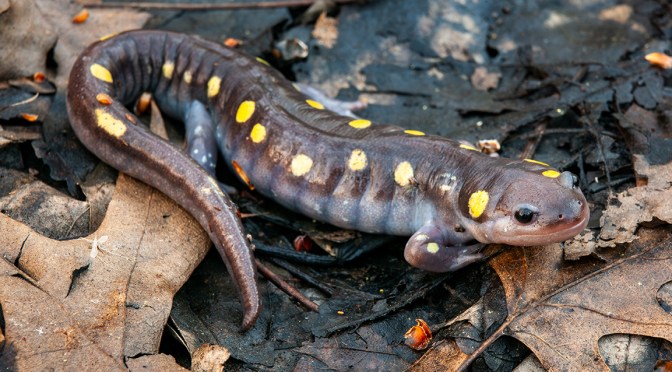
Winter lingers long on the Rensselaer Plateau. The snow piles deep, muffling the landscape in an icy hush, and the trees stand still in their frozen slumber. But as the days lengthen and the sun begins its slow work of softening the land, the transformation begins. The snow melts, trickling down into the forest floor, pooling in low spots, carving out secret, glistening pockets of water between the trees. These pools, often small and shallow, are the first sign of life returning to the woods.
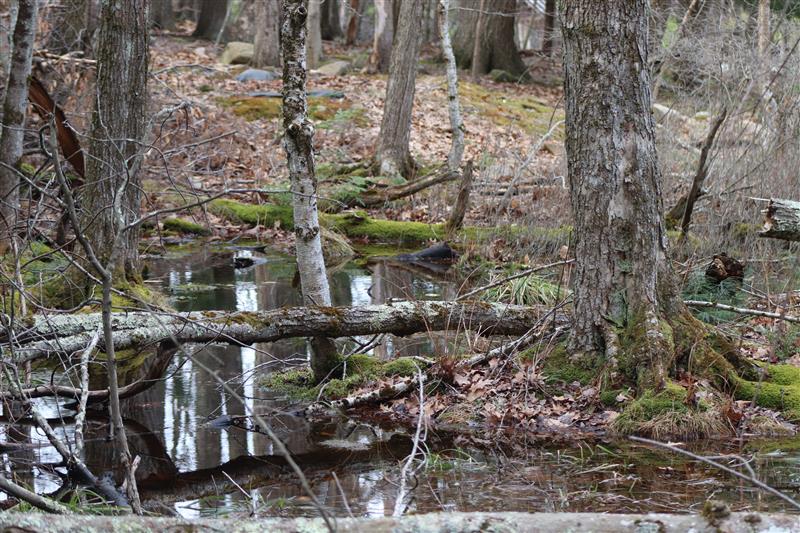
A hiker passing through a woodland trail in early spring might barely notice them, scattered like darkened mirrors between the hemlocks. Their glassy surfaces reflect the tangled branches above, the shifting April sky, and the delicate dance of lingering leaves caught in the shallows. But beneath their quiet exteriors, vernal pools are brimming with life.
What is a Vernal Pool?

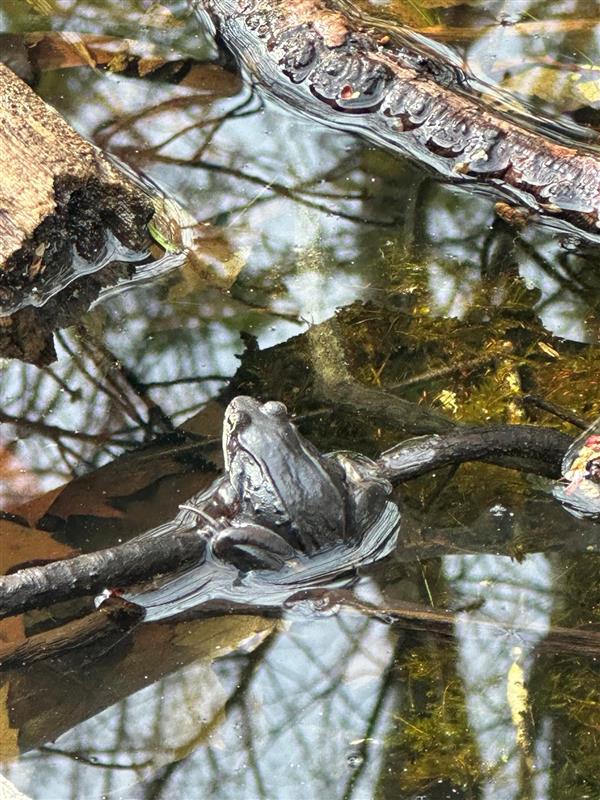
Vernal pools are seasonal wetlands, bodies of water that exist only for a brief but critical time. They fill with snowmelt and spring rains, holding their water just long enough to shelter an explosion of creatures that rely on their unique conditions. Unlike ponds or lakes, vernal pools lack a steady water source, and by summer’s heat, they vanish, leaving behind only damp earth and the promise of renewal. Their fleeting nature keeps them free of fish, making them vital sanctuaries for amphibians and invertebrates whose life cycles are perfectly attuned to the rhythm of the pools.
A Springtime Serenade

Stand beside a vernal pool on a warm April day, and you’ll hear the season’s first great chorus, the quacking calls of wood frogs. Their duck-like voices rise from the water’s surface, echoing through the trees. Soon, the pool will be thick with their floating egg masses, hundreds or even thousands of jelly-like spheres tethered together like lumpy tapioca. Spotted salamanders, too, leave their mark, wrapping their smaller, glistening egg clutches around submerged sticks or vegetation, safely encased in a jelly sheath.


In just weeks, these eggs will transform. Tiny, wriggling tadpoles will hatch, feeding hungrily on algae and microscopic life, growing legs and lungs in preparation for their departure. By midsummer, the pools will have shrunk under the heat, and the last of the juvenile frogs and salamanders will slip into the undergrowth, ready to vanish into the forest, until the next spring calls them home again.
The Hidden Residents

But amphibians are not the only inhabitants of vernal pools. Beneath the still water, an entire microcosm thrives. Fairy shrimp, delicate and translucent, swim with flickering legs, their presence an ancient marker of undisturbed pools. Daphnia, mosquito larvae, and a host of other tiny invertebrates fill the water, forming the foundation of this temporary ecosystem. Many of these creatures have remarkable adaptations. When the pools dry up, they enter a state of dormancy. Their eggs or cysts wait patiently in the mud for the return of the water. When spring rains come again, they awaken, ready to feed the newly hatched tadpoles and continue the cycle.
Fleeting World, Lasting Impact
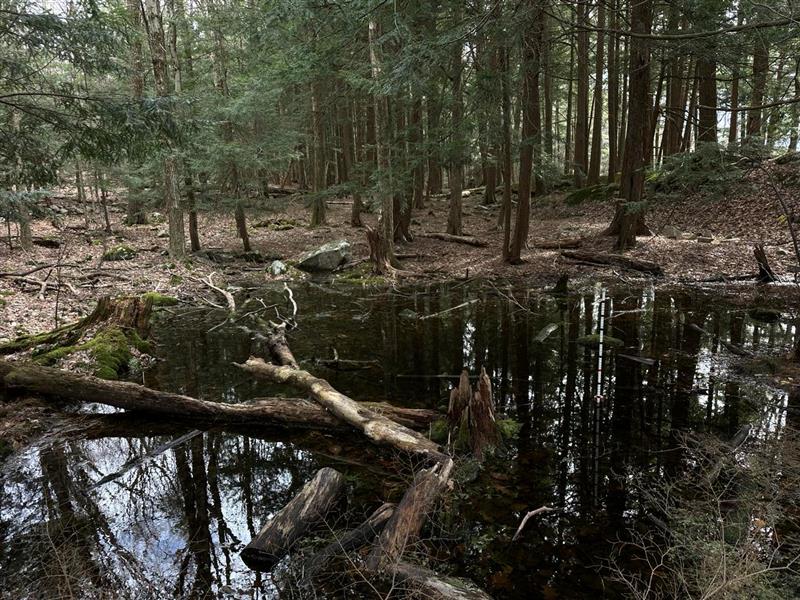
By late summer, the vernal pools will be gone. Their muddy basins will crack and harden. Leaves will pile where water once shimmered. The forest will look as if they never existed. Yet, for those brief months, they are a world unto themselves, nurseries for amphibians, refuges for tiny creatures, and a reminder of the delicate balance that defines the natural world.
To most, they might seem like nothing more than puddles, a hiker’s minor obstacle after a spring rain. But to those who pause and look closer, they reveal a secret, teeming universe, one that vanishes as quickly as it appears, yet shapes the landscape in ways unseen.
— Written by Savannah Wilson, Grafton Lakes State Park Environmental Educator. All photos by Savannah Wilson except where otherwise credited.
 New York State Parks and Historic Sites Blog