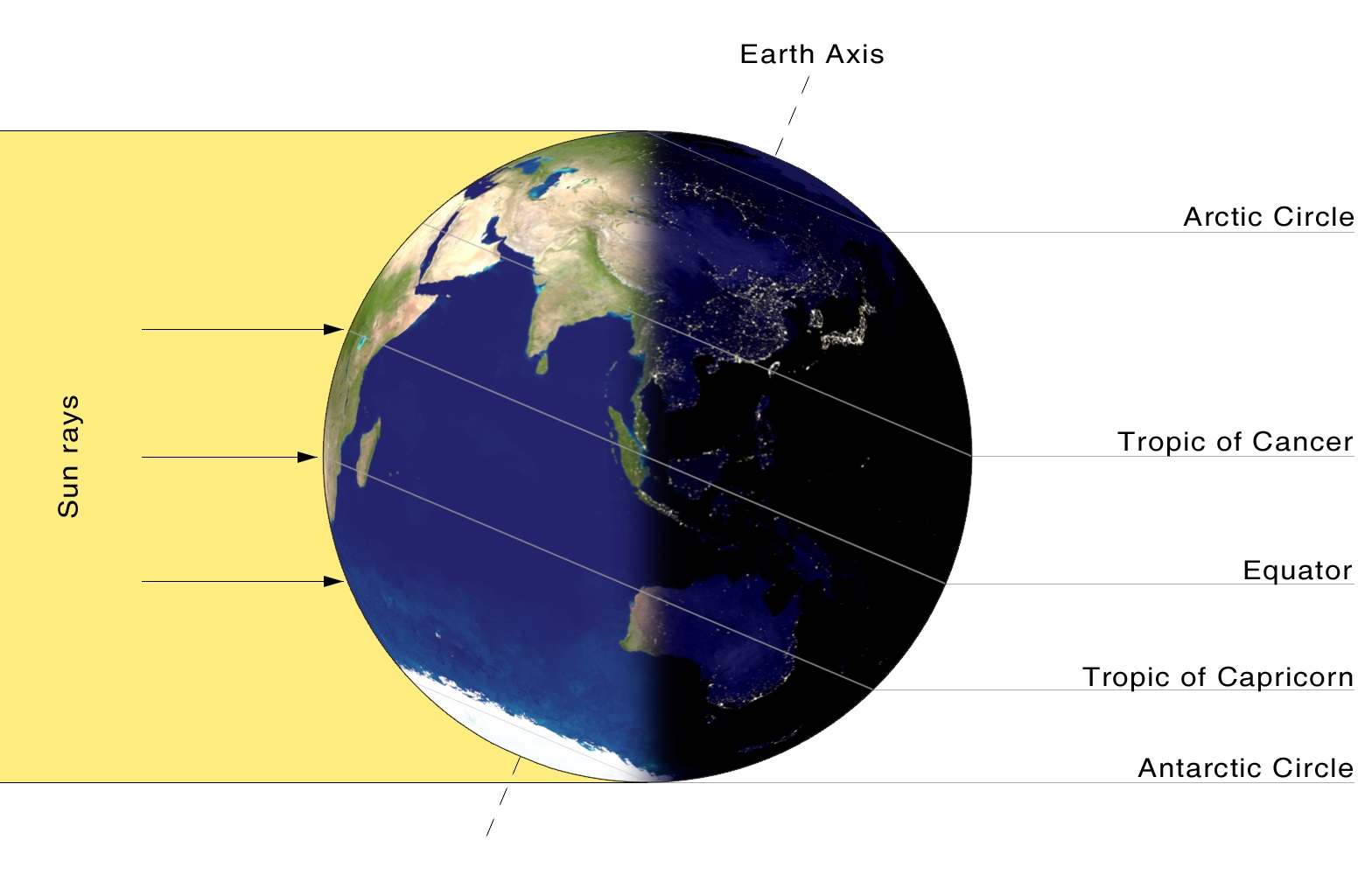
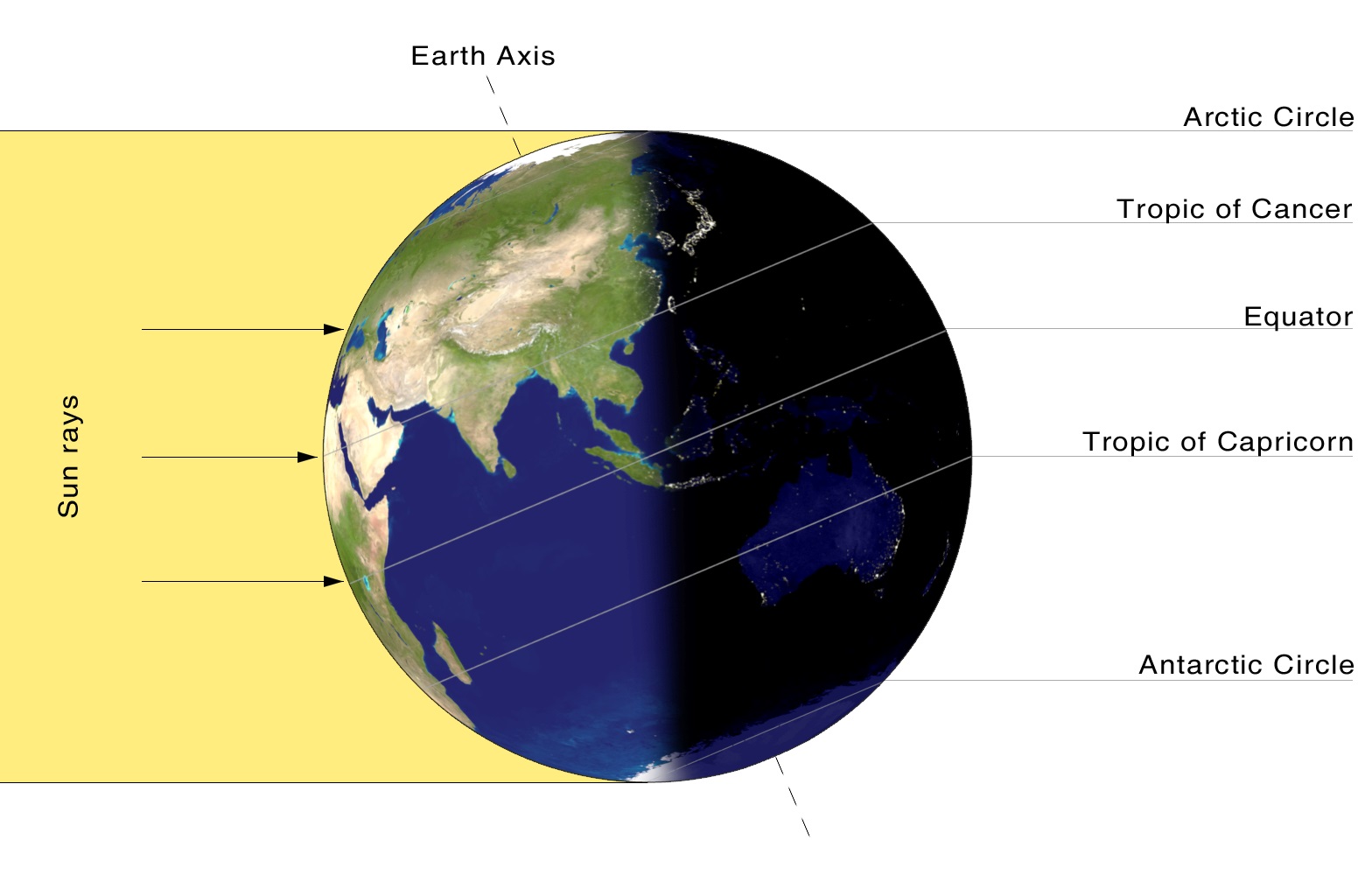
Ah, the winter solstice is here, that longest night and shortest day. The solstice (sols=sun; tice=stand still) occurred at 11:48 EST on Monday, December 21, 2015. This was the moment when the sun was directly over the Tropic of Capricorn in the southern hemisphere (see Figure 1). Once it reached this point, the earth started to slowly tilt northward and the days began to get longer. Because the tilting of the earth’s axis is so slow, the day length is the same (stands still) for a day or two after the winter solstice.
Winter is a great time to explore New York’s State Parks and Historic Sites. Some Parks offer opportunities to try snowshoeing, cross-country skiing and, ice fishing. Bring your own skis, ice fishing gear, snowshoes, snowmobiles, or skates to create your own winter fun in a Park or Historic Site. Or take a hike go wildlife watching or attend a program. Just remember to dress for the weather and you’ll have a grand time!
Ice fishing at Grafton Lakes State Park. Photo by OPRHP.
Snowmobiling at Lake Taghkanic State Park. Photo by OPRHP.
Ice skating at Saratoga Spa State Park. Photo by OPRHP.
Here delicate snow-stars, out of the cloud, Come floating down in airy play, Like spangles dropped from the glistening crowd That whiten by night the Milky Way.
Snow is that magical precipitation that turns our stark winter landscape into a winter wonderland; gives school children joy at the possibility of a day off – SNOW DAY; and gives commuters white knuckles as they navigate home on slippery roads. Snow is what we expect to see each winter here in New York State. But what is snow? How is it formed? Is it true that no two flakes are the same?
Snow will form in clouds between the temperatures of -39˚F and 32˚F. Clouds are mostly filled with tiny water droplets, tiny meaning that thousands can fit in a period. Microscopic dust and salt particles from the land and sea are also found in clouds.
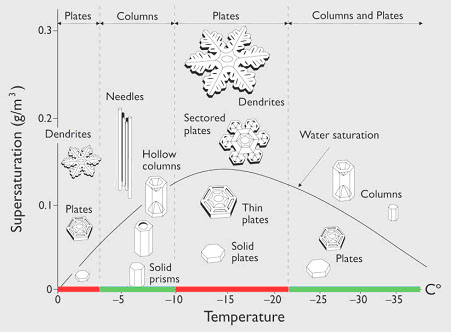
As the dust and salt cool in a cloud, they attract the tiny water droplets which stick and freeze to the particles – beginingthe formation of a snow flake (or the scientific term snow crystal). These tiny snowflakes grow by collecting more water molecules. When they get too heavy to be in the cloud they start to fall to the ground. As they fall, they bump into other snowflakes causing pieces (tiny crystals) of the snowflake to break off which become new snow flakes. The humidity and temperature inside the clouds will determine which type of snowflake is formed. If the air is moist and warm (25o-32o F) large flakes will form. If it is cold and the cloud has little moisture, the snow that forms resembles tiny columns. Figure 1 illustrates how different types of snowflakes form in different cloud conditions.
Why do snowflakes have a six-sided symmetry? Snowflakes are six-sided because of the way that the individual water molecules connect together – they form hexagonal lattices which give the snowflakes six-sided symmetry.
Eight common types of snowflakes are:
Hexagonal Plate Crystal:
Six-sided flat crystals with various amounts of surface patterns. Largest of these can be just under ¼” across. Hexagonal plate crystals are found in most snow falls.
Stellar Crystal or Dendrite:
Stellar crystals are six-pointed star shaped snowflakes. These flakes can be up to 1/2″ across. They can be found in low numbers in most snow falls. Formed in the low atmosphere when the temperatures are not too cold and the humidity is high, sometimes the stellar crystal flakes join together to form large flakes that are 2” across. The gentle drifting of the stellar crystal flakes gives a tranquil feeling to snowfalls.
Column Crystal:
Forming in cold clouds and low moisture, column crystal flakes are six sided and can be hollow inside. During the winter, column crystals are commonly found in the high, wispy cirrus clouds. They help to create a halo around the moon on winter nights. The halo is created by moonlight streaming through these ¼” crystals. Rarely do these crystals fall to the ground.
Asymmetrical Crystal:
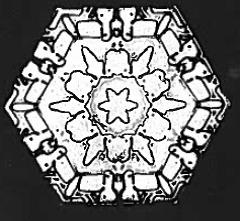
Asymmetrical Crystals are another common snowflake. They appear to be many hexagonal plates stuck together and have been mistaken for stellar crystals. They are about 3/8” across.
Bullet Crystal:
Bullet crystals are column crystals that look like one end was sharpened with a pencil sharpener to form a hexagonal pyramid. They can be seen either singly or in groups of three, attached by the points of the pyramid.
Tsuzumi Crystal:
Named for the Japanese drum of the same design, Tsuzumi crystals are column crystals with hexagonal plate crystals at each end. They form when the column crystals bump into the hexagonal plate crystals as the snow falls.
Needles:
Needles are fine, six-sided columns with a point at each end; they range in length from ¼” to ¾” long. This is one of the most common types of snow flake in a snow storm. Sometimes the needle flakes freeze together during the descent forming conglomerate flakes. These conglomerate flakes quickly break apart as soon as the flakes hit the ground.
Stellar Hexagonal Plate Crystals:
Stellar Hexagonal Plate Crystals are some of the most stunning snowflakes. They form when either a stellar crystal goes through a hexagonal plate crystal cloud condition or a hexagonal plate crystal goes through a stellar crystal condition. These are some of the most common snowflakes in a storm.
Have you ever gone hiking and wondered where the trail came from, who built it, and when? Many of the oldest trails in New York began as Native American hunting paths, eventually becoming established trade and migratory routes. Until the Industrial Revolution, trails mostly served a functional purpose, but trail building boomed as a new ‘leisure class’ emerged and became interested in outdoor recreation. Today, 16,000 miles of trail run through New York, accommodating hiking, mountain biking, cross-country skiing, horseback riding, snowmobiling, and more.
In 1891, the New York State Legislature assigned funding to build a trail network across the state, which turned into the greenway system we know today. To promote and advocate for these trails, groups like the Appalachian Mountain Club, New York-New Jersey Trail Conference (NY-NJTC), and the Adirondack Mountain Club were founded. They provided the volunteers and training necessary to build enough trails to satisfy the demand. Many of these groups exist today and continue to train volunteers in trail construction and maintenance.
The first long distance hiking trail, the Appalachian Trail, was built by The NY-NJTC in Bear Mountain and Harriman State Parks in 1923. Conceived in 1921 by Benton MacKaye, the original idea combined recreation, conservation and economic socialism, with wilderness camping. It was seen as an opportunity for people to get away from the city and renew themselves. While MacKaye’s vision of interconnected mountain resorts was never fully realized, the trail was completed in 1937. Today, the Appalachian Trail stretches 2,175 miles from Maine to Georgia.
The Great Depression was a time of enormous parks and trails growth. As part of the New Deal, President Franklin Delano Roosevelt founded the Civilian Conservation Corps (CCC), based on a similar program he started while serving as governor of New York. This program, in operation between 1933 and 1942, provided unskilled laborers with jobs in the conservation and natural resources fields. During the nine years it ran, three million men participated (220,000 of which were in New York). They planted over three billion trees, and they built more than 800 parks nationwide.
As bicycles increased in popularity, cyclists began advocating for paved surfaces. Paved roads allowed cars to go more places and drive faster than they had been able to previously, thereby making road biking more dangerous for cyclists. In the 1960s, the government began converting unused rail corridors into rail trails to provide a safe space for biking. In the 1970s, rail trails also allowed inline skaters to venture outside of roller rinks and provided ideal corridors for the first recreational snowmobilers.
Following a funding slump in the 1970s, the 1980s and 1990s saw renewed interest in trail building. In 1987, New York City began planning a greenway system; the project was amended in 1993 with a proposal to develop 350 miles of bike and pedestrian trails throughout the city. As of 2010, 140 miles of trail were open to the public.
Black Diamond Trail volunteer work day. The Black Diamond Trail connects Taughannock State Park, Allan H. Treman Marine Park, Buttermilk Falls State Park and Robert Treman State Park. Photo by OPRHP.
These days, most trails are built by volunteers through programs like the NY-NJTC, the Student Conservation Association, Park Friends groups and other organizations. Anyone can get involved to help build or maintain a pathway and contribute to the legacy of trails in New York.
Enjoy this short video about safety and preparedness tips for hiking in New York!
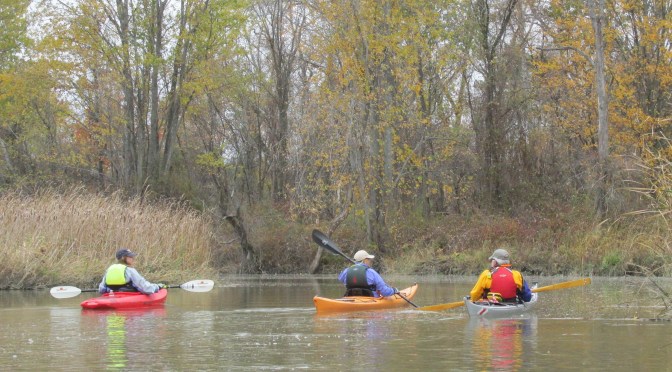
The tang of a slightly warm breeze rattled the yellow leaves of the cottonwoods under a dome of grey clouds welcoming an intrepid group of fall paddlers chasing the last vestiges of summer at Schodack Island State Park on the Hudson River near Albany.
“We weren’t planning to go out on to the Hudson River for this trip, but were headed to the kayak launch at Schodack Creek on the eastern side of the island,” Ro Woodard recalled. “It has tidal waters like the Hudson and snakes through the phragmites reeds and cattails swamp under the mighty bridges of the CSX Railroad and NYS Thruway. It was exciting to think, as I drove over the Thruway bridge and looked down to the creek, that I would be soon seeing the secrets of the marsh from a water’s eye view rather than a bird’s eye view.”
Warm fall and winter days might tease paddlers into heading for their favorite open water, but the warm air temperatures can deceptively mask the dangers of the cold water surrounding our boats as we paddle. NYS OPRHP would like to remind paddlers and sportsmen who venture out on the water between November 1 and May 1 that everyone in boats less than 21 feet in length (this includes motor boats, too) MUST WEAR a US Coast Guard approved life jacket while underway. OPRHP also recommends that everyone wear a life jacket if the water temperature is less than 70o F.
All boaters (and, yes, paddlers are boaters) should be aware of the possibility of a sudden unexpected swamping, capsize, or a fall overboard into the cold water. At the onset of a sudden cold water immersion there is an initial uncontrollable gasp reflex leading to hyperventilation and increased heart rate and blood pressure which can result in immediate drowning. Go to Cold Water Boot Camp to see what this reaction looks like. A life jacket may save your life by keeping your head above water and your body floating you while you get your breathing in control. Next you should attempt self-rescue by getting back in or on your boat. You have about 10 -20 minutes depending on the temperature of the water before your muscles and nerves cool down and stop functioning; even good swimmers can’t control their movements and ultimately experience swimming failure. Again, the life jacket can make all the difference because it will float you. This is a sobering message for those going out for what they hope to be a fine day on the water. Remember to wear your life jacket, because it can make all the difference.
Late season paddlers should dress for the water temperature, not the air temperature with either a wet suit or dry suit under your life jacket. Bring along safety equipment to help with rescue in case of a capsize: pump, rescue bag, sling, paddle float, whistle, visual distress signals, and a VHF radio or cell phone is a waterproof bag. Also take a course to learn how to use the equipment and how to rescue a paddler who is in the water, empty the water from their boat and get them back inside before you head out for your cold season paddling trip. It is important to have essential skills and equipment, which we hope we never have to use, with you when you kayak and canoe. The American Canoe Association has a variety of courses for all level of paddlers.
Always paddle with a group if possible and be sure to let someone know where you are going and when you are expected to return. Take a boating safety course and refrain from the use of alcohol when paddling. Boating safety courses can be found at http://nysparks.com/recreation/boating/boating-safety-class.aspx and a free online paddle sport safety course at www.paddlecourse.com.
A well dressed and well equipped paddler.
Kayak launch on Schodack Creek, Schodack Island State Park.
Under the bridges for a creek level view.
Click on an image above to enlarge it and read the caption.
The properly dressed and equipped group enjoyed a pleasant afternoon sweeping upstream on the incoming tide, sharing summer paddling stories and watching the sky hoping for a glimpse of one of the many eagles which inhabit the shores of the Park. They passed under the bridges to the sound of a honking horn. The honking must have come from a sharp-eye paddler who was crossing the bridge in his or her car and spotted us paddling. After encountering a tree across the narrowing creek, they turned around to head south just as the tide was turning and the current carried them back to the launch ramp. No eagles on this trip, but a flock of crows soared over head as we finished our day.
The fabulous fall padding season has wound down. The air temperatures are dropping and so is the water temperature. Though lots of us summer paddlers put away our kayaks and canoes until spring, many hearty paddlers continue to enjoy the late fall paddling until ice forces them off the water. If that paddler is you, remember to wear your life jacket, let someone know when and where you are paddling, dress to stay warm, bring your safety equipment, don’t drink alcohol while out on the water, and paddle with a group if possible. The rest of you, we’ll see you in the spring!
Post and photos by Ro Woodard, Marine Services Bureau, OPRHP.
In 1782 Benjamin Franklin wrote “the wild turkey is a bird of courage that would not hesitate to attack a grenadier of the British guards, who should presume to invade his farmyard with a red coat on,” in an effort to promote the turkey over the bald eagle as the national emblem of the United States. Although the turkey was not selected to hold the prestigious position of national emblem, the bird is certainly an icon for the month of November and the celebration of the Thanksgiving holiday.
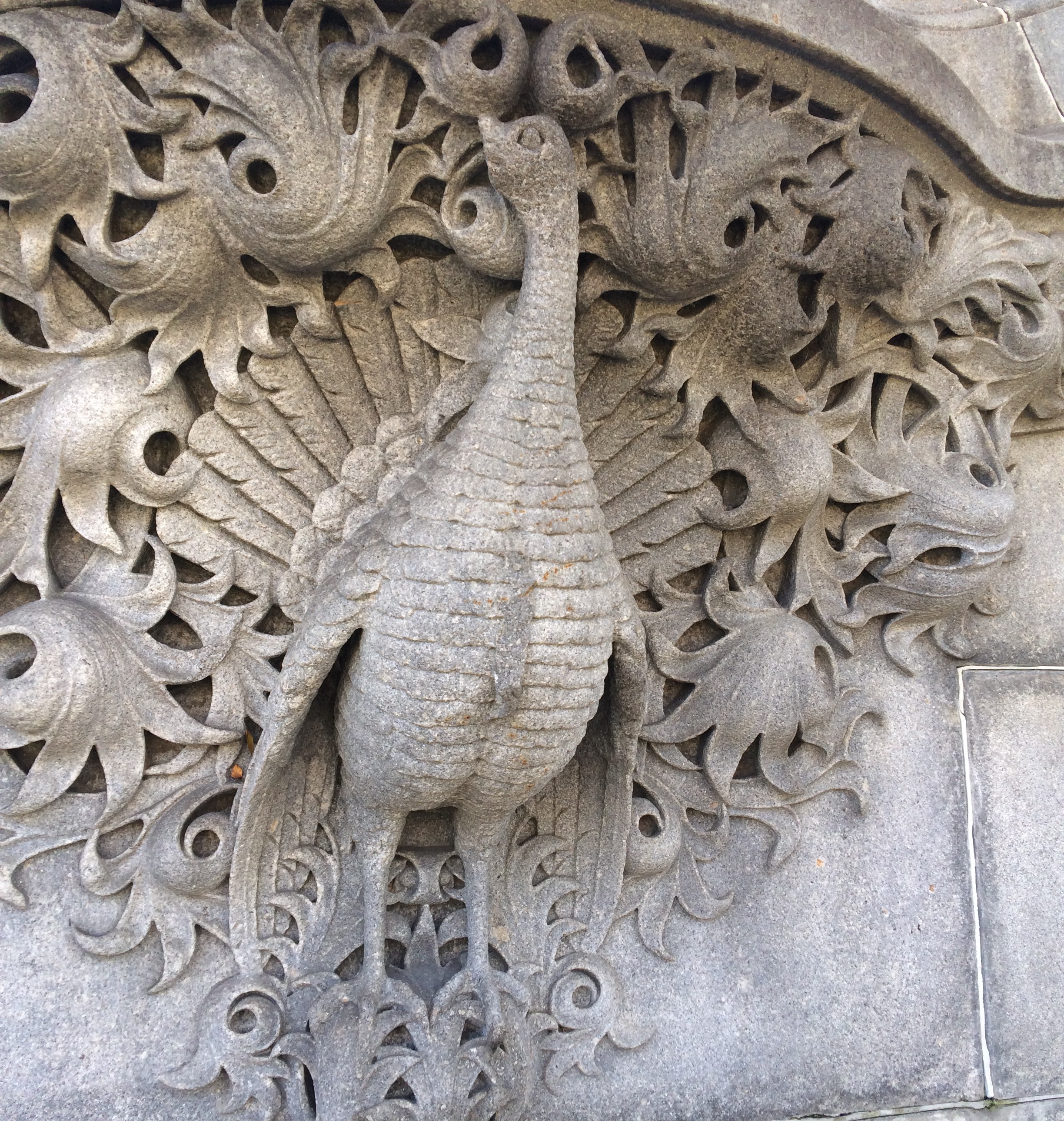
A turkey is featured on the New York State Capital building. Photo by Lilly Schelling, OPRHP.
There is much more to know about turkeys than what side dishes the bird pairs nicely with on the Thanksgiving table. To be the hostess with the mostess (turkey knowledge, that is) try sharing some of the following fun facts with your dinner guests this Thursday!
Turkeys can run at speeds of up to 25 miles per hour and can fly up to an impressive speed of 55 miles per hour.
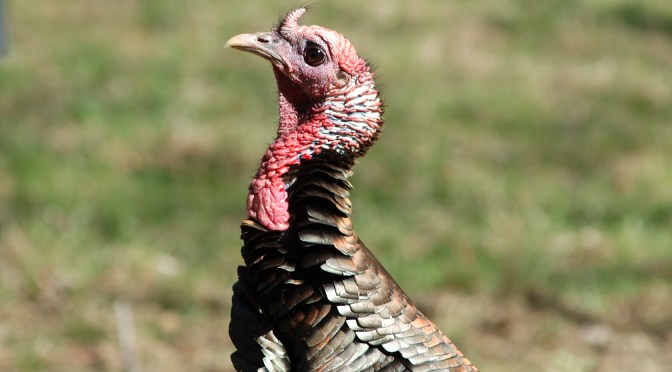
The area of bare skin on a turkey’s throat and head changes color depending on its level of stress or excitement. A male turkey’s head will turn blue when excited, or turn red when it is preparing to fight.
Male turkeys have beards and spurs. The older the turkey, the longer the beard. Females are called hens, chicks are known as poults, and young males are jakes. See the photo below for more information about turkey anatomy!
Because turkeys have a number of natural predators, including foxes, coyotes, and raccoons, they often sleep perched atop tree branches with their flock. In the morning, they call out a series of yelps before descending from the tree to ensure that the rest of their roosting group has made it safely through the night.
Turkeys have excellent daytime eyesight that is 3x better than a human’s! A turkey’s vision range covers 270 degrees, and they can also see in color. Turkeys have poor vision at night.
Wild turkeys were almost hunted to extinction by the early 1900’s, but recovery efforts have brought their numbers up to seven million across North America today. Allegany State Park in western New York was the source site for turkeys that were later reintroduced across the rest of the state in the 1950’s. It was presumed that these turkeys wandered across the state border from Pennsylvania.
Above: A male turkey (called a tom) at Minnewaska State Park Preserve. Photo by OPRHP, edited by Lilly Schelling.
Post by Megan Phillips, OPRHP. Photos by Lilly Schelling, OPRHP.












 New York State Parks and Historic Sites Blog


