Category Archives: history

A Look Back At The Total Solar Eclipse Of 1925

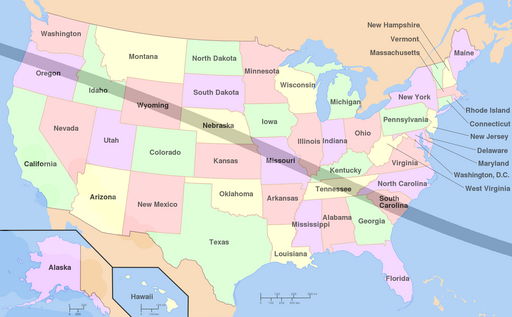
Many of us remember the last total solar eclipse in the United States, known as the Great American Eclipse in August 2017. The news coverage talked of the path of totality which travelled from coast to coast, starting in Oregon and arcing south across the country through South Carolina. Those who remained here in New York were treated to a view of between 59-75 percent obscuration (covering) of the sun as the moon passed between the sun and Earth. While it was definitely a national event, New York didn’t get the front-row seats that being in an eclipse’s path of totality provides.

Path of 2017 eclipse, courtesy of Wikicommons.

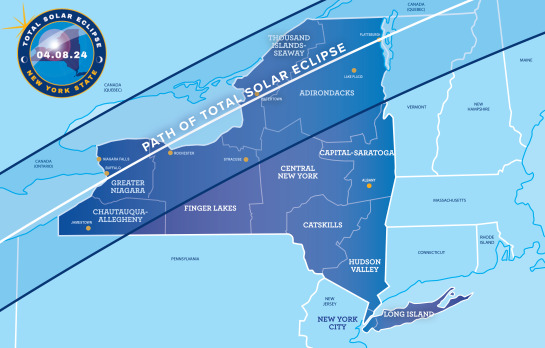
Thankfully, many New Yorkers will soon have the opportunity to see this celestial wonder for themselves from their own backyards or local parks. On April 8, 2024, another total solar eclipse will pass from Mexico through parts of 14 different states and into Canada. This time, New York is in the eclipse’s path.

The 2024 eclipse path in New York State, courtesy of I Love NY. To drill down on the path of totality for April 8, visit our interactive map.

Some people have been looking forward to the 2024 total solar eclipse for years, some for decades! But all of this anticipation has some of us looking backwards to the last total solar eclipse that passed through the skies of New York State in 1925.

Path of 1925 total solar Eclipse, Butler Papers, Archives of American Art, Smithsonian Institute.
Continue reading A Look Back At The Total Solar Eclipse Of 1925

Telling New York’s Whole Story: Black History At State Historic Sites

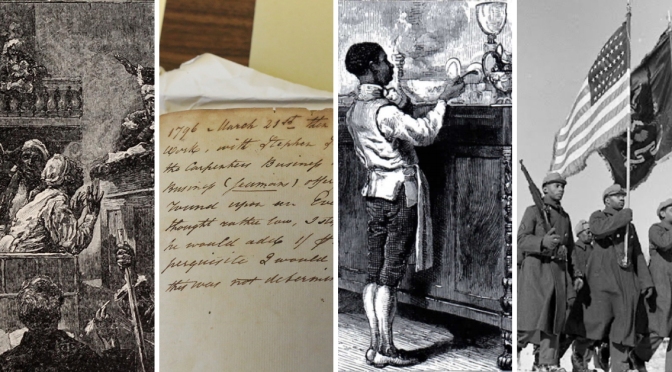
Black History Month is drawing to a close. But at the Office of Parks, Recreation and Historic Preservation, research into New York’s Black history is continuous. From the 1627 arrival of the first 22 enslaved African men to the 1827 abolition of slavery in New York and into the future, Black history is the history of New York and of the United States. This is a cornerstone principle of ‘Our Whole History,’ a Parks initiative launched several years ago to thoroughly research and share the stories of New York State from the points of view of all who lived it.

As research continues, a more complete picture of the past emerges. The stories of the Black New Yorkers who contributed so much to New York’s history are revealed through painstaking, detail-oriented research. Key caretakers, highly skilled laborers, folks who contributed to a smooth-running household become clearer.

To piece together their stories, our dedicated historians conduct archaeology, study physical objects, and delve deep into records of all kinds: account ledgers of both homes and businesses; census data; estate inventories; wills; letters and journals; city directories; diaries, and more.

Several of our historians shared with us the stories of Black figures who shaped the history of their sites.  

Continue reading Telling New York’s Whole Story: Black History At State Historic Sites

How Dutch Holiday “Pinkster” Became an African-American Cultural Celebration 

In settlements along the Hudson River Valley and in Albany on the hill where the New York State Capitol sits today, enslaved and free African descendants once gathered with family and friends to celebrate Pinkster. During the holiday, the Dutch attended religious services but also gathered socially to play games and eat holiday foods. Enslaved Africans had leave to travel and gather during the festivities, which was not allowed during most of the year. 

Left: Pinkster event signage outside of Schuyler Mansion State Historic Site. Right: Pinkster coverage from the Albany Morning Express, 1880.

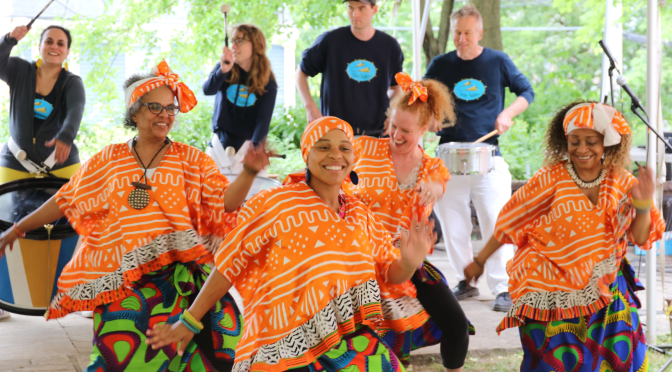
Over the past few decades, the Pinkster celebration has enjoyed a resurgence in New York State. And in recent years, historic sites in New York State Parks, Recreation and Historic Preservation’s care have served as venues to carry on the deeply rooted cultural tradition. 

A History of Pinkster 

Settlers in New Netherland, a 17th century Dutch colonial province on the east coast, practiced their religious observance of Pentecost (Pinksteren in Dutch) or Whitsunday in the Americas. Pentecost signifies the Holy Spirit being sent to the disciples, roughly fifty days after the resurrection, as described in the New Testament of the Christian bible.  

In 1803, a published account of Pinkster in the Albany Centinel newspaper described the scene: “readiness, on Monday morning, blacks and a certain class of whites, together with countries and colours, begin to assemble on Pinkster from every part of the city and from the adjacent country miles around, forming in the whole a motley group of thousands…” 

Continue reading How Dutch Holiday “Pinkster” Became an African-American Cultural Celebration 

“Share Your Story” Project Welcomes 100 Years of Memories

We’re thrilled to announce our Share Your Story project, inviting you to share your NY State Parks memories and nostalgia throughout 2024. 

Every year, tens of millions of people visit New York State Parks and Historic Sites. Whether it’s an afternoon at a nearby favorite spot, family traditions passed down from generation to generation, or a long-planned vacation, parks and sites are where memories are made. They’re also where many people experience those special “firsts” — a first time canoeing, learning about meaningful state history, ice skating, camping, and so much more.

During our Centennial year, we invite you to share those memories. The Share Your Story project is your chance to reminisce about your experiences at New York State Parks and Historic Sites with your fellow park lovers.

Continue reading “Share Your Story” Project Welcomes 100 Years of Memories

Commemorating the Canandaigua Treaty at Ganondagan State Historic Site

The Canandaigua Treaty Day Celebration is held annually in Canandaigua, New York, to polish the chain of friendship between the United States and the Six Nations, and to honor the sovereignty of the Haudenosaunee (hoh-DEE-noh-SHoh-nee) Confederacy. The Six Nations consist of the Mohawk, Oneida, Onondaga, Cayuga, Seneca, and Tuscarora, who originally and currently live in Northeast North America and Upstate New York. 

Ganondagan State Historic Site is home to the Seneca Art & Culture Center, which features stories of Haudenosaunee contributions to art, culture and society, and the Bark Longhouse, a replica of a 1600s Seneca family’s dwelling as well colonial trades and goods. Self-guided hiking trails, including a tree tour and medicine walk, are available year-round, dawn to dusk, weather-permitting. 

Michael Oberg, Distinguished Professor of History, SUNY Geneseo, gives a presentation at Ganondagan State Historic Site.

Co-created in 1794 by the young United States and the Haudenosaunee Confederacy (an alliance of Six Nations), the Canandaigua Treaty was a binding, solemn agreement that defined mutual obligations between the independent nations. It set out to affirm land rights to the Haudenosaunee and established the promise of friendship between all parties. Today the treaty is commemorated by the Haudenosaunee by paying tribute to their peace-making efforts to uphold their end of the “chain” of friendship.

On November 11, Ganondagan State Historic Site hosted a lunch, lecture and tour to honor the 229th anniversary of the Canandaigua Treaty at their Seneca Art & Culture Center in Victor, NY. The annual event signals how the relationship between the United States and Six Nations has been challenged, strained, and violated, but reveals that the treaty itself has never been broken and is still recognized by both governments.

Continue reading Commemorating the Canandaigua Treaty at Ganondagan State Historic Site