

Saratoga Spa State Park is remarkable not only for its heralded mineral springs, but also for its architecture and historic theater. Now known as the Spa Little Theater, the space was originally designed for the scientists who studied the surrounding mineral springs to share their findings.
In September, the Spa Little Theater and nearby buildings and grounds were once again a place of scientific knowledge sharing, hosting the 2023 New York State Invasive Species Expo that brought land managers, researchers, and the public together for an immersive three-day interactive learning experience and conference.

Invasive species are non-native species that can cause serious biological, economic and human health-related impacts to the areas in which they are introduced. They often have a significant adverse effect on biodiversity and habitat suitability for native species. While there will never be an easy fix to the issues that invasive species create, fostering connections between interested partners – whether public or private – and sharing solutions, new technologies and positive outcomes are an important first step.
Every topic and activity at the Expo was united by a common theme: Reflect, Adapt, Evolve. Presenters and participants were asked to reflect on the history of land use, invasive species management, and stewardship in New York State, then think about ways in which we are currently adapting to a changing landscape and climate, and finally contemplate how invasive species management might evolve to face the challenges of the coming decades.
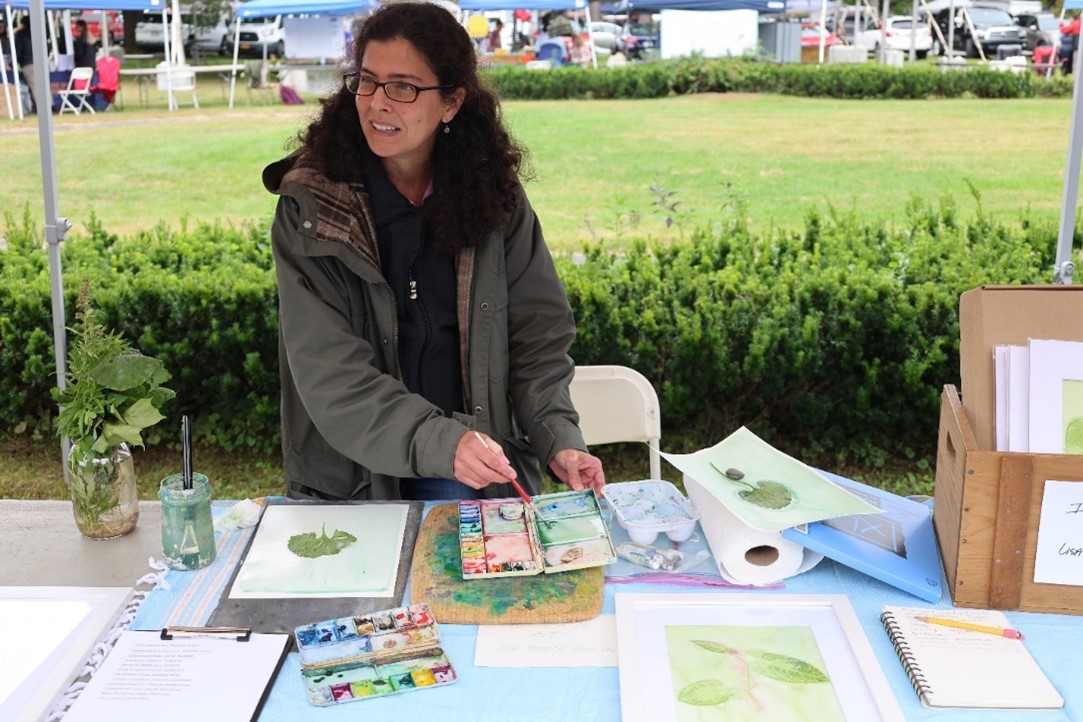
The 2023 New York State Invasive Species Expo
The Expo kicked off with “Community Day,” which coincided with a Farmers’ Market. More than 500 marketgoers learned about the impacts of invasive species and ways that they can help counter them. The event included interactive tabling, games, prizes, and demonstrations, and drew in continuous crowds of interested participants– all despite the cool, overcast weather.
Over the next two days, 600 attendees participated in sessions designed to engage professionals, researchers, and the public. Participants attended a variety of interactive experiences, including field trips to the Saratoga Tree Nursery and a Karner Blue butterfly habitat restoration site, electrofishing demonstrations, guided hikes, biocontrol releases, bird banding, collaborative workshops, and presentation and poster sessions.
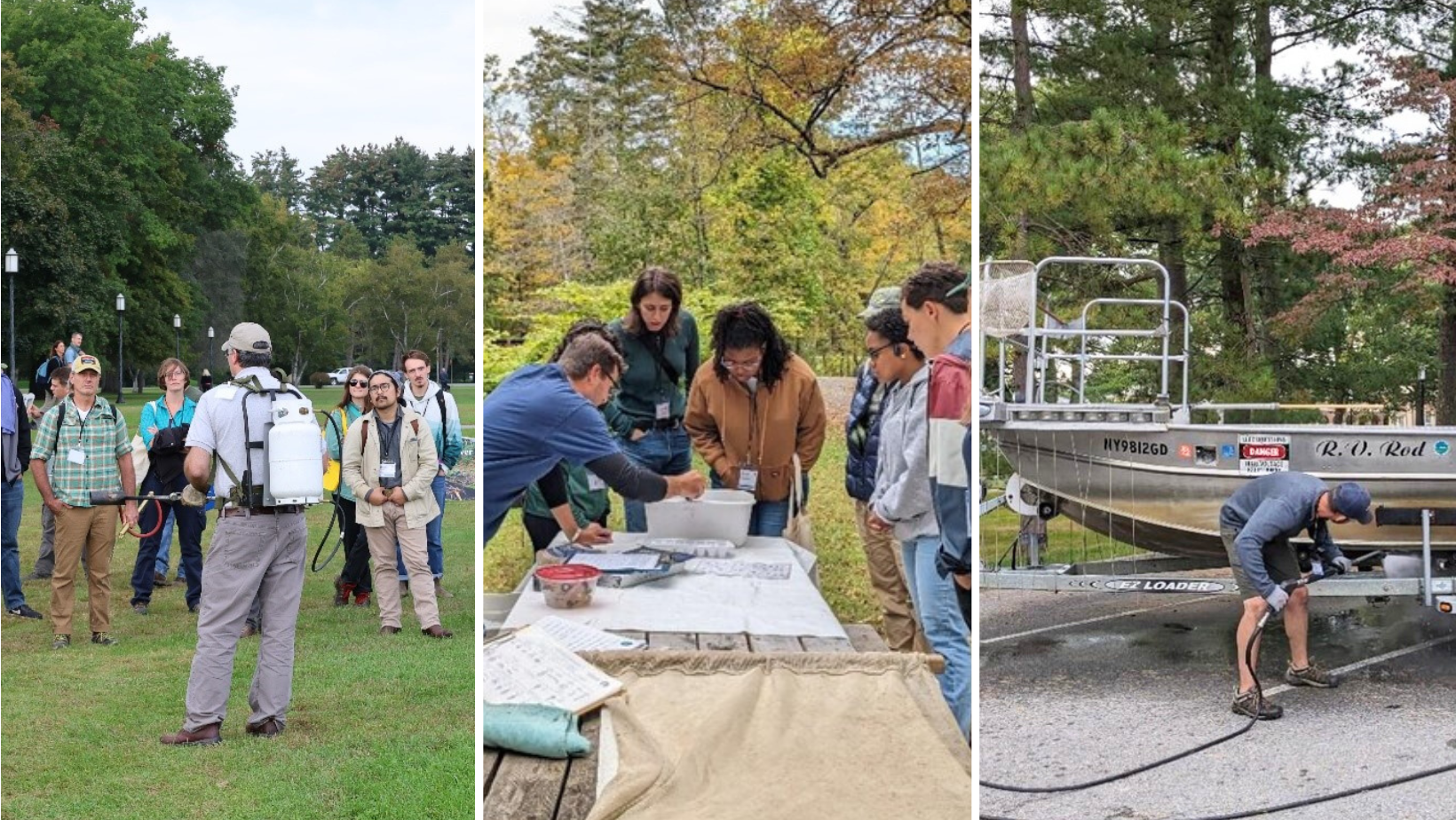
Centered around the Reflection Pool in the main part of the Saratoga Spa campus, the expo’s “Field Day” featured more than 30 interactive experiences aimed at engaging people with some of the more thrilling aspects of invasive species management. Participants watched conservation dogs sniff out invasives, learned the ins and outs of “weed torching,” interacted with wildland firefighters (including testing out their equipment!), learned how tree-climbing can be useful in invasive species detection, and learned how drones can be used for detecting, monitoring and controlling invasive species.

How To Be Part of the Solution
If you don’t know much about invasive species or their impacts, events like the Invasive Species Expo are a great way to learn more about their effects on ecosystems and the innovative solutions that are currently in use by land managers.
You’ll get another chance to attend the NYS Invasive Species Expo in 2025, but in the meantime, what can you do to learn more, and to address invasive species impacts in your area? Fortunately, there is quite a bit!
- Get Engaged – Volunteer with your local PRISM (Partnerships for Regional Invasive Species Management)! PRISMs are also great places to get up-to-date information about invasive species in your region and learn how to control them. PRISMs – New York Invasive Species Information (nyis.info)
- Record what you see – iMapInvasives is New York’s main hub for tracking, mapping, and monitoring invasive species. The better we understand where invasive species are and the sooner they are found, the better we can lessen their impacts. Download the iMap app today and watch a free webinar to get started! NY’s invasive species database and mapping system | NY iMapInvasives
- Boaters/Anglers – Wash and dry your boat properly. Remove all plant matter from boat, ballast, prop, trailer and equipment. Dispose of plants in an aquatic invasive species disposal station, if available, or above the high-water line. Clean, Drain, Dry – NYS Dept. of Environmental Conservation
- Campers/Hikers/Bikers – Check clothing, boots, pets, equipment and camping gear for seeds, plant matter and insects. Clean gear and dispose of debris. Use local firewood. PlayCleanGo
- Gardeners – Plant native plants. Educate yourself and others about the importance of using native species. There are many native look-alikes that are just as beautiful as their invasive counterparts. PlantWise brochure (ny.gov)
- Check out the NYS OPRHP Blog! – Read the “Invasive Species Spotlights” featuring invasive species that are prevalent throughout the state, updates on new and emerging species, stories on how Parks is addressing and mitigating the negative impacts of invasives, and tips on how you can get involved! NYS OPRHP Blog, search words: invasive species.
It takes collaboration between land managers, researchers, and the public to protect natural areas from invasive species. Through events like the 2023 NYS Invasive Species Expo, and everyday actions, we can thwart invasive species and conserve biodiversity.
— Written by Sarah Travalio, Terrestrial Invasive Species and Biocontrol Coordinator in Albany’s Division of Environmental Stewardship and Planning
 New York State Parks and Historic Sites Blog