

In honor of the 100th anniversary of the founding of New York’s park and historic site system, we knew we wanted to do something special. Telling our full story in-house in a documentary style — and ensuring that the agency’s 100-year legacy was shared accurately and completely — seemed like a daunting task for our small (but mighty!) Public Affairs team.
Above all else, it required bringing the right voices to the table:
- Professional storytellers who value public resources.
- Team members with vast institutional knowledge, from Indigenous history to environmental conservation and New York State’s recreation evolution.
- Powerful visuals that do our 250+ facilities justice.
- Staff and like-minded individuals who are passionate about our open spaces and rich cultural resources, and are working to preserve and protect them, day in and day out.
Thankfully, from discussions early on, Capital region PBS affiliate WMHT demonstrated enthusiasm for working on a documentary that would share our state park and historic site system’s Centennial story with New Yorkers. And it was this author’s honor to play a small role in seeing the enormous undertaking come to life.
Staff Voices
New York State’s Office of Parks, Recreation and Historic Preservation isn’t just state parks and historic sites. The agency is brimming with passionate people who are experts in their fields. What was it like for them to participate in the formation of ‘From Land to Legacy’?
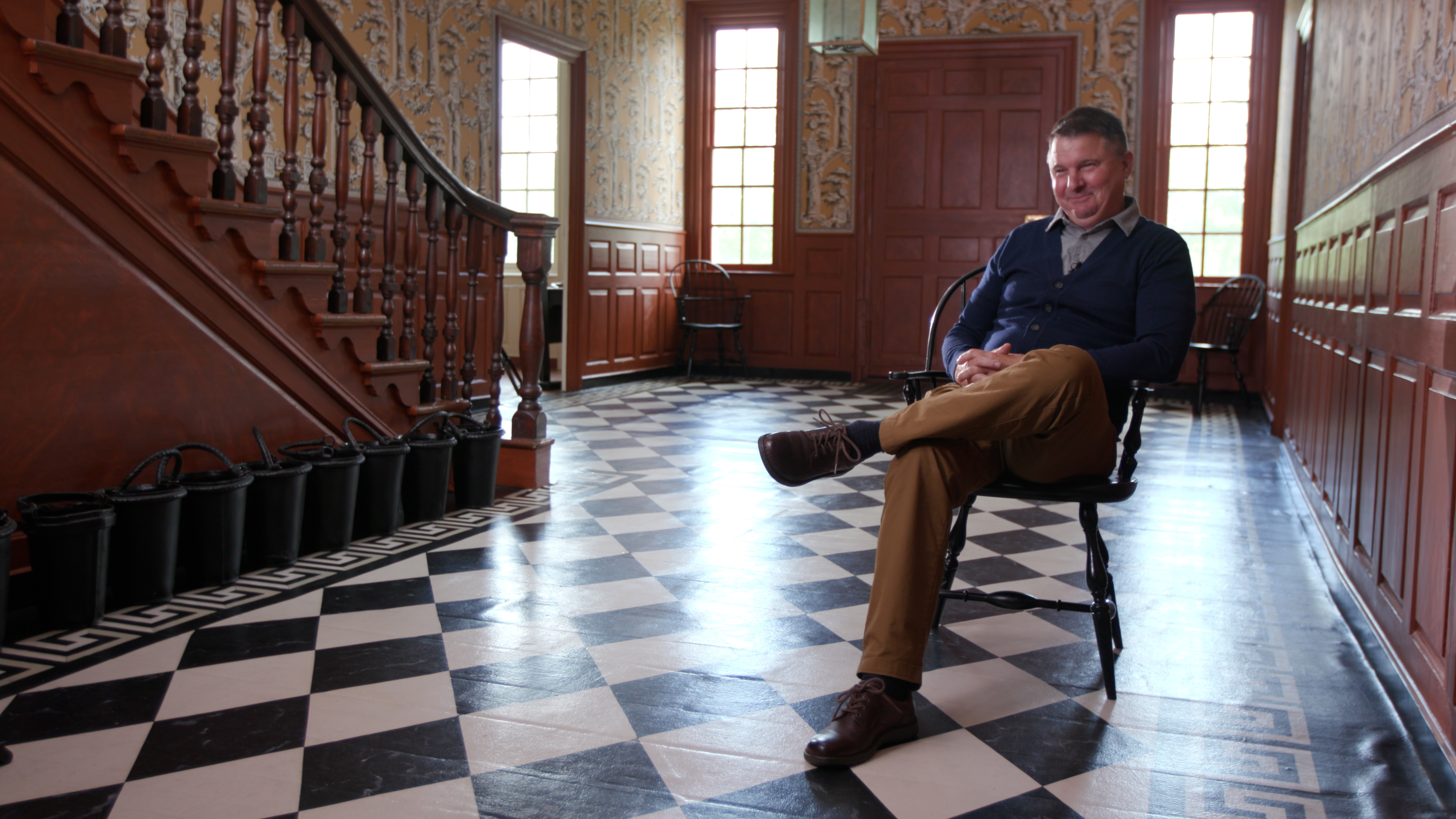
Anchoring the documentary with historical background is the agency’s historian, William Krattinger. His entertaining and matter-of-fact interview is woven throughout the film. Krattinger’s insight takes viewers on a journey through time while also imparting key information on the impactful figures and cultural context during State Parks’ development.
“More than anything I am hoping that my interviews help to convey a deep appreciation for the remarkable history of our organization,” Krattinger said. “Having spent the last few years deeply immersed in our state park history, I am left with a tremendous feeling of pride for the many outstanding individuals who have contributed to park/site system’s growth and development. Many individuals along the way ‘paid it forward’ and put their own interests aside for the public benefit and for the interests of future generations. Without their generosity and vision, our park system would not have developed in the same way. ”
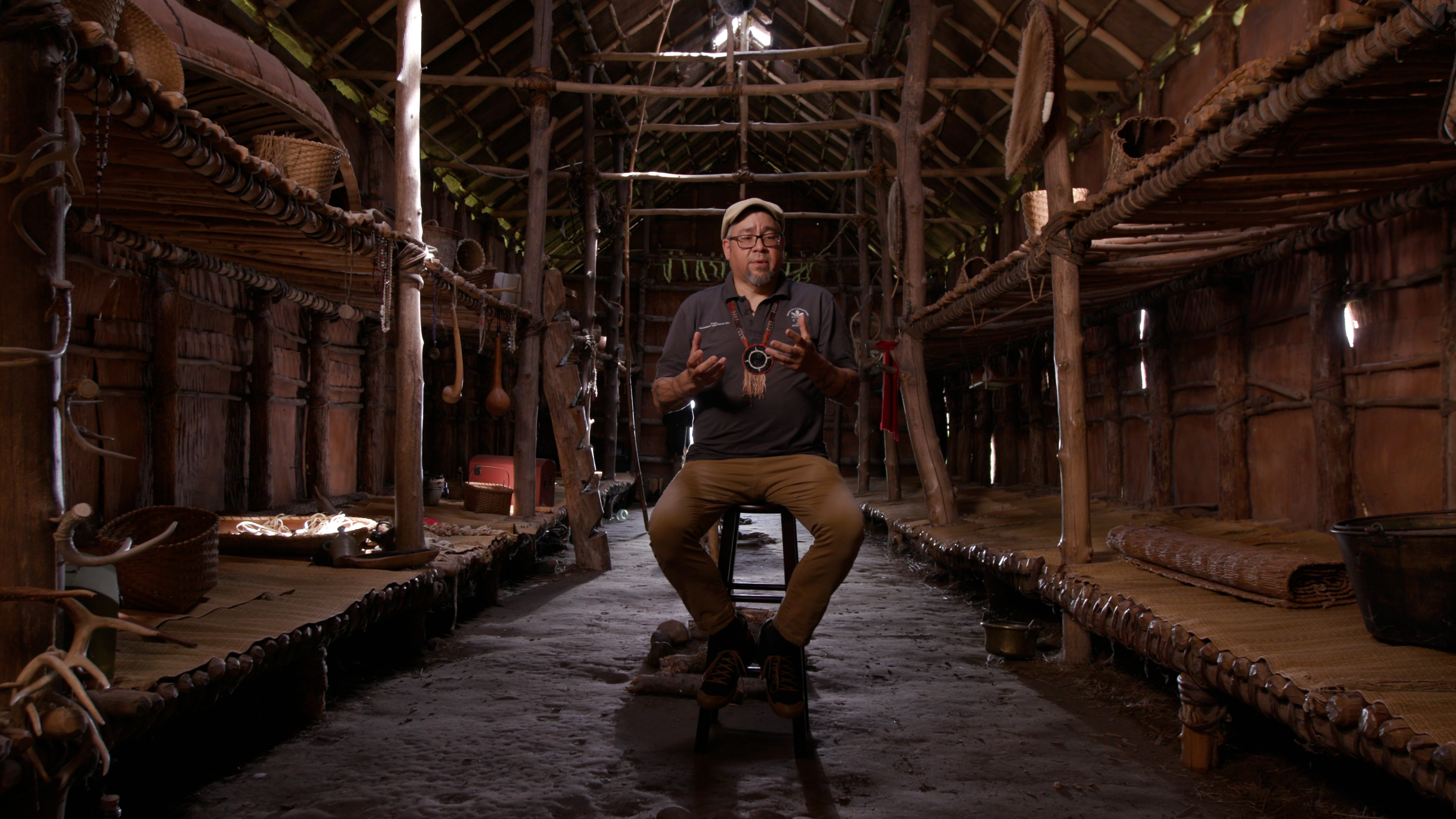
Ganondagan State Historic Site Manager Michael Galban shares powerful anecdotes about the importance of Indigenous visibility among staff in the film.
As the manager of State Parks’ only Indigenous historic site in our system, Galban, who also serves as Director of the Seneca Art and Culture Center at the site, speaks openly in the film about the benefits of visitors meeting and interacting with Indigenous staff — interpreters and environmental educators — as they take in accounts of Seneca history and present-day footprints during their visits.
For Galban, being interviewed for projects like this was something he’s quite used to. “The WHMT team was very efficient and professional,” he said, noting that the film’s producer, Nicole Van Slyke, was “well prepared and easy to work with.”

“The thing that I tried to stress during my interview is that our parks and historic sites belong to everyone, and that it’s our goal to make them welcoming and accessible to all,” said Gregory Smith, Director of the Bureau of Historic Sites. “This is at the heart of all the work we do at New York State Parks.”
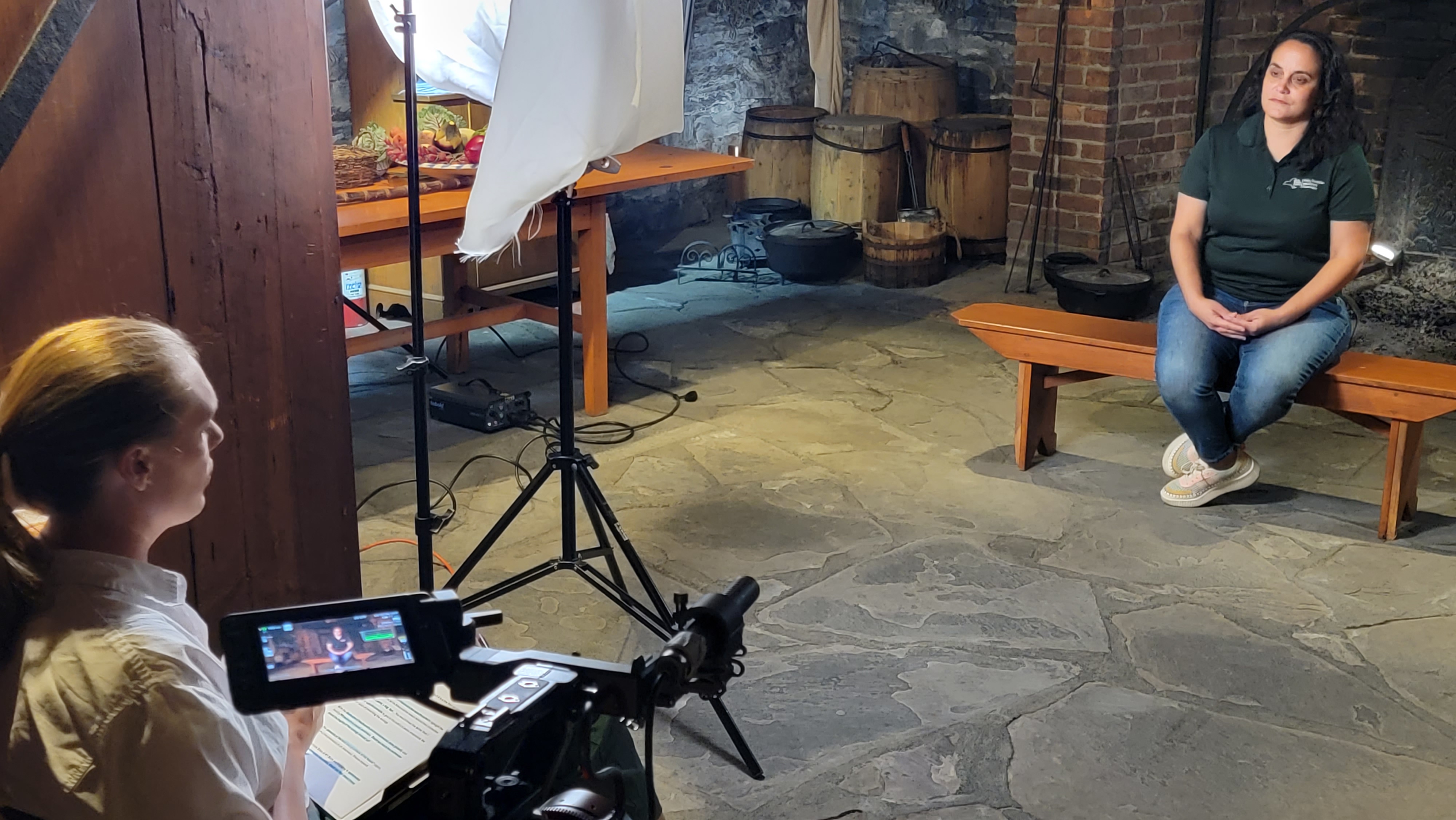
Gabriella Cebada Mora, Director of the Division of Environmental Stewardship & Planning, provides the film’s viewers with additional context regarding State Parks’ environmental legacy. From land conservation strategies of the past to stewardship and caretaking efforts necessary long into the future, Cebada Mora knows what’s at stake.
“100 years ago, State Parks began with an idea to protect New York’s natural lands from privatization and development, and to provide public access to these beautiful and iconic places,” she said. “Today, we continue to improve on that legacy, ensuring that all are welcome with a continued promise to conserve and protect these natural spaces. 100 years from now our park system will likely look different from today, however we are committed to these environments and the people and communities that love and rely on them.”
One of our favorite lines from the film is from Cebada Mora, where she talks about New York State lands:
“These places, they’re not special because they’re just state parks. Being a state park isn’t what makes them special. They were special before they were state parks.”
Tapped for not one but two roles in the film was the ever-talented Cordell Reaves, Community Affairs Coordinator for the agency’s Division for Historic Preservation. In addition to sitting for an interview with Van Slyke and the WMHT team, Reaves also voiced the doc as its primary narrator.
“The agency’s mission is important and it is something I feel strongly about,” Reaves said. “The documentary provided an opportunity to convey that to a much broader audience and express why I believe our work has a great impact across New York.”
When asked about the preparation that went into participating in the film, Reaves was reflective. “The entire process forces you to think deeply about the work we do. What motivates us. and how the work serves the public,” he said. “We all really had to think deeply about concepts and tasks we take for granted.”
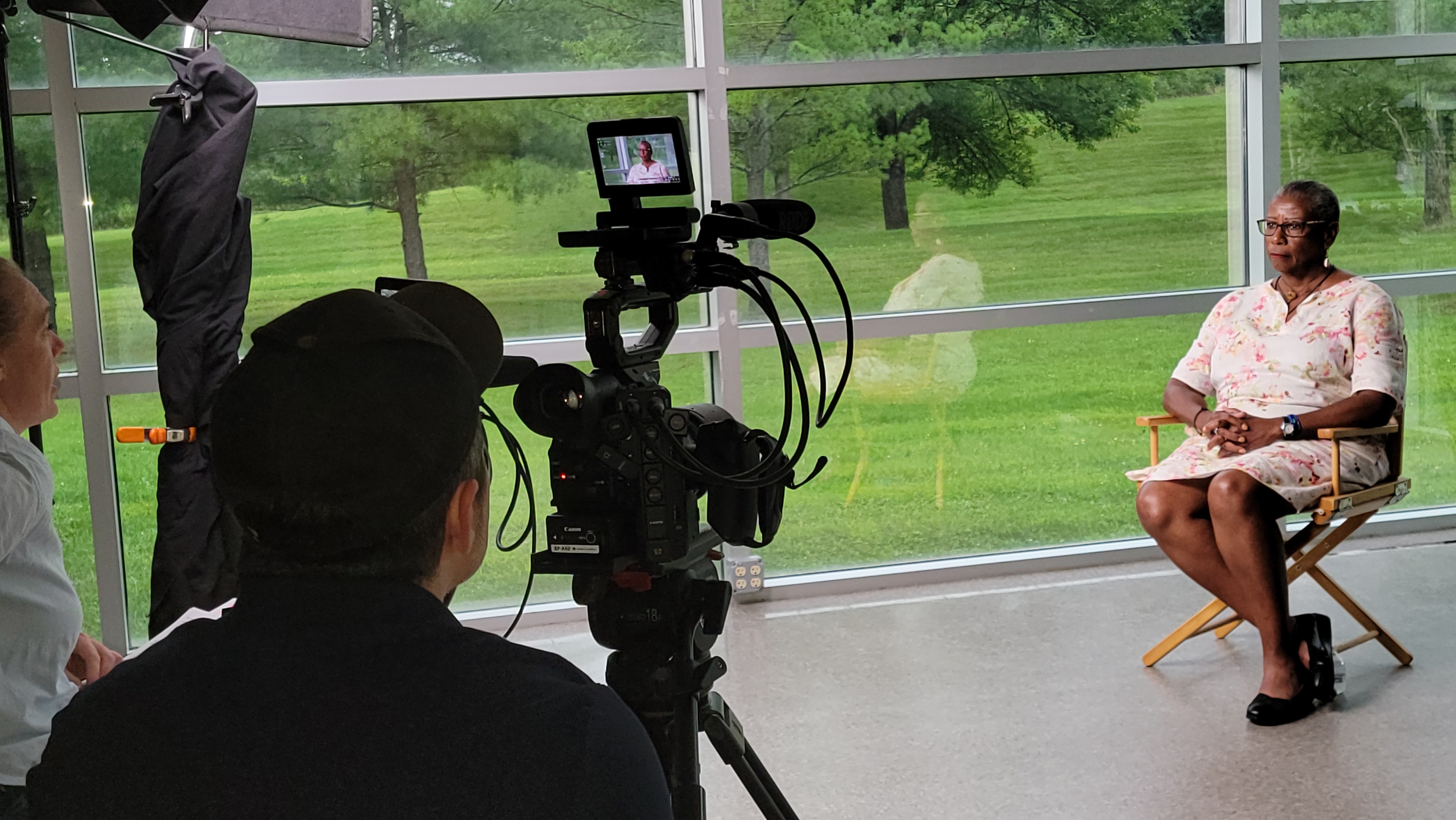
Interpreter of African American History for the New York State Bureau of Historic Sites within our agency is Lavada Nahon, another subject expert who provides a valuable perspective in ‘From Land to Legacy.’
“I enjoy sharing with people the work that we’re doing on Our Whole History, particularly my specific work on Black history,” Nahon said.
When asked what she hopes her interview comments in the film convey, Nahon mentioned the importance of “balancing out the history we share to include all people, particularly those like Africans and their descendants that typically has been left out or narrowly-focused on the horrors of slavery and not the daily lives of those enslaved and how they contributed to building New York.”
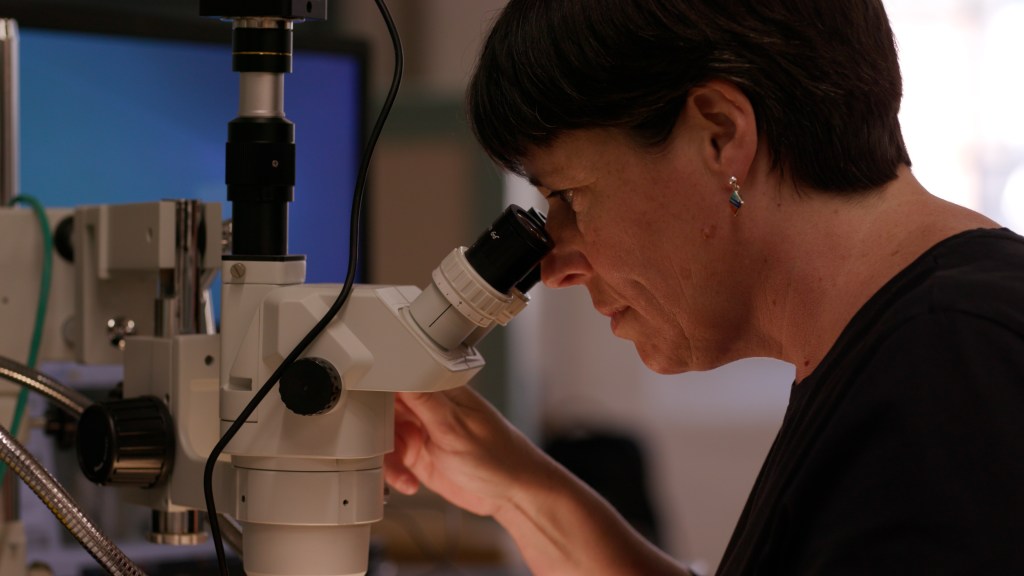
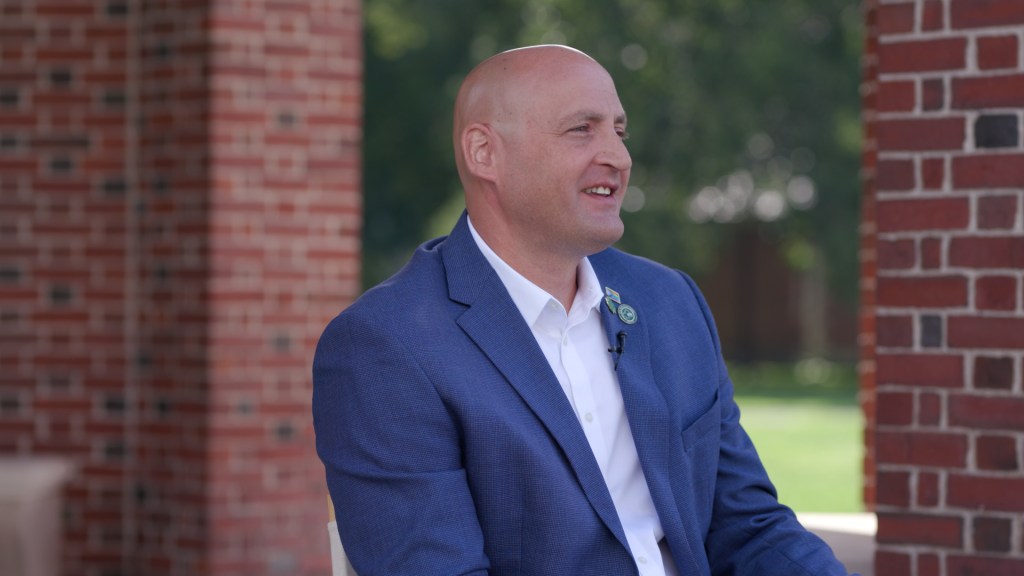

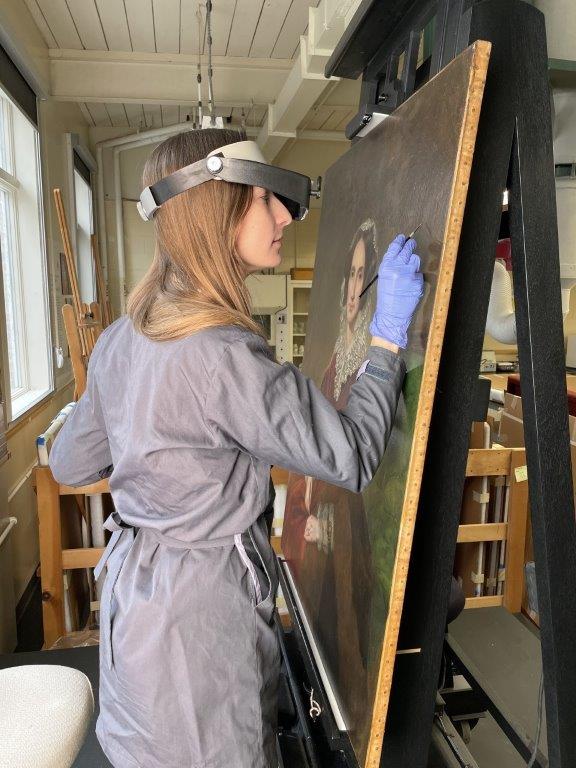
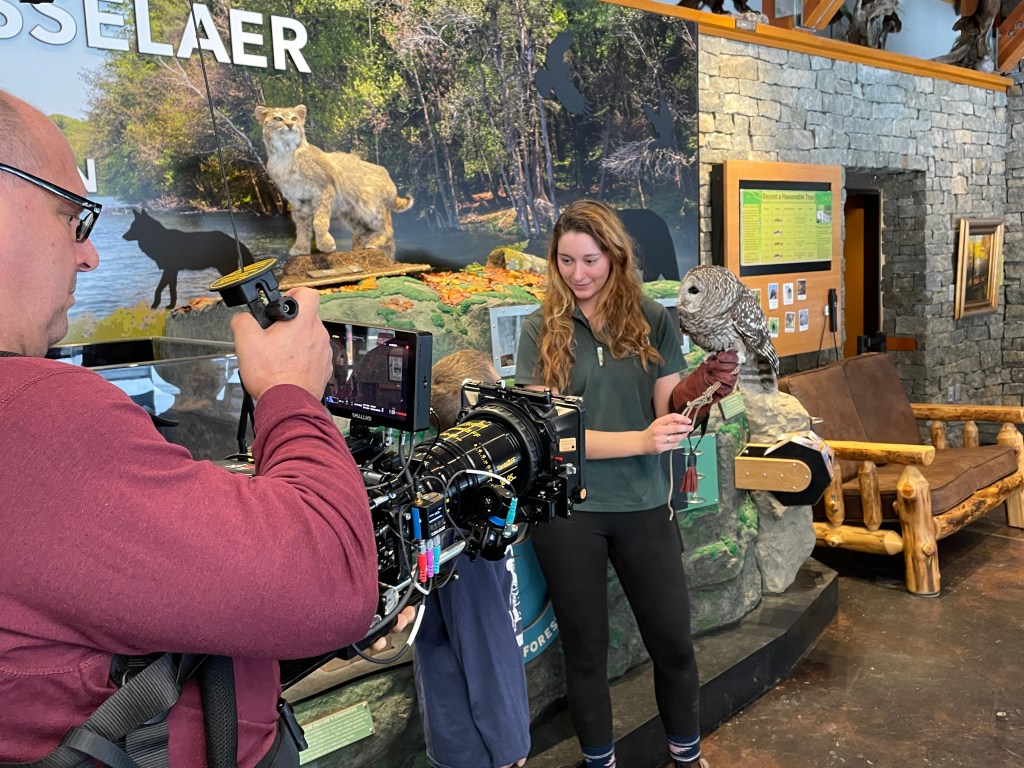
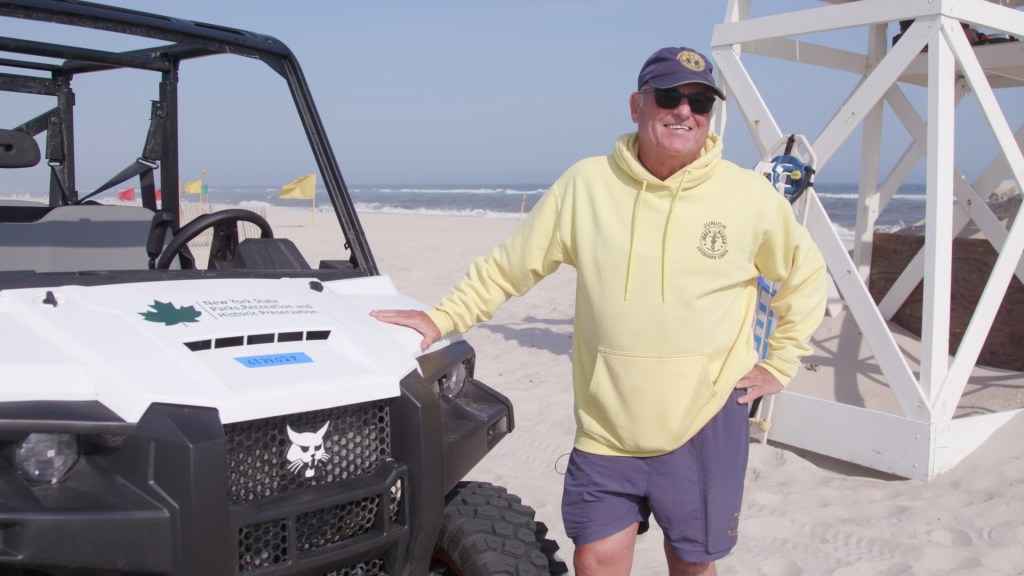
Top left: Erin Moroney. Top right: Randy Simons. Middle left: Yolanda Bostic Williams. Middle right: Elizabeth Robson. Bottom left: Savanah Wilson. Bottom right: Thomas Curtin.
There were several other staff members who participated in the documentary as well, including Architectural Conservator Erin Moroney; Paintings Conservator Elizabeth Robson; Jones Beach State Park Lifeguard Captain Thomas Curtin; Environmental Educator Savannah Wilson; Chief Diversity, Equity & Inclusion Officer Yolanda Bostic Williams; and Commissioner Pro Tempore Randy Simons. It’s been such a joy to see their wisdom and experience shared with audiences and viewers around the state.
“It was a true honor to be chosen as a staff ambassador for WMHT’s documentary,” said Bostic Williams. “I did not have that on my bingo card!”
In her interview comments, Bostic Williams took a personal approach, reminiscing on family memories that helped build her connection to New York’s state park and historic site system, as well as the importance of making our more than 250 facilities welcoming and accessible to the public.
“I would like to dedicate my portions of the interview to my beloved grandparents, Charles and Marion Jones and my family,” Bostic Williams said. “Without their love for people and nature, I wouldn’t be who I am today.”
History Research and Visual Support
In addition to WMHT’s interview footage, landscape imagery and the collecting of historical photos and documents were critical to showcasing the state park and historic site system in a beautiful and honest way.
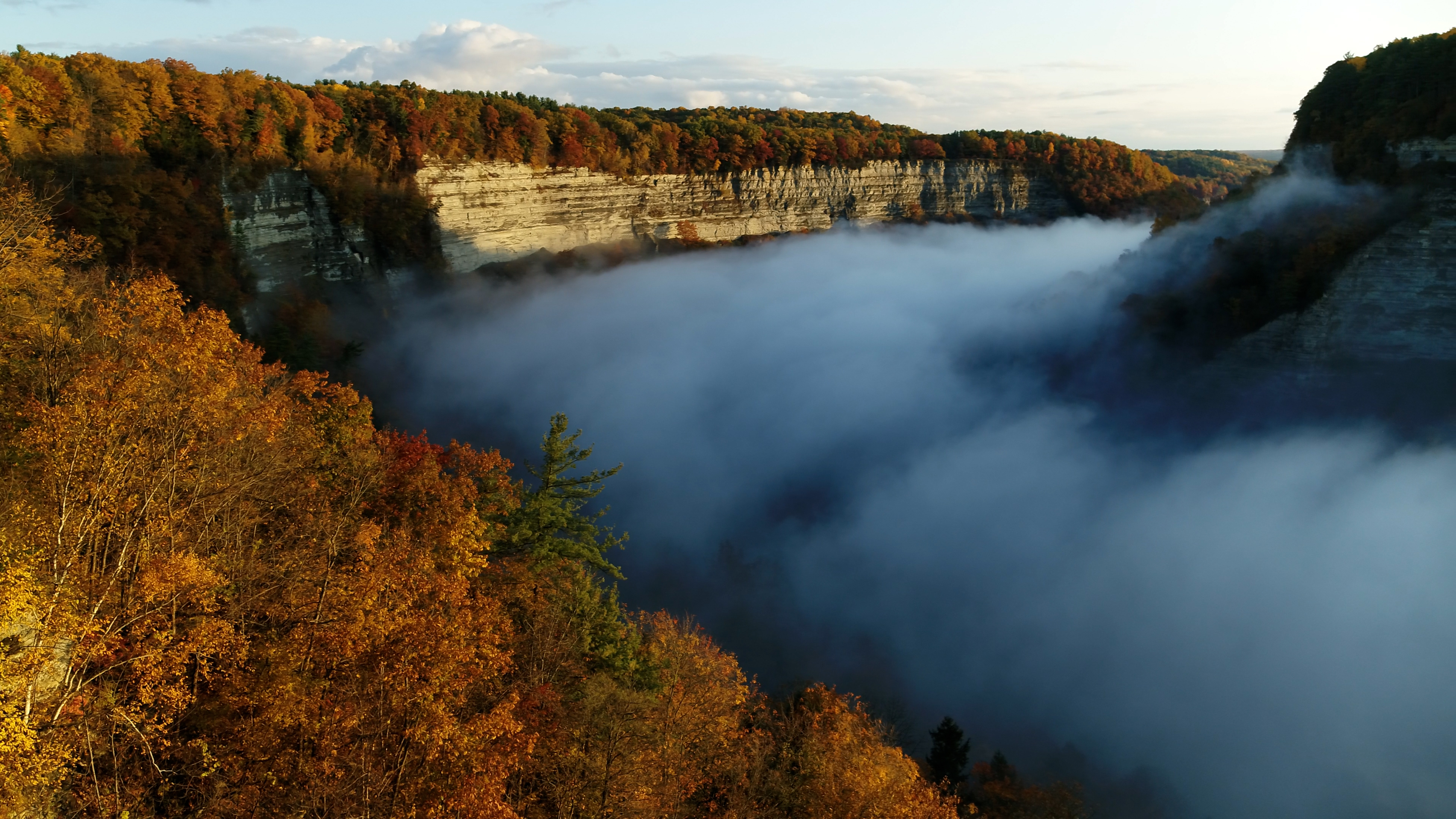

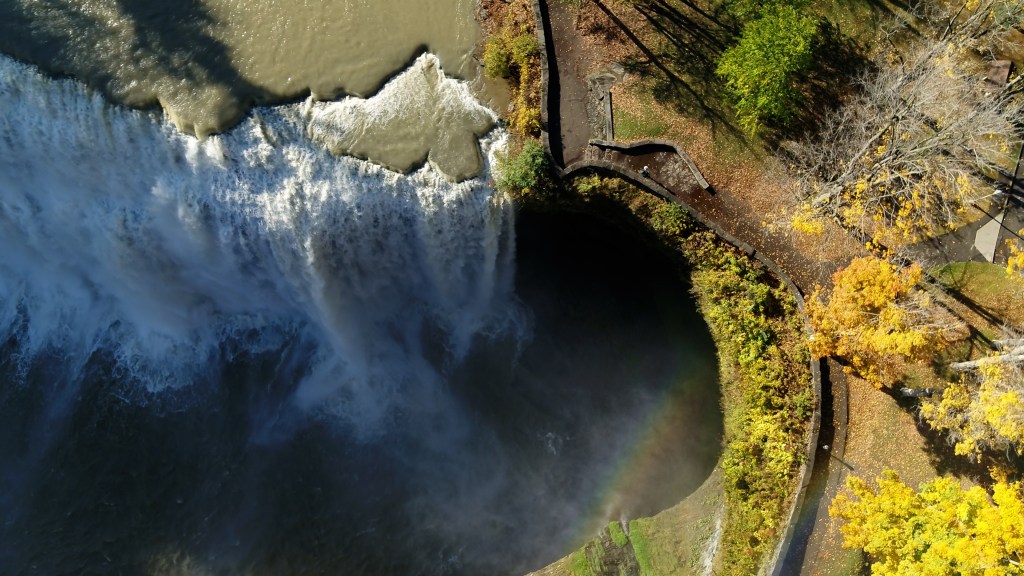
Stills from I Love NY drone footage; John Boyd Thacher State Park (top), Green Lakes State Park (bottom left) and Letchworth State Park (bottom right).
Empire State Development’s tourism-focused I Love NY team are some of the best in the business when it comes to capturing New York’s stunning outdoor spaces. Luckily, State Parks’ Public Affairs team is only a handful of floors away from I Love NY’s production team at our Albany headquarters, and they were generous with their time and footage to make this project a success.

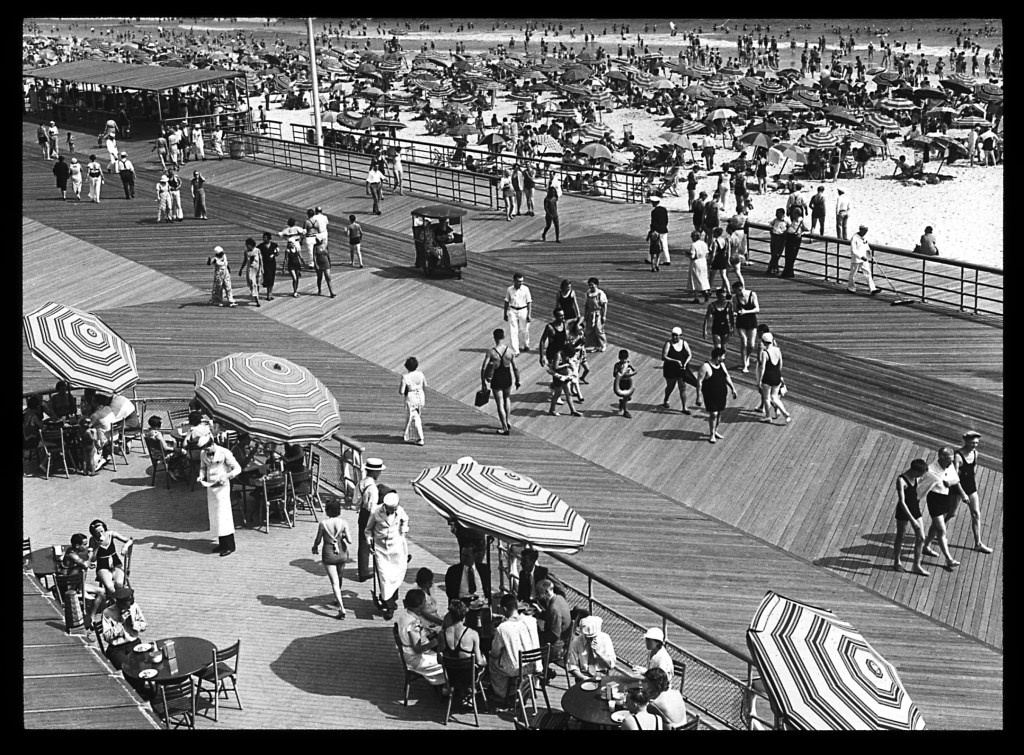
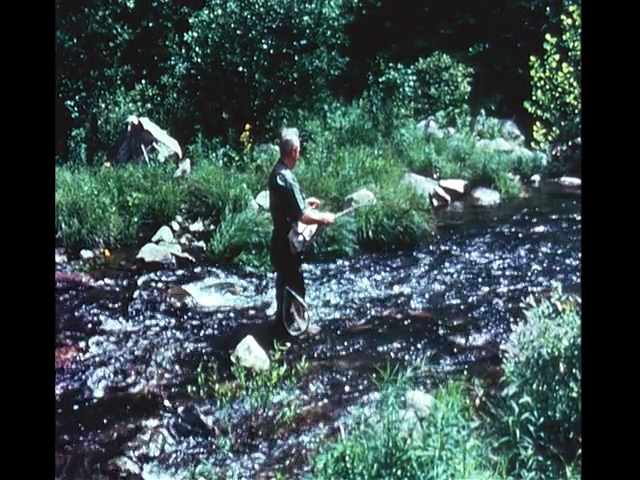
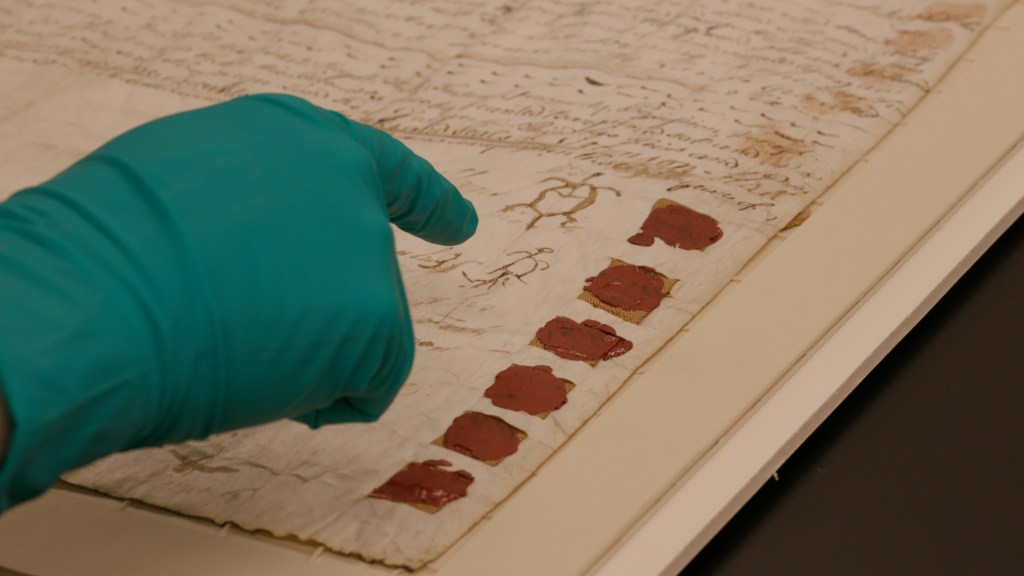
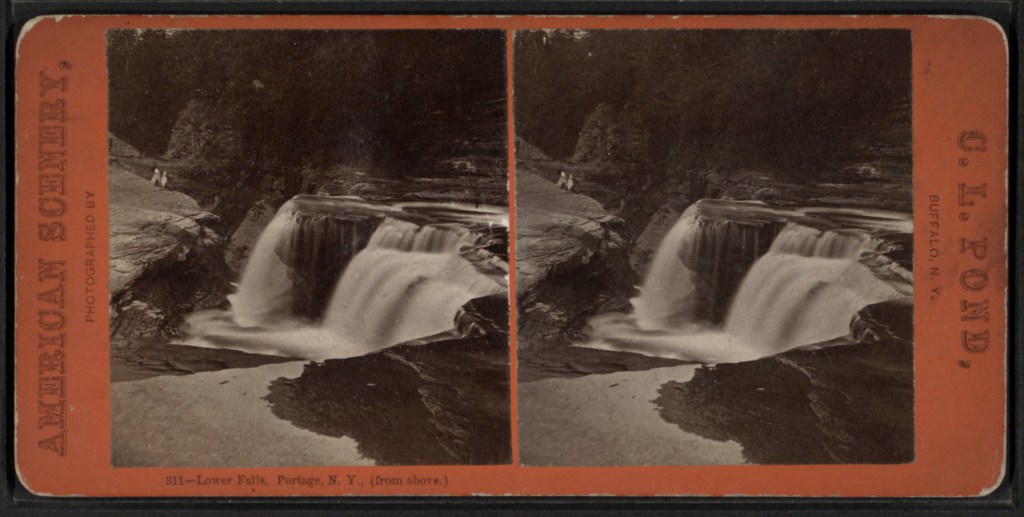
Top: The Division for Historic Preservation’s Collections Care Center located at Peebles Island State Park. Middle left: Jones Beach Boardwalk. Middle right: a screen capture of a man fishing from the promotional film, ‘The Park Along the Hudson: The Story of the Palisades Interstate Park. Bottom left: A still from ‘From Land to Legacy,’ shot in the Collections Care Center. Bottom right: Lower Falls at Letchworth SP (1870).
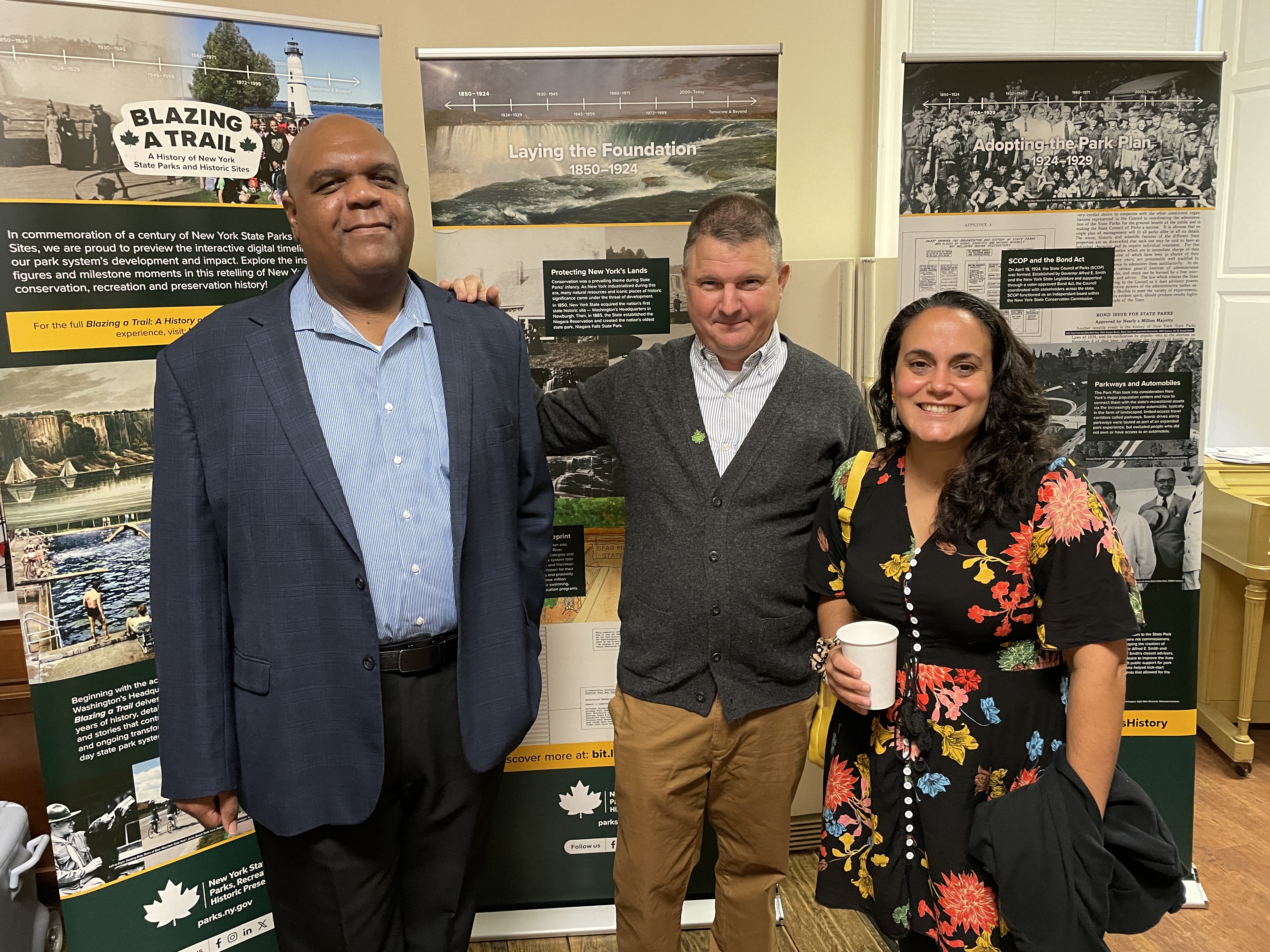
Scattered throughout the film are photographs, documents, lantern slides and footage that took time, skill, and research savvy to locate and collect. Our agency’s Historic Preservation Communications Specialist, Aine Leader-Nagy, was up to the task. Not only did her painstaking work support the ‘From Land to Legacy’ documentary visuals, but it also helped to stand up another vital project that came out of this Centennial year: the Blazing a Trail interactive digital timeline.
Leader-Nagy also played a key role in ensuring WMHT was able to film at Division for Historic Preservation’s Collections Care Center located at Peebles Island State Park. The Collections Care Center houses a number of preservation labs as well as historic collections — both of which helped provide additional visuals and context for the film.
A Masterclass from WMHT
WMHT Producer and Editor Nicole Van Slyke and her crew worked through the spring and summer of 2024 to research State Parks’ properties and history, formulate interview topics and film with our staff, and assemble the documentary piece by piece with the support we were able to provide.
Fast forward from preliminary discussions at the end of 2023 to an in-person premiere at Saratoga Spa State Park’s Spa Little Theater in early September of this year: the film is complete and ready to be shared! Projects of this magnitude generally require months, if not years, of work to be completed. But WMHT was able to bring ‘From Land to Legacy” to life in a much shorter timeframe. For that we remain in awe.
At the screening, we were pleased to have WMHT’s Vice President and Chief Content & Engagement Officer, Will Pedigo, introduce the film alongside State Parks Commissioner Pro Tempore Randy Simons. After the screening, Van Slyke moderated a panel with Simons, Krattinger and Cebada Mora, answering audience questions about how the public could support the future of New York’s precious state lands and cultural resources.
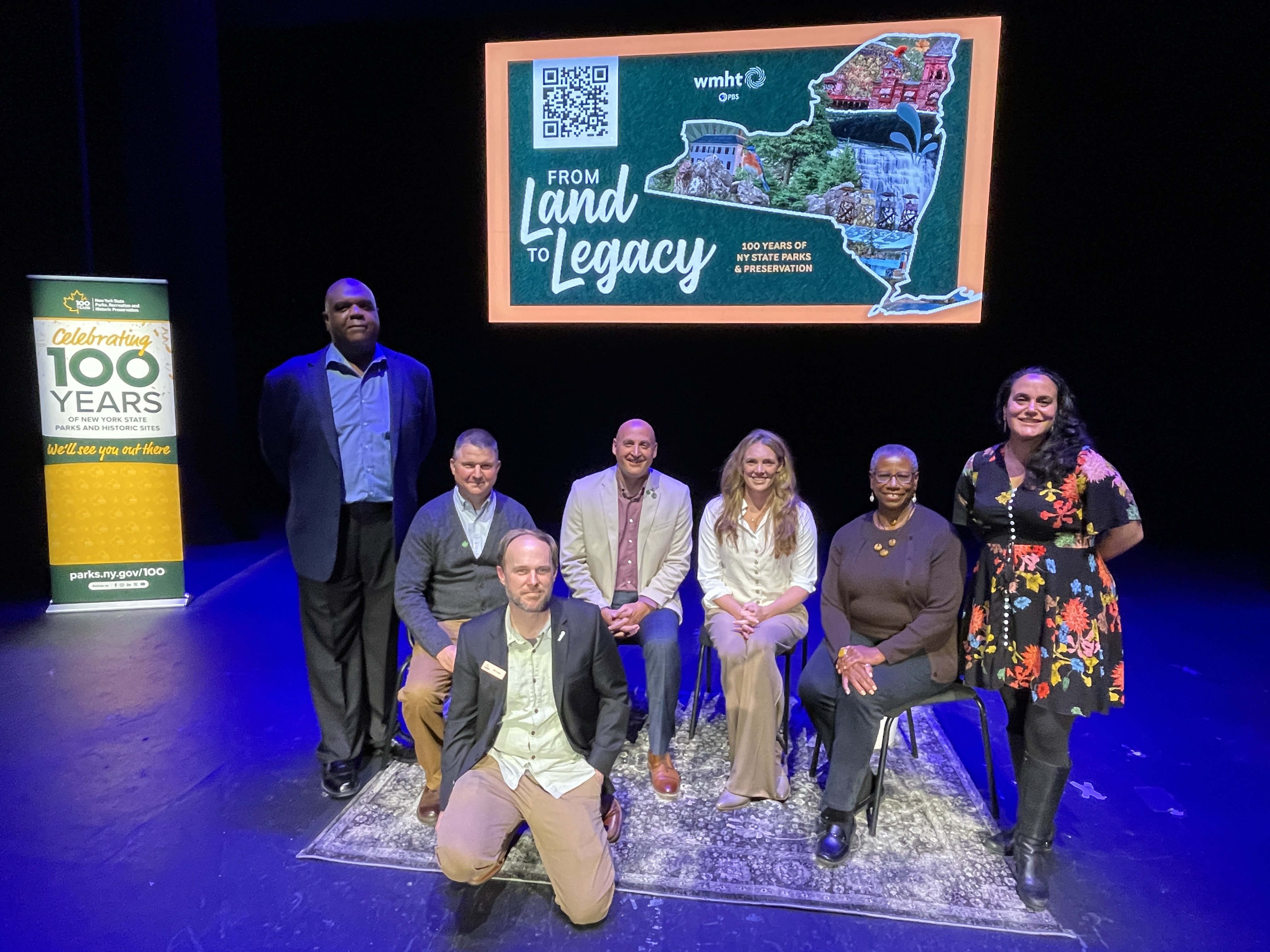
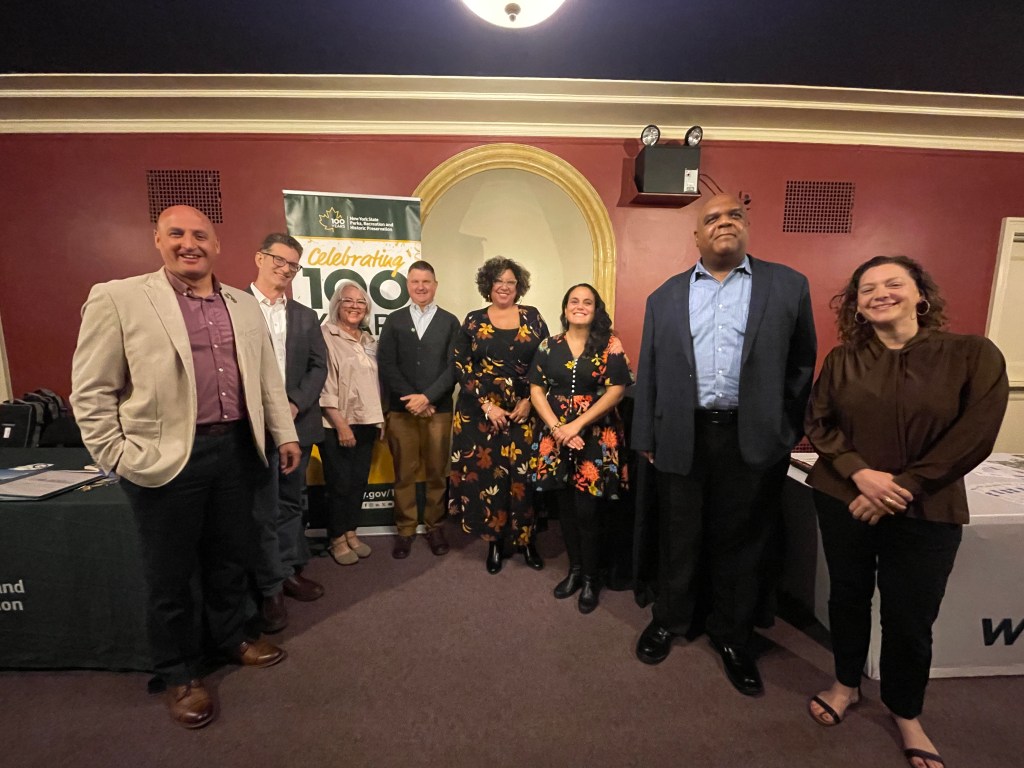
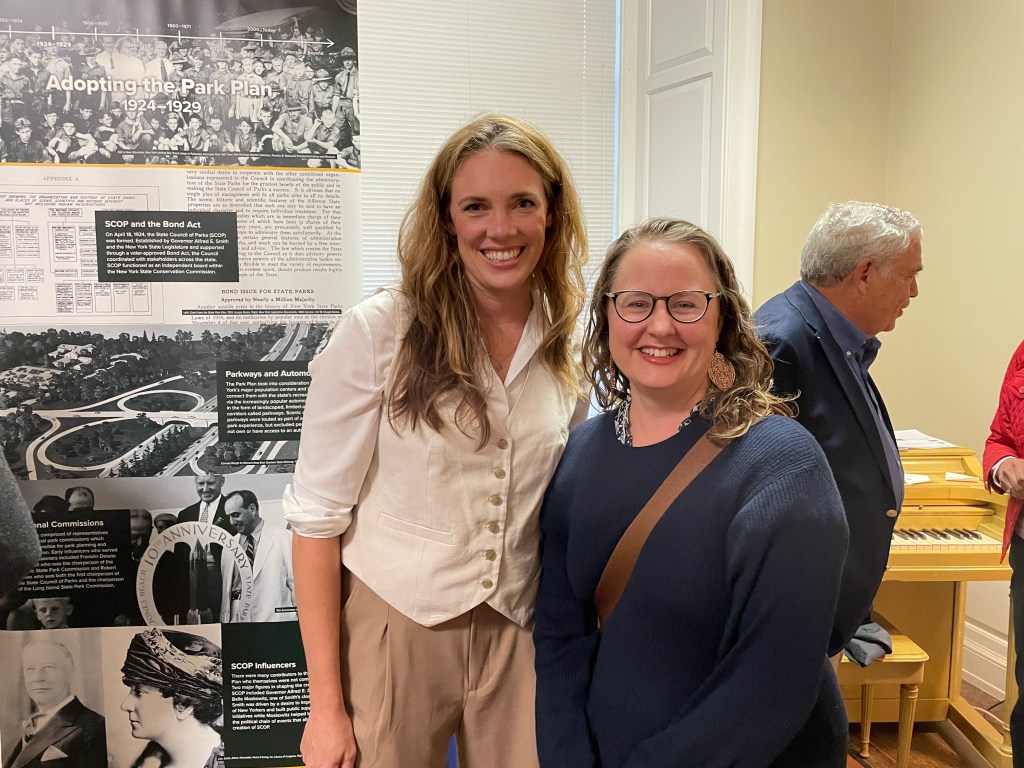
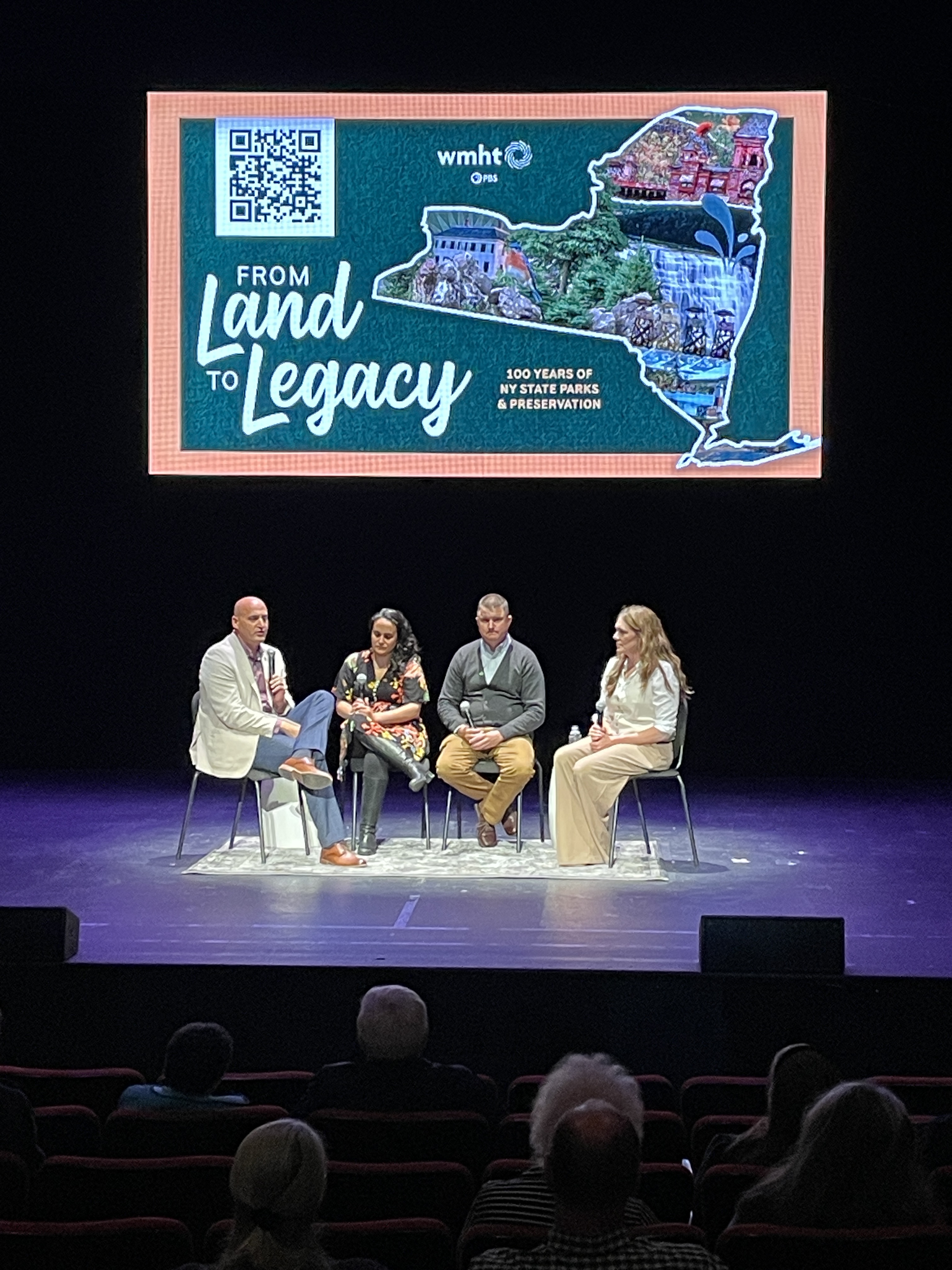
Top: On-stage group photo of State Park and Historic Site staff with WMHT’s Will Pedigo and Nicole Van Slyke from the premiere screening held at the Spa Little Theater. Middle left: State Parks staff at the screening. Middle right: Nicole Van Slyke and Aine Leader-Nagy in the screening’s green room. Bottom: Commissioner Pro Tempore Randy Simons, Gabreilla Cebada Mora, William Krattinger and Van Slyke during the premiere’s panel.
Through WMHT’s lens, our incredible staff was able to meet this moment and help tell State Parks’ story. Setha Low, Director of the Public Space Research Group, also provided a vital voice in the film, rounding it out with essential context and thought-provoking anecdotes. Together, these perspectives helped the film to present researched history prior to the Office of Parks, Recreation and Historic Preservation’s formalization as a state agency as well as a summary of our present-day identity and offerings, all while underscoring our impact on and goals for future generations.
“It was a remarkable experience and opportunity—my only hope is that my commentary helps to elevate the public’s perception and appreciation of who we are, where we came from, and where we’re going as an organization,” said Krattinger.
To all of the staff members who participated in the PBS / WMHT documentary, ‘From Land to Legacy,’ thank you for your contributions to this film. We now have an incredible tool that explains our history and mission — one that we’ll undoubtedly use for years to come. To other staff members who provided support, including Dan Keefe, Daniel Mackay, Daniel McEneny, Travis Bowman, Kathy Howe, Kjirsten Gustavson, and Andrea Cerbie Marvinney, I hope you feel very proud of this moment.
If you haven’t seen it yet, you can stream ‘From Land to Legacy’ on demand here.
-Written by Lacey Seidman, Deputy Public Information Officer with support from Kate Jenkins, Public Affairs Digital Specialist.
 New York State Parks and Historic Sites Blog