
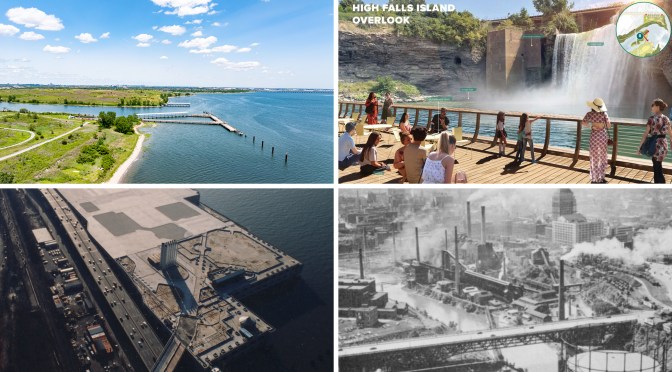
Green space and recreation don’t always come to mind when thinking about infrastructure. However, at New York State Parks, they go hand in hand. Across New York, our state’s infrastructure is getting a second chance at serving communities. What once was a factory, railroad, or hospital is now a space for New Yorkers to get outside, get some exercise, and disconnect from their electronic devices. In this series, we are highlighting a bit of the history from your favorite state parks and showing how they once served a very different but equally important purpose to our state.
This second installment of the Second Act for Infrastructure series invites you to punch your timecards and learn about the state parks built from former industrial infrastructure! Including a landfill, quarry, mills and water treatment facilities, these sites served an important purpose in the development of their communities. Today, they continue to aid in their community’s development as places where residents can learn and play.
This article highlights three locations with extensive histories as industrial centers. There are many other state parks and historic sites with similar stories not included in this article. You can learn a more about them and the featured parks in our interactive timeline, Blazing a Trail.
Read on and see why green is the new gray!
High Falls State Park
High Falls State Park is in active development and is poised to transform the City of Rochester. High Falls State Park will be built on 40 acres of land that was once at the core of Rochester’s industrial heart. The strong currents generated by the flow of the Genesee River and namesake High Falls made this location an ideal place for water-hungry factories and mills to set up. And set up they did.
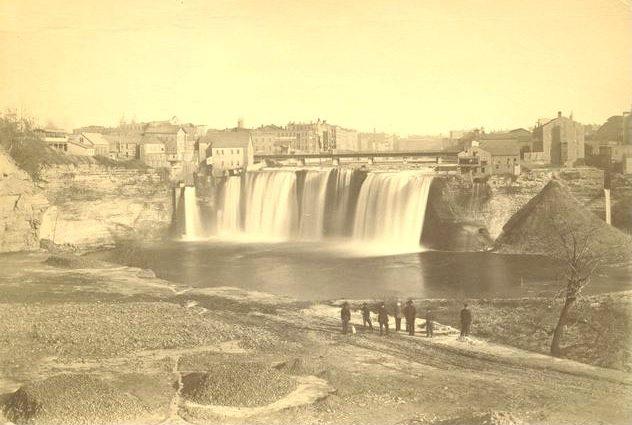
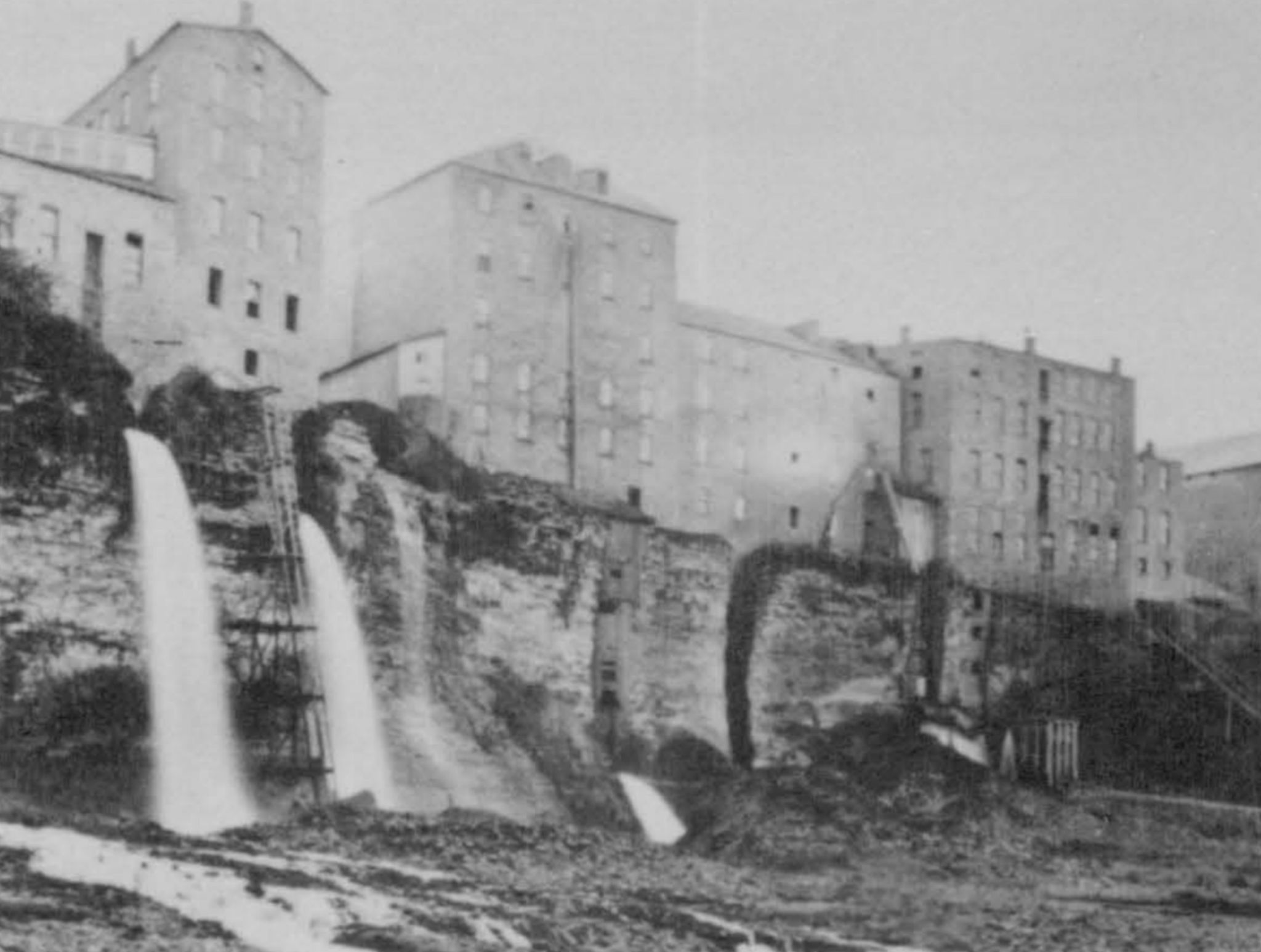
In 1815, Francis and Matthew Brown began excavation of a mill race around the falls. This mill race provided power to water wheels and allowed for factories to be built, most notably flour mills. Known today as the “Flower City,” Rochester was once the “Flour City,” producing the majority of America’s flour, thanks in part to this new industrial zone. Just over 40 years later in 1857, development around High Falls picked up significantly. Breweries like Reisky & Spies Brewery, which later became Genesee Brewing, were established, along with an incinerator plant. Parts of the incinerator will be incorporated into the future state park. Ruins from the building and smokestack will make up Incinerator Plaza – a space for events, performances and community gatherings.
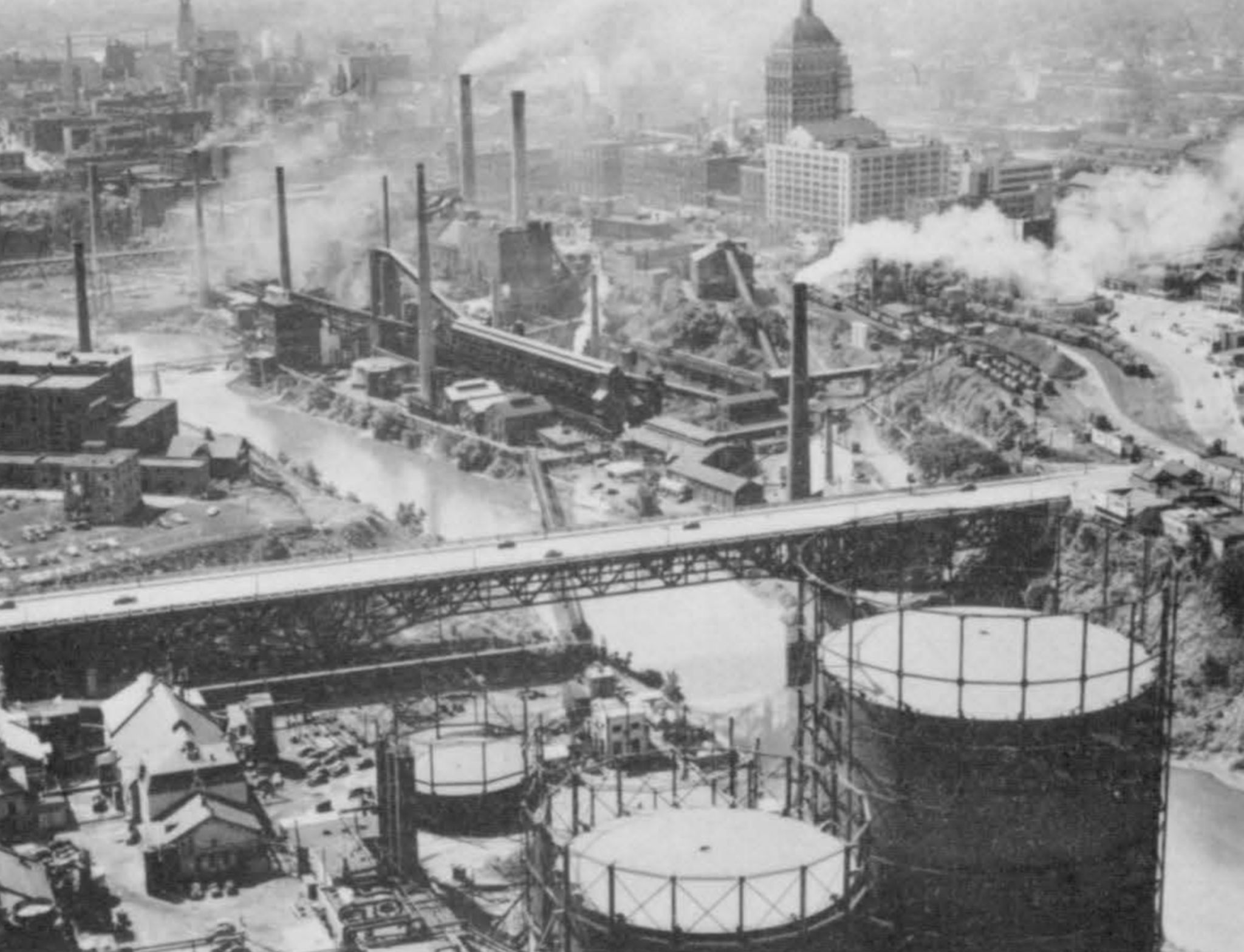
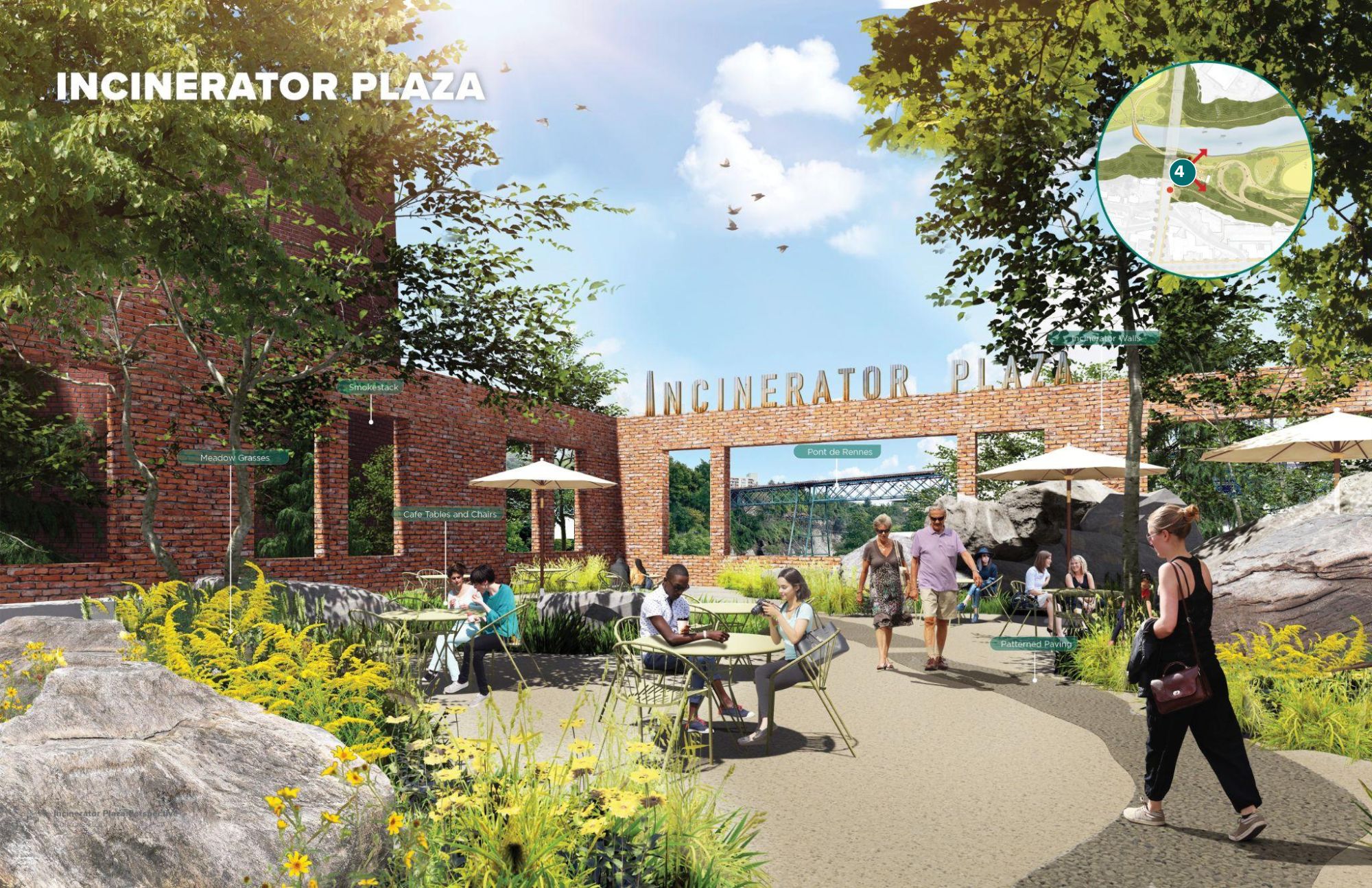
Just before the turn of the twentieth century, electricity generation at High Falls began. Coal, gas and oil were used along with hydroelectricity to generate power for the growing city, notably at Beebe Station. Built into the walls of the gorge, the plant was used until 1999. While these and other sites transformed Rochester into a hub for innovation, they also left scars on the surrounding environment. Ash and heavy metals from nearly 200 years of industry contaminated much of the gorge. Development required extensive clean up and environmental remediation.
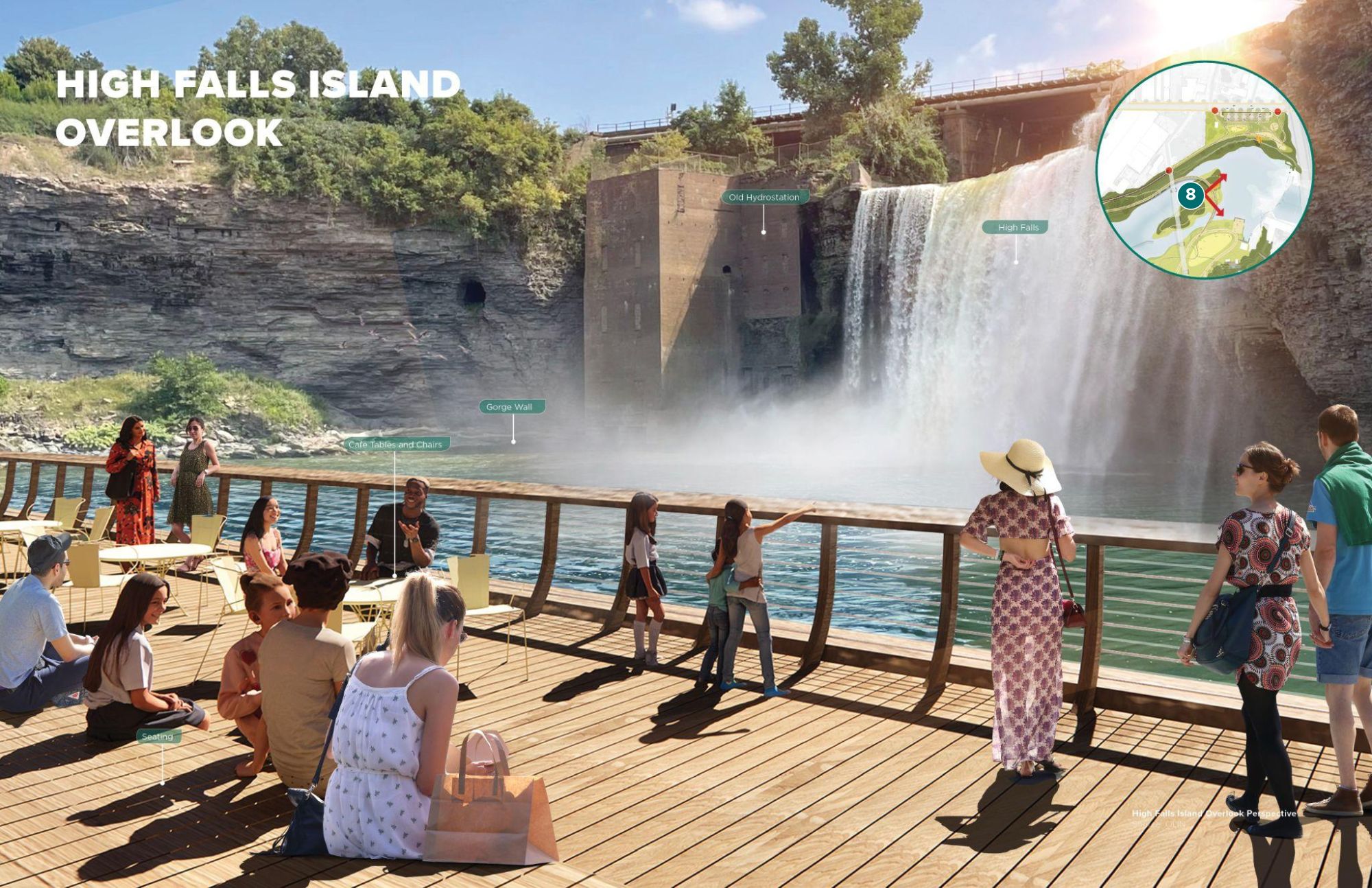
With the much of the clean-up complete and the remaining remediation expected to finish soon, plans can begin moving forward that will make High Falls State Park a reality. The framework plan calls for the creation of new viewing areas, walking trails, playground and spaces for events.
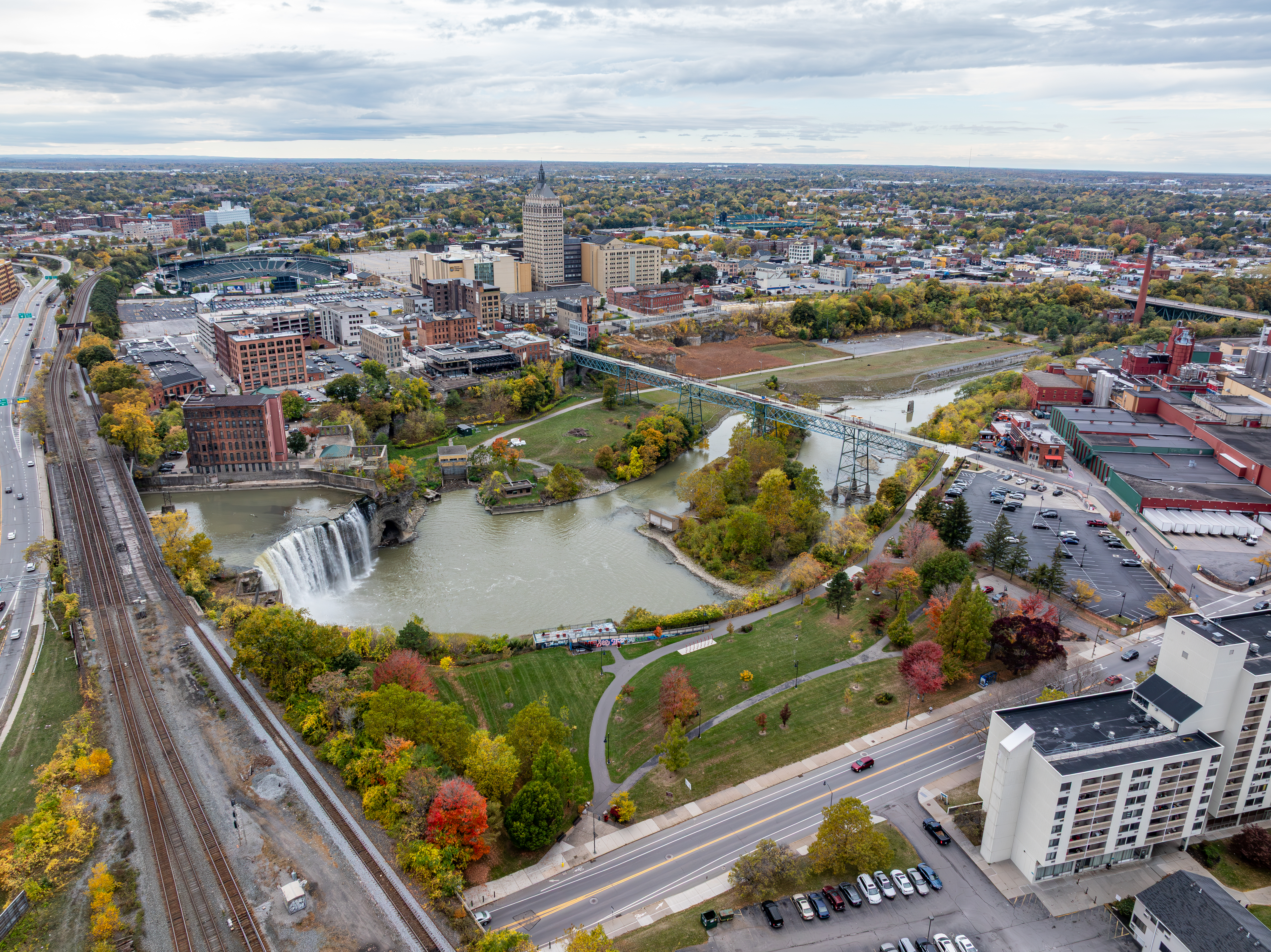
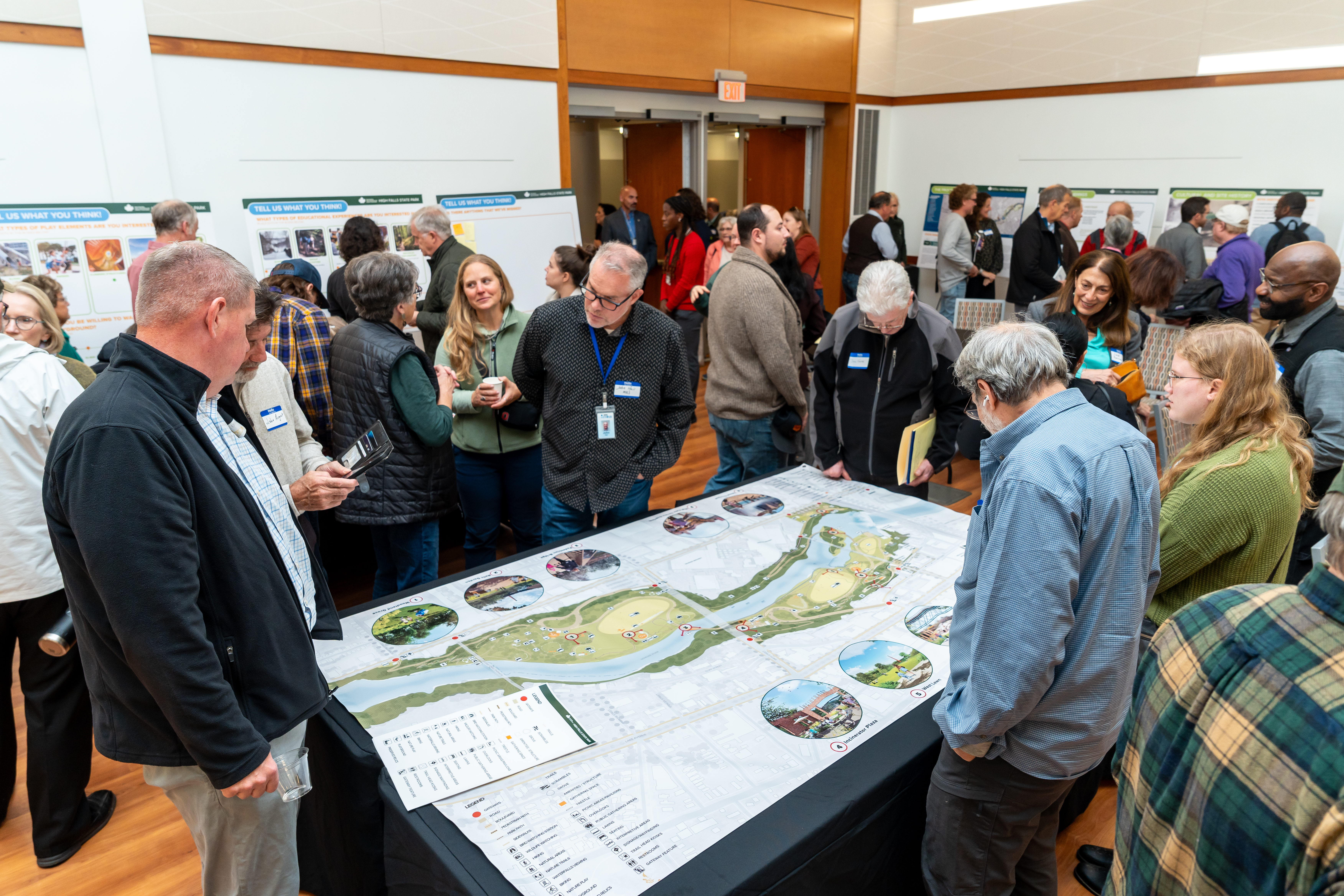
Recent community meetings have been vital in solidifying the framework and have given residents the opportunity to shape the future of a new state park and of their downtown. Explore the proposals and even more park history for yourself by visiting the High Falls State Park website.
Shirley Chisholm State Park
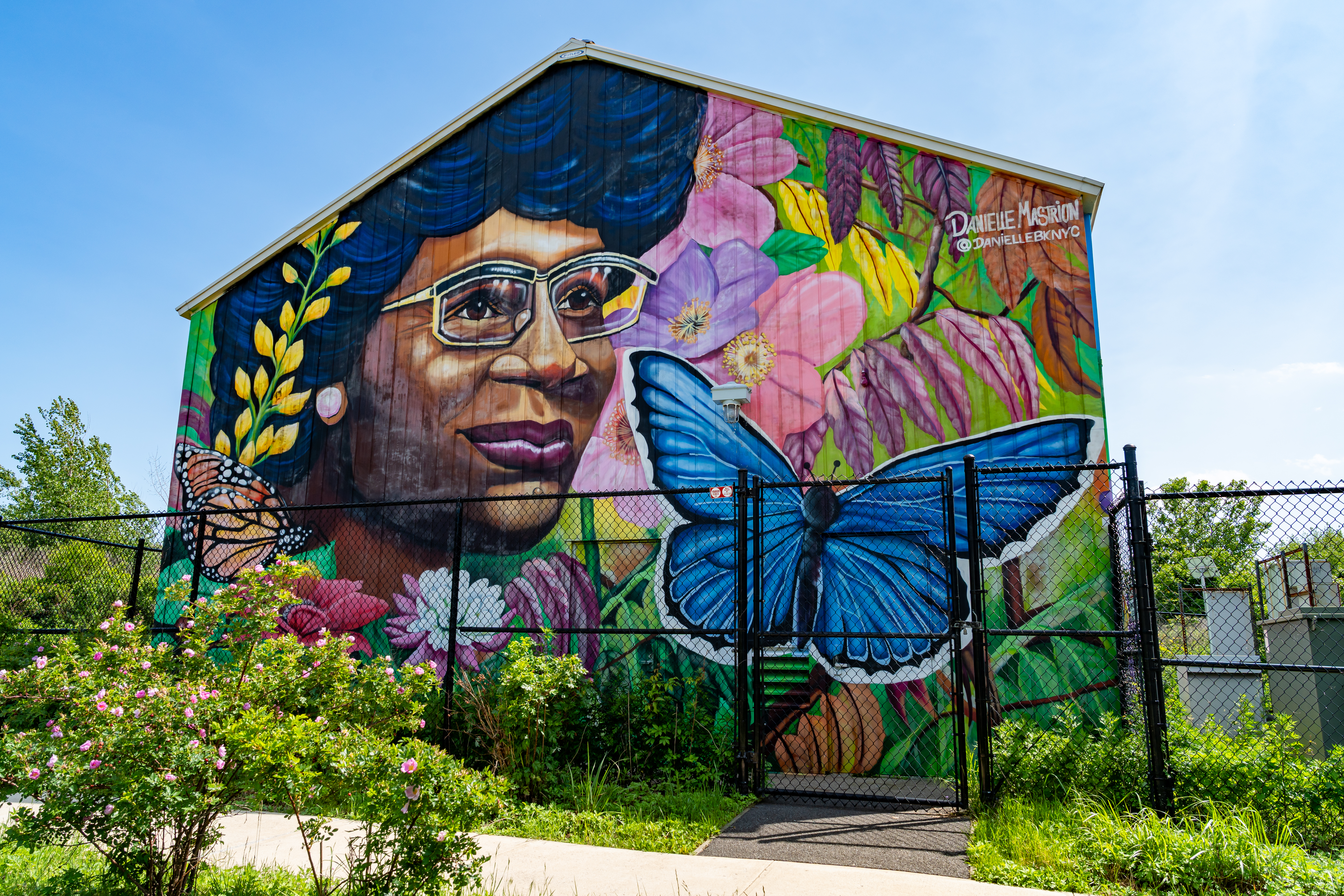
For a completed success story, look no further than Shirley Chisholm State Park! Located on the shores of Jamaica Bay in New York City, Shirley Chisholm State Park is a 400+ acre site that rises 130 feet above sea level, with rolling hills, dense wetlands, and a fantastic view of the distant New York skyline. Home to diverse wildlife and miles of trails, Shirley Chisholm State Park serves as both a nature and recreation preserve.
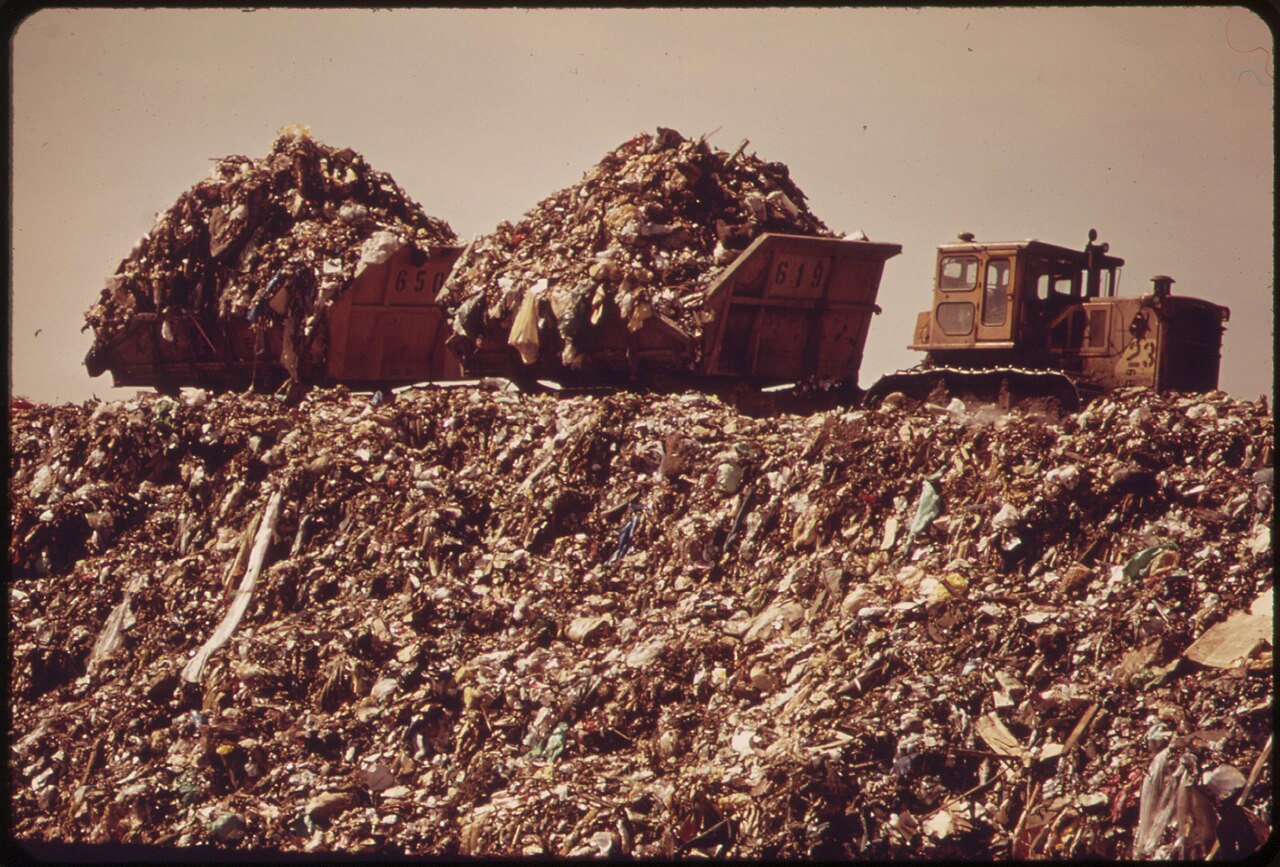
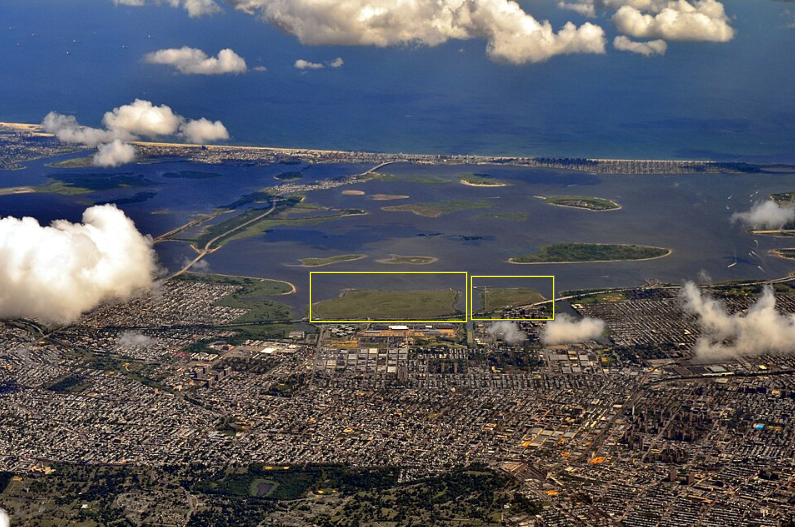
It wasn’t always like this, though! What we now call Shirley Chisholm State Park was once a pair of landfills known as the Pennsylvania Avenue and Fountain Avenue landfills. Originally proposed as a part of Spring Creek Park, landfills opened instead in 1956. The New York City Department of Sanitation managed these landfills for several decades and like most dumps, accepted several different types of waste. From municipal (the kind you put on your curb) to industrial (ash, demolition debris, oils), the site was a catch-all for much of the city’s waste. At their peak, the landfills took in nearly 8,200 tons of trash each day, which added up to roughly 40 percent of New York City’s waste! All that trash created serious ecological concerns. The landfill was a neighborhood nuisance of bad sounds, sights and smells, particularly for the residents of the nearby Starrett City housing development.
In 1972, hope for a park returned. Congress created the Gateway National Recreation Area around parts of the New York metro area, including Jamacia Bay, Staten Island and Sandy Hook, NJ. Managed by the National Parks Service, the area was created with the goal of providing new recreation opportunities for city residents. This came with the added benefit of environmental protections and habitat restoration. As a result, the city closed both the dumps, along with many others across the five boroughs. While the Pennsylvania Avenue landfill closed in 1979, it would take six more years for the Fountain Avenue landfill to cease operation in 1985. As one might imagine, landfills are not particularly clean places. Much of the waste disposed of at the site left the environment heavily polluted and in no shape for a park.
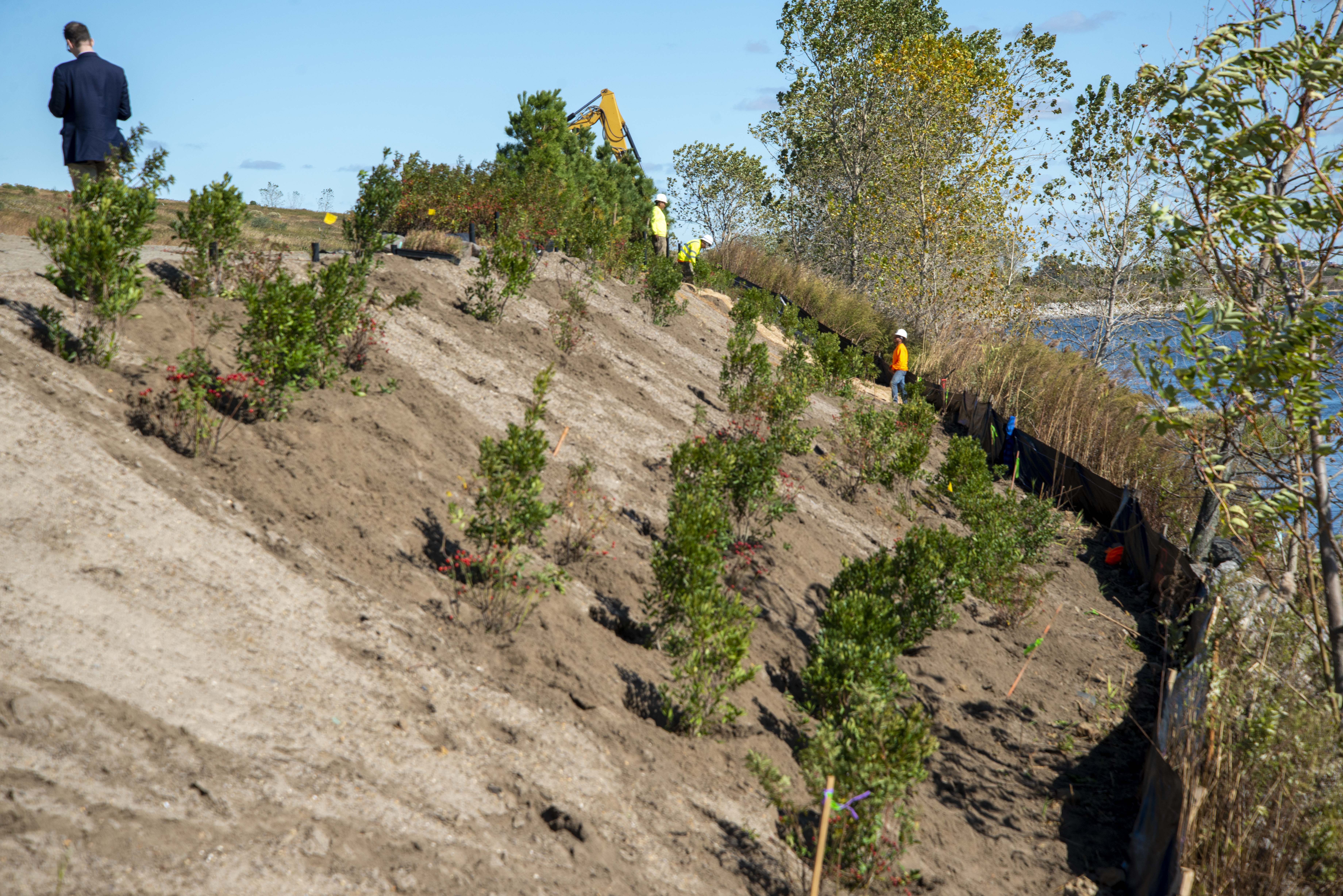
By 1991, both sites were declared as Superfund sites, which unlocked funding to clean up and restore the lands which the dumps once occupied. When remediation of the 407 acres of land began, the first steps were to install an impermeable plastic cap and a below-ground barrier to fully encapsulate the landfills and support future reuse. A below-grade methane gas piping system was also installed throughout the property so that gas from decomposing waste could be carried safely to the property’s two flares. On top of these protection measures, more than 1.2 million cubic yards of clean soil – enough to fill nearly 100,000 dump trucks – was spread up to four feet deep across the site. More than 35,000 trees and shrubs, and native grassland species were also planted, creating prairieland and supporting a diverse ecosystem of coastal meadows, wetlands, and woodlands. As wildlife began to return, so did people.
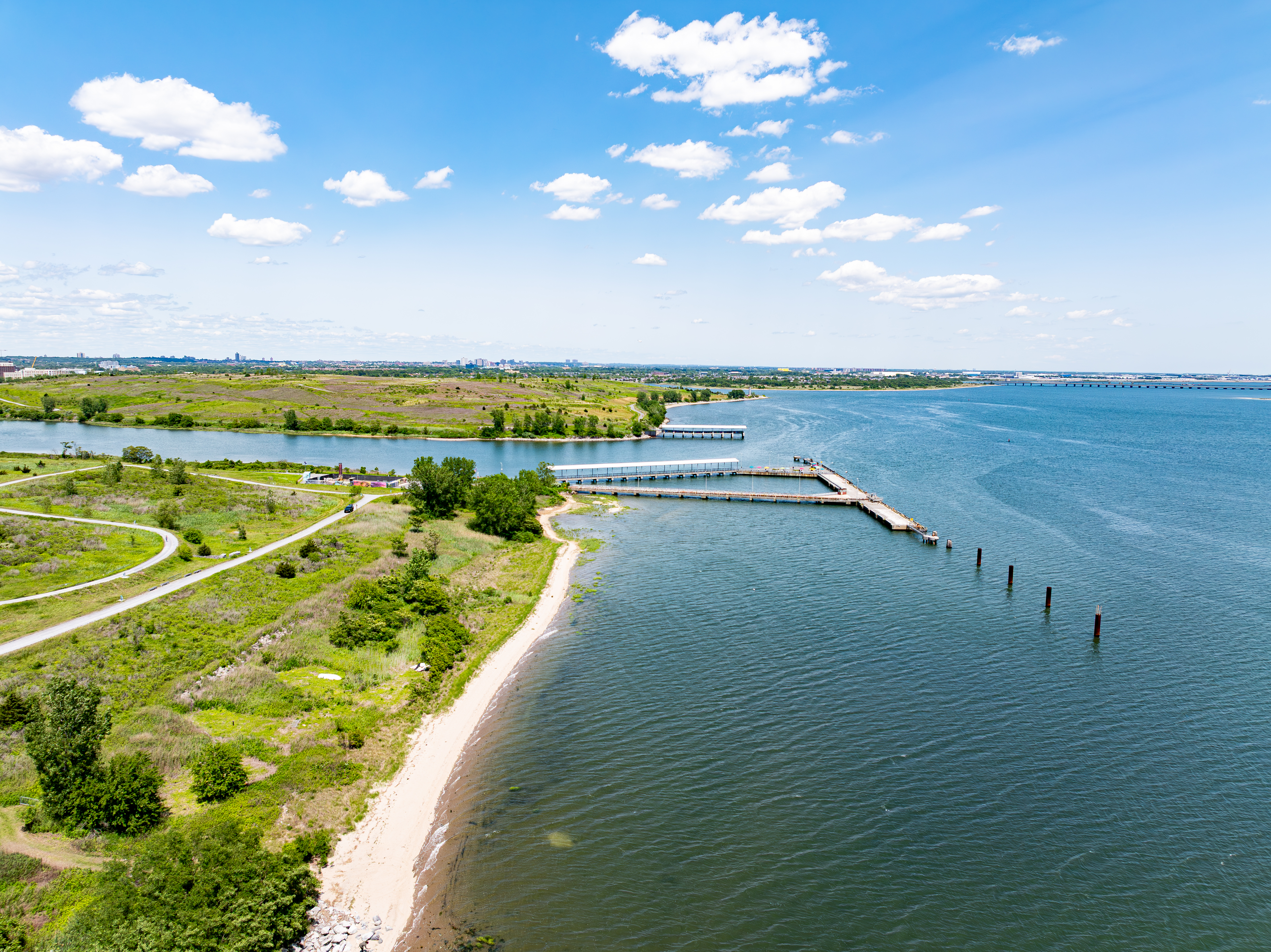
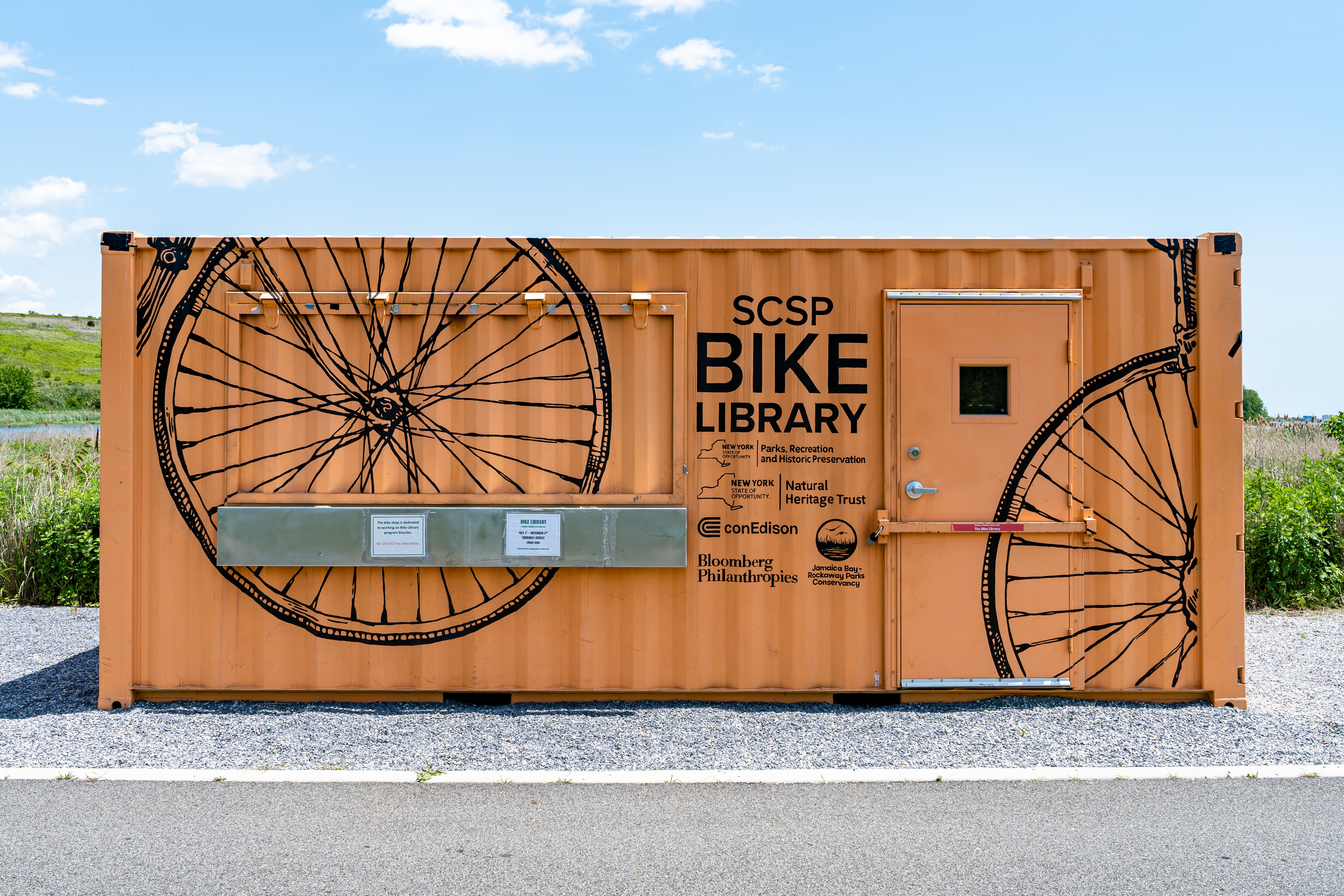
Shirley Chisholm State Park first opened to the public in 2019, just before the COVID-19 pandemic. One of the largest state parks in New York City, the park boasts miles of trails, areas for picnics, scenic views and even a bike library that is housed in a reclaimed in a storage container. Visitors of the park do not need to pay for entry, and they can enjoy free bike rides and environmental education programming as well! The park is named for famous Brooklynite Shirley Chisholm, the first Black Congresswoman, and first Black person to run for President of the United States.
Riverbank State Park
Harlem’s unique, community recreation-focused Riverbank State Park is another example of how New York State Parks makes green from grey. The park is built on the rooftop of a wastewater treatment plant in the Hudson River and took decades to build. More than 3 million visitors come annually, making it one of the most popular in our system.
Prior to environmental protection laws, many municipalities discharged raw sewage into rivers, streams and oceans. It doesn’t take a creative mind to see why this might not be a great idea for the health of residents and wildlife downstream, especially in a densely populated city like New York. That is why in the early twentieth century, New York enacted a pollution control plan that, among other proposals, called for the creation of wastewater treatment facilities. Added to the 1941 plan, construction on the North River Wastewater Treatment Plant would not start until 1972. This facility is an important part of the city’s sewer system and is capable of processing 340 million gallons of water every day, protecting the health of millions of New Yorkers in the process.
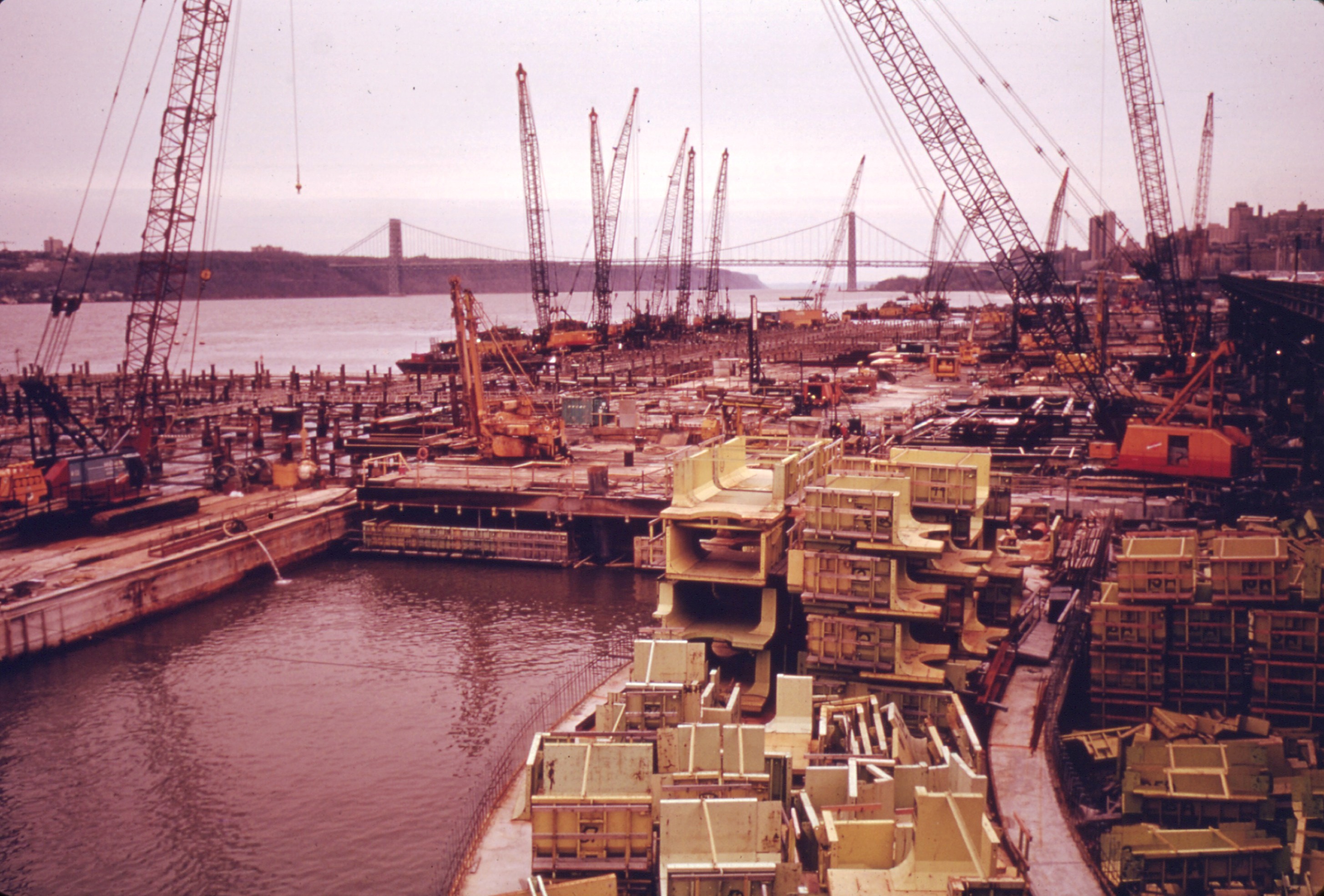
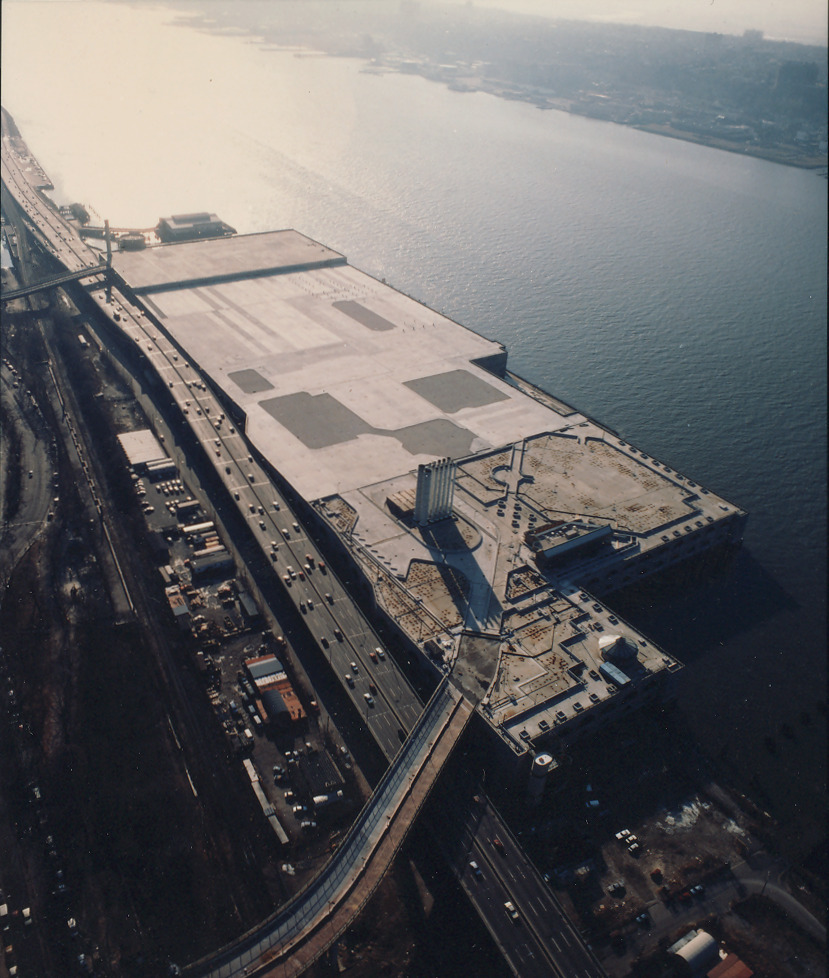
By 1991, the wastewater plant was finally complete. Two years later, Riverbank State Park was open to the public. Although designs were proposed in 1969, the park had to wait for the rooftop of the wastewater treatment plant to finish before construction could begin. This decades-long process and changes in the project’s budget led to multiple design changes until the current iteration of the park took shape. Inspired by Japanese rooftop parks, this type of urban greenspace transforms an otherwise unsightly place into a place of both natural beauty and fun.
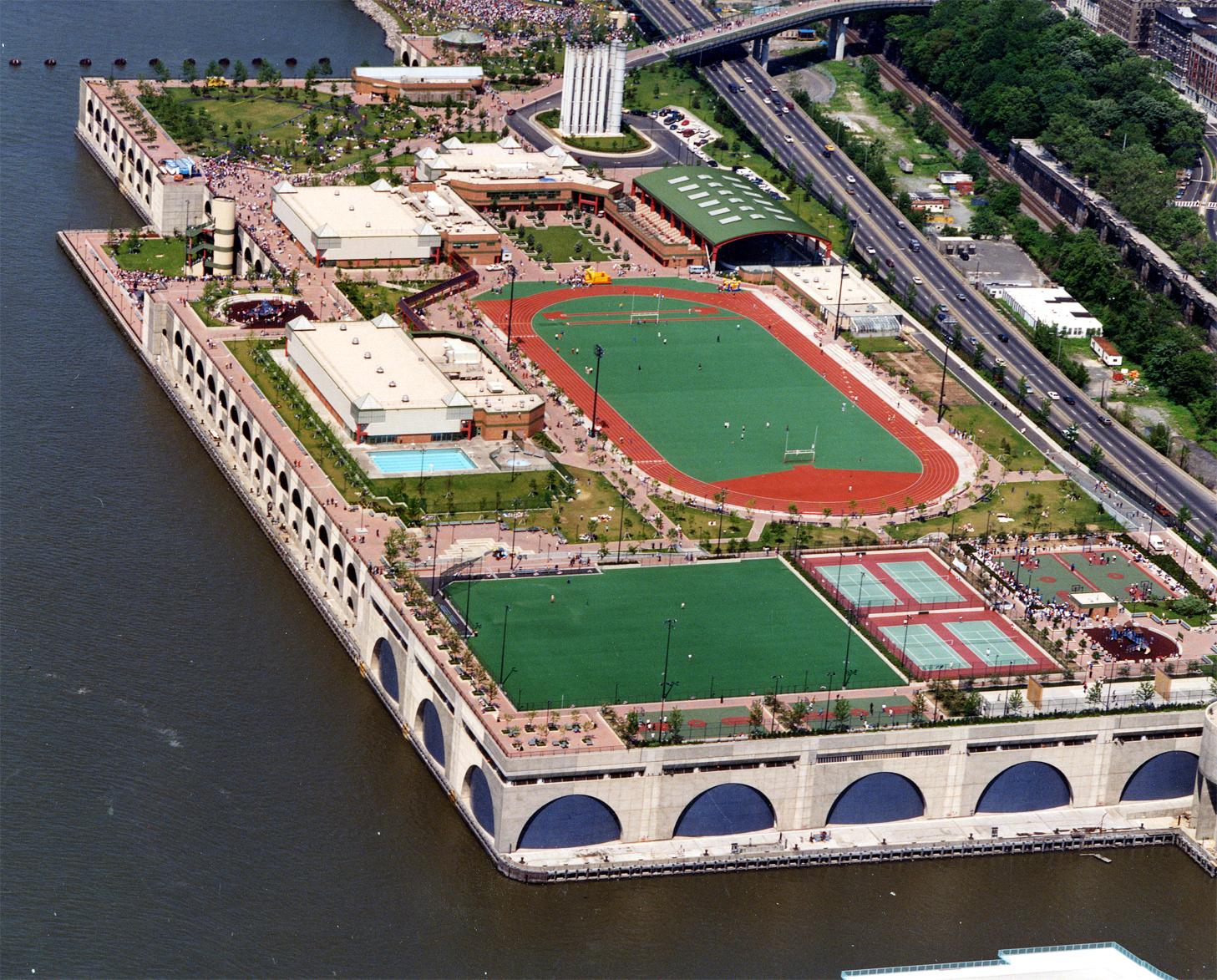
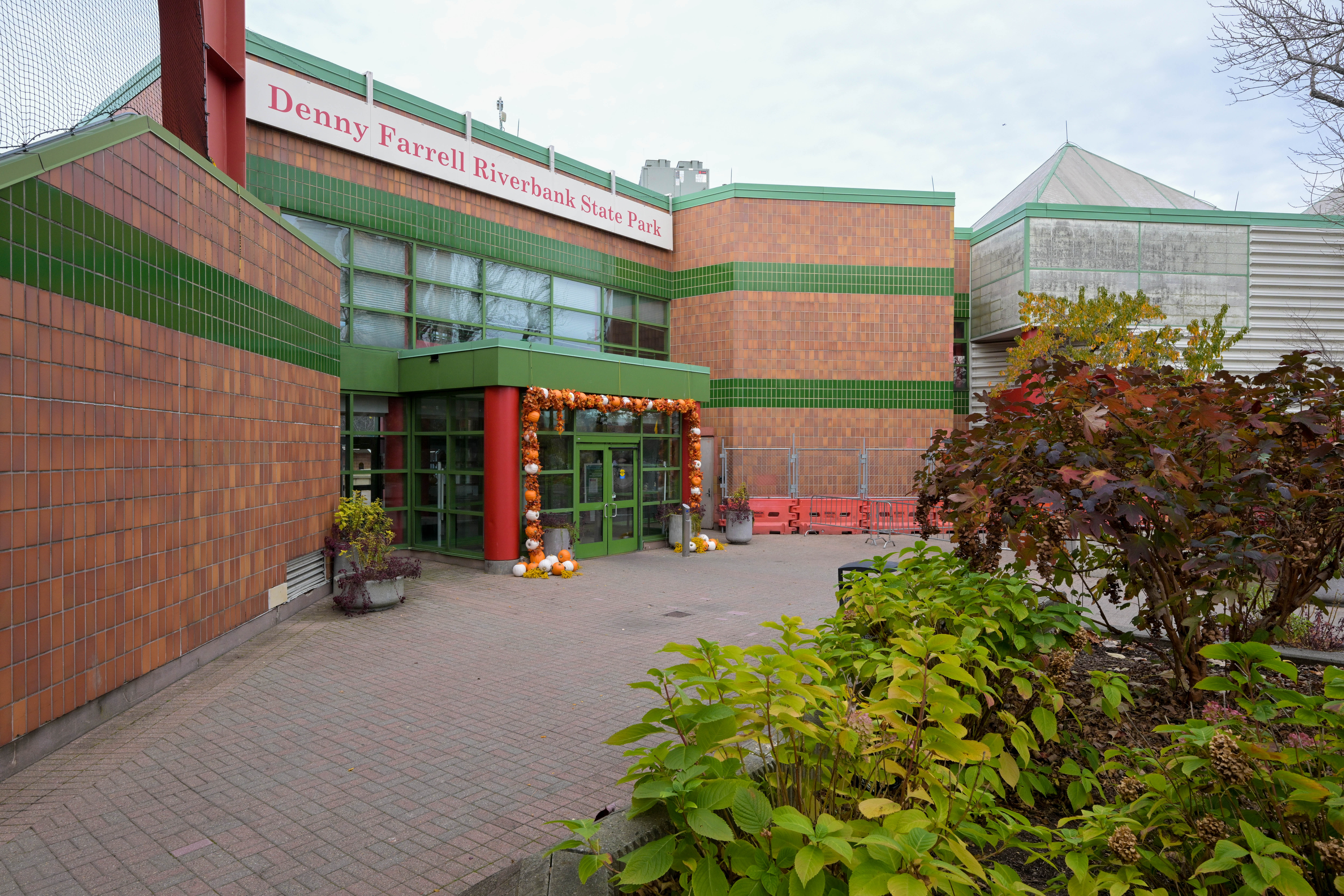
Riverbank State Park, officially Denny Ferrell Riverbank State Park opened to the public in 1993. The 25-acre park features a wide variety of amenities for residents and visitors to enjoy. Open year round, the park has a mix of indoor and outdoor recreation opportunities. Indoor amenities include an Olympic-size pool, a covered skating rink for roller skating in the summer and ice skating in the winter, an 800-seat cultural theater, a 2,500-seat athletic complex with fitness room, and a 150-seat restaurant. Outdoor amenities include a 25-yard lap pool, a wading pool, four tennis courts, four basketball courts, a softball field, four hand/paddleball courts, a 400-meter eight-lane running track with a football/soccer field, an educational greenhouse, two playgrounds, a water splashing area and a kid inspired carousel.
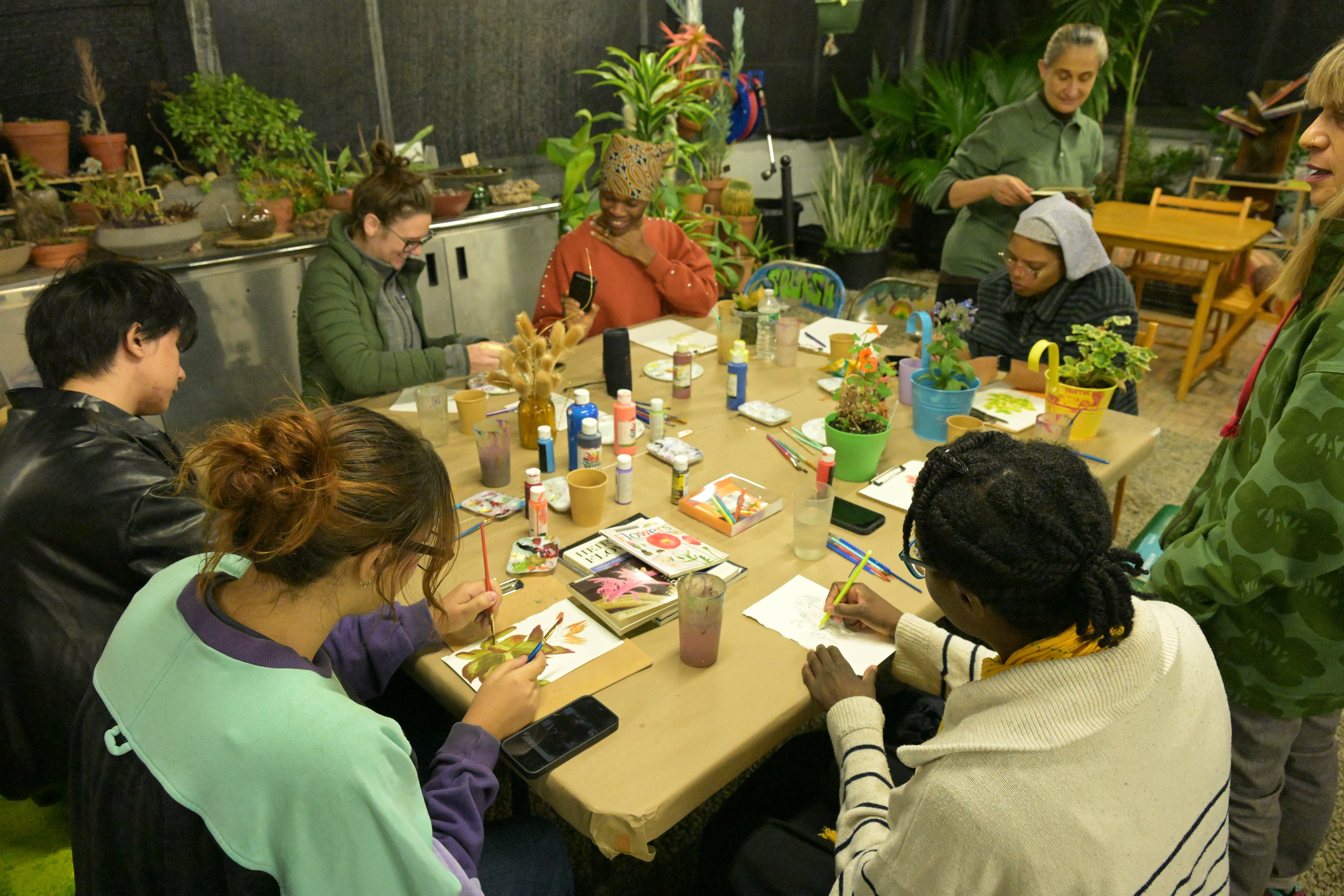
As part of her 2026 State of the State proposals, Governor Kathy Hochul has called for the renovation and revitalization of Riverbank State Park to enhance the visiting experience and improve access to recreation and community spaces. Riverbank State Park renovations will advance the Unplug and Play initiative which seeks to develop new ways for families and individuals to connect to one another and live happier, healthier and more active lives. Learn more about Riverbank State Park.
— Written by Jennifer Robilotto, Public Affairs Assistant
 New York State Parks and Historic Sites Blog