Tag Archives: nature

Second Act for Infrastructure – Turning Grey Space into Green Space 

Green space and recreation don’t always come to mind when thinking about infrastructure. However, at New York State Parks, they go hand in hand. Across New York, our state’s infrastructure is getting a second chance at serving communities. What once was a factory, railroad, or hospital is now a space for New Yorkers to get outside, get some exercise, and disconnect from their electronic devices. In this series, we are highlighting a bit of the history from your favorite state parks and showing how they once served a very different but equally important purpose to our state. 

This second installment of the Second Act for Infrastructure series invites you to punch your timecards and learn about the state parks built from former industrial infrastructure! Including a landfill, quarry, mills and water treatment facilities, these sites served an important purpose in the development of their communities. Today, they continue to aid in their community’s development as places where residents can learn and play.  

This article highlights three locations with extensive histories as industrial centers. There are many other state parks and historic sites with similar stories not included in this article. You can learn a more about them and the featured parks in our interactive timeline, Blazing a Trail

Read on and see why green is the new gray! 

Continue reading Second Act for Infrastructure – Turning Grey Space into Green Space 
Restoring the Cornell Mine Trail at Bear Mountain State Park

With nearly 450 miles of blazed trails crisscrossing almost 130,000 acres of publicly accessible open space, the Palisades region’s hiking system is among the most expansive in New York State. The region hosts the oldest section of the Appalachian Trail running through Bear Mountain State Park and Trailside Museums and Zoo, an extensive section of the Long Path, approximately 50 miles of carriage roads in Minnewaska, and dozens of other well-loved trails that bring the region’s 7 million annual visitors to waterfalls, wetlands, streams, lakes and forests.

All of these trails require ongoing maintenance and protection, and we take pride in keeping them safe and traversable for all visitors.

Continue reading Restoring the Cornell Mine Trail at Bear Mountain State Park

Be Kind, Rewind: Looking Back at State Parks and Historic Sites in 2025

The Centennial celebration of 2024 was a tough act to follow! We launched the second century of Parks and Historic Sites by meeting the moment and building towards the future, and even welcoming the entire golfing world to Bethpage State Park for the Ryder Cup. Let’s take a look back at the year that was!

Continue reading Be Kind, Rewind: Looking Back at State Parks and Historic Sites in 2025

A Year in the Field With the NY Natural Heritage Program

Established in 1985, the New York Natural Heritage Program is a partnership between the State University of New York College of Environmental Science and Forestry and NYS Department of Environmental Conservation. The program’s mission is to determine the location and status of New York’s plants, animals, and ecological communities and provide this information to public agencies and scientific and educational institutions to facilitate conservation. Today, they count multiple non-profits, local governments, federal institutions, and state agencies among their partners — including New York State Office of Parks, Recreation and Historic Sites. You may have heard about their long-term firefly study at several of our parks. Ecologist Julie Lundgren shares more highlights from their year of work in New York State Parks.

Continue reading A Year in the Field With the NY Natural Heritage Program

Bark, Buds and Beyond: A Guide to Identifying Winter Trees  

When the weather turns brisk and the leaves have dropped, tree identification can feel like a puzzle with missing pieces. But winter reveals its own set of clues — bark, buds, branch patterns, fruit and leaf scars. By learning to read these signs, you’ll see your winter woods in a new light. 

Bark: The Tree’s First Impression 

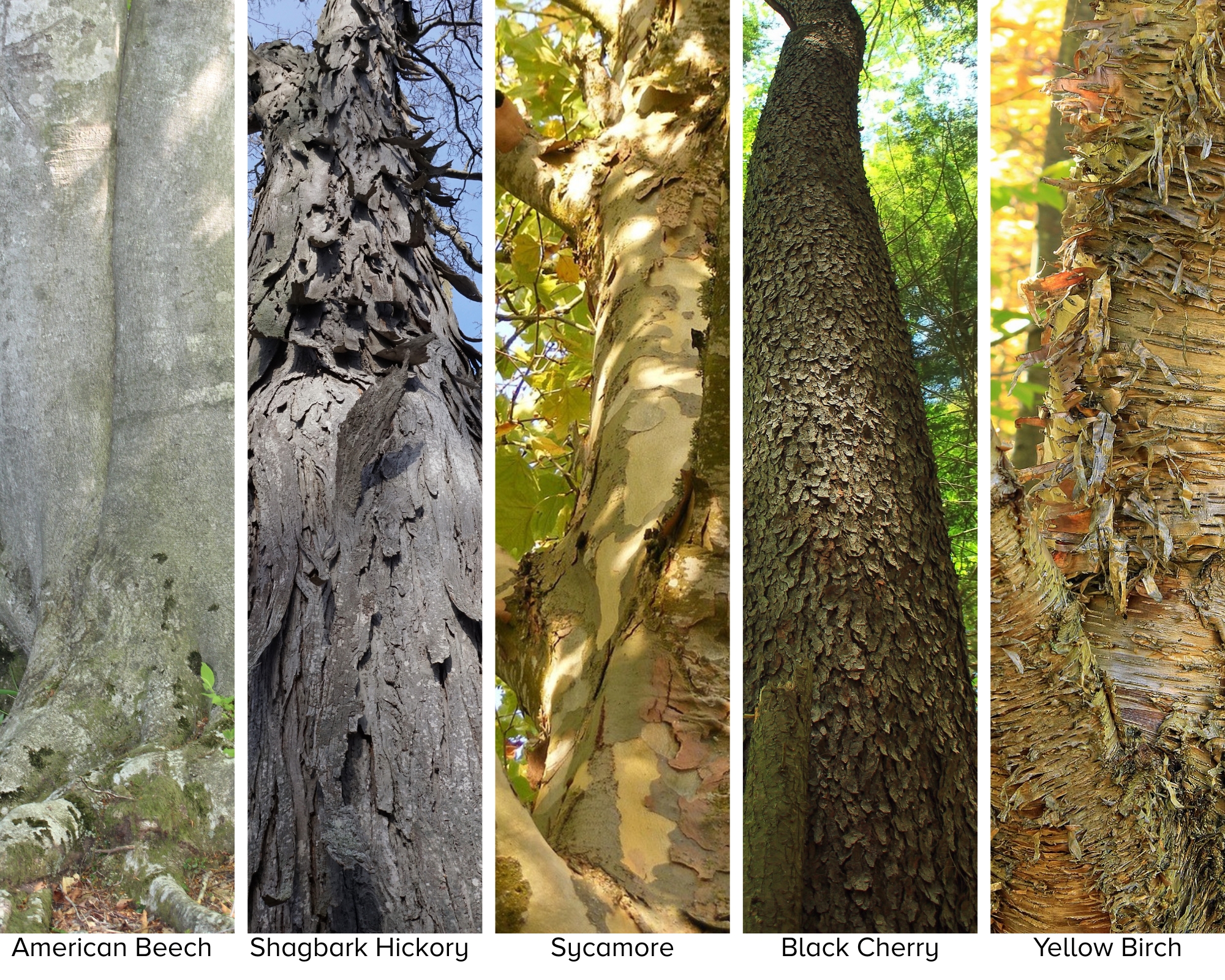
Bark is often the first clue you’ll notice. Some trees have such distinctive bark that once you have learned to recognize it, you can spot it instantly.  

Image showing the bark textures of five different tree species: American Beech, Shagbark Hickory, Sycamore, Black Cherry, and Yellow Birch.
Continue reading Bark, Buds and Beyond: A Guide to Identifying Winter Trees