Category Archives: Cool Science

What to do with a Thousand Acres of Swallow-wort?

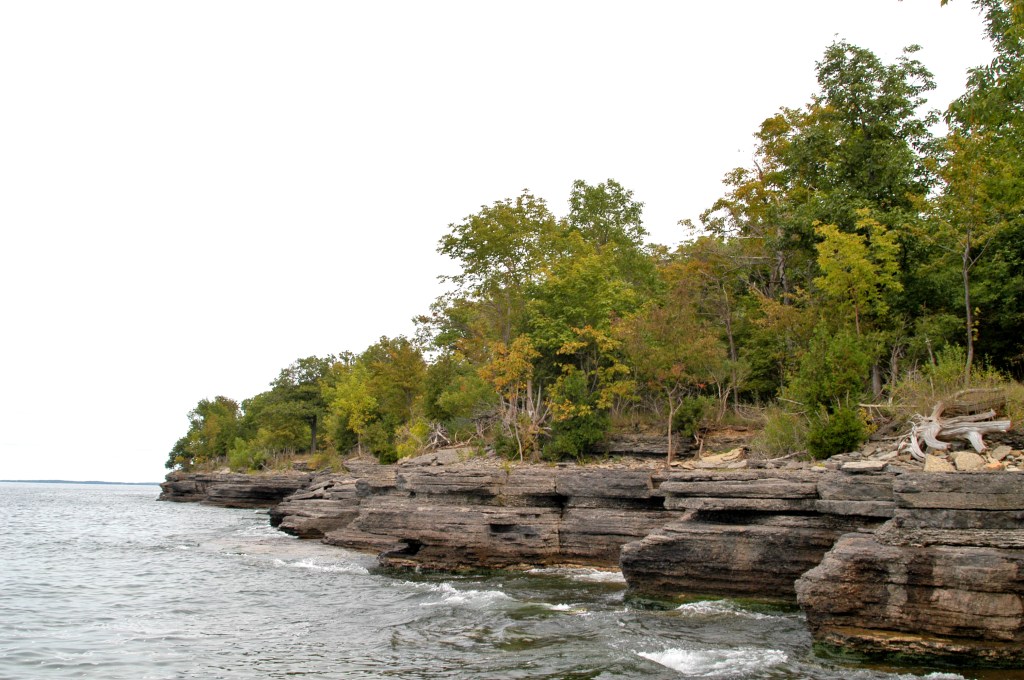
With 80-foot cliffs overlooking eastern Lake Ontario, 14 miles of hiking trails, a dog park, a state-of-the-art playground, a residential cottage that sleeps eight, and a globally rare ecosystem, Robert G. Wehle State Park is a gem.

This striking landscape also has a military history of helping to defend the country. Between 1895 and 1947 before it was a park, the U.S. military used this property as training grounds. The park includes remnants of the Stony Point Rifle Range, where soldiers trained for combat, as well as shoreline concrete observer posts where spotters oversaw aerial gunnery target practice.

In 1963, the U.S. Army sold this land to Louis Wehle, founder of the post-Prohibition Genesee brewery, and Thomas Nagle, a Rochester car dealer. In succeeding years, Wehle and his son, Robert, maintained the property as a cattle farm, game preserve, and rural retreat for raising of internationally-renowned hunting dogs . After Robert Wehle’s death in 2002, the state Department of Environmental Conservation acquired the land, later passing it State Parks to establish as Robert G. Wehle State Park in 2003.

Click on this slideshow below for scenery at the park:

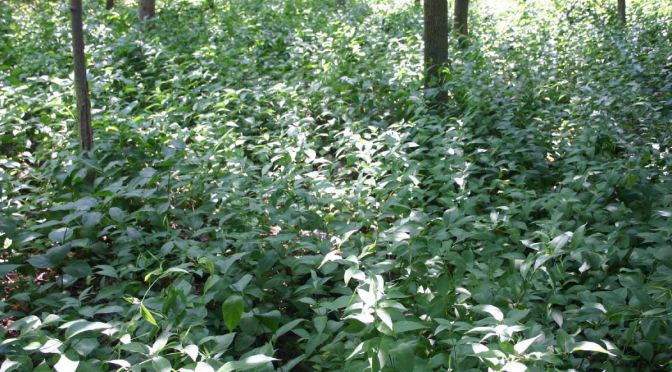
But visitors to this park may notice something else beyond its beauty _ large areas overrun by a strange, twining vine that seems to grow everywhere that is not mowed lawn, leaving few if any other plants surviving. Before his death, Robert Wehle was trying, with limited success, to control this invasive plant, known as pale swallow-wort (Vincetoxicum rossicum).

Now, decades after it was used to help train soldiers, this park is again on the front lines of a new mission: To be part of a campaign to learn whether a small moth found in Europe and Asia can help fight this invading perennial plant, which has spread throughout the eastern U.S. and Canada.
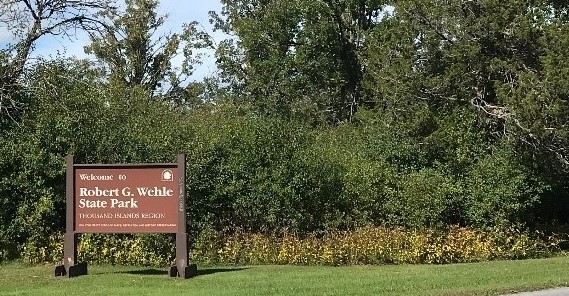
Pale swallow-wort at the entrance to Robert G. Wehle State Park in Jefferson County. The plant has begun to turn yellow at the end of the summer.


But first, what is this aggressive interloper that drives out other plants wherever it spreads?

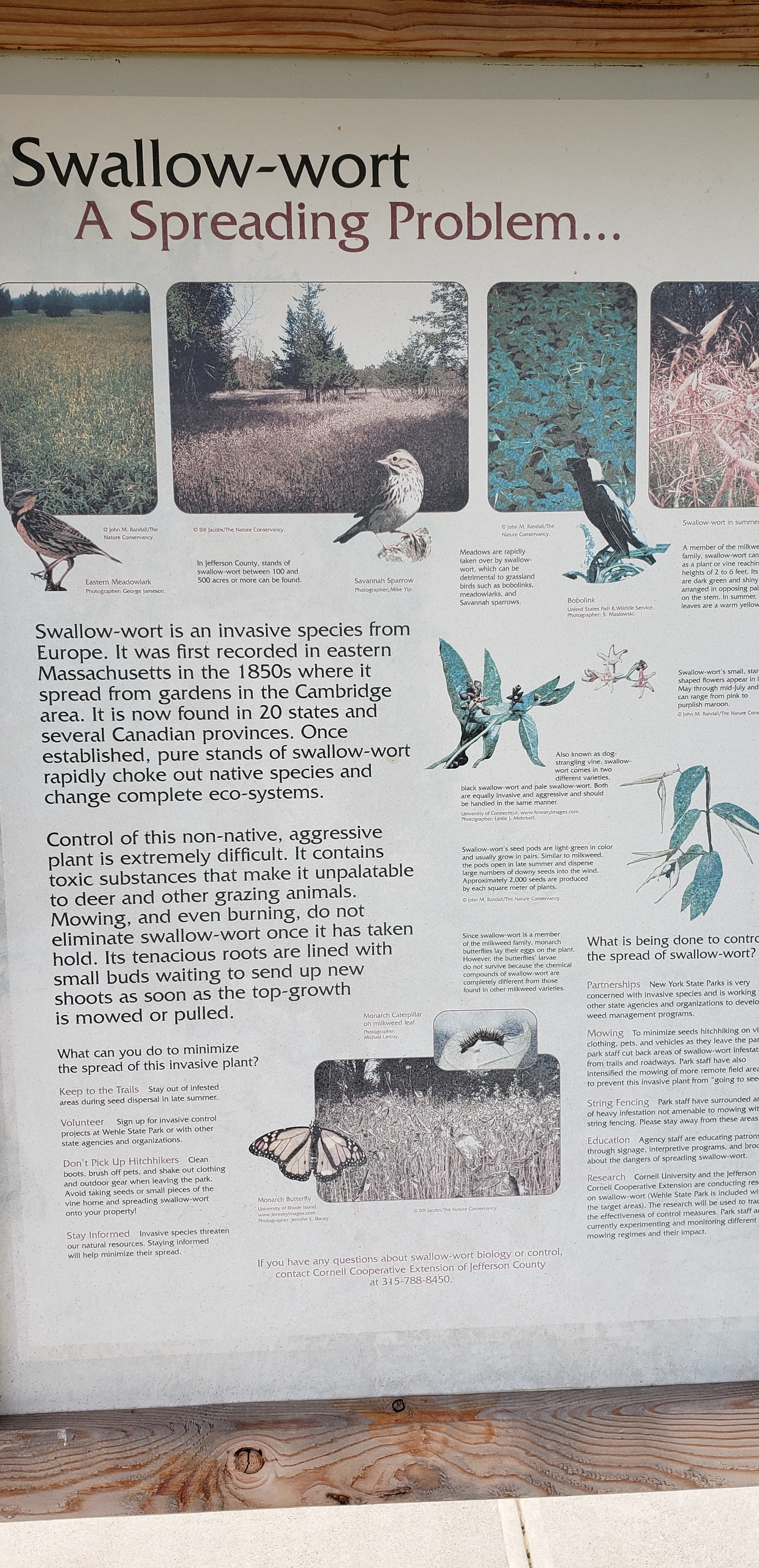
Also given the ominous name of “dog-strangling vine,” pale swallow-wort is a native of Ukraine that was introduced to North America in the mid- to late-1800s as an ornamental vine in herbariums and greenhouses. Once here, it began expanding into old fields, pastures, and woodland understories. Pale swallow-wort wipes out native plants in its path due to its vast root system, immense seed production and seed dispersal method (seeds look similar to milkweed seeds and can float far away in the wind), and the production of allelochemicals that inhibit growth of other nearby plants and protect it from grazing animals. Whitetail deer, which will eat most plants, avoid it.

Pale swallow-wort also poses a threat to New York’s population of native Monarch butterflies, which require milkweed to reproduce. Monarchs are known to confuse swallow-wort with milkweed and lay their eggs on it. Due to the chemical composition of swallow-wort, Monarch larvae that feed on the plant usually don’t survive.

All of these traits combine to create the ‘perfect’ invasive species and a land manager’s worst nightmare. So, what has been done and what is still being done to control this tenacious weed?

Robert Wehle noticed this plant on his property, according to anecdotal accounts. The cattle herds that he kept could have suppressed the plant’s invasion in pastures through grazing and trampling.  Wehle also utilized fire management to maintain some fields, which could have held swallow-wort at bay temporarily. Records also indicate he tried chemical herbicides to control swallow-wort infestation. This suggests that, like subsequent scientific studies conducted have shown, that Wehle found grazing and burning were not effective control techniques. 

After the land became a State Park, grazing, burning, and chemicals were no longer done.  Instead, staff began mowing areas around the entrance, maintenance shop, parking lots, rental compound, and trails frequently, which cuts back swallow-wort before it matures enough to produce seeds. But only so much mowing could be done on a 1,100-acre property.

Where mowing stops at Robert G. Wehle State Park, pale swalow-wort often begins.
Pale swallow-wort along trails in the park, above and below. The plant turns yellow in the fall.
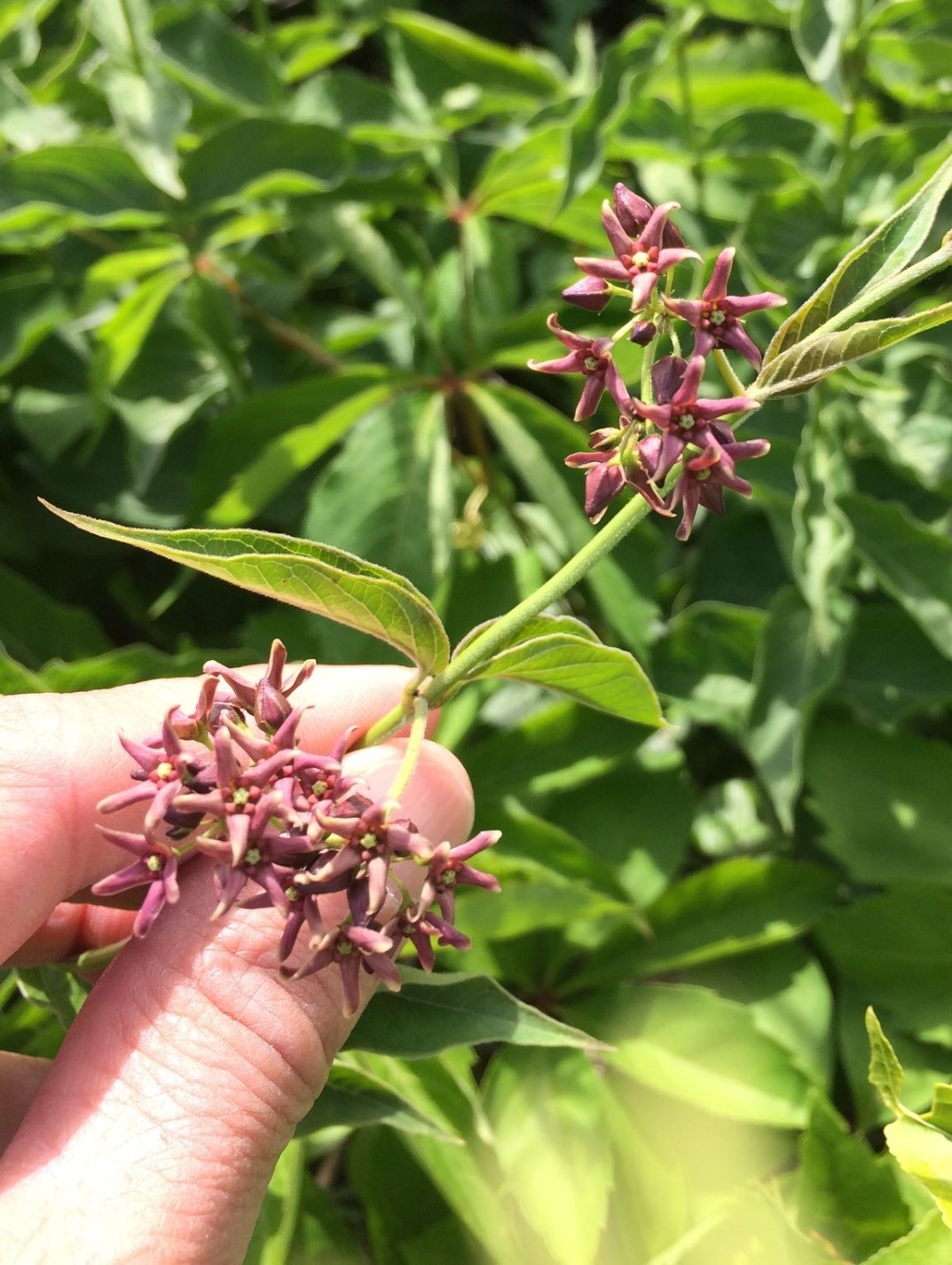
The flowers of pale swallow-wort.

A plan to address this issue was adopted in 2010 by State Parks, in cooperation with the state Department of Environmental Conservation. The first step was to raise public awareness of the problem. Interpretive signage was installed at most trailheads throughout the park to inform visitors. Boot brush stations were placed at the entrance/exit to the park for patrons to clean off their footwear to limit the spread of swallow-wort and its seeds off the property . The feathery seeds can easily stick to shoes, clothing and even the fur of dogs being walked.

That same year, State Parks hired an excavation company to carry out an experiment that may show promise for restoring degraded portions of Wehle’s globally rare Alvar ecosystem. Alvar is a grass- and sedge-dominated community, with scattered shrubs and sometimes trees. The community occurs on broad, flat expanses of calcareous bedrock, like limestone or dolostone, covered by a thin veneer of mineral soil.

Using a skid steer in selected areas, crews scraped away soil containing swallow-wort roots from limestone bedrock. Once most of the soil was gone, swallow-wort could not take root on bare rock. The areaa was then reseeded with native species. Other native plants showed up on their own, freed from the smothering competition from the swallow-wort. But these efforts could not be used everywhere in the park.

An area of the park reclaimed from pale swallow-wort by scraping off soil and later reseeding it with native plants.
In addition to the Lake Ontario and St. Lawrence regions, pale swallow-wort is found in other areas of the state, including the Finger Lakes and Hudson Valley. (Photo credit – New York State Invasive Species Information, http://nyis.info/)

Where does the moth come into this ongoing effort? For the last two years, Parks and its partners at Cornell University, SUNY College of Environmental Science and Forestry (ESF), Wells College, SUNY Cortland, and the University of Rhode Island have been using Robert G. Wehle State Park to study the viability of Hypena opulenta moths to suppress this invader.

This approach – the use of a natural enemy to deal with an invasive species – is known as biocontrol. In order to ensure that a new introduced species will not negatively impact other plants and animals, the effects must be extensively studied before any widespread use or release can be permitted. It cannot be overstated how extensively biocontrols are scrutinized before potential approval for release. Study can continue for years or even decades. Only after research confirms there will be little or little to no impacts to native species will federal regulators approve the biocontrol to be released.

In this case, the U.S. Department of Agriculture (USDA) in 2017 approved the release of the moths for field testing as biocontrol for pale swallow-wort. After the moths lay eggs on the swallow-wort, the larvae that later emerge eat the plant’s leaves.

For the last two seasons, Hypena moths were placed in cages in areas of swallow-wort at Robert G. Wehle State Park, as well on as nearby Grenadier Island in Lake Ontario off Cape Vincent. The cages ensured that the moths would be confined to the test areas.

Results from 2020 showed promise as one cage showed 100 percent defoliation of swallow-wort within four weeks by the caterpillars. Preliminary results from this year were not as successful. However, this is all part of the scientific process as the battle against the invasive continues with Robert G. Wehle State Park playing its part.


A Hypena opulenta moth inside the mesh cage over a patch of pale swallow-wort. The moth will lay its eggs on the plants.
After eggs hatch, the emerging caterpillars begin eating the plant leaves.
After four weeks, the caterpillars have eaten all the leaves in this cage. (All photos above credited to the St. Lawrence Eastern Lake Ontario Partnership for Regional Invasive Species Management.)

Hopefully one day we can say the tide is turning. Eradication is likely not possible, but containment could give native plants a better chance at a peaceful co-existence. If you visit the park, remember: Use the bootbrushes and check your clothes! Don’t inadvertently spread the ‘perfect invasive.’


Cover Shot – A pale swallow-wort infestation at Robert G. Wehle State Park. All photos NYS Parks unless otherwise credited.

Post by Pete Zimmer, Stewardship Specialist, Mid-State Capital District/Thousand Islands Region, NYS Parks


Resources


Learn more about the biocontrol project from the report below by the St. Lawrence Eastern Lake Ontario Partnership for Regional Invasive Species Management:

More information is also available from the New York State Invasive Species Research Institute.


The 2013 report by the U.S. Department of Agriculture also describes early efforts to contain pale swallow-wort.

Lights in the Night at Niagara Falls

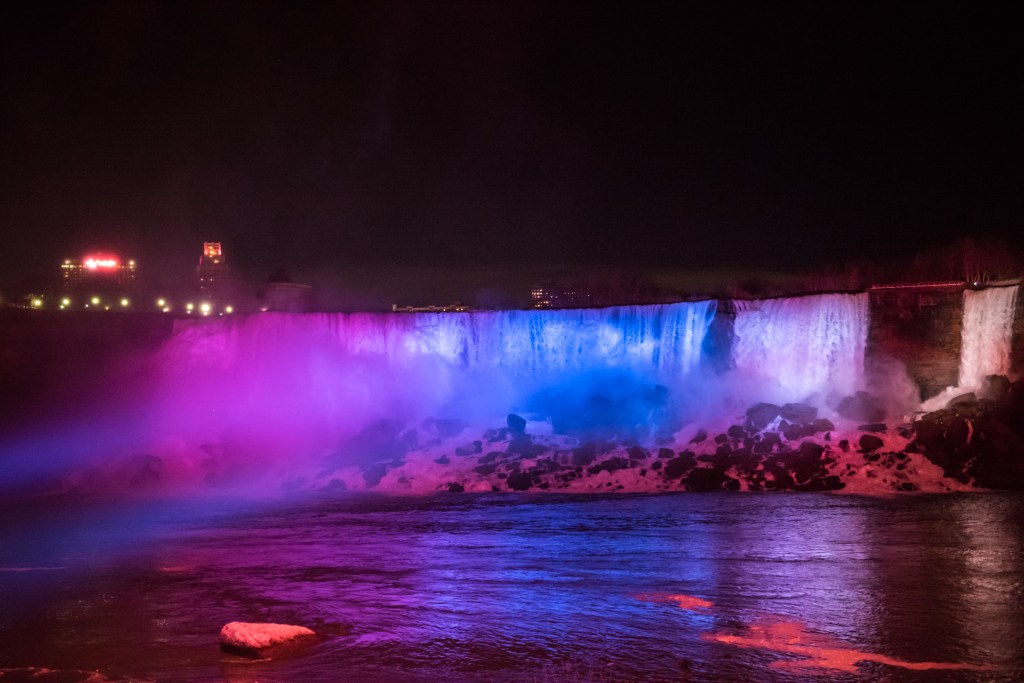
A custom energy-efficient LED lighting system that produces a rainbow of colors nightly at Niagara Falls State Park is a far cry from the simple technology used at the start of the Civil War when the falls were illuminated for the first time in honor of a visiting English prince.

The evening of Sept. 14, 1860, the falls were lit up for a short time using so-called Bengal lights, which were a centuries-old type of chemical flare that burned with bluish light. While it worked for the prince’s visit, this short-term and cumbersome method of lighting the falls was not to be used again.

A few years later, a new technology developed during the recently concluded Civil War came to the world-famous falls.  Spotlights used then were powered by heating up piles of calcium quicklime until it glowed brightly, which is the origin of the phrase of putting something “in the limelight.” Union forces had used such spotlights during the war to illuminate Confederate positions at night.

The emerging technology of electric lights arrived at the falls in 1879 to herald the arrival of an official couple from the government of Canada. More than two decades then passed before Walter D’Arcy Ryan, an innovative lighting engineer with Schenectady-based General Electric Co., designed a massive new searchlight system in 1907 that used colored gelatin films changed by hand to project different colors onto the face of the falls.

For 30 nights in a row in 1907, Ryan used 44 searchlights with colored filters, and powered with steam engines, to illuminate the entirety of Niagara Falls for the first time. Following this acclaimed success, he was named head of GE’s Illuminating Engineering Laboratory, the world’s first institution for research into lighting, created the following year in Schenectady.

According to the New York Tribune of Sept. 5, 1907, Niagara Falls looked far more dramatic lit up at night such that “words fail to describe the magnificence of the spectacle”. Another observer wrote: “It was a riot of glorious beauty, so new, so strange, so marvelous – so like some unearthly and unexplained magic that it held the spectator startled, then spellbound, speechless and delighted.”

Officials pose with the General Electric searchlight system used to illuminate Niagara Falls in these undated photographs. (Photo Credit- NYS Parks)

Ryan’s system was incredibly powerful for its day, producing more than 1 billion candela (a measurement of luminous intensity). That was the equivalent to more 8.3 million standard 110-watt lightbulbs!

By then, the illumination of the falls was proving to be an increasingly popular attraction, and in 1925 a joint U.S.-Canadian group was formed to manage and operate lighting – the Niagara Falls Illumination Board. The five-member board saw to it that new, even more powerful electric lights were installed for a ceremony that year. Lights were upgraded again in 1958, 1974, and 1997.

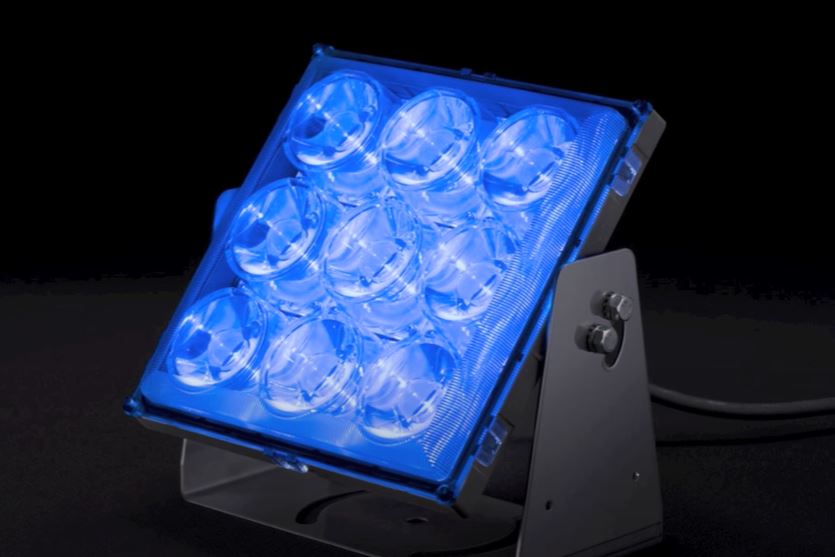
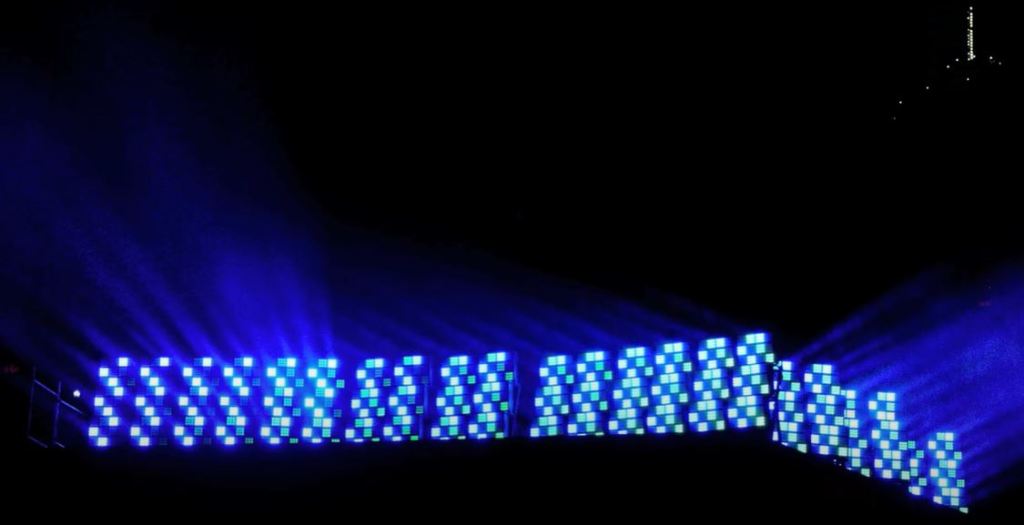
Today, visitors to Niagara Falls State Park are witnessing the work of an array of energy efficient LED lights that was installed in 2016. This $4 million custom system produces any color desired and has twice as much illumination as the previous lights, producing an enormous 8 billion candela. (For the lighting techies, that is more than eight times more powerful that the turn-of-the-century GE system, equivalent to the illumination from 66.6 million standard 110-watt lightbulbs!)

The array contains 12,600 LED lights, evenly divided among red, blue, green, and white. Red, blue, and green are the primary colors of light in physics and adjusting the ratios of each produces the full palette of colors. When all three colors are equally combined, that produces white light. The system at Niagara is powerful enough to span the 1,900 feet needed to reach the both the American and Horseshoe Falls.

A technician tests the new LED lighting system at Niagara Falls. (Photo Credit- Mulvey & Banani Lighting Inc.)

Click this slideshow below to see aspects of the LED array, including a close-up of the lights, their appearance once grouped, and use in action.

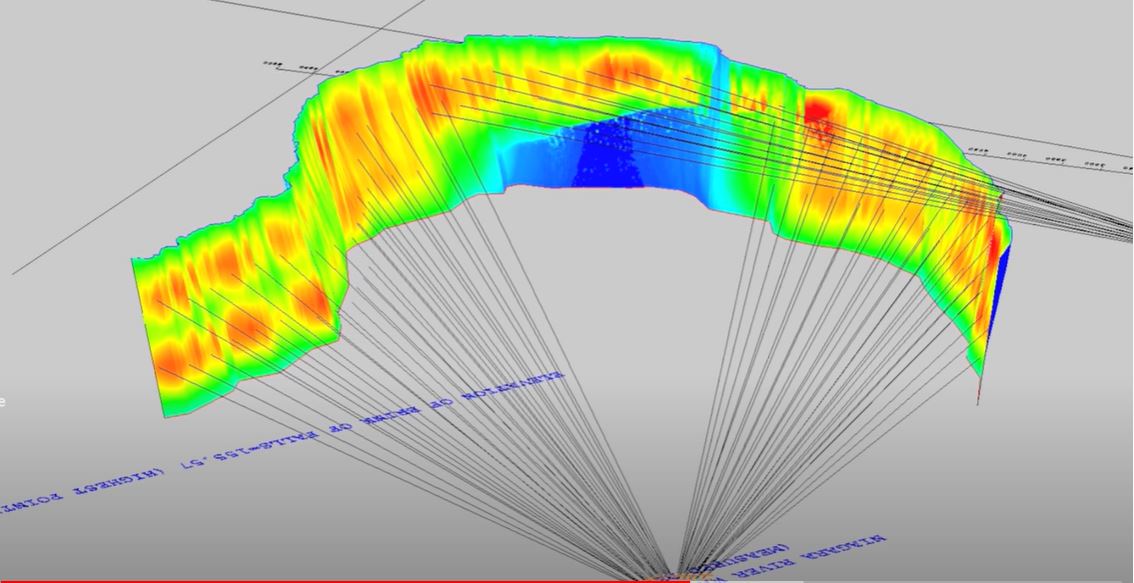
A schematic of how the LED light beams illuminate American Falls and Horseshoe Falls. (Photo Credit- Mulvey & Banani Lighting Inc.)

This unique custom system was designed by a consortium of companies including ECCO Electric Ltd., Salex Inc., Mulvey & Banani Lighting Inc., Sceneworks, and Stanley Electric. To test whether the LEDs could cast beams of light the distance needed, the crew successfully tested mockup systems across a lake in Ontario and along an abandoned aircraft runway!

The lights are operated via computer but can also be operated by two staff members who watch guard over the lights each night. They can even be programmed to perform shows such as “Inspired by Nature” which features colors and movements inspired by nature, including the sunrise, aurora borealis, rainbows and sunset.

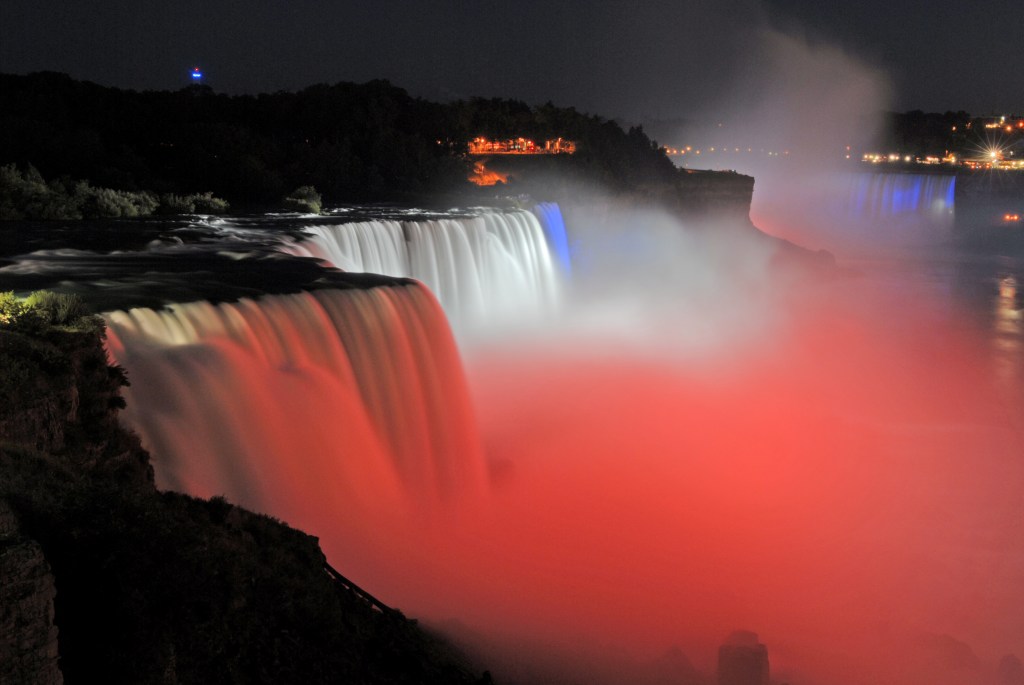
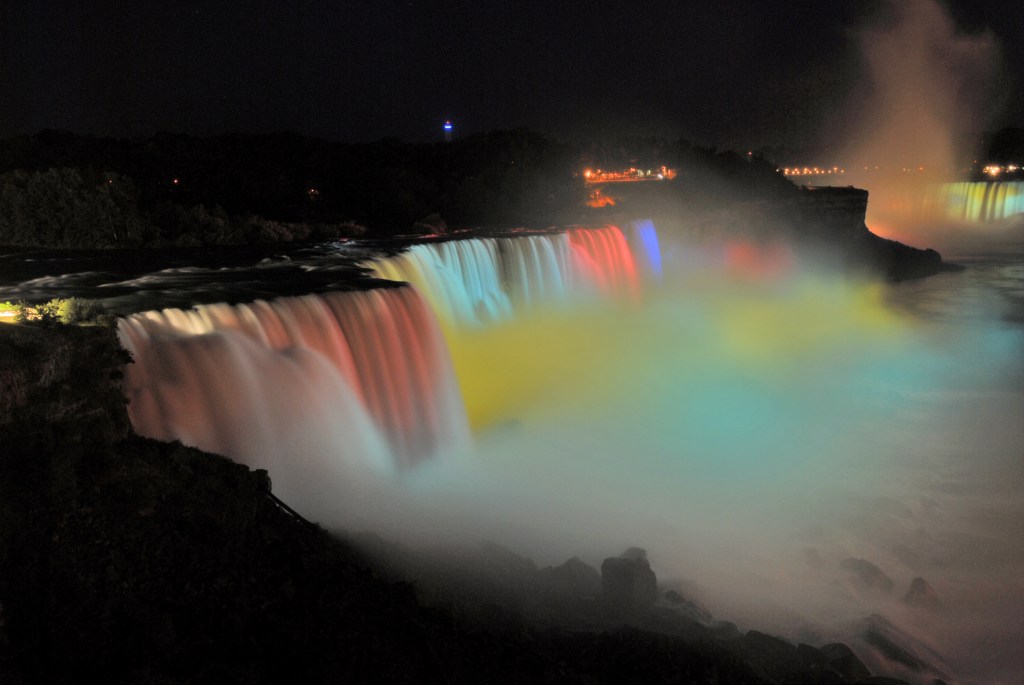
Today the world-famous falls are lit up every night of the year in an ever-changing light show, the colors chosen to reflect a wide variety of causes, events, and people, all of which reviewed and approved by the board.

On June 15th, 2021, for example, the falls were illuminated in the official New York State colors of blue and gold in celebration of reaching 70 percent of New York adults receiving their first dose of COVID-19 vaccine.

In 2016, when Queen Elizabeth turned 90 on April 21, the falls were colored purple in her honor. It did cause a bit of unintended confusion.  The musician formerly known as Prince, who was closely associated with purple, died the same day so many people mistakenly thought the lighting was for him!

Other recent illumination highlights might be less well-known, including highlighting of the Republic of Bashkortostan, Wrongful Conviction Day, and Dress Purple Day, Bullying Prevention Month, Latvian Independence Day, and Dysautonomia awareness.

The falls have been illuminated blue to mark playoff appearances of the NFL Buffalo Bills, purple and gold to mark the tragic death of NBA star Kobe Bryant, a combination of red, white, and gold to honor the Canada’s gold-medal Olympic women’s soccer team, and blue and green for the Canadian professional basketball team Niagara River Lions.

The falls also have been lighted green for St. Patrick’s Day, rainbow colors for Pride Month, blue to mark the 70th anniversary of the North Atlantic Treaty Organization (NATO), and red to welcome Chinese New Year.

One night a year, March 26, the falls go dark for an hour in honor of Earth Hour, a global initiative aimed at drawing attending to ongoing human-induced climate change. Click on the slideshow below to see some of Niagara Fall’s amazing colors!

With the ability to shine light through mist and flood both the American Falls and Horseshoe Falls with every color under the sky, the nightly illumination is the highlight of any visit to Niagara.

Hours of illumination vary by seasonal timing of nightfall, starting between 4:30 and 8:30 p.m., and wrapping up from 1 to 2 a.m. With the earlier nightfall in winter, the falls are illuminated earlier in the evening. When the falls freeze in the winter, creating massive ice formations, the lights take on another beautiful dimension.

The Illumination Board is an example of international cooperation between the U.S. and Canada, with its membership consisting of New York State Parks, Niagara Parks (Canada), the New York Power Authority, Ontario Hydro (Canada) and the cities of Niagara Falls in both the U.S. and Canada, which pay annual dues to cover the expenses associated with this special attraction.

The group is also charged with fulfilling requests for lighting for charitable organizations, special causes, global events, and other special occasions.  As the Falls is such a global icon, hundreds of requests are received each year.

Under board rules, requests cannot be considered for commercial purposes, personal occasions like birthdays or marriage proposals, religious or political events, and institutions, such as hospitals and schools.

Be sure to include an overnight on your next visit to Niagara Falls to catch the illumination. Pro tip: The best viewing from the American side is from Terrapin Point or Prospect Point.

Check out the schedule of lightings and learn more about the nightly illumination here.

Post by Angela Berti, Marketing and Public Affairs Coordinator, Niagara Region, NYS Parks

Watch this Youtube video below by Mulvey & Banani Lighting to learn more about how the Niagara Falls are illuminated…


Learn more about the color of light from the American Museum of Natural History.

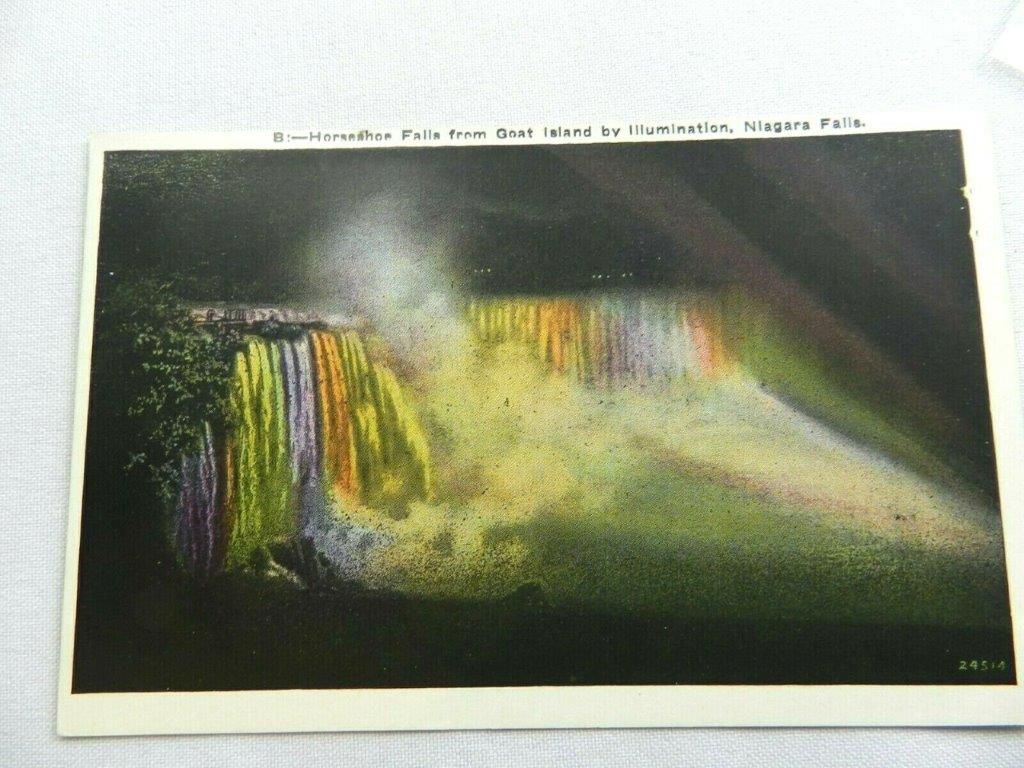
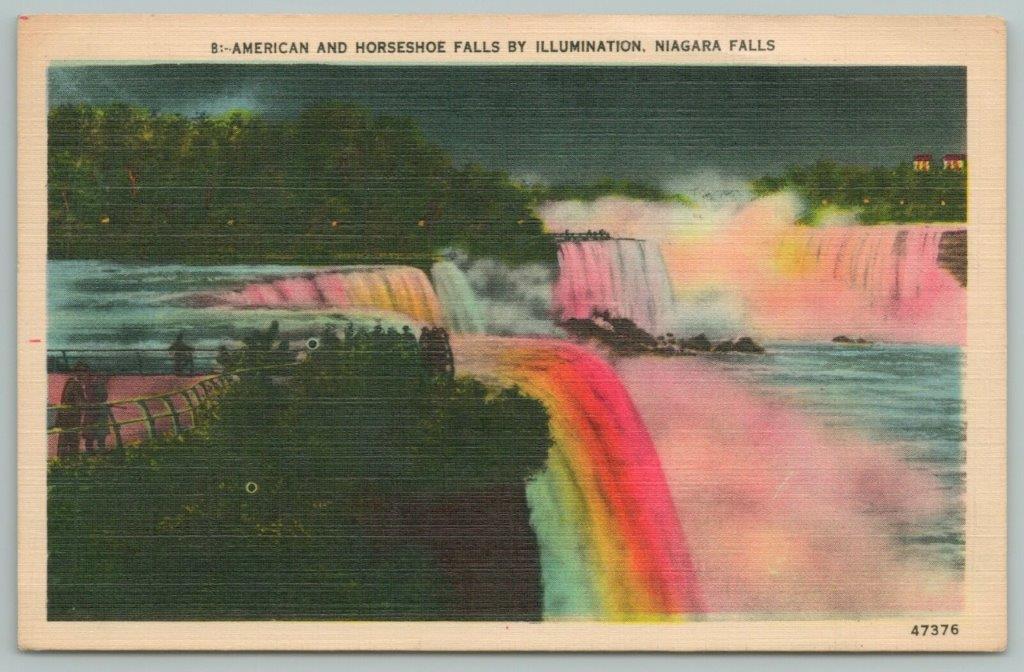
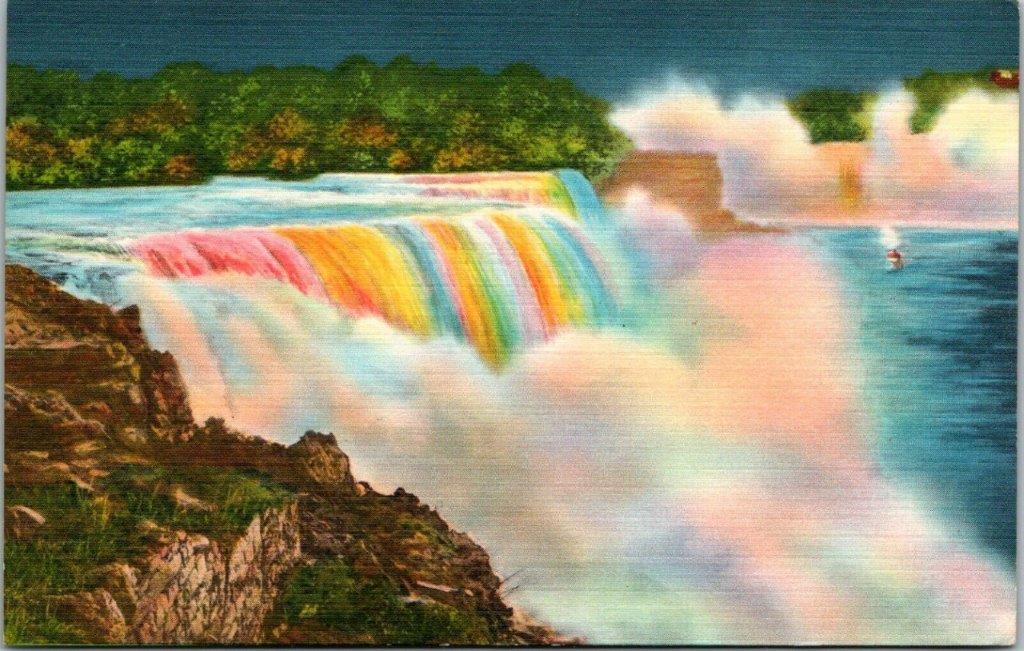
Click below for a slideshow of historic Niagara Falls’ postcards showing its illumination…

Eclipse of the Beaver Moon

Starting in the wee hours of Friday, November 19, the upcoming Beaver Moon eclipse will be the longest partial lunar eclipse in six centuries, clocking in at nearly 3 ½ hours. Visible throughout North American, this celestial occurrence also is a reminder that stargazing nights are among many events available at State Parks, some of which have relationships with local astronomy clubs.

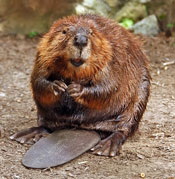
But to start, a naturalist question: Why is this upcoming full moon that will undergo this eclipse called the Beaver Moon? Well, according to state DEC naturalist Tom Lake, this description originates with the Indigenous peoples of the Northeast, who in November observed that beaver would stock up provisions to get through the coming winter when ponds, lakes, and other waterways freeze over. Beaver instinctively collect forage, including branches, limbs, even small trees, dragging it into their ponds, and securing it on the bottom for later retrieval as needed during the cold and ice of mid-winter.

The Beaver Moon, as illustrated by The Old Farmer’s Almanac.

Now, what about this lunar eclipse? What will happen, when will it happen and how best to observe it? According to the National Aeronautics and Space Administration, during the peak of the eclipse, the earth’s shadow will cover 97 percent of the moon’s surface, likely casting the moon in a dark, rusty reddish color.

The partial eclipse phase will last 3 hours, 28 minutes and 24 seconds, making it the longest partial eclipse in nearly 600 years! But to see this cosmic dance of earth, moon and sun unfold, two things are needed: Clear nighttime skies and a willingness to be awake when most people normally are asleep.

When the eclipse starts at 1:02 a.m. on Nov. 19, as the earth begins to pass between the sun and the moon, the changes initially will be subtle and difficult to see. That is because the earth actually casts two types of shadows _ a lighter, broader shadow known as the penumbra and a full, dark shadow, called the umbra. After initially entering the penumbra, the full moon will start entering the umbra at 2:18 a.m., gradually darkening and reddening until maximum eclipse is reached at 4:02 a.m. The moon then will start exiting the umbra, followed by the penumbra, until the eclipse ends completely at 7:03 a.m.

This graphics shows the progress of the eclipse. Note, the times shown are in Universal Time (UT). The local times in Eastern Standard Time are part of the description above this graphic. Photo Credit- NASA/Sky & Telescope

No special equipment is needed to safely observe a lunar eclipse, unlike a solar eclipse, which should never be looked at directly without special protective gear. A pair of binoculars can reveal more detail of the moon’s surface. For photography buffs, NASA has tips here for how to best photograph the moon and eclipses.

In State Parks’ Long Island Region, several Parks will remain open for those who want to observe the Beaver Moon eclipse. A requirement for a stargazing permit, which is normally needed to be in those parks after normal operating hours, is being waived for this event.

Long Island State Parks that will remain open for viewing are:

Upstate, the light pollution that present around metropolitan New York City is not as much of an issue, so finding a place to see the eclipse will be relatively simple.

Some of the darkest night skies in the New York are found in the Adirondack Region, and the John Brown Farm State Historic Site outside of Lake Placid will be open that night and morning with a telescope available for visitors who want to see the Beaver Moon eclipse.

And for those interested in astronomy, keep in mind that State Parks offer a variety of stargazing events throughout the year, with a calendar listing available here.

Some Parks also host events by local astronomy clubs, like the Mid-Hudson Astronomy Association in the Hudson Valley which has a Dec. 3 public event at Lake Taghkanic State Park and the Rockland Astronomy Club, which has an November 27 event at the Anthony Wayne Area at Harriman State Park and Dec. 8 event at Rockefeller State Park Preserve. Rockefeller State Park Preserve also hosts free monthly stargazing events, with a Rockland Astronomy Club member donating use of telescope and his expertise. The next such event is Dec. 2.

At Moreau Lake State Park in Saratoga County, a telescope will be is expected available for visitors on the night of Dec. 14 for the Geminids meteor shower, which can produce up to 120 meteors a minute. Fort Niagara State Park will also be open Dec. 13 for the meteor shower.

At Clay Pit Ponds State Park Preserve on Staten Island, a Winter Solstice Astronomy Night will be held Dec. 18, hosted by Professor Harold Kozak, a NASA Solar System Ambassador.

Before making a trip, always call the specific park in advance to ensure such weather-dependent events are being held as scheduled.

And for those who aren’t able get outside the coming Beaver Moon eclipse, check out a virtual online telescope event for that night. Happy viewing!

This chart shows the Beaver Moon lunar eclipse will be visible. (Photo Credit- NASA JPL/Caltech.
Maybe I’ll stay up late to see the Beaver Moon Eclipse! (Photo Credit- NYS DEC)

Cover Shot- Lunar Eclipse (Photo Credit- NASA)

Post by Brian Nearing, Deputy Public Information Officer, NYS Parks

Lights Out For The Birds

Twice a year, billions of birds migrate throughout the United States between their wintering and breeding grounds. These birds typically migrate south in the fall and will migrate north again in the spring. That means right now in New York State, birds are passing through as they travel down south to warmer climates. All types of birds will be seen migrating during the seasons, including warblers, shorebirds, raptors, and more.

Birds will usually spend their days saving their energy, resting, and finding food sources and during the night will use most of their energy flying. Migratory birds are typically nocturnal travelers, which means they gain the most mileage during the night hours. While we are asleep after an event filled day, there can be an estimated 150 million to upwards of 300 million birds travelling overhead in one given night. Even though the day is over for us and is our time to relax and unwind, the night hours are highly active for migrating birds!

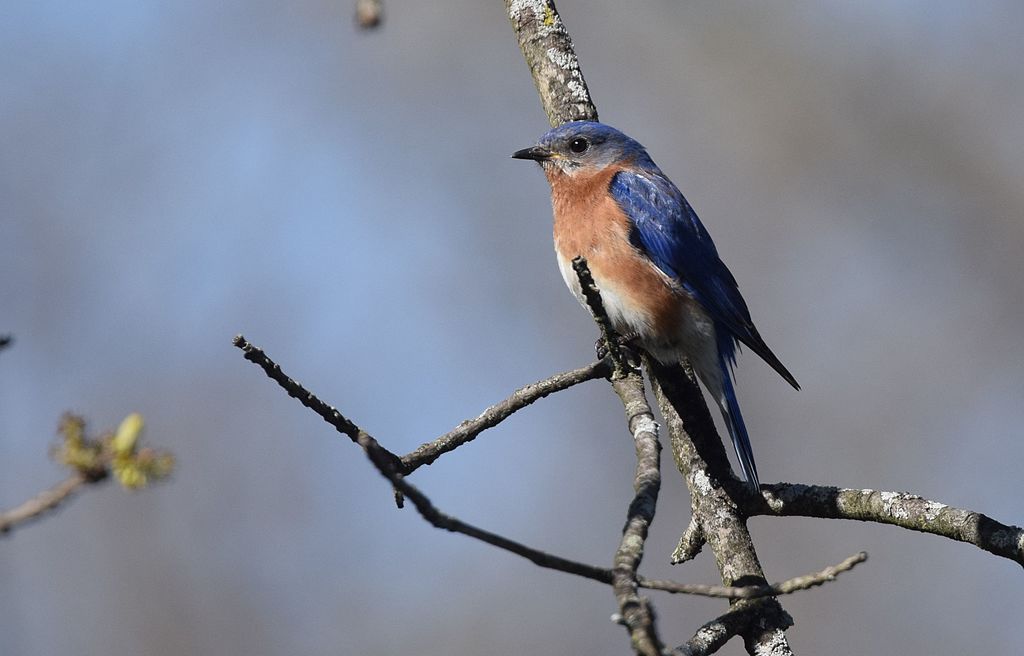
The official New York State bird, the Eastern Bluebird, migrates south in the fall to spend its winters in the southeaster U.S. or Mexico. (Photo credit – Wikipedia Commons)
Dark-eyed junco (female) migrate south into New York from Canada and sometimes hang around all winter. (Photo credit – Wikipedia Commons)

Nighttime migration poses different threats to these birds, particularly in big cities. Large buildings are typically lit up with hundreds of bright lights throughout all hours of the night. This light pollution can significantly change birds’ behaviors, including migration patterns, foraging for food, and communication with other birds in the area. Light pollution can distract the birds as they might start to think it is daytime, because they cannot process light sources like we can. All of these behaviors are a waste of energy for birds, making their long journey much more dangerous.

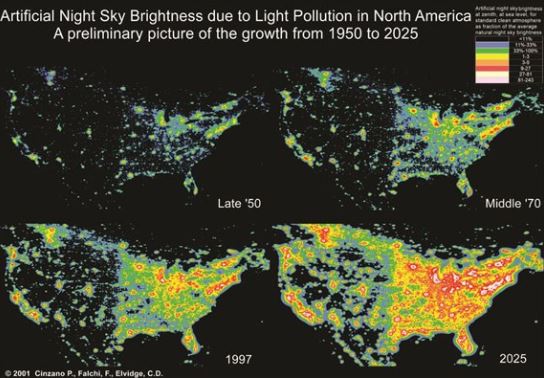
According to the National Park Service, nighttime light pollution in the U.S. has gotten much worse in decades after World War II, so much that now eight in ten Americans can no longer see the Milky Way. And this is an increasing issue for migrating birds.

This National Park Service map shows the growth of light pollution in the U.S. since the 1950s

Birds and State Parks

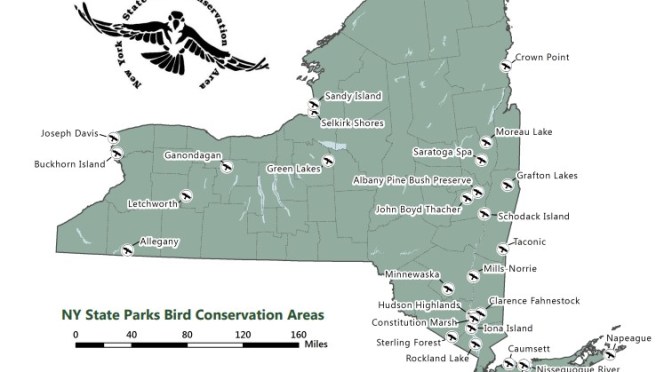
New York State Parks are a great place to visit to catch a view of migrating birds. The forests, meadows, wetlands, and other natural areas in State Parks provide some of the most crucial habitats for these birds along their journey, and have helped them survive over the years by offering shelter and food. In some parks there are specific areas designated as Bird Conservation Areas (BCAs). Of the 62 BCAs throughout the state, 27 are within State Parks.

An area can be designated as a BCA if it is judged as important habitat for one or more species based on certain criteria. There are many BCA locations throughout the state, such as Saratoga Spa State Park that is home to more than 100 different bird species. You can find the location of Saratoga Spa State Park and other BCAs on the map provided below and the State Parks website. You can also check the State Parks events list for birding events near you!

A map of the Bird Conservation Area in Saratoga Spa State Park.

In addition to BCAs, there are also areas recognized nationwide by the National Audubon Society to help protect birds and their habitats; Important Bird Areas (IBAs). One example in New York State is Rockefeller State Park Preserve in Westchester county, and is home to 180 different bird species! Check out the National Audubon Website to see Rockefeller State Park Preserve and all the other IBAs in New York State.

What Is The “Lights Out” Movement?

The “Lights Out” movement is a nationwide event that was created in in Chicago in 1999 by the National Audubon Society to help reduce the number of bird fatalities. Since then, the effort has spread to cities including Atlanta, Baltimore, Boston, Cleveland, Dallas, Denver, Detroit, Kansas City, Milwaukee, Philadelphia, Pittsburgh, Portland, Salt Lake City, San Francisco, St. Louis and Washington, D.C.

Bird fatalities are more directly caused by the amount of energy birds are wasting during the night because of the heavy light pollution across the United States. This energy is being wasted on flying around, using more vocalization and the exhaustion is leaving them more vulnerable to other threats around them.

If you’re interested in watching migrations, a tool that can be used is the BirdCast migration tool. This website has many resources for nationwide and local monitoring. The nationwide mapping tools include a live forecast of the density of the birds migrating as well as a 3-day prediction forecast of what it could look like. In addition to the nationwide prediction forecast, you can also check out a live animated video of the current migration patterns each day!

Use the slider bar to see how the BirdCast migration changes between Oct. 6 and October 14.

Another neat tool that this website includes is a live local alerting map that is specific for a county, city, or town. The local maps tell you how many birds to expect flying over your area that night and what the next couple nights look like as well. This tool provides important information so you can participate in helping the birds during their migration.

There are two large windows for bird migrations;: one in the fall and one in the spring. Bird migration can take place from August through November with peak migration in October in the fall and from March through June with peak migration in May in the spring. Check out the links provided above to get more information on BirdCast and when peak migration is happening in your area!

How Can You Help?

Some suggestions to help get you started with the Lights Out Movement for nighttime hours:

  • Turn off exterior decorative lighting
  • Turn off interior lighting, or use curtains and blinds
  • Install automatic motion sensors and controls wherever possible
  • Click on the link to check out the full list of suggestions: Lights Out Movement. One of the local efforts is based in New York City.

After visiting State Parks and seeing the many different species of birds that are in New York State, it is important for all of us to do our part to help keep them safe. The National Audubon Society provides suggestions on how to decrease light pollution on a local level, which will help birds during their migration. It is estimated that 253 million annual bird deaths from collisions are from residential areas compared to 340 million from tall buildings and skyscrapers. Your part at home is just as important as businesses!

Participating in the Lights Out movement helps more birds safely reach their migration grounds, giving you and your family more opportunities to see them in New York State Parks! To make an official pledge with the movement, sign up here.


Cover Shot – A map of Bird Conservation Areas in New York State Parks.

Post by Allyson Paradis, Wildlife Unit Assistant, NYS Parks

More Resources from the NYS Parks Blog

Raptor Migration and Hawk Watching

When we think about spring and fall in the northeast, we often dwell on the extraordinary changes that occur to our trees and other plants. In the spring, we yearn for green to replace the barren gray and white of winter; in fall we marvel at the warm oranges, reds, and yellows that are on…

Golden Opportunities at Betty and Wilbur Davis State Park

On February 24, 2009, two visitors to Betty and Wilbur Davis State Park were enjoying a sunny walk on Davis Road when two BIG birds flew overhead, going north.  “Golden Eagles!” exclaimed these experienced bird watchers.  Both were volunteers at the Delaware Otsego Audubon Society’s (DOAS) Franklin Mountain Hawk Watch which is known for its…

To Boldly Go…

About four times each year, State Parks adds a variety of properties to the State Register of Historic Places, a step towards later being listed on the National Register of Historic Places as important pieces of America’s broad cultural heritage.

But while the vast majority of these listings are buildings, like factories, churches, homes, libraries or schools, that’s not always the case. Sometimes, Parks’ historic researchers like me working on the register listings get to take on the story of something truly out of this world.

Science fiction fans worldwide recognize the name “Enterprise” as the name of the starship in iconic 1960s television series Star Trek. A decade after the show went off the air, those fans helped see to it that America’s first prototype of a reusable orbiting spacecraft would also carry that name. In 2013 I was honored to document that historical connection as part of support for the listing the NASA Space Shuttle Enterprise on the state and national historic registers as culturally and technologically significant.

It was 45 years ago this September when the Space Shuttle Enterprise rolled out of its assembly building at Rockwell International Space Division’s facility in Palmdale, California. Waiting outside were a crowd of VIPs that included six cast members of the Star Trek crew, and series creator Gene Roddenberry.

On Sept. 17, 1976, the crew of Star Trek’s fictional Enterprise attended the roll-out of the Space Shuttle Enterprise at the Rockwell International Space Division’s facility in Palmdale, California. Show (left to right) are Dr. James D. Fletcher, NASA Administrator; DeForest Kelley (Doctor Leonard “Bones” McCoy); George Takei (Ensign Hikaru Zulu); James Doohan (Chief Engineer Montgomery Scott); Nichelle Nichols (Communications Officer Hyota Uhura), Leonard Nimoy (Science Officer Spock); Star Trek creator and producer Gene Roddenberry; unidentified NASA representative; and Walter Koenig (Ensign Pavel Chekov).
The model of the Starship Enterprise used during shooting of the Star Trek television series is now on display at the National Air and Space Museum in Washington, D.C. (Photo Credit – National Air and Space Museum’s Steven F. Udvar-Hazy Center by Dane A. Penland)

NASA had initially suggested naming the prototype Constitution and even wanted to unveil the spacecraft on September 17 – Constitution Day. But as NASA’s plans became publicly known, thousands of fans of Star Trek – which had gone off the air several years earlier in 1969 – began a write-in campaign to the White House urging President Gerald Ford to name the orbiter Enterprise in honor of the fictional starship.

“I’m a little partial to the name Enterprise,” said Gerald Ford, noting that he had served in the Pacific during World War II aboard a U.S. Navy ship that serviced an aircraft carrier of that name. The Star Trek write-in campaign apparently influenced President Ford and the show’s fans are generally credited as being the driving force behind the shuttle’s name change.

While called Enterprise, the prototype NASA orbiter was formally known as Orbiter Vehicle-101 or OV-101, and represented the culmination of years of research, design, and experimentation. Planning for the Space Shuttle Program had begun in 1968, ten months before Neil Armstrong and Buzz Aldrin set foot on the moon during the Apollo 11 mission. The intent was to develop a reusable and affordable vehicle that could travel to and from space routinely, easily, and affordably. 

Unlike typical aviation advancement, the space shuttle was a major technological leap forward. While airplanes tend to slowly evolve over time through constant adjustments based on testing and performance, the systems and design of the shuttle was unprecedented. Space flight capabilities went from disposable rockets and capsules to a reusable cargo space plane in only twenty years; there was no transitional design. As a prototype, Enterprise was largely responsible for making sure these new technologies and concepts worked properly to ensure the safety of the astronauts who would fly aboard the other vehicles.

Two events likely led to the decision to use a rocket/space plane system for the shuttle: the advent of thermal insulation tiles by Lockheed, which made it affordable and convenient to insulate an airplane-like design, and the order by Congress that the next space vehicle meet not only the requirements of NASA but also the U.S. Air Force. One of the biggest requirements of the Air Force was the ability to land at Vandenberg Air Force Base in California so that classified missions could be completed quickly and efficiently. After testing it was determined that the sweeping, triangular-shaped delta wing design would be more stable and would allow for the necessary maneuverability at high speeds that a conventional wing design wouldn’t allow.

Enterprise, the first and only full-scale prototype orbiter vehicle of the space shuttle fleet,was first used during the Approach and Landing Tests, one of the earliest missions of the Space Shuttle Program. The Approach and Landing Tests program saw Enterprise fly in Earth’s atmosphere, doing so thirteen times, five of which saw it separate from the Shuttle Carrier Aircraft to fly and land unaided. The Shuttle Carrier Aircraft is a modified Boeing 747 that is used to transport space shuttle orbiter vehicles in a piggyback-like configuration.

In February 1977, the Space Shuttle Enterprise rides atop a modified Boeing 747 carrier aircraft as part of approach and landing tests at the Dryden Flight Research Center in Edwards, California.
The NASA mission patch for the Approach and Landing Test.
Space Shuttle Enterprise just after releasing from the Boeing 747 carrier aircraft to start a five minute, 28 second unpowered test flight above the Dryden Flight Research Center.

Enterprise was also of paramount importance in planning and preparation at shuttle facilities in Florida and California. In the early days of the Space Shuttle Program, Enterprise was the only completed orbiter vehicle and was therefore the only vehicle capable of ensuring that the facilities were prepared and ready for the first launch. The fit checks, vibration tests, atmospheric flights and landings, and various other development tasks performed on Enterprise enabled Columbia to launch successfully into space during STS-1 on April 12, 1981.

Enterprise was used later in the investigations and procedural revisions following the Challenger and Columbia shuttle accidents. Following the Challenger accident in 1986, Enterprise aided in crew escape tests. Following the Columbia accident in 2003, one of Enterprise’s wing edges and a landing gear door were borrowed for tests related to foam chunks striking an orbiter during launch. Although the loss of two space shuttle orbiters was a devastating loss, Enterprise helped the program return to flight and continue its mission.

In February 1985, the Space Shuttle Enterprise is in launch position d during verification tests at the Vandenburg Air Force Base Space Launch Complex in California.

In 1983, Enterprise began its role as an ambassador and educational tool. Enterprise was first ferried to Paris, France for the Paris Air Show. The international tour continued on with stops in England, Germany, Italy, and Canada. This tour represents the only time an orbiter has travelled internationally. Upon returning home Enterprise was showcased at the World’s Fair in New Orleans, Louisiana. On November 18, 1985 Enterprise became the property of the Smithsonian National Air and Space Museum.

In June 1987 Enterprise was used for testing landing barriers. The landing barrier is essentially a large net stretched across the runway that helps the orbiter reduce speed when landing. The tests were successful, and the landing barriers were installed at three Transoceanic Abort Landing sites (Moron and Zaragota, both in Spain, and Banjul, Gambia). Although retired, Enterprise continued to aid NASA throughout the 1990s and 2000s to test new systems and technology.

Enterprise was put on public display by the Smithsonian in Washington, D.C. from 2004 to 2012 before being transferred to the Intrepid Sea, Air and Space Museum in Manhattan, where it remains on display.

The Space Shuttle Enterprise makes it final flight on April 27, 2012, atop a NASA 747 carrier aircraft on its way to John F. Kennedy Airport for shipment by barge to the Intrepid Sea, Air and Space Museum, located at the bottom center of the photo.

Accomplishments of Enterprise and the Space Shuttle Program

The Space Shuttle Program is responsible for releasing some of the most significant orbiting telescopes, such as the Hubble Space Telescope, the Compton Gamma Ray Observatory, and the Chandra X-ray Observatory. The shuttles also released many groundbreaking probes and space craft including:  the Galileo probe, which explored Jupiter; the Magellan probe, which helped map Venus; and the Ulysses probe, which conducted the first systematic survey of the environment of the Sun.

The biggest achievement of the program was the construction of the International Space Station (ISS). The main purpose of the ISS is to serve as an orbiting laboratory. The station has advanced science and technology in areas ranging from biology and medicine to astronomy and physics. Hundreds of experiments have been conducted in orbit aboard the shuttle and the ISS. Some of them are long term and more publicized, such as the effects of microgravity on the human body. Astronaut John Glenn, who first traveled to space during the Mercury Program in 1962, returned to space in 1998 at the age of 77 as part of an experiment to better understand the effects of microgravity on the elderly. Other experiments are much smaller in scope, such as determining if fish can swim upright and observing seed growth in microgravity.

Leroy Chiao, NASA astronaut on STS-65 (1994), STS-72 (1996), and STS-92 (2000), as well as commander and science officer on International Space Station Expedition 10 (2004-2005), stated that “[The] shuttle, to me, represents a triumph and remains to this day a technological marvel. We learned so much from the program, not only in the advancement of science and international relations, but also from what works and what doesn’t on a reusable vehicle. The lessons learned from shuttle will make future US spacecraft more reliable, safer, and cost effective.”

The space shuttle program was also the first American space program to reflect NASA’s adoption of diverse hiring practices. In the late 1970s NASA became more progressive regarding its astronaut selection process. Test pilots and military personnel were no longer the only recruitment avenue for astronauts. The agency began focusing on scientists and engineers as well as women and minority groups. The space shuttle program provided a platform for NASA’s shift in culture and allowing space to become accessible for everyone in a way that hadn’t previously existed. The first American woman (Sally Ride, 1983), first African American (Guion Bluford, 1983), and first African American woman (Mae Jemison, 1992) flew in space aboard the space shuttle. In addition, many non-US citizens have flow aboard the shuttle, representing a diverse group of people and a high level of cooperation. NASA brought diversity, equity, and inclusion to space exploration via the space shuttle.

“[The space shuttle] will be remembered for being the vehicle that enabled us to get the International Space Station successfully assembled on orbit, but it depends on what your favorite thing is. If you’re a scientist or an astronomer, it will always be remembered as the vehicle that delivered the Hubble Space Telescope, then flew four successful servicing missions capped off by one of the most spectacular flights in the history of the shuttle program, STS-125, when we did five back-to-back-to-back-to-back-to-back space walks and carried out every objective of that flight when no one thought we would be able to finish everything.

You look at other satellites that it deployed: Magellan, Ulysses. You look at the space laboratory that was flown on it, or the space habitation module. The people that it took to space. We now see, when you look at an astronaut crew, it’s usually a rainbow of people—all races, all genders, all nationalities…There are countless things that the space shuttle will mean, just depending on who you are and where you sit.”

– Charles Bolden, NASA Administrator, 2011

Like its fictional namesake, the shuttle Enterprise was the first step of a bold journey further into outer space. It performed a 36-year mission (seven times longer than that of the Star Trek Enterprise) that set the stage for the shuttles Atlantis, Challenger, Columbia, Discovery, and Endeavor and their crews to undertake unprecedented scientific and technological missions in orbit. The pioneering vessel truly has a place in the nation’s history, and State Parks was proud to have gotten it listed to the State and National Registers of Historic Places.

Live Long and Prosper!

One of the many letters received by State Parks to support the historic register listing of the Space Shuttle Enterprise was submitted by NASA astronaut Fred Haise, who had been in command of the shuttle on three of its approach and landing test flights. Haise was also a crew member aboard the ill-fated Apollo 13 lunar mission in 1970.
The Starship Enterprise as seen in the opening credits of the original Star Trek television series. (Photo credit – Paramount/CBS)

All photos credited to NASA unless otherwise noted.

Post by Daniel A. Bagrow, Historic Preservation Program Analyst, State Parks Historic Preservation Office