With its spectacular scenery, Letchworth State Park is one of the most beloved parks in our system. But a crucial part of its story is the power of thinking differently.
Letchworth State Park.
William Pryor Letchworth, the park’s namesake, was deeply interested in epilepsy, traveling the country and the world in the late 1800s to study how it was treated. It’s not unreasonable to imagine that Letchworth would be proud to know that the park bearing his name is now home to a first-of-its-kind nature trail designed to meet the needs of people with an often misunderstood and stigmatized condition: autism.
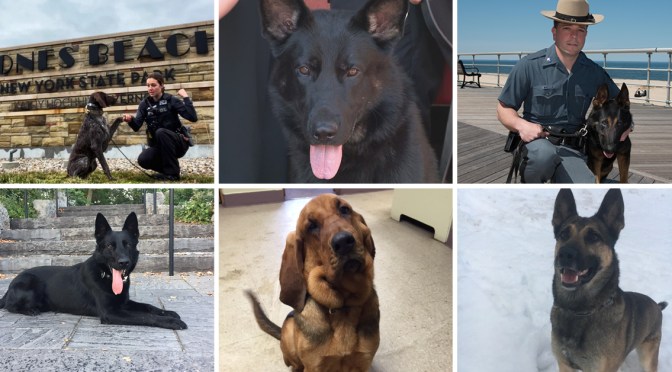
Since 2002, New York State Parks and Historic Sites have been proudly protected by a team of four-legged officers and their handlers. The K-9 program commenced in 2002 with two K-9 teams trained in explosive detection stationed on Long Island. The team expanded from there, adding four more K-9 teams stationed in the Niagara and Saratoga-Capital District Regions, and in the Hudson Valley, all primarily trained for finding explosive devices. This inaugural generation served with distinction until 2014, marked by the retirement of K-9 Chase from the Palisades Region.
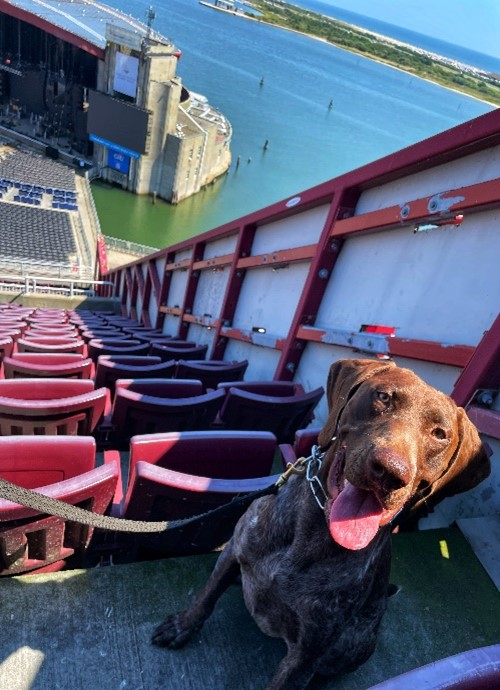
Park Police K-9s at work: Kairos sweeping Northwell Health Theater at Jones Beach, Travers at Saratoga Spa State Park, Niko investigating a crime scene in the Buffalo-Niagara region.
The K-9 force is larger and more diverse than ever today, with six K-9 teams throughout New York. The police dogs range in breeds and specialties, serving not only the State Parks system but the communities they live in, often being called in to help at large events and to find missing people. There is no typical day for a K-9 team. One day, they could be patrolling a park, and the next, tracking down perpetrators. Regardless of their task, they are well-prepared with each new pup undergoing extensive training to ensure they can handle whatever comes their way. Training ranges from explosive detection, search and rescue, tracking, and other disciplines well-suited for this unique breed of officer.
However, each pup is only half of the team. Their handler, a New York State Park Police Officer, is specially trained to work with K-9s and they must work in sync to be successful. Many of the handlers can only describe the relationship they build with their K-9 companions as “special” and their passion for their partners is clear. These teams work and live with each other every day. When not at work, these pups live life much like any other dog would, living at home with their handlers and their families, relaxing, playing, and receiving plenty of pets.
Let‘s dive into the biographies and backgrounds of each of these canine crimefighters, highlighting their unique personalities and showcasing some of the amazing things they have done to make the our state parks safer.
All are welcome at New York State Parks and Historic Sites, but getting to our facilities isn’t always easy. People who don’t have cars, for example, are often left to navigate transportation barriers that prevent them from accessing outdoor recreation opportunities.
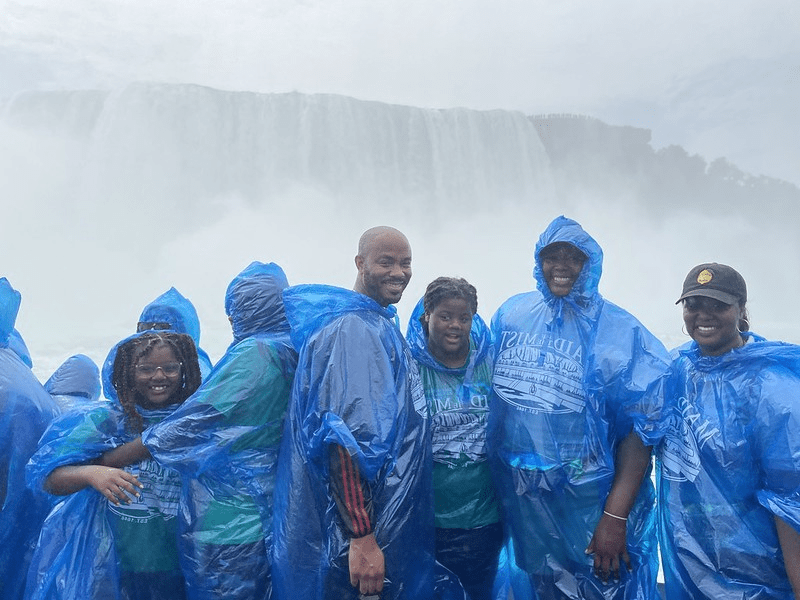
A group of adults and children experience the Maid Of The Mist at Niagara Falls through the Ladders to the Outdoors program.
KeJuan Harmon is actively working to bridge the access gap for kids to discover and experience the wonders of state parks firsthand. In his role as State Parks’ Statewide Ladders to the Outdoors Coordinator, Harmon is giving back to communities in Western and Central New York. As part of the Share Your Story project for our agency’s Centennial, he describes the magic that happens when kids experience the outdoors for the first time.
“One of the most surprising things since I started working with our State Parks is the invisible barrier of Niagara Falls, the amount of kids from within three or four miles of Niagara Falls that have never been.”
Art and artifact conservators are the guardians of our cultural heritage. Their fascinating work blends art and science to protect the treasures of the past for future generations. But that work is often invisible to the public.
The American Institute for Conservation showcases this field through the annual Ask A Conservator Day. This year, NY State Parks and Historic Sites’ Department of Historic Preservation conservators Elizabeth Robson (Paintings) and Paige Schmidt (Wooden Objects) took a break from their labs to answer questions about their work.
What do conservators do? What is outside the scope of their field?
Conservators are highly skilled, highly trained professionals who care for art and artifacts. They assess the condition of a particular object and carry out a course of treatment for it. They also provide guidance on how to store and exhibit an object or work of art.
Conservators also specialize in one area of expertise, such as paintings, paper, objects, textiles, or architecture. There are further specialties within these categories, like murals, books, photographs, frames, wooden objects, archaeological objects, metals, and more. While a conservator’s treatment may improve the aesthetics of an object (e.g. replacing missing paint), they never do so at the expense of any original material. Nor do they give appraisals of artworks or artifacts.
This Veterans Day, New York’s Office of State Parks and Historic Sites honors and recognizes our military veterans around the country. We are fortunate to have a number of veterans as members of our Parks family, and we thank them, not only for their service, but for sharing how their military experience informs their civilian roles within our agency.
Andrew Bresset, Neil Briggs, and Francis Cleveland.
Andrew Bresett is an Army veteran and a maintenance worker at Lakeside State Park in Waterport. He says his service taught him perseverance. “No matter the situation, we can always get through it,” he said. “I can get through any challenge that’s thrown my way.”
Neil Briggs is an Army veteran and a seasonal maintenance worker at Selkirk Shores State Park in Pulaski. As an equipment operator in the Army, he brings a wealth of experience to his position. He says that a highlight of his service was loading a multi-million-dollar computer onto a C145 airplane guided by a ‘Full-Bird’ Colonel.
Francis Cleveland works at Robert Treman, Buttermilk Falls and Allan Treman State Parks in the Finger Lakes. Before that, he served in the Marines. “I was a ‘jar head’ for six years,” he said. “I appreciated the comradery we all had. Gung Ho!” He credits his service with his strong work ethic and attention to detail. “I take my work seriously. Things need to be done right.”






 New York State Parks and Historic Sites Blog