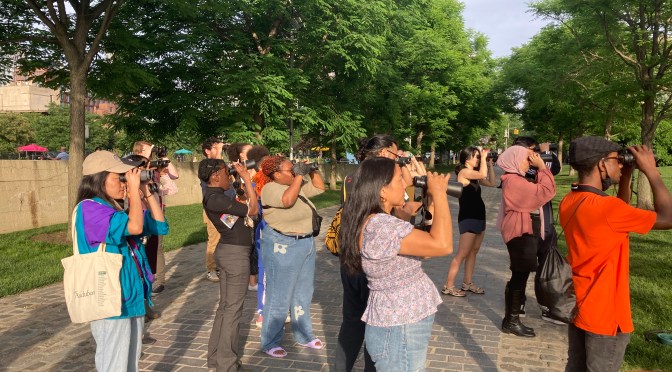
Black Birders Week 2023 kicks off at the end of May, and in collaboration with the organization Black AF In STEM, State Parks’ environmental educators from New York City invite you to join in celebrating and uplifting Black birders. From budding novices to seasoned experts, all birders, including those who aspire to learn more about birding generally, are welcome.
What is Black Birders Week?
On May 25, 2020, Christian Cooper – a Black man – was riding his bike through Central Park when he encountered a white woman with her dog in the Ramble and politely asked her to put her dog on a leash. As an avid birder, Mr. Cooper knew that the period between March 1 and July 31 is the main breeding period for ground nesting birds, and the Ramble is a prime nesting area. In response to Mr. Cooper’s request, the woman called 911 and asserted that an African American man was threatening her and her dog.
When the recorded cell phone video of Christian Cooper’s encounter went viral, it made national news and demonstrated the unique challenges Black people may face when engaging in outdoor activities. The incident, and others like it, led to the creation of “Black Birders Week” by Black AF In STEM, fortifying efforts to highlight Black nature enthusiasts and increase the visibility of Black people in environmental issues.
“Black Birders Week has made me even more aware of the dangers Black people face when we spend time in outdoor spaces, but it also helped me discover a vast community of Black birders and nature lovers around the country,” said Roslyn Rivas, Public Programs Manager at NYC Audubon and a guest facilitator for New York State Parks.
How and when can you participate?
From May 28, 2023 to June 3, 2023, NY State Parks is hosting a week-long series of events at two state parks named after historically prominent Black women who lived in New York City: Marsha P. Johnson State Park and Shirley Chisholm State Park.
All programs are free and materials are provided, including binoculars and bird guides. At each event, participants may enter a raffle to win special prizes including binoculars, plush Audubon birds, or a New York State Park Empire Pass!
“I never imagined there would be so many of us, and I have absolutely loved getting to make so many connections and new friends in this network,” said Rivas. “Black Birders Week is a time when we can come together and enjoy being outdoors without fear, especially when access to green space has been purposely limited for Black people throughout history.”
Twice a year, billions of birds migrate throughout the United States between their wintering and breeding grounds. These birds typically migrate south in the fall and will migrate north again in the spring. That means right now in New York State, birds are passing through as they travel down south to warmer climates. All types of birds will be seen migrating during the seasons, including warblers, shorebirds, raptors, and more.
Birds will usually spend their days saving their energy, resting, and finding food sources and during the night will use most of their energy flying. Migratory birds are typically nocturnal travelers, which means they gain the most mileage during the night hours. While we are asleep after an event filled day, there can be an estimated 150 million to upwards of 300 million birds travelling overhead in one given night. Even though the day is over for us and is our time to relax and unwind, the night hours are highly active for migrating birds!
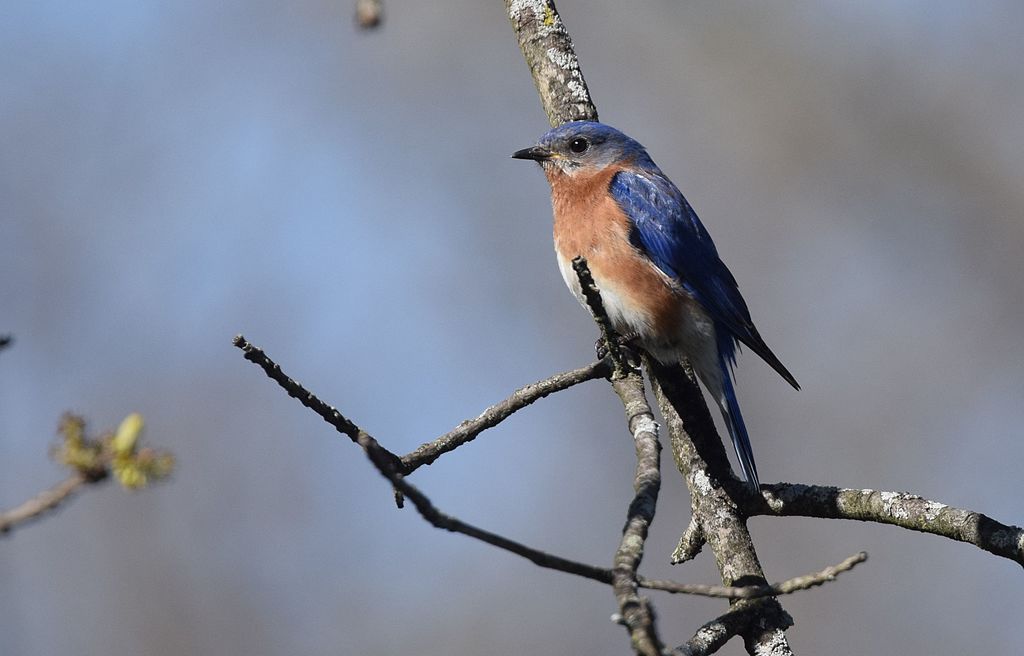
The official New York State bird, the Eastern Bluebird, migrates south in the fall to spend its winters in the southeaster U.S. or Mexico. (Photo credit – Wikipedia Commons)
Dark-eyed junco (female) migrate south into New York from Canada and sometimes hang around all winter. (Photo credit – Wikipedia Commons)
Nighttime migration poses different threats to these birds, particularly in big cities. Large buildings are typically lit up with hundreds of bright lights throughout all hours of the night. This light pollution can significantly change birds’ behaviors, including migration patterns, foraging for food, and communication with other birds in the area. Light pollution can distract the birds as they might start to think it is daytime, because they cannot process light sources like we can. All of these behaviors are a waste of energy for birds, making their long journey much more dangerous.
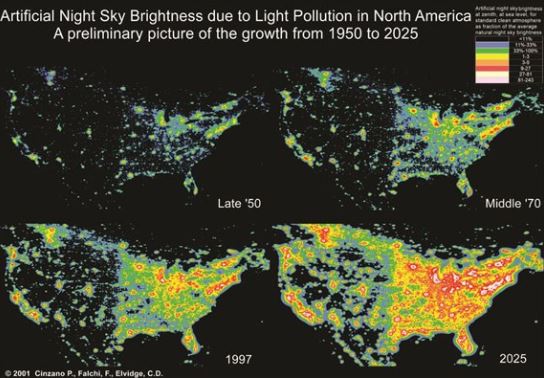
According to the National Park Service, nighttime light pollution in the U.S. has gotten much worse in decades after World War II, so much that now eight in ten Americans can no longer see the Milky Way. And this is an increasing issue for migrating birds.
This National Park Service map shows the growth of light pollution in the U.S. since the 1950s
Birds and State Parks
New York State Parks are a great place to visit to catch a view of migrating birds. The forests, meadows, wetlands, and other natural areas in State Parks provide some of the most crucial habitats for these birds along their journey, and have helped them survive over the years by offering shelter and food. In some parks there are specific areas designated as Bird Conservation Areas (BCAs). Of the 62 BCAs throughout the state, 27 are within State Parks.
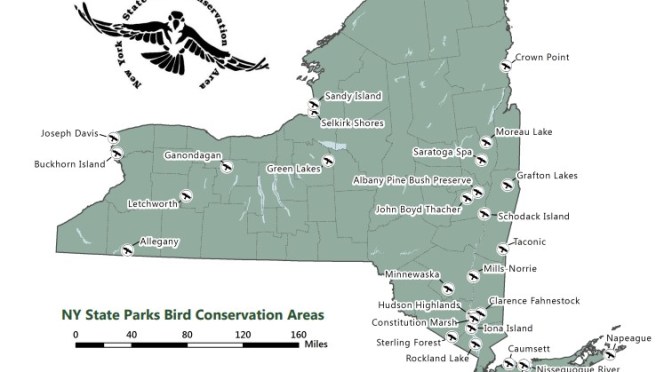
An area can be designated as a BCA if it is judged as important habitat for one or more species based on certain criteria. There are many BCA locations throughout the state, such as Saratoga Spa State Park that is home to more than 100 different bird species. You can find the location of Saratoga Spa State Park and other BCAs on the map provided below and the State Parks website. You can also check the State Parks events list for birding events near you!
A map of the Bird Conservation Area in Saratoga Spa State Park.
In addition to BCAs, there are also areas recognized nationwide by the National Audubon Society to help protect birds and their habitats; Important Bird Areas (IBAs). One example in New York State is Rockefeller State Park Preserve in Westchester county, and is home to 180 different bird species! Check out the National Audubon Website to see Rockefeller State Park Preserve and all the other IBAs in New York State.
What Is The “Lights Out” Movement?
The “Lights Out” movement is a nationwide event that was created in in Chicago in 1999 by the National Audubon Society to help reduce the number of bird fatalities. Since then, the effort has spread to cities including Atlanta, Baltimore, Boston, Cleveland, Dallas, Denver, Detroit, Kansas City, Milwaukee, Philadelphia, Pittsburgh, Portland, Salt Lake City, San Francisco, St. Louis and Washington, D.C.
Bird fatalities are more directly caused by the amount of energy birds are wasting during the night because of the heavy light pollution across the United States. This energy is being wasted on flying around, using more vocalization and the exhaustion is leaving them more vulnerable to other threats around them.
If you’re interested in watching migrations, a tool that can be used is the BirdCast migration tool. This website has many resources for nationwide and local monitoring. The nationwide mapping tools include a live forecast of the density of the birds migrating as well as a 3-day prediction forecast of what it could look like. In addition to the nationwide prediction forecast, you can also check out a live animated video of the current migration patterns each day!
Use the slider bar to see how the BirdCast migration changes between Oct. 6 and October 14.
Another neat tool that this website includes is a live local alerting map that is specific for a county, city, or town. The local maps tell you how many birds to expect flying over your area that night and what the next couple nights look like as well. This tool provides important information so you can participate in helping the birds during their migration.
There are two large windows for bird migrations;: one in the fall and one in the spring. Bird migration can take place from August through November with peak migration in October in the fall and from March through June with peak migration in May in the spring. Check out the links provided above to get more information on BirdCast and when peak migration is happening in your area!
How Can You Help?
Some suggestions to help get you started with the Lights Out Movement for nighttime hours:
Turn off exterior decorative lighting
Turn off interior lighting, or use curtains and blinds
Install automatic motion sensors and controls wherever possible
Click on the link to check out the full list of suggestions: Lights Out Movement. One of the local efforts is based in New York City.
After visiting State Parks and seeing the many different species of birds that are in New York State, it is important for all of us to do our part to help keep them safe. The National Audubon Society provides suggestions on how to decrease light pollution on a local level, which will help birds during their migration. It is estimated that 253 million annual bird deaths from collisions are from residential areas compared to 340 million from tall buildings and skyscrapers. Your part at home is just as important as businesses!
Participating in the Lights Out movement helps more birds safely reach their migration grounds, giving you and your family more opportunities to see them in New York State Parks! To make an official pledge with the movement, sign up here.
When we think about spring and fall in the northeast, we often dwell on the extraordinary changes that occur to our trees and other plants. In the spring, we yearn for green to replace the barren gray and white of winter; in fall we marvel at the warm oranges, reds, and yellows that are on…
On February 24, 2009, two visitors to Betty and Wilbur Davis State Park were enjoying a sunny walk on Davis Road when two BIG birds flew overhead, going north. “Golden Eagles!” exclaimed these experienced bird watchers. Both were volunteers at the Delaware Otsego Audubon Society’s (DOAS) Franklin Mountain Hawk Watch which is known for its…
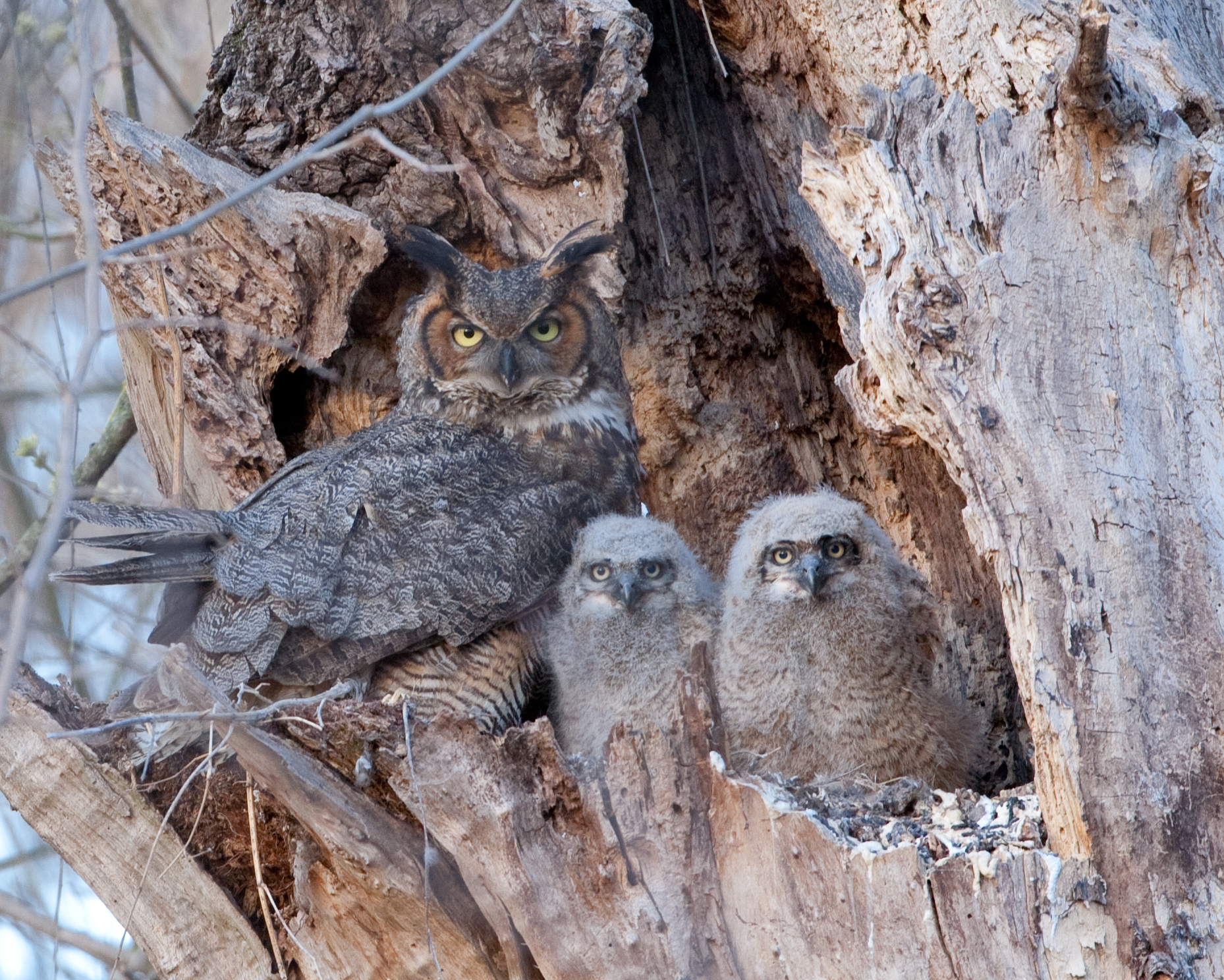
In the wild, February and March may seem like the worst time for a bird to raise a family, with challenges including frigid temps, sleet, wind, and snow. But this is no ordinary bird, this is a great bird—a Great Horned Owl (Bubo virginianus). These large, thick-bodied raptors- weighing in at 2.5 to 5 pounds with 4 ½ to 5’ wingspans – are one of the most widespread owls in North America and have plenty of ‘don’t mess with me’ moxie. They have a very diverse diet, including small mammals, rabbits, geese, herons, amphibians and reptiles, skunks, porcupines – and even other raptorial birds. It is this adaptability and tenacious behavior that gives them a leg up on surviving tough conditions.
Great Horned Owls are among the earliest birds to breed each year, with males staking out territory from other males beginning in October. Most Great Horned Owls mate for life and every autumn they reestablish their bonds by loudly calling to each other. Like many birds, they have a range of vocalizations. Their classic hoot is unmistakable, a deep slightly muffled resonating “hoo-h’HOO–hoo-hoo” call with the female’s voice slightly higher in pitch than the male’s.
While establishing their territory they will seek out a suitable nest. They don’t build their own– instead, they use abandoned real estate like an old Red-tailed Hawk nest or a hollowed tree cavity, even a cliff ledge will do.
Great Horned Owl, at the nest with her Owlets
When January arrives the parents-to-be will be settled in and ready to start a family. The female will lay 1-4 eggs and incubate the eggs for 30-37 days through all kinds of weather. Only the female can incubate the eggs as she has a featherless patch on her abdomen called a “brood patch,” an area that has many blood vessels and is very efficient at transferring her body heat to the eggs. While she is incubating and brooding the young chicks, the male will hunt for them, but if the food he provides is insufficient she will also hunt for the family. Great Horned Owls are large birds and it takes owlets longer to grow than say a robin and longer to develop and master complex skills.
Great-horned owl feathers have a velvety texture and combined with tiny serrations along each feather edges called flutes which muffle their wing beats allowing owls to silently swoop down on their prey unnoticed.
Nesting early is a risky move but there are definite advantages. By day 45, the young are fully feathered and capable of flight and by the time spring arrives, these youngsters are ready to practice their main craft– hunting. Not only are temperatures milder but there is now an abundance of young inexperienced prey animals, such as rabbits, mice, squirrels and chipmunks who are also venturing out on their own. These predators can now hone their flying and hunting skills under ideal conditions all because their parents were early birds.
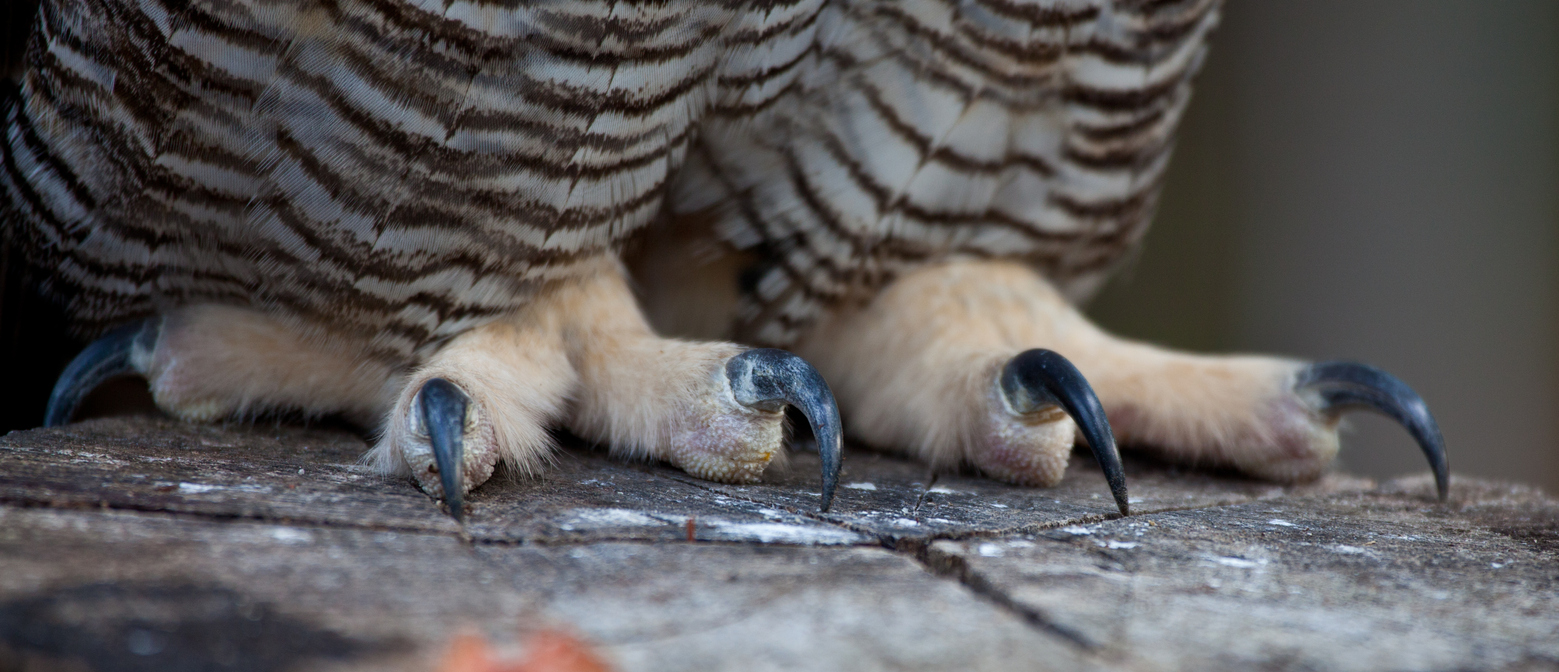
When clenched, an adult Great Horned Owl’s talons lock down like a ratchet and require a force of 28 lbs. to pry them back open.Owls have huge eyes compared to their body size– larger eyes are able to take in more light which is picked up by their rod- and cone-shaped photoreceptors. Rods allow them to see well in dim light, but colors, not as well. Cones help distinguish colors but only when our surroundings are well lit. Humans have about 200,000 rods per square millimeter while owls have close to a million rods per square millimeter. This is then magnified by the owl’s tapetum lucidum or ‘eyeshine,’ a feature humans do not have. This layer of tissue located behind the retina reflects all available light to those photoreceptor rods and provides superior night vision.
Spring is in the air and baby animals abound in our State Parks. Look and listen for some of these young critters in our parks. Remember, it is best to watch them from a distance so you do not scare the young animal or its parent. If you see a young animal that looks like it is abandoned, please leave it be. It is most likely fine on its own or has a parent close by and waiting for you to back away. It is fun to explore and watch, but don’t stay in one spot too long so that the animals can go back to their daily activities.
A class gets a close-up look at a young box turtle at Clay Pit Ponds State Park Preserve. The turtle was handled briefly and then released where it was found. If you find turtles crossing the road or trail, you can move them to safety by putting them on the side where they were headed.
A pair of young raccoons peek out from behind a tree at Fort Niagara State Park.
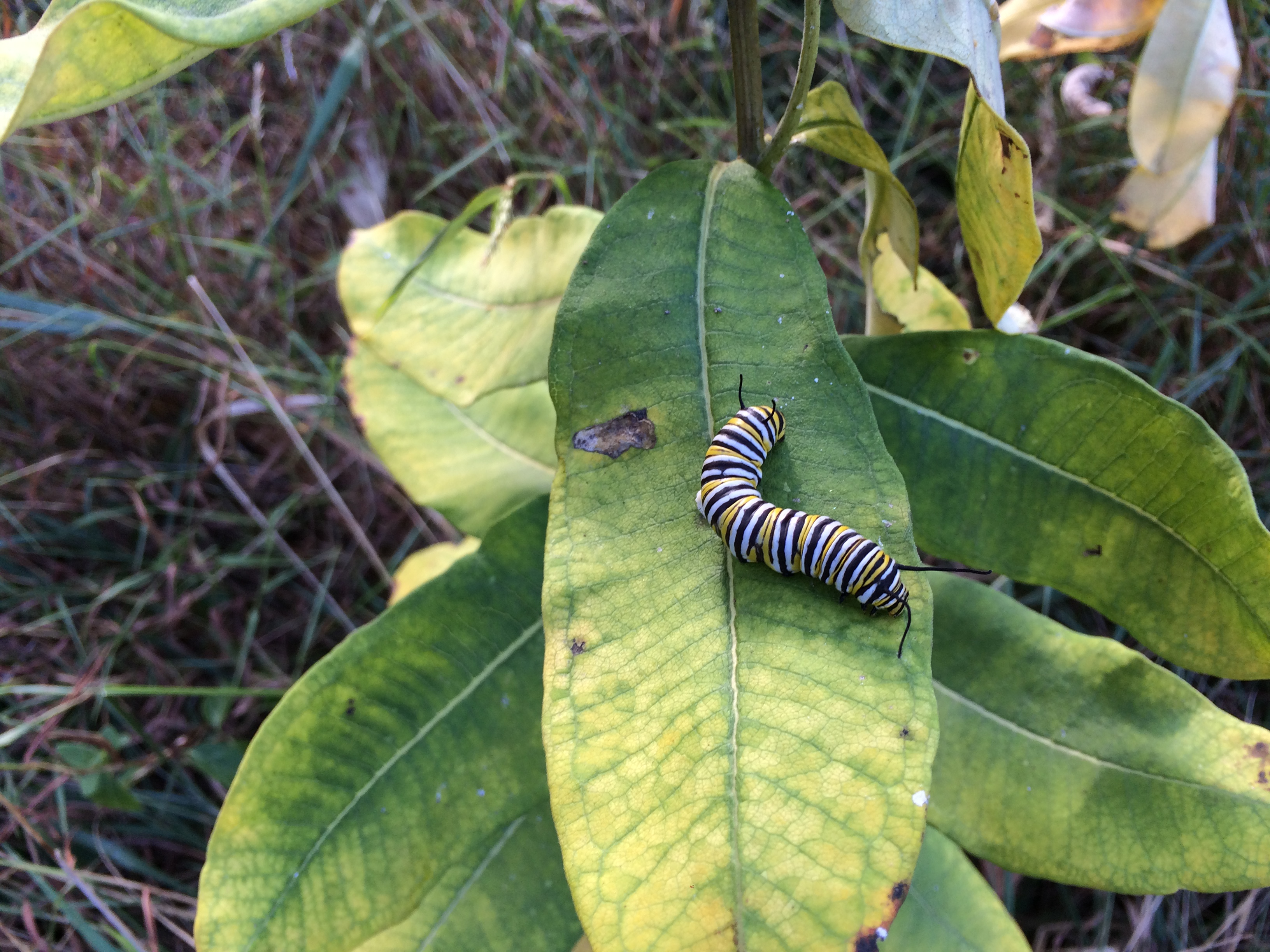
Common milkweed (Asclepias syriaca) is one of the monarch caterpillars preferred plants. You can find milkweed in along unmown trail edges and in meadows in many State Parks
A red fox vixen keeps a watchful eye over a pair of kits at Letchworth State Park.
Warm weather brings the honey bees back into action. Here, a drone honey bee (at left) is hatching from the hive at the Taconic Outdoor Education Center.
Canada geese and goslings at Jones Beach State Park. Adult geese can be pretty aggressive about protecting their babies, so watch quietly from a distance. The goslings can be a lot of fun to watch as they scurry about.
Mother mallard and her many ducklings.
A white-tailed deer fawn hiding in the brush at Letchworth State Park. The mother is close by, watching you and waiting for you to move on. You have to look hard and move quietly to get a chance to see these youngsters in the woods.
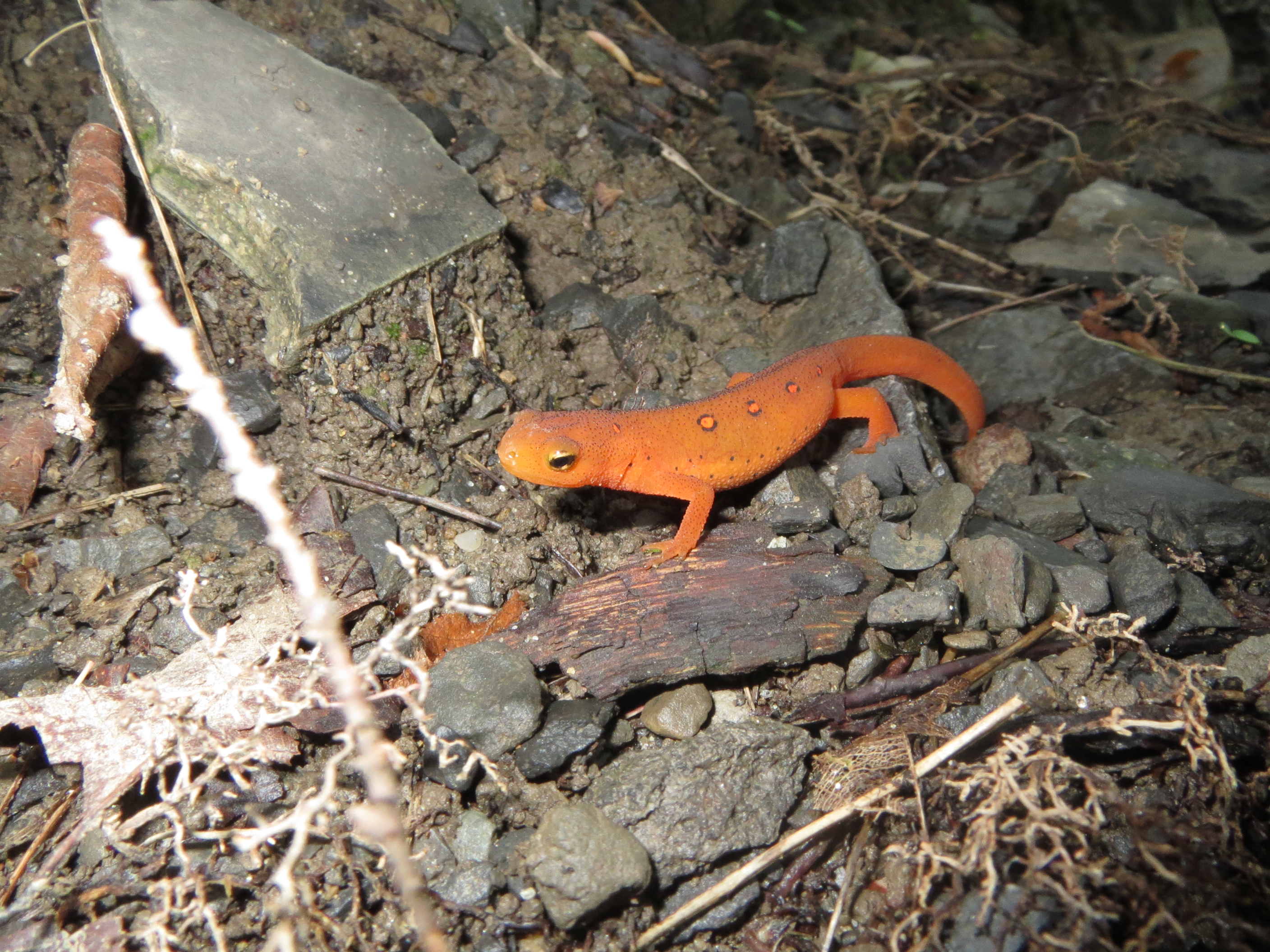
Red efts are the young stage of the aquatic eastern newt (Notophthalmus viridescens). You can hold this one gently, but keep it close to the ground as it will run right out of your hand. This one was seem at John Boyd Thacher State Park.
Red efts are the young stage of the aquatic eastern newt (Notophthalmus viridescens). You can hold this one gently, but keep it close to the ground as it will run right out of your hand. This one was seem at John Boyd Thacher State Park.
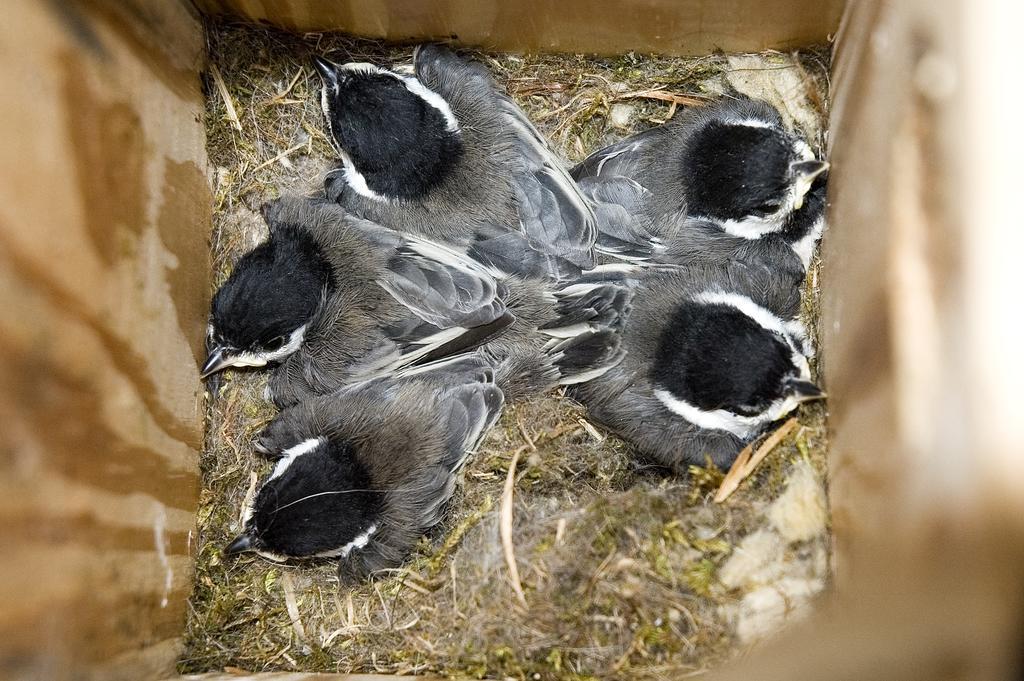
Black-capped chickadees nest in tree cavities or will use birdboxes as seen here.
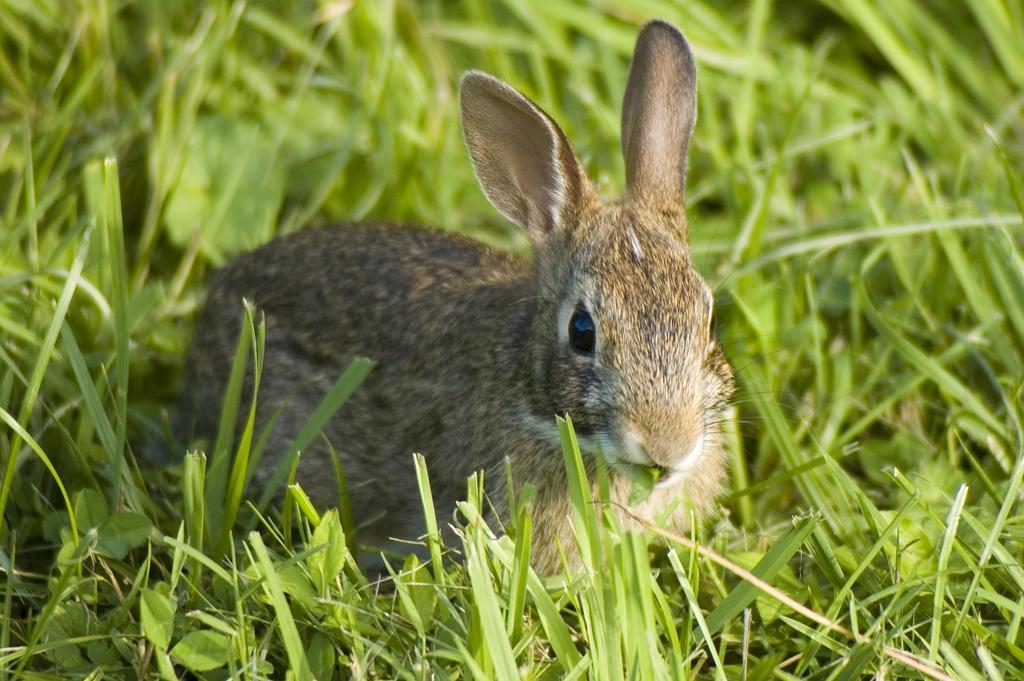
You might see Eastern cottontails in your back yard, local park or in the campground or picnic area in many of the state parks.
Bald eaglet are really big baby birds. This one has been banded by wildlife biologists. The blue and silver leg bands help identify the bird when it is seen elsewhere over the course of its adult life.
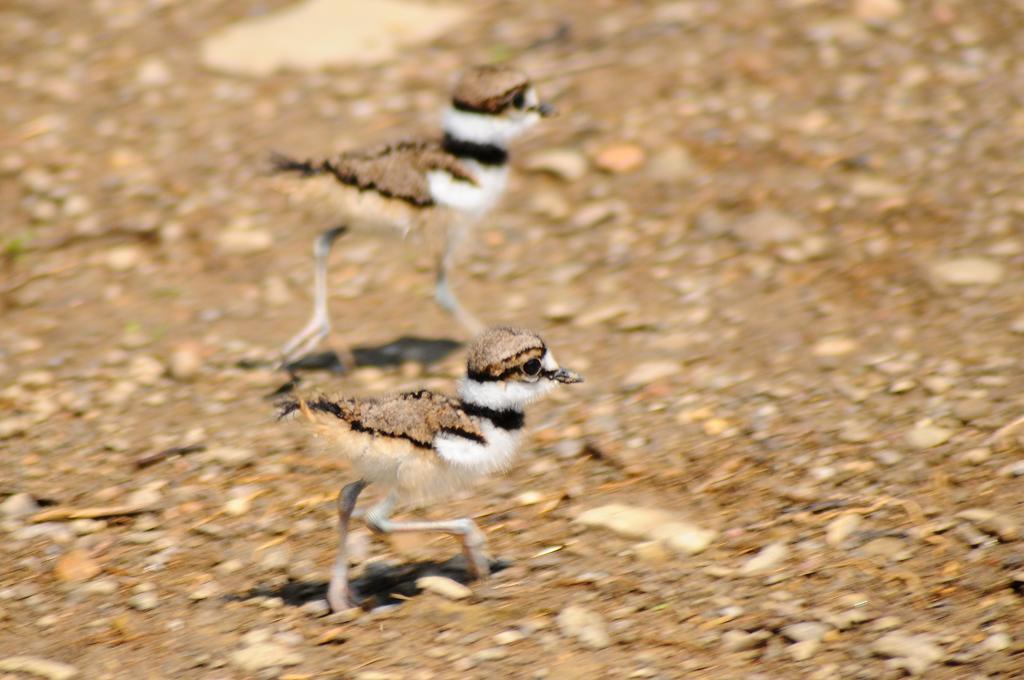
Young killdeer on the run at Allegany State Park. They have a really loud call and may be seen in open areas like lawns and parking lots! Killdeer are precocial birds, meaning they leave the nest shortly after they are hatched.
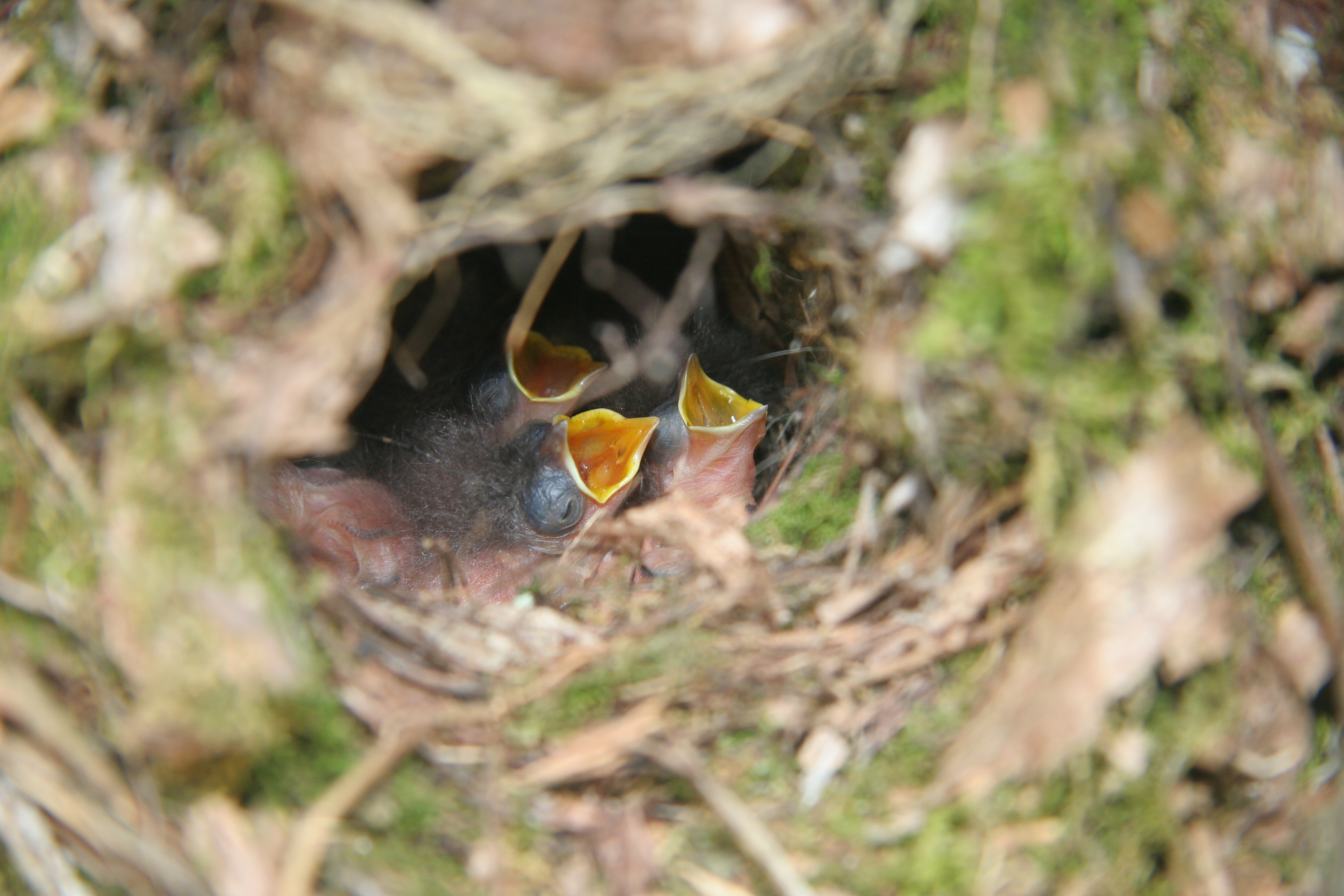
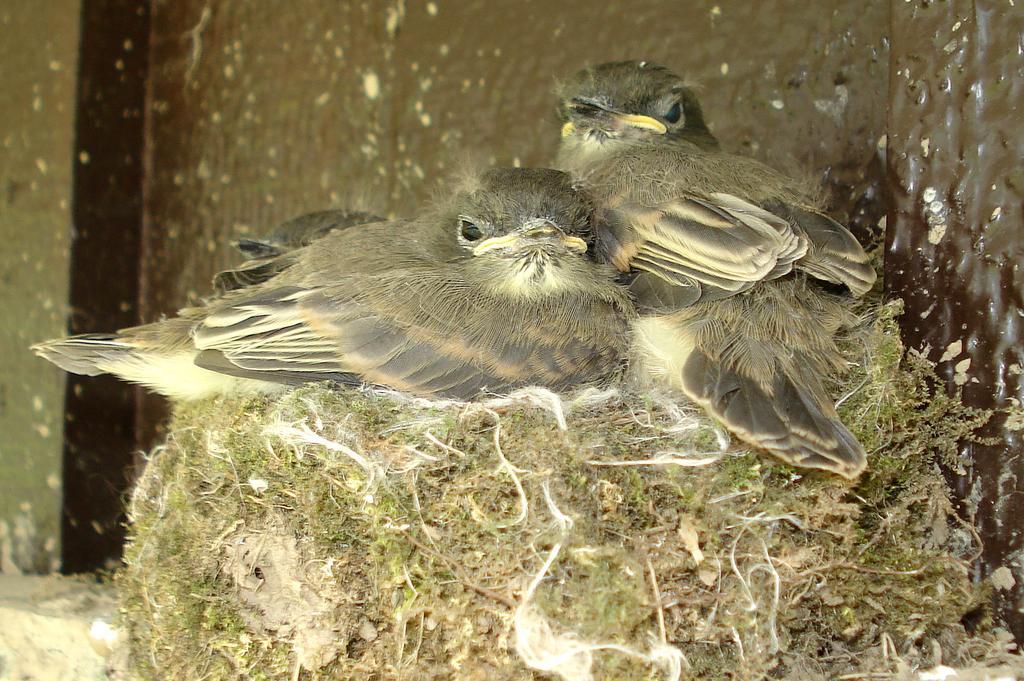
Eastern phoebe nestlings getting a little too big for their nest. Time to try out those wings.
Northern rough-winged swallow fledgling.
Young snapping turtle covered in duck weed from its pond. Remember that bigger snapping turtles bite, so keep your distance.
A very tiny wood frog, identifiable by the dark mask on its face. It’s ok to hold them gently for a bit, but let them go so they can grow up in their home in the woods.
Woodchuck mom and her pups in Allegany State Park. The white one was known as “Marshmallow.”
A young American woodcock hides in the underbrush, so well camouflaged and thus seldom seen.
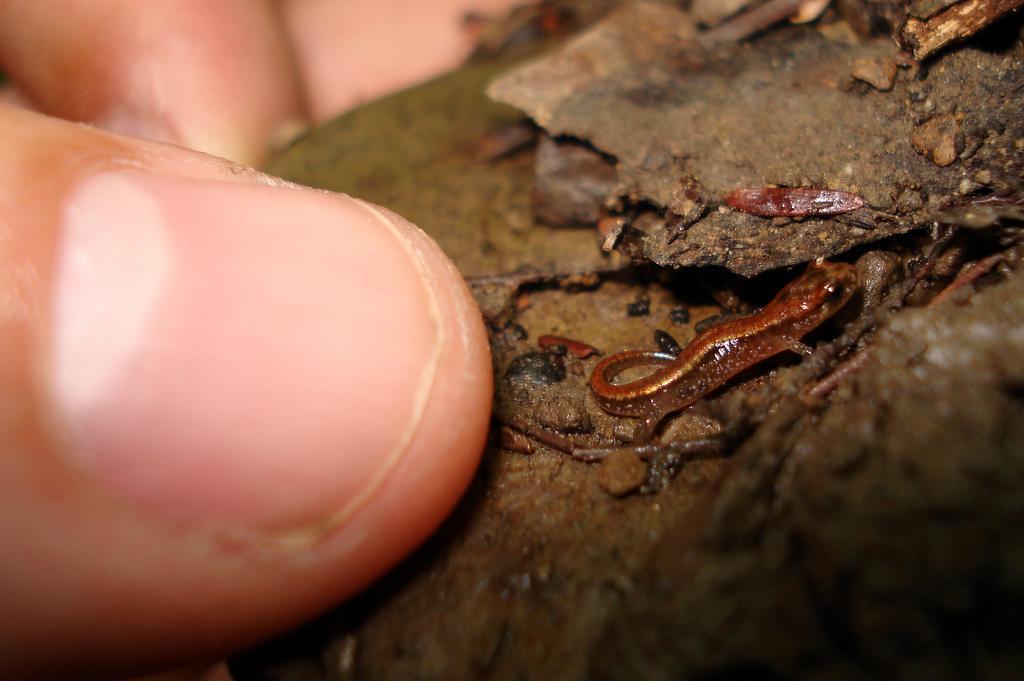
A young dusky salamander found in a wet log at Allegany State Park. It is great to explore and find young animals. Keeping hands off can keep them safe and allow you to observe their behavior in their natural habitat.
Take time this spring to enjoy our State Parks little critters!
Thank you to all staff who contributed to this post.
Between 1950 and 1972, chemical contaminations such as DDT almost eliminated bald eagles (Haliaeetus leucocephalus). The chemicals lead to soft, very breakable eggs resulting in no baby bald eagles and a drastic decline in the population, at which time the species was put on the NYS endangered species list as well as the federal list. By 1960, only one active eagle nest was known in New York State. So, in the late 1970’s, an intensive restoration program began to rebuild the population in the state, to hopefully remove them from the list. The program involved bringing in and raising wild bald eagles from the Great Lakes region and Alaska in hopes that the birds would reestablish the population here in New York. The project, known as “hacking”, was a big success! In 2014, a statewide survey found approximately 330 nests in New York, 250 of which were occupied by breeding pairs, causing the species to be moved from endangered status to threatened within the state. In addition, the birds’ successful recovery across the U.S. led to the removal of bald eagles from the federal Endangered Species list.
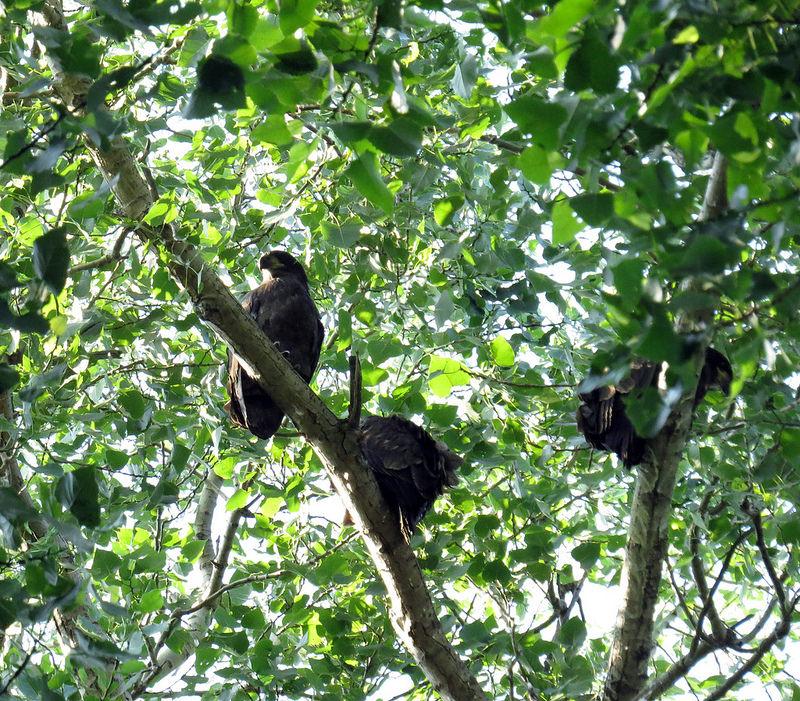
Immature bald eagles often hang out near the nest during the summer. Notice that these birds are all brown, indicating they were born this year. Photo by State Parks.
Bald eagles mate for life and will usually return to the same nesting site year after year, somewhere near their birth nest area. Bald eagle pairs perform various activities together before mating, such as sharing food, building the breeding nest, and sometimes even courtship flights. The nesting season in New York ranges from the beginning of January to the end of August. Between September and December some birds may stay if there is open water and ample food, while others may migrate to a wintering location. During the nesting season, the eagles are extremely sensitive to human disturbances, such as loud noises, fast movement, or being too close to the nest. If too many disturbances happen during the nesting season, the eagles may leave or even abandon their nest. This past summer, State Parks and the NYS Department of Environmental Conservation (DEC) enacted a plan to help protect the bald eagles nesting in Beaver Island State Park from these human disturbances. Similar protections are in place for eagles nesting in other State Parks such as on the Hudson River, Thousand Islands, and other regions.
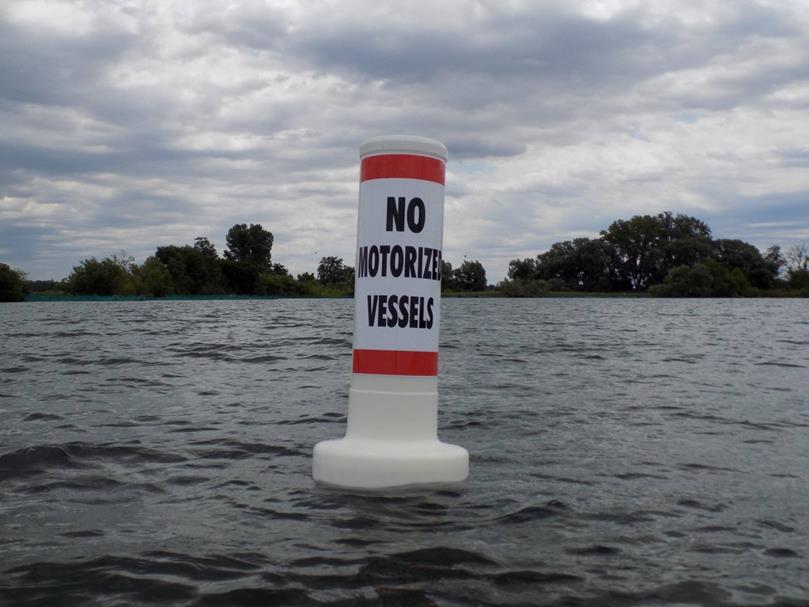
One of many “no motorized vessel” buoys located around the nesting area. Photo by Josh Wulf,2016.
One protective measure is to keep motorized vessels away from the nesting bald eagles. The “no motorized vessel” buoys extend 330 feet all around the nesting area in all directions. Non-motorized vessels such as kayaks or canoes are permitted. In all cases, there are still federal navigation laws around the islands to help protect the habitat, such as maintaining a 5 mph speed limit while within 100 feet of the shoreline. There are also signs on the land that note the edge of the prohibited area for anyone walking on foot. You can help by paying attention to signs to keep your distance from nesting eagles and also avoid disturbing groups of eagles you may see in the winter.
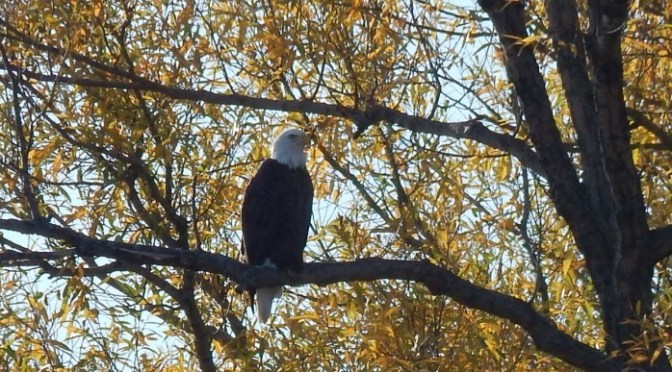
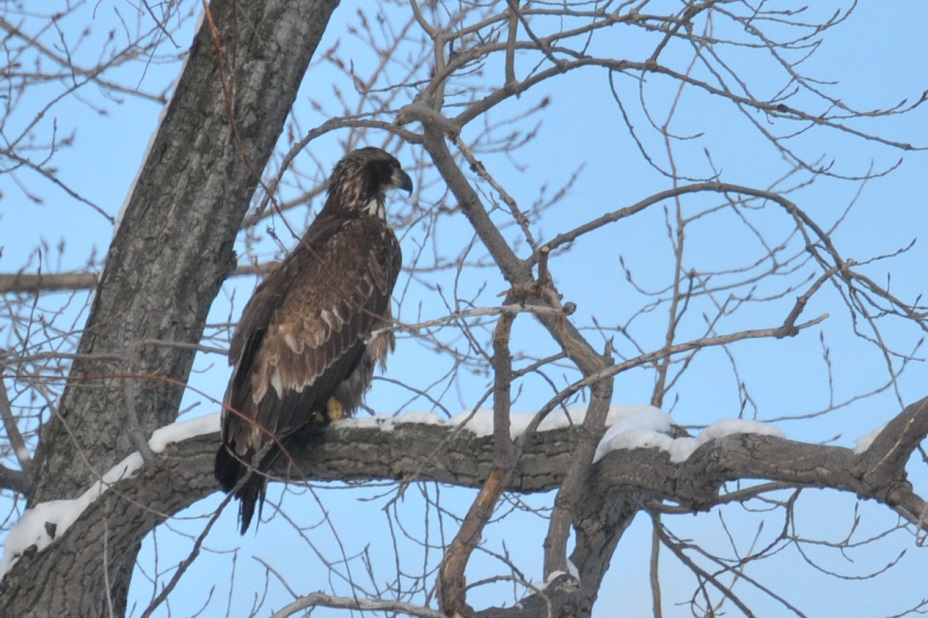
Immature bald eagle in late winter. Notice the white feathers are starting to come in, but the bird still lacks the white head of the adults. Photo by Gary McDannel, 2014.
Preserving and maintaining good habitat in State Parks has played an important role to the return of this majestic species. With the cooperation of everyone, we can continue to enjoy the wonder of seeing bald eagles on New York’s lakes and rivers, thanks to the remarkable recovery effort that brought the eagles back.
For more information on bald eagles and the protection, please visit the NYSDEC website:












 New York State Parks and Historic Sites Blog