

Following our Centennial anniversary, we continue to share the story of New York State Parks and Historic Sites through our interactive history timeline, Blazing a Trail: A History of NY State Parks and Historic Sites. Our latest addition to the series covers the 21st century history of New York’s state park and historic site system. “A New Millennium” details a new era of leadership, the threat of park closures, the creation of vital community partnerships, the impact of climate change, and vital investments in the late-2010s that helped position New York as a nationwide recreation destination.
Continue reading A New Millennium: ‘Blazing A Trail’ Covers New York State Parks’ Recent PastTag Archives: harmful algal blooms

People and Safety Procedures Behind Water Quality Testing at NY State Parks
As New York splashes the summer away, a dedicated team works behind the scenes to make sure our beaches are swim-ready.

Consisting of three permanent staff and a summer intern, the Water Quality Unit at New York State Parks is charged with coordinating water sampling at the 75 monitoring stations at 49 beaches throughout New York State. Based in Albany they work closely with other agencies to report and track their results.
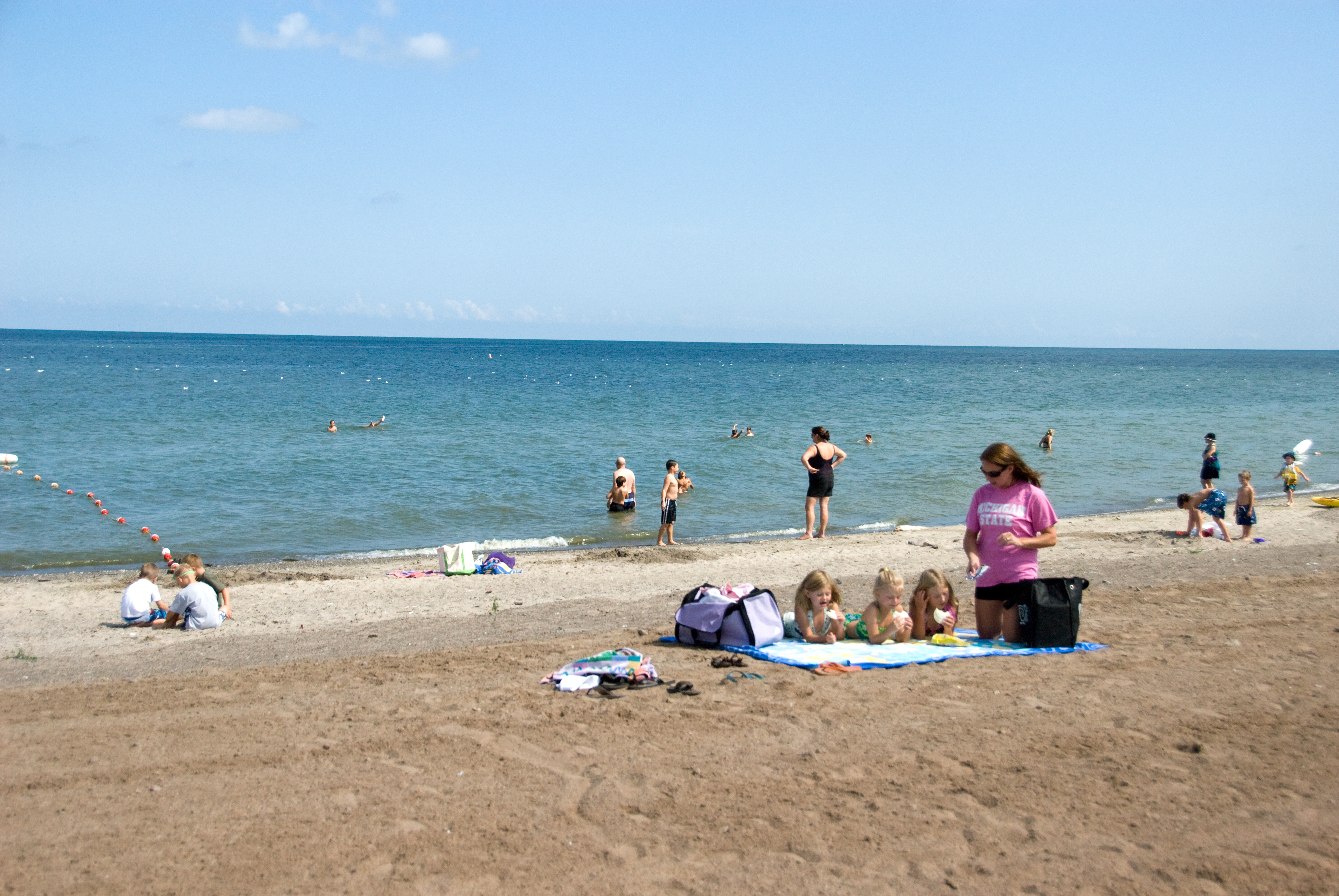
Water Quality Unit team members all agree that this is a job hiding in plain sight. While it’s essential to public health and appreciated by millions every summer, it’s generally under the radar of most of the people it benefits.
Continue reading People and Safety Procedures Behind Water Quality Testing at NY State Parks
Parks Water Quality Unit: Keeping Watch on our Beaches and Waterbodies
It’s finally June, which means the Water Quality Unit at New York State Parks is out in full swing for the 2019 summer season. Each year, staff from the Water Quality Unit coordinate water quality monitoring programs for many of the waterbodies within Park boundaries. A substantial portion of State Parks attendance is associated with recreational water use, so it is important to ensure the beaches are operated in a manner that is both safe for patrons and that protects this valuable resource for future use. The Beach program oversees weekly bacteriological sampling at 96 sampling stations within 60 parks, provides water quality training to Park staff, works on collaborative studies with other agencies, and ensures compliance with the Harmful Algal Bloom (HAB) protocol. Keep reading for an overview of each of these responsibilities!
Beach Locations
New York State Park Beaches are located across the entire state – from end to end and top to bottom; on small inland lakes, the Finger Lakes, the Great Lakes, the Niagara and St. Lawrence Rivers, and on the Ocean. This link will take you to the State Parks webpage where you can search for a beach near you or one you want to visit.

Weekly Sampling
Each guarded beach is sampled a minimum of once a week for E. coli (freshwater) or Enterococci (marine) bacteriological indicators during the swim season. The EPA defined regulatory limit for exceedances are greater than 235 E. coli colonies per 100 ml, and greater than 104 Enterococci colonies per 100 ml. If a sample comes back over the regulatory limit, the beach is sampled again, until a satisfactory result is reported by the certified laboratory. State Parks defines two categories of beaches: Category 1 (must resample and may remain open), and Category 2 (must resample and close immediately). Click here to learn more about beach categories and closure criteria. The data collected for the beach water quality program is carefully entered into large databases that are used for report generation, data evaluation, and reporting to regulatory agencies that in turn provide funding for beach sampling.
Beach Water Quality Training and Education
The Water Quality Unit provides regional trainings to park staff on how to properly collect a water sample, when to close or re-open a beach, and how to identify specific algae. The unit also conducts sanitary surveys to identify potential pollution sources and assists staff with site-specific questions and needs. In addition, the unit develops and/or distributes educational materials on potential waterborne illnesses and other water-related topics.
Water Quality Collaborations
The Water Quality Unit routinely collaborates with other agencies and organizations such as the United States Geological Survey (USGS), the New York State Department of Health (NYSDOH), New York State Department of Environmental Conservation (NYSDEC) and colleges and universities on subjects such as E. coli predictive modeling and HAB occurrences. State Parks collects and shares data with these agencies to help further current research. Check out this link Cornell at Work in NYS Parks to see Professor Ruth Richardson from Cornell University at work in Buttermilk Falls State Park testing out a new technology!

Harmful Algal Blooms
Research on the occurrence of HABs is still in full bloom both in the United States and worldwide. In past years, State Parks has seen HABs on our beloved lakes and beaches, sometimes for the first time ever noted. While this can be a startling discovery on a beautiful morning, be secure in knowing that State Parks has in place a firm reporting and response protocol for blooms observed both at beaches and non-beaches. State Parks follows guidance from the NYSDOH and NYSDEC in closing and re-opening beaches suffering from a HAB, and in posting signage and warning the public of an existing HAB on a State Park waterbody.
To learn what harmful algal blooms look like, click here for a link to last year’s blog on HABs and a summary of the concentrated effort being made in New York State to address HAB occurrences.
Post by Amy LaBarge, Ocean and Great Lakes Beach Water Quality Coordinator
Harmful Algal Blooms: New York State Takes Action in 2018!
There has been a lot of activity in New York State this spring regarding Harmful Algal Blooms (HABs)! In an effort to raise awareness regarding HABS, Governor Cuomo called together four HAB Summit Meetings across the State (February 27 in New Paltz, March 6 at SUNY ESF, March 20 in Ticonderoga, and March 26 in Rochester). Leading experts from the Department of Health (DOH), Department of Environmental Conservation (DEC), Department of Agriculture and Markets (DAM) and other state and national experts convened to discuss and address the causes of algal blooms in 12 priority waterbodies across the state. The meetings were the first step in the development of action plans to address HAB occurrences in each waterbody. Of the 12 priority waterbodies chosen as part of the Governor’s initiative to combat HABs, five of them are the home of State Park’s beaches, marinas, or campgrounds (Conesus Lake, Honeoye Lake, Chautauqua Lake, Cayuga Lake and Lake Champlain). The action plans will be used to implement monitoring and treatment projects related to HABS.
What’s the problem with HABs?
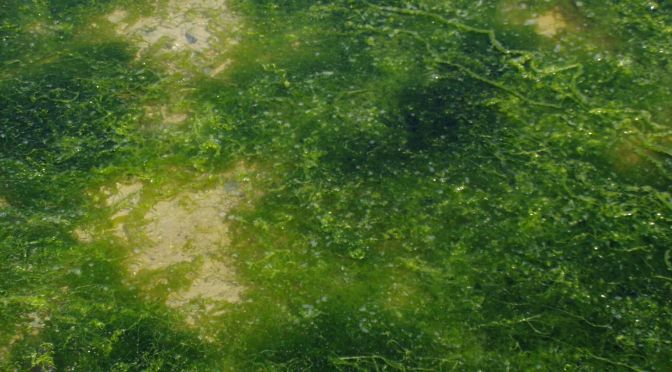
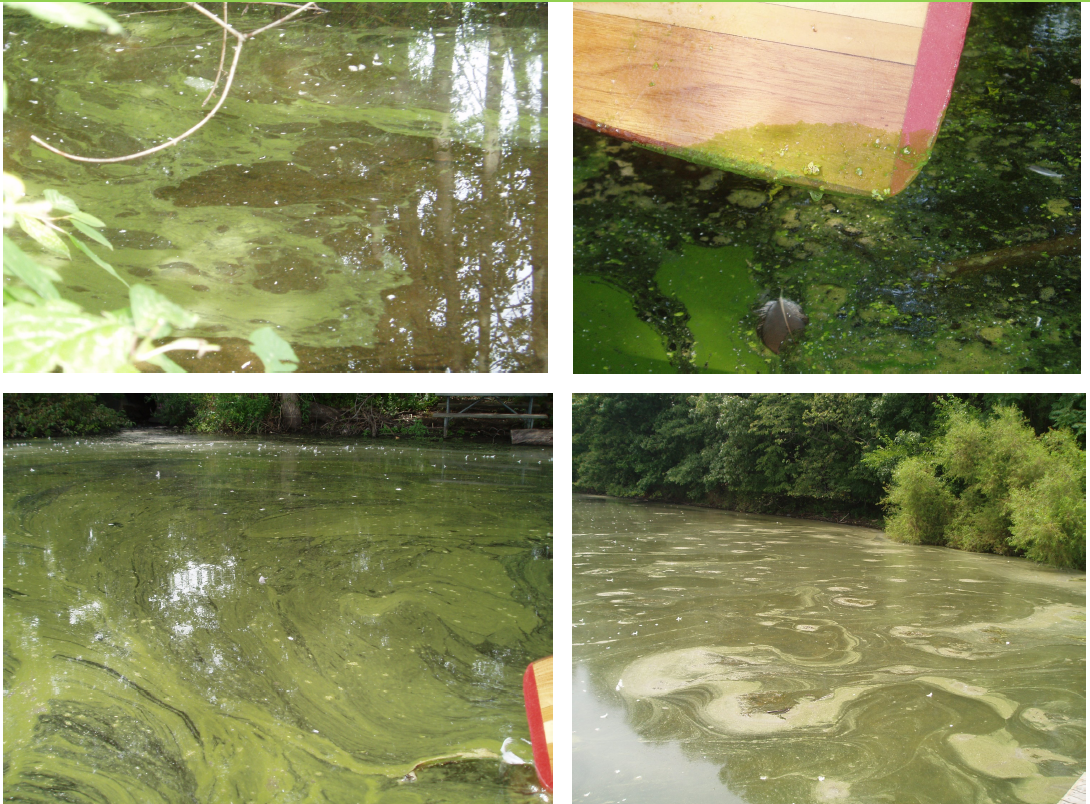
You might see a couple of different terms used in association with HABs, but they mean the same thing: cyanobacteria and blue green algae are used interchangeably. The term “blue-green algae” is a misnomer; it is not truly algae. It is a type of bacteria called cyanobacteria that is capable of photosynthesis. An algal “bloom” consists of cyanobacteria in great enough numbers of cells to be seen by the naked eye. Some algal blooms can produce toxins, but not all do. When an algal bloom produces toxins, it is called a Harmful Algal Bloom. HABs can thrive when certain conditions are met, including warm weather, stagnant water, and sufficient nutrients in the water body. The bacteria can form dense mats on the surface of a lake or can be suspended in the water column. The blooms can be brightly colored and look like pea soup, spilled paint, or an oily scum/sheen that coats the lake surface. The blooms move around the lake in response to wind and currents, tend to accumulate at shorelines, and can move vertically in the water column to find the perfect nutrient and temperature conditions to flourish. Blooms occur most often in waters high in phosphorous and/or nitrogen, and research is ramping up to determine the exact causes of algal blooms.
Because of the potential for blooms to produce toxins, it is important to keep people and pets out of the water during a bloom. The toxins can make people and animals sick, and toxin exposure can cause a range of symptoms, including rashes, respiratory irritation, gastrointestinal troubles, and effects on the liver. HABs may also impact drinking water and recreational activities, and can cause unpleasant odors.
It is State Parks Policy to follow the DOH protocol and close bathing beaches when a HAB is present. To re-open a beach at a State Park, the beach must be free of any signs of a bloom for 24 hours, and a water sample must be submitted for toxin analysis.
The Big Message for the 2018 Beach Season
Know it, Avoid it, Report it. Learn what a bloom looks like, avoid it, and make sure to report it to the Park Manager if you see a potential bloom at a State Park. You can also notify the NYS Department of Environmental Conservation, or harmfulalgae@health.ny.gov
HAB Photos from State Parks:
Below are a few links to learn more about HABs!
NYS Department of Health: Harmful Blue-Green Algae Blooms
Environmental Protection Agency: Cyanobacterial Harmful Algal Blooms in Water
NYS Department of Environmental Conservation: Harmful Algal Blooms

Floating Treatment Wetlands at Rockland Lake State Park
You may have noticed something new in the water at Rockland Lake State Park. These are floating treatment wetlands! Read our post below to find out more about these water treatment platforms.
Why are they here?
In recent years, harmful algal blooms have become common in Rockland Lake. These algae blooms are largely caused by an unhealthy increase in nutrients such as phosphorous in the lake. The nutrients come from many sources nearby, including excess lawn/garden fertilizers that wash into storm ditches after a rainfall, then drain into Rockland Lake. One culvert (inlet) with consistently high nutrient levels is located near Parking Field 5 and it was chosen as the location for a new floating treatment wetland. The goal of adding a floating wetland to the lake is to reduce the amount of nutrients – and by extension, harmful algal blooms – in the lake.
What are they?
Floating treatment wetlands (a.k.a. floating wetlands/islands) help to bring the benefits of natural wetlands to polluted water. They filter water to improve water quality and they provide important habitat for a variety of plants and animals. Floating wetlands can come in different shapes and sizes, but in general, wetland plants are supported atop a buoyant platform, with roots exposed in the lake water below.
What do they do?
Floating treatment wetlands help to create the right balance of submerged and non-submerged wetland habitat based on each individual site’s needs. As the plants grow, they use-up excess nutrients in the water. In addition, communities of beneficial bacteria form a film around the roots, further helping to filter nutrients and pollutants. Higher/lower elevations create areas with varying oxygen levels, promoting these different biological filtering methods. The floating platform blocks sunlight, preventing the growth of algae. Lastly, fish and wildlife enjoy the new addition to their habitat.

Floating wetland materials arrive by truck in late July 2017, photo by State Parks

More floating wetland materials. Plants from a local nursery include: tussock sedge (Carex stricta), swamp rosemallow (Hibiscus moscheutos), Blueflag iris (Iris versicolor), and soft rush (Juncus effuses), photo by State Parks

Floating wetland materials. These special polyester supports will help hold the plants in-place for years to come., photo by State Parks

Constructing the floating wetland! Some of the plants are submerged, while others are elevated on an island., photo by State Parks

One of several floating wetland units., photo by State Parks

Constructing the floating wetland! Units are assembled near the shore, to be later brought to the target location., photo by State Parks.

Another close-up, with thin netting around the edge to protect the young plants from birds., photo by State Parks.

Close-up of a floating wetland unit. Brick weights help keep the plants evenly balanced, with roots below water, photo by State Parks.

Floating wetland at Parking Field 5 culvert, September 2017, photo by State Parks.

Finished floating wetland, installed at Parking Field 5 culvert. The green “spilled paint” look on the water is a harmful algal bloom. Photo from early August 2017, photo by State Parks.
This is the first time that floating treatment wetlands have been used in New York State Parks. Environmental staff will determine the effectiveness of this project by monitoring water quality changes over time (e.g. harmful nutrient levels and algal blooms by the inlet as well as lake-wide). If successful, then floating wetlands may be used to help treat stormwater pollution and improve other aquatic habitats in New York.
Post by April Brun, Gabriella Cebada Mora, and Erin Lennon.
Rockland photos by Gabriella Cebada Mora, Aissa Feldmann, Matt Brincka, and Erin Lennon.
Resources
Floating Island/Wetland images and information
US Environmental Protection Agency information on nutrient pollution and harmful algal blooms:
(Website) (Video)
NYS Dept. of Environmental Conservation information on fertilizers and how to reduce nutrient runoff:
 New York State Parks and Historic Sites Blog