John Burroughs: A Naturalist for the Ages

Upon his death in 1921, the New York Times devoted an entire page to John Burroughs.  The New York State Senate adjourned, and the Daily Times of Los Angeles reported that a resolution passed in Burroughs’ honor by the California State Assembly – it read in part, “whereas press dispatches today announce the death of John Burroughs, foremost naturalist of the United States, be it resolved that in his death the nation has sustained the loss of one who as scientist, citizen and man, occupied a deservedly high place in the regard of all people…”

When I was in my teens, I stumbled upon one of John Burroughs’ 27 books in a local library.  His writing was simple yet elegant and wonderfully descriptive of the natural world.  I was hooked.

Every walk in the woods is a religious rite, every bath in a stream is a saving ordination.

Who was this man of such great fame 100 years ago but who today is almost forgotten?

John Burroughs was first and foremost a farmer who developed an intimate, deep-rooted connection with the land.  Born in 1837, Burroughs dropped out of school after the sixth grade.  He spent 17 years working on his family’s farm and read every single book from his small local library.  His father was a strict Baptist, but Burroughs resisted organized religion.

jb-looking-at-a-bird

I never went to Sunday school and was not often seen inside the church.  My Sunday’s were spent roaming in the woods or fields… following the streams and swimming in the pools. 


He briefly attended the Cooperstown Seminary, but formal schooling was not for him.

I can learn more about a cat by it jumping on my lap than by dissecting it in a laboratory.

 At age 20, Burroughs married Ursula North, and like most of his family and acquaintances, she did not support his intense interest in writing.  Undaunted, Burroughs began to write seriously for the Saturday Press and the New York Leader. By age 23, he was regularly publishing essays in the Atlantic Monthly and would continue to do so for the rest of his career.

At age 26, he met Ralph Waldo Emerson who was a great influence on him as a writer.  He then moved to Washington D.C. where he met another writing mentor, Walt Whitman, who ultimately became a close friend.  By age 48, Burroughs was a full-time writer and farmer gleaning much of his inspiration for his essays from the natural world that surrounded him.  This is what set him apart from other writers of his time(?).

John Burroughs is credited with inventing the nature essay, a truly American form of creative writing, and he did so in a way that spoke to the masses.  His writings soon became standard in popular magazines, as well as in many schools across the nation where his descriptions of nature enthralled students and piqued their interest in the out-of-doors.

The student and lover of nature has this advantage over people who gad up and down the world, seeking some novelty or excitement; he has only to stay at home and see the procession pass.  The great globe swings around to him like a revolving showcase.

By his late sixties, John Burroughs was a household name across the nation.  He had befriended John Muir and traveled with him as the naturalist on the Harriman Alaska Expedition in 1899.  Industrialists of the age, including Edison, Firestone and Ford, sought out John Burroughs as the guest naturalist on camping expeditions.  President Roosevelt, a big fan of Burroughs’ essays, steamed up the Hudson River in his presidential yacht to visit the famous writer at his small writing cabin that Burroughs had named “Slabsides.”

The most precious things in life are near at hand, without money and without price.  All that I have ever had or will have can be yours by reaching forth your hand and taking it.

It is impossible to know what influence Burroughs’ work and friendship had on all of these important figures in American history.  What we do know is the extent to which they sought him out, and undoubtedly he helped form their impressions of the natural world and man’s relationship to it.

Our civilization is terribly expensive to all of its natural resources.  One hundred years of modern life doubtless exhausts its stores more than a millennium of the life of antiquity.

John Burroughs died at age 84 on a train heading for home from California.  He was laid to rest in his home town of Roxbury, New York, adjacent to what he referred to as “boyhood rock”, the giant rock he played on as a child.  The property and gravesite are proudly maintained by New York State Parks.  His summer get-away home in his later years, “Woodchuck Lodge”, stands adjacent to his gravesite and is maintained by “Woodchuck Lodge Inc.”  His writing cabin “Slabsides” in West Park, New York, is maintained by the John Burroughs Association.

John Burroughs’ nature writing remains relevant today for several reasons, but perhaps most importantly, because it focuses on nature close at hand, right outside our door.  Wherever we are, there too is nature with all its mystery and wonder.

Young people (and old) are getting outside less, suffering from what Richard Louv described in his book “Last Child in the Woods” as nature deficit disorder.  All of us at State Parks play a critical role in reversing this trend.  We are providing more and more opportunities for young people to get outside to learn about nature and have fun while enjoying the great outdoors!

I suspect John Burroughs would approve.

I am not always in sympathy with nature study as pursued in schools… such study is too cold, too mechanical and likely to rub the bloom off of nature.  It lacks soul and emotion, it misses the accessories of the open air and its exhilarations.

Post by Tom Alworth, State Parks
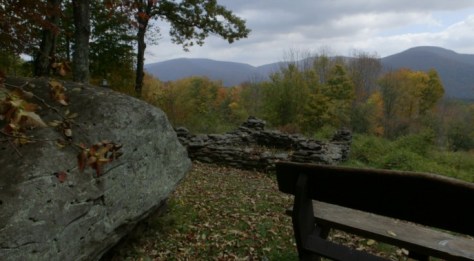
boyhood-rock-and-gravesite
Boyhood Rock and Gravesite, photo by Tom Alworth

Featured image John Burroughs and grandchild courtesy of New York State Archives
The Return of the Eagle

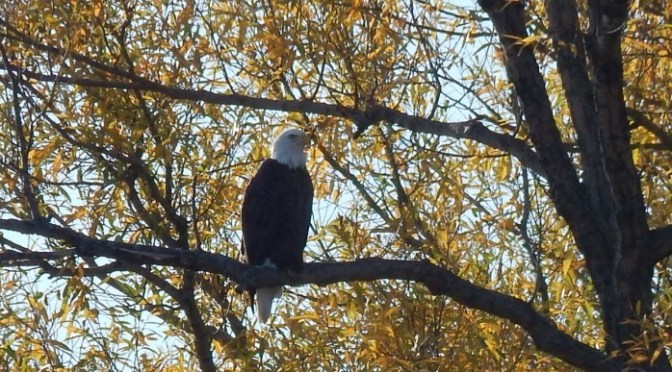
Between 1950 and 1972, chemical contaminations such as DDT almost eliminated bald eagles (Haliaeetus leucocephalus). The chemicals lead to soft, very breakable eggs resulting in no baby bald eagles and a drastic decline in the population, at which time the species was put on the NYS endangered species list as well as the federal list. By 1960, only one active eagle nest was known in New York State. So, in the late 1970’s, an intensive restoration program began to rebuild the population in the state, to hopefully remove them from the list. The program involved bringing in and raising wild bald eagles from the Great Lakes region and Alaska in hopes that the birds would reestablish the population here in New York. The project, known as “hacking”, was a big success! In 2014, a statewide survey found approximately 330 nests in New York, 250 of which were occupied by breeding pairs, causing the species to be moved from  endangered status to threatened within the state. In addition, the birds’ successful recovery across the U.S. led to the removal of bald eagles from the federal Endangered Species list.

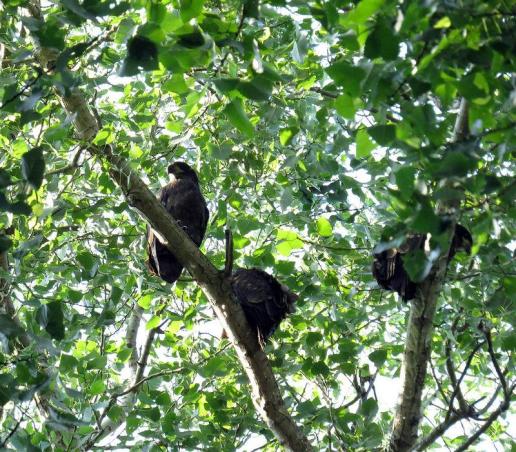
immature-bald-eagles-often-hang-out-near-the-nest-during-the-summer-notice-that-these-birds-are-all-brown-indicating-they-were-born-this-year-photo-by-state-parks-july-2014
Immature bald eagles often hang out near the nest during the summer. Notice that these birds are all brown, indicating they were born this year. Photo by State Parks.

Bald eagles mate for life and will usually return to the same nesting site year after year, somewhere near their birth nest area. Bald eagle pairs perform various activities together before mating, such as sharing food, building the breeding nest, and sometimes even courtship flights. The nesting season in New York ranges from the beginning of January to the end of August. Between September and December some birds may stay if there is open water and ample food, while others may migrate to a wintering location. During the nesting season, the eagles are extremely sensitive to human disturbances, such as loud noises, fast movement, or being too close to the nest. If too many disturbances happen during the nesting season, the eagles may leave or even abandon their nest. This past summer, State Parks and the NYS Department of Environmental Conservation (DEC) enacted a plan to help protect the bald eagles nesting in Beaver Island State Park from these human disturbances. Similar protections are in place for eagles nesting in other State Parks such as on the Hudson River, Thousand Islands, and other regions.

one-of-many-no-motorized-vessel-buoys-located-around-the-nesting-area-photo-by-josh-wulf-july-2016
One of many “no motorized vessel” buoys located around the nesting area. Photo by Josh Wulf,2016.

One protective measure is to keep motorized vessels away from the nesting bald eagles. The “no motorized vessel” buoys extend 330 feet all around the nesting area in all directions. Non-motorized vessels such as kayaks or canoes are permitted. In all cases, there are still federal navigation laws around the islands to help protect the habitat, such as maintaining a 5 mph speed limit while within 100 feet of the shoreline. There are also signs on the land that note the edge of the prohibited area for anyone walking on foot. You can help by paying attention to signs to keep your distance from nesting eagles and also avoid disturbing groups of eagles you may see in the winter.

immature-bald-eagle-in-late-winter-notice-the-white-feathers-are-starting-to-come-in-but-the-bird-still-lacks-the-white-head-of-the-adults-photo-by-gary-mcdannel-2014
Immature bald eagle in late winter. Notice the white feathers are starting to come in, but the bird still lacks the white head of the adults. Photo by Gary McDannel, 2014.

Preserving and maintaining good habitat in State Parks has played an important role to the return of this majestic species. With the cooperation of everyone, we can continue to enjoy the wonder of seeing bald eagles on New York’s lakes and rivers, thanks to the remarkable recovery effort that brought the eagles back.

For more information on bald eagles and the protection, please visit the NYSDEC website:

Viewing Tips

Life History

Protection

Post by Jillian Harris, State Parks


Have Some Winter Fun With Your Friends and Family – Go Snowmobiling

You may not see any snow when you look out the window right now, but winter is here and now is the time to think about all of the outdoor activities it brings. One of the best ways to experience New York State’s natural winter beauty is on a snowmobile, exploring the snowmobile trail system that crisscrosses 45 counties through woods, fields, towns and our State Parks.  Snowmobiling is a fun, family-friendly way to enjoy winter scenery and wildlife, especially for those people with disabilities who are unable to do strenuous activities like cross-country skiing and snowshoeing.

With over 10,000 miles of public trails, there’s something for everyone to enjoy from local loops to weekend getaways. Many of our parks have trails connecting to the statewide trail system.  And some parks, like Allegany State Park, have not only over 60 miles of groomed trails but also winterized cabins that are open year-round for a warm winter weekend retreat.

The New York State Parks Snowmobile Unit has a few tips to make sure you return from your trips safely and are ready to ride again another day:

-Attend a New York State Snowmobile Safety Course. Adults are not required to take a course but it’s recommended that everyone take one, regardless of experience or age. Requirements and a list of upcoming courses are available here.

-Always ride with a buddy, and always leave a travel plan including a return time with someone at home.

-Never drink and ride. Alcohol effects reaction time and judgement.

-Wear a helmet any time you’re operating a snowmobile, no matter how short the trip.

-Ride as conditions allow and within your ability. Slow down at night and when weather such as falling snow reduces sight distance. Check local conditions before crossing frozen bodies of water to ensure the ice is thick enough to ride. Always obey posted speed limits and local regulations.

-The safest place to ride is on the trail. New York State snowmobile trails are maintained by dedicated club volunteers, and deep or drifting snow off the trail may hide dangerous hazards. In addition, the majority of trails are actually located on private property with the permission of the property owner, and trespassing can close trails permanently for everyone.

If you’re new to the sport, or have never been on a snowmobile before, the New York State Snowmobile Association is teaming up with New York State Parks to offer Take a Friend Snowmobiling events where you can learn more and take a free snowmobile ride, conditions permitting.  An event is scheduled at Grafton Lakes State Park during the annual Winter Fest on  January 26, 2019. Necessary equipment will be provided; participants are urged to dress appropriately for outdoor weather conditions. More Take a Friend Snowmobile events can be found at the Snowmobile Association website.

Post by Bennett Campbell, State Parks

Keep An Eye Out For HWA

The winter is a great time to visit State Parks in New York. Even in these colder months, opportunities for recreation are abundant and each year State Parks welcomes cross-country skiers, snowshoers, and hikers, who enthusiastically explore the many miles of trail that are open and maintained for winter activities.

Many recreationists are as eager to hit the trails in the winter as in the warmer months, but most are likely not aware that by enjoying their favorite winter past-time, they are also able to aid State Parks Biologists and staff in detecting an insidious invasive pest.

The Hemlock Woolly Adelgid (HWA), is a non-native, invasive aphid-like insect that infests Eastern Hemlocks throughout New York State, and across most of the eastern US. The insect attacks the tree by attaching to the underside of the branch at the base of the needles, and feeding on the sap. The tree will respond by shutting down resources to the damaged areas. Eventually, as the infestation spreads, the tree dies – the insects having essentially sucked the life out of it.

Currently, work is being done throughout NY State to try to slow the spread of this pest. However, in order to combat HWA, researchers first need to know where it has (and hasn’t) been found. This creates an opportunity for concerned and conservation-minded citizens to provide a great service to the parks they love, and to help to protect the natural beauty that they cherish.

Hemlocks, one of many coniferous (cone-bearing) species throughout New York State, can best be identified by their needles, which are flat, generally a little more than an inch long, and have two white lines running parallel on the underside. The winter months are the best time of year to check these trees for HWA. The insects, which lay eggs in the fall, coat the egg sacks with a white, woolly protective layer, which allows the developing young to survive the winter. This white “wool” also makes the egg sacks very visible throughout the winter months (mainly December-March), and allows observers, with little to no formal training, to detect the presence of HWA in hemlocks.

hwa-eggs-alyssa-reid-state-parks
HWA egg sacks on an Eastern Hemlock branch. Note the two white lines on the underside of the needles. Photo by Alyssa Reid, NYS Parks.

Checking for HWA is easy – simply flip a hemlock branch over, and scan the base of the needles for the presence of white, woolly, round egg-sacks. While some larger hemlocks have branches that are un-reachable, many of the smaller trees have overhanging branches that can easily be reached without leaving the trail. Take note of where you are, and anything that looks suspicious (many smart phones will even allow you to save your location), and let Parks staff know where you found HWA before you head home for the day.

So, as you head out on the trail this season, consider pausing from time-to-time to inspect a nearby hemlock branch or two. NY State’s hemlocks need our help, and you can play an important role in conservation, while enjoying the outdoors!

For more information, or to find out how to volunteer and learn more about HWA and invasive forest pests, contacts NYS Parks Invasive Species Staff: 845-256-0579.

hwa-survey-alyssa-reid-state-parks
HWA surveys are an important way to help out, while exploring New York’s winter wonderland. Photo by Alyssa Reid, State Parks

Post by Sarah Travalio, State Parks

Wildlife Spotlight: Furbearer frenzy: The Mink

Scientific name: Mustela vison

Small predator furbearers are some of the most fun, and most uncommon, animals to see in the wild. And mink are some of the most secretive in this group! Minks are in the weasel family and can grow to about the size of a housecat. Unlike weasels however, mink do not change color in winter. Mink are generally dark furred, with a distinctive white patch on their chins. Mink seem to be more common in the southern tier of New York State, so keep an eye out for these adorable buggers on your hikes in that area.

Mink were traditionally prized and trapped for their soft, glossy coats. Mink coats were a status symbol in the early 20th century, with most coats made from wild-caught mink. However, the 1950s through the 1970s saw a large increase in the production of farmed mink, especially from Europe, which reduced the burden on the wild populations. Today, trapping licenses for mink are available through the NYS Department of Environmental Conservation (DEC), and the season is open when the population can withstand normal trapping pressures. DEC reports that the mink population is stable and able to sustain the trapping that still exists.

Mink are excellent swimmers, and they can also climb trees. Their clawed and webbed feet make them versatile predators. They are opportunistic predators, meaning they prey on crayfish, frogs, lizards, eggs, earthworms- pretty much anything they can find! They prefer wetland, or stream habitats, and will actually use existing burrows for their dens. They prefer muskrat holes, and some individuals have even been reported to evict (and eat) a resident muskrat to use a preferred hole.

Don’t forget to report mink and any other furbearers you see to DEC, to help with annual population data collection on these seldom seen species:

Email: wildlife@dec.ny.gov

Online: Upstate NY

Long Island

____

Post by Keleigh Reynolds, State Parks

1024px-mink_in_the_park_by-mink_in_the_park-jpg-qmnonic-derivative-work-mariomassone-mink_in_the_park-jpg-cc-by-2-0-httpcreativecommons-orglicensesby2-0-via-wikimedia-commons
American mink, By Mink_in_the_park.jpg qmnonic derivative work Mariomassone (Mink_in_the_park.jpg) [CC BY 2.0 (httpcreativecommons.orglicensesby2.0)], via Wikimedia Commons.jpg