“Bate” and Switch

Happy Halloween! Children all over are dressing up in their costumes to head out trick-or-treating. But these children, disguised as spooky vampires or Wonder Woman, aren’t the only ones with a few tricks up their sleeve. Animals can use disguises too! Some animals have actually developed physical or behavioral characteristics that copy other species or objects, a strategy called mimicry. Using appearances, sounds, smells, or behaviors, mimicry provides an animal with some advantage, usually protection from predators. But unlike kids throwing on a costume for a day, the mimic’s display isn’t a conscious choice by the animal; rather it is the product of millions of years of natural selection. Because the mimicry helps the animal survive in some way, those characteristics are more likely to be passed on to the next generation.

There are many types of mimicry. Batesian mimicry, named after the English naturalist Henry Walter Bates, is one of the most common forms and occurs when a tasty or vulnerable creature mimics an unsavory or dangerous creature. Below are several examples of Batesian mimicry that can be found right in your backyard!

Hoverflies are excellent mimics, warding off predators with their coloration. These small flies are harmless, but with their black and yellow stripes they look like stinging bees and wasps. They can often be seen hovering at flowers, feeding on nectar and pollen. Can you tell which two photos are of hoverflies and which two are not?

Here’s another example of mimicry through colors and patterns. “Eyespots” may mimic the eyes of a larger animal and serve to scare away potential predators, especially young birds. Eyespots can frequently be found on the wings of butterflies and moths, as well as on caterpillars.

These two species of caterpillars have clear eyespots near the front of their bodies. These body markings could help the caterpillar mimic the look of a snake or other more threatening predator. The actual eyes are located on the head, which is the smaller bump at the base of the large pseudo-head.

Another deception – the eastern tiger swallowtail caterpillar mimics the appearance of bird poop in its early stages, which reduces the likelihood of getting eaten by birds or other insects.

A second type of mimicry is called Müllerian mimicry, named after the German naturalist Fritz Müller, in which several species that are equally harmful or unsavory have evolved with shared characteristics. Predators quickly learn to avoid that characteristic, which then benefits all the mimicking species. One example of this is the monarch and viceroy butterfly. Scientists have determined that birds tend to dislike the taste of both butterflies. By sharing a similar color and pattern, these butterflies are advertising that they are not tasty and birds are more likely to avoid both species.

Viceroys and monarchs can be difficult to tell apart. If you look at the lower wing of the butterfly, viceroys have a bold black line that monarchs do not have. Also, viceroys are usually smaller than monarchs.

Mimicry is not only used by animals, but plants and fungi use it as a survival strategy too. There are orchids that have evolved to resemble female insects, so that male insects will be attracted to the fake mate and will collect and/or deposit pollen when they land on the flower. There are fungi that mimic the smell of rotting meat to attract insects, which then help spread the fungi’s spores. There are plants that very precisely mimic the chemical signals released by insects during mating season, which attracts more potential pollinators to the plant.

Mimicry plays a very important role in the survival of many species. It is a complex system involving plants and animals, predators and prey alike, each trying to deceive for safety, food, or propagation. So this Halloween, when kids are in full disguise, think about all the plants and animals that have precisely developed costumes too. If some prey can’t come up with a good trick, the predator may be in for a treat!
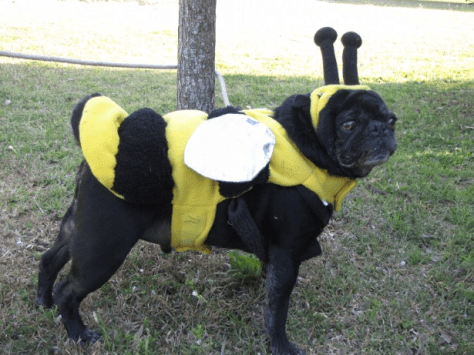
Pug Costume - Public Domain
Similar to the hoverfly, domestic dogs have sometimes been known to mimic bees, though with much less success – Happy Halloween! Image – Public Domain

Post by Kelsey Ruffino, Student Conservation Association and State Parks

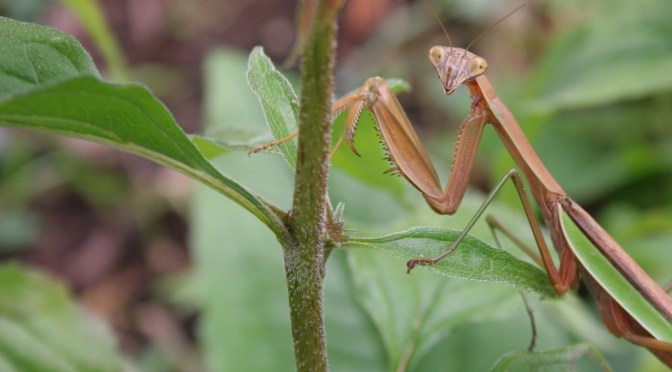
Featured image: praying mantis by Lilly Schelling, State Parks
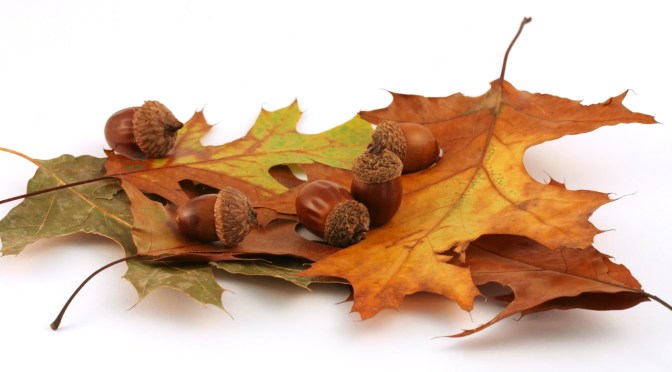
Nutty Over Nuts

Fall is an especially good time to find all kinds of nuts on the forest floor, in a picnic area in the park, or maybe even in your neighborhood or back yard. Let’s take a look and learn how to identify some of these wild nuts.

In technical botanical terms, all of these “nuts” are called the “fruit”. The fruit is defined as the seed and the package which holds the seed. So, for example, the acorn is the “fruit” of an oak tree, and inside is the nut which is a type of seed. If you use plant keys you will see those terms, but for general use, it is ok to call them all nuts!

Acorns are some of the most common types of nuts. Do you know what tree they come from? Acorns come from oak trees. Oaks are found far and wide across New York State and the United States so you should be able to find oak trees and acorns in a park near you. Acorns come in different shapes and sizes, depending on the type of oak they are from. They are a favorite food of squirrels, turkeys, deer, and other animals.

Red oak acorn_photo by Julie Lundgren
Red oak acorn, photo by Julie Lundgren, NYNHP

Red oak acorns are big (over 1 inch long) and roundish like a fat egg. They have very flat caps that cover only a small part of the acorn. The northern red oak (Quercus rubra) is the most common oak species in NY and its state parks.

Scarlet oak acorn_photo by Julie Lundgren
Scarlet oak acorn, photo by Julie Lundgren, NYNHP

Scarlet oak (Quercus coccinea) acorns are less than 1 inch long and have shiny caps with tight scales. Scarlet oaks are common in Eastern NY, usually found on sandy or rocky soils. If you look closely at this picture, you can see a small round hole in the acorn: a sign that it was eaten by some type of insect.

Bur oak acorn_photo by Julie Lundgren
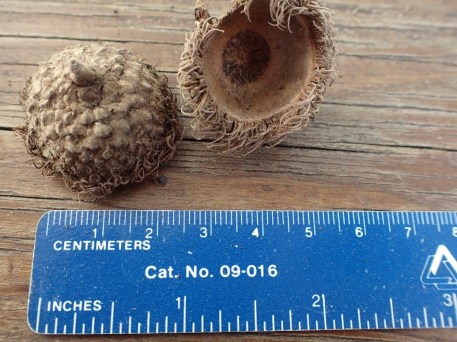
Bur oak acorn, photo by Julie Lundgren, NYNHP

The large size and heavy fringe of this acorn cap tell us that these are from bur oak (Quercus macrocarpa), one of our less common oak species in NY. Sometimes you will only the acorns caps, as the nuts have been carried away by squirrels.

Walnuts

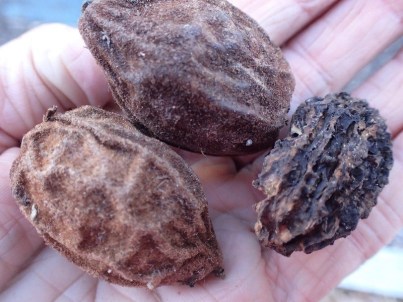
What nut looks like a green tennis ball? That would be the black walnut (Juglans nigra), from the tree of the same name. They have a really strong smell and can stain your clothes, so handle with care. Over time they turn brown and dry out. Black walnuts can be eaten but it takes a lot of work to dry and husk them. They also make a beautiful natural dye.

Black walnuts ADJ_photo by Julie Lundgren
Fresh black walnuts can get almost as big as a tennis ball. As they age and dry out, they get smaller like the one in the center. photo by Julie Lundgren, NYNHP

The butternut tree (Juglans cinerea) is a closely related to black walnut and has very similar nuts. They start out bright green like the black walnut, but are shaped more like footballs rather than the tennis balls shape of black walnuts.

Butternuts ADJ_photo by Julie Lundgren
Butternuts, photo by Julie Lundgren, NYNHP

By early fall, the butternuts nuts have dried up and lost their fuzzy husk and they look very much like the English walnuts you buy in the store. This butternut was found empty. Both black walnuts and butternuts are edible but it can be tough to find one that hasn’t already been snacked on by a squirrel!

Butternut_photo by Julie Lundgren
Butternuts in mid-fall, photo by Julie Lundgren, NYNHP

Hickory

Hickories are another very important tree for wildlife including turkey, deer, chipmunk, squirrel, mice and others. Of the 20 hickory species found in North America, five species are native to New York State. A good key to identifying these is found here.

Hickory shells ADJ_photo by Julie Lundgren
Hickory nuts can have thin or thick-walled husks like the two types shown here, photo by Julie Lundgren, NYNHP.
Pignut_Bitternut_photo by Julie Lundgren
Pig nut, photo by Julie Lundgren, NYNHP.

Pignut (Carya glabra), Mockernut (Carya tomentosa) and Bitternut (Carya cordiformis) hickory have thin husks like this. There are two types of nuts: ones that keep their husk on as they mature or ripen (“indehiscent”) and those with husks that split completely and fall off the nut by the end of fall (“dehiscent”). One has to look at the leaves and/or buds to properly identify these species. As its name suggests, Bitternut is one that is not palatable to either wildlife or people.

Shellbark Hickory_photo by Julie Lundgren
Shellback Hickory nut, photo by Julie Lundgren, NYNHP.

Wow – what nuts are these? These are the thick husks of the Shellbark hickory (Carya laciniosa), a tree that is rare in NY. The husks range from 1.5 inches to nearly 3 inches long, and the nuts inside would be pointed at both ends. That’s one tough nut to crack! These husks were empty, but you can see how the cavity tapers to a point at each end. The more common Shagbark hickory (Carya ovata) is very similar, but the nuts are rounded at the base and the husks do not exceed 2 inches long. Nuts from both of these trees are sweet and edible.

American Chestnut

American Chestnut_photo by Julie Lundgren
American chestnut, photo by Julie Lundgren, NYNHP.

If you find one of these, consider yourself very lucky! This is the fruit and nut of the American chestnut tree (Castanea dentata). Although a blight killed off the large trees, some sprouts persisted and some trees do get large enough to produce nuts like this. These spikes are so sharp you can’t even pick them up with your bare hands, which keeps animals from eating the nut inside. Eventually the husks open up to release the nut in hopes that a new tree will grow.

Quiz Time – What Nuts are These?

Piles hickory shells_photo by Julie Lundgren
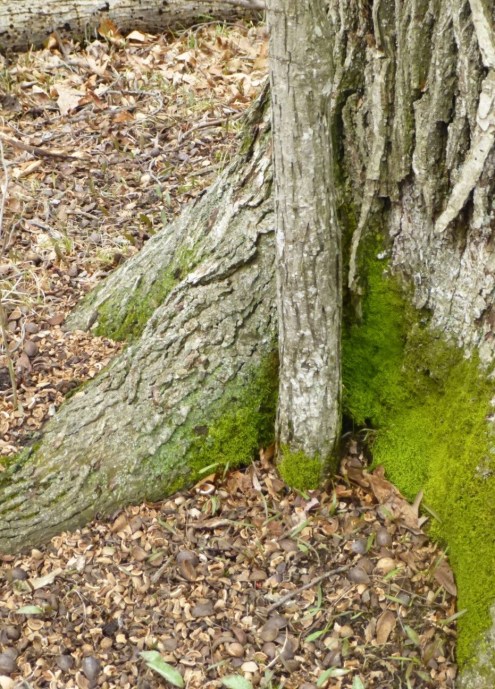
Shell pile at the base of a tree, photo by Julie Lundgren, NYNHP.

It’s easy to overlook them, but look around the base of the trees and sometimes you will find piles of nuts – empty or maybe whole. All kinds of nuts are a very important food source for wildlife. The ones shown above (mixed in with the leaves) are mostly the empty shells or husks of hickory nuts that were eaten by animals.

Shell assortment ADJ_photo by Julie Lundgren
Can you find the following nuts: black walnut, a half-eaten butternut, 2 kinds of hickory nuts, and caps from some acorns? Photo by Julie Lundgren, NYNHP.

Learn More

Want to learn more about nuts and tree fruits of all kinds? Below are some good books and websites to get you started.

Fruit Key and Twig Key book_photo by Julie Lundgren
“Fruit Key and Twig Key to Trees and Shrubs” by William Harlow, photo by Julie Lundgren.

GoBotany – an online tool for identifying plants in New England but includes most tree species found in NY state too.

Shellbark Hickory NYNHP Conservation Guide

New York Flora Atlas

Photos and post by Julie Lundgren, NY Natural Heritage Program

Adventure Awaits At Allegany

What’s your idea of adventure? Is it something exotic like scuba diving, mountain climbing or bungee jumping? Perhaps something quieter, such as camping under the stars or exploring a stream in search for brook trout? Adventures can be big or small, but they all push us out of our comfort zones as we learn about new activities and exciting areas of our world.

Allegany State Park, known as the “Wilderness Playground of Western New York” is one such place where adventure abounds. With 65,000 acres of pristine forests, miles of trails, serene lakes and natural beauty everywhere, it’s hard not to find an activity to enjoy.

The Outdoor Adventure Series hosted by the Environmental Education and Recreation Department offers informative, hands-on, free clinics for all those want to be adventurous souls. Each program is led by an outdoor enthusiast who shares their knowledge and passion of their favorite activity. They bring their gear, suggest what you may need to get started and then let you try your hand at fly fishing, paddle boarding or geocaching.

Allegany State Park hosts several unique events throughout the year, such as Geobash, one of the biggest geocaching events around;  Raccoon Rally, a bike festival featuring both  road and mountain bike races  and the Art Roscoe Loppet cross country ski race. The Adventure series promotes these events by hosting a program about the sport or activity in the same month as the event to give people the chance to try a new sport or volunteer at the event. Remember it’s about getting people out, trying something new.

Maybe you’d like to have an adventure without many people around. Quiet water activities such as kayaking, fly fishing and paddle boarding are things anyone can do at any age.  Local shops such as Sportsman Outlet in Bradford, PA provide kayaks to try. Not only will they help you decide what kind of kayak you might like, they also advise you what gear you should take with you to be safe on the water, such as a life vest.  Adventure Bound on the Fly in Ellicottville, NY, introduces one of the newest sports – paddle boarding, and one of the most graceful – fly fishing to young and old giving all a chance to paddle on Quaker Lake or cast with finesse.

If it’s the woods that calls your name, programs such as mountain biking, cross country skiing, backpacking or camping might be more to your taste. Just Riding Along out of Bradford, PA, offers all kinds of mountain bikes – fat bikes, fast bikes and bikes with all the bells and whistles.  Find dirt on the Art Roscoe trails which become tracked cross country ski trails when the snow flies in December. The Allegany Nordic Patrol not only keeps skiers safe during the winter, but they help educate winter enthusiasts about the joys of gliding and sliding on skis through a winter wonderland of snow cover trees.

Camping has always been a favorite activity since the park was first founded in 1921. The first adventurous souls camped in old WWI tents on platforms. Today the education staff pulls out tents, hammocks, and backpacks of all shapes and sizes for even the youngest of explorers to get out in the woods. Staff also answers questions such as what to take, how to pack, and what to do if you see a bear – all important things to know when going out in the woods of Allegany.

The Outdoor Adventure Series covers a wide range of interesting activities for every season, from photographing fall colors, to snowshoeing under a full moon, to fishing for native trout, and paddling on a warm summer night watching the sun set across a lake.

No matter what you try, I agree with Amelia Earhart: “Adventure is worthwhile in itself”.

Be sure to check out the last two programs this year:

Wednesday, November 1, 2017 – 5:00- 7:00 – Summit Warming Hut – Night Hike- What’s in your Pack? Night hike on Bear Paw trail following a short program on the 10 essentials we should carry in our packs. Bring a flashlight or head lamp.

Wednesday, December 6, 2017 -5:00- 6:30 – Summit Warming Hut – Prepare for Cross Country Ski Season – Allegany Nordic will discuss everything you need to know about cross country skiing, from equipment selection to proper clothing.

These programs are open to the public and weather dependent. For more information, visit the Allegany State Park Facebook page or contact the Environmental Education Department at 716-354- 9101 ext. 236.

Post by Adele Wellman, State Parks
Training the Doughboys

Looking over the playing fields at Fort Niagara State Park, it is hard to imagine that 100 years ago those fields were used for a different purpose: training young New Yorkers headed off to the ‘Great War.’

In April 1917, President Woodrow Wilson declared war on Germany, ending 2-1/2 years of neutrality.  This was not an easy decision for President Wilson, but many factors influenced his decision. There was unrest in Russia and German U-boats were indiscriminately sinking US merchant ships. In addition, it was discovered that Germany had secretly offered to help Mexico recover land lost during the Mexican-American War (1846-1848) if Mexico would ally with Germany and declare war on the United States (Mexico did not take up this offer). With all this in mind, Wilson declared war on Germany.

When war was declared, the United States was not ready. The Army was small, with under 100,000 professionally trained soldiers, many of whom had never been on the battlefield.  Sixteen nations had armies larger than the United States.  With the declaration, the Army needed both enlisted men and officers to help defend United States’ interests and allies France, Belgium, and Great Britain.

As the United States inched towards war, Army officials were looking for places to train officers through the Reserve Officers’ Training Corps (ROTC).  One of the places that was chosen to train officers was Fort Niagara, an army training post at the mouth of the Niagara River in Youngstown, New York.  When Wilson declared war, Fort Niagara was training troops headed to Panama or to minor conflicts along the Mexican border.

001-Postcards (2)
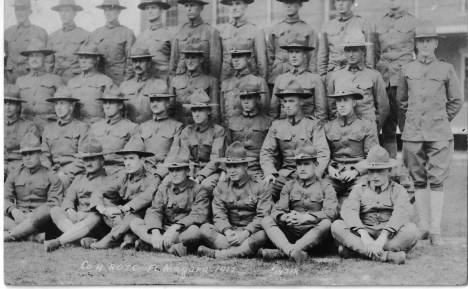
ROTC trainees, photo courtesy of Old Fort Niagara

The Army planned two ROTC trainings at Fort Niagara in 1917, one from May through August, and the second from August through November.  Each session would train men on field sanitation and hygiene, care of arms and equipment, drilling, military courtesies, and the realities of trench warfare.  The chief training officer was Colonel John W. Heavey.

Because housing for the trainees was in short supply, the camp quartermaster hired day laborers to build nine 20’ x 300’ barracks and four mess halls during the month of April. The buildings were completed before the first class of ROTC trainees arrived.  Telephone and electrical systems were also installed throughout the training facilities in April.

001-Postcards (3)
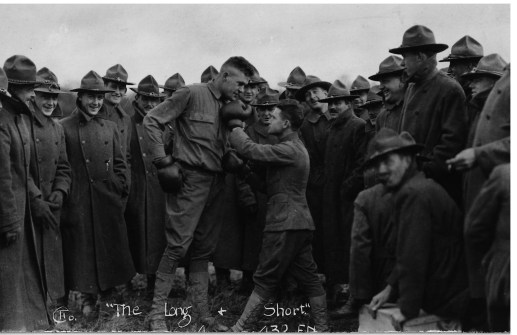
The ‘Long’ and ‘Short’ spar in autumn 1917, photo courtesy of Old Fort Niagara

The first officer class consisted of 2,500 young men from Pennsylvania, including some from wealthy Philadelphia families.  Local newspapers noted that a few of the officer candidates “know more about the different brands of face powder than they do about gunpowder.”

Nora 3.2
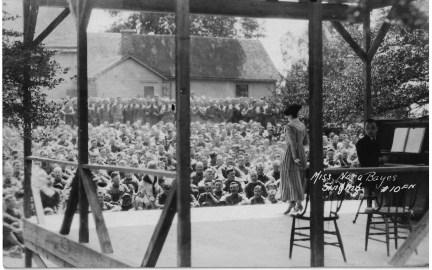
Nora Bayes singing to the ROTC trainees

The second class consisted primarily of New Yorkers, many of which were from Buffalo. These “typical Americans, clean-cut, upstanding fellows, the kind that make fighters” were lucky enough to have a concert by Nora Bayes (Eleanora Sara Goldberg) just after their training started.  Ms. Bayes was a popular actress, singer, and comedian of the time who co-wrote Shine on, Harvest Moon with her husband Jack Norworth.

This slideshow requires JavaScript.

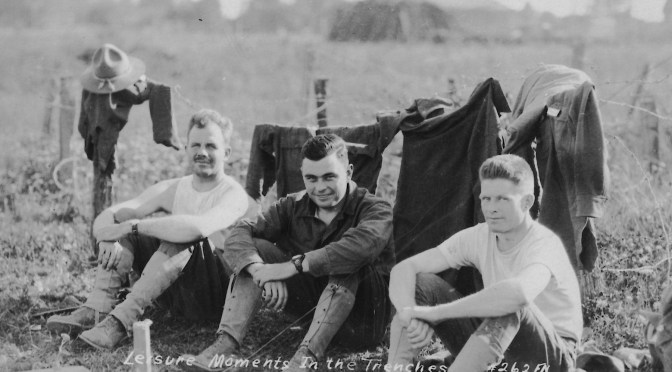
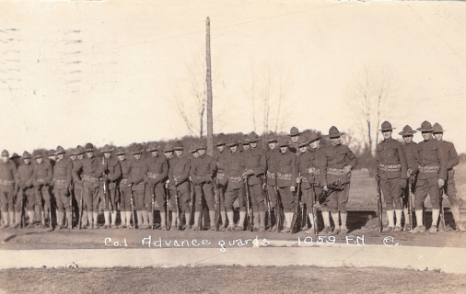
Bayes’ concert was a brief reprieve from the daily 16-hour training.  Each day the trainees had inspections, signal practice, mapmaking, long marches, mock battles and marksmanship, and trench construction.  The trenches were dug on the Fort Niagara Beach.  Military ceremonies marked the end of the training, with the ‘graduates’ learning which regiment they were assigned in the American Expeditionary Forces. American Expeditionary Forces troops were also known as ‘doughboys.’

Advance Guard
Advance Guard, photo courtesy of Old Fort Niagara

After the second ROTC training, the fort became training grounds for 1,772 Polish-American soldiers who were part of the Polish Blue Army.  They trained at Fort Niagara from December 1917 through February 1918 before joining the Western Front.

After the war, Fort Niagara served as the home of the US Army 28th Infantry Regiment until the regiment was relocated to Fort Jackson, South Carolina in 1940.

Blog adapted from:  Emerson, Robert, Clean Cut, Upstanding Fellows: Fort Niagara’s ROTC Training Camps, 1917 March 2017 Fortress Niagara, p 5 – 15.

Sources

Wikipedia United States in World War I

Katonah Record, July 27, 1917

The Honeoye Falls Times, July 26, 1917

Buffalo Evening News, September 25, 1917

Special thanks to the staff at Old Fort Niagara for their assistance with this post.

Hiking Hidden Gems

Planning a hike this fall? State Parks staff recommend you try one of these hidden gems:
At Golden Hill State Park in Niagara County, Renee recommends the Interpretive RED Trail. The 1.7-mile-long trail provides a magnificent view of the 30 Mile Point Lighthouse as you hike along the shoreline of Lake Ontario.  The lakeshore habitat is very important for migrating birds. They use this area to rest and refuel before making their way across Lake Ontario. The hike will take you through diverse habitats including shrublands, grasslands, deciduous woodlands, a variety of evergreen forests, and an oak grove with 300-year-old trees.   The trail follows Golden Hill Creek where an abundance of wildlife can be seen. Watch for herons, kingfishers, warblers, great horned owls, white tailed deer, red fox, chipmunks, and woodchucks. This hike is rated easy to moderate.

This slideshow requires JavaScript.

If you are looking for a moderate four-mile hike, Mike suggests the Fire Tower Ramble which features scenic views in Sterling Forest State Park in Orange County.  Climbing the fire tower, you can see Sterling Lake, Cedar Pond, Greenwood Lake, Schunnemunk Mountain, and the surrounding Hudson Highlands. On a clear day, New York City is visible in the distance. This 60-foot fire tower was built in 1922 by the Department of Conservation. It was one of the first all-steel fire towers built outside of the Adirondack and Catskill Preserves.

This slideshow requires JavaScript.

Mark notes that the trail system at Robert V. Riddell State Park in Delaware County provides a diversity of experiences and opportunities. Once a dairy farm, Riddell has many trails which traverse both fields and forest and has access to Schenevus Creek, a tributary of the nearby Susquehanna River. Nature enthusiasts regularly enjoy the trails on the north side of I-88 not only for the scenic views but also for the diverse wildlife along the creek. History lovers can also see the remnants of the former dairy along the trail, including the slate-roofed dairy barn built in the 1830s. The southern part of the park (south of I-88) has a different trail experience with longer, more rugged trails, access to a waterfall, and the spring-fed Mud Lake. Mud Lake is a bog surrounded by spruce and tamarack (larch) trees, low shrubs and a floating mat of peat moss along the edge of the open water. This fascinating habitat makes Mud Lake a destination for local nature enthusiasts.  Plans are in the works to expand the trail system in the southern side of the park to enhance hiking opportunities in the area.

This slideshow requires JavaScript.

One of the most popular attractions at Long Point State Park in Chautauqua County is the Point Trail, according to Tom.  Approximately 1/2-mile-long, the trail loops through a forest of maple and oak trees and rewards hikers with fantastic panoramic views of Chautauqua Lake once they arrive at the “point.”  There are a few benches and interpretive signs along the way to sit on and learn about the park and history of the lake.  This level trail is accessible to everyone and state park staff recently put down a new layer of crushed stone to make the walk a bit nicer on rainy days.

This slideshow requires JavaScript.

Before you head out, check out our trail tips. See you on the trail!