

The digital chirrup of my alarm shakes me from my slumber. I dress, kiss my wife goodbye, get in my car and drive to work. After burning my tongue on hot coffee, I step through the doors of my workplace. This, however, is no ordinary door. It is a wooden drawbridge across a dry moat, guarded by five iron cannons pointed directly at me as I hurry to clock in.
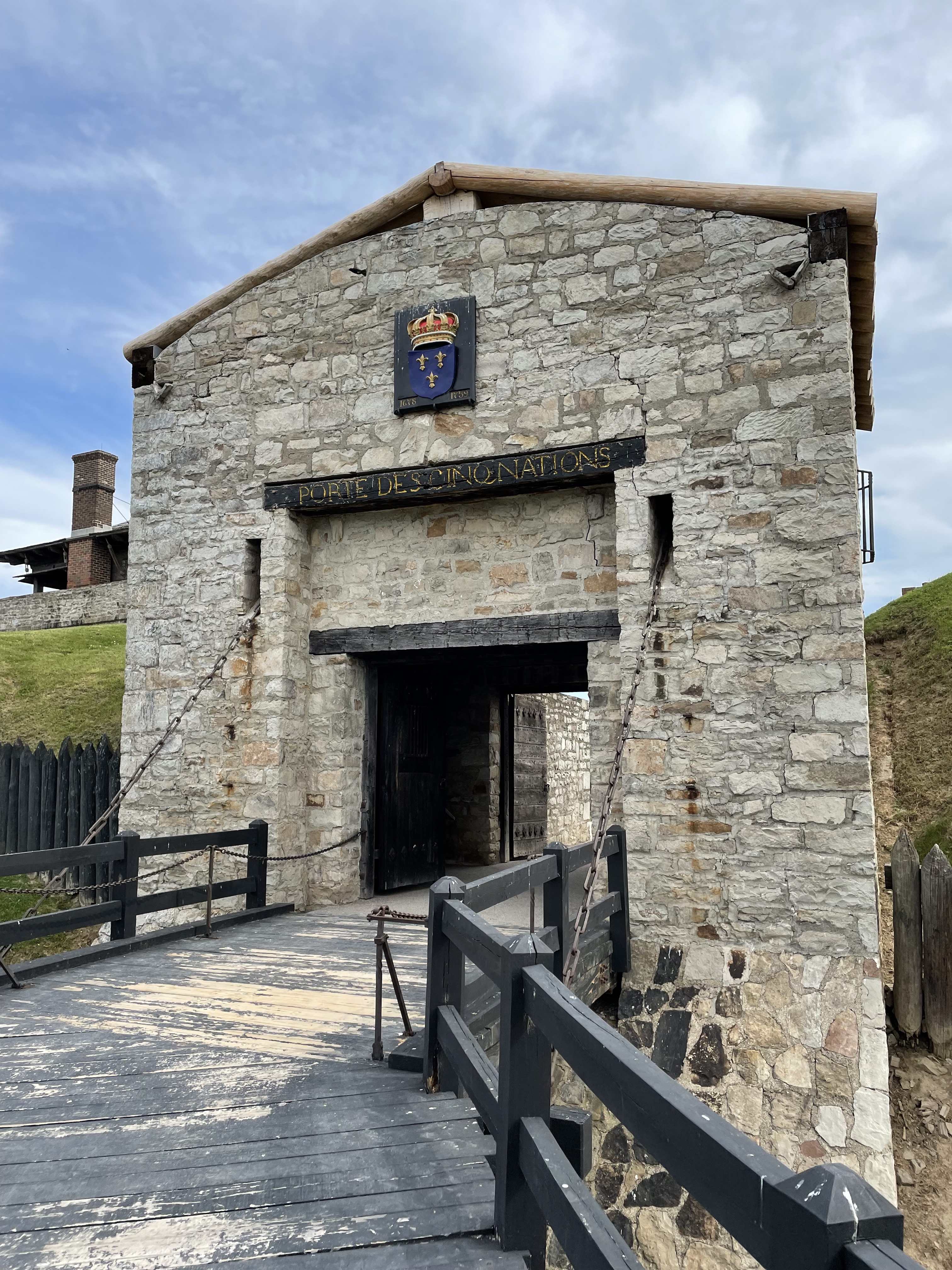
The second door I must pass is a stalwart oaken gate attached to a great stone tower built by British engineers in 1770. I step into our office, the façade of the old provisions warehouse that once supplied every English fort in the Great Lakes region. Once inside, my colleagues and I receive the morning’s briefing and decide who will dress in what uniform and who will carry what firearm onto the field today.
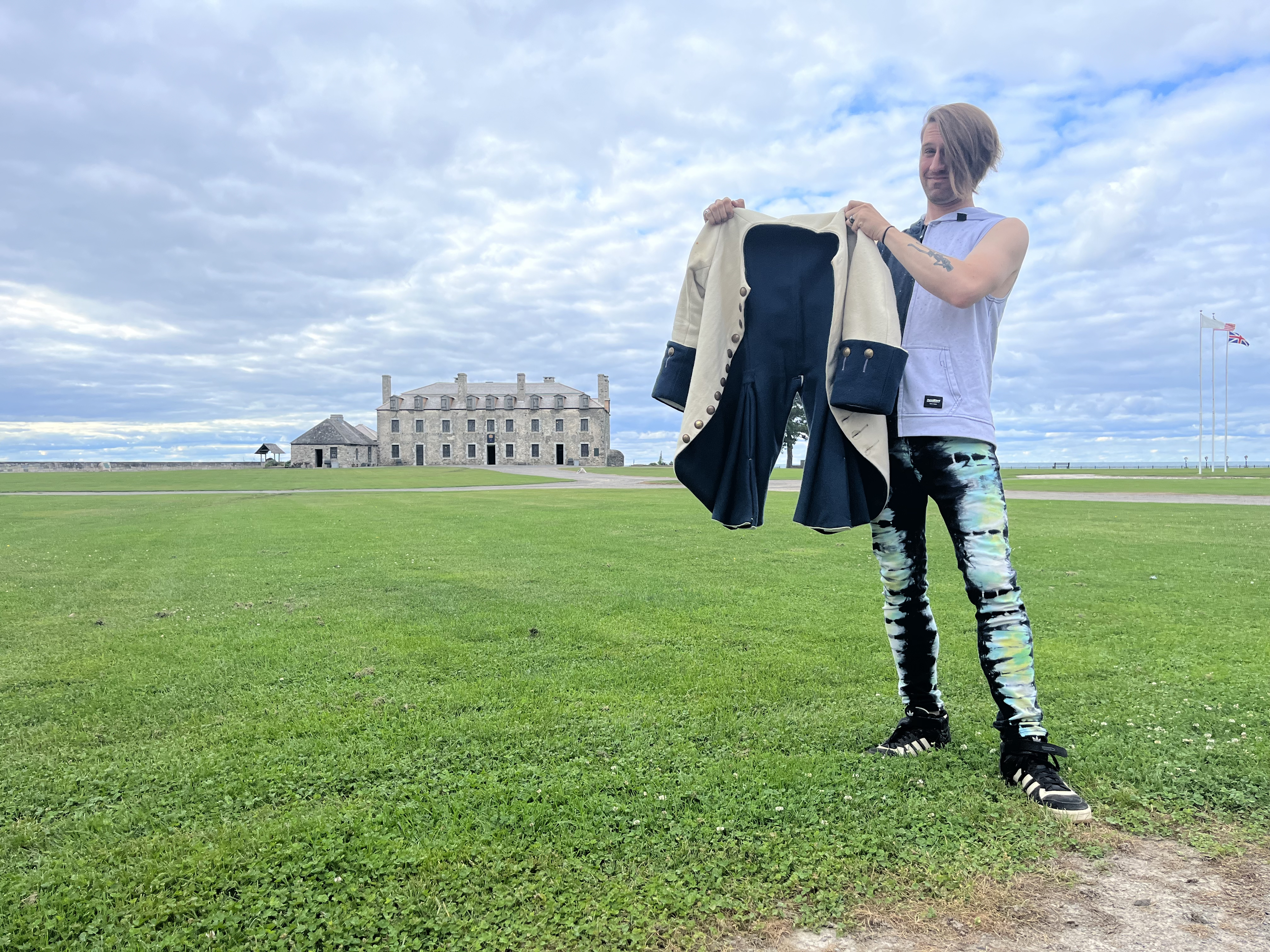
Allow me to introduce myself: My name is Derek, and I am a historical interpreter at Old Fort Niagara. It is my job to portray — in a living, breathing image — the lifestyle of a soldier in the eighteenth century.
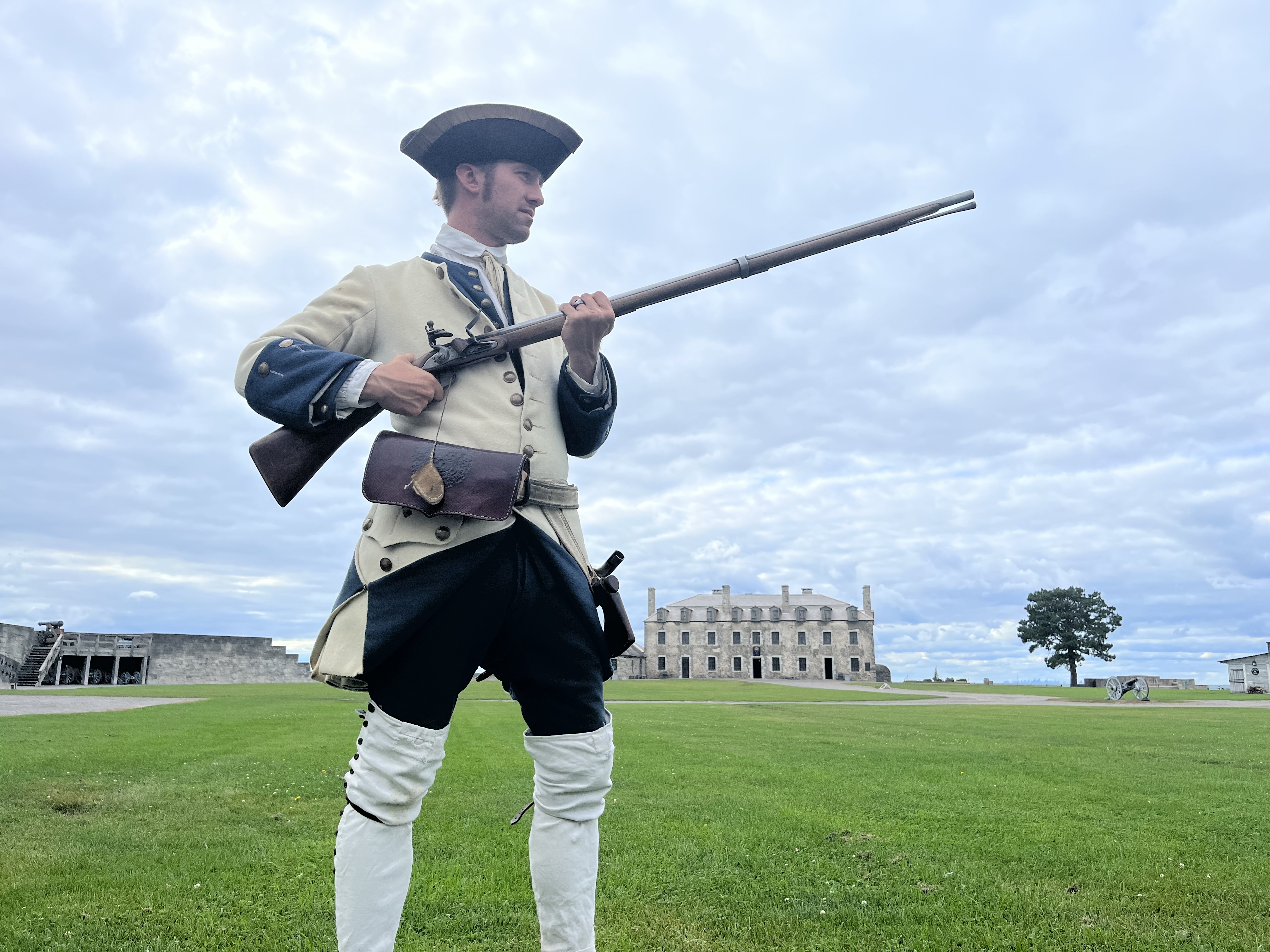
I suppose I should begin where it makes most sense to begin; getting ready for “battle,” so to speak. In the case of our current garrison, this involves layering a linen shirt, wool socks, wool breeches, a double-layered long-sleeved wool vest, a double layered long-sleeved wool overcoat, a leather belt and cartridge box, leather buckled shoes, and a wool felt hat. Perfect for summer weather!
Next, we must assemble the essentials for our demonstrations: flints, musket cartridges (make sure your powder isn’t leaking out of them into your cartridge box, that could be a disaster), musket (is the safety working and all the screws in place? Well oiled, but not to the point of clogging the the barrel?), bayonet with suitable sheath, sidearm likewise sheathed… you know, the typical office supplies. We march out to raise the colors at ten o’clock sharp.
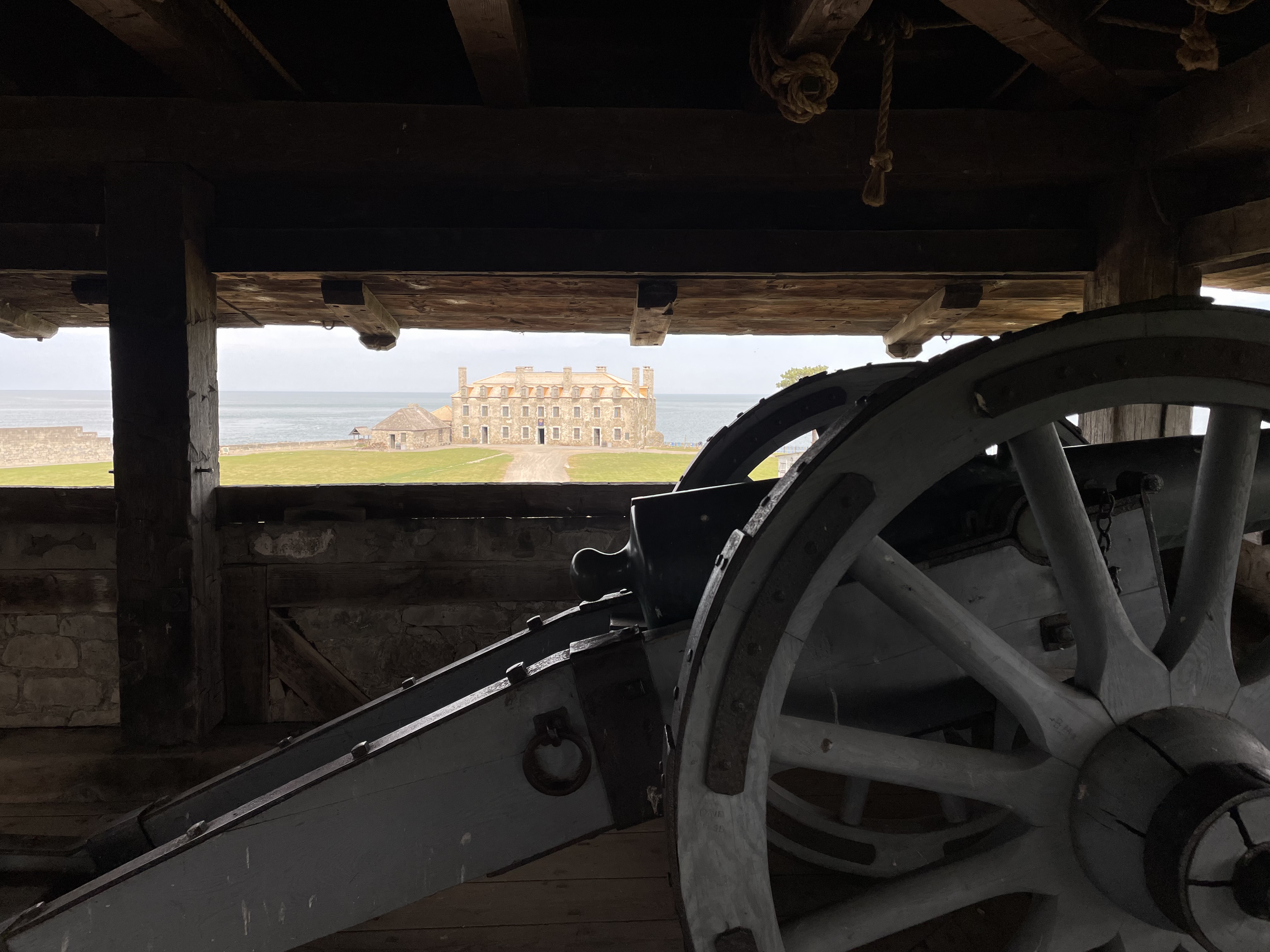
At noon, our sergeant assembles us for a public infantry drill. Should there be enough of us on any given day, we fire our artillery at two o’clock. At the top of every hour, one can find one or more of us demonstrating the firepower of an eighteenth-century army.
“I love what I do, I love talking to our visitors, and I love being able to say that I spend my workday living in the eighteenth century.”
Throughout the day, a guest may see us performing a variety of less gunpowder-reliant tasks such as chopping wood, hauling water buckets to our laundress, or throwing copious amounts of ash from the fireplaces over the fort walls. Sometimes, on the last days of a golden summer, you may even find a few of us soldiers taking a break from our labors and inviting visitors to partake in a game of bittle-battle! Unfamiliar? Think of a mixture of cricket and baseball, but the original eighteenth century version of the game is full-contact. Do not fret, we omit that part from our games with the public.
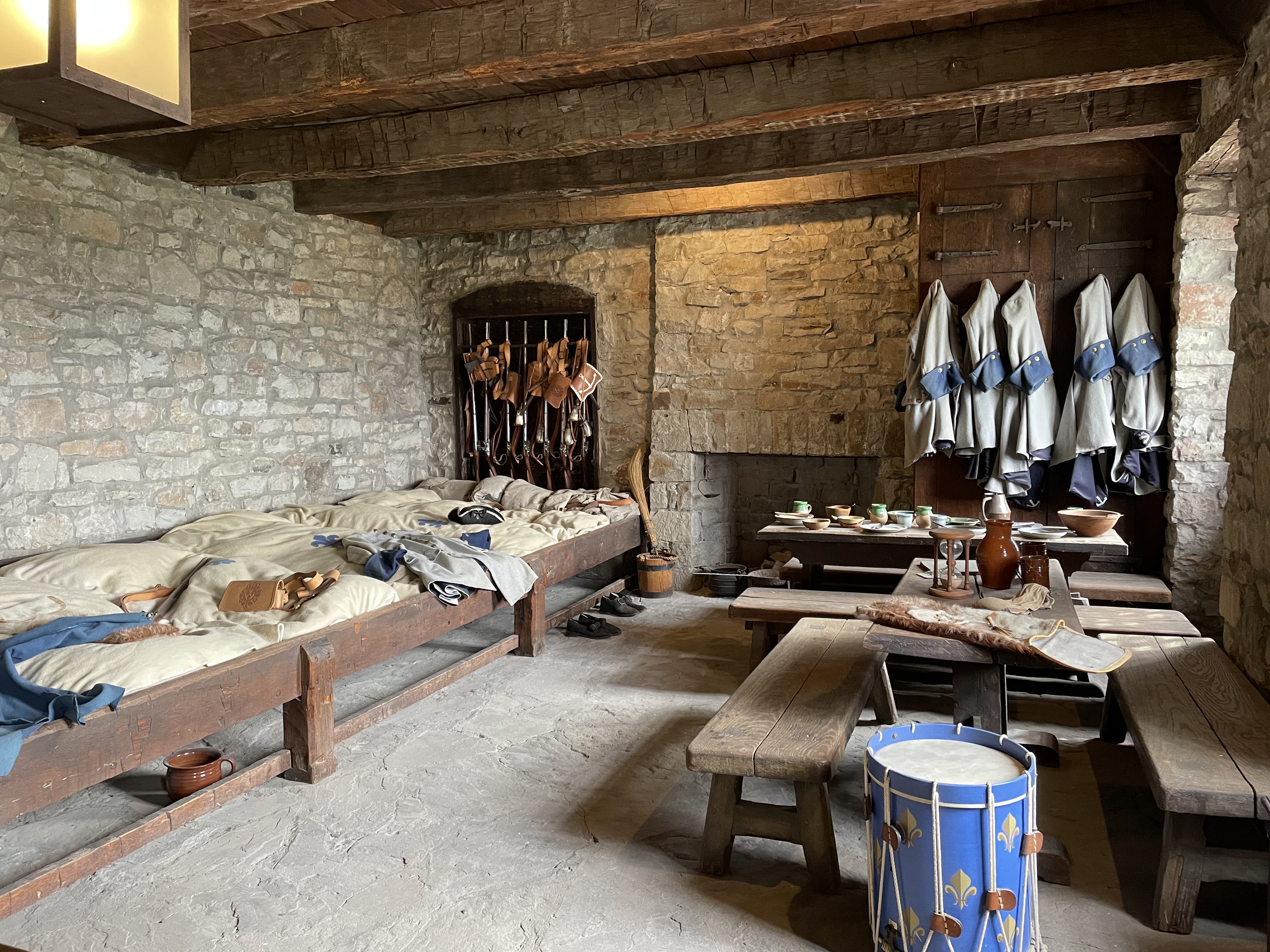
Finally, as you gaze over the cliffside behind the castle to view the setting sun, we soldiers retrieve the colors from the flagpoles. The sergeant dismisses us, and we return to our barracks to peel away the eighteenth century from ourselves. It is a bittersweet feeling.
I love what I do, I love talking to our visitors, and I love being able to say that I spend my workday living in the eighteenth century. Nevertheless, going home and spending an evening in the twenty-first century is the literal breath of fresh air one needs before waking up the next day and spending eight more hours in twelve pounds of wool.
As a man of the modern age, this job taught me not to take my modern conveniences for granted. While I do enjoy living in the eighteenth century for forty hours a week, I appreciate my air conditioning, my car, my personal digital library of books and music. I could not do without them. But I’m grateful to have the ability and resources to do a job like this– to comfortably reside in a bygone era like a tourist to the past.
“How can one hope to educate modern-day people about antiquity without drawing parallels to familiar items or ideas?”

To that point, I must warn all prospective visitors that our interpreters are, indeed, aware of our existence as modern-day people. We are not first-person actors. We are not expected to speak with eighteenth century dialects or ignore the existence of modern advancements in medicine and technology. After all, how can one hope to educate modern-day people about antiquity without drawing parallels to familiar items or ideas?
It is not enough to simply don the mask of a man from the wilds of eighteenth century New France. My duty is to extradite and re-contextualize the lessons of the past for new audiences so that they may also realize how far we have come, and yet how like our ancestors we remain. Their stories are our stories. Our struggles echo theirs. Perhaps in visiting Fort Niagara one may, through our guidance, learn a bit more about humans both past and present. These lessons may delight, disgust, or amuse you. But they will nevertheless remind you of a shared humanity.
-Written by Derek Schultz, historical interpreter at Old Fort Niagara in Youngstown, NY.
 New York State Parks and Historic Sites Blog
Derek,
Your article was nicely done.
Very nice article, Derek.