

New to camping or haven’t gone since you were a kid? Thinking about how to prepare for or what to expect during an overnight trip might be overwhelming, and we get it! Used to creature comforts at home, trying something new or unpredictable always feels intimidating.
But what if, with a little help, what seems challenging turned out to be calming and therapeutic, refreshing and well worth it? Studies show that spending time outdoors and offline fosters positive mental health, improves resiliency, and relieves depression, anxiety and stress, particularly among our young people.
Here at New York State Parks, we firmly believe in the benefits of the outdoors, and we don’t want nervousness or confusion to stand in the way of you and your loved ones having an incredible camping experience. That’s why we’ve done the work for you. In this post, we’ll shell out some rock-solid guidance on:
- what to pack (including an updated version of our checklist!)
- campground etiquette
- fun and easy recipes to try
- the differences between Parks and DEC campgrounds
Camping is an affordable way to enjoy nature in new ways. Here’s hoping we’ll #SeeYouOutThere.
What To Pack
If you’re a first-timer, camping prep can be daunting, but keeping a list will make the process much more digestible and efficient. It’s important to know the basics: at a State Parks or DEC campground, you’ll get your own camping space with a picnic table and fire pit and have access to restrooms, showers, and water stations. Before you go, be sure to check the weather — rain or high / low temperatures — and consider how that might affect your planning and packing. (A 60 degree night feels cooler in a tent than you might expect!)

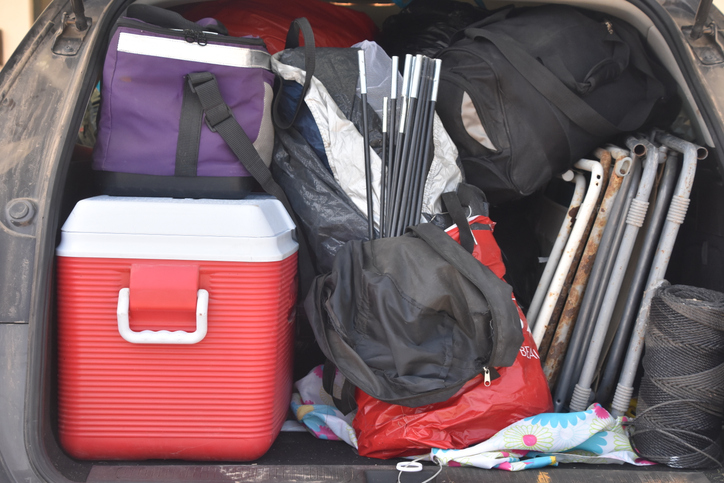
When it comes to everything you need to bring with you, we worked with camping pros from the Reservations & Pass Programs Bureau and other staff who camp regularly to update the New York State Parks camping checklist. In it, you’ll find recommendations for items to pack in multiple categories to help demystify the experience. Yes, you’ll probably need to stock up on a few items, but once you assemble the necessities, your camping “kit” is good to go for future trips!
- Campsite/Equipment: What you need to set up camp for a comfortable experience, from a tent to lanterns and lawn chairs by the campfire.
- Cooking/Dining: Items to store and prepare food, like coolers, a camping stove, cooking utensils, and tools like a can opener.
- Hygiene: Most campgrounds have bathhouses nearby to use the restroom and shower, but unlike motels and hotels, you need to bring certain items like towels and toiletries.
- Pet Supplies: We want to ensure your furry friends are safe and comfortable, too, so think: beds, medications, etc. Most campgrounds require proof of rabies vaccination as well.
- Heath and Safety: Nature is glorious, but items like sunscreen and insect repellent will make it more enjoyable, and it’s wise to be prepared for cuts and scrapes like you would be at home.
- Tools/Miscellaneous: Practical items like rain gear, a multi-tool, and phone chargers and power banks are a must during camping trips.
Review and download the full New York State Parks camping checklist HERE. You won’t regret it!
Campground Etiquette
Now that you’ve arrived at your campsite, it’s important to be a good guest while you’re there. When you check in, you’ll be given a list of rules, but they all boil down to one very simple thing: respect.
Respect Your Neighbors
- Noise is the most common complaint we get. Please keep music, conversations, electronic devices, and activities at a respectful noise level and obey quiet hours (10 PM to 7 AM). However, our campgrounds are vibrant places, and it’s also important to be tolerant of others who are enjoying their campsite differently than you.
- Watch your lights at night. Avoid shining headlights, lanterns or flashlights into other people’s campsites. Turn the lights off when you’re finished using them.
- Keep your camping setup on your own site, even if surrounding sites are empty or you’re next to a public space.
- Keep trash contained so it doesn’t blow on to other people’s sites, and make sure that you don’t leave food or food waste out unattended or overnight that will attract wildlife.
- If you’ve brought a pet, please keep it leashed at all times!
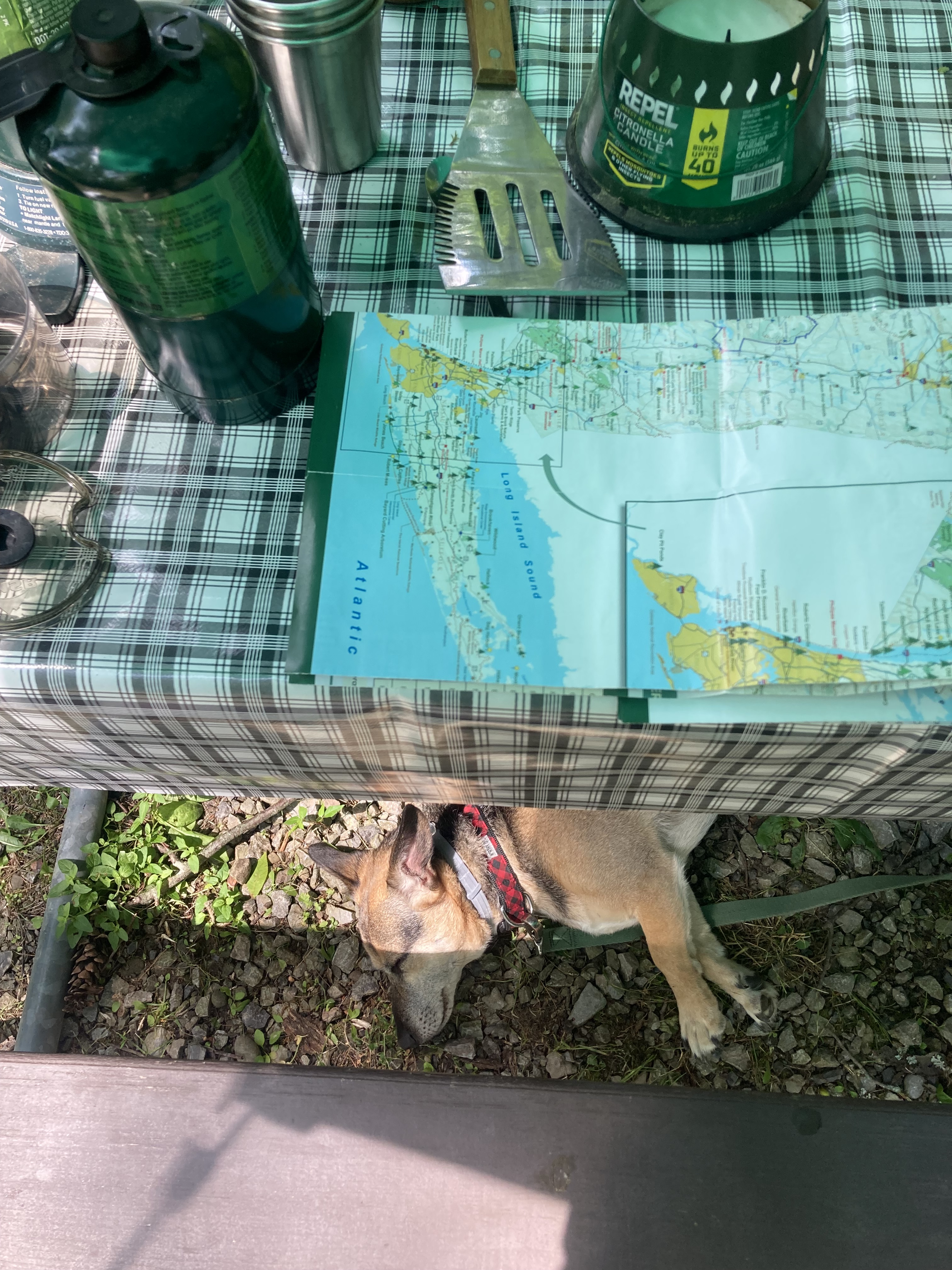
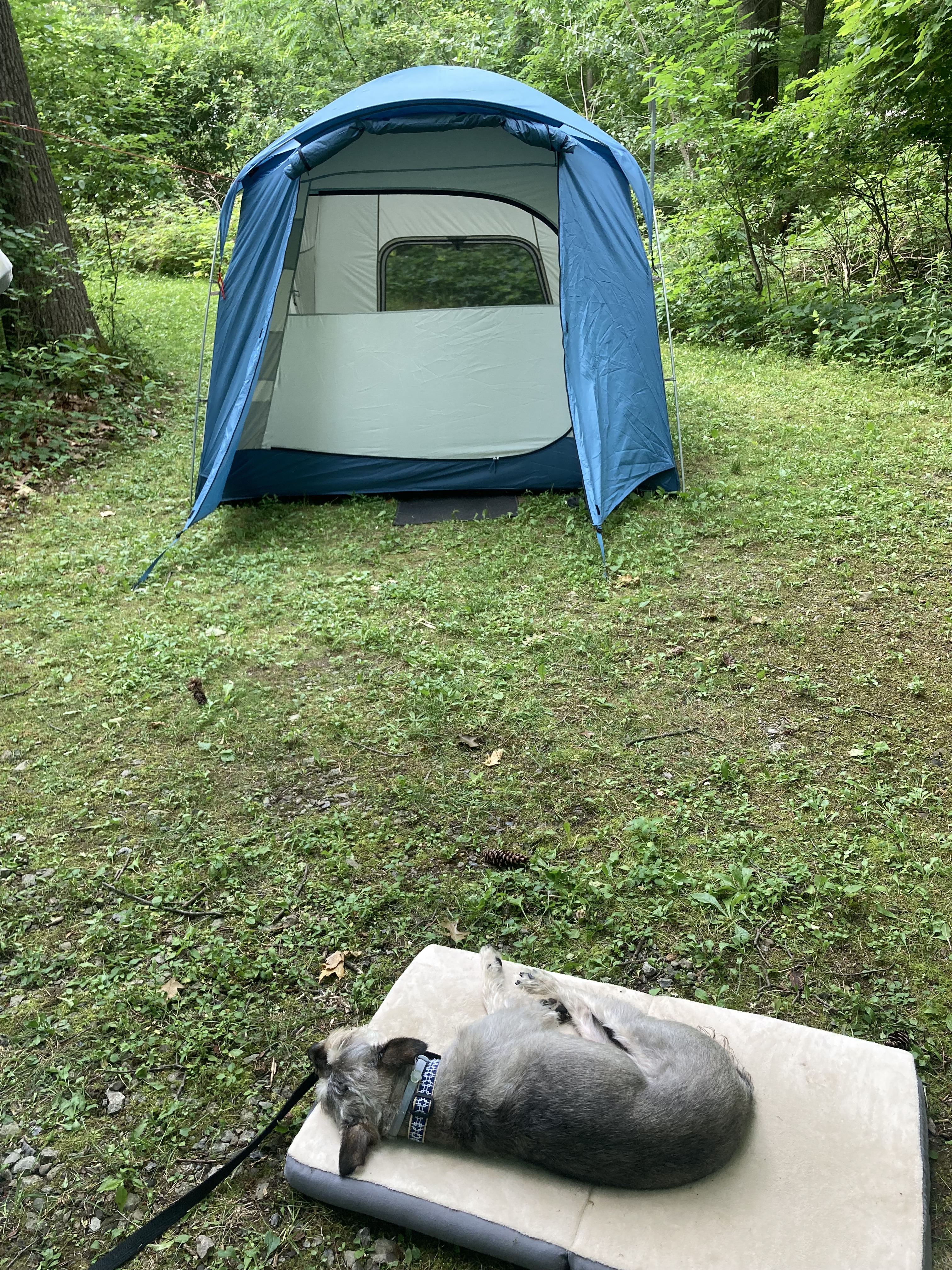
Furry friends, on leashes, resting and feeling at-home at a campsite.
Respect the Rules and Our Staff
- When you check in, you’ll be given a list of rules for the safety and comfort of everyone. Please be sure to follow them. Ask park staff for clarity if you need it. Save the office phone number in case you need assistance during your stay.
- If park staff asks you to quiet down, move part of your setup, or turn off lights, please do as you are asked.
- If another guest is breaking the rules, avoid confronting them directly and ask park staff for assistance.
- Please be polite and respectful whenever you’re interacting with our park staff.

Respect the Environment and Campground
- Keep it clean! Carry out everything you brought in to your site, or dispose of it in the dumpsters provided.
- Leave the environment as you found it. Don’t remove vegetation or other natural features. Even rock-stacking is disruptive to the ecosystem. If you see something memorable, take a photo to preserve the memory and allow it to remain in its ecosystem!
- Clean up after you use shared park structures like picnic shelters or restrooms. Report dirty or damaged structures to staff.
- Don’t harass or harm any wildlife you encounter. Come prepared for everything from insect encounters to racoons.
- Since 2009, New York State has had a regulation prohibiting the use of untreated firewood more than 50 miles from its source. This has helped tremendously in controlling invasive species. Do your part: buy your firewood locally and leave what you don’t burn behind.
Fun and Easy Camping Recipes
There are so many meals to make while camping that translate from your kitchen to the picnic table and camping stove. From staples like burgers and hot dogs, roasted corn on the cob and other veggies, to s’mores over the fire pit, there are simple and satisfying options that everyone will love. Below we offer some suggestions that are ideal for first-timers and customizable for every appetite.


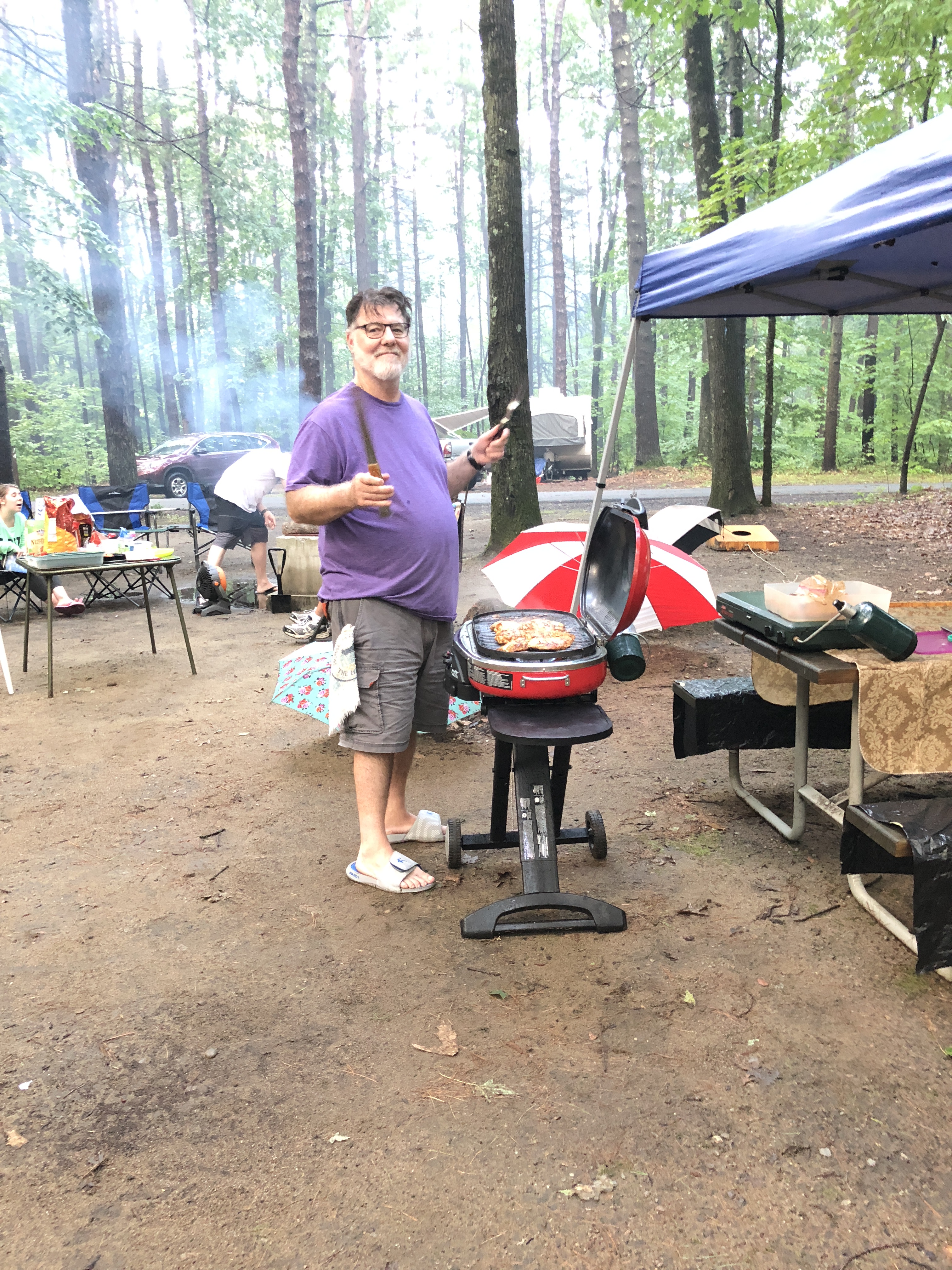
Preparing grilled vegetables over a campsite fire pit; plated roasted fruit skewers ready to serve!
How to Make Foil Packet Meals
Foil packet meals are a great option for families on a camping trip! There are a million reasons why beginners often start with foil packet meals, and why experienced campers keep using them. Here are just a few of them:
- They are adjustable – a foil packet can cook perfectly whether you are using your camper’s oven, the grill, or a campfire.
- To each their own – everyone can assemble their own, even the kids can pick what they want to add, making it possible to personalize each dish.
- More time for fun – the foil that the meal is baked in can also be eaten out of reducing the time needed for cleanup!
- Make ahead options – Often chopping can be done ahead of your camping trip to simplify meal prep. Just keep acidic ingredients (like vinegar based marinades) separate until you are at camp, as they can change the texture of food if they soak for too long.
The options are nearly limitless! All you need is a protein, a few vegetables, butter and/or oil, seasoning, and of course aluminum foil. So, try out some of your favorite flavor combinations: kielbasa and potatoes, bacon ranch chicken, shrimp boil, sausage with peppers and onions. You can do meat-free options and even dessert!
One of our favorites camping meals is chicken fajita foil packets with apple crisp for dessert:
Chicken Fajita Foil Packets
Slice 1 – 1 ½ pound of chicken into thin pieces or chunks and divide onto four (double layered) 18 x 12 sheets of foil (or you can also add a layer of parchment paper inside the foil if you prefer using parchment paper). Sprinkle with half of the seasoning mix.
Chop 2-3 medium bell peppers and a medium red onion into slices and arrange around the chicken. Drizzle with olive oil and the remaining seasoning.
Optional additions, if you want a heartier meal:
- Potatoes cut into quarter-inch pieces – these will soak up extra juice and flavor
- Instant rice – soak in equal parts water and rice for 5-10 minutes, drain most of the water before adding to the packet, add a few tablespoons of the water that the rice was soaking in into the foil
Finally, wrap up in foil and grill or place in the campfire over low coals to tender perfection. Time will vary depending on heat of your fire, but will generally take 20-30 minutes, turning at least once.
After removing from the fire, let rest 2-5 minutes before carefully opening foil. Be wary of escaping steam.
Serve with warm tortillas, avocado, an extra splash of lime juice and sprinkle with cilantro.
Apple Crisp Foil Packets
Core and slice 4 apples and divide between four 12”x12” foil packets.
Drizzle ¼ tsp olive oil and 1 TBS maple syrup on each.
Sprinkle ¼ tsp ground cinnamon (or try adding nutmeg, apple pie seasoning, or pumpkin pie seasoning) followed by ¼ cup of granola of your choice (choose gluten-free granola for a completely gluten free dessert).
Seal the apple crisp foil packs and place them on the campfire or grill.
Cook for 15-20 minutes, turning at least once, until the apples are cooked to your desired softness.
Remove the foil packs and serve them as is or topped with ice cream, yogurt or whipped cream.
How to Make Trail Mix
Already have all your favorite meals planned? How about a satisfying trail mix for while you are hiking one the hundreds of miles of trails available in state parks? It’s a perfect snack for the active, on-the-go camper because its relatively lightweight, easy to store, and is a good source of calories, carbs and healthy fats for sustained energy while hiking.
Trail mix can be purchased at the store, but you can also make it yourself, generally more inexpensively, healthier, and to your liking. A typical ratio will be dominated by nuts (barring allergies) and dried fruit: 1 cup nuts, 2/3 cup of dried fruit, ¼ cup of seeds, and ¼ cup additional mix-ins, either sweet or savory. Just gather your ingredients and combine! You can make one large trail mix or let each hiker choose their ingredients.
Nuts – If you are concerned with sodium intake, pay attention to the label. Look for raw, sprouted or dry-roasted nuts without added salts. Be sure to select shelled nuts — no need to carry extra, non-edible weight. If nuts are a no-go, increase the seeds, or add other crunchy protein-rich options like roasted edamame.
Dried Fruit – Dried fruit can get a bad reputation for concentrated sugars already, so keep an eye out for added sugars on the labels, but a hint of sweetness goes a long way to keep you moving down the trail. Raisins and dried cranberries are common, but any dried fruit can be good. Try different options based on what you like. Strawberries and bananas are a perpetual favorite for most kids. A mix of pineapple and papaya gives a tropical summer vibe. Dried apple and pears with a sprinkle of cinnamon and pecans can add some warmth to a fall hike. Banana chips are particularly good with peanuts and chocolate.
Seeds – Seeds add some texture variety and more healthy fats. Pepitas (pumpkin seeds) and hulled sunflower seeds are great options. If you like the health benefits of smaller seeds like flax or chia, consider adding granola that contains these seeds, as the seeds themselves tend to be too small and fall to the bottom of the mix.
Mix-ins – You can go sweet with chocolate chips, M&Ms, coconut flake, mini peanut butter cups, marshmallows. Or you can go savory with pretzels, dry cereal, popcorn, chopped or shredded jerky. Get creative and have fun.
New York State Park or DEC Campground?
Let’s talk geography first. New York State Parks manages an array of campgrounds throughout the state, from Long Island to the Great Lakes. The Department of Environmental Conservation manages campgrounds in the Adirondack and Catskill Forest Preserves.
All of these campgrounds require reservations and are designed for tents, campers or RVs. Many of the State Parks and DEC campgrounds have swimming beaches, but the DEC beaches are not supervised by lifeguards.
Primitive camping (also known as backcountry camping) is permitted on certain types of state lands managed by the DEC. Primitive campers generally take all of their gear in on their backs and set up their camps deep in the forest, with no access to amenities such as running water or restrooms. Follow their guidelines if you go this route!
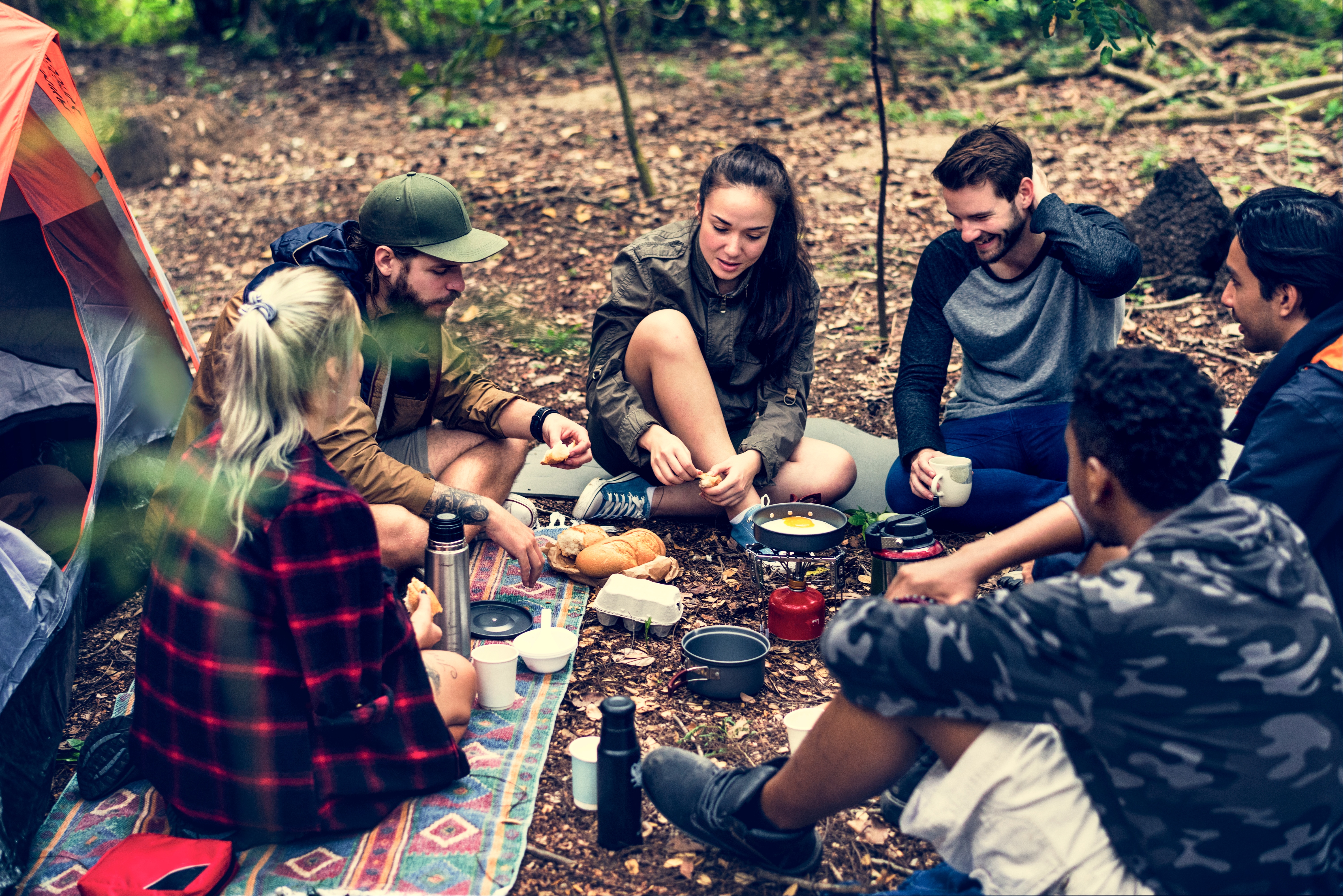
Many of us have those friends who proudly declare that camping just isn’t for them. It’s understandable that people would prefer to avoid having to manage surprises that being outdoors or out of their comfort zone might present. But trust us! Once you get a system down, you’ll start making unforgettable memories in no time.
– Written by Lacey Seidman, Public Affairs Deputy Public Information Officer; Kate Jenkins, Public Affairs Digital Specialist; and Angelina Weibel, Niagara Region Environmental Educator.
 New York State Parks and Historic Sites Blog
3 thoughts on “Camping 101: A Guide to Getting Out There”