

If you have ever been out enjoying New York’s great outdoors, chances are you have encountered wildlife. From chipmunks in the picnic grounds to bald eagles flying overhead, New York’s state park system provides over 350,000 acres of habitat that is home to hundreds of species of wildlife. These animals are important natural components of New York’s ecosystems.

If you are out hiking, biking, paddling, camping, hunting, or any other outdoor activity, there are some steps you can take to keep both you and wildlife safe.
- Be aware of your surroundings. Keep your ears and eyes sharp while outdoors, and watch where you put your hands and feet.
- Don’t feed wildlife. This disrupts their natural feeding habits and can lead to human-wildlife conflicts if the animals learn to take food from people. Always store your food properly. Never leave food unattended.
- Stay on designated trails.
- Always keep pets on a leash to protect them from any encounters.
- Respect wildlife and give them space. When outdoors, remember you are in their habitat. If you are lucky enough to see an animal, remain at a safe distance.
Read on to learn more about a few specific animals and how you can stay safe if you encounter them.
Black Bears
Have you ever seen a black bear in New York? Even though there may be more than 8,000 black bears in the state, this mammal is rarely seen by most New Yorkers. Adult male black bears weigh around 300 pounds, making them one of the largest mammals in New York State, second only to the moose. They are omnivores, with diets including insects and carrion (dead animals) as well as plant materials like berries, fruit, and seeds. Black bear numbers have increased in recent years and have become more widely distributed across the state, with ranges primarily covering the Adirondacks, Catskills, Hudson Valley, and Southern Tier areas of New York.

Even if you don’t get to see a bear in person, you may discover their signs. You might see claw marks on trees, made when bears climb the tree or mark it. You may also see tracks or scat on the ground. Black bear tracks have five toes, claw marks, and a large heel pad. Their scat varies with their diet but can be large, with droppings over an inch thick.
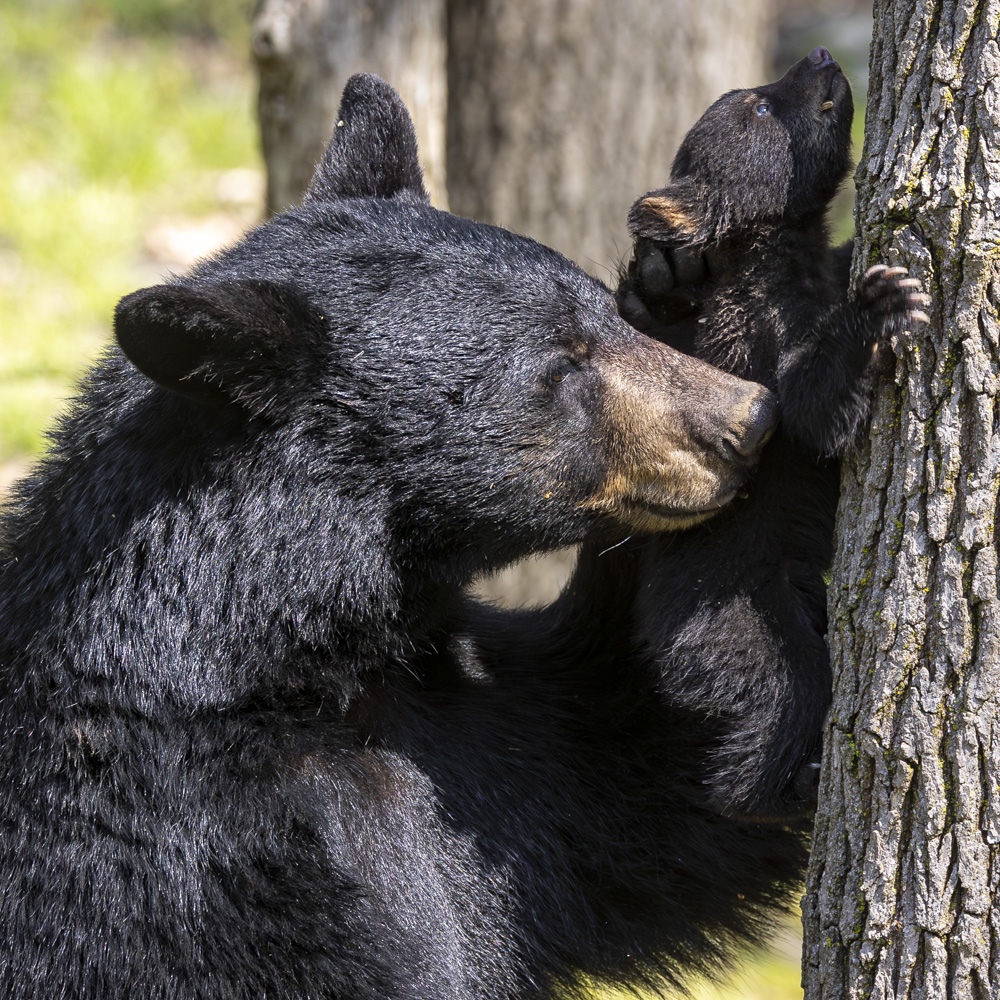
If you encounter a black bear, do not approach it. Resist the urge to get a closer look, take pictures, or toss food. Bears are fearful of humans, but they are also powerful animals that may defend themselves if they feel threatened. Be sure that you and everyone else in the area are safely out of the way and leave an escape route for the bear. If the bear hasn’t seen you, back away slowly. If it has seen you, frighten the bear by making noise such as banging sticks, yelling, or blowing car horns. Make yourself as big as possible by waving your arms. If the bear does not leave, makes warning or threatening gestures such as huffing or making popping sounds, or simply makes you feel threatened, back away slowly without making eye contact. Do not run.
It’s important to report the encounter to the nearest park employee as soon as possible. If you are camping in bear county, check out these BearWise Safety Tips from the NYS Department of Environmental Conservation (NYSDEC) to keep yourself and bears safe.
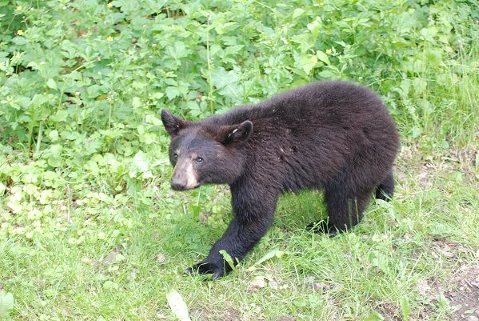
Get involved! There is a citizen science project—iSeeMammals—focused on studying the distribution of mammals like black bears across New York State. If you observe a black bear, you can play a role in wildlife research by reporting it to this project. Learn more at iSeeMammals.org!
Snapping Turtles
With shells up to 20 inches long and weighing between 8 and 35 pounds, the snapping turtle is one of the largest freshwater turtles in North America. Snapping turtles are commonly found throughout New York, and may be seen near lakes, ponds, and streams in the water, or nesting or basking (sunbathing to regulate their body temperature) on land. They prefer shallow, slow-moving waterbodies and spend most of their lives underwater. These turtles can be identified by their large head, jagged back edge of the upper shell (carapace), and long, thick scaled tail. You’re most likely to see them between April and October during their active season since they spend the winter buried in the muddy bottom of their waterbody. Much of their diet is plant matter, but as omnivores, they also eat fish, worms, frogs, and other small prey.
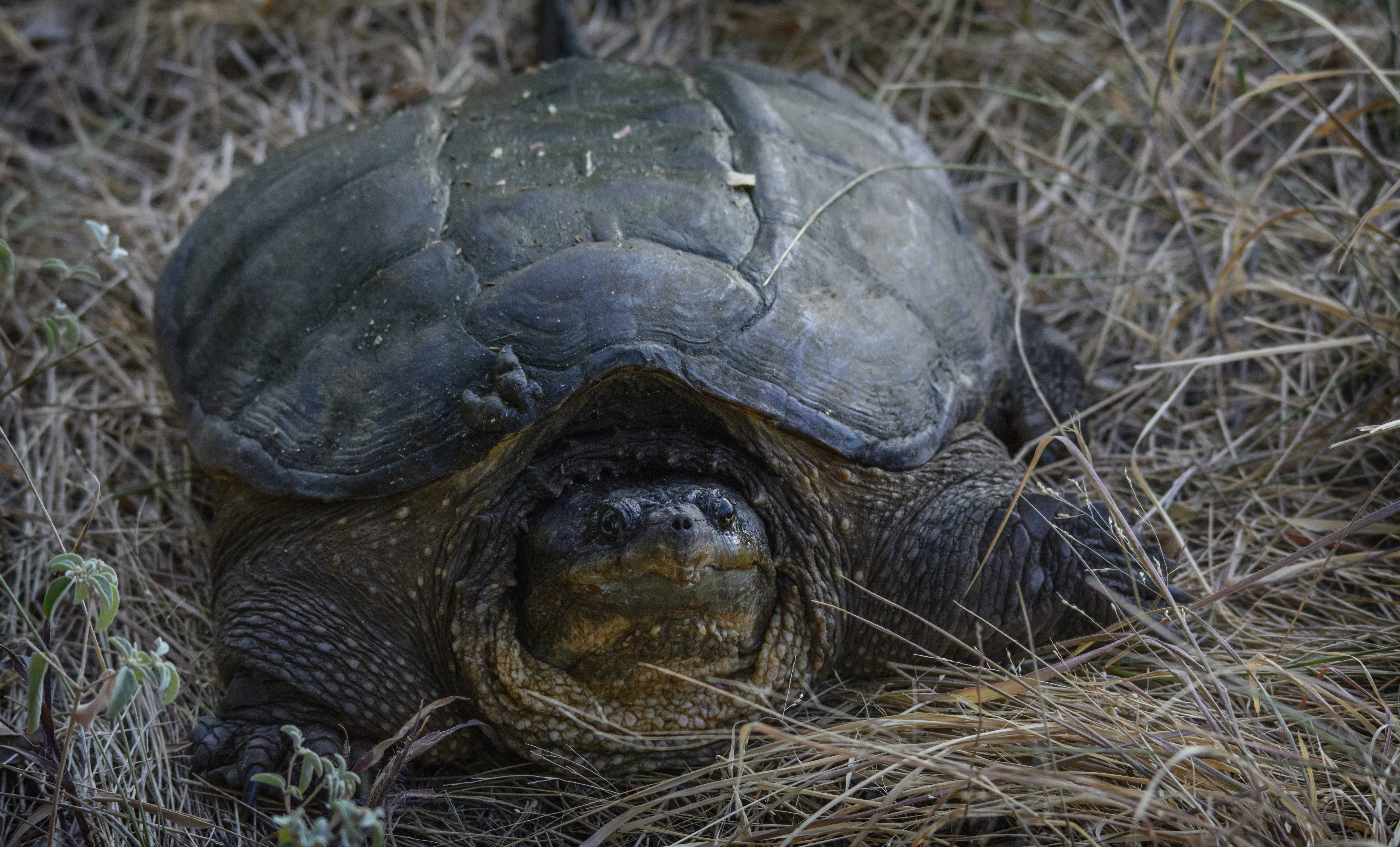
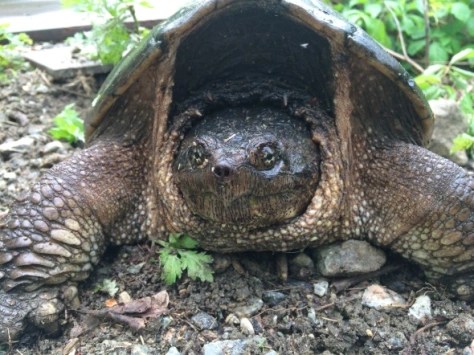
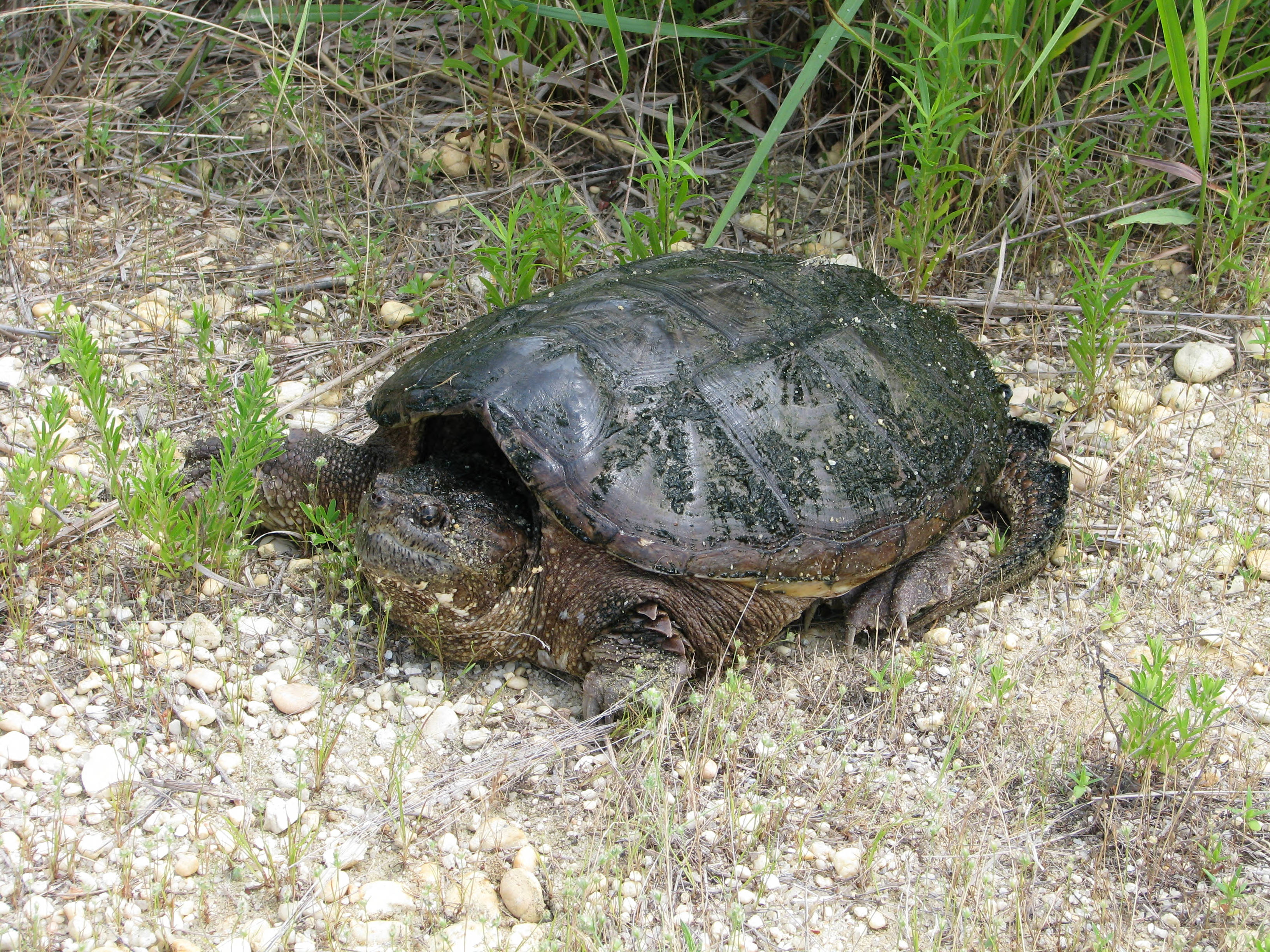
If you encounter a snapping turtle in the water, it will usually retreat and swim away. On land, snapping turtles can be much more defensive. They may hiss, lunge, or snap if they feel threatened. They have powerful jaws and necks, so be sure to remain a safe distance away. Never move a snapping turtle by pulling their tail, as this could cause severe injury to their spinal cord. Snapping turtles may also produce a strong-smelling musk when disturbed — another reason to appreciate this unique reptile from a distance!
Snakes
There are 17 species of snakes in New York, though most are rarely seen. Snakes are carnivorous, with diets ranging from worms, insects, and fish to small birds and mammals, depending on the species. When encountered by people, most snakes will attempt to retreat or hide. There are some snakes that may become defensive when they feel threatened.
According to the NYSDEC, “except for the venomous species, snakes’ teeth are quite small and hardly able to break a person’s skin. However, larger snakes are capable of drawing blood and as such, people should exercise caution around all snakes, whether venomous or not. Being careful around snakes not only protects yourself, but protects the snakes as well.”

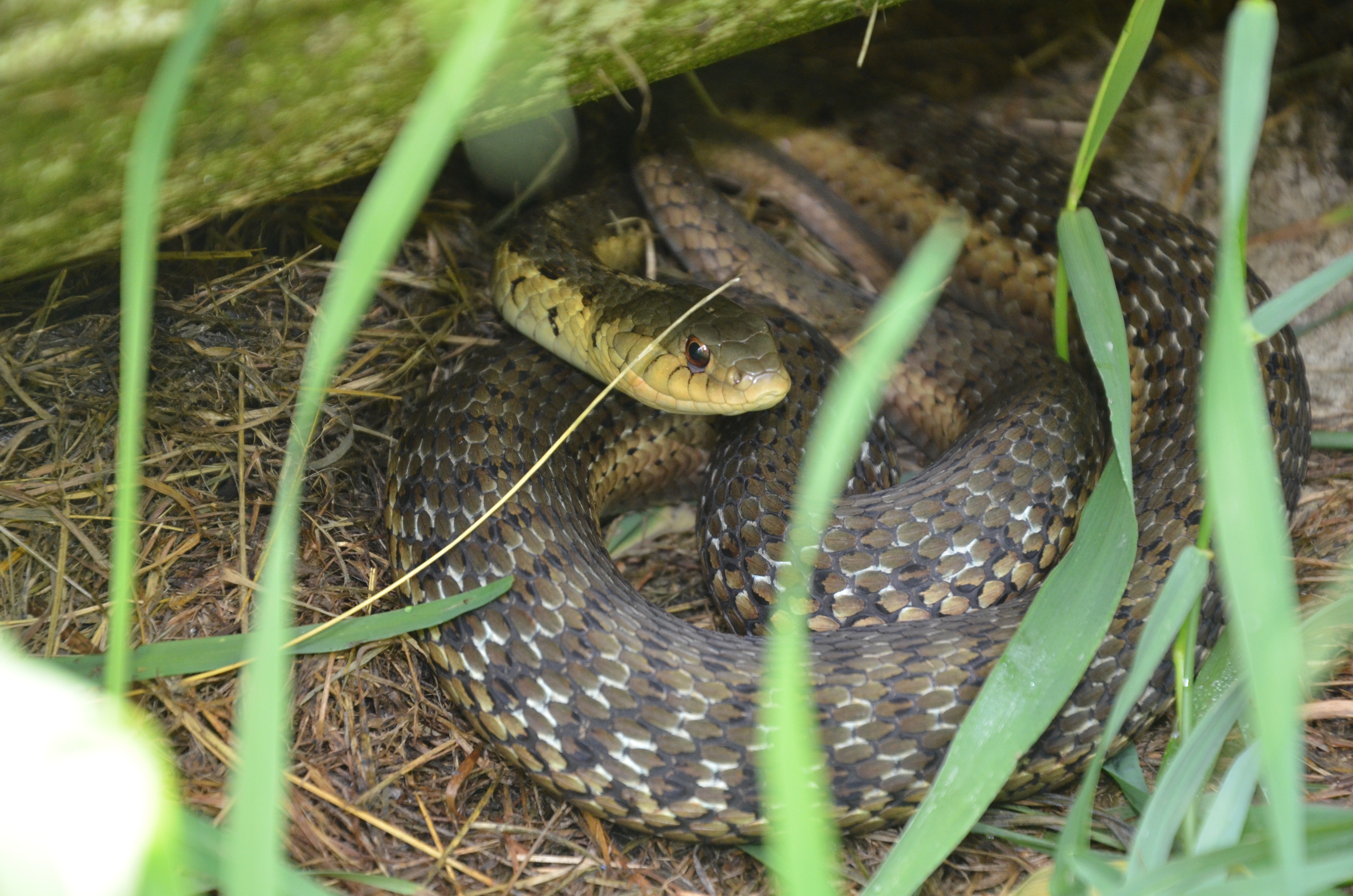
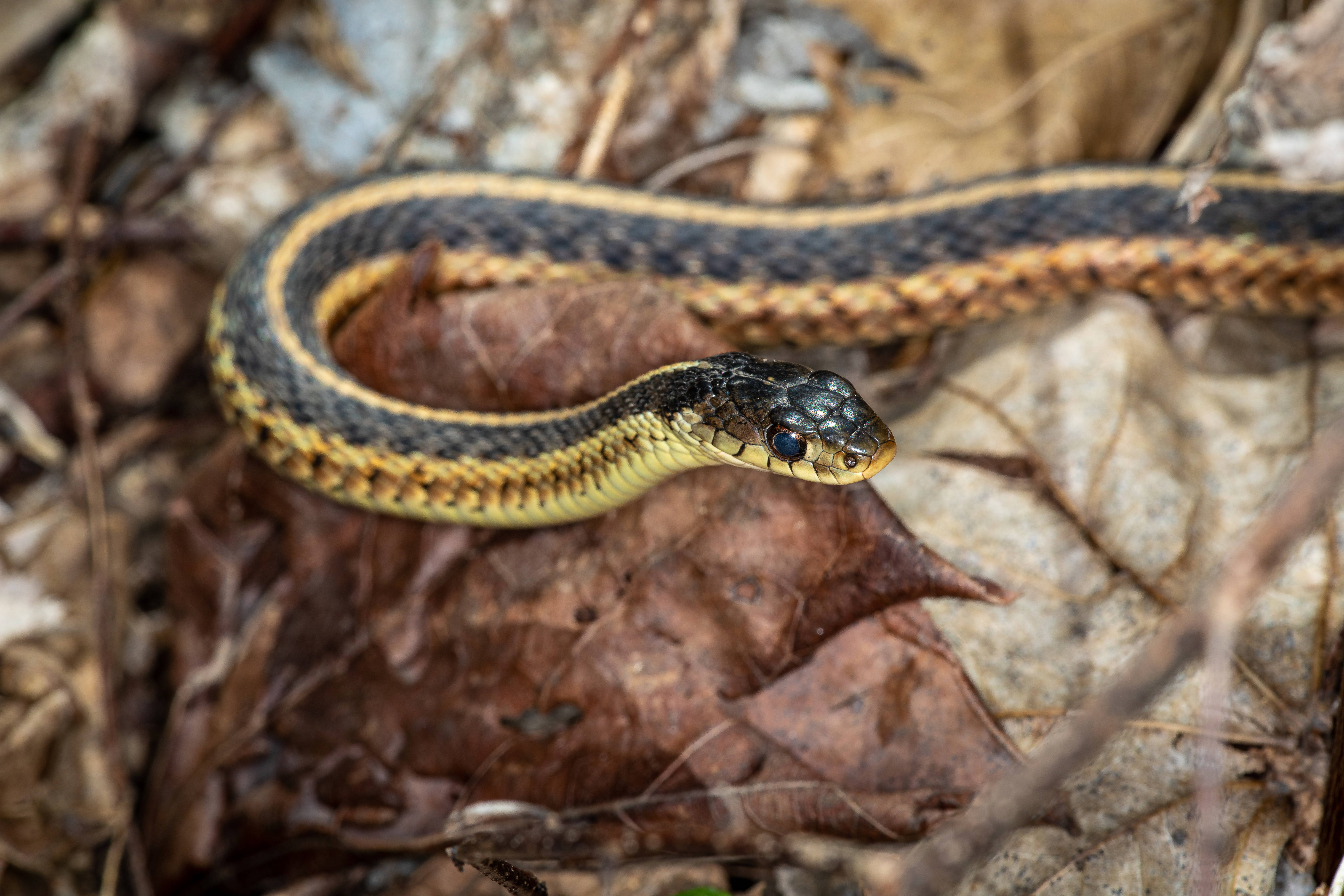
Some of the most frequently seen snakes in New York include the common garter snake and the northern water snake. These snakes are both non-venomous. The common garter snake grows up to 30 inches long and typically appears dark greenish with light stripes, sometimes with a checkboard-like pattern of light and dark squares along its body. It is often found in lawns, fields, and the edges of forests.
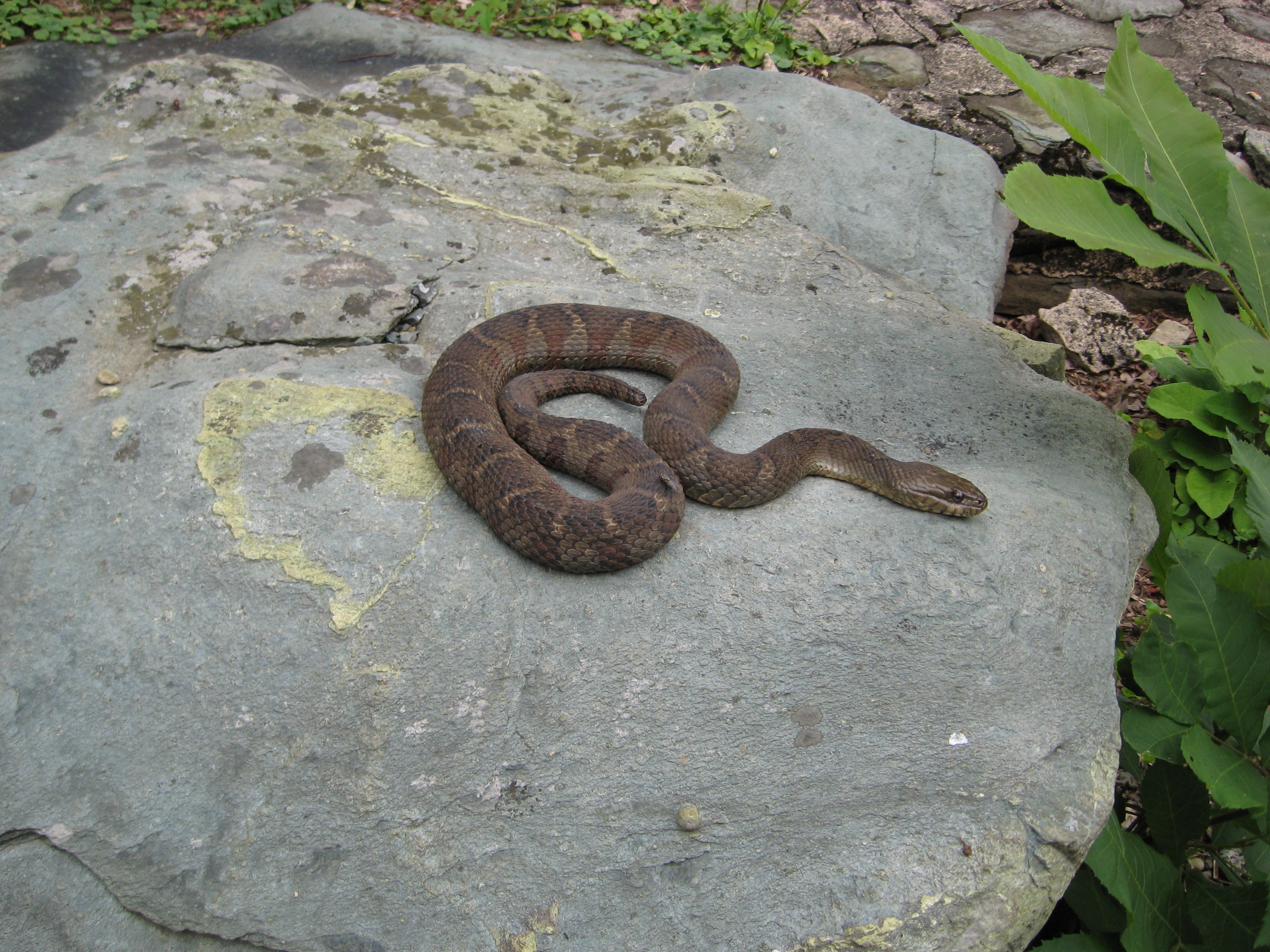

The northern water snake is larger, with lengths up to 48 inches, is typically brown with reddish or dark brown blotches along their back and sides. They are found in or near water. Unlike more timid species of snakes, the northern water snake may become defensive when disturbed.
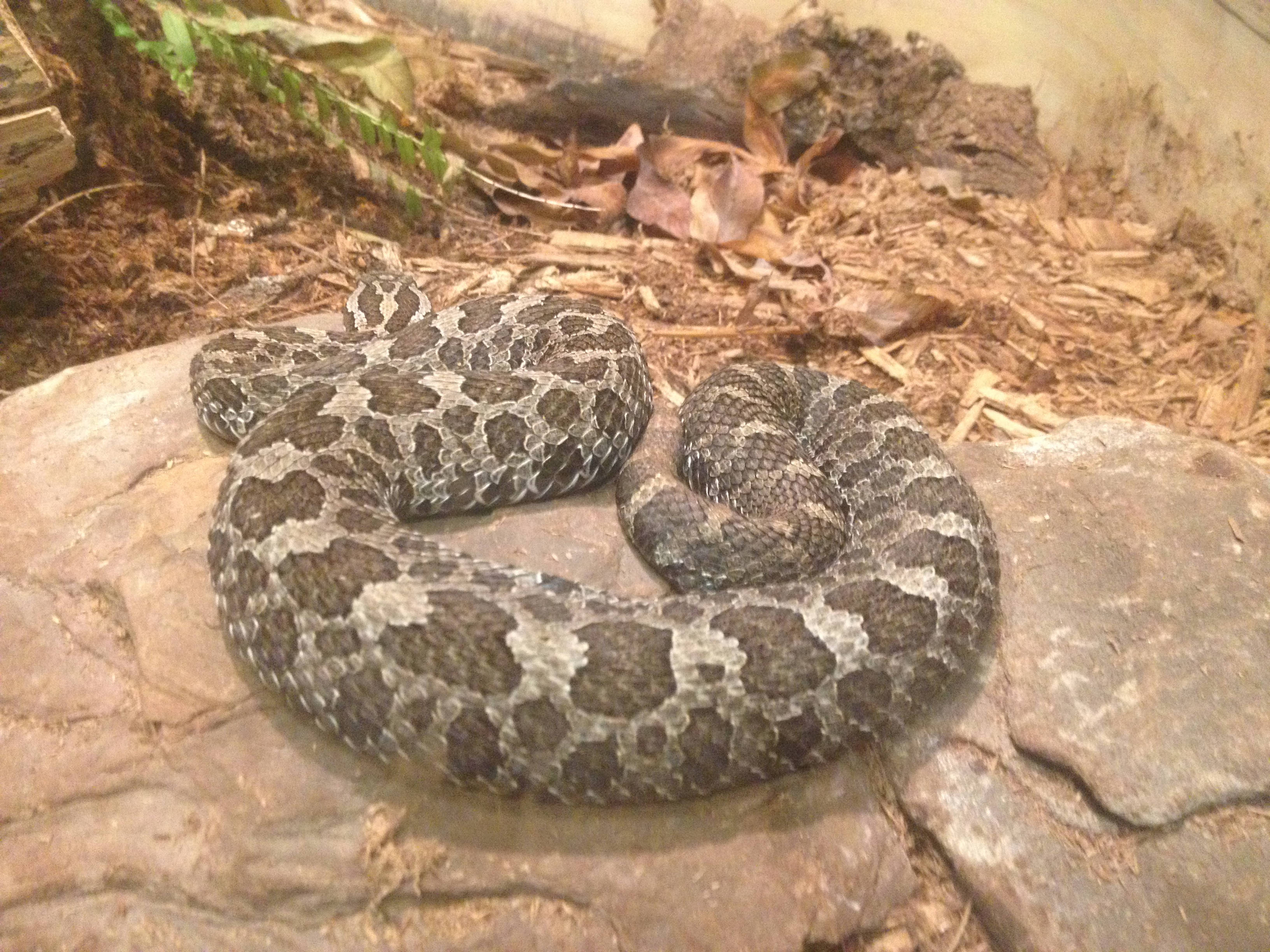
The three venomous snakes of New York are the timber rattlesnake, the copperhead, and the massasauga. These species have limited populations across New York, so they will not be commonly encountered by people. The massasauga, also known as the “swamp rattler,” lives in wetland habitats. It is the smallest of these three species, reaching 18-40 inches in length, and is typically gray or brown with distinct dark hourglass-shaped markings along its back.
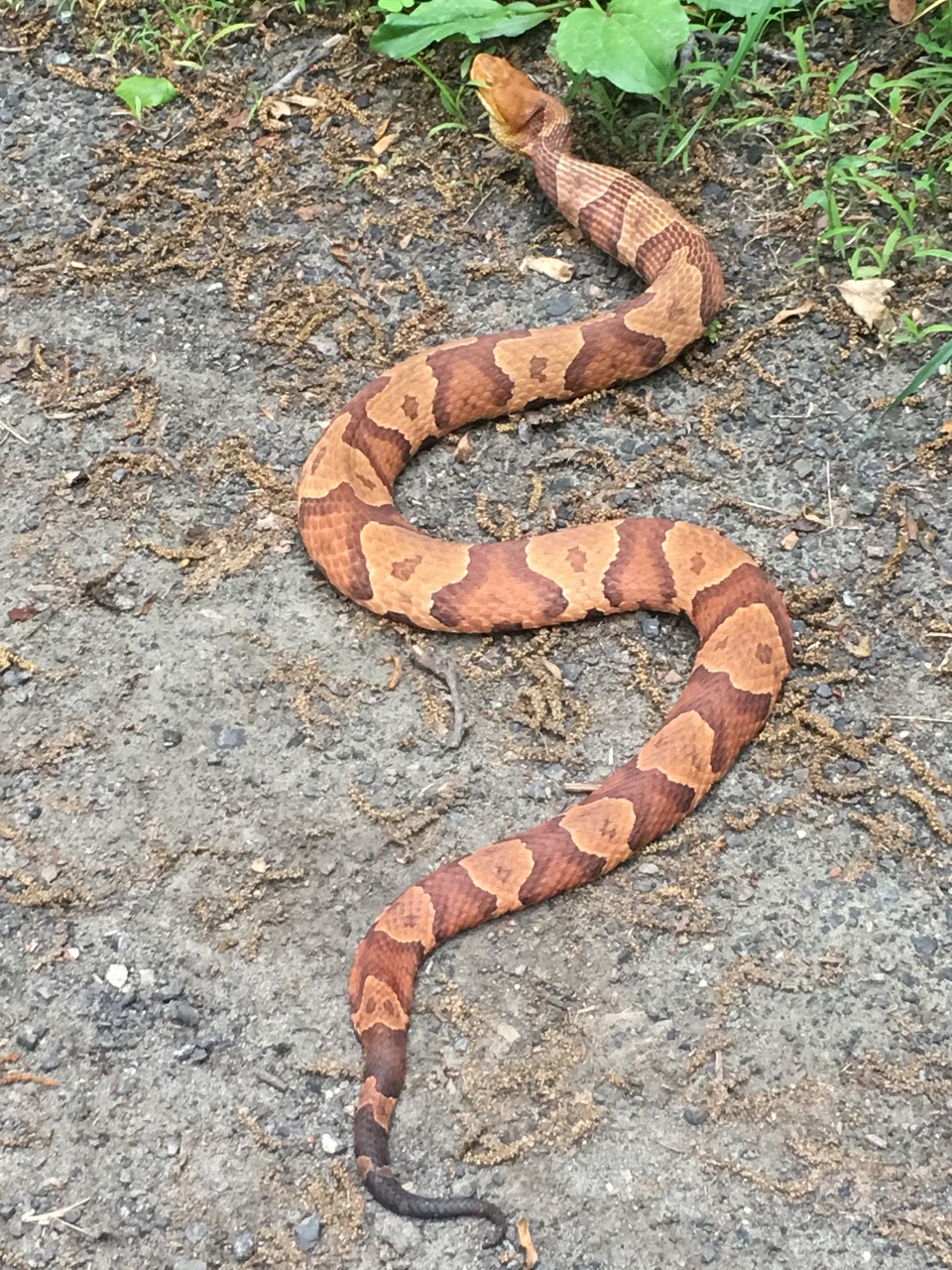
The copperhead, as its name implies, is a pinkish-tan snake with a coppery, orange-colored head and darker brown patches along its back. It typically reaches 2-3 feet in length and is found in similar habitat to the timber rattlesnake.
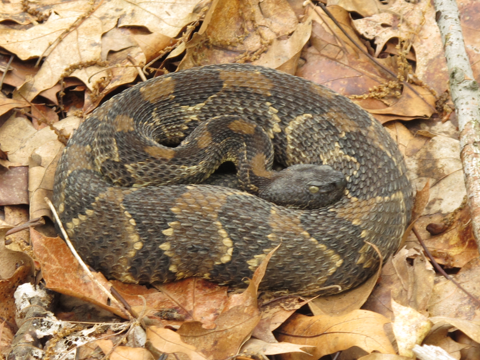
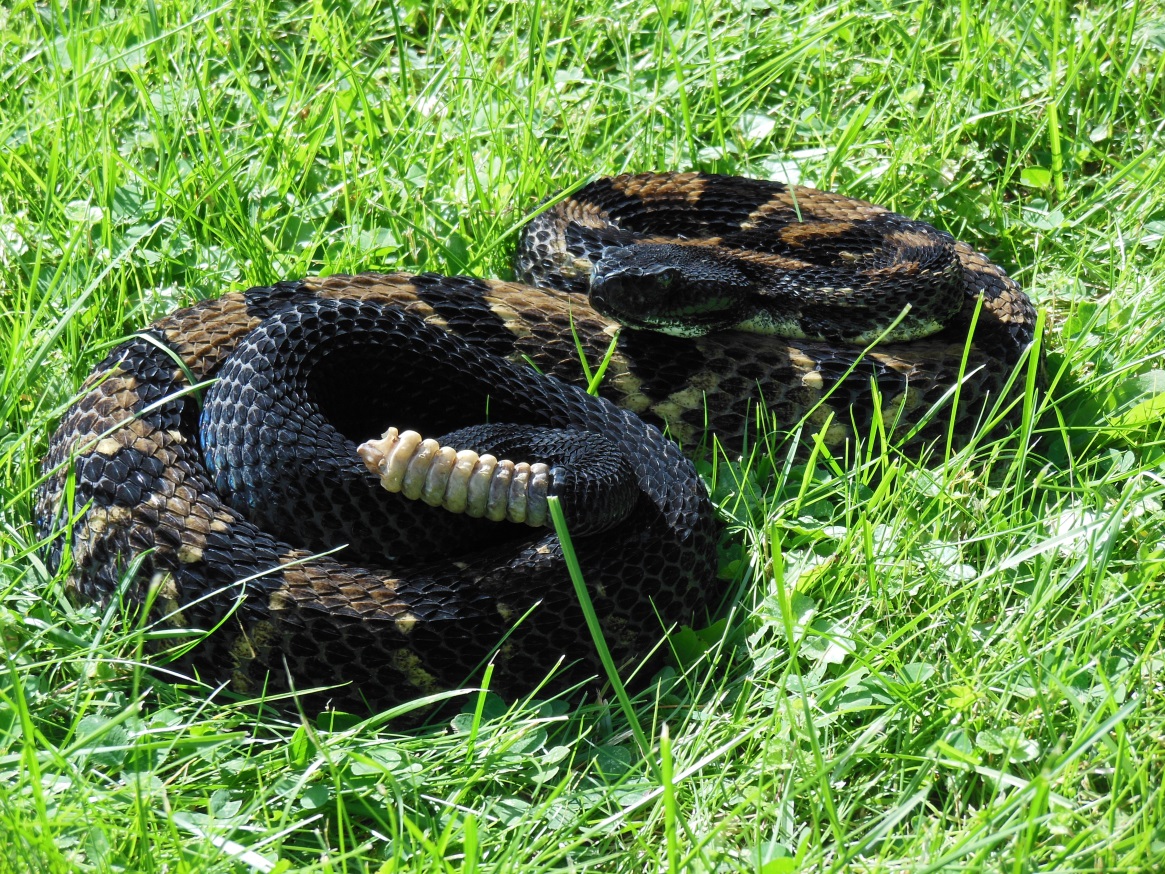
The timber rattlesnake lives in rocky slopes within hardwood forests but will also use surrounding lowlands. It can reach lengths up to 5 feet, though typically is 3-4 feet long, and has colorations varying from yellow with dark bands to almost all black. Timber rattlesnakes are listed as threatened in New York State and it is a criminal offense to disturb, collect, harm, or kill them.
It is a common misconception that rattlesnakes will pursue or attack a person. In fact, they are typically non-aggressive and will only strike if threatened or provoked. They may coil in a defensive posture and rattle as a warning. The NYSDEC explains that with venomous rattlesnakes, “the venom, which is used primarily to immobilize prey, can be fatal to humans if the bite is untreated. However, in New York there have been no records of human deaths attributed to rattlesnakes in the wild during the last several decades.” If you encounter a venomous snake, keep a safe distance of 6 feet or more away and let them move along on their own.
When looking for wildlife, check out these tips from the NYSDEC:
- Keep quiet, move slowly and be patient. This will increase your chances of seeing wildlife.
- View wildlife from a distance using binoculars or a spotting scope to observe the natural behavior of animals. It’s safer for wildlife and it’s safer for you.
- Avoid flushing or disturbing wildlife when watching or photographing them, and NEVER purposely chase wildlife! Flushing wildlife will lead to stress, deplete stored energy, and can cause death or decreased reproduction.
- Don’t feed the wildlife. Feeding can create dependence on humans and increase disease in wildlife.
- Leave wild baby animals where you find them.
Viewing wildlife is a great reason to head outside; it can be thrilling to spot an animal in its natural habitat! By following the tips above, you can have an enjoyable experience while keeping the wildlife safe too. Remember, most wildlife are more scared of you than you are of them, so they are likely to retreat as soon as you see them. In the rare case of a dangerous wildlife encounter, call 911 or seek medical attention if needed.
For additional information on wildlife, viewing and photography tips, and viewing areas near you, check out the NYSDEC’s Watchable Wildlife program.
— Post written by the New York State Parks Wildlife Unit (wildlife@parks.ny.gov). All photos property of OPRHP unless otherwise credited.
 New York State Parks and Historic Sites Blog