

Where does New York State Parks get its flowers, perennials, shrubs and trees? For the parks on Long Island, the answer for the past two and a half years may be simply “Michelle.” Since becoming the manager of the Nissequogue River State Park greenhouse, Horticulture Technician Michelle Doran-Leute has launched an ambitious program of seed collection, propagation and planting that’s not only making Long Island parks beautiful, but supporting its ecosystem. Her mantra has always been: You can’t have a park without plants! Follow along as Michelle takes us inside the operations at the Nissequogue River greenhouse and nursery.
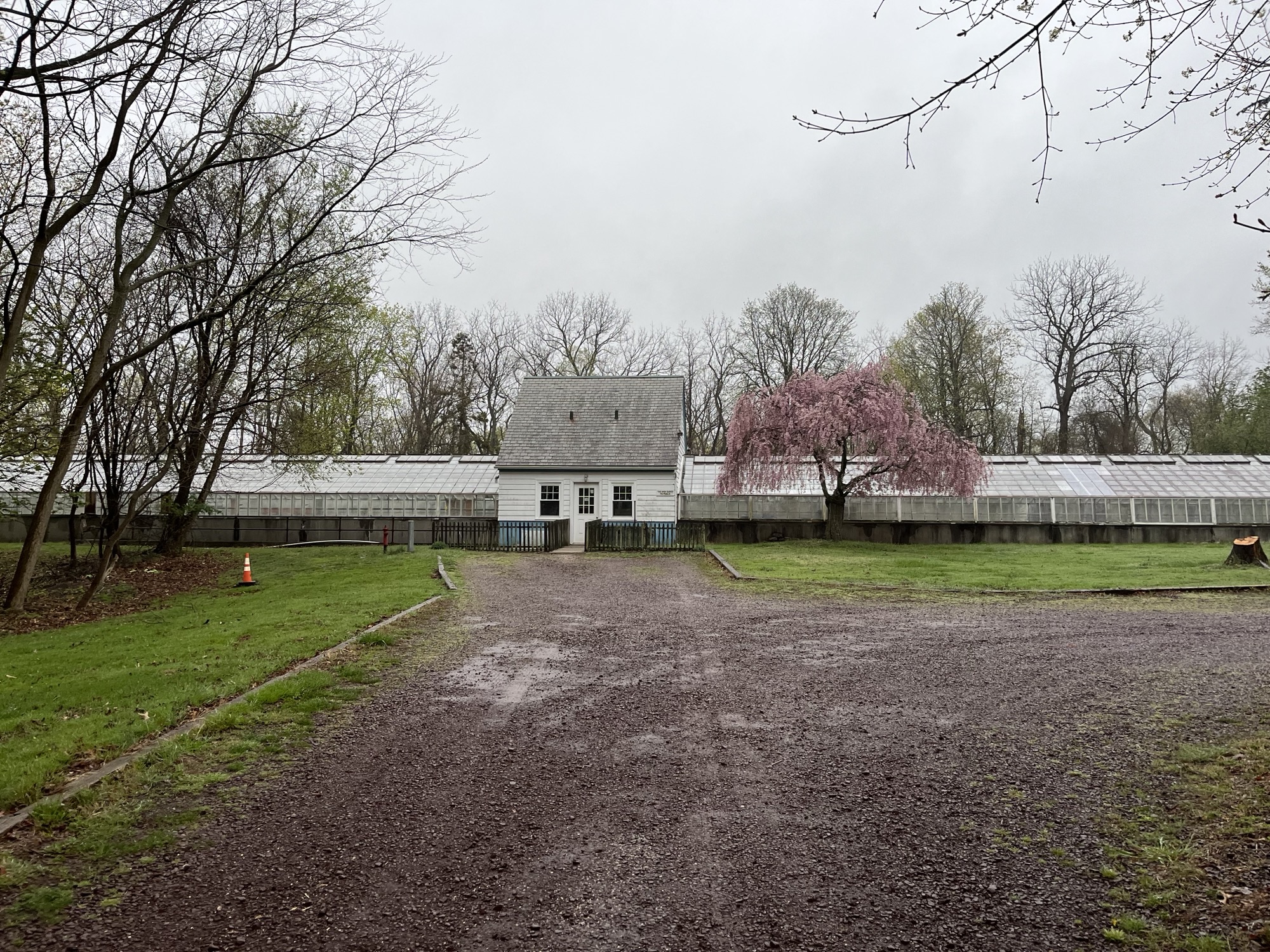

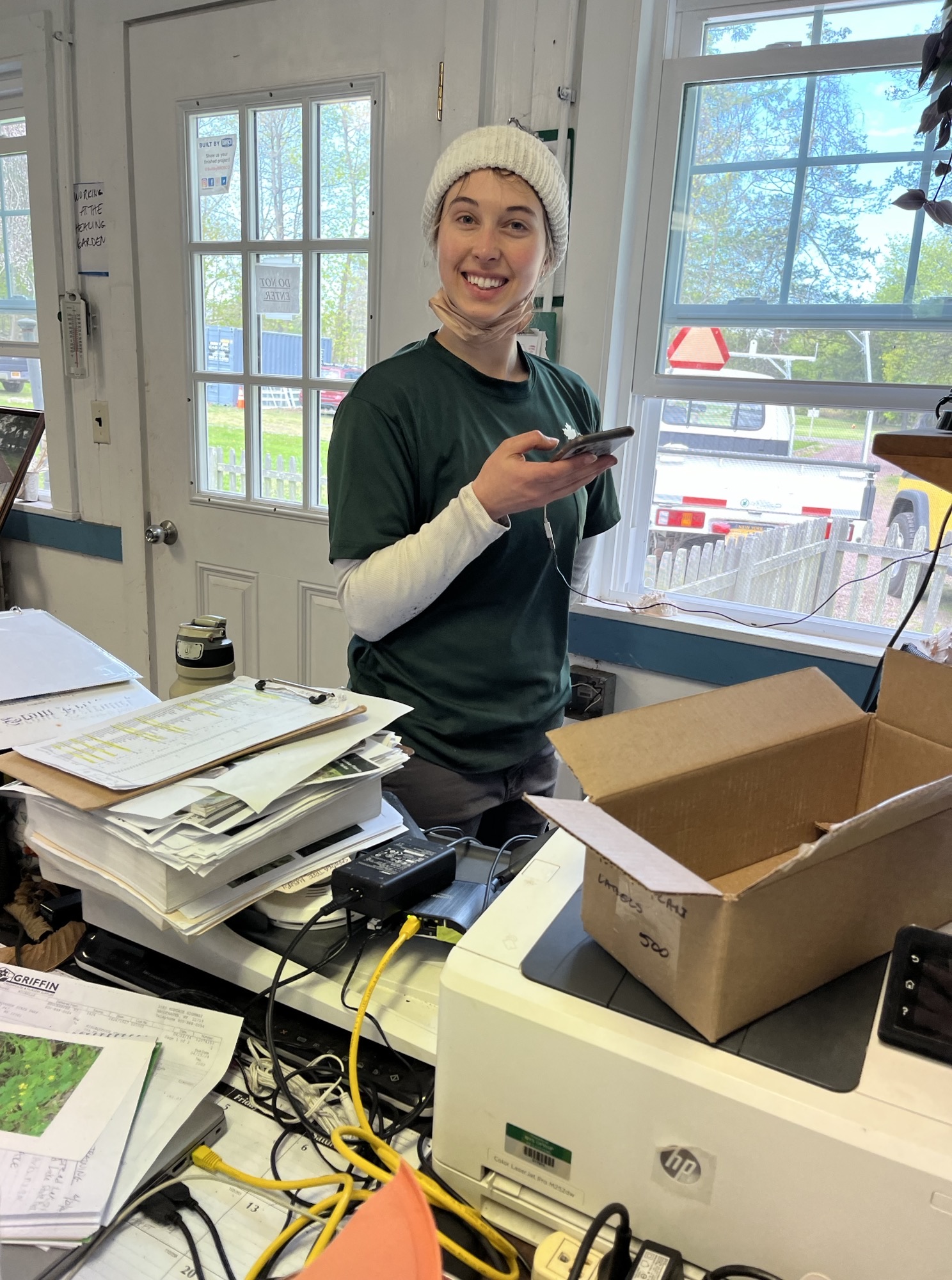
The Nissequogue River State Park (NRSP) greenhouse and nursery is home to the growing operations for the Long Island Region of New York State Parks. Operated and managed by myself and assistant Emma Halliday, its main purpose is to grow plant material to be distributed to the state parks of Long Island. We focus on growing native United States perennials, trees, shrubs, and ornamental mums, cabbage, kale, and asters for the fall season.
Long Island has a distinct ecology, salt spray, exposure to tides and hurricanes, and increasing urbanization. From the beach parks to forest parks, we have differences in the plants that naturally grow here.


Nissequogue River State Park has an interesting and unique history. Its grounds formerly belonged to King’s Park Psychiatric Center for 111 years before it was handed over to New York State Parks. Since 2000, NRSP has been transforming the appearance of the grounds to match its new use as a park. The greenhouse, designed by Lord and Burnham, was built around 90 years ago for horticulture therapy purposes. Patients at the psychiatric center started vegetable seeds in the greenhouse, which were planted onsite to feed the population at the self-sufficient center.
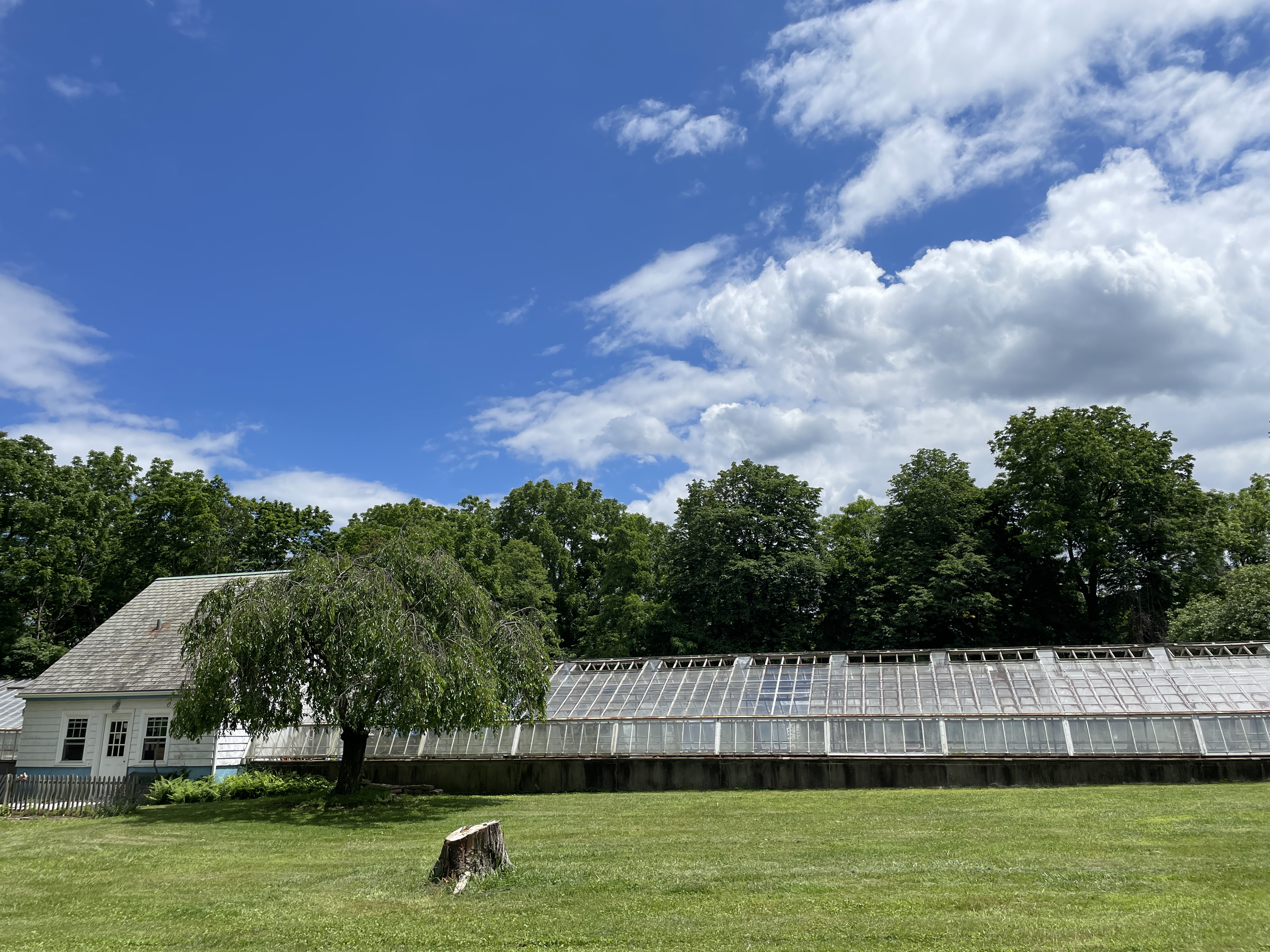

The greenhouse consists of two 90-foot-long wings and still has manual cranks to open and close the ventilation system. Unlike a modern greenhouse, there is no automation. The 1-acre nursery lies directly behind the greenhouse.


Propagation is our main duty at the greenhouse and nursery. The process initially started with summer annuals and poinsettias. However, due to the failure of the boiler two years ago, we shifted propagation to hardy perennials, trees, and shrubs. The trees and shrubs originate from the Department of Environmental Conservation (DEC) Saratoga Tree Nursery in the form of tree seedlings, which are then potted into three-gallon pots by my dedicated volunteer corps.
At the start of the program, perennials were sourced from perennial plug vendors from out of state. They are now sourced from a combination of seed collected from native plants from Long Island and North America. These seeds are then grown onto smaller two-inch plug pots at Bethpage State Park by horticulture technicians Victor Azzaretto and Alexa Roldos, then sent to NRSP greenhouse and nursery to be potted and grown into one-gallon pots. Other native seeds are directly grown at NRSP greenhouse and nursery under a program that just started this year.

Our priority is to source Long Island native ecotype seed from the forests that surround the NRSP greenhouse complex. Since we are an island, we have a different ecology from the rest of the state, giving genetic difference to our plant palette. Long Island has a distinct ecology, salt spray, exposure to tides and hurricanes, and increasing urbanization. From the beach parks to forest parks, we have differences in the plants that naturally grow here.

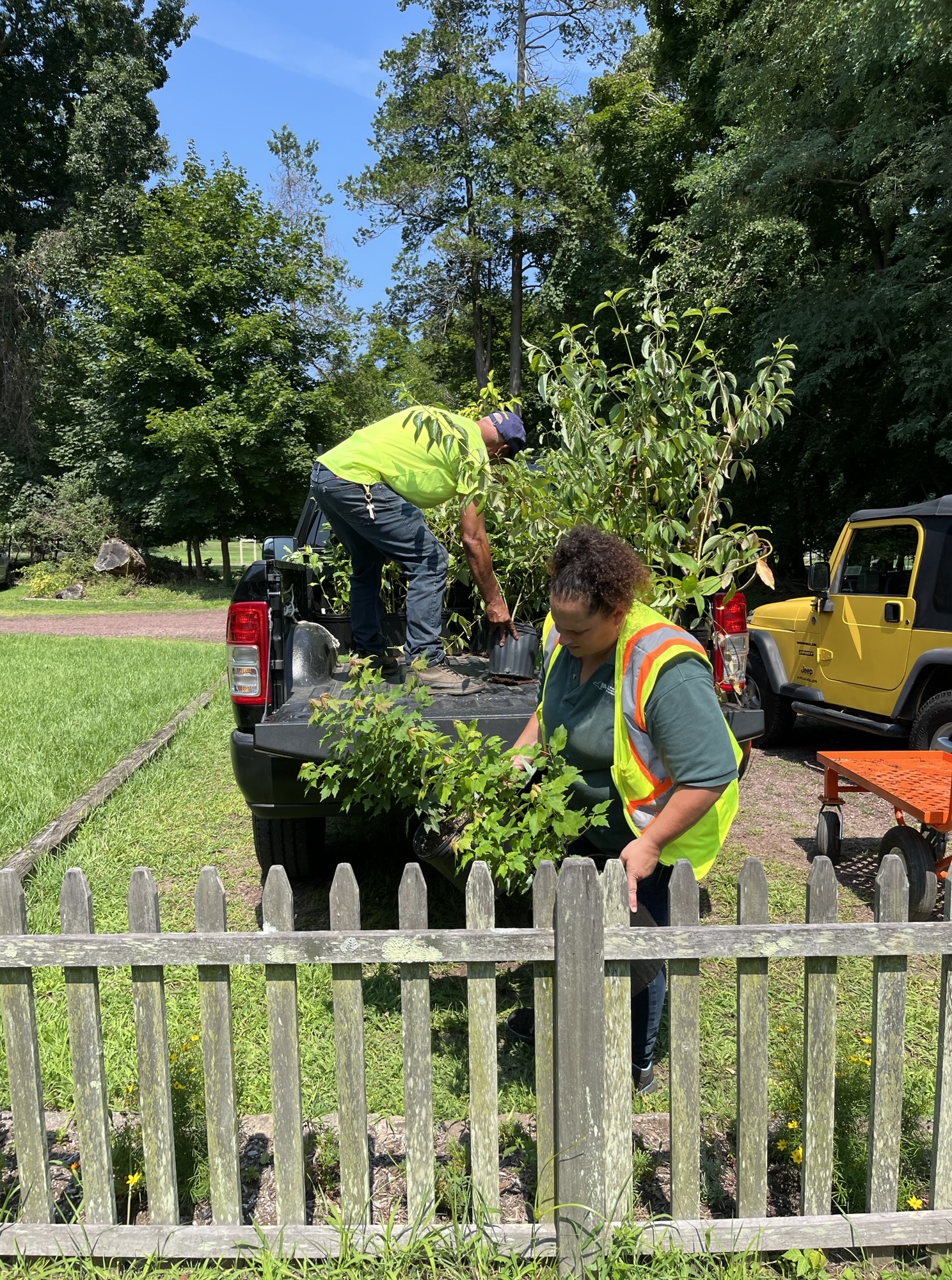
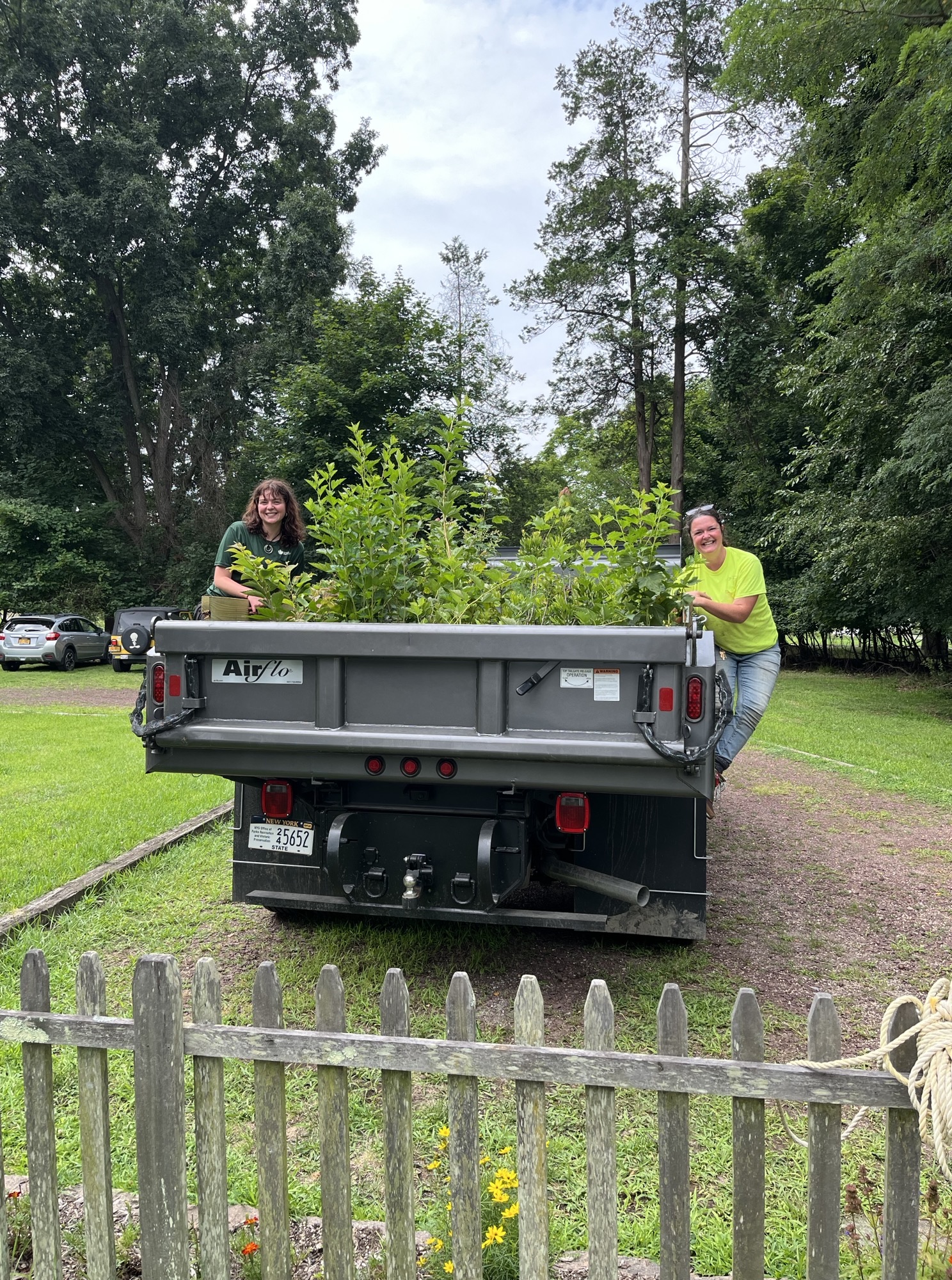
These native plants are then distributed to all of the region’s state parks from Montauk to Hempstead Lake via our coordinated pick-up process. All New York State parks on Long Island receive a fillable form that contains the weekly availability of trees, shrubs, and perennial plants along with a comprehensive plant catalog which details the cultural, landscape, and pollinator value of each plant. The plants are used around the administration buildings, environmental centers, pollinator gardens and forests at the parks to increase biodiversity and reduce invasive plants. This year, we grew 385 trees, 320 shrubs, and 900 perennials (from Bethpage State Park two-inch plug pots), plus 2,400 mums, 700 ornamental cabbage and kale, and 300 ornamental asters. Locally-collected seed that we propagated at the greenhouse and nursery produced an additional 920 perennials!


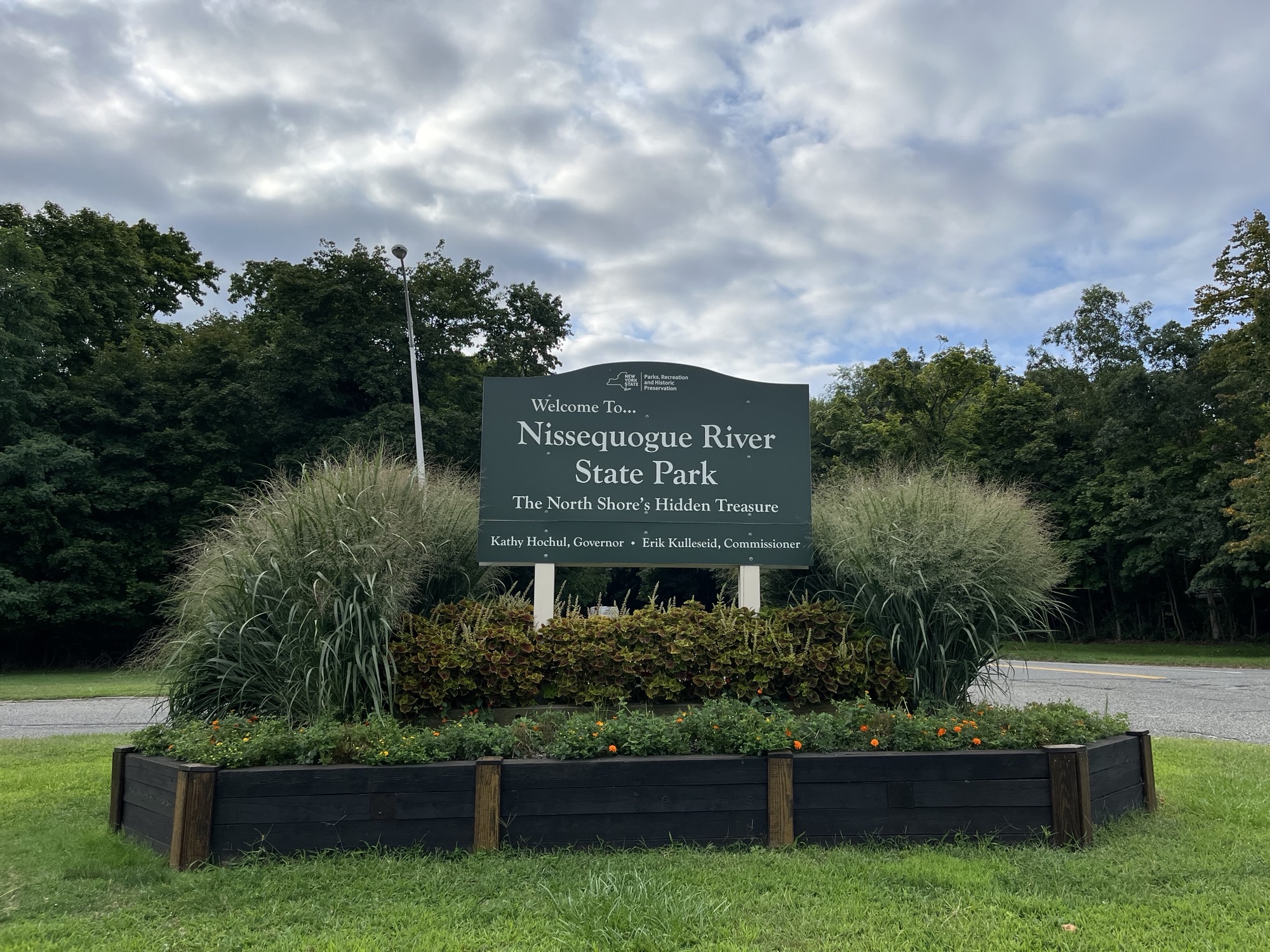
The NSRP greenhouse and nursery is also responsible for the landscape and garden installation and maintenance of all planters at Nissequogue. We handle the seasonal switch out of the park’s front sign garden, and care of the other display beds and pollinator gardens at the park.
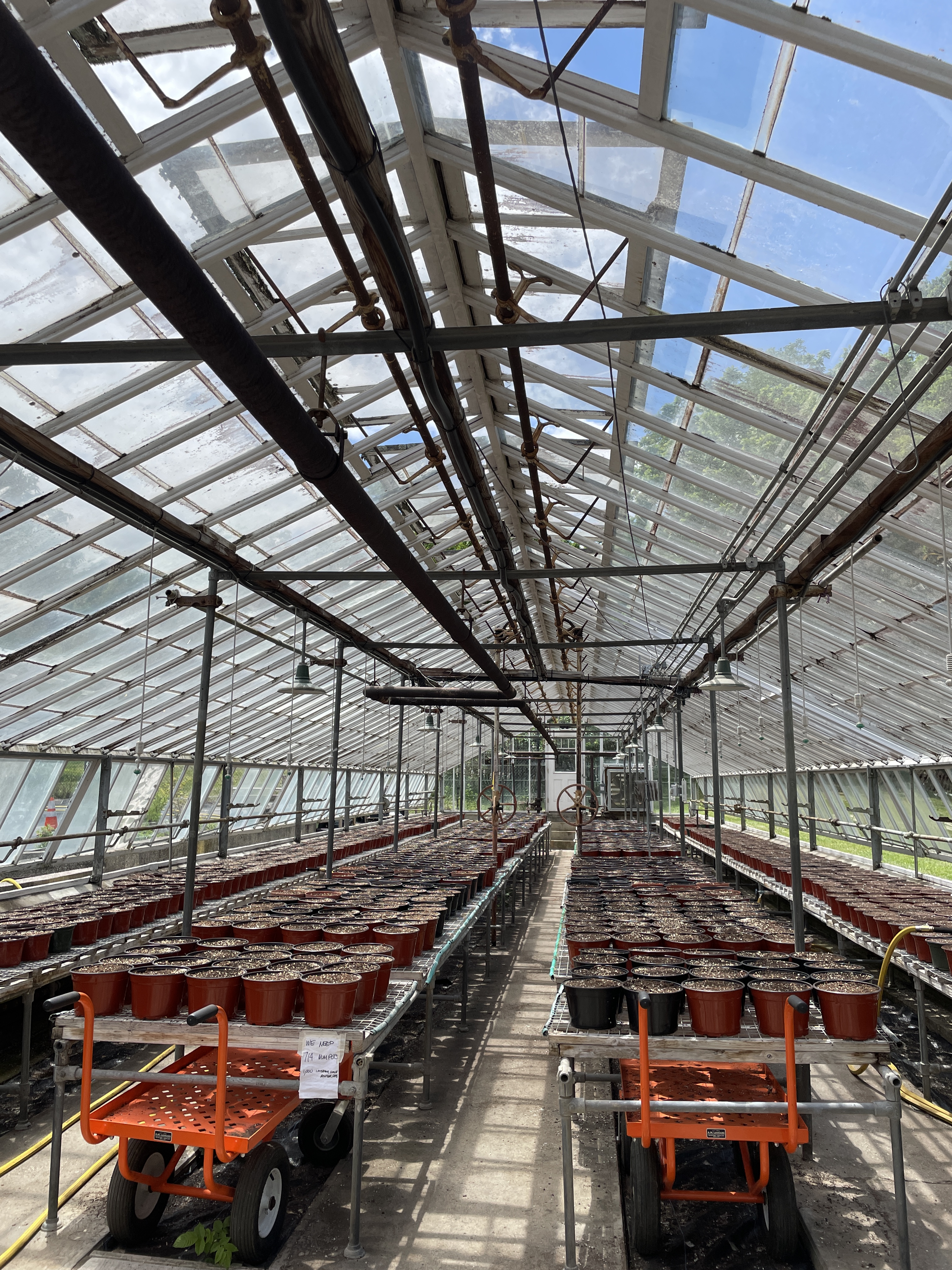
Our team also handles the greenhouse and nursery maintenance. Tasks such as maintaining landscape fabric and fence perimeter, weeding nursery, carpentry, tool maintenance, irrigation setup and breakdown, irrigation maintenance, fall and spring debris cleaning, window caulking, greasing the gears in the greenhouse and grading the terrain in the nursery are all part of our our work.

Invasive species management in and around the forest that encompasses the greenhouse complex is another task that happens at the NRSP greenhouse and nursery. We rely heavily on the environmental Saturday stewardship program managed by Michael DiMaulo to assist us in removal of invasive plants around the nursery. This allows us to identify and focus on nurturing the native plants that exist in the forest as well as manage the ecology of the facility.
Over the past two years, the nursery has undergone major renovations. Invasive trees and weeds had grown through the tears in old, degraded landscape fabric. The fabric has been removed, trees and weeds removed, and the grounds re-graded and a main pipe installed for drainage. An old picnic area, pond, and waterfall were removed. Other fixes included re-framing of areas of the greenhouse that had rotted out, and removing invasive plants in the two 70-foot-long cold frames in the nursery.
I chose the career of horticulture because I love growing things, being active, and improving our shared environment. My hopes and dreams for the Nissequogue River State Park greenhouse and nursery are big. We’ve partnered with the NYS DEC and New York State Agriculture and Markets to fight invasive insects like the spotted lanternfly. We’ve worked with volunteers to engage them in our work and help them make a real contribution. I’m just supposed to be growing plants, but I’m excited to see my role shoot far beyond that.
–Written by Michelle Doran-Leute, Nissequogue River greenhouse and nursery Manager
 New York State Parks and Historic Sites Blog