
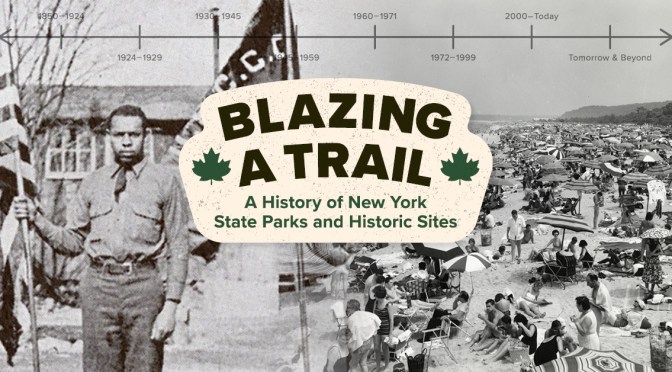
In celebration of our Centennial anniversary this year, we have been telling the story of New York State parks and historic sites through our interactive history timeline, Blazing a Trail. Since our last update on the blog, we’ve covered a lot of ground with three densely packed additions illuminating two eras of State Parks history.
Picking up where we left off in 1929, the new additions to the online exploration of our history span from the start of the Great Depression in 1930 until the end of post-war recovery in 1959.
Responding to an Economic Downturn
The first addition, presented in two parts, covers the years 1930 – 1945. The first part of this era details the effects that the Great Depression had on the development of State Parks.
Prior to the Depression, the New York State park system was expanding, using the guidance laid out in the 1924 State Park Plan. However, as money dried up, plans for future development ground to a halt.
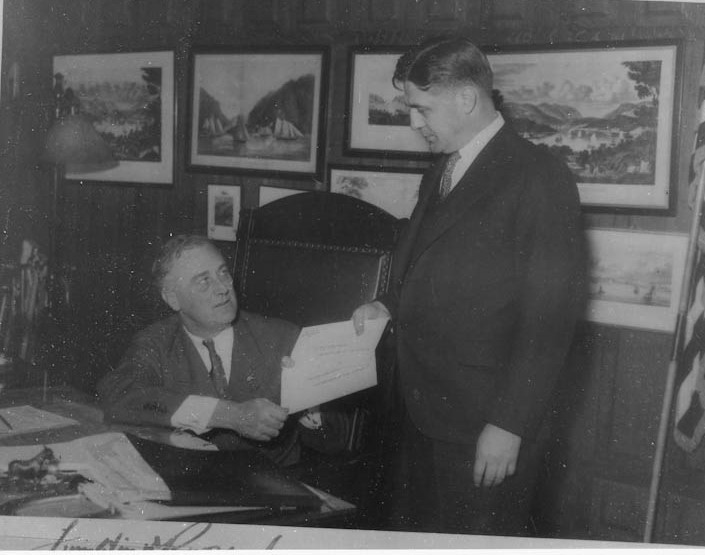
In response to the economic crisis, President Franklin D. Roosevelt enacted reforms under his New Deal plan which had a positive impact on New York’s state parks. Along with economic aid, the plan created the Civilian Conservation Corps (CCC), which employed nearly three million men on projects to improve America’s public lands.
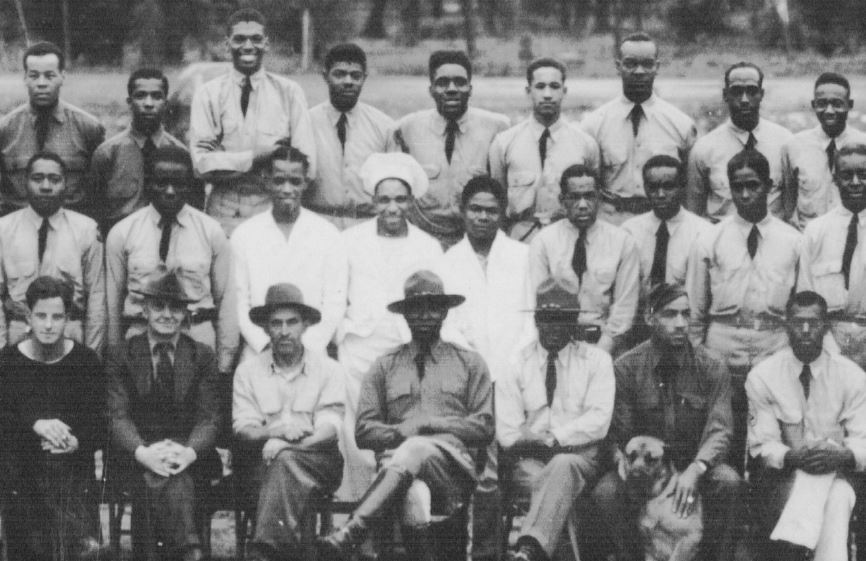
While there were many projects completed by the CCC in New York, Company 1251-c has a particularly notable story. Stationed at Newtown Battlefield State Park, Company 1251-c was one of the first all-Black companies to have Black officers in command at a time when these segregated companies were required to be led by white officers.
Other New Deal reforms impacting New York State Parks at the time included efforts to document the nation’s architectural heritage through the Historic American Buildings Survey and the pilot of Eleanor Roosevelt’s “She She She” camps at Bear Mountain State Park.
State Parks Mobilize
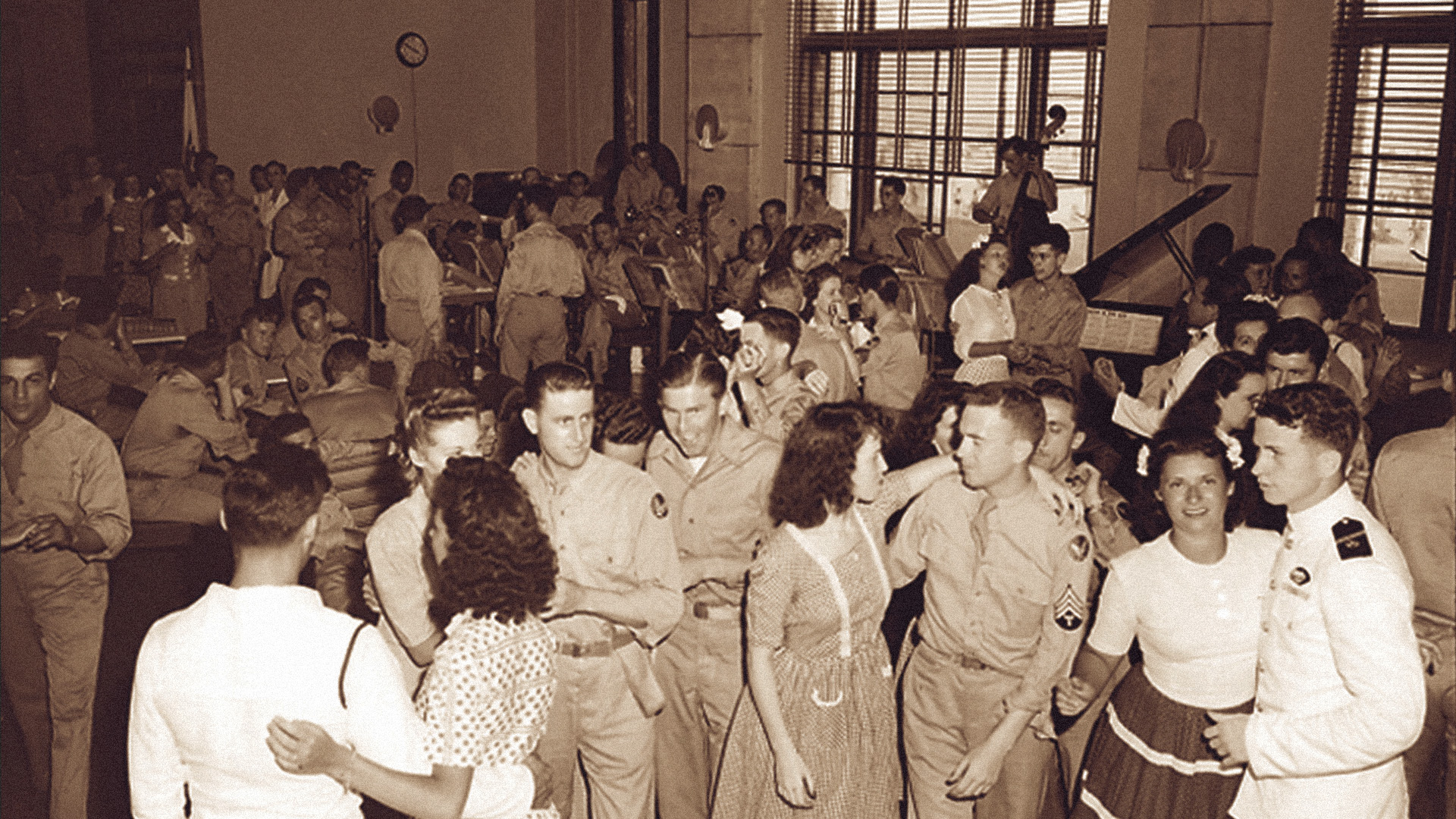
The second part of this era details the mobilization of New York’s state parks during World War II. With state and federal budgets shifting from domestic economic recovery to the war effort, funding was once again withheld for expansion and maintenance projects. This led to even more projects being deferred. Nevertheless, limited development of state parks continued as New York State Parks proved crucial during World War II. Across New York, parks, historic sites, and their staff answered the call to support the war effort. Jones Beach State Park hosted a popular USO Lounge. Clarence Fahnestock State Park served as a temporary home for British soldiers. Scores of State Parks staff enlisted to fight.
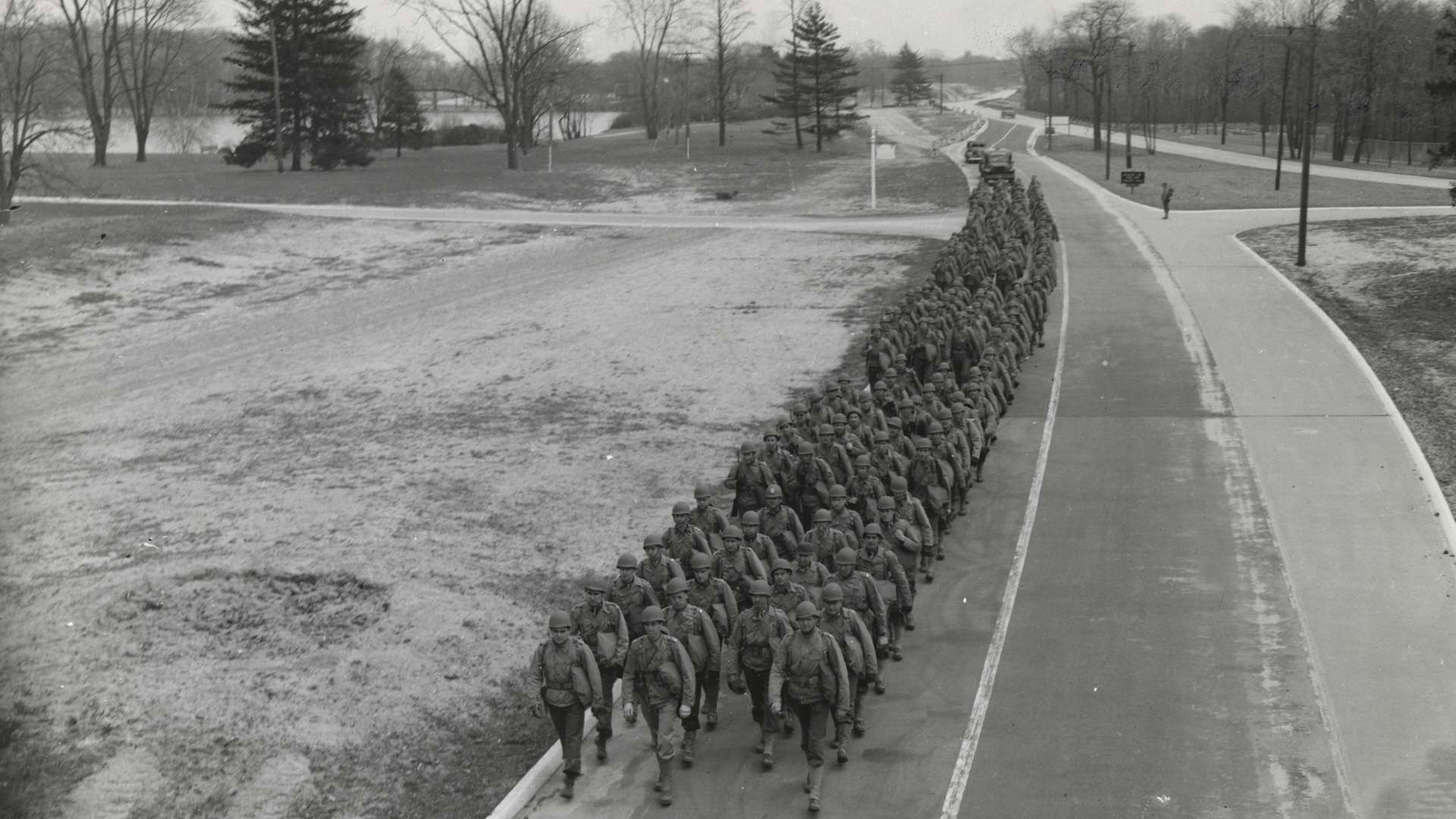
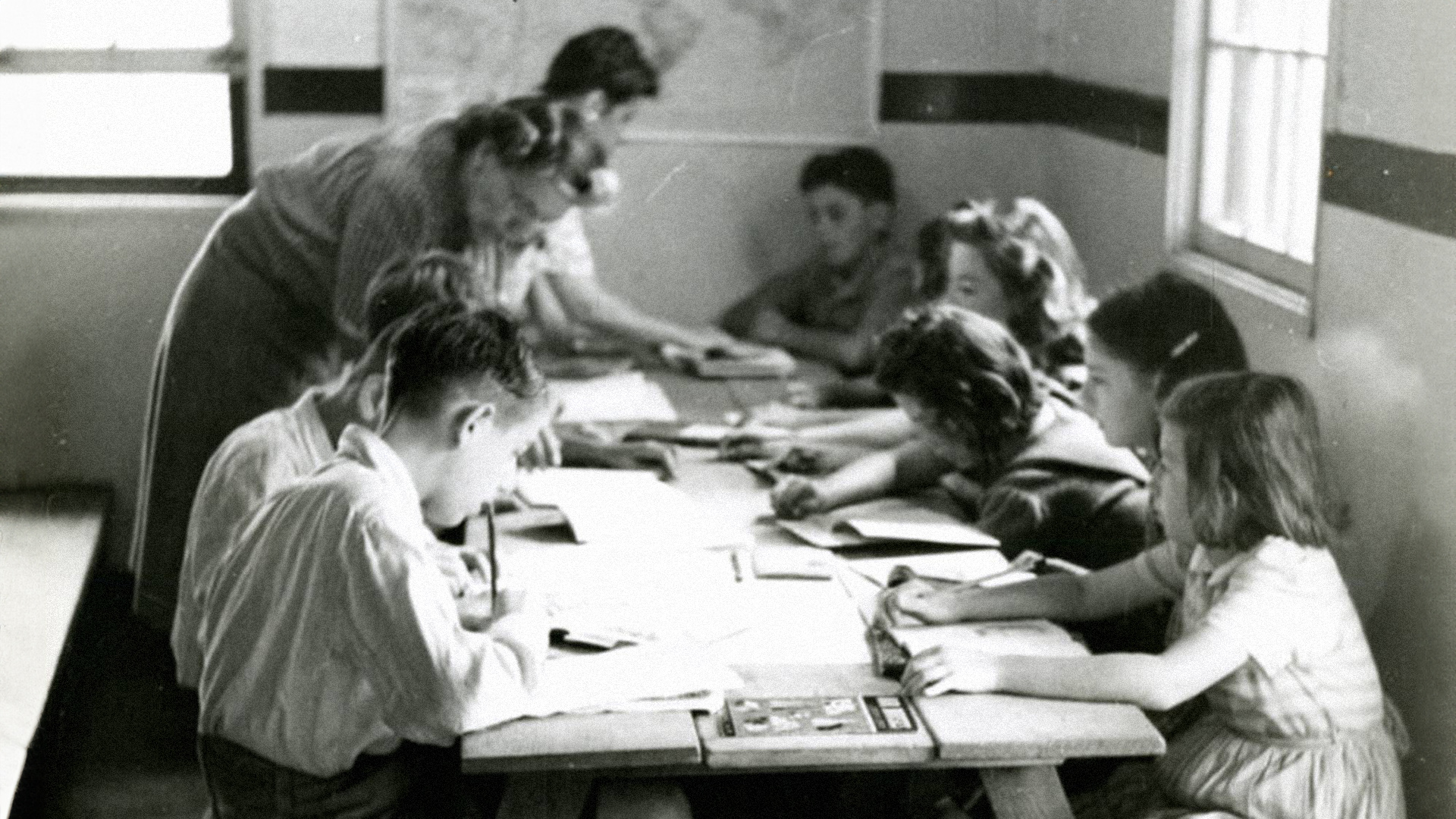
While there are several more stories to learn about, Fort Ontario’s stands out above the rest. Not yet a State Historic Site, the military installation served as the training ground for the 369th Coast Artillery (Anti-Aircraft) Regiment. Previously serving in World War I, the all-Black unit known as the Harlem Hellfighters were reorganized from an infantry unit to an anti-aircraft unit in 1940, and were the first all-Black combat unit assigned to a technical role in the U.S. military—a step towards desegregation. Following the unit’s deployment to the Pacific, the fort continued to play a significant role in the national story, serving as the only shelter in the United States for Jewish refugees fleeing the Holocaust. In total, 982 refugees were sheltered at the site in Oswego, where they received food, medical care, and schooling.
Post-War Parks
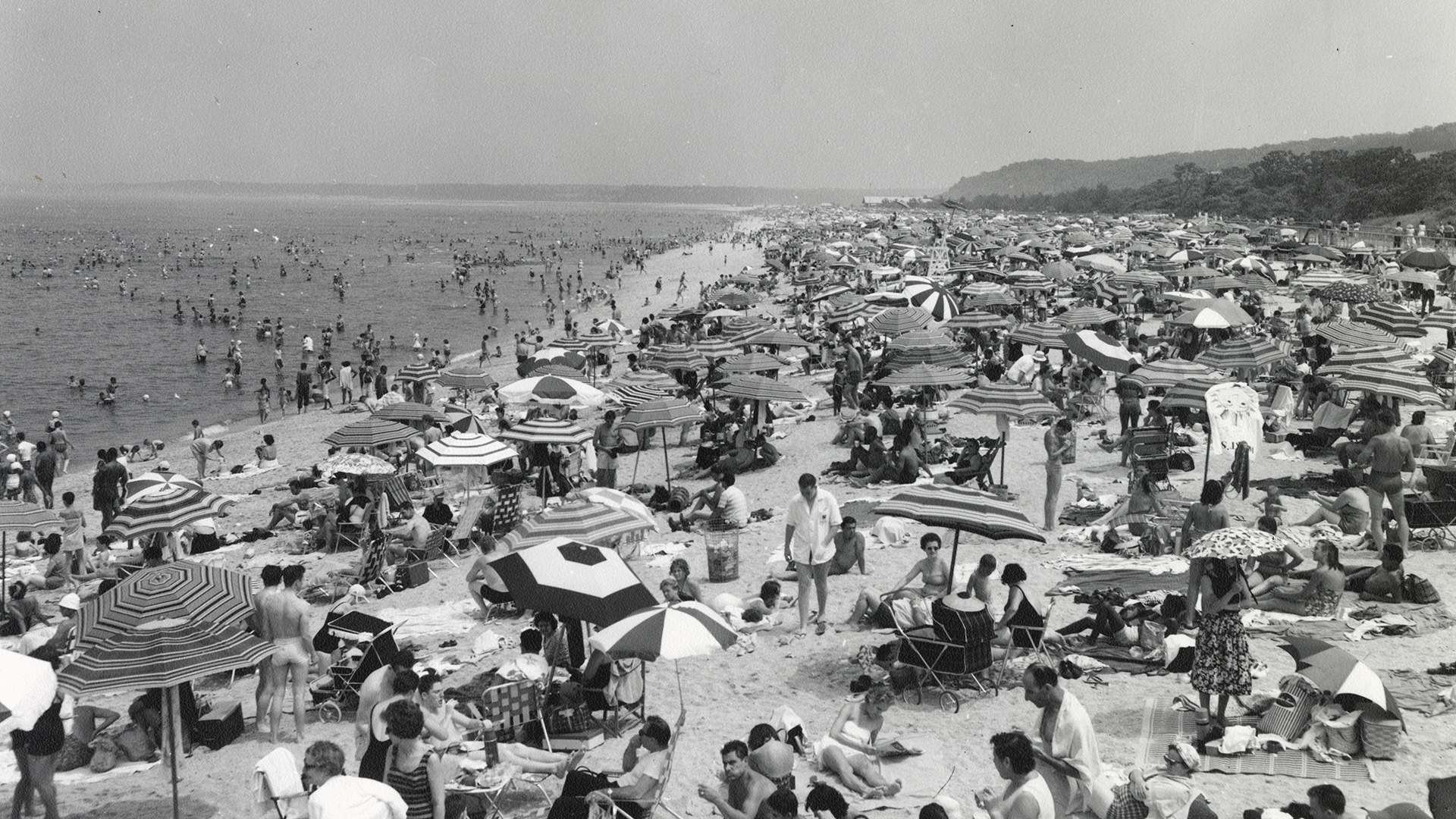
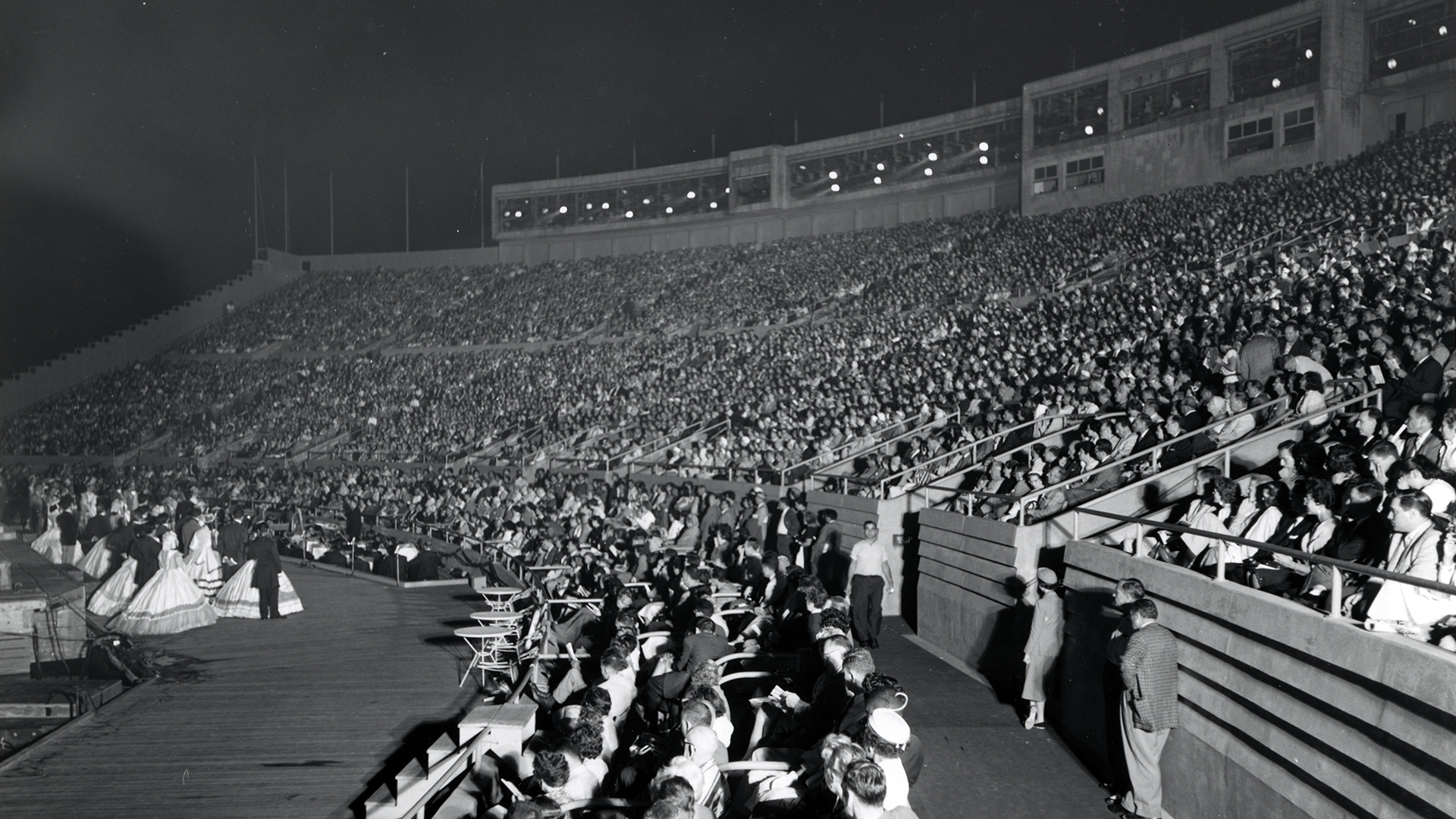
After this tumultuous era came a period of recovery. In the fourth Blazing a Trail era (1946 – 1959), we explore the post-war recovery and reinvestment in the New York State parks system. Following years of disinvestment, and anticipating a rise in attendance, a plan was enacted to revive New York’s existing state parks and meet public demand. The plan called for the completion of deferred maintenance, creation of new state parks, and the construction of amenities like the Jones Beach Theatre and facilities for winter activities. As a result of this plan, attendance rose to 27 million people annually by the end of the era in 1959. The tides had turned back in favor of New York State Parks’ visitors– locations around the state became known as affordable destinations for family vacations.
As more people flocked to parks to enjoy their free time, the impact on the environment became a growing issue for many advocates across the state. These concerns did not go unnoticed by the Conservation Department. During this era, water pollution led to beaches along rivers being closed. Increased recreational demand overwhelmed fish hatcheries. Novice campers lacking fire safety skills triggered damaging forest fires. Much like New York State Parks’ infancy in the late 1800s, a balancing act was taking place between the needs of a growing population and the necessity for environmental conservation.
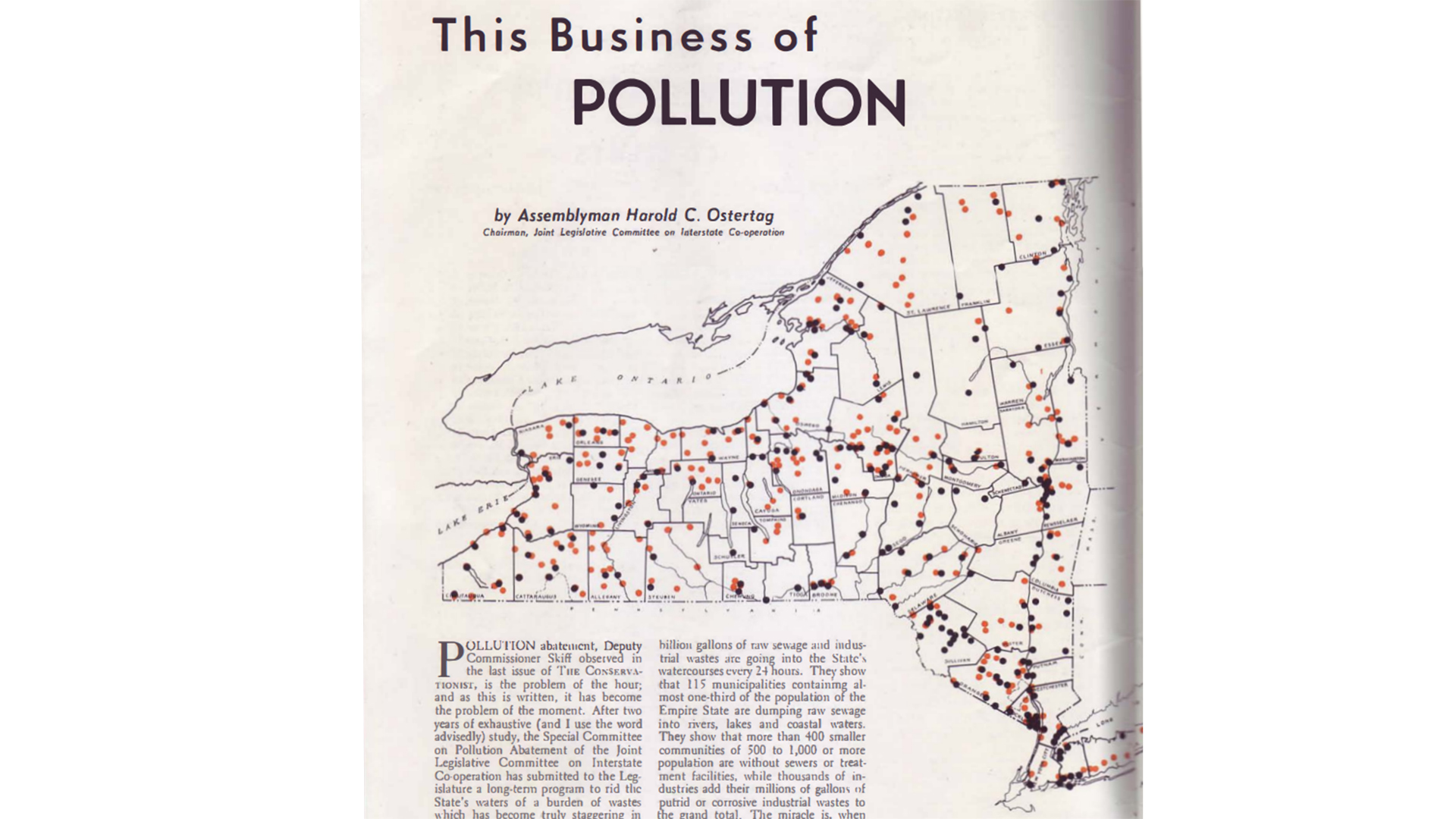
In 1946, the Conservation Department’s Division for Conservation Education attempted to rebalance the scales and began publishing the New York State Conservationist. The bi-monthly magazine included educational articles, photographs, and important information about conservation regulations. The magazine continues to serve its educational purpose and is still published by the New York State Department of Environmental Conservation.
Follow Along With Our Progress
Check back each month for new eras and more stories, including the Rockefeller commissionership and events of the recent past. Later this month, discover what the ‘Rockefellers’ World’ looked like and how the influence of two brothers led to a comprehensive and rapid expansion of New York’s State Parks and Historic Sites system and new definitions for what a state park could be. We’re thrilled to have you on this journey with us as we offer opportunities for New Yorkers to uncover the history of one of the nation’s first and largest system of parks and historic sites.
– Written by Jennifer Robilotto, OPRHP Public Affairs Assistant


Thank you for all of the intriguing information of the 1930″s era. I knew quite a bit of it already but the women’s camp was new to me as well as HABS. Thanks again for all your work in educating me about the state parks.