

As our understanding of history grows, so do the stories we tell about our past. The upcoming commemorations of the 250th anniversary of the American Revolution (2026) and the 400th anniversary of the arrival of the first enslaved Africans in New York and 200th anniversary of the ending of legalized slavery in New York (both in 2027) provide the perfect opportunity for a re-examination of these key events in American history.

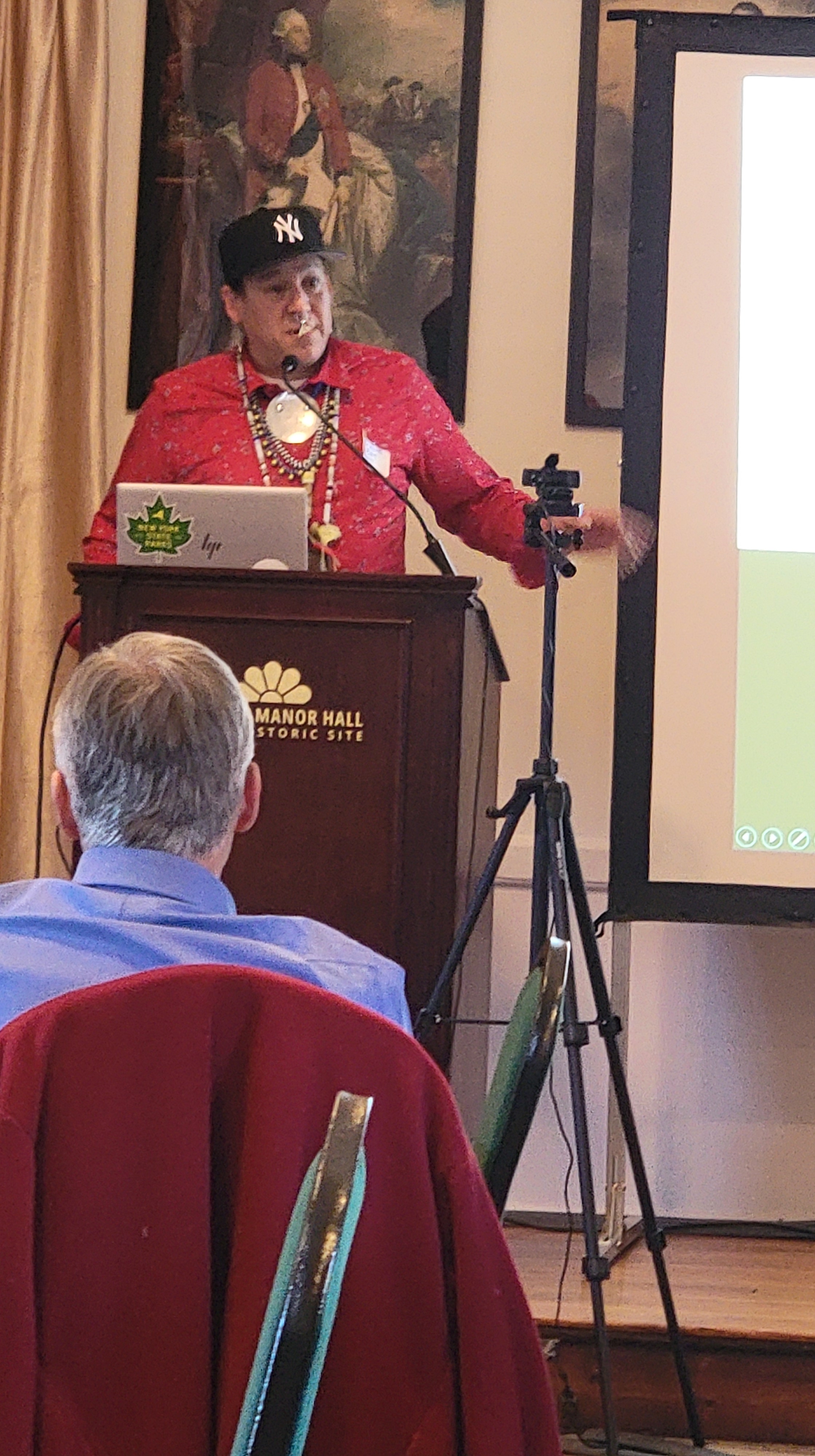
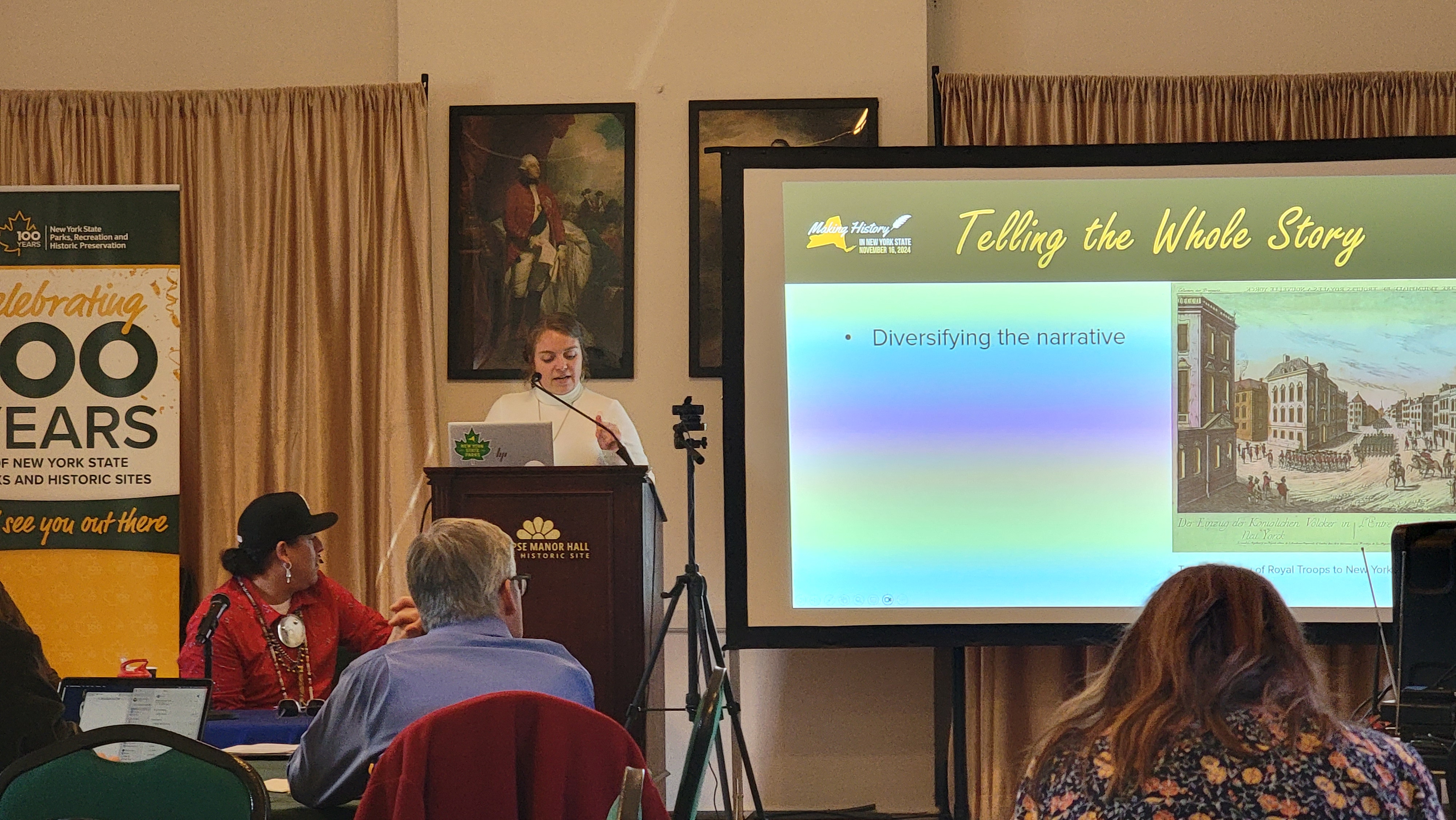


On Saturday, November 16, 2024, the public and staff members from New York State Parks, Recreation and Historic Preservation gathered at Philipse Manor Hall State Historic Site in Yonkers and online for “Making History: Revolution, Abolition, and Preservation in New York State,” a symposium highlighting the agency’s Our Whole History initiative. The initiative starts with acknowledging that our understanding of history is complex and nuanced, and evolves with historical research. Our Whole History actively fills in parts of history that were previously ignored to gain a more complete understanding of the past.
The “Making History” Symposium explored Our Whole History work underway to ensure the history we share is as complete as possible, and tells the stories of all people. Speakers from the Division for Historic Preservation and from Old Fort Niagara, Schuyler Mansion, Philipse Manor Hall, and Johnson Hall State Historic Sites shared new research, interpretive approaches, and major projects.
Our Whole History strives to expand and deepen public understanding of New York State history. Many New Yorkers still don’t know that New York was a major slaveholding state. Before it was even known as New York, the region was the home of Indigenous nations, many of which still remain in New York and other parts of North America. The Dutch followed, then the British and Americans – all nations that developed land and built economic power through the use of slavery. Yet, most depictions of slavery in popular culture are set in the southern states, not the wheat-driven economy of the Hudson and Mohawk Valleys.
Relatively recent research shows stark differences in how slavery operated in the north. During the symposium, State Parks historians explored one of the biggest revelations to come from this research. For many years, it was believed that the first Africans forcibly bought to the region arrived in 1626. But the Dutch scholar Jaap Jacobs uncovered evidence that verified the Dutch vessel Bruynvisch arrived with the first group of enslaved Africans in New Amsterdam (modern day Manhattan) on August 29, 1627. This vital new research, The First Arrival of Enslaved Africans in New Amsterdam by Jaap Jacobs, was published in 2023 but shared with the press and others in late 2021.
Getting such information out to the public is a large part of the work of the Our Whole History initiative. Interpreter of African American History for the Office of Parks, Recreation and Historic Preservation Lavada Nahon, Schuyler Mansion State Historic Site Interpreter Jessica Serfilippi, and Philipse Manor Hall State Historic Site Manager Michael Lord discussed the arrival of the first enslaved people in New York, the difficulty of gaining freedom, and the shifting legal constraints that defined the lives of the enslaved community.
These anniversaries are tied together by more than their overlapping time frames. They’re tied together by the concept of freedom. Typically, American Revolution interpretations are binary: brave Patriots seeking to establish a new nation and gain freedom versus the oppressive British. Our Whole History challenges this interpretation of the American Revolution by giving voice to the many groups and relationships formed, broken, and impacted by the war.
At Johnson Hall State Historic Site, efforts are underway to place the lives of the enslaved and Indigenous communities at the core of the story each visitor learns. Johnson Hall Interpreter Ian Mumpton, Philipse Manor Interpretive Programs Assistant Sarah Wassberg Johnson, and Head of Native Education at Old Fort Niagara Jordan Smith (Mohawk, Bear Clan) discussed Revolutionary stories that incorporated Black, Indigenous, and Loyalist perspectives.
The historic places that embody the stories of our past survive because people deemed them worthy of preservation. To help the public continue to uplift and preserve the stories of their communities, New York State Historic Preservation is focused on efforts to amend national register nominations to include history that was originally omitted or unknown, taking advantage of new research thanks to Our Whole History scholarship. Historic Preservation Program Analyst Leslie Krupa and Cordell Reaves, Coordinator of Community Affairs at the Department of Historic Preservation, led an open discussion about the efforts to correct the record for national register nominations.
They also provided resources to help people to get active in preservation, such as preservation grants, the national register program, and the Certified Local Government (CLG) program. CLG municipalities have established a strong commitment to preservation by undergoing a certification process. CLGs can obtain grant funding, training, and technical assistance from State Historic Preservation Offices to benefit their communities.
The information shared during the day-long program provided a new perspective on New York and American history. The public is not only our audience, but our partners, joining us as we learn. Our Whole History will continue to seek opportunities to share as we learn, via exhibits, programming, and web content.
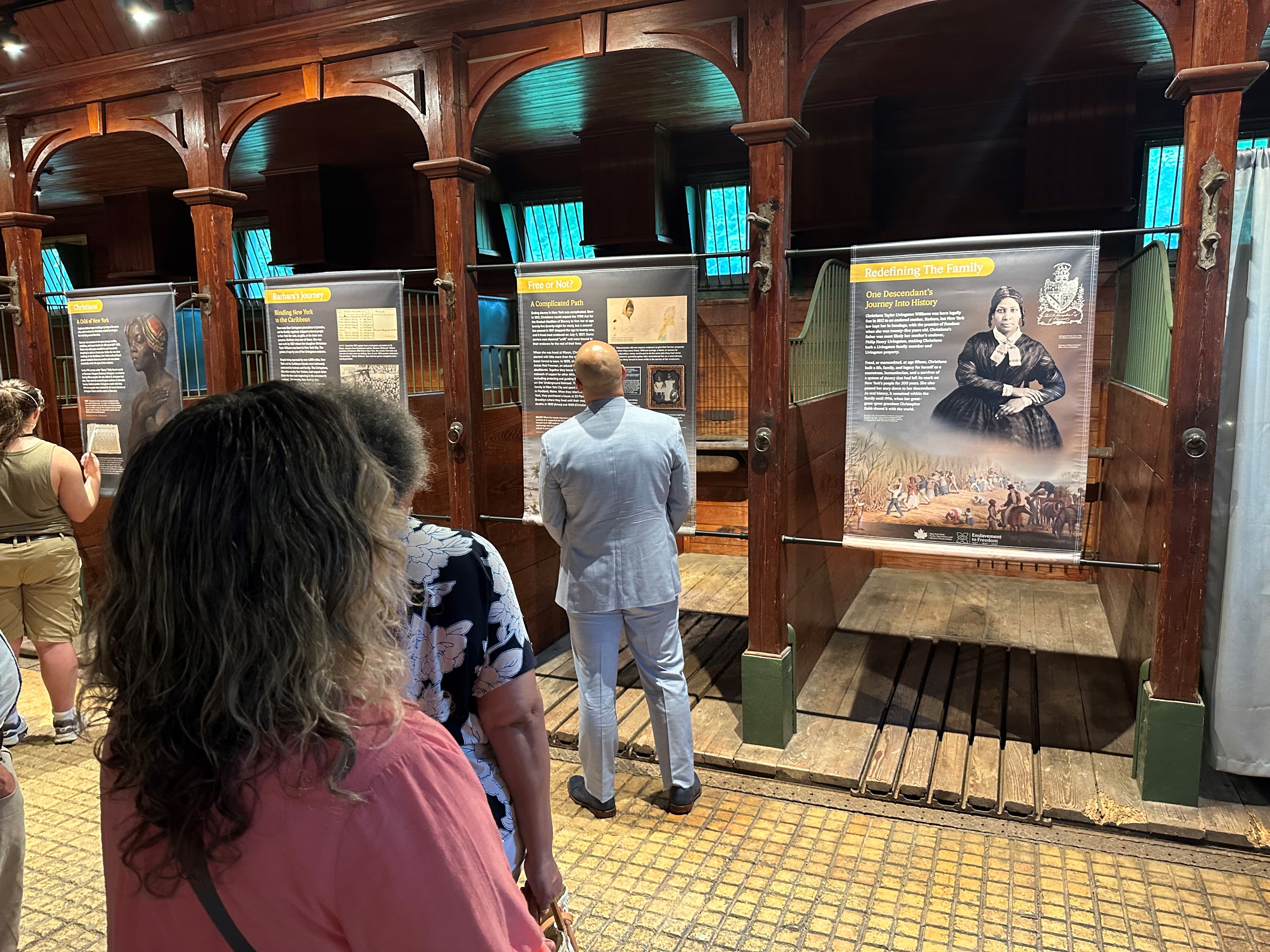


The traveling exhibits Poisonous Seeds and Redefining the Family provide in-depth examinations of slavery in New York. Poisonous Seeds: The Dutch and the Institution of Slavery in New Netherland/New York explores the beginning of slavery under the Dutch West Indian Company. Redefining The Family: One Descendant’s Journey Into History at Clermont State Historic Site profiles the complex familial relationships between enslavers and enslaved through the experience of the Livingston family.
The latest and most comprehensive information about New York’s important role in the American Revolution is now available at 20 different state properties around New York on digital kiosks. The Revisit the Revolution kiosks help visitors explore the lesser-known events and figures who played important roles during the war. The picture of the conflict revealed is akin to a Civil War. Families were split, long-standing alliances broken and a new nation born.

Our Whole History invites people of all backgrounds to learn more and to see themselves in our collective history. This approach will attract both new and returning audiences to our park system and connect our historic sites and parks to all visitors.
— Written by Cordell Reaves, Coordinator of Community Affairs at the Division for Historic Preservation
 New York State Parks and Historic Sites Blog