

Invasive species are non-native species that cause harm to the environment, the economy, or human health. Invasive species come from all around the world. When they’re introduced to a new environment, there is often no natural predator to stop the invasive species from spreading and pushing out native species. With too many invasive species in an ecosystem, native species can’t effectively create habitat for wildlife and support native pollinators.
Like everywhere in New York, our state parks and historic sites have to consider the impact from invasive species. Everyone can help, even if it’s just keeping an eye out and reporting your observations of invasive species to iMapInvasives!
Here are five invasive species to know for 2025:
1. Spongy Moth (Lymantria dispar)
Have you noticed brown splotches on the trees around your favorite state park? Maybe even on signs or buildings? They probably looked a little hairy and soft to the touch – maybe even a little spongy? Surprisingly, each of those fuzzy little pillows, called egg masses, are hiding anywhere from 100 to 600 caterpillar eggs. Those caterpillars grow up into an adult spongy moth – a destructive invasive species.
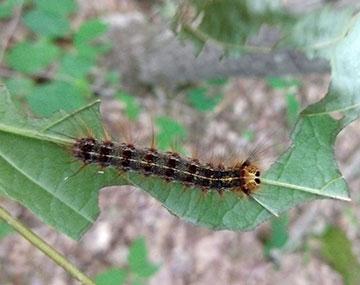
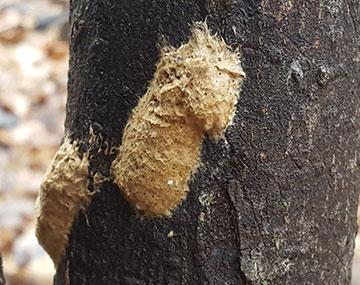
Spongy moth is originally from Europe and Asia and can now be found all over New York. Once it is warm enough in the spring, caterpillars emerge from their spongy cradles and eat, eat, eat the leaves of native trees, like maples and oaks.
Spongy moth populations rise and fall in a 10–15-year cycle. For many years, the populations will remain low, and the damage caused by the caterpillars may not even be noticeable. However, when the population reaches its peak, spongy moth suddenly becomes very apparent. The caterpillars can overwhelm the trees, eating away a lot of leaves, even across entire hillsides or forests. Usually, the trees regrow their leaves later in the season. However, if there is added stress from drought or other pests, it can cause permanent damage or even death to the trees, especially if the spongy moth infestations last for multiple years. Evergreen trees like pines and hemlocks are not the preferred food of the spongy moths, but in extreme outbreaks, even they may be eaten. They tend to have more trouble regrowing their needles and are more likely to be killed. The extremely high density of caterpillars can cause recreational impacts too, as the caterpillars themselves and their poop can be very disruptive to activities like camping, picnicking, and hiking!


Once the caterpillars get their fill, they turn into pupa inside grooves in the tree bark. They then go through a total transformation, called metamorphosis, turning into adult moths around July and August. Female moths are whiter in color and stick to the tree bark because they can’t fly. Male moths, browner and grayer than females, fly around from tree to tree looking for female moths to mate with. Females build their fuzzy egg masses out of their silk before laying their eggs. The cycle then starts all over.
Some birds and mammals, like squirrels, will eat the eggs or caterpillars when they can, but they don’t eat enough to keep the number of moths low. However, there are a few naturally occurring controls, including a viral disease (one that can only hurt spongy moth) and a fungus that infects caterpillars. These infections help reduce populations when they reach outbreak level, leading to periodic cycles of outbreaks. Diseased caterpillars will spread it to other groups of spongy moth like a nasty cold. There are also methods of control for individual trees including physical barriers and chemical and biological pesticides. New York State has seen spongy moth outbreaks for the last several years, though different areas of the state have experienced these outbreaks at different times. The good news is that after two or three years of high populations, the virus and fungus begin to spread rapidly through the spongy moth caterpillars and cause a dramatic population crash. The following year, spongy moth goes back to being hardly noticeable — at least for the next 10-15 years.
You can help out the effort to control spongy moth by scraping off the pillowy egg masses when you see them on trees and squishing the caterpillars. Remember, only scrape and squish if you’re absolutely sure you’re looking at spongy moths. Also, if the caterpillars look sick and aren’t moving, leave those be. They’ll help spread the virus or fungus to other caterpillars. Be careful – don’t touch the caterpillars with bare hands, as they have little spikes that can cause a rash. If trees on your property are infested, guidance for homeowners from NYS DEC can be found here.
2. Beech Leaf Disease (linked to Litylenchus crenatae mccannii; affects Fagus grandifolia and other varieties of beech)
Keep your eyes up to look for the next invasive species on the list — beech leaf disease, or BLD. There are still questions about what causes this disease and how it is spread, but scientists have noticed a pattern. We see BLD when a specific kind of nematode (a type of microscopic organism) makes beech leaves their home. A clear sign of BLD is when a darkened stripe forms between the veins of the leaf. That stripe makes BLD easy to spot, especially when the sun – or your phone’s flashlight – shines through the leaf.

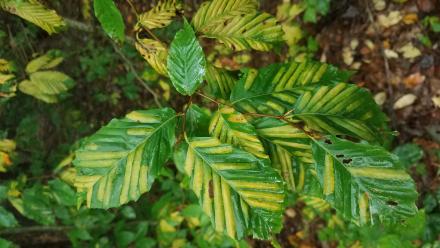
BLD has only recently gotten a foothold in the United States, as far as scientists can tell. It was first seen in Ohio in 2012 before being spotted in Western New York in 2018 and has quickly spread across New York (except for some areas in the North Country) and the rest of the northeast US. BLD is capable of killing beeches of all sizes and ages, with young trees and repeated infestations of mature trees of special concern. Recent studies have shown 30 percent of beech trees have died in areas where BLD was first detected over a decade ago. Biologists are working hard to find the best way to slow the spread. That work starts with people like you looking out for beech trees with those stripey, sickly leaves. Beech trees, recognizable by their smooth bark, are important parts of forests all over New York.

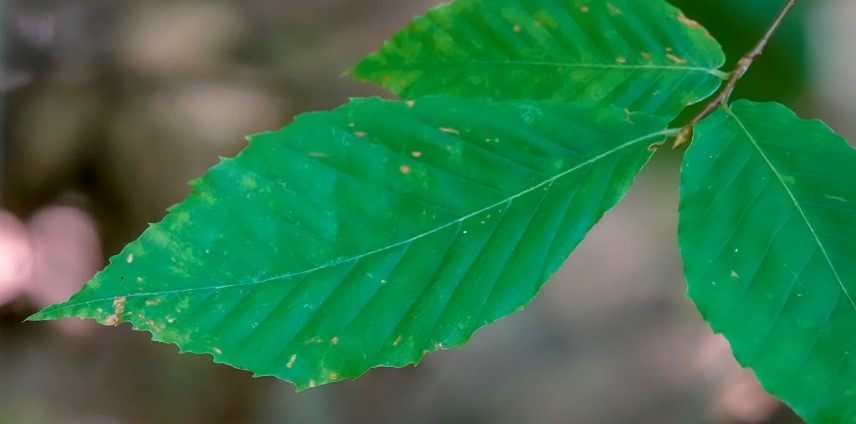
If you see a beech tree in a state park – be sure to look up! If you see those dark stripes and yellowing leaves, use iMapInvasives to report your observation. Fallen leaves with dark stripes are tell-tale signs of BLD. Controlling for any invasive species starts with keeping a sharp lookout! And remember to brush off your boots between hikes and to not move firewood.
3. Boxtree Moth (Cydalima perspectalis)
The boxtree moth was first observed in Western New York in 2021. Boxwoods are a common landscaping plant, and this moth’s favorite food. Since 2006, boxtree moths have been persistent invasive pests, chewing on boxwoods all over Europe. Boxtree moths are good examples of how invasive species often follow ornamental plants, the kinds of plants planted in managed outdoor spaces like parks and gardens. Since boxwood plants aren’t native to North America, the spread of the boxtree moth is unlikely to affect our natural ecosystems. However, anyone with boxwoods planted in their landscaping may notice serious damage or death of their plants after a boxtree moth infestation.

The bright green caterpillar of the boxtree moth lives its whole life on boxwood plants from egg to moth. The caterpillar eats through the boxwoods, leaving scraggily, brown, and very noticeable damage behind it. Another tell-tale sign is the cobweb-like silk the caterpillars leave between the branches of the boxwood plants. The boxtree moth can spread fast, with eggs taking only three days to hatch and caterpillars taking only two weeks to become moths. From May to October, tons of moths can be born, grow, and reproduce.
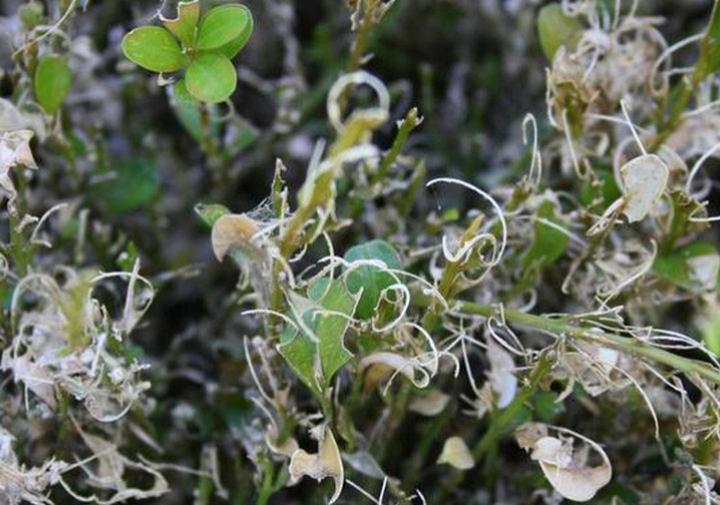
If you see caterpillars, moths, damage, or webs in state parks, tell a staff person. Parks staff are stopping the spread of boxtree moth by removing and bagging infested plants. That way, fewer parks, gardens, and homes will have to deal with boxtree moths. As the threat from the boxtree moth grows, consider planting landscaping plants other than boxwoods when you can. Keep reading below to learn more about using native species as alternatives in your landscaping!
If you suspect you found a boxtree moth or caterpillar at a park or at your home, you can report it to the New York State Department of Agriculture and Markets.
4. Water Soldier (Stratiotes aloides)
If you think you see the top of a pineapple breaking the surface of a pond or slow-moving stream, that may be water soldier. Water soldier might remind you of aloe vera with its sharp, serrated leaves. It can form dense mats in wet areas, which crowd out native plants, snag fishhooks, and cut up swimmers’ legs.
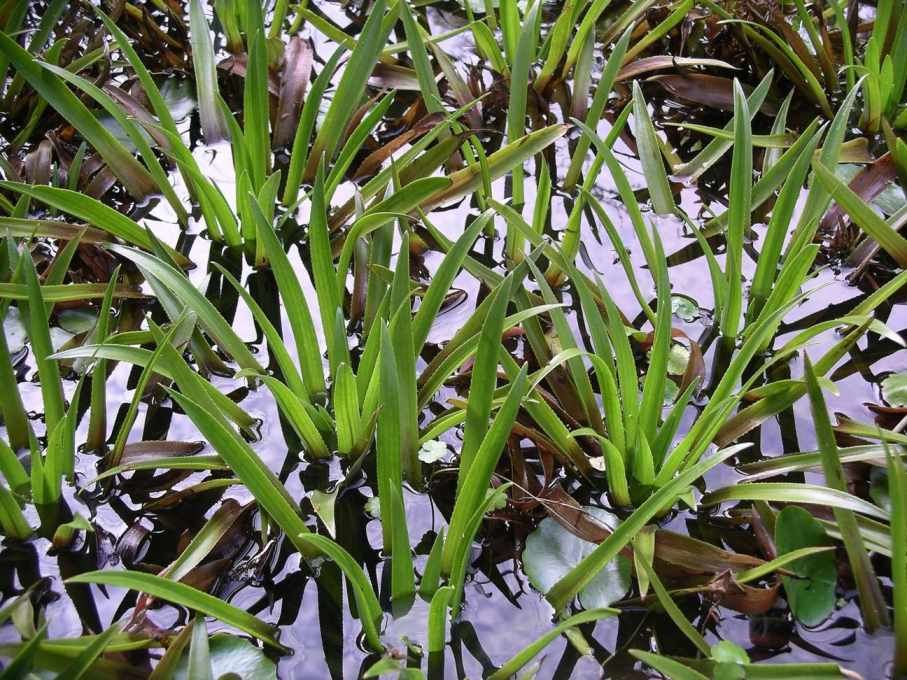
Water soldier is the newest species to New York on this list, first seen in a single location in Putnam County in 2024. Since 2008, Ontario, Canada has been the main stronghold of water soldier in North America. It has been used as an ornamental plant for about three centuries, so even though it’s found in wetlands across Europe and Asia, its true native range is hard to pin down. Water soldier is another example in the long history of ornamental plants hopping the fence and becoming invasive. Though it’s been confirmed in one location in New York, water soldier has not yet been seen anywhere else in the state. Since we can still stop its spread, it’s a top priority to watch out for.
Like the other invasive species on this list, if you think you see water soldier, don’t hesitate to report it to New York State biologists using iMapInvasives. The faster we act with invasive species, the better protected New York’s lands and waters will be! To protect New York’s waters, don’t dump your old aquariums outside. Thoroughly clean, drain, and dry boats and other watercraft to limit the spread of aquatic invasive species.
5. Invasive Species in Gardening
Invasive species prevention starts at home. As we’ve seen with boxtree moths and water soldiers, ornamental plants can easily host invasive species or become invasive themselves. All sorts of invasive species in New York, even some of the worst offenders, started out as just another pretty garden plant. Japanese barberry, purple loosestrife, invasive honeysuckles, burning bush, water chestnut, and many more invasive species were first planted in gardens. Slowly but surely, those garden plants escaped the garden walls and became invasive. Ecosystems in virtually every state park and natural area in New York are harmed in some way by invasive species, on land or in water, in the middle of cities or deep in forests.

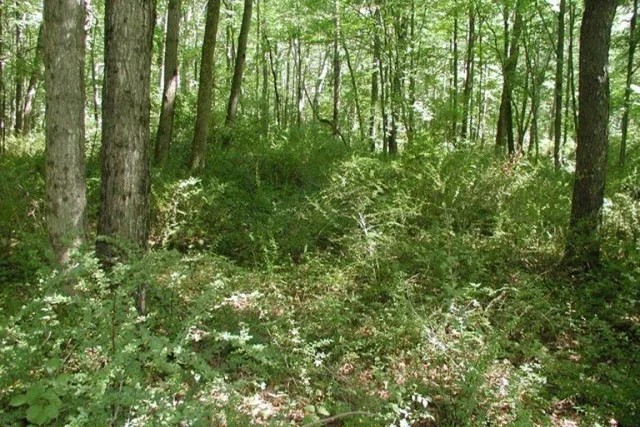
One of the best things you can do to prevent the spread of invasive species, especially new ones, is to learn how to plant native. Rather than filling gardens with plants from all over the world, stay local and plant native trees, shrubs, grasses, and wildflowers. Wildlife and pollinators will thank you!
The next best thing you can do is keep a lookout! When you’re in your backyard, or out and about wherever plants grow or animals live, keep a watchful eye to the nature around you. Keep learning about invasive species and the damage they cause, then report them using iMapInvasives. With more eyes out, invasive species can be detected quicker. The quicker they’re detected, the better chance we have to prevent damage.
Tools and Resources
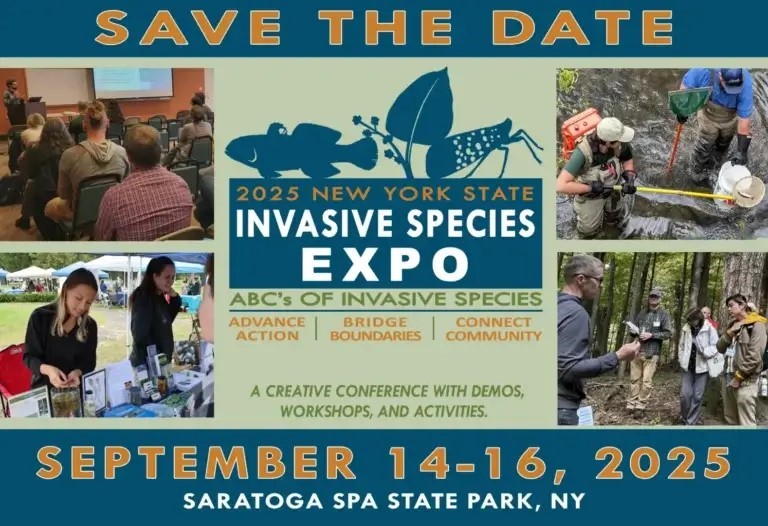
To learn more in person, attend the 2025 Invasive Species Expo at Saratoga Spa State Park, September 14-16. General attendance is open to the public and FREE! Get hands-on experience from the people who work the closest with invasive species.
Keep up to date with the NY Invasive Species Clearinghouse: http://NYIS.info
Use iMapInvasives to report invasive species: https://www.nyimapinvasives.org/
Learn more about Spongy Moth: https://dec.ny.gov/nature/animals-fish-plants/insects-and-other-species/spongy-moth
Report Boxtree Moth to NYS Agriculture & Markets: https://survey123.arcgis.com/share/227e255b38b44e58aaf788c692d8826d
Learn more about Boxtree Moth: https://agriculture.ny.gov/plant-industry/box-tree-moth
Don’t Move Firewood: https://dec.ny.gov/nature/animals-fish-plants/invasive-species/terrestrial/firewood
Clean, Drain, Dry: https://dec.ny.gov/nature/animals-fish-plants/invasive-species/aquatic/prevent-spread-of-aquatic-invasive-species/clean-drain-dry
Learn more about invasive Species in New York: https://dec.ny.gov/nature/invasive-species
— Written by Daniel Fleischman, Biologist, NYS Parks. Revised with expert input from the NYS Parks Invasive Species Unit – Matt Brincka, Nick Marcet, Becky Sibner, Sarah Travalio, and Justin Albinder.
 New York State Parks and Historic Sites Blog
One thought on “Five Invasive Species To Know For 2025 ”