

We’re showcasing some of the stand-out, unusual, and noteworthy New York State listings in the National Register of Historic Places in honor of the milestone 200th meeting of the New York State Board for Historic Preservation (on September 10, 2025). There are around 130,000 resources in New York listed in the National Register, either as individual sites or as parts of historic districts.
Our list recognizes decades of work by historic preservationists. They are listed here in no particular order, but rather by characteristic or region to give a flavor of the different types of listings on the register.
The Board – which was established in 1972 and expanded by the New York State Historic Preservation Act of 1980 – works with the New York State Historic Preservation Office to review nominations to the State and National Registers of Historic Places. You can learn more about the State Review Board online.
Let’s start exploring!
“First” Officially Listed Site: Old Fort Niagara
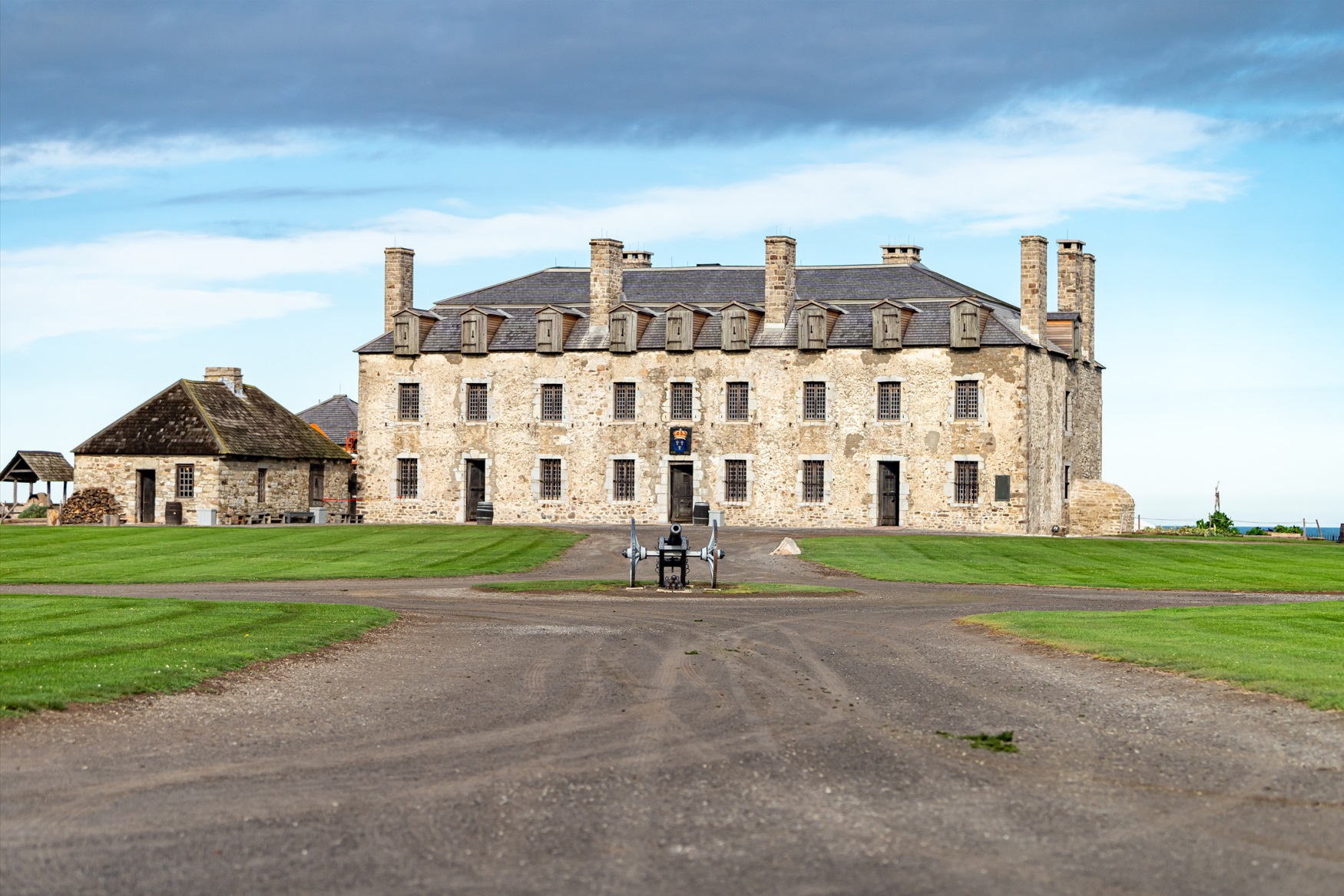
The National Register of Historic Places was authorized by the National Historic Preservation Act of 1966. Before that, the National Historic Landmarks program provided the primary means for the identification and recognition of significant properties across the nation. The National Register of Historic Places built upon this foundation by authorizing a more inclusive means of listing and protecting properties of all levels of significance. All properties designated as National Historic Landmarks before 1966 were automatically listed to the National Register of Historic Places in October of 1966.
New York State had several National Historic Landmarks at that time, including Old Fort Niagara. Built in the 1700s, both the British and the French considered Fort Niagara to be the strategic key to the Great Lakes Basin. Playing a part in the French and Indian War, the American Revolution, and the War of 1812, the fort was recognized in the National Register as containing the “most complete collection of extant 18th century military architecture in the United States.” It was designated a National Historic Landmark in 1960 and is now a New York state historic site.
Largest Listing (Based on Acreage): Adirondack Forest Preserve

The Adirondack Forest Preserve became the first state forest preserve in the United States after concerns about destructive practices by private and commercial interests in New York’s timber lands. Landmark legislation in 1885 allowed for the creation of the preserve, stating that the lands were to be forever kept as wilderness. In 1892, the Adirondack Park was formally established, encompassing the preserve lands.
Like Old Fort Niagara, the Adirondack Forest Preserve was first designated a National Historic Landmark (1963). It was added to the National Register in 1966, and it remains the largest (based on acreage) National Register nomination in New York State today.
Resource with the Smallest Footprint: Sidewalk Clock at 200 Fifth Avenue

Sidewalk clocks were once an important part of the street fabric of American cities, serving as advertisements for jewelers and other businesses. The classically-designed Sidewalk Clock at 200 Fifth Avenue in Manhattan was manufactured by Hecla Iron Works and installed in 1909. This ornate gilded cast-iron masterpiece is one of six sidewalk clocks listed in the National Register of Historic Places as part of the “Sidewalk Clocks of New York City Thematic Resources” (1975).
These rare survivors of an earlier era occupy the smallest footprints of any of the resources listed in the National Register in New York State. Interested in exploring the other National Register-listed sidewalk clocks? They are located at 522 Fifth Avenue, 783 Fifth Avenue, 519 Third Avenue, and 1501 Third Avenue in Manhattan, and 161-11 Jamaica Avenue in Queens.
Largest Historic District (Based on Number of Resources): Sunset Park Historic District
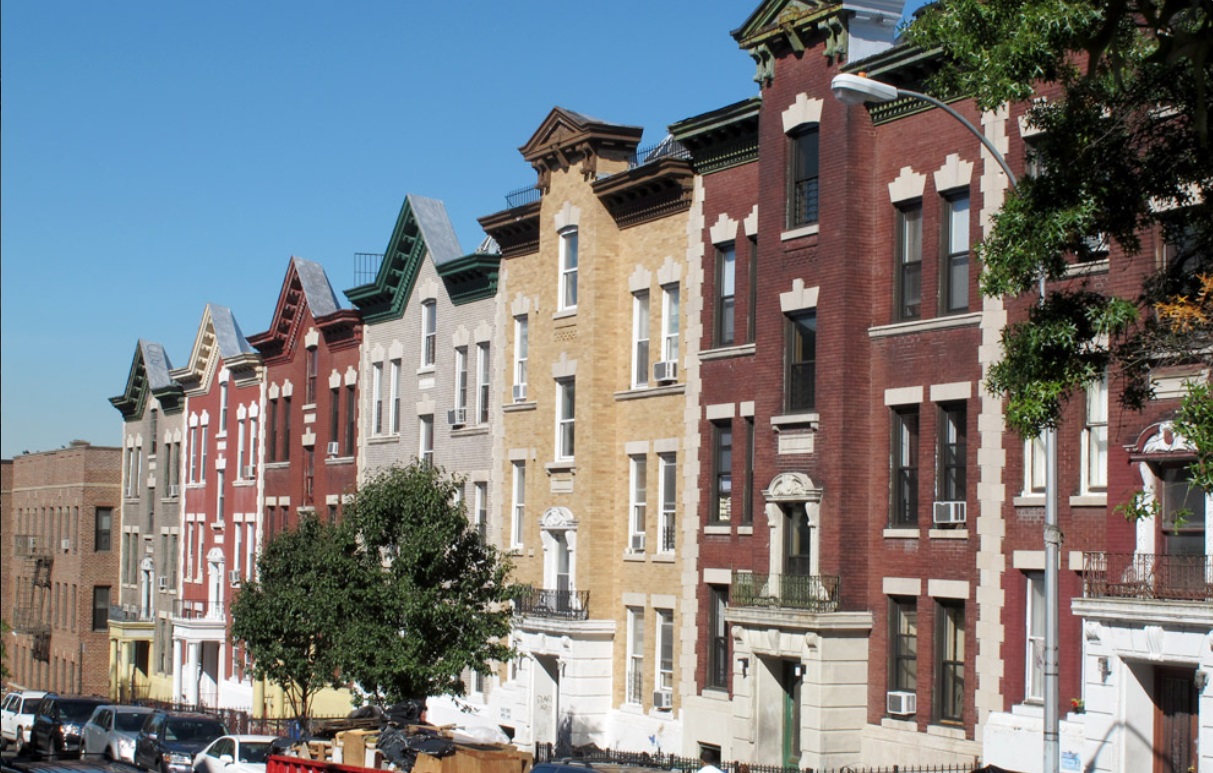
As of summer 2025, New York State’s largest historic district (with nearly 3,500 properties within its boundary) is Sunset Park Historic District in Brooklyn.
Listed in 1988, the district encompasses a turn-of-the-century residential neighborhood comprised of large and cohesive groupings of masonry row houses. The neighborhood was rapidly constructed between 1885–1912, with a second wave of development in the 1930s.
Since 1988, the neighborhood has remained the largest historic district in New York State; however, upcoming projects at the New York State Historic Preservation Office are on track to surpass this record.
Nationally Significant under Criterion A (Event): Space Shuttle Enterprise
National Register of Historic Places Criteria for Evaluation – Criterion A: Associated with events that have made a significant contribution to the broad patterns of our history.

One of New York’s most unexpected listings in the National Register of Historic Places has to be the Space Shuttle Enterprise, designated in 2013.
The shuttle is exceptionally significant as the only full-scale prototype of the orbiter fleet used during the early approach and landing tests of the space shuttle program and as the first orbiter to fly in Earth’s atmosphere. Enterprise was indispensable in proving the flightworthiness of the space shuttle orbiter and the continued testing and modification of the orbiter fleet throughout the space shuttle program.
While other notable space-related structures from across the country, including launch complexes, NASA buildings, and test facilities, are listed in the Register, Enterprise remains the only shuttle individually listed in the National Register of Historic Places.
Nationally Significant under Criterion B (Person)
National Register of Historic Places Criteria for Evaluation – Criterion B: Associated with the lives of persons significant in our past.
Al Held Home and Studio
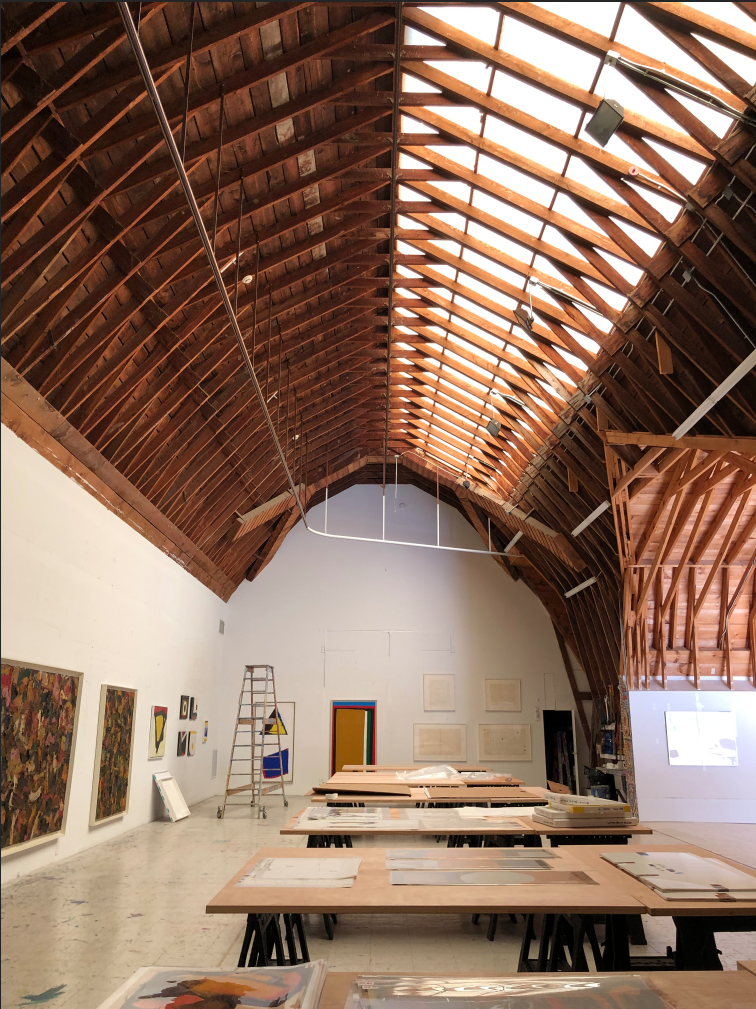
The Al Held Home & Studio is the long-time residence (1965-2005) of artist Al Held (1928-2005), an innovator in geometric abstraction and an important influence on 21st century abstract painters.
Held pioneered hard-edge abstraction and was lauded by critics and contemporaries alike. From the beginning of his artistic career, Held had been inspired by the work of prominent public muralists. The enormous studio spaces in Boiceville allowed him to pursue large-scale work. In a 1989 feature on his Boiceville home and studio in Architectural Digest, critic Deborah Solomon quoted Held affirming its importance to his artmaking: “my work is more concentrated here than in Manhattan.”
The residence was listed in the National Register of Historic Places in 2020 and is home to the Al Held Foundation. Entering the studio today, one is filled with wonder at its voluminous space and cathedral-like ceiling.
Alice Austen House
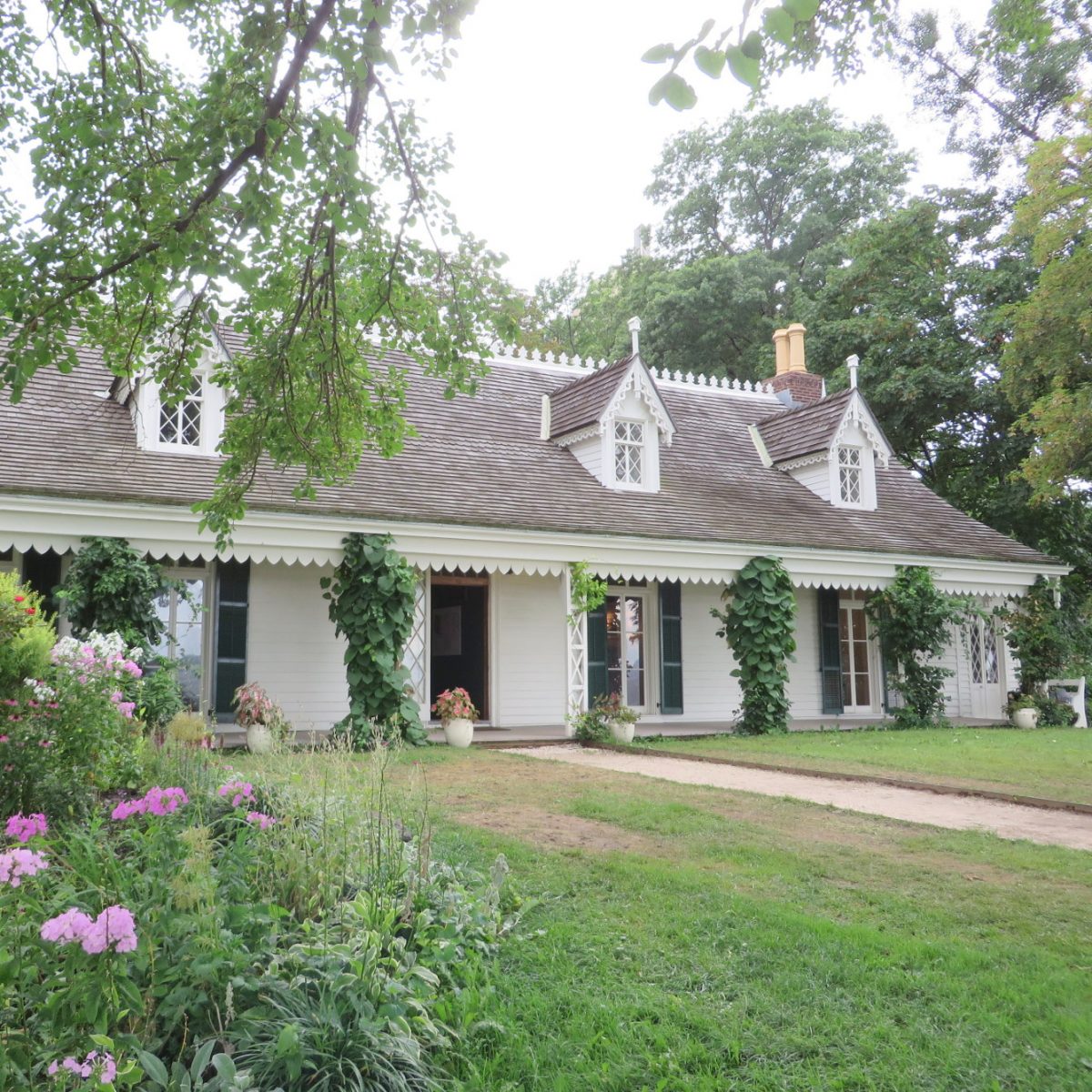
Pioneering female photographer Alice Austen (1866–1952) grew up in her family’s picturesque home on Staten Island and later lived there with schoolteacher Gertrude Tate, her partner of 55 years. Originally listed in the National Register of Historic Places in 1970, the listing for the 1600s house did not reveal the full extent of Austen’s significance as a lesbian artist. Austen’s photography often featured her non-traditional friends, creating a unique group of provocative images of a social life that was out of the ordinary for its time.
Through the efforts of the NYC LGBT Historic Sites Project, the site’s 1970 nomination to the National Register was amended in 2017 to include its significance to LGBT history, proving that nominations can be updated or expanded as new themes and contexts are revealed through additional research. The additional documentation for the Alice Austen House recognizes Austen’s openly non-traditional life and how she dealt with gender and social norms in her photography.
Nationally Significant under Criterion C (Design / Construction): Innisfree
National Register of Historic Places Criteria for Evaluation – Criterion C: That embody the distinctive characteristics of a type, period, or method of construction, or that represent the work of a master, or that possess high artistic values, or that represent a significant and distinguishable entity whose components may lack individual distinction.

Innisfree is a public garden blending Japanese, Chinese, Modern, and ecological design principles in Millbrook, a rural area in the center of Dutchess County.
Drawn to the region, Walter and Marion Beck began developing Innisfree as a private estate. Walter, an artist, and Marion, a gardener, were particularly interested in the landscape and created picturesque gardens based on Chinese and Japanese design principles during the early 1930s. Later, they worked with landscape architect Lester Collins, who helped them design and expand the gardens around their home on Tyrrel Lake. Innisfree became a public garden in 1960 under the leadership of Collins, who then more than doubled the size of the designed landscape.
Today, Innisfree is one of the largest intact modern designed landscapes in America and in 2019 was listed in the National Register as nationally significant for its landscape architecture.
Significant Under Criterion D (Information Potential): Schooner St. Peter
National Register of Historic Places Criteria for Evaluation – Criterion D: That have yielded, or may be likely to yield, information important in prehistory or history

Significant to maritime history, the St. Peter shipwreck is listed in the National Register of Historic Places (2004) as a rare and intact Great Lakes bulk cargo schooner.
Built in 1873, St. Peter sank in Lake Ontario in 1898. The schooner remains in the lake today and is exceptionally well-preserved in cold, deep water. The wreck retains the lines of a post-Civil War schooner and most of its working hardware, including hatchways, masts, booms, steering components, hoisting equipment, and pumps.
The site represents one of the best-preserved shipwrecks recorded in New York State and in 2024 was nationally recognized as part of the Lake Ontario National Marine Sanctuary designation by the National Oceanic and Atmospheric Administration.
Multiple Property Documentation Form (MPDF) Listing : Lustron Houses of New York
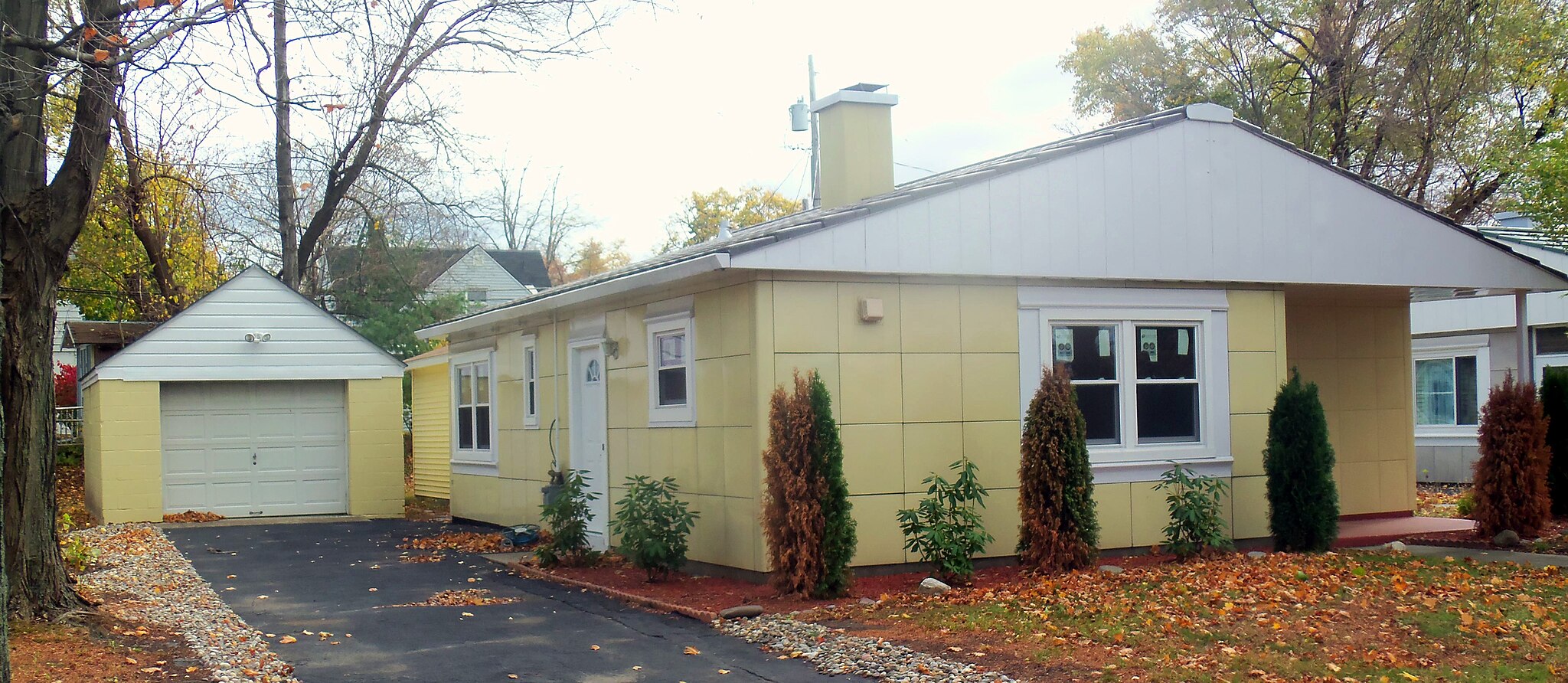
Built between 1948 and 1950, “Lustron houses” were pre-fabricated houses made of enameled steel panels (inside and out) manufactured by the Lustron Corporation in response to the post-World War II housing crisis. Less than 3,000 were produced before the company went into bankruptcy. Less than one hundred Lustron homes are estimated to survive in New York State.
Several of these are listed in the National Register of Historic Places either individually or as part of a historic district (e.g., the Lustron Houses of Jermain Street Historic District in Albany, listed in 2009) under the Lustron Houses of New York Multiple Property Documentation Form (MPDF).
An MPDF is a cover document that serves as a basis for evaluating the National Register eligibility of related properties. It streamlines the nomination process by providing and organizing information common to the property type(s) and historical themes. The Lustron Houses of New York MPDF (2008) explores the history and design of these unusual (and iconic) post-war structures.
Noteworthy from Western New York
Spencer Kellogg & Sons Elevator
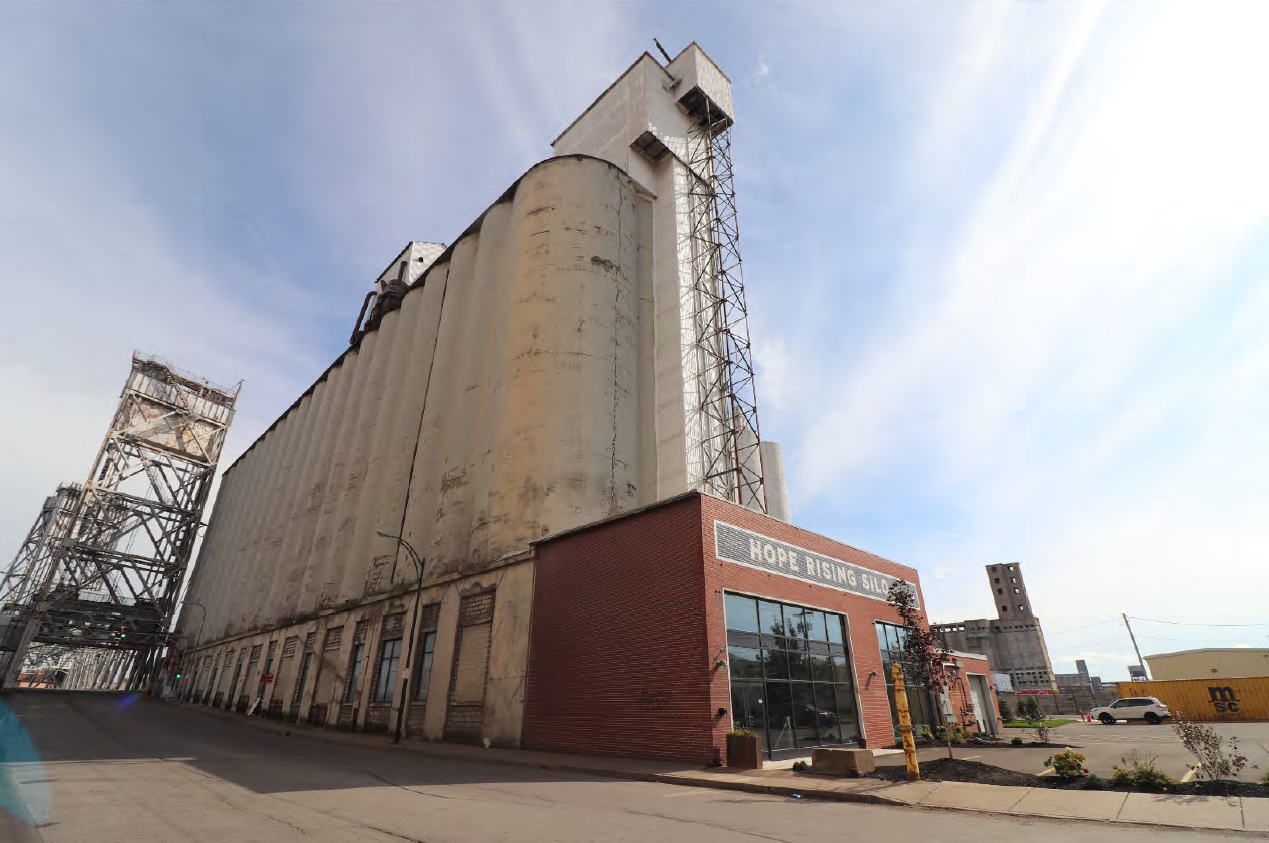
Listed in the National Register of Historic Places in 2024, the Spencer Kellogg & Sons Elevator is an example of a reinforced concrete grain elevator, located in Buffalo’s “Elevator Alley” along the Buffalo River.
Unlike Buffalo’s other elevators, which housed wheat or barley grains for foodstuffs or mill flour, this 1910 elevator housed linseed, used by the Spencer Kellogg company to manufacture linseed oil for paints and other industrial uses. The company existed in Buffalo from 1879 to 1961, growing from a one-person operation to a diversified international enterprise operating in eight states and several countries.
As the birthplace of the grain elevator, Buffalo is known for its many extant facilities. These sleek, functional, agricultural structures inspired European Modern architects. The Spencer Kellogg & Sons Elevator was listed in the National Register of Historic Places as part of the “Historic and Architectural Resources of the Buffalo Grain and Materials Elevator Multiple Property Submission” (2003).
Colored Musicians Club
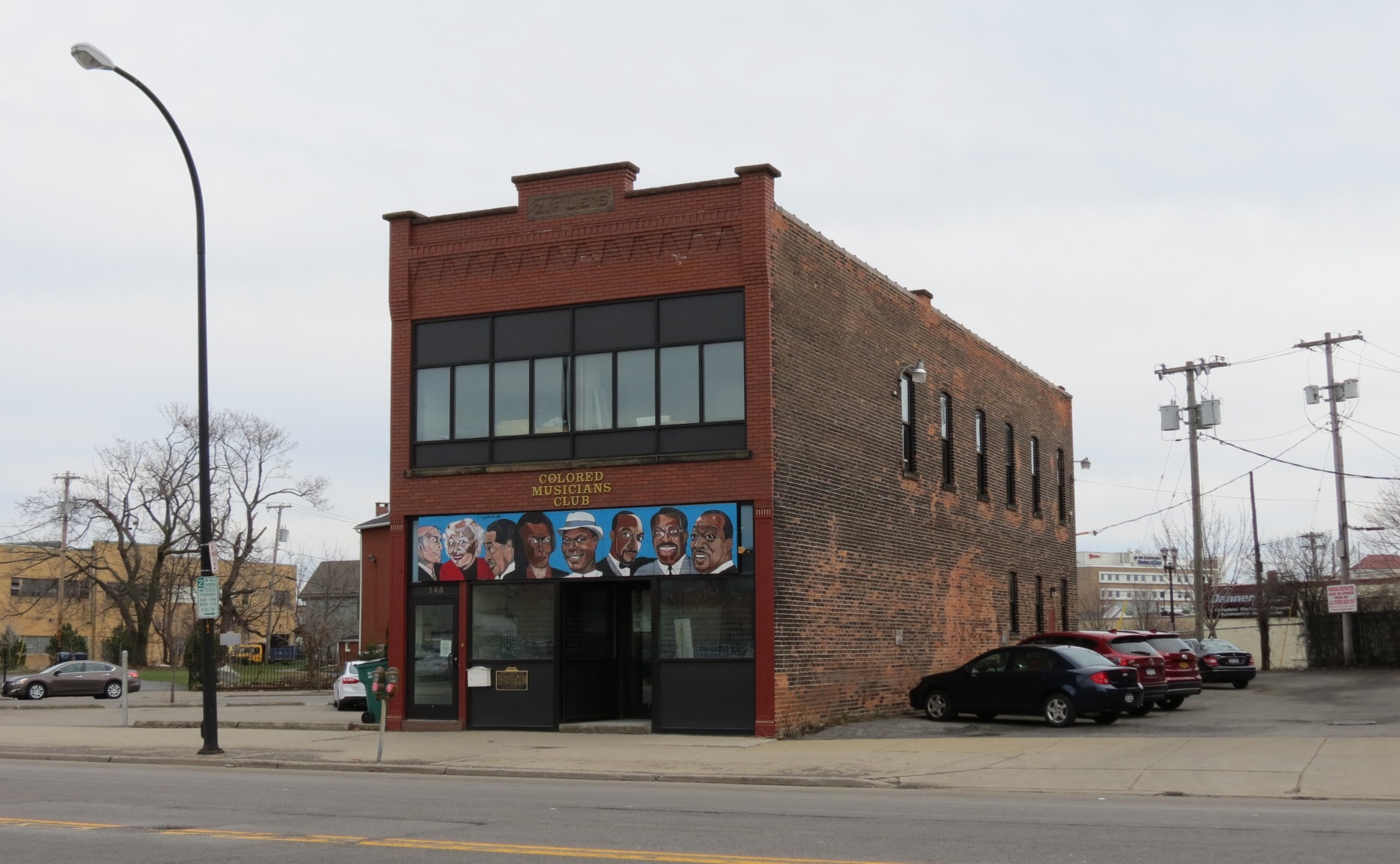
Located in Buffalo’s Michigan Street African American Heritage Corridor, the Colored Musicians Club is home to one of the oldest continually operating Black musicians clubs in the country. For many years, the building also held the offices of Buffalo Local 533, a Black musicians union established in 1917. Both organizations were formed in response to racism and segregation. Together they document the artistic, social, and economic history of Buffalo’s Black musicians’ community.
The club facilitated performances of the most famous jazz and rhythm and blues bands in American history. Duke Ellington, Ella Fitzgerald, Louis Armstrong, Nat “King” Cole, Miles Davis, Cab Calloway and many others often stayed to eat, socialize, and play in impromptu and scheduled jazz jam sessions in the club.
The Colored Musicians Club was listed in the National Register of Historic Places in 2018 and serves as a resource for education and community building as both a museum and performance space.
Noteworthy from Finger Lakes Region
Butterfield Cobblestone House
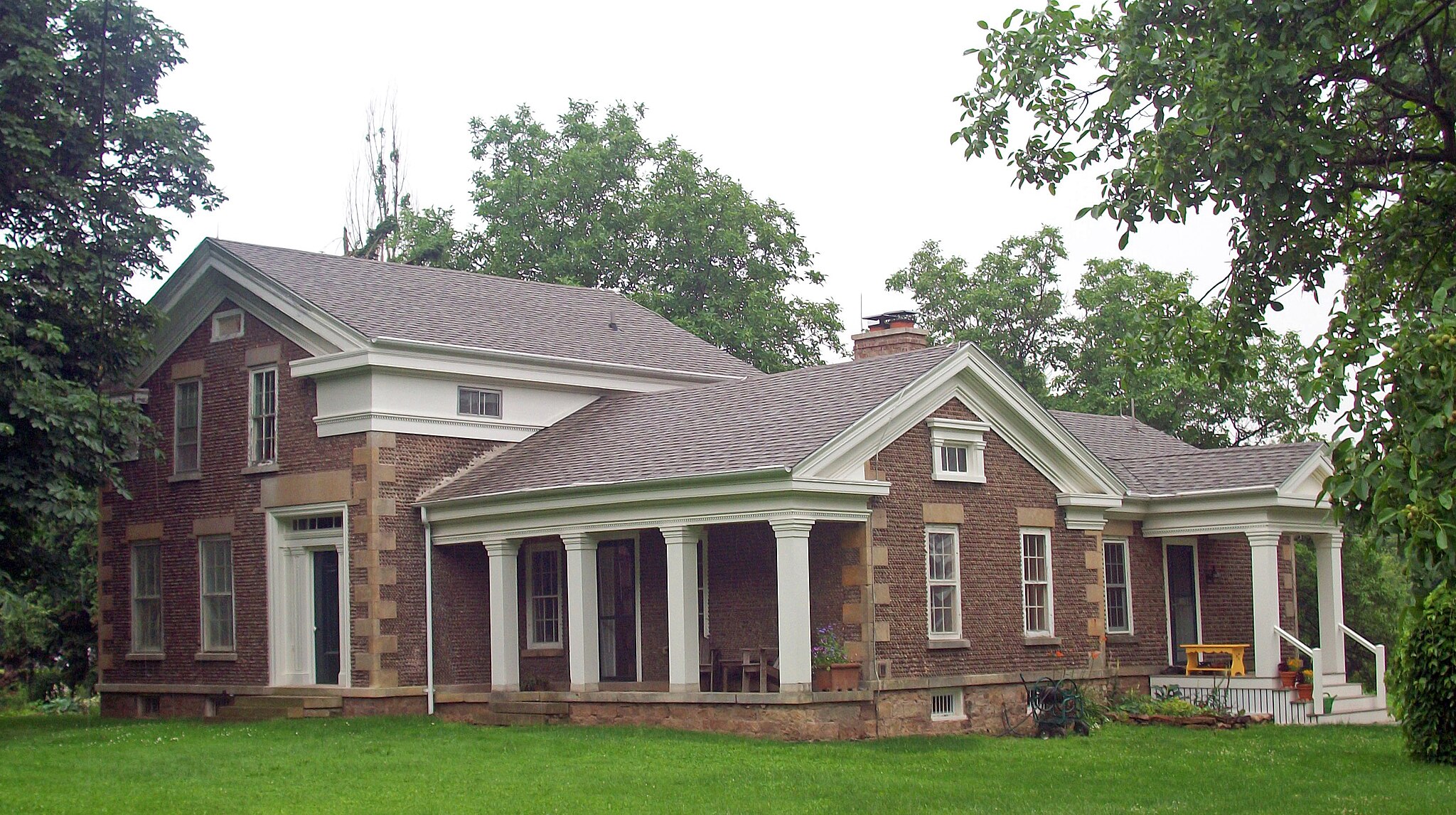
The Butterfield Cobblestone House in the Town of Clarendon was listed in the National Register of Historic Places in 2010.
Built in 1849 by Orson Butterfield (1808-1887), the stylish Greek Revival farmhouse is significant as a finely crafted example of the cobblestone method of construction in Western New York.

This house features small and medium-sized lake-washed cobblestones from nearby Lake Ontario set in horizontal rows bonded with lime mortar; limestone quoins for decoration and stabilization of the building’s corners (shown above); and stone ornamentation at door and window openings. This is one of several cobblestone buildings in the region listed in the National Register under the Cobblestone Architecture of New York State Multiple Property Documentation Form (1992).
East Avenue Historic District
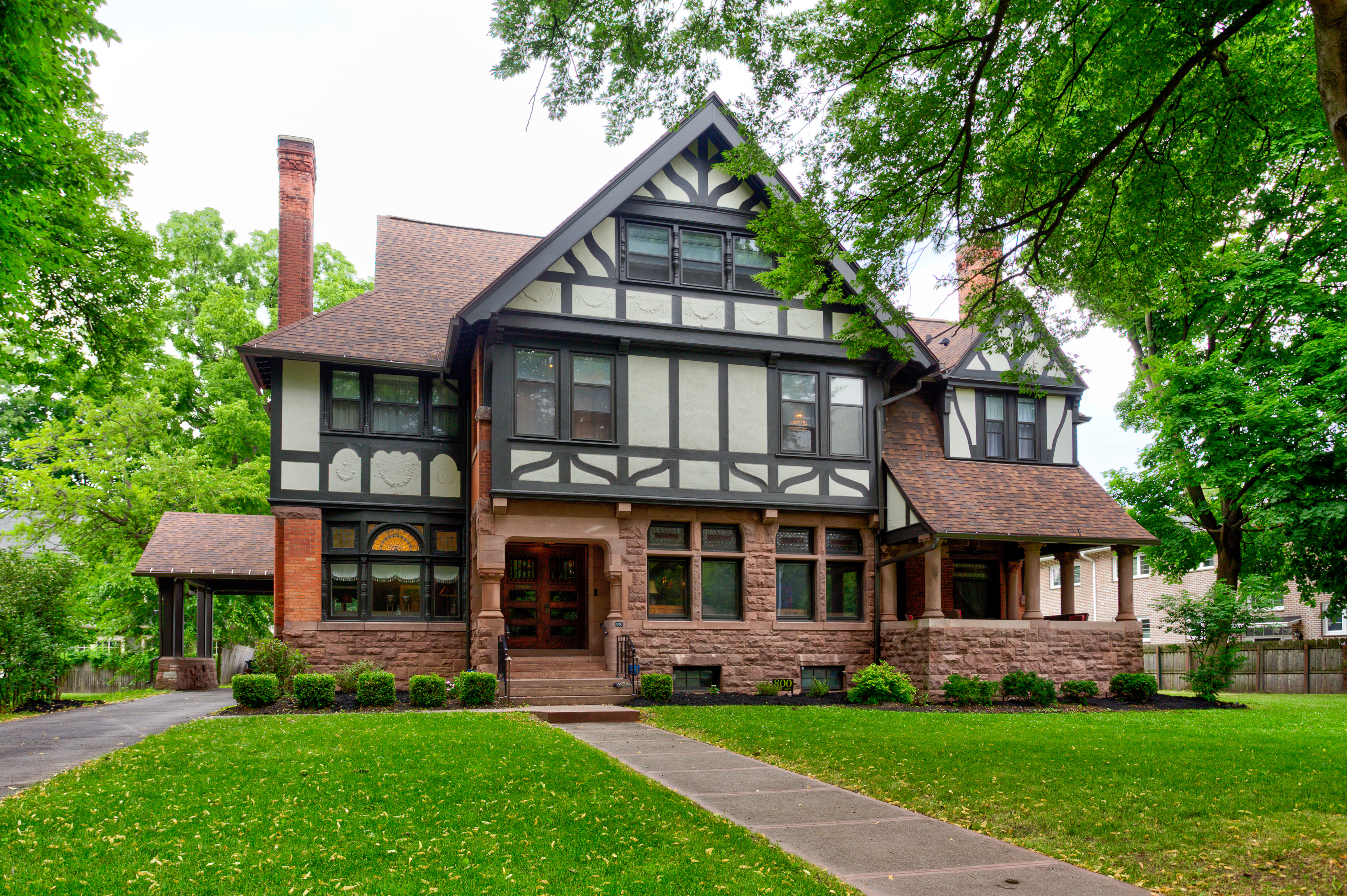
Listed in the National Register of Historic Places in 1979, Rochester’s East Avenue Historic District is one of the greatest catalogs of nineteenth and early twentieth-century urban residential architecture in New York State.
The district retains its original character as the “grand boulevard” of Rochester, with expansive lawns, specimen trees, gardens, and large-scale residences along the avenue. The surrounding side streets reflect the grandeur of the area on a smaller scale, but with equally impressive architectural designs. The district also includes several historic houses of worship and later apartment buildings.
Noteworthy from the Southern Tier: Max and Johanna Fleischmann House
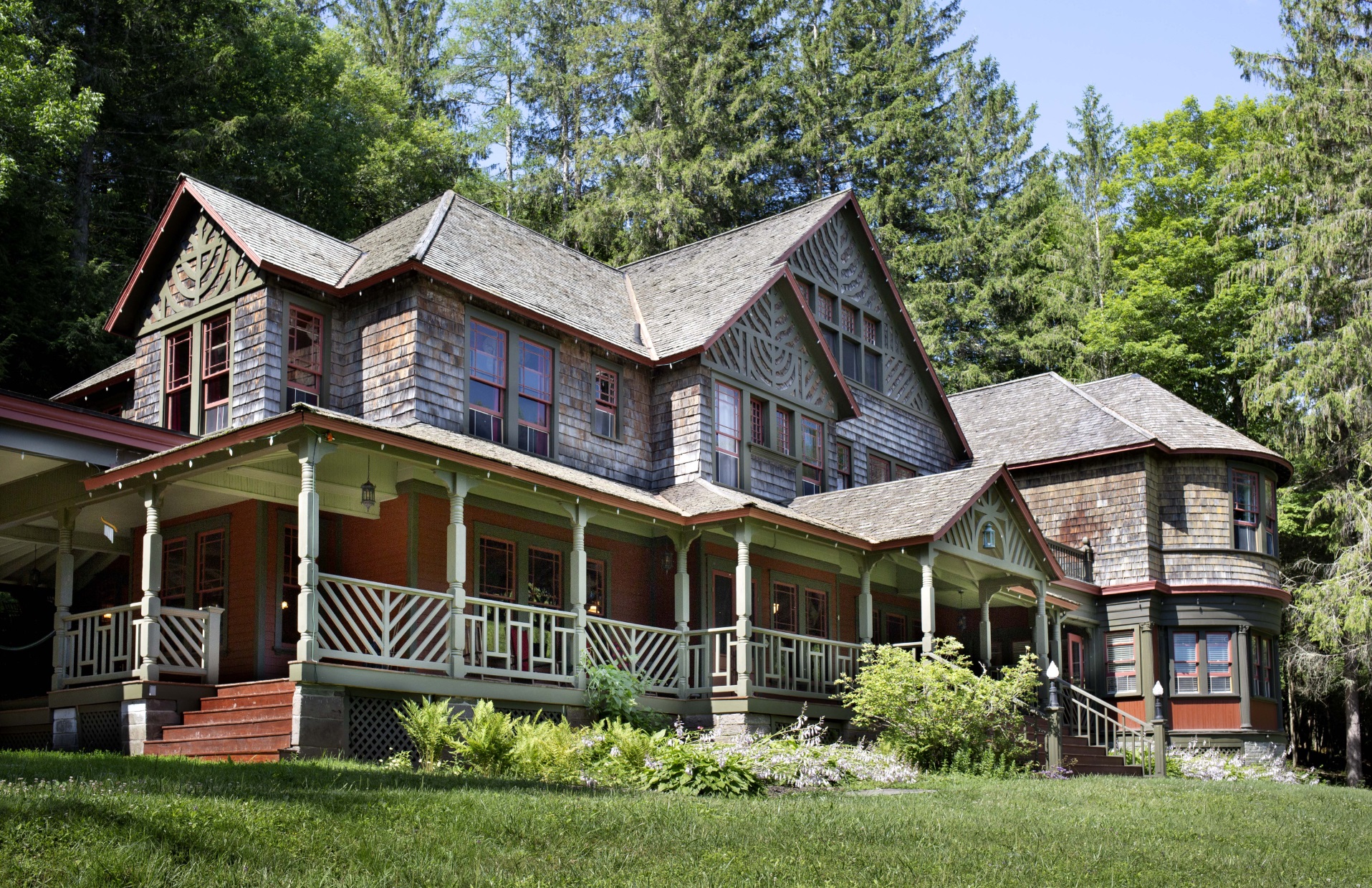
The Max and Johanna Fleischmann House in the Village of Fleischmanns was listed in the National Register of Historic Places in 2022. The Fleischmann family’s elegant summer compound, which once included six family-owned houses in a landscaped setting on a hillside overlooking the village, opened the door for wealthy Jewish vacationers in the area.
The Fleischmann family had an enormous impact on recreational development in this area of Delaware County and encouraged other late nineteenth-century leading figures in arts, business, and politics to summer in the Catskills.
Built in 1886, the house (now known as Spillian) was designed by Theodore G. Stein and is an exceptionally intact example of a Gilded Age summer “cottage” in the Stick and Shingle style. The house is especially distinguished by a lavish overlay of interior decorative painting, which covers most of the main floor and part of the second.
Noteworthy from Central New York: Niagara Hudson Building (current Niagara Mohawk Building)
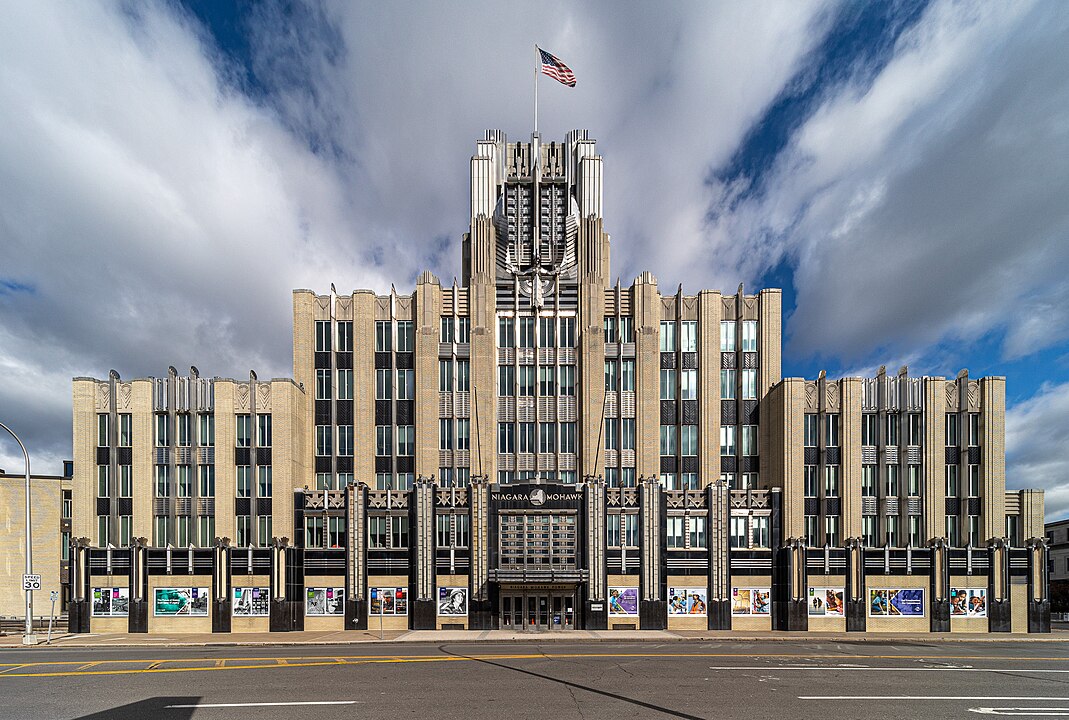
Completed in 1932, the Niagara Hudson Building (known today as the Niagara Mohawk Building) in Syracuse is an Art Deco masterpiece and powerful symbol of the Age of Electricity. It was the headquarters of the Niagara Hudson Electric Company, the largest electricity provider in the country at the time.
The building is distinguished by its complex angular geometric details, shiny metal ornament, and dramatic architectural lighting. The powerfully sculpted and ornamented modernistic building with its central tower and winged sculpture known as the “Spirit of Light” offered a symbol of optimism and progress during the Great Depression.
Listed in the National Register in 2010 at the national level of significance for its outstanding Art Deco design, the building was used as offices for a series of power companies. In 2011-2013, this stunning building was sensitively rehabilitated using federal historic rehabilitation tax credits.
Noteworthy from Mohawk Valley: Italian Community Bake Oven

Listed in the National Register in 2006, the Italian Community Bake Oven is a rare example of a masonry structure significant for its cultural association with early Italian immigrant labor in Little Falls.
Constructed ca. 1891 of stone and lined with firebrick, the bake oven provided large quantities of bread to feed a temporary camp of Italian immigrant construction workers who built the railroad spur between Little Falls and Dolgeville. The oven served the work camp of 100 immigrants during the early 1890s and subsequently was used by neighboring families for communal baking.
The concept of community bake ovens originated in Europe. The practice of constructing a central masonry oven for residents remains an established tradition, particularly in parts of Italy and France.
While the Italian Community Bake Oven was eventually abandoned and overgrown, it has recently been the subject of community preservation and interpretation efforts by Preserve Our Past.
Noteworthy from North Country
Mt. Van Hoevenberg Olympic Bobsled Run

The 1.5 mile-long Mt. Van Hoevenberg Olympic Bobsled Run was built for the 1932 Winter Olympic Games in Lake Placid. One of the more unusual engineering resources listed in the National Register of Historic Places, it’s nationally significant as a rare example of early bobsled run design and construction and for its association with the development of Lake Placid as a center for winter sports in the United States.
Designed by Stanislaus Zentzytzki, a renowned German engineer and course designer, the Lake Placid course was longer, steeper, and featured a more pronounced drop in curves than European runs, allowing for steadier driving and faster speeds.
After the American team won two gold medals and one silver medal at the 1932 Olympic games, bobsledding captivated the country’. Parts of the original Olympic Bobsled Run continue to be used for recreation. The run was added to the National Register of Historic Places in 2010.
Thousand Island Park Historic District (Additional Documentation)
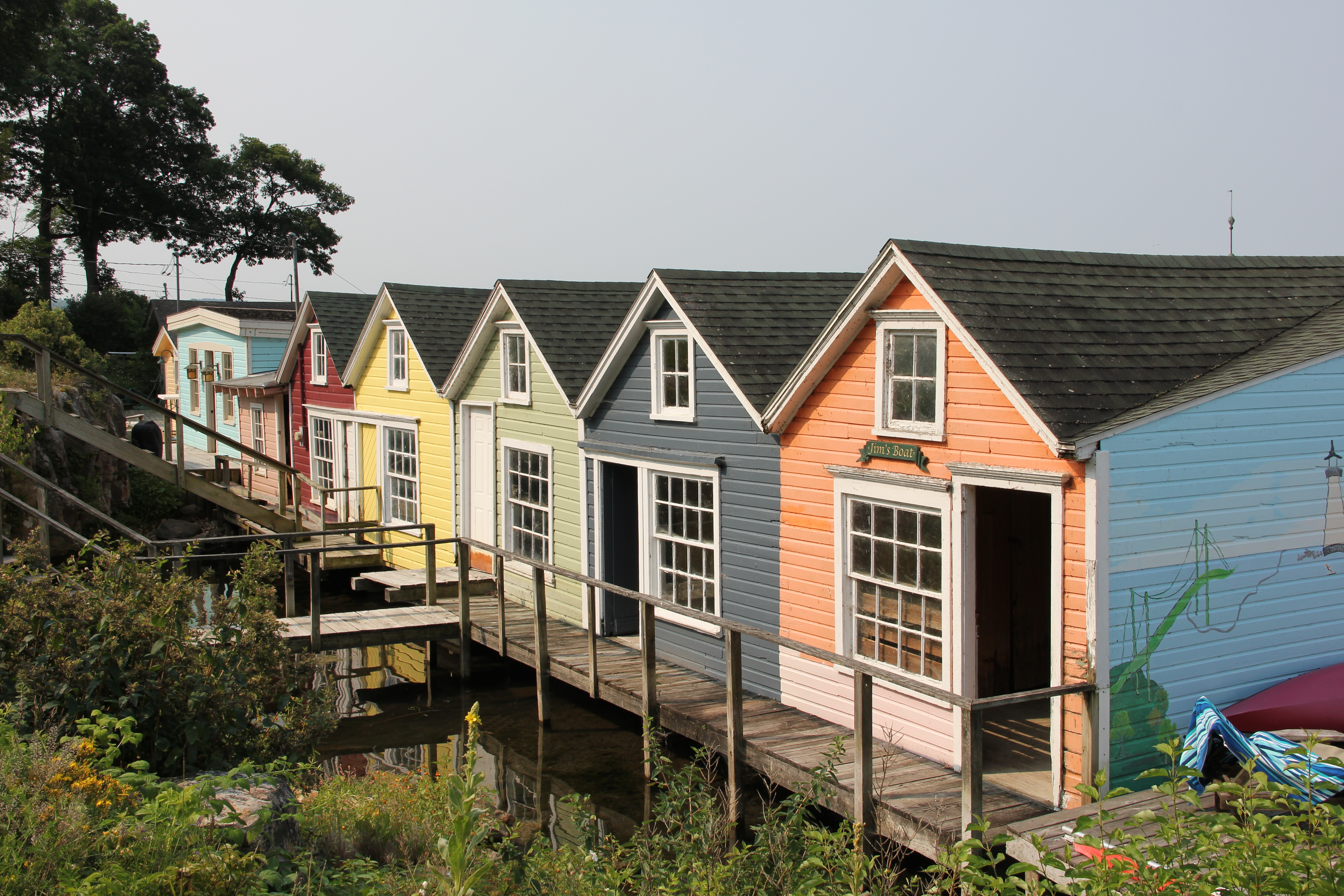
Thousand Island Park Historic District on Wellesley Island in the St. Lawrence River is significant for its association with the evolution of the Methodist campground tradition, and the rising popularity of summer vacations for middle- and upper-middle-class families in the region.
Originally listed in the National Register of Historic Places in 1982, the historic district nomination was amended in 2022 to expand the boundaries to include the boathouses (shown above) along the shore and to extend the period of significance to better reflect the history of the park in the twentieth century. Established in 1875 as a Methodist campground, it grew from a collection of roughly 500 tents to a fashionable summer community of over 300 cottages.
Noteworthy from Capital Region: Philip Schuyler Mansion (Additional Documentation)
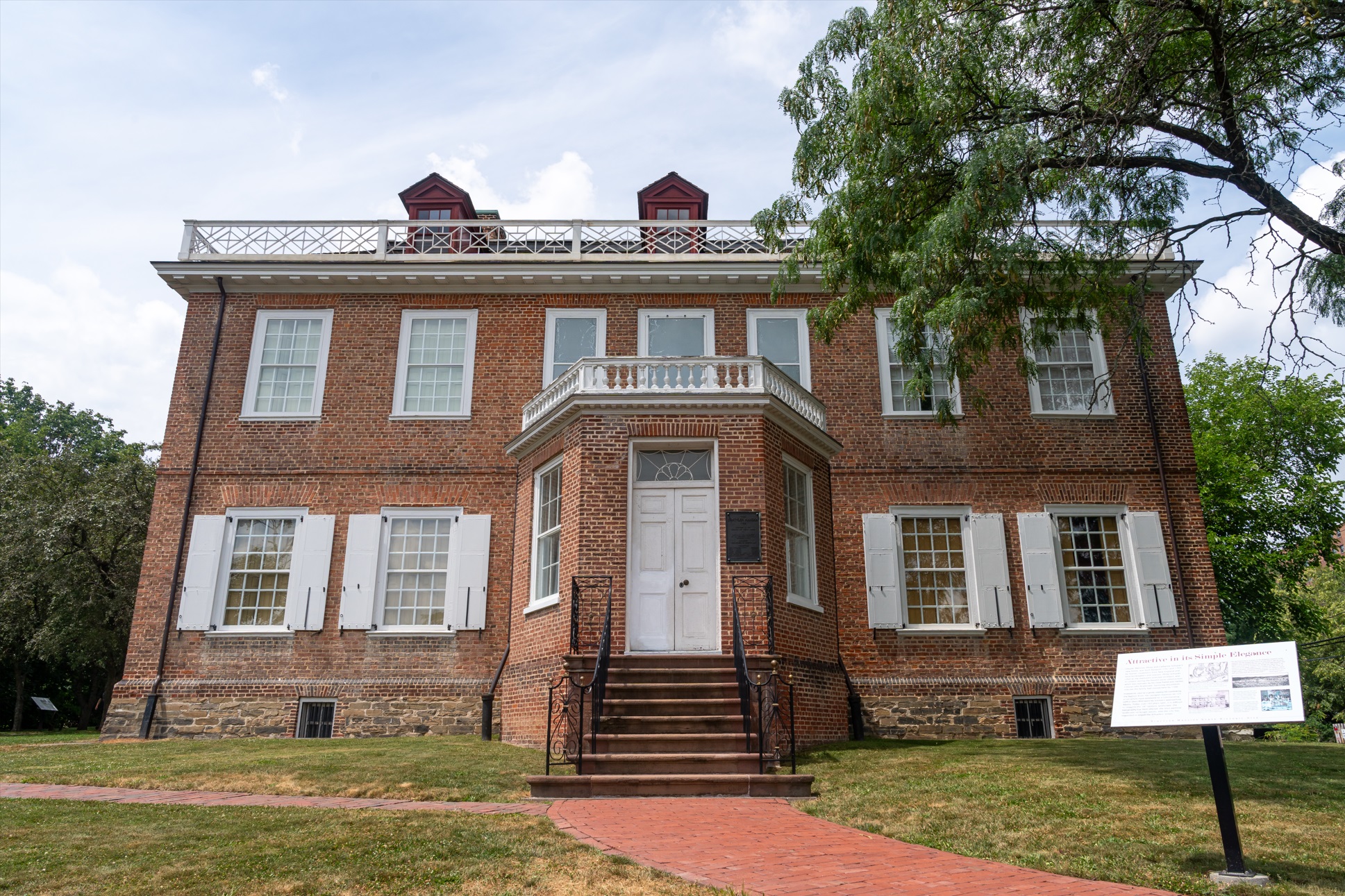
Designated a National Historic Landmark and listed in the National Register of Historic Places in 1967, the Philip Schuyler Mansion in Albany was originally recognized for its architecture and its association with Philip John Schuyler, a Revolutionary War general, senator, and member of the local patrician aristocracy.
However, the listing’s original documentation omitted details relating to Schuyler’s enslavement of human beings. In 2022, based on research conducted by staff at Schuyler Mansion State Historic Site and the New York State Historic Preservation Office, the mansion’s original nomination was amended to document the lives of the enslaved.
Among the stories of the enslaved who lived at least part of their lives at Schuyler Mansion are those of Prince, who negotiated his own sale from a British officer to Philip Schuyler to save himself from captivity in a prisoner-of-war camp; Claas, Diana, Scipio, and Adam, who made their bids for freedom among the British Army during the Revolutionary War; and Silvia, who found work after slavery as a fortune teller to support her children.
Noteworthy from Mid-Hudson Region
Woodstock Music Festival Site
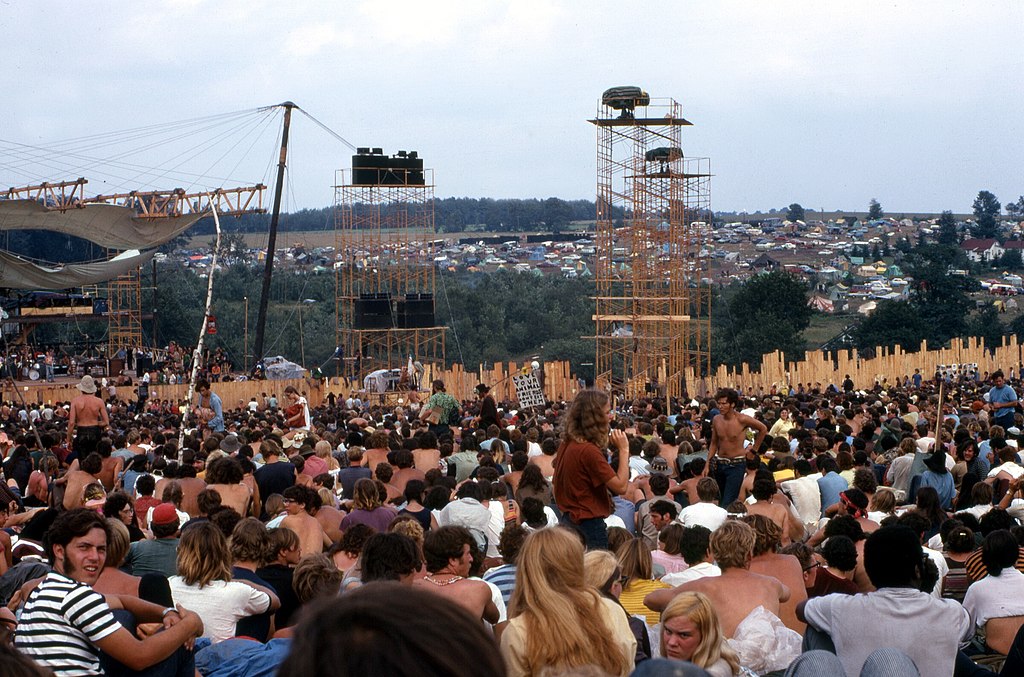
The Woodstock Music Festival Site, listed in the National Register of Historic Places in 2017, commemorates the music festival that took place August 15–18, 1969, on nearly 300 acres of rolling farmland in rural Bethel.
Woodstock was the definitive expression of the musical, cultural, and political idealism of the 1960s and was recognized immediately as a watershed event in American culture. It came to symbolize the optimism, activism, and alternative lifestyles of the Baby Boom generation. The festival featured many major musical acts including Richie Havens, Jimi Hendrix, Janis Joplin, Santana, Sly & The Family Stone, the Grateful Dead, Jefferson Airplane, Joan Baez, and Creedence Clearwater Revival.
Although approximately half a million people attended in person, its effects spread far beyond the audience and profoundly affected a generation who experienced it and identified with it.
Armour-Stiner House
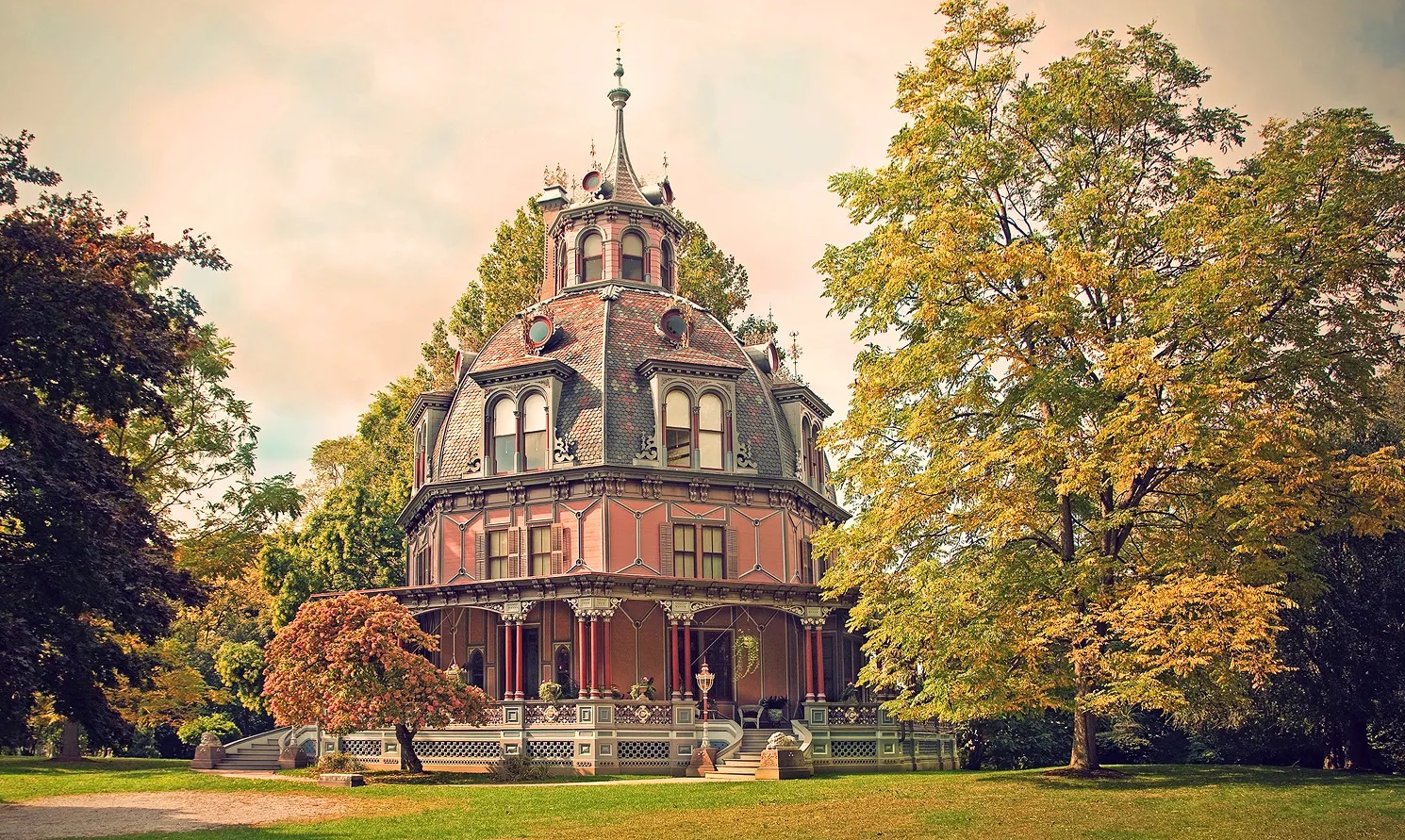
Listed in the National Register of Historic Places in 1975, the Armour-Stiner House is the only fully domed octagonal residence in the United States. Reflecting the mid-nineteenth century architectural philosophies of Orson Squire Fowler, the octagon plan house was thought to be cheaper to erect, easier to heat, to admit more light, and be more accessible for greater numbers of people, thereby improving society.
In 1975, the Cramers, who owned the house for nearly thirty years, were offered a significant sum by a developer who intended to demolish the house. They instead sold the house at a lower price to the National Trust for Historic Preservation, which marked the first time the Trust used their Limited Endangered Building Fund to save an architectural landmark from destruction. In a historic move, the Trust resold the property into private ownership with the conditions that the purchaser maintain a timeline for repair and restoration of the property, and an agreement to maintain and preserve the home’s exterior. The agreement remains active today.
Noteworthy from New York City
Cyclone Roller Coaster

One thrilling National Register-listed resource is the Cyclone Roller Coaster in Coney Island.
Built in 1927, the Cyclone is the only surviving wood-track coaster at Luna Park in Coney Island and is classified as a gravity ride of the wood-track twister type. Covering nearly 3,000 feet of track in a minute and fifty seconds, the Cyclone carries three cars of passengers and reaches speeds of over 60 mph. It’s one of the country’s few surviving vintage wood-track roller coasters, which modern building codes make impossible to replicate today.
The Cyclone Roller Coaster was listed in the National Register of Historic Places in 1991.
Chinatown and Little Italy Historic District
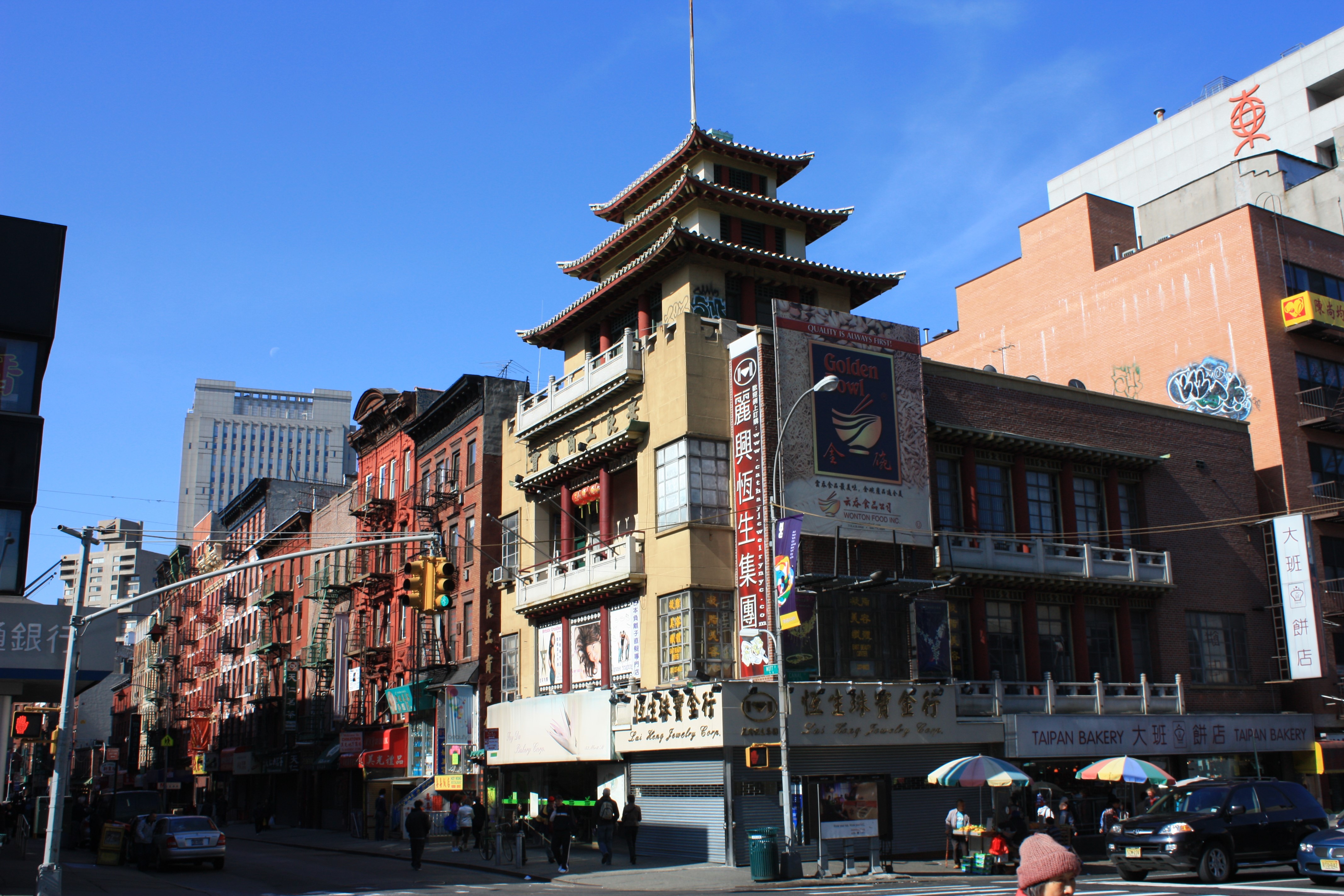
The Chinatown and Little Italy Historic District, listed in the National Register of Historic Places in 2010, is a 38-block area of Lower Manhattan on the west side of the Bowery.
These neighborhoods were forged in the same dynamic period of American history, the mid-nineteenth through early twentieth centuries, when waves of immigrants from all corners of the world came to New York. The parallels in the Chinese and Italian experience are many: both groups sought to settle with familiar community for linguistic and social reasons; both groups were fleeing civil unrest and hardship in their homelands; and both were seeking economic opportunities.
The historic district is not only significant in the areas of heritage, social history, immigration, and heritage tourism, but also for its architecture. Its numerous tenements reflect the evolution of housing reform laws of the late 1800s and early 1900s. The tenement buildings represent the importance of commerce to this densely populated area, since most have shops or restaurants at the ground floor. The Italian and Chinese identity of the district is also evident in some of the alterations made to existing buildings that housed churches, clubs, and other organizations and businesses central to these communities.
Noteworthy from Long Island: Old Field Point Light Station
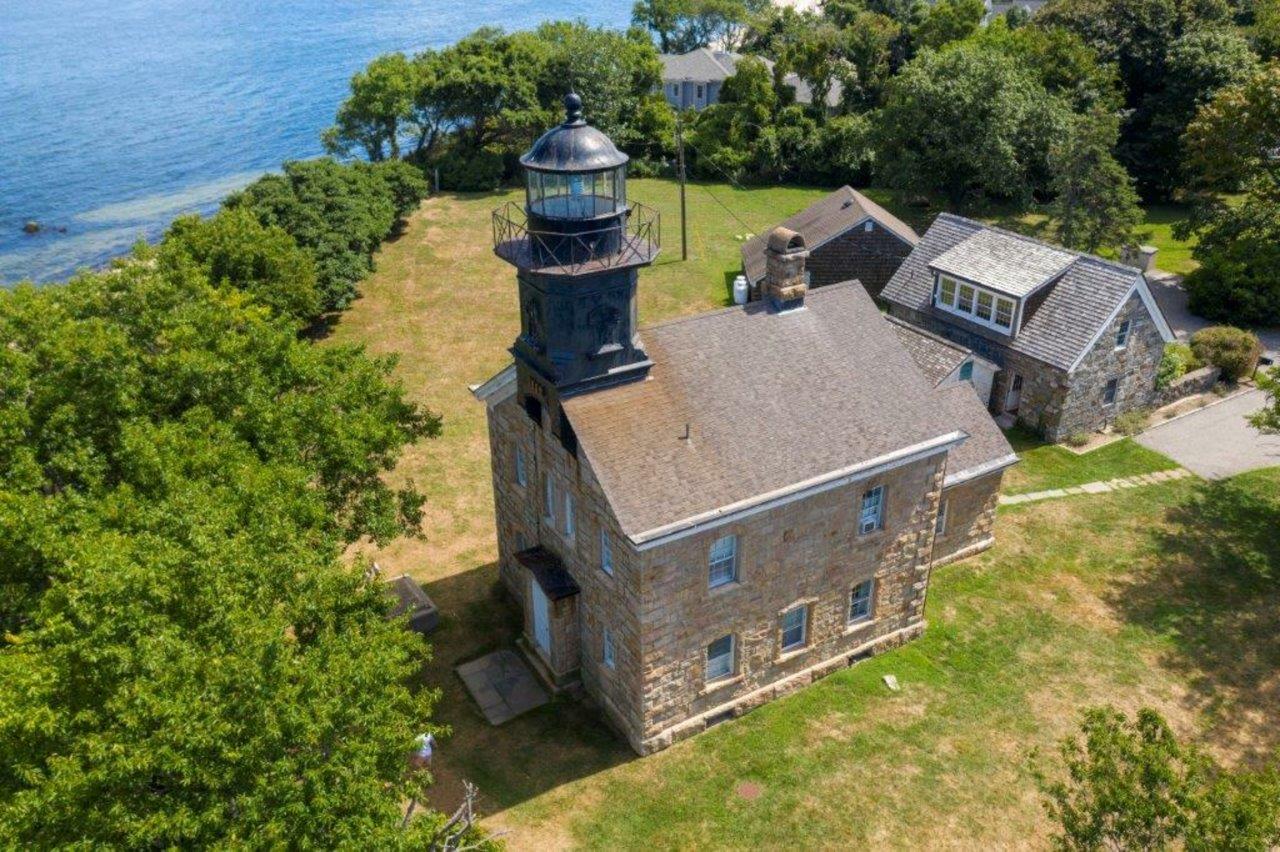
Old Field Point Light Station in Setauket has a long history on the Long Island Sound.
The first light tower on this location was built in the early 1800s and the original keeper’s dwelling was built around 1824. Building two separate structures – a tower and dwelling – was in line with a first wave of federally funded maritime safety measures.
The light house that exists today was constructed between 1868 and 1869. It was designed following a newer standardized model that housed the keeper’s dwelling and the light itself in the same structure. This model was developed by the United States federal government following the Civil War and was in use until the 1930s.
While Old Field Point Light Station is now unmanned, it remains active, ensuring the safety of boaters on Long Island Sound today. It was listed in the National Register of Historic Places in 2024 for its association with the evolution of lighthouse construction and as an example of ongoing federal efforts to enhance maritime safety.
— Written by Kathy Howe, Director, Community Preservation Bureau and Chelsea Towers, Coordinator, Survey & National Register Program at the Division for Historic Preservation.
 New York State Parks and Historic Sites Blog