

What do a bare-cheeked bumblefly, a brown bog sedge, and a Blanding’s turtle have in common?
Not only are they living organisms that start with the letter B, but more importantly, they are all considered to be rare species in New York State. What does it mean to be a “rare species,” exactly? Rare species are uncommon or few in number and as a result, at a greater risk of extinction than common species. This is because small populations are more susceptible to environmental changes, like flooding or wildfires, and to genetic issues. Some rare species—like the bald eagle, still listed as threatened in New York despite its inspiring national comeback—might be familiar. Others—like the globe-fruited seed-box, grass-leaved ladies’ tresses, hairy-necked tiger beetle, Nuttall’s milkwort, southern pygmy clubtail, or wavy-rayed lampmussel—sound more like they are from a fantasy novel than from New York’s natural areas.
Though you may not see them, our parks and historic sites harbor some of the state’s most imperiled and significant natural assets, supporting 192 species of rare animals and 290 species of rare plants. In some cases, these sites support the only occurrences of a rare species in the state, or even in the world! Read on to learn about a few examples of rare species.
In New York, rare species are tracked by the New York Natural Heritage Program (NYNHP), a program of the State University of New York College Environmental Science and Forestry (SUNY ESF). NYNHP tracks a selected subset of New York’s plants and animals, based on their degree of rarity or imperilment within the state and world. Working with environmental stewardship staff at our parks and historic sites, NYNHP conducts targeted field surveys to map the location and extent (when known) of the populations and to collect data on condition, landscape context and threats to these rare species occurrences.
Knowing the locations of rare species is essential to prevent losses or conflicts with these species and sites. This information is used for the siting of facilities, trails and other park projects to avoid impacts, and to identify key areas for on-the-ground stewardship efforts, including habitat protection and restoration. Rare species are important components of natural ecosystems, and as such, their conservation is a high priority within New York’s state parks and historic sites.
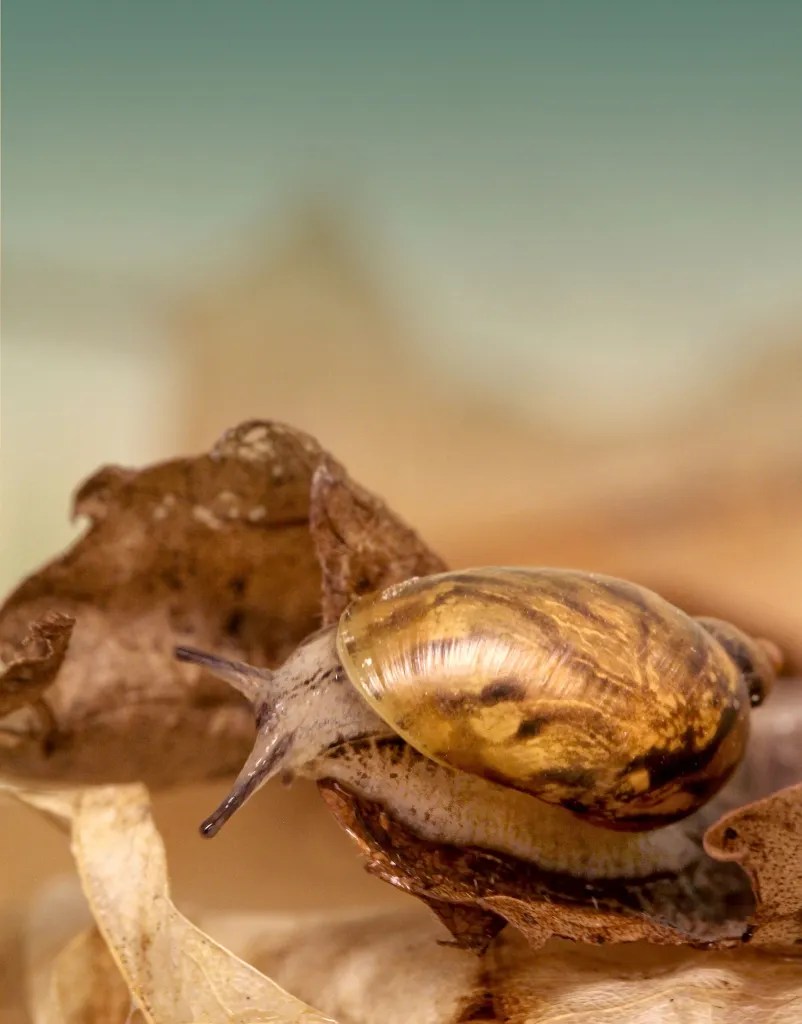
Chittenango Ovate Amber Snail at Chittenango Falls State Park
This tiny snail is the “most rare” of all flora and fauna at our parks and sites. It is endemic to Chittenango Falls State Park, meaning it is found nowhere else on earth! Its numbers are only in the hundreds, but a dedicated staff is determined to ensure its survival by keeping its habitat free from invasive species and stocked with its preferred plants. Through a partnership with SUNY ESF, Chittenango ovate amber snails are being bred in a lab. These snails are then being used to strengthen the population at Chittenango Falls and to establish other colonies of the snail at carefully identified locations in the Oneida Lake watershed. Check out this blog post to learn more!
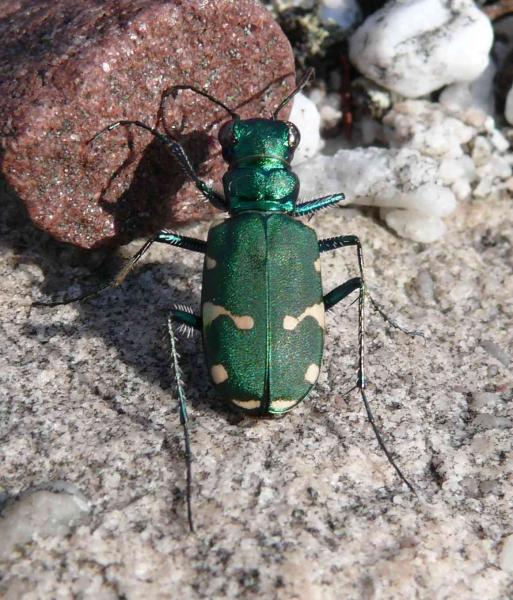
Northern Barrens Tiger Beetle at Minnewaska State Park Preserve
The northern barrens tiger beetle is a small, metallic green insect. After decades of not being detected in the state, it was rediscovered in 2004 at Minnewaska State Park Preserve in Kerhonksen. In New York, this rare species is only known to occur at a single site. The brilliant green beetle prefers rocky and sandy sites like pitch pine summit habitat. Careful maintenance and monitoring of this ecosystem will support the northern barrens tiger beetle and other species.
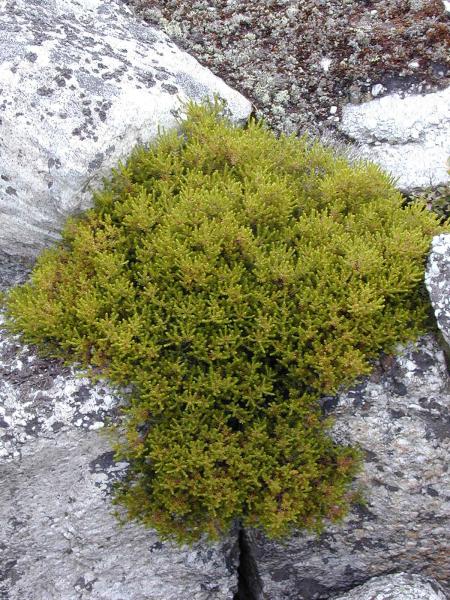
Broom Crowberry at Minnewaska State Park Preserve
The 1887 discovery of this plant growing on Gertrude’s Nose—a prominent rock formation in the Shawangunk Mountains—created a stir among the scientific community that continues to this day. This is the only known location of broom crowberry growing naturally at a non-coastal site. It’s considered endangered in New York, but not federally. Its population has been stable here, but with the popularity of Gertrude’s Nose as a hiking destination, it’s vulnerable to foot traffic. The population at this location is monitored by park stewardship staff to ensure its protection. If you hike at Gertrude’s Nose, be sure to stick to the marked trails to avoid impacting these plants and this significant habitat.
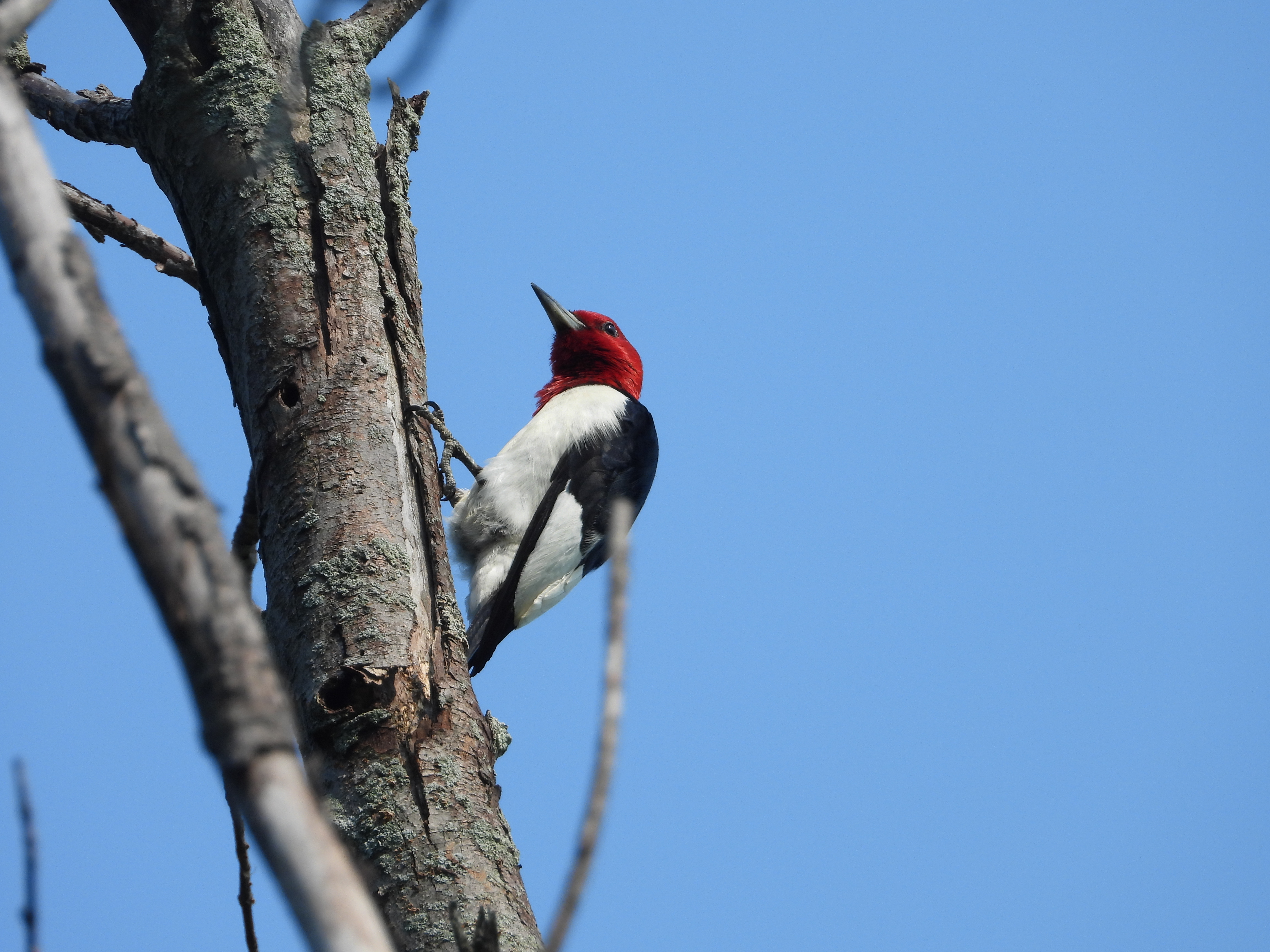
Red-headed Woodpecker at Fort Niagara State Park
The bright red hood of the red-headed woodpecker is unmistakable. It is one of the few species of woodpeckers to cache food, storing seeds, nuts, and even insects. This rare woodpecker has experienced a substantial population decline in recent decades. It requires dead, standing trees to nest and faces competition with the non-native European starling for nesting cavities. The open park setting of Fort Niagara State Park is perfect habitat for red-heads. Be sure to bring some binoculars and keep a look out while walking the many paths throughout the park.
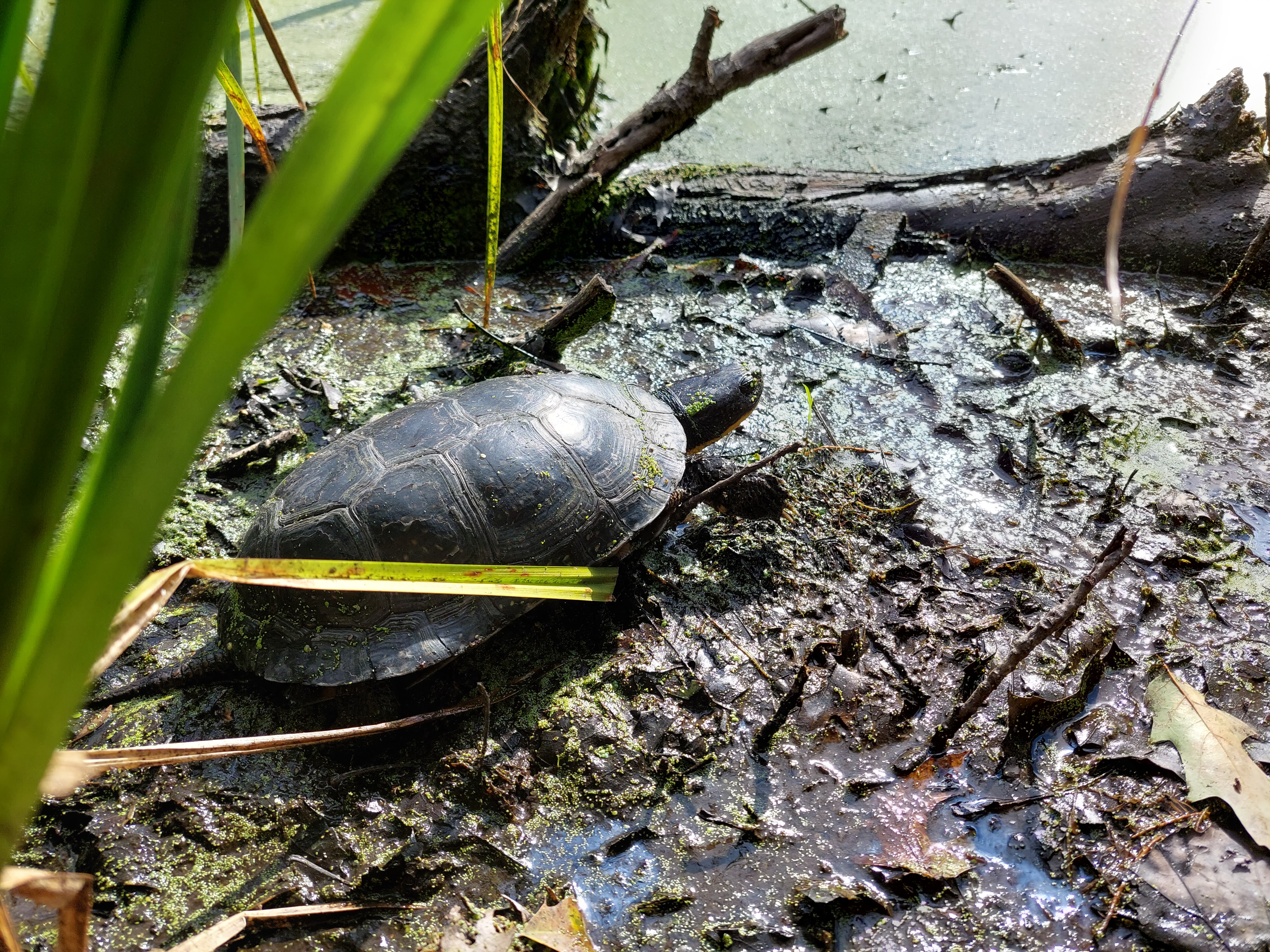
Blanding’s Turtle at multiple parks
The Blanding’s turtle is a long-lived species, with the oldest known individual reaching over 83 years of age! Blanding’s turtles are medium-sized, with an average shell length of approximately 7-9 inches. The carapace, or upper shell, is dark with yellow-colored flecks or streaks. The plastron, or lower shell, is yellow with dark blotches. This species is considered threatened by New York State due to declining population numbers. Found in several locations across New York, their exact locations are sensitive due to their rarity and vulnerability to collection.
Blanding’s turtles can be found in wetlands with shrubby plants like buttonbush and willow. To protect the Blanding’s turtle, environmental stewardship staff have worked to protect wetlands and create nesting habitat in New York State Parks by reducing invasive species and providing areas with sandy soils for the turtles to lay their eggs. Small hatchlings emerge from their nest from August to October.
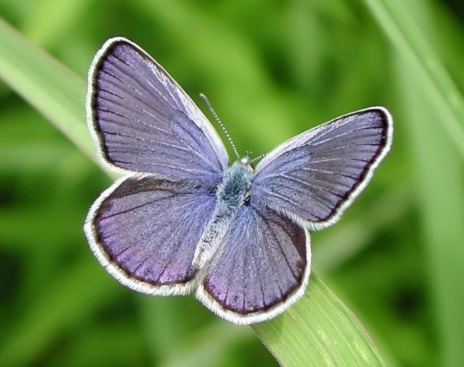
Karner Blue Butterfly, Saratoga Spa State Park
The Karner blue is a small butterfly with about a one-inch wingspan. Male butterflies have violet-blue wings lined with white. Female butterflies are more brownish blue in color. The larvae (caterpillars) feed exclusively on one food plant: wild blue lupine leaves. Without blue lupine, the Karner blue would not survive. This plant can be found in dry, sandy habitats.
The Karner blue butterfly is a state and federally endangered species, which means a species in danger of extinction. This species is declining due to human activities such as development. Environmental stewardship staff have worked to reduce invasive species and establish native plant species, like blue lupine, to create habitat for the Karner blue butterfly within our parks. A long-term habitat restoration project is underway at Big Bend Preserve within Moreau Lake State Park. The project, which includes invasive species management and prescribed burning, will restore more than 400 acres of new barrens habitat for these rare butterflies.

—Written by Kelsey Ruffino, OPRHP Wildlife Biologist
 New York State Parks and Historic Sites Blog