All posts by New York State Parks

Parks Water Quality Unit: Keeping Watch on our Beaches and Waterbodies

It’s finally June, which means the Water Quality Unit at New York State Parks is out in full swing for the 2019 summer season.  Each year, staff from the Water Quality Unit coordinate water quality monitoring programs for many of the waterbodies within Park boundaries.  A substantial portion of State Parks attendance is associated with recreational water use, so it is important to ensure the beaches are operated in a manner that is both safe for patrons and that protects this valuable resource for future use. The Beach program oversees weekly bacteriological sampling at 96 sampling stations within 60 parks, provides water quality training to Park staff, works on collaborative studies with other agencies, and ensures compliance with the Harmful Algal Bloom (HAB) protocol.  Keep reading for an overview of each of these responsibilities!

Beach Locations

New York State Park Beaches are located across the entire state – from end to end and top to bottom; on small inland lakes, the Finger Lakes, the Great Lakes, the Niagara and St. Lawrence Rivers, and on the Ocean.  This link will take you to the State Parks webpage where you can search for a beach near you or one you want to visit.

Moreau
Beachgoers relax at Moreau Lake State Park

Weekly Sampling

Each guarded beach is sampled a minimum of once a week for E. coli (freshwater) or Enterococci (marine) bacteriological indicators during the swim season.  The EPA defined regulatory limit for exceedances are greater than 235 E. coli colonies per 100 ml, and greater than 104 Enterococci colonies per 100 ml.  If a sample comes back over the regulatory limit, the beach is sampled again, until a satisfactory result is reported by the certified laboratory.  State Parks defines two categories of beaches: Category 1 (must resample and may remain open), and Category 2 (must resample and close immediately).  Click here to learn more about beach categories and closure criteria.  The data collected for the beach water quality program is carefully entered into large databases that are used for report generation, data evaluation, and reporting to regulatory agencies that in turn provide funding for beach sampling.

Beach Water Quality Training and Education

The Water Quality Unit provides regional trainings to park staff on how to properly collect a water sample, when to close or re-open a beach, and how to identify specific algae. The unit also conducts sanitary surveys to identify potential pollution sources and assists staff with site-specific questions and needs.  In addition, the unit develops and/or distributes educational materials on potential waterborne illnesses and other water-related topics.

Water Quality Collaborations

The Water Quality Unit routinely collaborates with other agencies and organizations such as the United States Geological Survey (USGS), the New York State Department of Health (NYSDOH), New York State Department of Environmental Conservation (NYSDEC) and colleges and universities on subjects such as E. coli predictive modeling and HAB occurrences.  State Parks collects and shares data with these agencies to help further current research.  Check out this link Cornell at Work in NYS Parks to see Professor Ruth Richardson from Cornell University at work in Buttermilk Falls State Park testing out a new technology!

SmartPhone
Staffer checks water quality data on smartphone.

Harmful Algal Blooms

Research on the occurrence of HABs is still in full bloom both in the United States and worldwide.  In past years, State Parks has seen HABs on our beloved lakes and beaches, sometimes for the first time ever noted.  While this can be a startling discovery on a beautiful morning, be secure in knowing that State Parks has in place a firm reporting and response protocol for blooms observed both at beaches and non-beaches.  State Parks follows guidance from the NYSDOH and NYSDEC in closing and re-opening beaches suffering from a HAB, and in posting signage and warning the public of an existing HAB on a State Park waterbody.

To learn what harmful algal blooms look like, click here for a link to last year’s blog on HABs and a summary of the concentrated effort being made in New York State to address HAB occurrences.

Post by Amy LaBarge, Ocean and Great Lakes Beach Water Quality Coordinator
Pausing to Ponder Pollinators

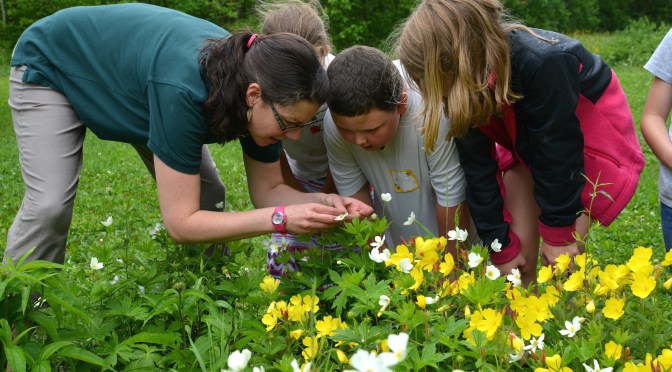
It is Pollinator Week, the week we celebrate pollinators small and tiny.  Our native pollinators, including bumble bees, mining bees, bee flies, longhorn beetles, and flower moths, play an important role in supporting the diversity of plant life in New York. Since 2016, State Parks staff has been working hard to help protect our native pollinators by cultivating native plant gardens and meadows.

This slideshow requires JavaScript.

Pollinator gardens are a great way to attract a variety of pollinators and provide a place for people to see and learn about plants and pollinators up close. Unlike natural areas, these areas often contain a familiar garden plants like daffodils, marigolds, petunias, snapdragons, Stella Dora lilies, garden iris, cosmos, and many other non-native plants that provide color and variety and attract pollinators. However, by adding in plants that are native to New York State, you boost the value to the insects. Native pollinators evolved with the native flora, so they do better on these plants.  Some examples of native flora that are good for gardens are violets, blue flag iris, wood lily, butterfly weed (not to be confused with the non-native butterfly bush see below), asters, goldenrods, native sunflowers, Joe-Pye weed, azalea, and many others. Using a variety plants helps to support both the insect “generalists” who use many kinds of flowers, as well as the “specialists” that go to only one or a few types of flowers. Pollinator gardens in State Parks offer a good way for you to learn about some plants that occur in the park or region too.

Pollinator meadows are larger areas from a quarter acre to many acres, typically where old fields containing a mix of native and pasture grasses are supplemented with native plant species that attract pollinators. This is the type of area that works well for planting milkweed, goldenrods, native grasses (like little bluestem, panic grass, big bluestem), and other species that don’t need a lot of care and that tend to spread. To maintain the meadow habitat, these sites are best managed by occasional mowing to keep woody plants from moving in. Targeted weeding is also needed to keep any non-native invasives from getting a foothold. But managing a meadow close to a woodland is a plus as a number of pollinators make their home their and visit the meadows for food.

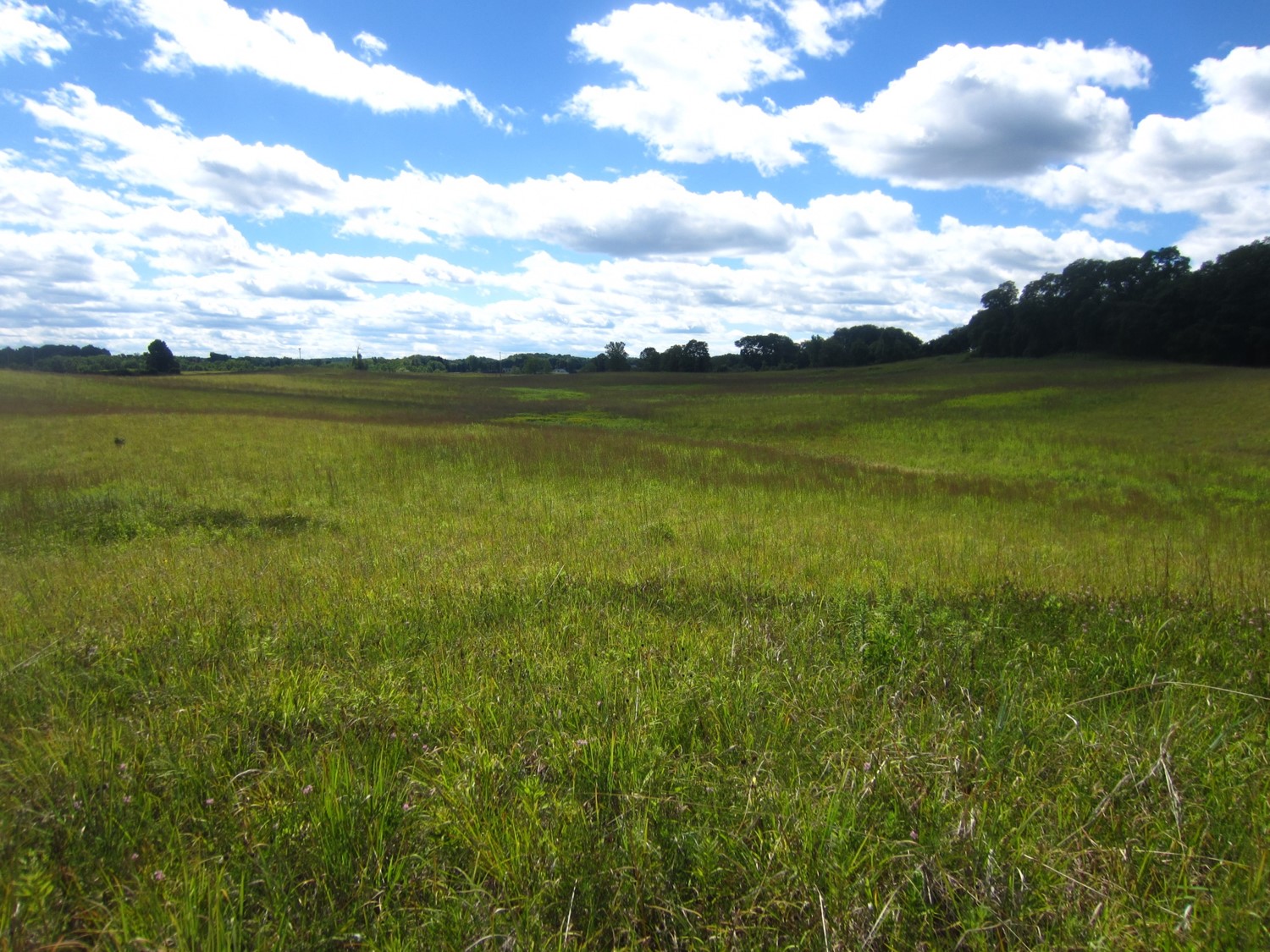
GanondaganMeadow
The grassland at Ganondagan State Historic Site is a great place to find our native pollinators.

There are many lists of plants recommended for pollinator gardens or meadows but be wary as some contain plants that are not native to New York state. They also sometimes include non-native invasives which you really don’t want!

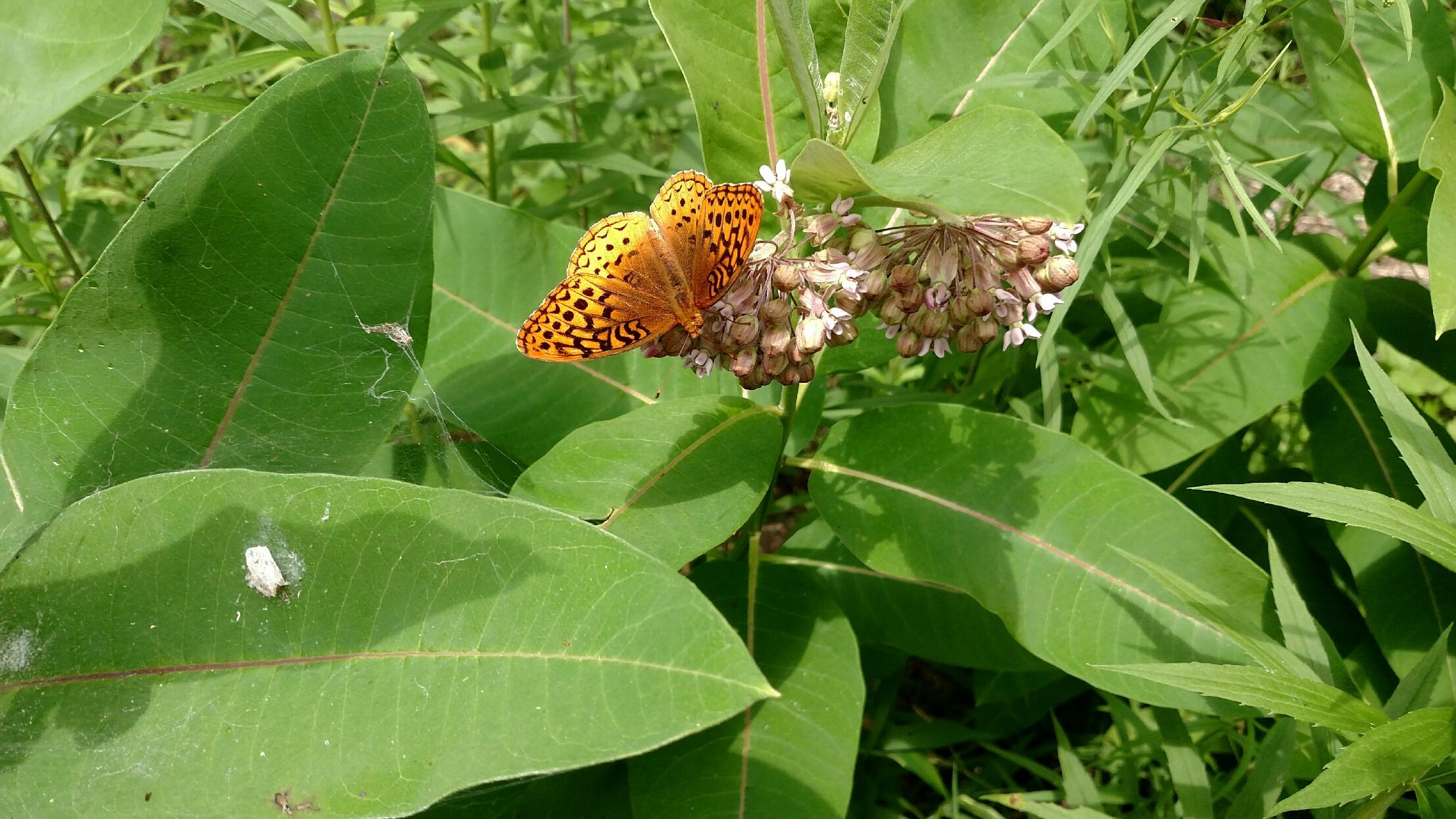
Fritilary aug 2017
Fritillary butterfly enjoys some milkweed at Caleb Smith State Park.

And beware that some common names can be confusing. For example, butterfly bush vs butterfly weed are not remotely related! Butterfly bush (Buddleia davidii) is a purple flowered shrub that is popular but not native and can be invasive. Best to avoid that one.  In contrast, butterfly weed, Asclepias tuberosa, is an orange flowered milkweed native to NY and a great choice for attracting pollinators to your garden or meadow. To determine if a plant species is native to NY go to NY Flora Atlas.

NY State Parks staff have created more areas that make it easy for you to learn about native flora and fauna. The following places offer excellent spots for you to see native pollinators and learn about the plants they depend on. Take time this week to ponder pollinators at one of State Parks’ pollinator gardens or meadows.

Some of the parks will also have special pollinator programs during both Pollinator Week and over the summer, where you can search for and identify native pollinators.

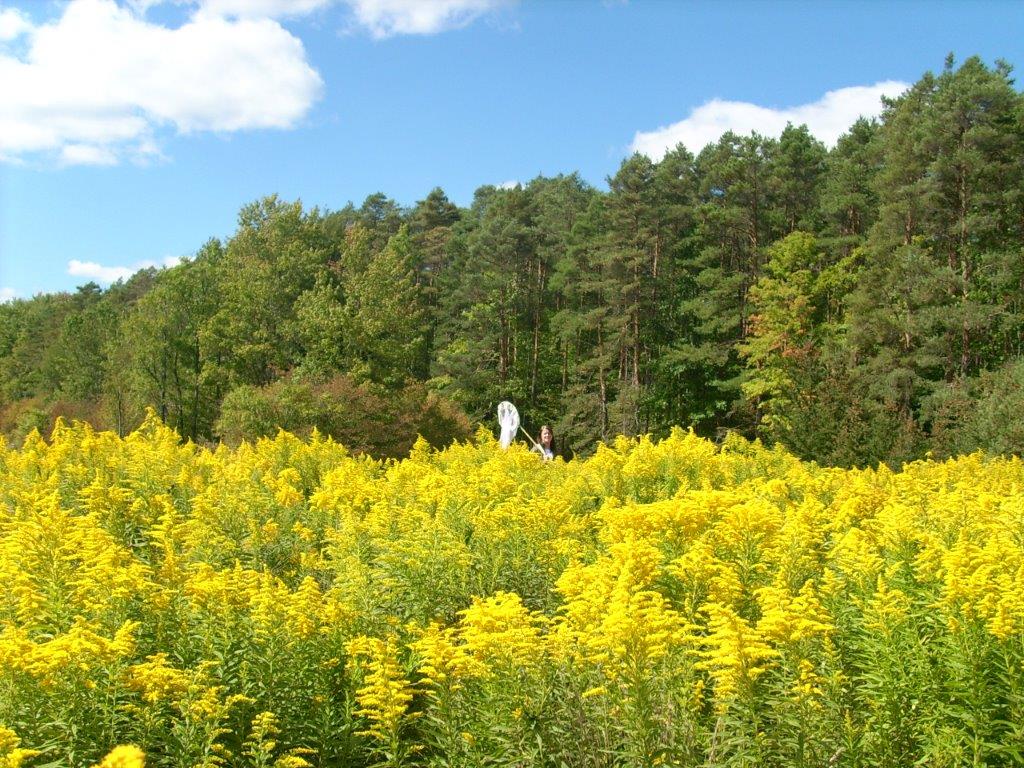
cassie-meadow Allegany
Pollinator program at Allegany State Park.

Learn more about our native pollinators and other insects:

Hohm, Heather, Pollinators of Native Plants: Attract, Observe and Identify Pollinators and Beneficial Insects with Native Plants, Pollination Press LLC; 2014.

NY Natural Heritage Program and the Empire State Native Pollinator Survey

Wilson, Joseph S, The Bees In Your Backyard, Princeton University Press, 2015.

Xerces Pollinator Conservation

More information on insects and flowers:

Websites

BugGuide

Butterflies and Moths of North America

Books

McKenny, Margaret and Roger Tory Peterson, A Peterson Field Guide to Wildflowers: Northeastern and North-central North America

Newcomb, Lawrence, Newcomb’s Wildflower Guide

Tallamy, Douglas and Rick Darke, Bringing Nature Home: How You Can Sustain Wildlife with Native Plants, Updated and Expanded

Grab Your Phone – Take a Picture

This Saturday is National Nature Photography Day.  So, grab your phone, head out to your favorite state park and take some pictures.

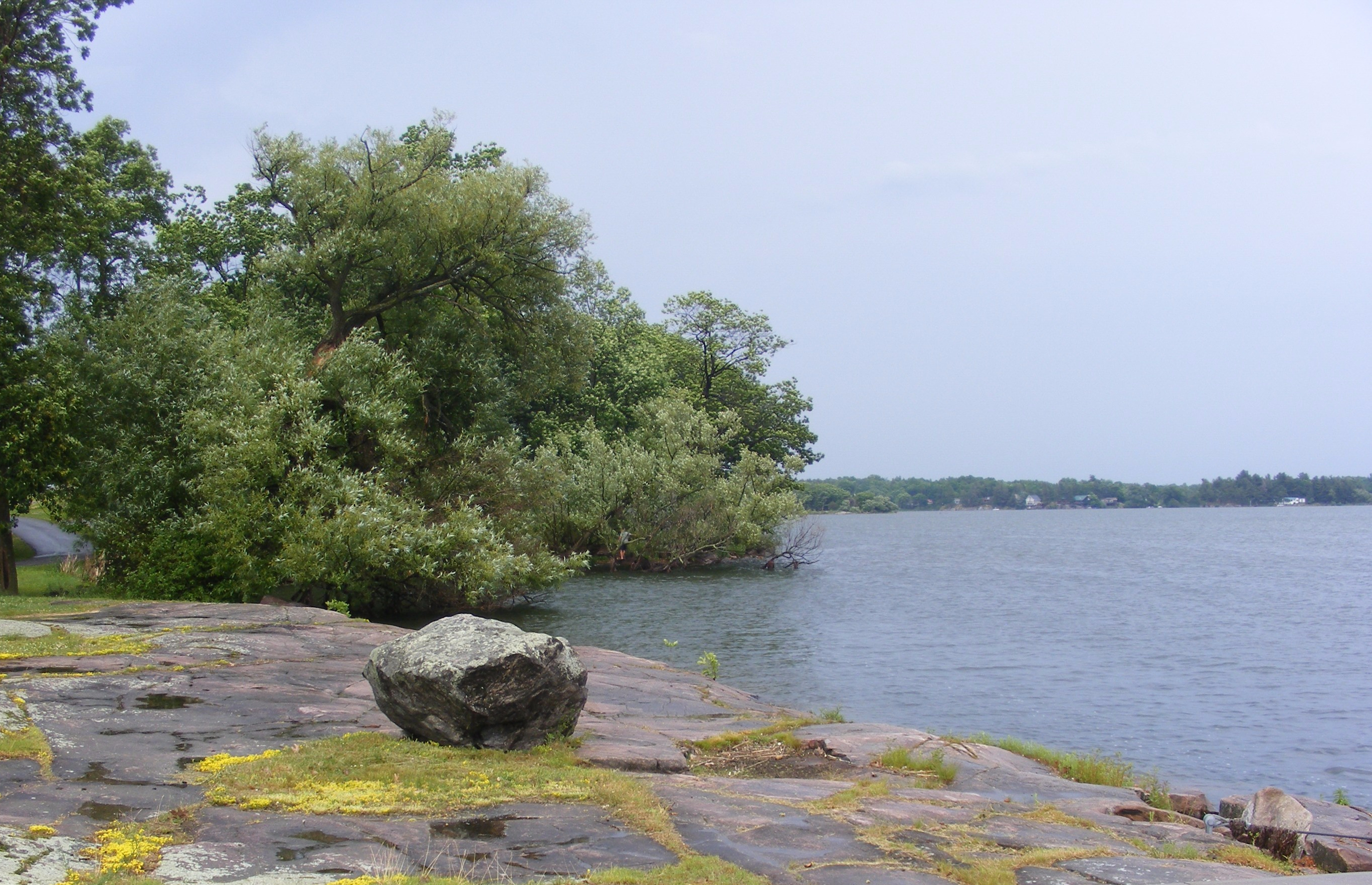
rock-kring-pt.jpg
Along Morgan Island shoreline in Kring Point State Park.

Here are a few tips to help you take great photos with your phone:

  1. Get to know the different photo settings your phone offers.
    1. Burst Mode is great for capturing fast moving images like birds or insects in flight or chipmunks scurrying along the trail.
    2. HDR, or High Dynamic Range, helps to improve landscape photos that have contrasting levels of light between the sky and land. HDR evens out the light and shadows between the bright and dark areas.
    3. Practice changing the focus by tapping the screen in the spot where you want the camera to focus.
    4. Practice changing the exposure (image brightness) in case you want to take pictures of something that is in a dark spot or a bright spot.
  2. Before you start taking pictures, clean the lens. With all the use our phones get, the lens can get dirty with finger prints and more. Use a soft lens cloth or 100% cotton cloth dipped in distilled water to clean your lens.
  3. When you are out taking photos:
      • Be sure you have plenty of memory or storage available for your photos.
      • The Rule of Thirds guideline will help with composing the photo. The Rule of Thirds is based on dividing the image into nine equal parts and placing points of interest along the lines.  In the example below, the image on the right takes advantage of the Rule of Thirds by placing the rock spire on the left vertical line and the distant horizon centered on the lower horizontal line, making the image feel balanced. The image on the left centers the rock spire, not the whole scene, and the image feels unbalanced.   Research has shown that our eyes naturally go to the intersections of the lines rather than the middle of the photo.  Use the grid setting on your camera to help with the composition.

    Tadrart01- Pir6monderivative work Teeks99
    Rule of Thirds guideline, image by Tadrart01- Pir6monderivative work Teeks99
  • Take multiple pictures of the same image,trying some from a different angle or perspective, such as looking up to take pictures of trees or kneeling to take photos through the meadow.

This slideshow requires JavaScript.

TreeHollowAllegany
Crouching down gives you a better angle for photos like this one of a tree hollow in Allegany State Park.

  • Keep your camera steady as you take your photos, especially for photos of fast-moving things. Place your phone on a rock or a wall to take your pictures or bring a tripod with a smartphone mount.

Tripod - accessed from Thingverse
Cellphone tripod, accessed from Thingverse.com

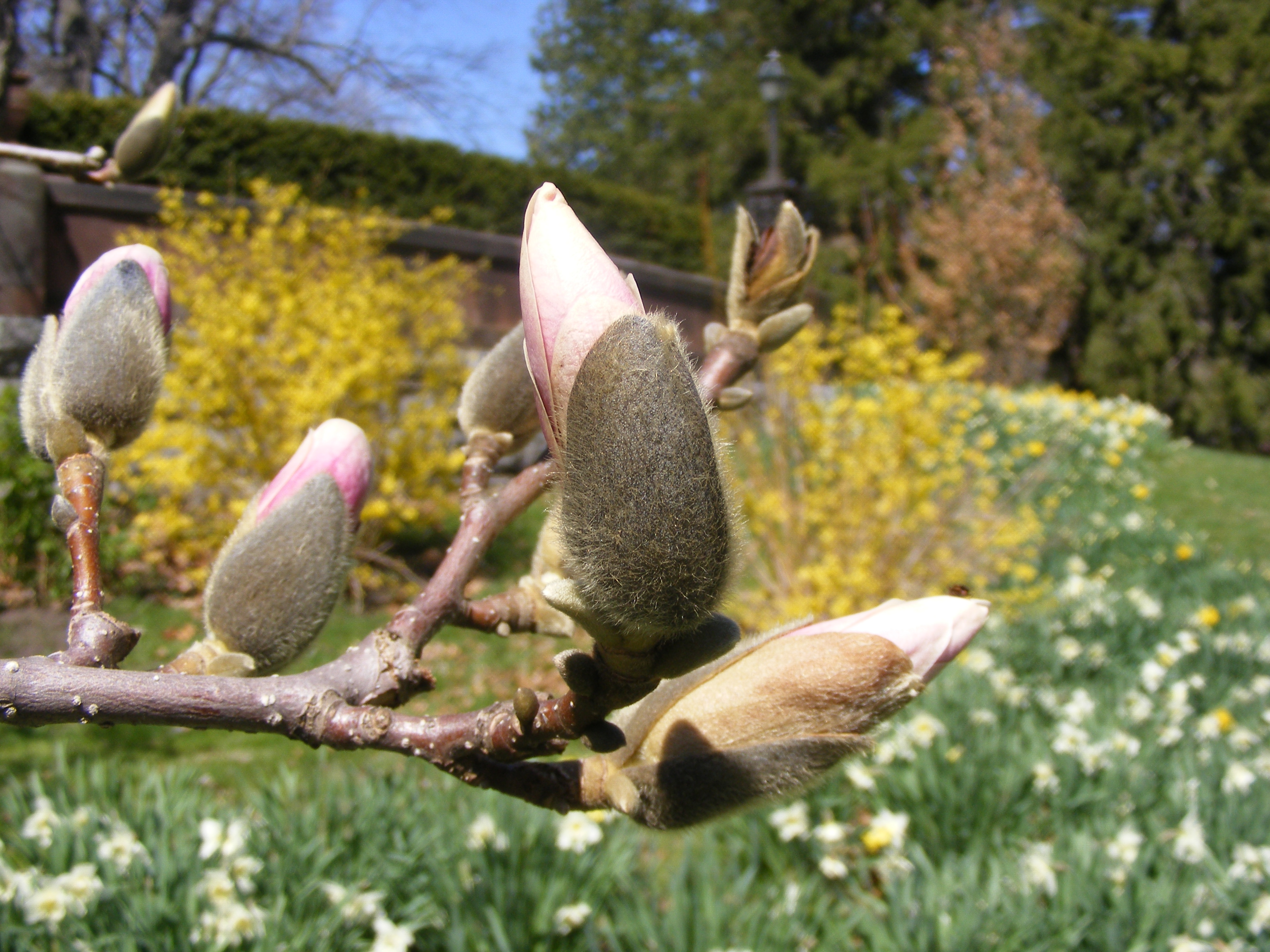
  • If your phone has macro mode, use it to take photos of flowers or bees in flowers. Just be really careful that you keep your camera steady as you take photos in macro mode, any tiny movement can ruin your shot. If you do move, you can try to take the photo again.

MagnoliaBud
Magnolia bud at Sonnenberg Gardens and Mansion State Historic Park. Used macro mode to capture the image.

If you take some photos this weekend, tag us #nystateparks, @nystateparks

References

8 Tricks to Take Better Photos With Your Phone

12 Mobile Photography Tips Every Photographer Should Know

Hiking the Grasslands of Knox Farm State Park

Knox Farm State Park (Knox), located in East Aurora, is the former country estate of the celebrated Knox family. Seymour H. Knox, founding partner of the F.W. Woolworth Company, purchased the property in the 1890’s to train Standardbred and carriage horses. The Knox family made significant contributions to the business, educational, and cultural legacy of Western New York and owned the property until 2000 when it was sold to the state. Today the park consists of 633 acres, roughly 400 of which are grasslands and 100 acres of woodlots and wetland areas.

ClaudiaRosen
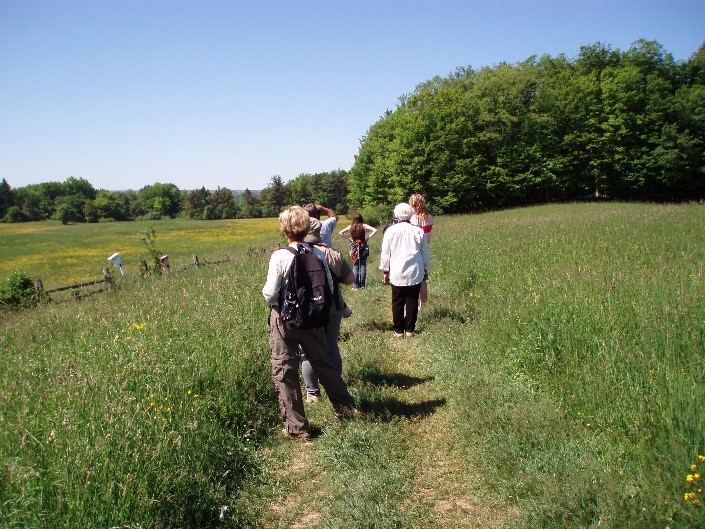
Enjoying one of the many vistas in the park, photo by Claudia Rosen.

The grasslands provide a unique opportunity to enjoy a diversity of life that cannot be found in many other places in Western New York. Visitors can hike, ride horseback, cross-country ski, or snowshoe through the scenic trails. No matter the season, Knox always provides a memorable experience.

Birding
Birding along the grassland trails, photo by Niagara Programs Office.

After the winter thaw, some of the most anticipated yearly arrivals to the park are the boisterous bobolinks and eastern meadowlarks. Both bird species only nest in grasslands and can be found in large numbers throughout the park. Bobolinks breeding in Knox may have migrated from as far away as Argentina, making them the longest migrator of any of the New World passerines, or perching birds! Males perform a captivating display flight making a series of buzzes and whistles that sound like R2-D2 from Star Wars.

Another grassland representative of the park, the eastern meadowlark, is usually heard before it is seen. They can be found along the trails singing their sweet, lazy whistles from atop a fence post or stalk of high grass. Like bobolinks, female eastern meadowlarks build their nests in a small depression on the ground, hidden amongst the tall grasses. Other grassland birds you may encounter are savannah sparrows, field sparrows, and eastern bluebirds.

EMeadowlark_PaulBigelow
Eastern meadowlark, photo by Paul Bigelow

While walking the trails you may also encounter a striking resident of the park, the Baltimore checkerspot  butterfly (Euphydryas phaeton), named for the orange and black colors of George Calvert, the first Lord of Baltimore. The caterpillars of these beautifully marked butterflies can be found in wet areas of the park where they feed on white turtlehead (Chelone glabra). However, they are more frequently encountered along the grassland trails where they make use of English plantain (Plantago lanceolate). Adults can be found nectaring on common milkweed (Asclepias syriaca) and other flowers in the designated butterfly meadow.

fenced-field-knox-farm_gardenwalkgardentalkATT

A walk through the grasslands of Knox will always yield an exciting surprise. From incredible vistas to the theatrical display flights of male bobolinks, you’re guaranteed to walk away with a feeling of bliss. All trails in the park are easy to walk and some paths are even paved, making them accessible to all. If you haven’t made a trip to Knox Farm yet, be sure to mark it on your list and enjoy this unique and diverse park.

For those interested in learning more about the grasslands of Knox, guided hikes are offered through the Niagara Region Interpretive Programs Office.

Matthew Nusstein, Park Naturalist – Niagara Region

Super Simple Campfire Cuisine

Memorial Day and the unofficial kickoff to summer is nearly here.  Many of us will be headed to our favorite state park for a weekend of camping fun or a relaxing afternoon picnic.

If you are looking for some easy recipe ideas for your trip, may we suggest…

Diner-Bacon-&-Egg-Sandwich-On-Roll_Evan-Amos Public domain
MaryAnn’s breakfast sandwich, photo by van-Amos Public Domain

Maryann’s Easy Skillet Breakfast Sandwiches

Ingredients

Bagel or English muffin, 1 per personBacon, 2 slices per person
Eggs, 1 per personAmerican cheese, 1 slice per person

Equipment

Cast iron skilletFork
Spatula

Directions

  1. Cook the bacon in the skillet and remove
  2. Remove some of the bacon fat and grill the bagel or muffin
  3. Remove the bagel or muffin and add the eggs
  4. Cook easy over eggs adding cheese went egg is flipped.
  5. Place the egg/cheese on one half bagel or muffin, place two slices of bacon, and top with the other bagel or muffin half.
  6. Season to taste with salt, pepper, hot sauce or other seasoning.
Pita_pizza_jeffreyw CC wikicommons
Jackson’s pita pizza, photo by Jeffrey, accessed from Wikicommons

Pita Pizza, one of Jackson’s favorites:

Ingredients

PitasTomato sauce (stored in a sealable plastic jar, plastic bags are a no-go)
Shredded cheeseOther toppings optional

Equipment

Spoon for spreading sauceTinfoil is optional but does make a more evenly cooked pizza
Cooking grate optional – you can also use a Y-shaped stick

Directions

  1. Gather all ingredients: pitas, pizza sauce, pizza meat, and toppings and assemble your pizza
  2. Get your campfire hot with low flames
  3. Assemble the pita pizzas and lay them on the grill or Y-shaped stick over the campfire (your Y-shaped stick will not catch on fire as long as it is thick and you are cooking over coals and low flames- do not let the flames touch the stick or pita too much)
  4. Cover the pizzas by tenting some tinfoil
  5. Remove from the fire when the cheese is melted
Pizza-Nachos_towpeasandtheirpod
Stefanie’s skillet nachos, photo by twopeasandtheirpod

Skillet Nachos are one of Stefanie’s favorites:

Ingredients

1 bag corn tortilla chips1/4 cup onion ; diced
1/4 cup black olives; sliced1/2 cup pepperoni; chopped
1 cup cheddar cheese; shredded1/4 cup tomatoes; diced
2 tablespoons vegetable oil1/4 cup sour cream
1/4 cup salsa

Equipment

10” cast iron skillet

Directions

Heat oil in a cast iron skillet. Spread evenly in layers the chips, onions, olives, pepperoni, tomatoes then the cheese. Cover and heat until the cheese melts.

Serve in the skillet with sour cream and salsa.

Recipe from BigOven.com

MacCheeseFoodista
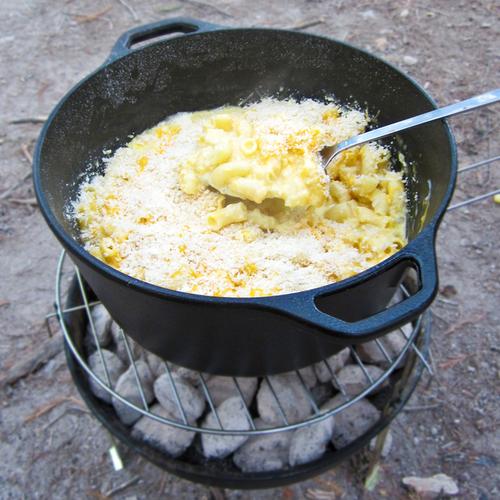
MaryAnn’s Mac & Cheese, photo by Foodista

If you have a hankering for macaroni and cheese, Maryann suggests:

Skillet Mac N Cheese

For camping, measure out the ingredients before the trip and pack in smaller containers or Ziploc bags to save time and space.

Ingredients

2 cups uncooked elbow macaroni (about 8 ounces)1-1/2 cups half-and-half cream
2 tablespoons butter3/4 pound cheese (cheddar and smoked cheddar), shredded
2 tablespoons all-purpose flourOptional toppings: cherry tomatoes

Equipment

10” cast iron skilletWooden spoon
1-1/2 qt. pot with lid

Directions

  1. Cook macaroni according to package directions; drain.
  2. Meanwhile, in a large cast-iron or other heavy skillet, melt butter over medium heat. Stir in flour until smooth; gradually whisk in cream. Bring to a boil, stirring constantly. Cook and stir until thickened, about 2 minutes. Reduce heat; stir in cheese until melted.
  3. Add macaroni; cook and stir until heated through. Top as desired.
Camping_food_outdoor. PXHERE
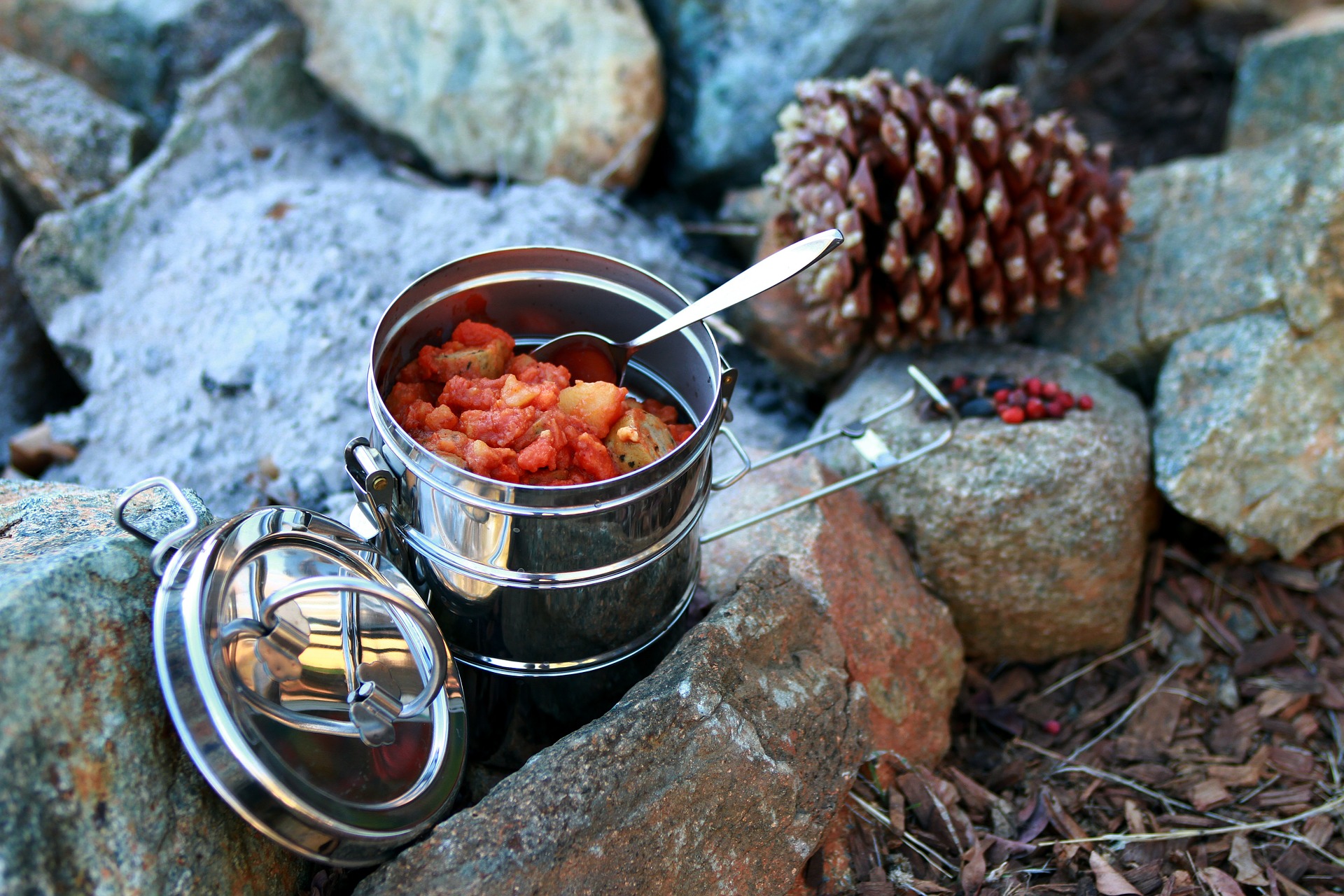
Ro’s one-pot stew, photo by PXHERE

Ro recommends this one pot meal:

Campfire Stew

Serves 12 people

Ingredients

3 lbs. 90% ground beef3 10 oz. cans of concentrated alphabet vegetable soup
1 large onion, peeled and dicedSalt and pepper

Equipment

2-qt. pot with lidKnife
Cutting boardWooden spoon

Directions

  1. Brown ground beef
  2. Add onions and fry until soft
  3. Add vegetable soup and just enough water to keep from sticking.
  4. Cover and heat until hot.

Who can forget dessert?

PeachCobbler_OkieBoys_Flicker
Sarah’s peach cobbler, photo by Okie Boys, accessed from Flicker

Lazy Peach Cobbler from Sarah:

Ingredients

2 (30 ounce) cans sliced peaches, in syrup½ stick (1/4 cup) butter
1 package white or yellow cake mix1 can whipped cream, optional
Ground cinnamon to taste

Equipment

12” camp Dutch oven (the ones with feet and a flat top)

Directions

  1. Place a 12-inch camp Dutch oven over 15 hot charcoal briquettes.
  2. Pour contents of peach cans into oven. Spread dry cake mix evenly over peaches. Sprinkle cinnamon over all to taste. Cut butter into equal slices and arrange on top.
  3. Put lid on top of oven and place 10 hot charcoal briquettes in a checkerboard pattern on top. Bake for about 45 minutes or until done.
  4. Spoon into bowls and add cream, ice cream or whipped cream, if desired.

Recipe from Lodgesmfg.com.

Mock Angel Food Cake from Ro:

Serves 12 people

Ingredients

Loaf of white bread14 oz. can sweetened condensed milk (pull top)
3 cups shredded or flaked coconut

Equipment

Cutting boardKnife
Three small bowls3’ long straight sticks or pie irons

Directions

  1. Open the milk pour in one bowl
  2. Open coconut and pour about half into one bowl
  3. Trim off crusts off the bread
  4. Cut into 1 in long strips place in one bowl
  5. Dip the bread into the milk and then roll in coconut
  6. Toast on a stick over embers, or cook in a pie iron or a reflector oven.

From Cooking Out of Door compiled by Alice Sanderson Rivoire published by Girl Scout of USA, 1960

Allison’s helpful hint for making refrigerated items last: fill 1-gallon jugs or large yogurt containers with water and freezing them to put in your cooler. They will last longer than a bag of ice and your food won’t be swimming in water as the ice melts.

Need more ideas? Check out these books and websites.

Books

Bell, Annie, The Camping Cookbook, Kyle Books, 2010.

Hansel, Marie, The Campout Cookbook: Inspired Recipes for Cooking Around the Fire and Under the Stars, Workman Publishing, 2018

Time Books, The Outdoor Adventure Cookbook: The Official Cookbook From The Ultimate Camping Authority, Oxmoor House, 2017

White, Linda, Cooking on a Stick: Campfire Recipes for Kids, Gibbs Smith, 1996

Websites

Reserve America’s Camping Recipes

Dessert Recipes from Utah State Parks

Campfire recipes from Huron County Parks

Camping Recipes from South Carolina State Parks

KOA’s Camping Recipes

d4893424-d016-4eea-8e1a-1626b637e457_1024
Enjoy your cooking