Spring is in the air and baby animals abound in our State Parks. Look and listen for some of these young critters in our parks. Remember, it is best to watch them from a distance so you do not scare the young animal or its parent. If you see a young animal that looks like it is abandoned, please leave it be. It is most likely fine on its own or has a parent close by and waiting for you to back away. It is fun to explore and watch, but don’t stay in one spot too long so that the animals can go back to their daily activities.
A class gets a close-up look at a young box turtle at Clay Pit Ponds State Park Preserve. The turtle was handled briefly and then released where it was found. If you find turtles crossing the road or trail, you can move them to safety by putting them on the side where they were headed.
A pair of young raccoons peek out from behind a tree at Fort Niagara State Park.
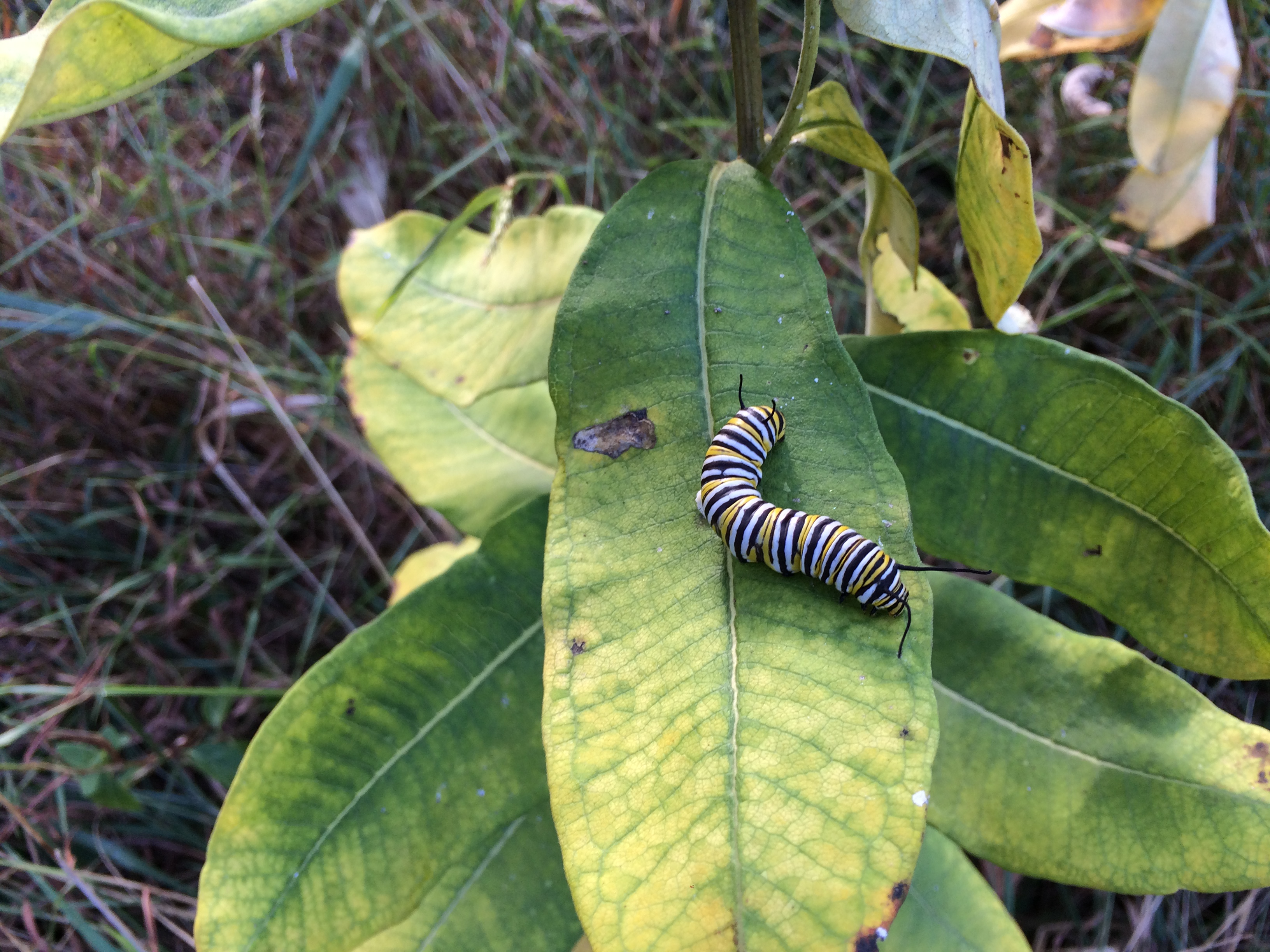
Common milkweed (Asclepias syriaca) is one of the monarch caterpillars preferred plants. You can find milkweed in along unmown trail edges and in meadows in many State Parks
A red fox vixen keeps a watchful eye over a pair of kits at Letchworth State Park.
Warm weather brings the honey bees back into action. Here, a drone honey bee (at left) is hatching from the hive at the Taconic Outdoor Education Center.
Canada geese and goslings at Jones Beach State Park. Adult geese can be pretty aggressive about protecting their babies, so watch quietly from a distance. The goslings can be a lot of fun to watch as they scurry about.
Mother mallard and her many ducklings.
A white-tailed deer fawn hiding in the brush at Letchworth State Park. The mother is close by, watching you and waiting for you to move on. You have to look hard and move quietly to get a chance to see these youngsters in the woods.
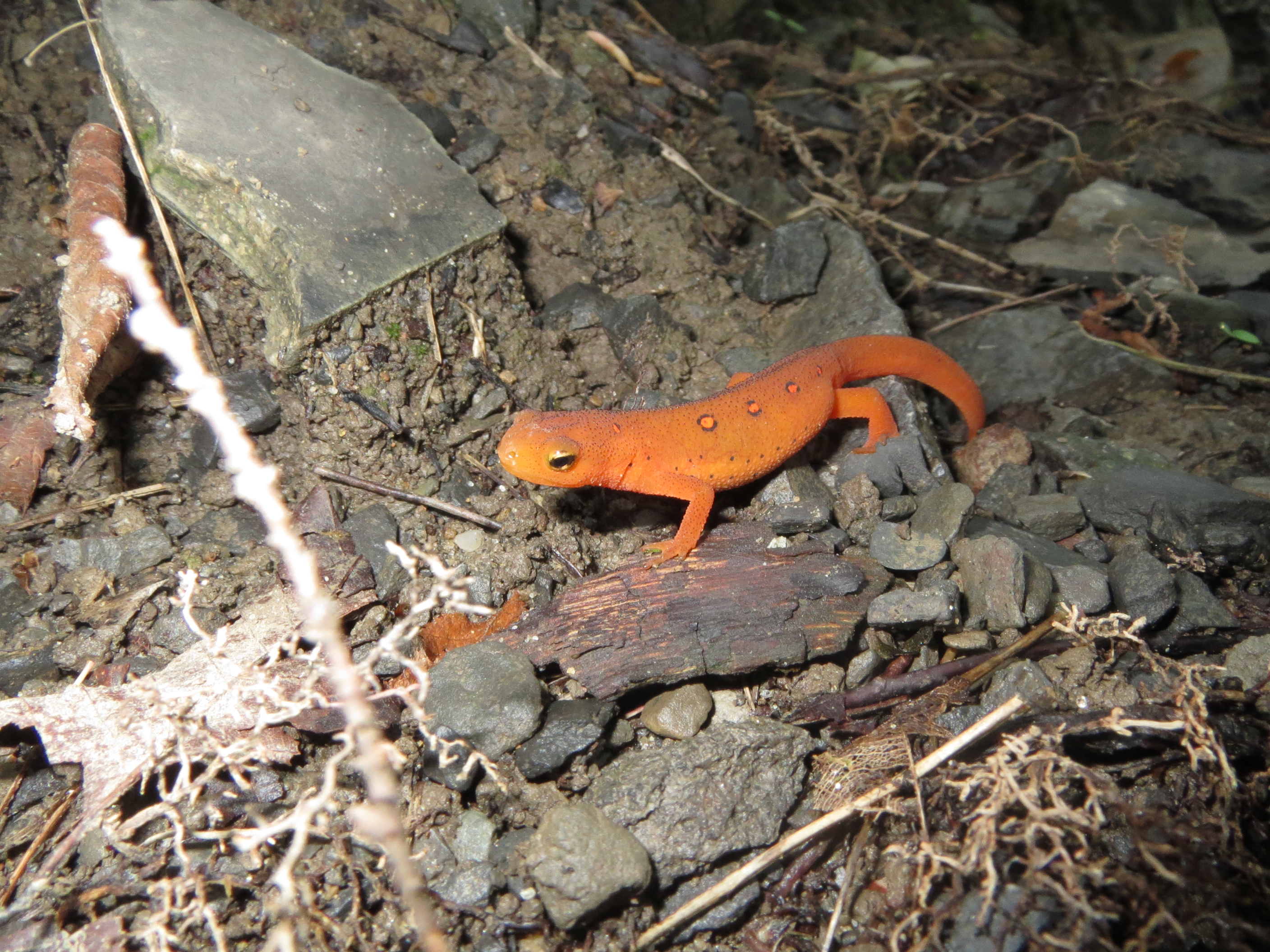
Red efts are the young stage of the aquatic eastern newt (Notophthalmus viridescens). You can hold this one gently, but keep it close to the ground as it will run right out of your hand. This one was seem at John Boyd Thacher State Park.
Red efts are the young stage of the aquatic eastern newt (Notophthalmus viridescens). You can hold this one gently, but keep it close to the ground as it will run right out of your hand. This one was seem at John Boyd Thacher State Park.
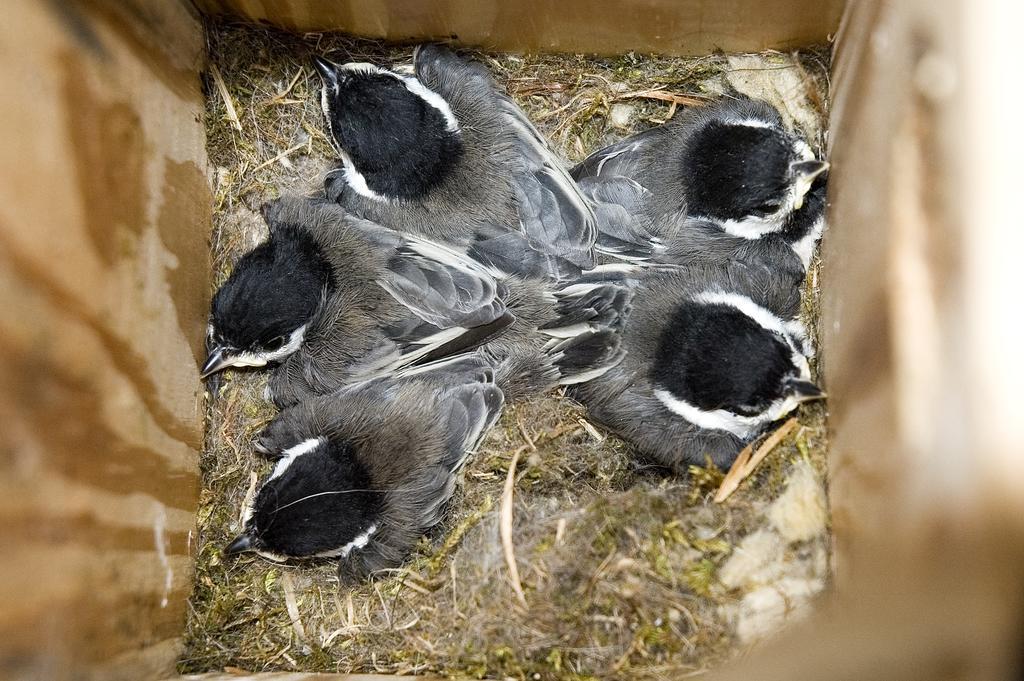
Black-capped chickadees nest in tree cavities or will use birdboxes as seen here.
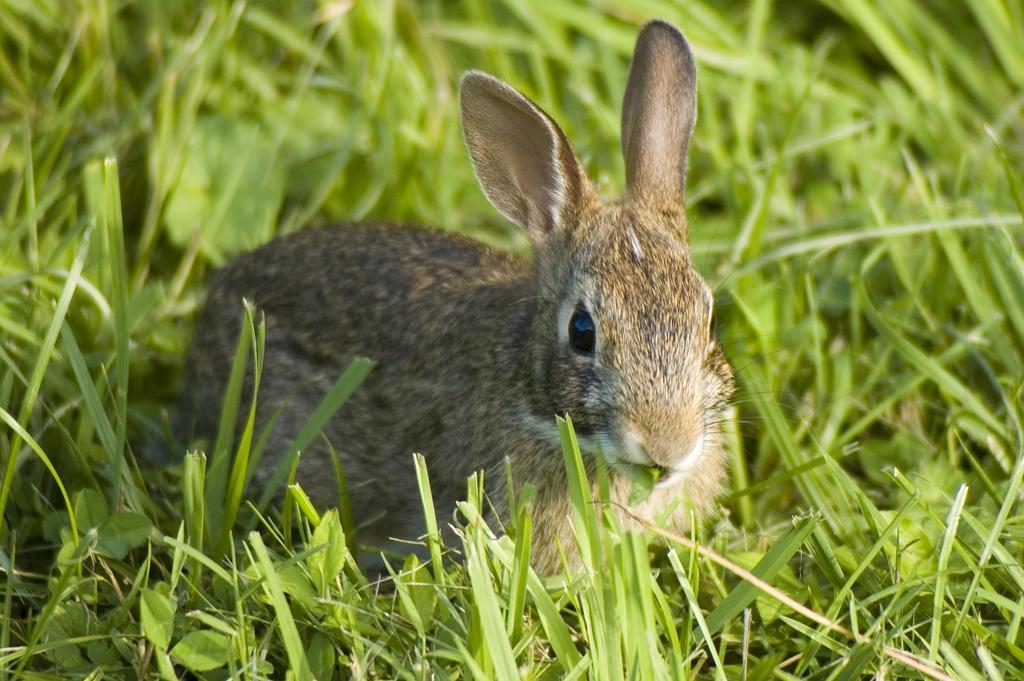
You might see Eastern cottontails in your back yard, local park or in the campground or picnic area in many of the state parks.
Bald eaglet are really big baby birds. This one has been banded by wildlife biologists. The blue and silver leg bands help identify the bird when it is seen elsewhere over the course of its adult life.
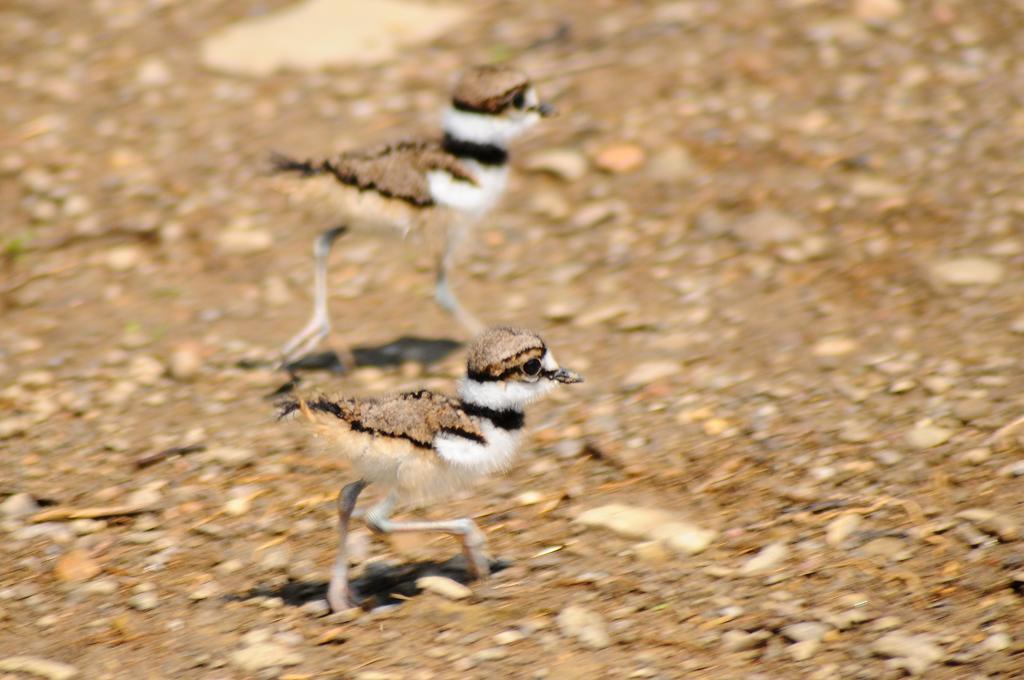
Young killdeer on the run at Allegany State Park. They have a really loud call and may be seen in open areas like lawns and parking lots! Killdeer are precocial birds, meaning they leave the nest shortly after they are hatched.
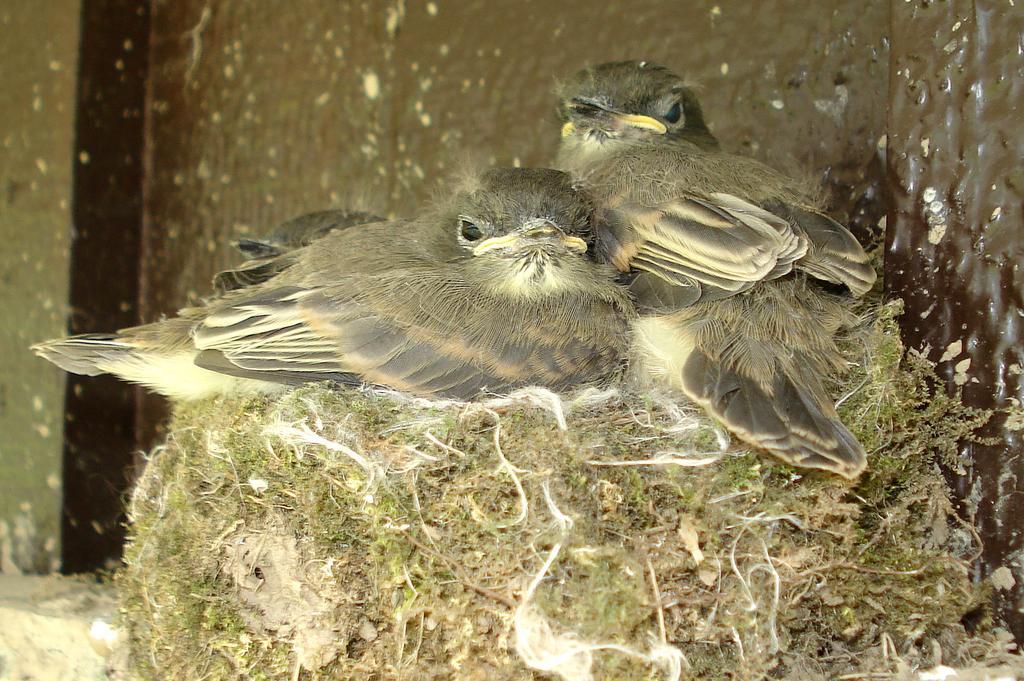
Eastern phoebe nestlings getting a little too big for their nest. Time to try out those wings.
Northern rough-winged swallow fledgling.
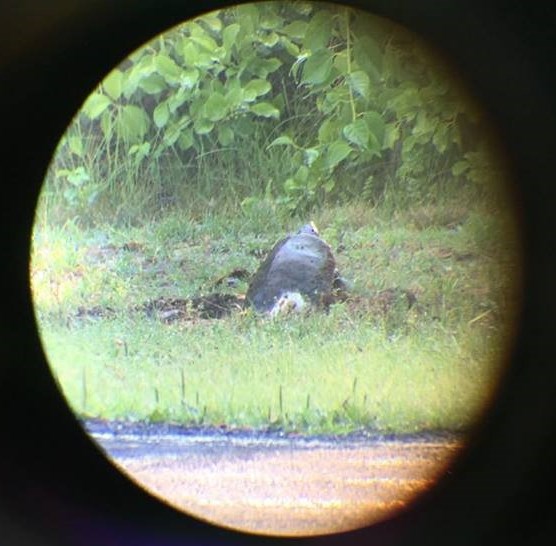
Young snapping turtle covered in duck weed from its pond. Remember that bigger snapping turtles bite, so keep your distance.
A very tiny wood frog, identifiable by the dark mask on its face. It’s ok to hold them gently for a bit, but let them go so they can grow up in their home in the woods.
Woodchuck mom and her pups in Allegany State Park. The white one was known as “Marshmallow.”
A young American woodcock hides in the underbrush, so well camouflaged and thus seldom seen.
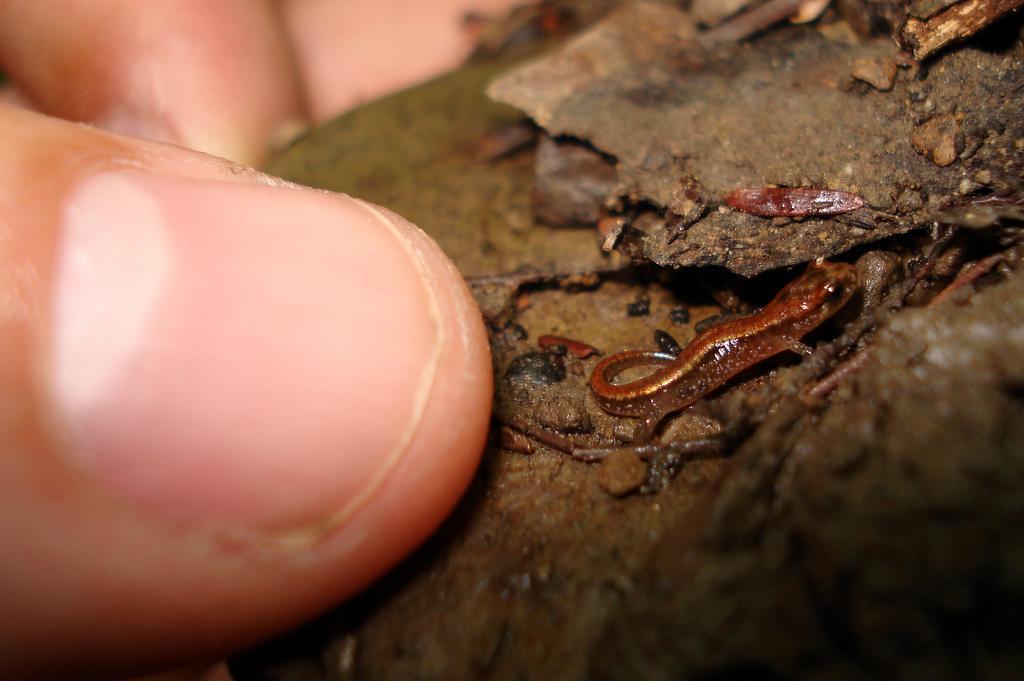
A young dusky salamander found in a wet log at Allegany State Park. It is great to explore and find young animals. Keeping hands off can keep them safe and allow you to observe their behavior in their natural habitat.
Take time this spring to enjoy our State Parks little critters!
Thank you to all staff who contributed to this post.
During the summer months along the Hudson River south of Troy, New York, it’s easy to notice the tides rising and falling, herons wading in the shallow streams, and the giant cargo ships purposefully streaming up and down the river. Difficult to spot, however, are the river’s many turtles. Several varieties call the Hudson home, but the northern (also called common) map turtle is perhaps the most interesting and understudied.
Northern map turtle “Princess” hanging out while her tracker tag dries before her release. Scientists use these tags to locate the turtles for months after capture.
Northern map turtles (Graptemys geographica) are large river turtles that get their name from the intricate circling pattern on their shells, which resemble the elevation lines on a map. These turtles are relatively secretive. In urban areas they have to work especially hard to find what they need to survive. For one thing, turtles need good basking objects—places where they can come out of the water safely and sun themselves to warm up. Fallen trees or rocks make the best basking habitat, specifically ones that are farther out into the water so they can easily escape from potential predators. Because of the tides, many potentially good basking objects aren’t reachable as they are either too high up the bank or underwater at any given time.
Scientists quietly observe northern map turtle “Luna” nesting from a safe distance. This nest received protection from predators and likely hatched successfully months later.
Another problem is finding places to lay their eggs. All turtles lay eggs and the northern map turtle is no exception. Most turtles prefer loose, sandy soil with plenty of sunlight for the eggs to develop successfully. Temperature determines the gender of the tiny map turtle babies—eggs toward the cooler, bottom of the nest often become males, while those eggs toward the warmer top (that therefore get more sun and heat) will become females. But in this highly urban area, good places to nest are few and far between. Natural areas, like those found in some of the State Parks along the river, help provide habitat for them. These spots seem perfect for northern map turtles, but they do tend to have a couple of drawbacks: 1) road and foot traffic and 2) predators smelling the eggs and destroying the nests soon after they’ve been laid. In addition, well-meaning people who are simply curious about these turtles (and with good reason!) approach nesting females that may “spook” and stop laying. People should give nesting turtles some space and observe quietly from a distance.
Probable northern map turtle nest destroyed by a predator. Shells that appear twisted indicate some animal has eaten them, whereas more intact shells mean the nest has likely hatched successfully.
Because good turtle habitat is hard to find in an urbanized section of the river, researchers Dr. James Gibbs and Master of Science candidate Julia Vanaman from the State University of New York College of Environmental Science and Forestry are working to identify what habitats are most important to map turtles. Aquatic plants, basking objects, forest along the river banks, and shoreline development all likely play a role in where these turtles choose to spend their time. Once the researchers understand why a turtle likes an area, they can pass along that information to state and local park managers who can protect habitat and take measures to enhance it (e.g., by creating nesting habitat or increasing the number of available basking objects). With these habitat improvements, hopefully these fascinating turtles will stick around for many years to come.
Note: Northern map turtles (Graptemys geographica) occur across much of eastern North America from the Mississippi River, north to the Great Lakes and St. Lawrence River, and east to small portions of the Susquehanna, Delaware and Hudson river systems. In New York State, the map turtle is considered vulnerable to decline and is recognized as a Species of Greatest Conservation Need (SGCN) in the state’s wildlife action plan. For more information, please check out the following links:
Spring is here and the tree buds are starting to pop. Red maple (Acer rubrum) is among the first to flower, revealing little tassles of red and orange. The leaves will emerge a bit later.
Silver maple (Acer saccharinum) is another early bloomer. Perhaps this tree was named after its silvery flowers.
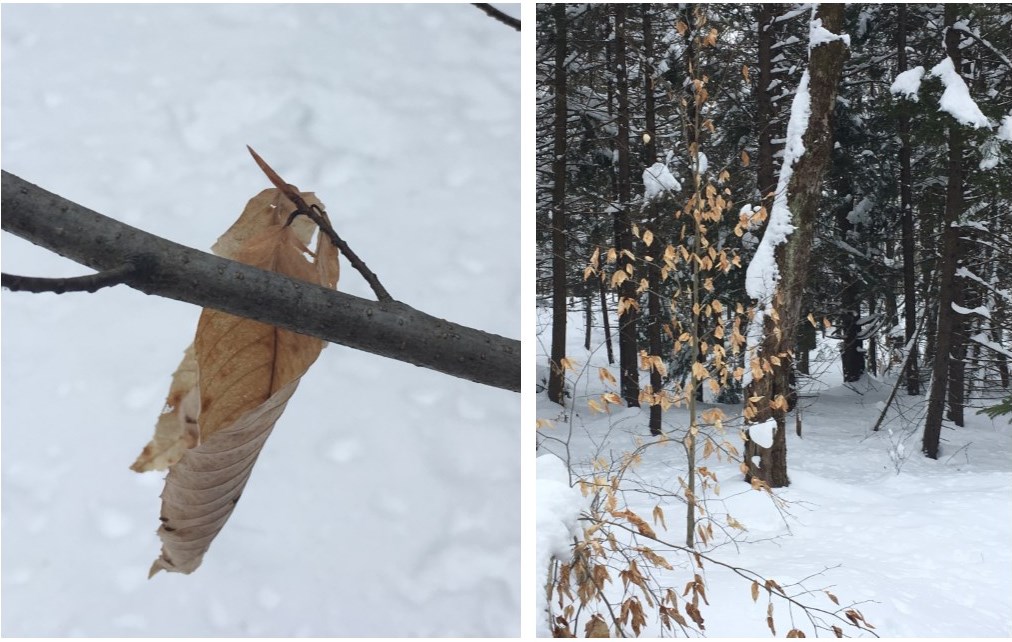
Beech trees are late comers — the long skinny buds and last year’s leaves are still holding tight. They are easy to spot in the woods before everything greens up.
American beech (Fagus grandifolia) bud and leaves.
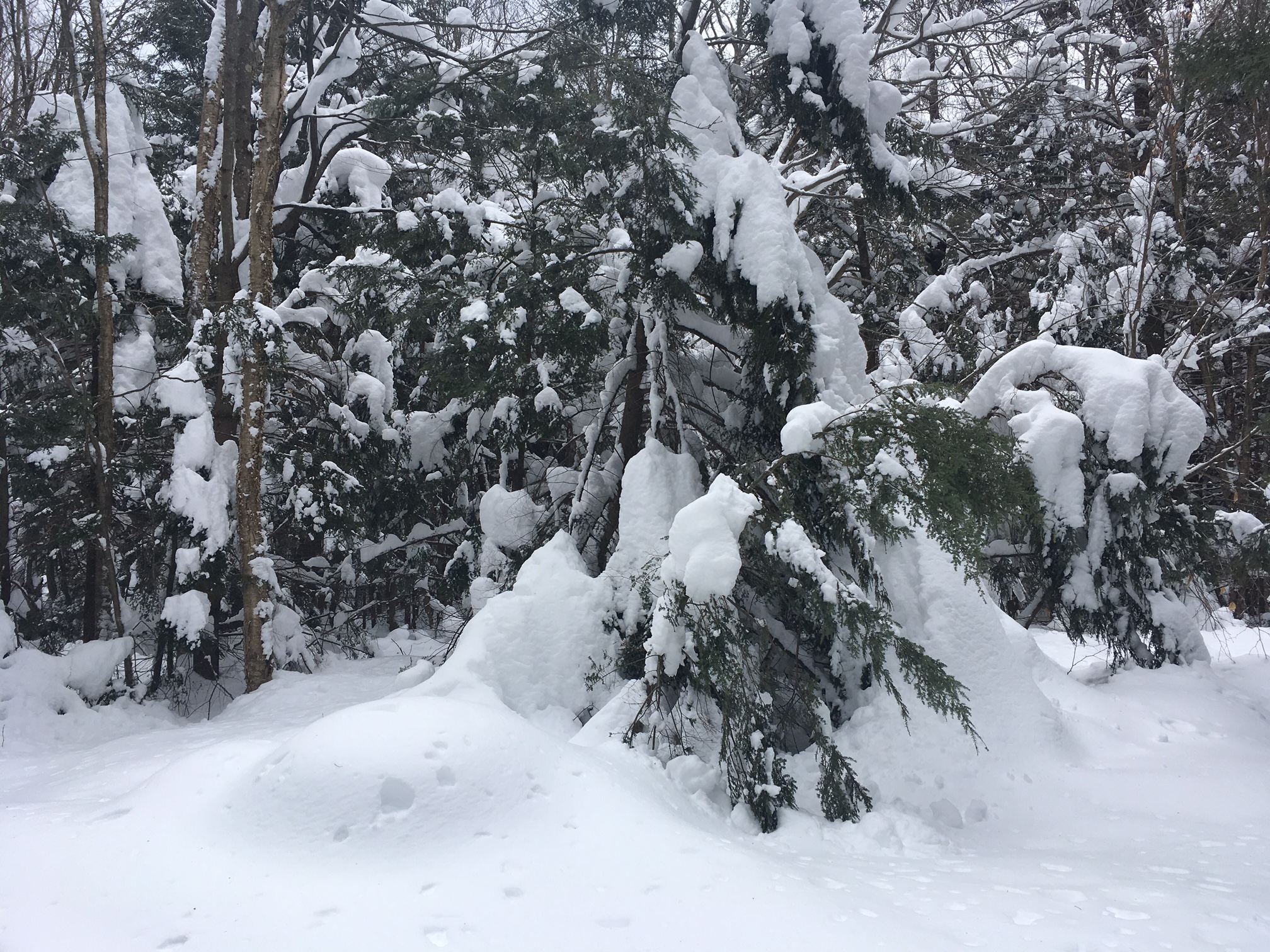
Remember all that snow and how heavy it was? If you find trees arching over a trail or at odd angles in the woods, that may be a sign that it survived a heavy load of snow like these hemlocks. Trees are amazingly resilient and strong.
Hemlock (Tsuga canadensis) branches bent down by the weight of the snow.
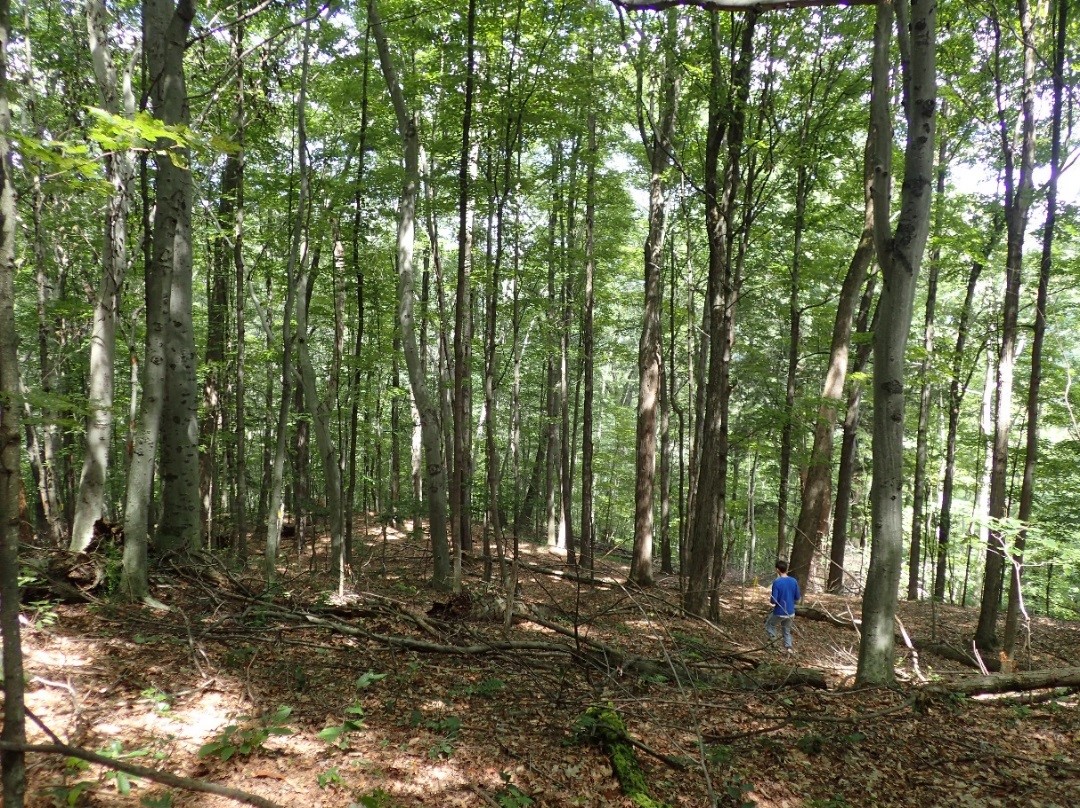
Before long the trees will be greening up and a new season of growth, with the sounds of birds, insects, and wildlife, will return. Take a walk through the woods. Look how small we are compared to the trees!
Immersed in the woods on a trail at Bennington Battlefield State Historic Site.
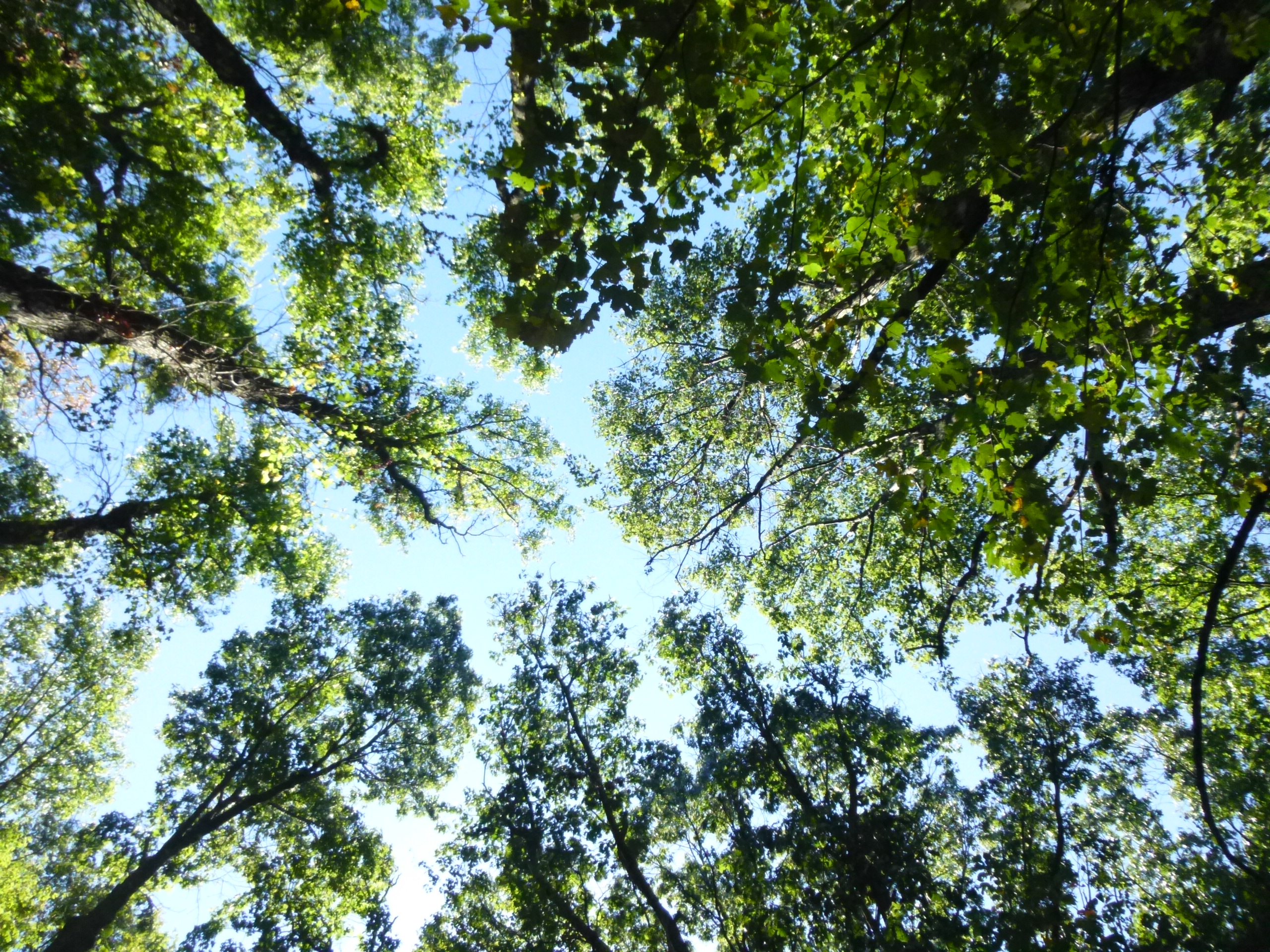
Do you feel inspired, in awe, empowered or claustrophobic under a canopy of trees? More than 80% of NY State Parks and Historic Sites are covered in forest, so you can find spots like this in a park near you.
Tree canopy at Clay Pit Ponds State Park Preserve, Staten Island.
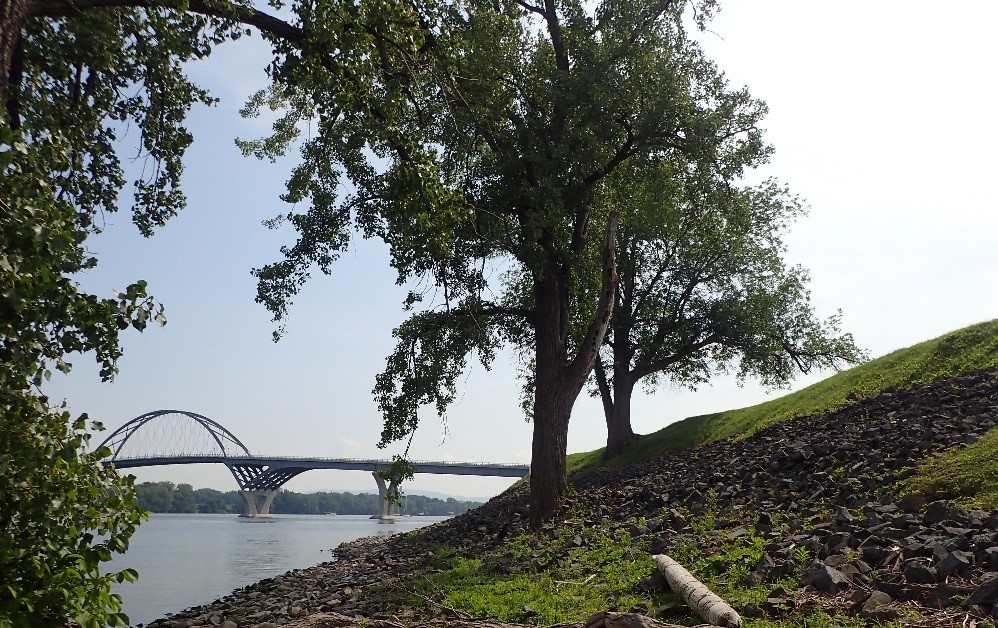
Perhaps you prefer viewing the trees from a distance or sitting under a favorite tree. NYS Historic Sites are great places for this: Crown Point on Lake Champlain (below), Olana on the Hudson, Sackets Harbor on Lake Ontario, Lorenzo in Cazenovia, or Hyde Hall at Glimmerglass are a few spots to enjoy big trees.
Crown Point State Historic Site offers scenic vistas and some beautiful trees.
Take a little time this Arbor Day to appreciate our tall tree friends and spring into action with some walks in the woods or a stroll along a tree-lined path.
Post and photos by Julie Lundgren, State Parks Ecologist, NY Natural Heritage Program, NYNHP. NYNHP works in partnership with State Parks to survey and map rare species and natural communities in the parks to aid in stewardship of their natural resources.
In 1944, President Franklin D. Roosevelt invited a small group of Holocaust refugees to the United States. The War Refugee Board (WRB) was established to determine who should come to the US and where they should be housed. FDR sent Special Assistant to the Secretary of the Interior Ruth Gruber to Italy to bring back 982 men, women, and children. The refugees were from 18 different European countries and most were Jewish. Many had been fleeing persecution for years and had made their way to an Allied-controlled part of Italy. Almost 100 of the refugees had escaped concentration camps such as Dachau and Buchenwald.
The refugees were to be housed at Fort Ontario, which is outside of Oswego, New York, and is now a state historic site. The fort had recently been vacated of troops training to fight overseas. Barrack-like houses were quickly constructed to be the temporary homes for the refugees. The War Refugee Board chose to keep family groups together, and sought people with skills that would be helpful in the camp (for example, seamstresses and carpenters).
Two story barrack-homes and dining hall (Photos from ‘Token Shipment’ by Edward B. Marks)
The refugees took a ship from Italy to New York City, then a train to Oswego. After fleeing for months or years, the haggard group arrived at Fort Ontario on August 5, 1944. Many of the adults wore crude handmade sandals and most children were barefoot.
The refugees admired the beautiful grounds of Fort Ontario, but the tall fence around the compound reminded them of the concentration camps they had fled from. The barrier was a security measure and also served to quarantine them in case they brought communicable diseases. Oswego residents had been surprised to hear about Roosevelt’s invitation, and were curious about the newcomers. As soon as the refugees arrived, Oswegians came to the fence to greet them. Children on both sides played along the fence, and beer and cigarettes were passed over by the Americans.
Refugees receiving shoes, soap, and towels upon arrival (Photo from ‘Token Shipment’ by Edward B. Marks)
In the first days after their arrival at the shelter, the adults were interviewed by WRB staff. They had all passed a background check in Italy, and now officials wanted to determine if the refugees could provide information on Hitler’s Europe which could help the Allied armies.
When the refugees first arrived, many gorged themselves on the food provided during meal times. After years of food scarcity due to the war, they were scared that the plentiful food would not last. Most of the refugees were underweight, so the WRB increased the amount of nutritious food served, particularly milk. The WRB also listened to requests and provided a few traditional ethnic foods such as dark bread, and created a separate dining hall for the Jewish refugees who followed kosher dietary rules.
‘Lightkeeper’s House’ at Fort Ontario painted by refugee artist Olga Mikhailoff, c. 1945, State Parks; and English practice letter by refugee Stella Levi, October 25, 1944, State Parks.
After the initial quarantine period of several weeks, the refugees were permitted to leave the shelter. Children were enrolled in local schools and were bused in from Fort Ontario. Adults were given passes to go into Oswego and had to adhere to a curfew. In addition, the WRB hosted open house events where Oswegians could enter the camp; the main reason was to assuage local rumors that the refugees were living lavishly.
Refugees building wooden music stands and orking in the machine shop(Photo from ‘Token Shipment’ by Edward B. Marks)
Once the refugees became settled, they got to work. A library was created to provide books, English language classes were offered, and a day care was established. The dining halls and laundries were staffed, and private agencies outfitted workshops for creating products for sale, such as music stands. The refugees were paid a set wage, no matter the person’s previous work experience, funded by the WRB and private agencies. In the fall of 1944, a group of refugees left the fort for several weeks to help pick apples in the region.
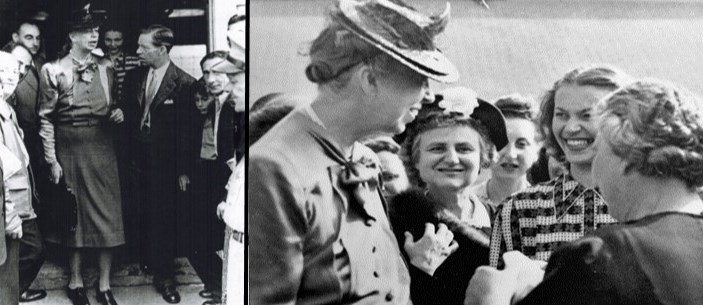
Eleanor Roosevelt visiting Fort Ontario in September 1944 (Photo from ‘Token Shipment’ by Edward B. Marks)
Unlike the refugees coming to the US today, the World War II refugees were not initially granted the right to stay in the country permanently; FDR planned for them to return to Europe after the war was won. After FDR’s death and the war overseas came to an end, however, the WRB and federal government could not decide what to do with the refugees. The majority of the refugees wanted to stay in the US, and Oswegian leaders formed a Freedom Committee to advocate for the refugees to be permanently integrated into the community. Six congressmen of the subcommittee of the House Committee on Immigration and Naturalization visited Fort Ontario to hear testimony from the refugees, Oswego residents, and government officials. Leaders within the refugee committee were selected to give heart-wrenching accounts of what they had experienced during the war, and explain that many had no homes to return to.
Newspaper clipping showing Boy Scout Troop 28 testifying before Congressmen about their desire to remain in the US (Photo from ‘Token Shipment’ by Edward B. Marks) and page from LIFE Magazine, August 1944.
On December 22, 1945, President Harry Truman announced that the refugees who wanted to stay should be permitted to remain in the US. After many months of waiting for a decision, the refugees were overjoyed. Immigration processing began in January and the last of the refugees left Fort Ontario on February 4, 1946. A group of 66 Yugoslavs decided to return to Europe, but most chose to remain in the US. More than half of the refugees were resettled in New York State, and many went to New York City, which had larger immigrant populations. Others were reunited with family in 21 other states.
Senior conservator Heidi Miksch and Park Worker Brian Hibbert remove part of the historic fence at Fort Ontario. (Kevin Fitzpatrick, Palladium Times)
This chapter of American history is being brought back into the spotlight. Last summer, conservators from State Parks removed a section of the boundary fence for the refugee shelter and shipped it to the US Holocaust Memorial Museum in Washington, D.C. “It’s an iconic symbol,” says Paul Lear, historic site manager at Fort Ontario. “It was the meeting place between the townspeople and the refugees.” The fence represents the struggles and successes throughout American history to welcome newcomers to our country: the initial barrier, followed by acceptance.
The new exhibit at the US Holocaust Memorial Museum featuring the fence is scheduled to open in April 2018.
Post by Alison Baxter, Excelsior Service Fellow
Special thanks to State Parks staff members Paul Lear and Amy Facca for pictures and resources.
Featured image: Oswegians conversing with World War II refugees housed at Fort Ontario (Photo from ‘Token Shipment’ by Edward B. Marks)
Resources
Fitzpatrick, Kevin. “Section of Refugee Shelter boundary headed to National Holocaust Museum for new exhibit”. Palladium Times, June 30, 2017.
Marks, Edward B. “Token Shipment: The Story of America’s War Refugee Shelter, Fort Ontario, Oswego, N.Y.” United States Department of the Interior War Relocation Authority, 1946; revised 2017.
Imitation is the sincerest form of flattery. And back in early 2016, Schodack Island State Park Manager John Lowe was musing with Capital Region Audubon Society President John Loz about potential partnership projects. Moreau Lake State Park’s nifty bird blind initiative came immediately to mind.
Designated both a state Bird Conservation Area (BCA) and an Audubon Important Bird Area (IBA), Schodack Island is a bird-watchers mecca waiting to happen. Many birds of conservation concern – bald eagles, great blue herons, cerulean warblers, to name only a few – nest on site. The waterfowl assemblages are impressive. But, aside from two interpretive signs near the parking lot, the Park offered limited amenities or functional improvements to engage the public with its remarkable wildlife resource. As the poet Gertrude Stein might have said, there was “no there there.”
But it takes a village, and in fall 2016, Park Manager Lowe cobbled together a motley assortment of local Audubon operatives, Schodack “friends”, along with community members and rank volunteers to work alongside his very capable Park Operations professionals in constructing three bird watching blinds at strategic spots along the trails at Schodack Island State Park.
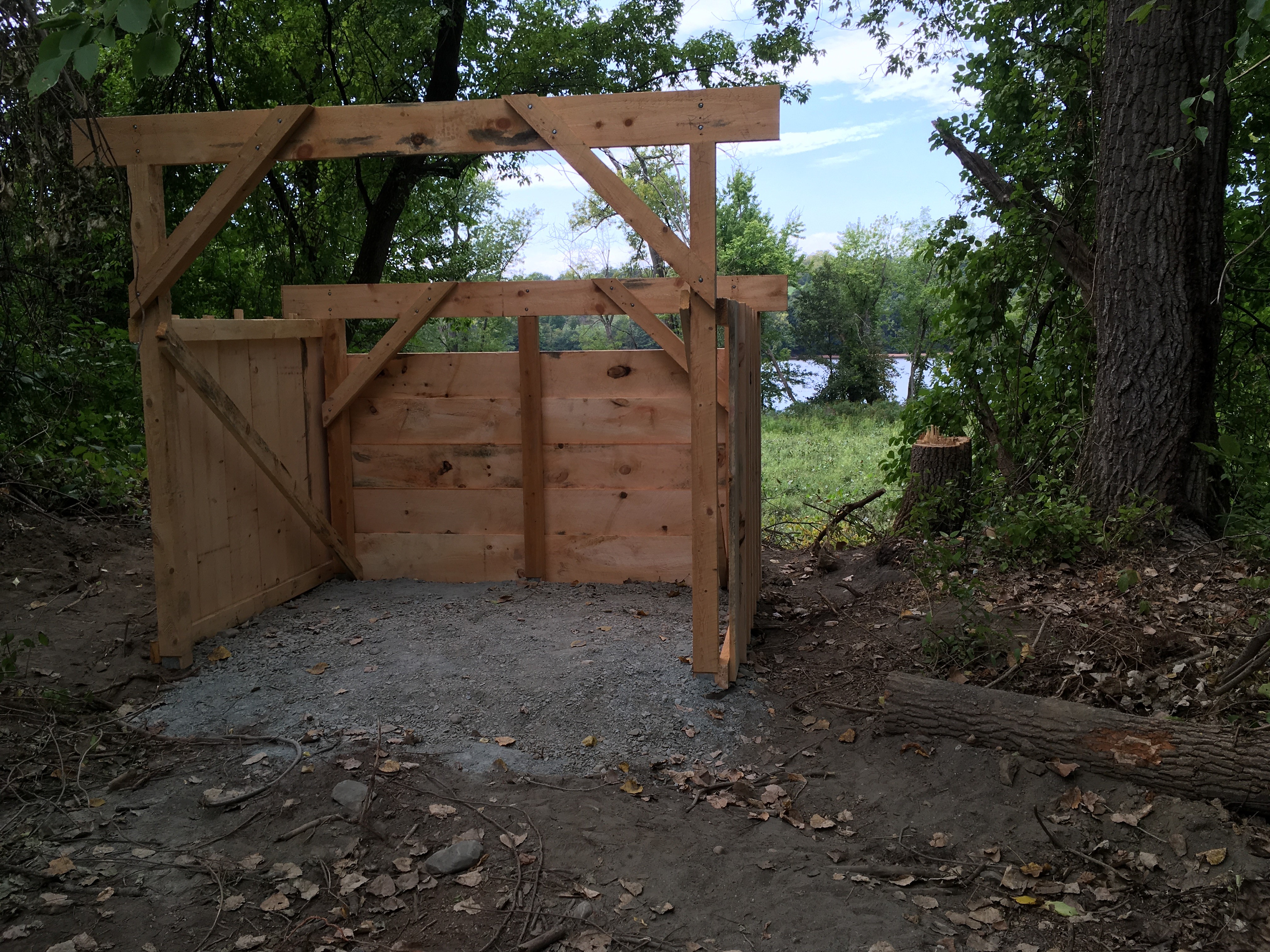
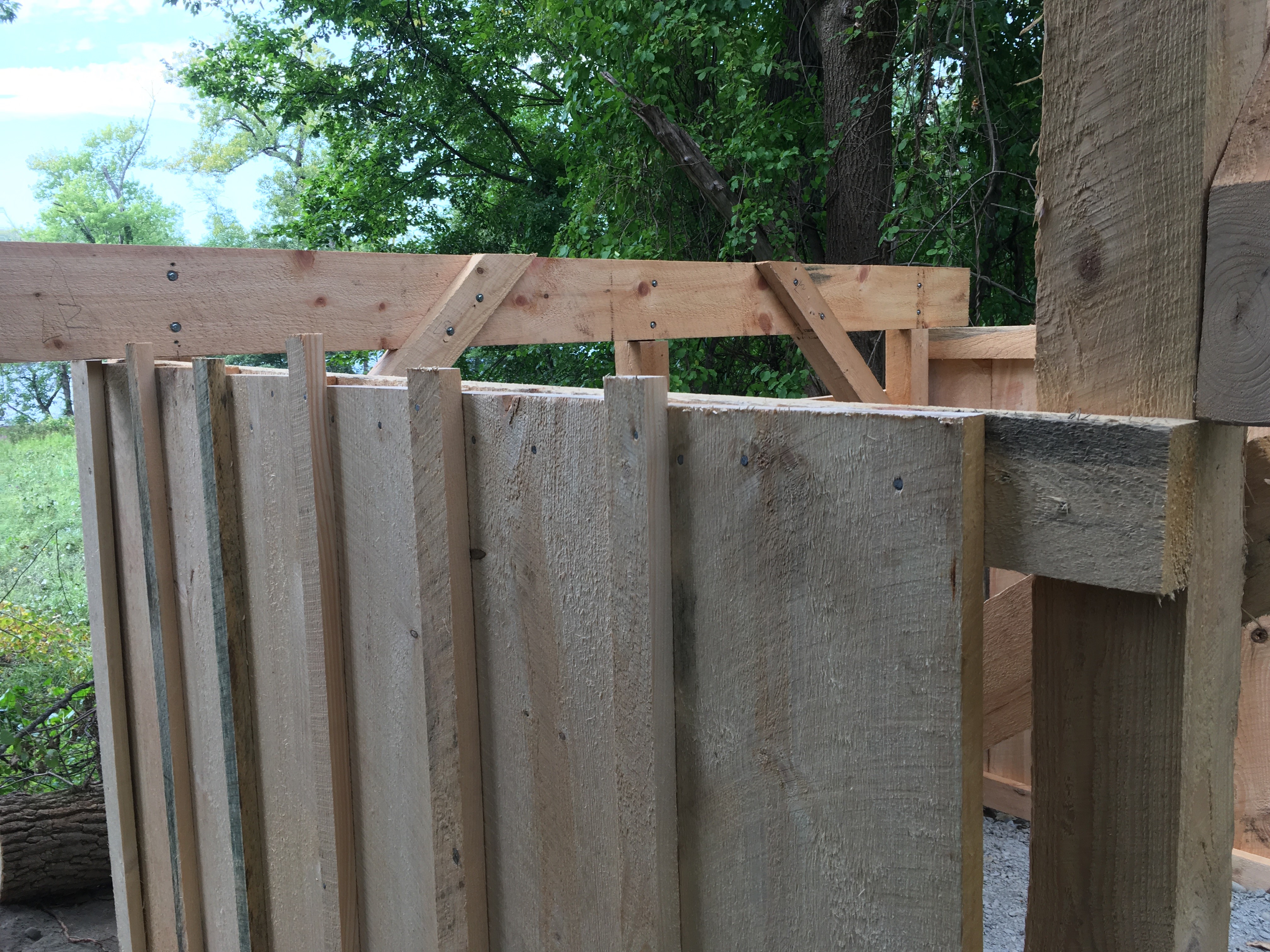
Bird blind in progress, note the nice view of the river beyond the blind. Photo by Audubon Society of the Capital District.
To be honest, the 6’ x 8’ wooden blinds were something that Park Manager Lowe’s handy Park Operations staff could have hammered together themselves in one day, and “done it good”. Lowe wisely summoned the butcher, the baker and the candlestick maker to make sure to give the community real ownership in his initiative. It worked!
Schodack Island State Park’s bird blinds serve several critical customer service needs: the rich viewsheds framed by intelligent placement of the blinds within the Park’s varied landscape draw serious photographers and bird-watchers, casual visitors can enjoy “close encounters of the bird kind” without disturbing wildlife, and also benefit from helpful interpretive signage in each blind.
Visitors are encouraged to enter their own bird sightings in the shelter register to help build the park’s developing scientific record. And the many joggers, dog-walkers and hikers who frequent the trails daily will welcome these arresting destinations within the park’s long and rather placeless linear trail system, 13 miles total with few rewards. So now, there’s a “there” there!
Realizing the park’s tremendous potential for developing bird tourism, Park Manager Lowe has been working closely with the Friends of Schodack Island State Park and the Audubon Society of the Capital Region to articulate a long-range vision which maximizes both the public accessibility to and the protection of the Park’s extraordinary avifauna, including planning to embark on a fourth bird-watching blind this spring.
The Audubon Society of the Capital Region mustered three more volunteer crews in spring 2017 to help stain the bird blind exteriors. And in summer 2017, the Audubon Society won a grant to oversee the design, fabrication, and installation of informative interpretive panels for each of the blinds. You might call it a model collaborative project. Or just a diligent Park Manager making sure that all the players get in game.
Under the leadership of former State Parks Deputy Commissioner Al Caccese, Audubon New York, the state-wide affiliate of the National Audubon Society, began an outreach initiative in 2009 which Al lovingly dubbed “Audubon in the Parks” to advance bird conservation in New York’s State Parks. At the time, Al was the Executive Director of Audubon New York, so the partnership made perfect sense. Through its 27 local chapters, Audubon New York has provided a wide variety of programs and services at over 50 state park facilities throughout New York, particularly targeting those designated as BCAs or IBAs.
For example, the Audubon Society of the Capital Region, Audubon New York’s Albany affiliate, has waged war with invasives, sponsored lectures, set up bluebird boxes, conducted bird walks and/or participated at festivals at every state park or historic site within its purview: Schoharie Crossing, Thacher and Thompsons Lake, Schodack Island, Peebles Island, Saratoga Spa and Grafton Lakes. The Audubon in the Parks partnership has done much to advance the mission and goals of State Parks, while forwarding the Audubon agenda.
We thank the butcher, the baker and the candlestick maker.
An example of the excellent craftsmanship that went into the building of the bird blinds, photo by Audubon Society of the Capital District.















 New York State Parks and Historic Sites Blog