February vacation is a great time to get out and explore our state parks. Many parks are offering free programming to keep you and your family occupied this February break. Here is a sampler of just some of the many programs State Parks is offering this year. Our programs include active outdoor fun, wildlife ID, and parties!
Got a hankering to try ice fishing? Then head out to Glimmerglass State Park in central NY on February 21, Moreau Lake State Park, north of Saratoga Springs, on February 22, or John Boyd Thacher State Park, Thompson Lake just west of Albany, on February 24 for a free fishing clinic led by Department of Environmental Conservation staff. All the fishing gear will be provided during these workshops. Remember that proper clothing is critical for safe ice fishing outings. Dress warmly, paying extra attention to your head, feet and hands – dressing in layers is essential.
A success catch at Glimmerglass State Park, photos by State Parks
Setting the ‘tip-up’ line at Glimmerglass State Park, photo by State Parks.
Perhaps you are hoping to get to know our natives. Many parks are offering wildlife and plant identification walks, ranging from seal walks at Jones Beach State Park on Long Island to an owl prowl at Max V. Shaul State Park in the northern Catskills, as well as a winter tree identification workshop at Knox Farm State Park in western New York.
Geese gingerly step on frozen freshwater pond at Caumsett state Park.
You may be able to see harbor seals resting at low tide during a seal walk, photo by Maritime Aquarium of Norwalk.
If you are looking for a little adventure, check out the snowshoeing and cross-country skiing trails at Parks across the state or join in on a guided hike. The Lake Erie ice volcanos are particularly exciting, and you can visit them at Evangola State Park in western New York.
Snowshoe lesson, photo by State Parks.
Posing inside an ice volcano at Evangola State Park, photo by State Parks.
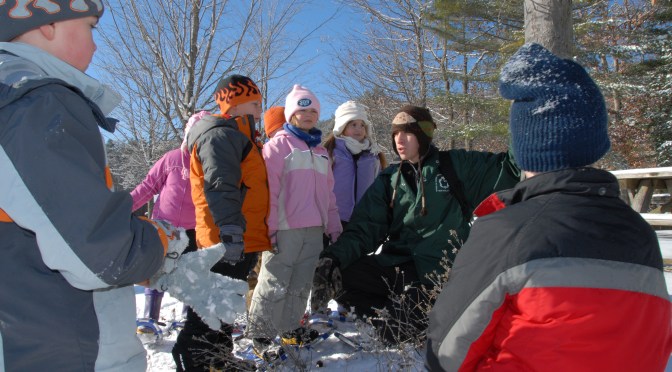
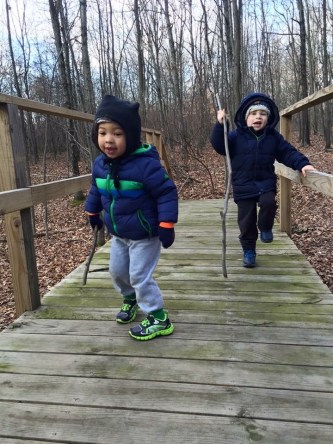
Many state parks across the state will be offering programs for preschoolers during February vacation.
February is a great time to get the young explorers outdoors, photo by State Parks.
Maple sugaring starts in February! Clay Pit Ponds State Park Preserve on Staten Island Caumsett State Historic Park Preserve on Long Island, and Letchworth State Park south of Rochester will have maple programs this week. Visitors can learn how to identify and tap maple trees, and the sugaring process.
As the 2018 Winter Olympics kick off in PyeongChang, South Korea, figure skating, speed skating and hockey will be among the marquee events. Generations of young skaters will be inspired by the aerial feats, athletic prowess and teamwork showcased on the ice, while dreaming of standing on the medal podium proudly representing their country.
For amateur and recreational skaters who want to enjoy some quality ice time with family and friends a little closer to home, select New York State Parks offer a variety of locations and experiences throughout the winter months, including rinks and many frozen ponds. From Riverbank’s roof-top skyline in Manhattan to the oval at historic Bear Mountain to the quiet beauty among the pines in Saratoga, these scenic settings are the perfect backdrop to embrace the weather in the northeast and stay active in the outdoors.
Whether your specialty is a triple lutz, or you skew closer to a full-time klutz (or somewhere in between), ice skating is a fun way to exercise for people of all ages. The New England Baptist Hospital and M. Kathryn Steiner, M.D., the physician for the Skating Academy of Boston, recently noted the many fitness benefits of skating including strength, flexibility and balance.
For ice enthusiasts who prefer a net and some action, pond hockey is more popular than ever before. Both Chenango Valley and Saratoga Spa State Parks host annual multi-day tournaments that draw visitors from across the U.S. These, together with parks such as Schodack Island, Grafton Lake, and Glimmerglass, hold winter festivals and regular programs throughout January and February with some offering instruction to help grow new legions of skaters.
Along with inspiration for general winter recreation, the State Parks’ website (parks.ny.gov) offers a full list of State Parks with ice skating. Many sites offer skate rentals, lessons, special events, warming huts and refreshments. Call ahead for conditions and hours, and be sure to carve out some ice time for yourself this season!
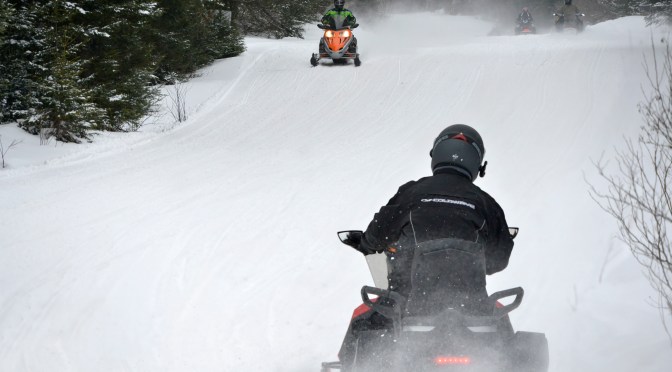
Snowmobile trails at Letchworth State Park offer more than 25 miles of trail passing through some of the most beautiful scenery in Wyoming and Livingston Counties. The corridor trail (C3) extends through most of the length of this 17-mile-long park. Entering the park in the North from the Genesee Valley Greenway, the corridor trail follows along the main park road.
Between the Perry and Castile entrances, the trail is the main park road. This stretch of the corridor gives riders spectacular views of park gorge overlooks not seen by many patrons during the winter months. On the corridor, south of the Castile entrance, riders can view the iconic Archery Field Overlook of the Genesee River Gorge. Continuing south, the corridor trail passes by the Humphrey Nature Center and Trailside Lodge where it then traverses the mature oak-hemlock forests of the park.
Riding at night requires a Genesee Region night time snowmobile riding permit. For more information regarding snowmobiling, winter accommodations, trail conditions, and permits online or call the Letchworth State Park Visitor Center at (585) 493-3600.
—
State Parks reminds all snowmobilers that their machines must be registered and insured to enjoy the trails in Letchworth State Park and the over 10,000 miles of additional trails throughout the state. The bulk of the registration fees is directed to the many volunteer-run snowmobile clubs across the state for trail development and maintenance. For information on joining a snowmobile club, visit New York State Snowmobile Association.
To help ensure a safe and enjoyable season, OPRHP offers the following tips:
– Young riders are required to attend a snowmobile safety course, but all riders can benefit from safety education. State Parks maintains a list of snowmobiling safety classes, check for course availability and age requirements.
– Use caution while traveling across frozen waterways. Check local ice conditions (ice should be at least 5” thick,) carry or wear a flotation device and self-rescue picks, limit travel at night, and “if you don’t know, don’t go.”
– Use the buddy system, leave a travel plan, and emergency contact information with someone at home.
– Wear proper clothing and remember that helmet use is required whenever operating a snowmobile. Using of a rigid chest and back protector is also recommended.
Grafton Lakes State Park is another great place to go snowmobiling. Grafton Trail Blazers will be offering free snowmobile rides during WinterFest, January 27, 2018.
Post by Bennett Campbell and Doug Kelly, State Parks
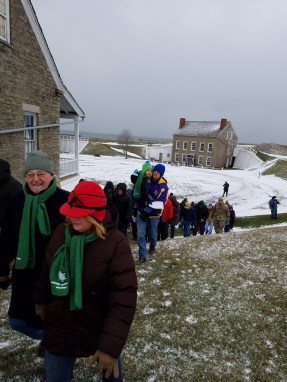
Join the “Military Musicology, Walking Tour of Old Fort Ontario”
What better way to kick off 2018 than to join family and friends in the outdoors on New Year’s Day for a First Day Hike. On January 1, New York State Parks and the state Department of Environmental Conservation (DEC) will be hosting a set of guided hikes as part of a nationwide effort to encourage people to get outdoors. Now in its 7th year, New York’s First Day Hike (FDH) program will offer 75 hikes across every region at state parks, historic sites, wildlife areas and trails.
Each year, this enjoyable holiday tradition draws more and more visitors with multiple hiking options from Western New York to the tip of Long Island. Additionally, since some FDH events are held in the afternoon, there’s no need to get up early for those who like to celebrate New Year’s Eve with gusto!
Hikes are being offered at 59 state parks and historic sites, with some facilities offering multiple hikes for different age groups, skill level and destinations within the park; and at 14 DEC wildlife areas, trails and environmental educations centers. Staff from State Parks and DEC, along with volunteers will lead these family-friendly walks and hikes, which range from one to five miles in length, depending on location and weather conditions.
“First Day Hikes have become a popular outdoor tradition for families and friends; a healthy way to kick off the New Year amidst the stunning beauty of our state’s most scenic natural backdrops,” said State Parks Commissioner Rose Harvey. “This year’s program includes an expanded variety of winter walks and hikes and is the perfect reminder that New York’s parks are open year-round, offering world-class recreation and enjoyment for people with varying interests and abilities.”
Some host locations welcome dogs on leashes and several have flat, even surfaces for strollers. Participants are encouraged to contact the park for information and pre-registration where noted. A sample of this year’s programs feature a seal walk, a walking history tour, a snowshoe waterfall hike, pet-friendly treks, gorge walks, military musicology, canal towpath walk, and more. New entries for 2018 include a bird survey, full-moon hike, mountain trails, views from a fire tower, and a walk through a maritime forest.
Letchworth State Park will offer four different hikes from Letchworth CSI – Who Done It: Journey for young children to a fast-paced hike to the Great Bend Gorge.
The First Day Hikes program originated in neighboring state Massachusetts in 1992 for their state parklands. Since 2012, the program has been held in all 50 states and branded as America’s State Parks First Day Hikes. January 2018 marks the year that First Day Hikes will become an international movement with Ontario Parks in Canada offering these family favorites as well.
If conditions permit, some First Day Hikes may include snowshoeing or cross-country skiing with equipment for rent if available or participants can bring their own. Many host sites will be offering refreshments and giveaways. A map and details about hike locations, difficulty and length, terrain, registration requirements and additional information are listed at parks.ny.gov.
Last year’s event featured nearly 4,000 participants, who hiked a total of 7,900 miles amidst New York’s winter beauty. So, start your own tradition, grab some sturdy footwear and a warm jacket, and join in the fun!
Evangola State Park FDHers, hiked along Lake Erie.
Walking through the snow at Moreau Lake State Park just north of Saratoga Springs.
FDH are for both young and not-so young. This pair was at Wellesley Island State Park along the St. Lawrence River.
Happy Halloween! Children all over are dressing up in their costumes to head out trick-or-treating. But these children, disguised as spooky vampires or Wonder Woman, aren’t the only ones with a few tricks up their sleeve. Animals can use disguises too! Some animals have actually developed physical or behavioral characteristics that copy other species or objects, a strategy called mimicry. Using appearances, sounds, smells, or behaviors, mimicry provides an animal with some advantage, usually protection from predators. But unlike kids throwing on a costume for a day, the mimic’s display isn’t a conscious choice by the animal; rather it is the product of millions of years of natural selection. Because the mimicry helps the animal survive in some way, those characteristics are more likely to be passed on to the next generation.
There are many types of mimicry. Batesian mimicry, named after the English naturalist Henry Walter Bates, is one of the most common forms and occurs when a tasty or vulnerable creature mimics an unsavory or dangerous creature. Below are several examples of Batesian mimicry that can be found right in your backyard!
Hoverflies are excellent mimics, warding off predators with their coloration. These small flies are harmless, but with their black and yellow stripes they look like stinging bees and wasps. They can often be seen hovering at flowers, feeding on nectar and pollen. Can you tell which two photos are of hoverflies and which two are not?
Hoverfly, photo from Wikimedia CCO
Honeybee, photo by David Cappaert, Bugwood.
Hoverfly, photo by David Cappaert, Bugwood.
Paper wasp, photo by David Cappaert, Bugwood.
Here’s another example of mimicry through colors and patterns. “Eyespots” may mimic the eyes of a larger animal and serve to scare away potential predators, especially young birds. Eyespots can frequently be found on the wings of butterflies and moths, as well as on caterpillars.
Polyphemus Moth, photo by Kelsey Ruffino, State Parks.
Common Buckeye Butterfly, photo by Jerry A. Payne, USDA Agricultural Research Service, Bugwood.org
These two species of caterpillars have clear eyespots near the front of their bodies. These body markings could help the caterpillar mimic the look of a snake or other more threatening predator. The actual eyes are located on the head, which is the smaller bump at the base of the large pseudo-head.
Spicebush Swallowtail Caterpillar, photo by Jerry A. Payne, USDA Agricultural Research Service, Bugwood.org
Eastern Tiger Swallowtail Caterpillar, photo by Chris Evans, University of Illinois, Bugwood.org
Another deception – the eastern tiger swallowtail caterpillar mimics the appearance of bird poop in its early stages, which reduces the likelihood of getting eaten by birds or other insects.
Eastern Tiger Swallowtail Caterpillar – Jerry A. Payne, USDA Agricultural Research Service, Bugwood.org
A second type of mimicry is called Müllerian mimicry, named after the German naturalist Fritz Müller, in which several species that are equally harmful or unsavory have evolved with shared characteristics. Predators quickly learn to avoid that characteristic, which then benefits all the mimicking species. One example of this is the monarch and viceroy butterfly. Scientists have determined that birds tend to dislike the taste of both butterflies. By sharing a similar color and pattern, these butterflies are advertising that they are not tasty and birds are more likely to avoid both species.
Viceroys and monarchs can be difficult to tell apart. If you look at the lower wing of the butterfly, viceroys have a bold black line that monarchs do not have. Also, viceroys are usually smaller than monarchs.
Viceroy Butterfly, photo by David Cappaert, Bugwood.org
Monarch Butterfly, photo by David Cappaert, Bugwood.org
Mimicry is not only used by animals, but plants and fungi use it as a survival strategy too. There are orchids that have evolved to resemble female insects, so that male insects will be attracted to the fake mate and will collect and/or deposit pollen when they land on the flower. There are fungi that mimic the smell of rotting meat to attract insects, which then help spread the fungi’s spores. There are plants that very precisely mimic the chemical signals released by insects during mating season, which attracts more potential pollinators to the plant.
Mimicry plays a very important role in the survival of many species. It is a complex system involving plants and animals, predators and prey alike, each trying to deceive for safety, food, or propagation. So this Halloween, when kids are in full disguise, think about all the plants and animals that have precisely developed costumes too. If some prey can’t come up with a good trick, the predator may be in for a treat!
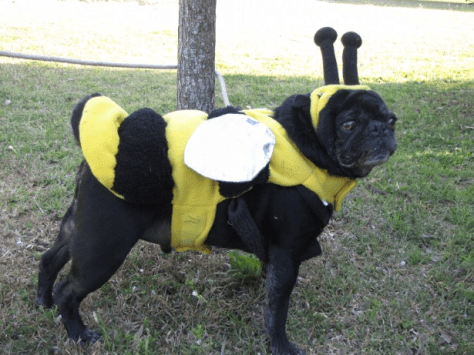
Similar to the hoverfly, domestic dogs have sometimes been known to mimic bees, though with much less success – Happy Halloween! Image – Public Domain
Post by Kelsey Ruffino, Student Conservation Association and State Parks
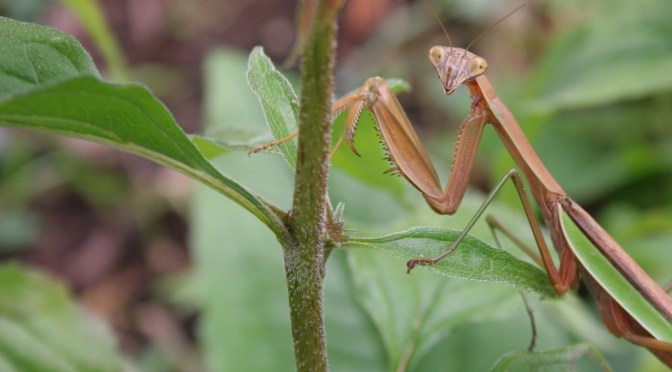
Featured image: praying mantis by Lilly Schelling, State Parks










 New York State Parks and Historic Sites Blog

_(14374841786)_-_cropped.jpg)