A highlight to any winter beach walk on a Long Island State Park beach is the sighting of a seal, either hauled out on sand bars during low tide or swimming off the beach at high tide.
Harbor and grey seals, and more rarely hooded, ringed, and harp seals can be seen off of Long Island from late fall through early spring. These seals belong to the family Pinniped, meaning “feather-footed” or “wing-footed.” They are considered true seals – meaning they have no ear flaps, their front flippers are short, and their necks are short. Seals are excellent divers; they can hold their breath for 40 minutes, swim up to eight miles an hour, and dive up to 600 feet. They eat a variety of fish and invertebrates including crabs and squid. Thanks to a thick layer of fat and a dense coat seals keep warm in winter.
The best time to see large groups of seals is at low tide when they haul out of the water to rest and sleep on sand bars and rocks. When seals are hauled out at low tide they hold their head and tail up in a “banana-shaped” position. Be sure to watch the seals from a distance since seals can be easily scared.
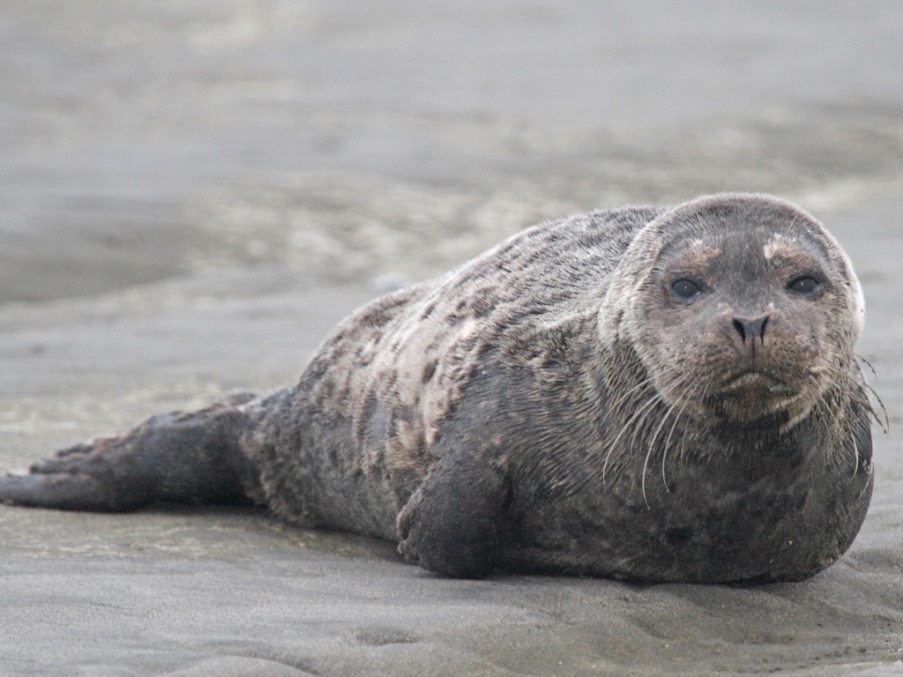
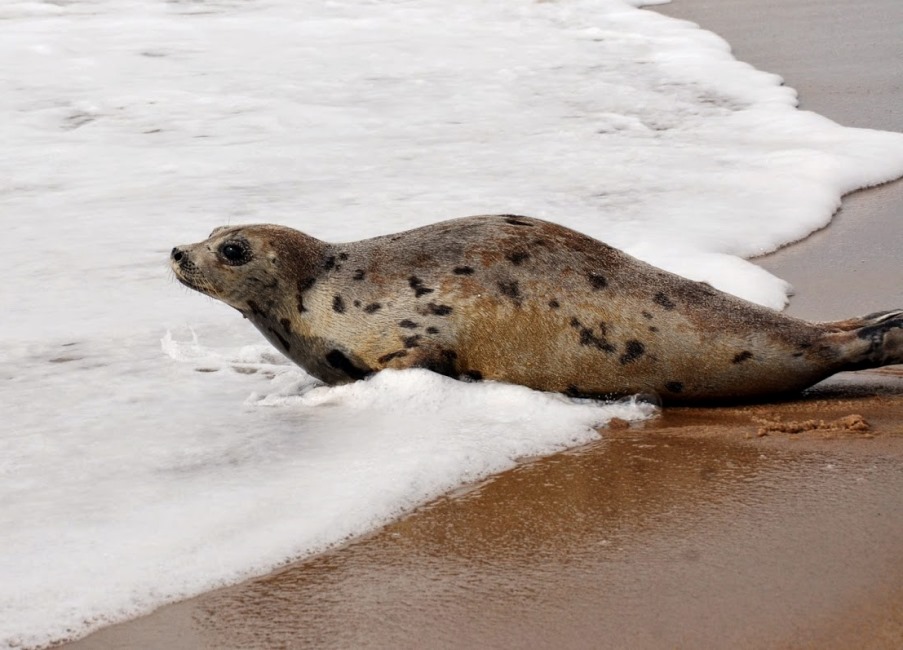
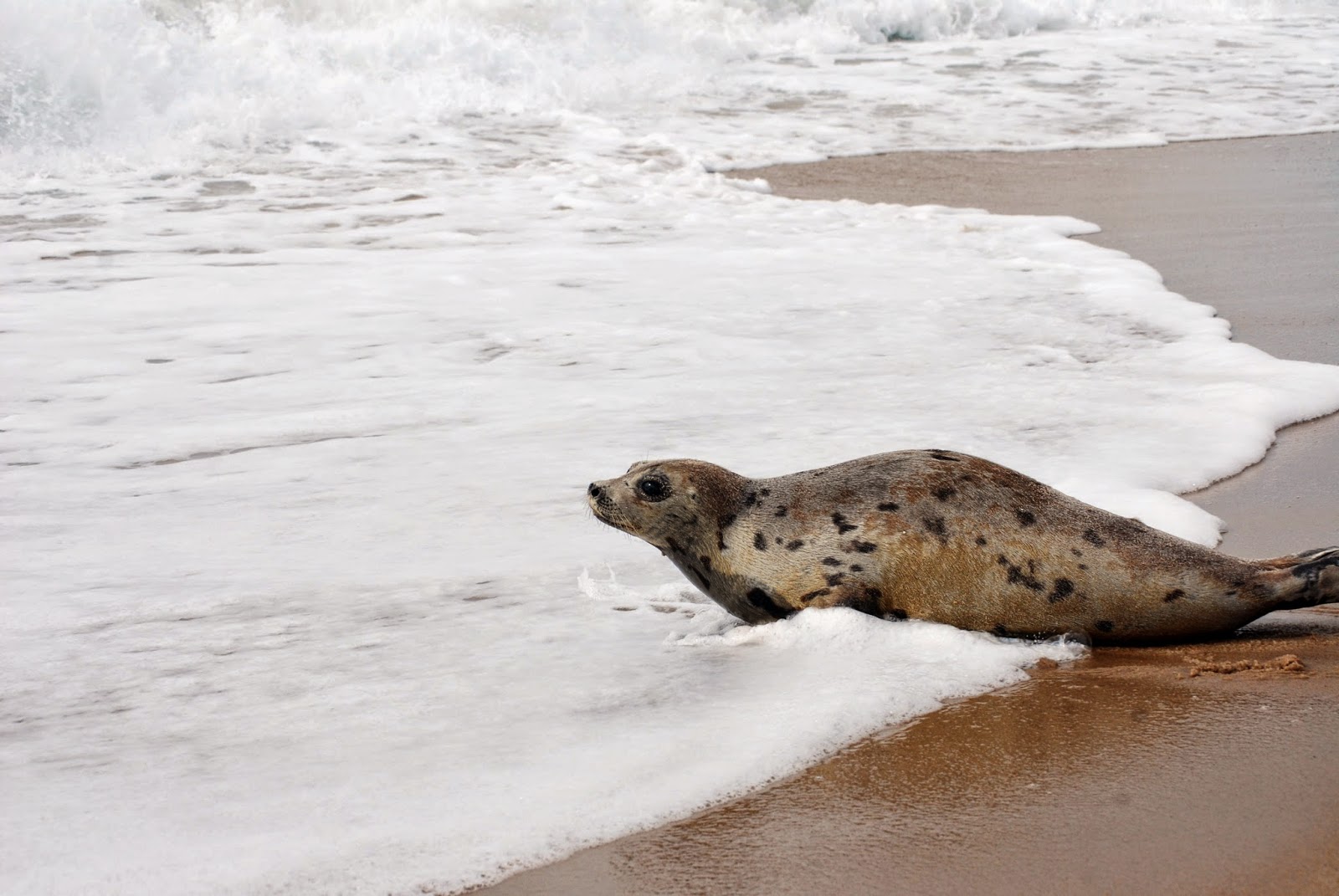
Harbor Seals are the most common seal that you will see. These 4-1/2’ – 6’ seals range in color from tan to brown to light gray with irregular black spots. They have a smallish head that looks like a Cocker Spaniel in profile. This profile gave them the nickname “sea dog.” Their nostrils are “V” shape when seen from the front. Harbor seals weigh 250 lb.
Gray Seals are a large seal with gray coloration. Interestingly, adult males are dark gray with small black markings and adult females are light gray or brown with dark patches. Males can be 8’ long and weigh 800 lb., females 7’ and weigh 400 lb. They have a distinctive “horsehead” profile and their nostrils form a “W” when seen from the front. Females have a slightly smaller head than males.
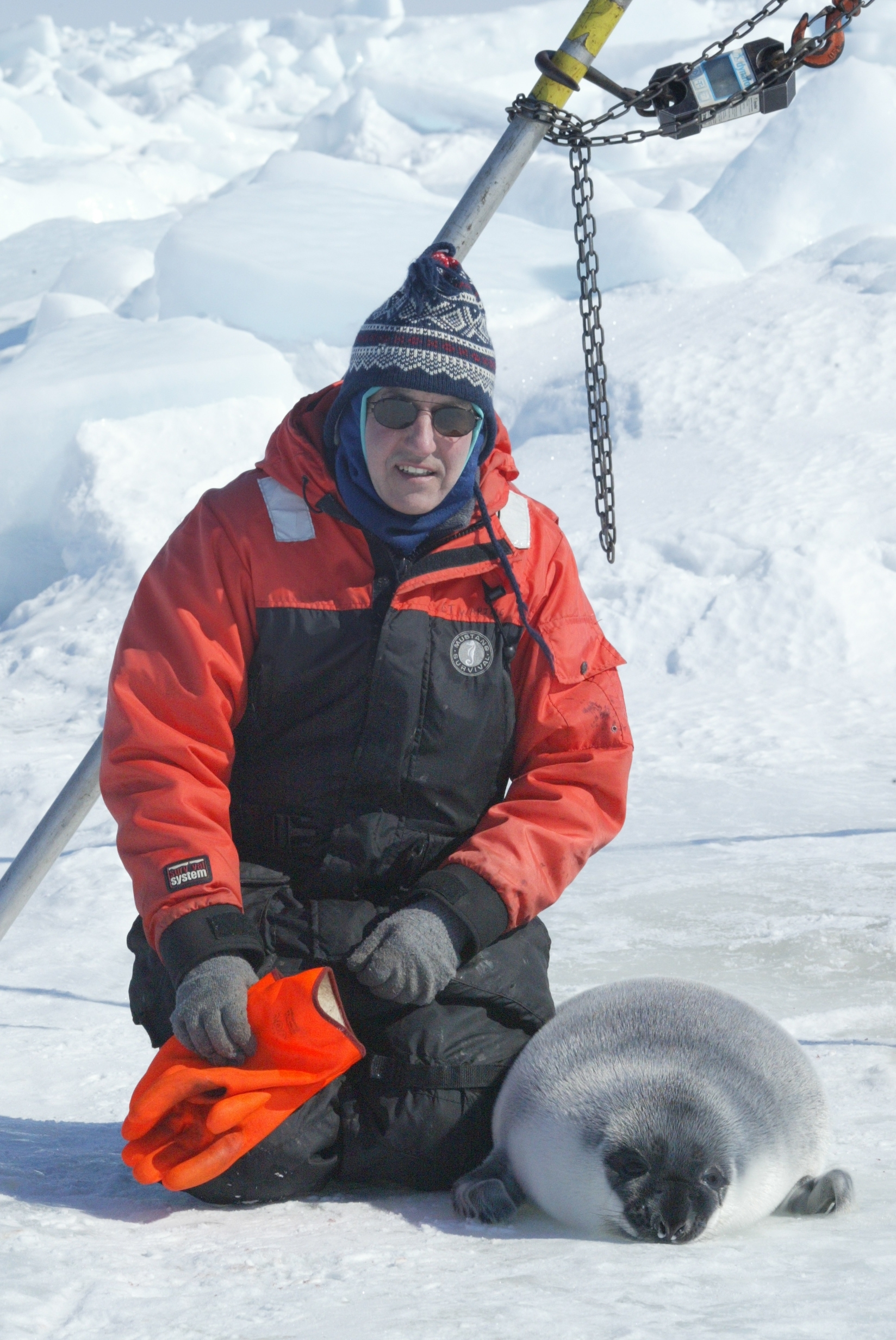
Hooded Seals are the largest seal that winters off of Long Island; males are 9’ long and females are 7’ long. Males weigh 900 lb., females 670 lb. The coat coloration of silver-grey with irregular black spots is the same in both adult males and females. First year pups have a slate colored coat. All female and juvenile male hooded seals have a larger head and broader muzzle than the harbor seal. Adult males have an unusual nasal apparatus that they will inflate when they are angered or threatened. Juvenile males do not have this nasal sac.
It is always a thrill to see harp seals and ringed seals because they are rare visitors to Long Island.
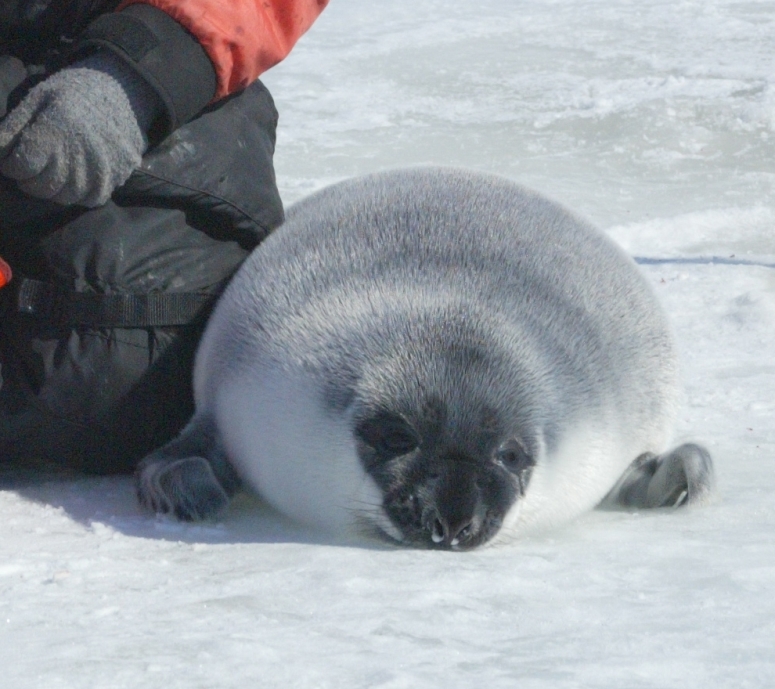
Harp Seal adults are white with a dark harp- or saddle-shaped pattern on its back and flanks. The more common juveniles have a light coat with dark blotches. Harp seals look similar to harbor seals in profile but they are slightly larger (both males and females are 6’ long and weigh 400 lb.) and they have a stockier body than the harbor seal.
Ringed Seals are the rarest and smallest seals found off of the New York coast in the winter; they measure between 4’-5-1/2’ long and weigh between 150-250 lb. Generally, the coats are a gray-black color with numerous dark spots surrounded by light areas that look like rings. Juvenile ring seals have a fine silvery coat. From a distance, ringed seals have a slightly smaller head than a harbor seal and their nose is more pointed than a harbor seal.
And please keep your dog at home. You wouldn’t want your dog scaring the seals.
References:
Katona, Steven, Rough, Valerie, and Richardson, David (1983). A field guide to the whales, porpoises, and seas on the Gulf of Maine and Eastern Canada : Cape Cod to Newfoundland. New York: Charles Scribner and Sons.
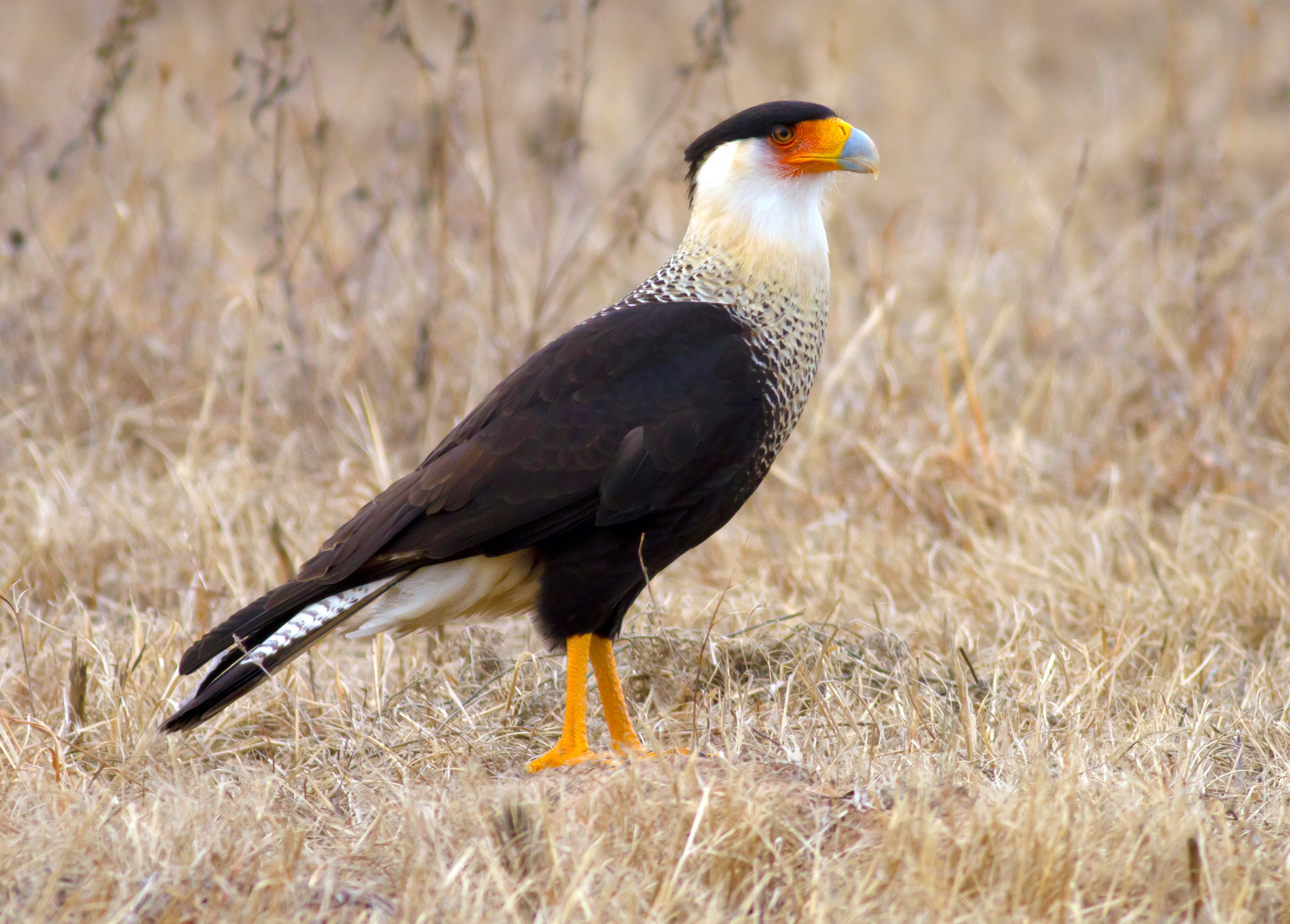
The following is a personal account of a Crested Caracara sighting by Ed McGowan, the Director of Science and the Trailside Museums and Zoo for the Palisades Interstate Park Commission:
Bear Mountain State Park, Doodletown – Jan 5, 2015 – Normally a time of year when New Yorkers head south, on this blustery winter day a Floridian made a rare visit to the skies over Bear Mountain State Park. Fellow League of Naturalists volunteers Gerhard Patsch, Dave Baker, Mike Adamovic, and I watched in amazement as a Crested Caracara soared overhead in the late morning sun. The bird circled several times, drifted north out of view but then returned overhead before heading east towards the Hudson. The field markings and overall gestalt of the bird were unmistakable. To our knowledge, this is the first record of a Caracara in New York State. We later learned that one of these southern raptors was photographed in Berks County, PA just a week earlier, so perhaps our sighting was the same bird blown north by the previous day’s violent winds. Wherever it came from, it was a sight to behold, a tropical apparition on a brisk winter’s day.
There are many species of birds that do not migrate to warmer or more temperate climates, but remain to take advantage of available local food sources.
For some of these smaller birds, specifically chickadees, spending the winters here in the frigid Northeast is possible due to a short-term hibernation state called torpor. During this period, energy expenditure is reduced due to exposure to extreme cold, food shortages, or severe droughts. Throughout this process of thermoregulation (maintenance or regulation of internal body temperature), metabolism, body temperature, and heart rate are decreased in order to help conserve energy and maintain body heat during the harsh winter months.
All of our fine feathered friends depend on specific habitats to obtain food and provide a safe place to nest and nurture their young. By protecting and conserving a wide range of habitats throughout our State Parks, we are ensuring the health and viability of New York State’s resident bird populations.
OPRHP has partnered with Audubon New York in efforts to enhance awareness regarding the conservation of state priority birds within designated New York State Parks. The “Audubon in the Parks” initiative concentrates its efforts on maintaining and conserving essential habitat in Bird Conservation Areas (BCAs) and Important Bird Areas (IBAs) for the over 300 bird species that reside on Park lands.
Currently, 67 out of the 136 IBA sites that have been identified in New York State are located inside our Parks, and 25 out of 59 statewide designated BCA’s also fall within park boundaries. These programs provide activities ranging from bird walks to data entry, and even larger habitat restoration projects.
This joint partnertship fosters public engagement through outreach, environmental interpretation, and habitat restoration in several NYS Parks. In addition, this initiative encourages members, volunteers, birders, and “citizen scientists” to participate in these programs by identifying, monitoring, and conserving essential bird habitat.
Audubon New York and OPRHP are focused on restoring and improving existing bird habitats in State Parks with designated bird BCAs and IBAs sites through partnerships, education, and habitat improvement efforts.
Below are examples of some winter birds commonly found in New York State that you might see in our State Parks. Most commonly you will find these birds perched in a tree, gliding over a open field or even enjoying a snack at your backyard feeder.
Passerines
The term passerine refers to perching song birds. The vocalists of the bird world, these birds have a repertoire of song, calls and voices; each used for specific purposes. All members of this group have similar physical characteristics. The foot of a passerine has three toes facing forward and one toe directed backwards, which allows them to hang on to tree branches, reeds or any vertical surface. These common bird species can often be heard and seen visiting backyard feeders.
Black-capped chickadee.
Black-capped Chickadee: Poecile atricapilla
Habitat: Common to mixed wooded areas. Mixed wooded refers to tree species that shed their leaves annually (deciduous) and evergreens or conifers (coniferous).
Diet: Mostly seeds, insects, spiders, berries and small fruit.
Auditory recognition:Chickadee dee dee dee.
Identifying characteristics: Small and fluffy with distinguishing black cap and throat, and white cheeks.
Northern cardinal
Northern Cardinal: Cardinalis cardinalis
Habitat: Commonly found in brushy areas next to the edges of woods.
Identifying characteristics: Both have large triangular shaped bills. Male cardinals have bright red plumage with a black face and red bill. Females have reddish-brown plumage and red-orange bill.
Tufted titmouse, photo by Lilly Schelling.
Tufted Titmouse: Baeolophus bicolor
Habitat: Commonly found in mature deciduous (shed leaves annually) wooded areas.
Diet: Mainly seeds and insects.
Auditory recognition: Peter peter peter peter.
Identifying characteristics: Pale grey color with orange flanks, small pointed grey crest, black forehead and a broad tail.
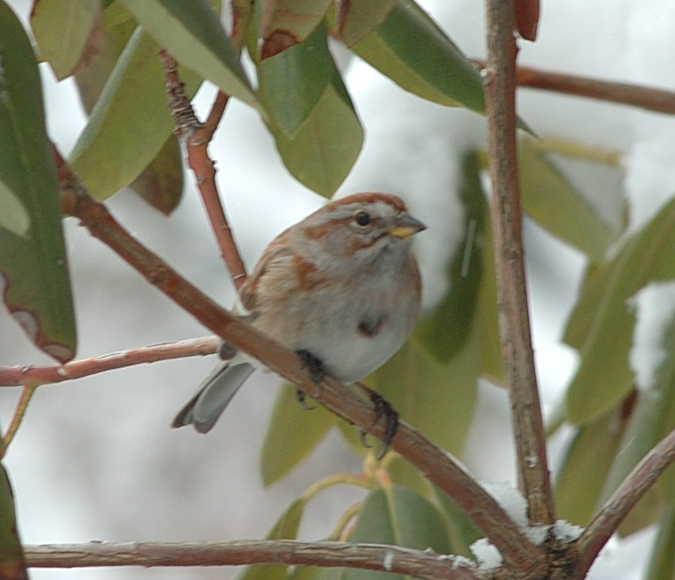
American tree sparrow.
American Tree Sparrow: Spizella arborea
Habitat: Brushy or weedy areas in proximity to trees, open fields, woodland edges, marshes, and suburban areas.
Diet: Seeds from grasses and plants, few insects and berries.
Auditory recognition: A series of high-pitched sweet whistles and trills. Swee swee ti sidi see zidi zidi zew.
Identifying characteristics: Bicolored bill, white bands on wings and a dark spot on center of chest area.
Dark-eyed junco
Dark- Eyed Junco: Junco hyemalis
Habitat: Common to open woodland and brushy areas, along the roadside and at backyard feeders.
Diet: Mainly seeds and insects. Usually seen foraging on the ground beneath feeders.
Auditory recognition: High-pitch trill resembling the ring of an old rotary dial phone.
Identifying characteristics: Grey to grey-brown in color, pale pinkish-white bill, white underbelly, and white outer tail feathers.
Woodpeckers
All species of Woodpeckers have stiff tail feathers which are used like props, allowing the birds to cling to tree bark while in search of food. Another common characteristic that is shared among woodpeckers is a strong chisel like bill which is used to tap and excavate insects from beneath the bark of trees. They are the percussionists in the world of birds. During a walk in a State Park, Woodpeckers can often be heard tapping on trees as they look for insects to eat.
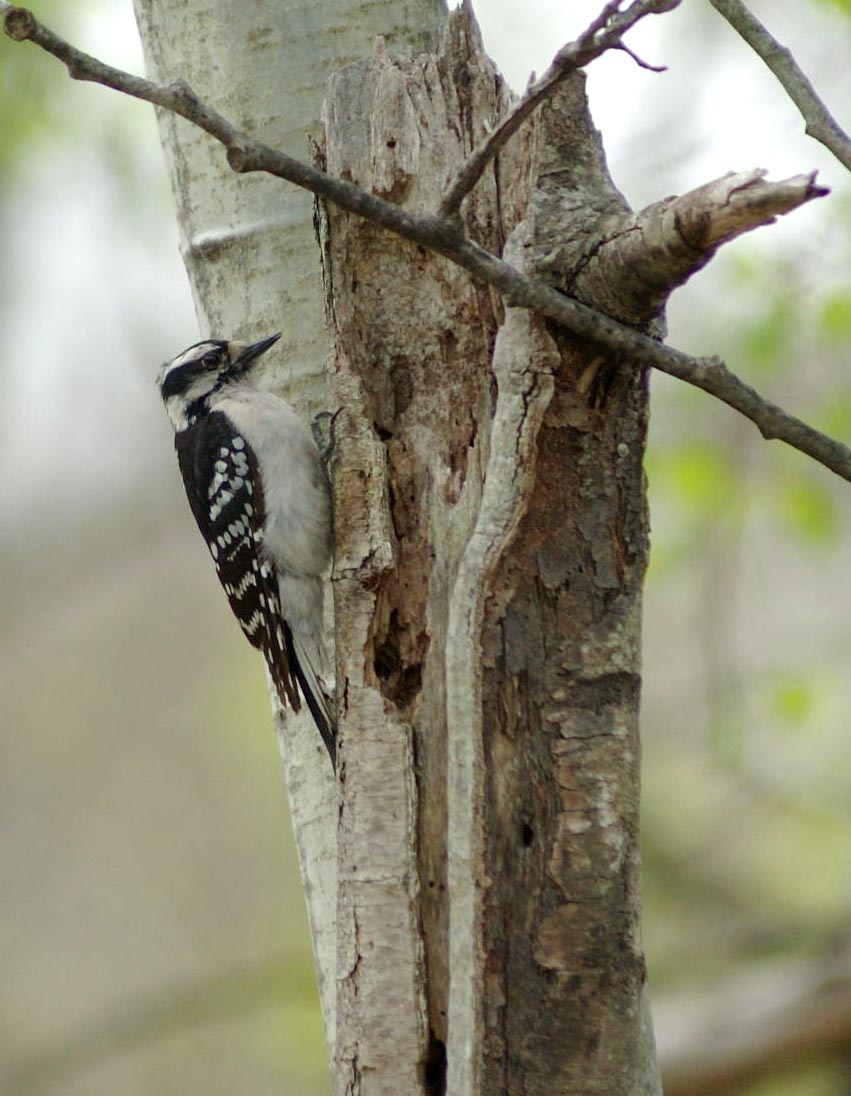
Downy Woodpecker
Downy Woodpecker (Smallest Woodpecker in North America):Picoides pubescens
Habitat: Common to deciduous wooded areas consisting of patches of smaller trees and brush.
Diet: Variety of insects (beetles, ants, gall wasps and caterpillars), seeds, berries.
Auditory recognition: High-pitch whinny with a distinctive high-pitched pik.
Identifying characteristics: Both males and females have a white patch on their back and white spots on their wings. Only males have a red patch on the back of their heads, females do not have this added patch of color.
Pileated woodpecker, photo by Lilly Schelling.
Pileated Woodpecker (Largest Woodpecker in North America): Dryocopus pileatus
Habitat: Mature hardwood and mixed forests and woodlots.
Diet: Creates a distinctive oval or rectangular hole while foraging on dead trees and logs searching for carpenter ants, termites, larvae of wood-boring beetles, other various insects.
Auditory recognition: Series of 6-8 high-pitched wuks. Wuk, wuk-wuk-wuk, wuk-wuk.
Identifying characteristics: Large in size with a long neck, black plumage on wings, chest and back, notable red crest, and white patch on underside of wings.
Raptors
Owls belong to the Raptor family, also commonly known as birds of prey. Due to their carnivorous appetites which consists of small mammals (rabbits, moles, ground sqirrels, and mice), these skilled and efficient hunters have razor sharp talons, a hooked beak with sharp edges, acute eyesight, and distinctive facial disks which allow them to search for prey.
Snowy Owl, photo by Lilly Schelling
Snowy Owl (Heaviest Owl): Bubo scandiacus
Habitat: Perches on ground or fence posts in open fields and marshes.Snowy owls migrate to New York State from Canada and Alaska (also known as the Taiga region of North America).
Diet: Often hunts during the day for small rodents and birds in open fields. Have been known to feed on prey as large as geese.
Auditory recognition: Brooo brooo brooo.
Identifying characteristics: Large and sleek, mostly all white plumage. Face and underwing always white.
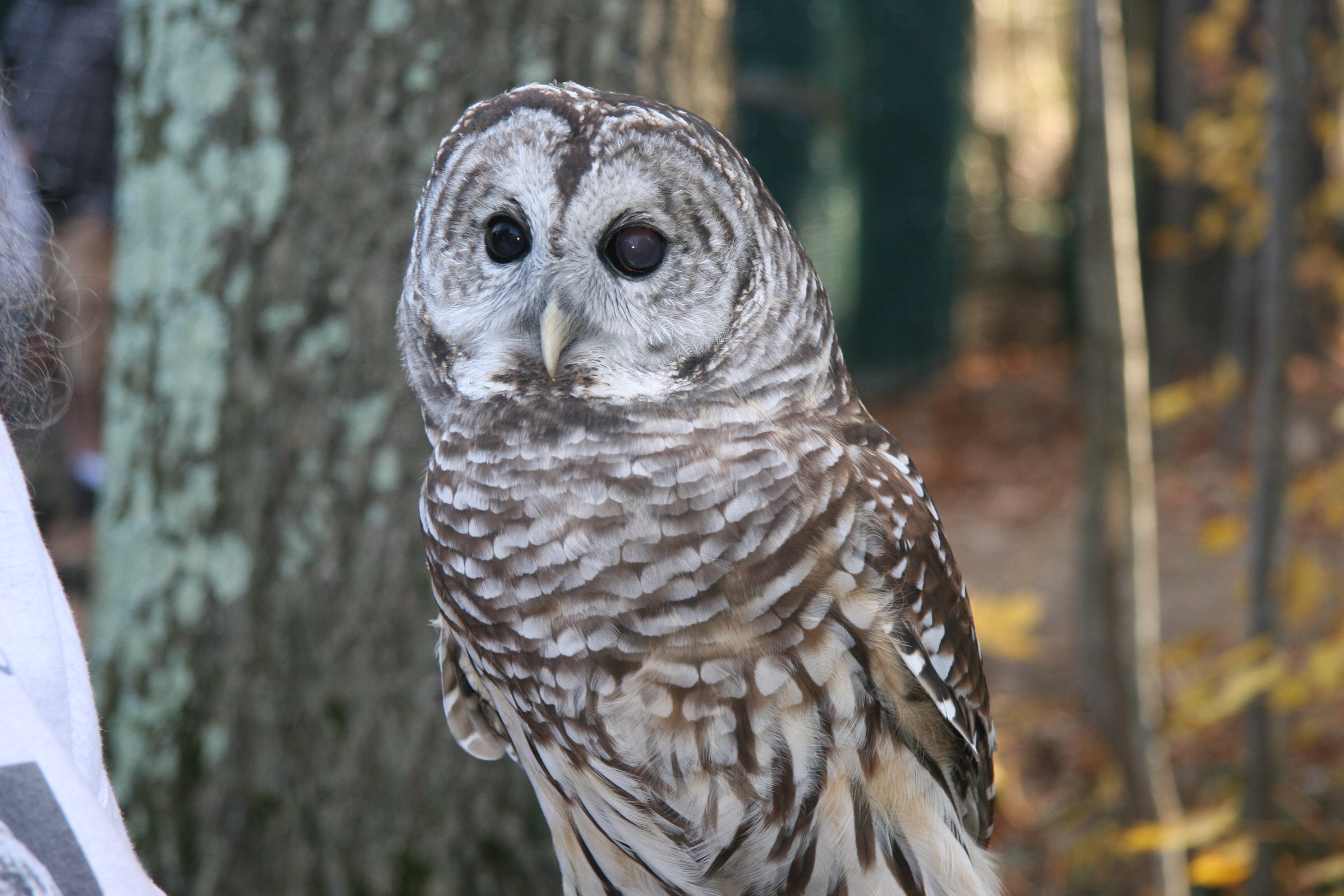
Barred owl, photo by Lilly Schelling.
Barred Owl: Strix varia
Habitat: Prefers hardwood swamps, woodlands or mature forests consisting of both evergreen and deciduous trees in close proximity to water, and wooded river bottoms.
Diet: Most active at night but has been known to hunt for small mammals and rodents during the day in fields and forests.
Auditory recognition: Hoo hoo ho-ho, hoo hoo ho-hooooooooaar (“who cooks for you”, “who cooks for you-all”).
Identifying characteristics: Brown in color with lighter spots, wings and tail barred brown and white, bold streaks on chest and distinguishing dark eyes.
Barn owl, photo by Lilly Schelling.
Barn Owl: Tyto alba
Habitat: Woodlands, groves, farmland, marshes, and cliffs. Prefer to nest in old barns and man-made structures.
Diet: Hunts at night in search of small mammals and rodents (voles, mice, small rats, shrews, and juvenile rabbits).
Auditory recognition: Shiiish or kschh (screech).
Identifying characteristics: Long legs, pale tawny and white plumage with dark eyes surrounded by a white heart shaped border.
Even in the wintertime, these birds depend on specific habitats to obtain food and provide a safe place to nest and nurture their young. By protecting and conserving a wide range of habitats throughout State Parks, OPRHP is ensuring the health and viability of New York State’s resident bird populations.
For more information on the birds depicted here and additional species:
In the summer you can recognize the different kinds of trees from the shape and size of their leaves. When trees drop their leaves in the winter months you can use different characteristics such as bud shape, leaf arrangement, bark, and overall growth pattern to identify tree species. As an example, let’s learn how you can identify Red Maple, Green Ash, and Black Walnut. First let’s learn some basic terms!
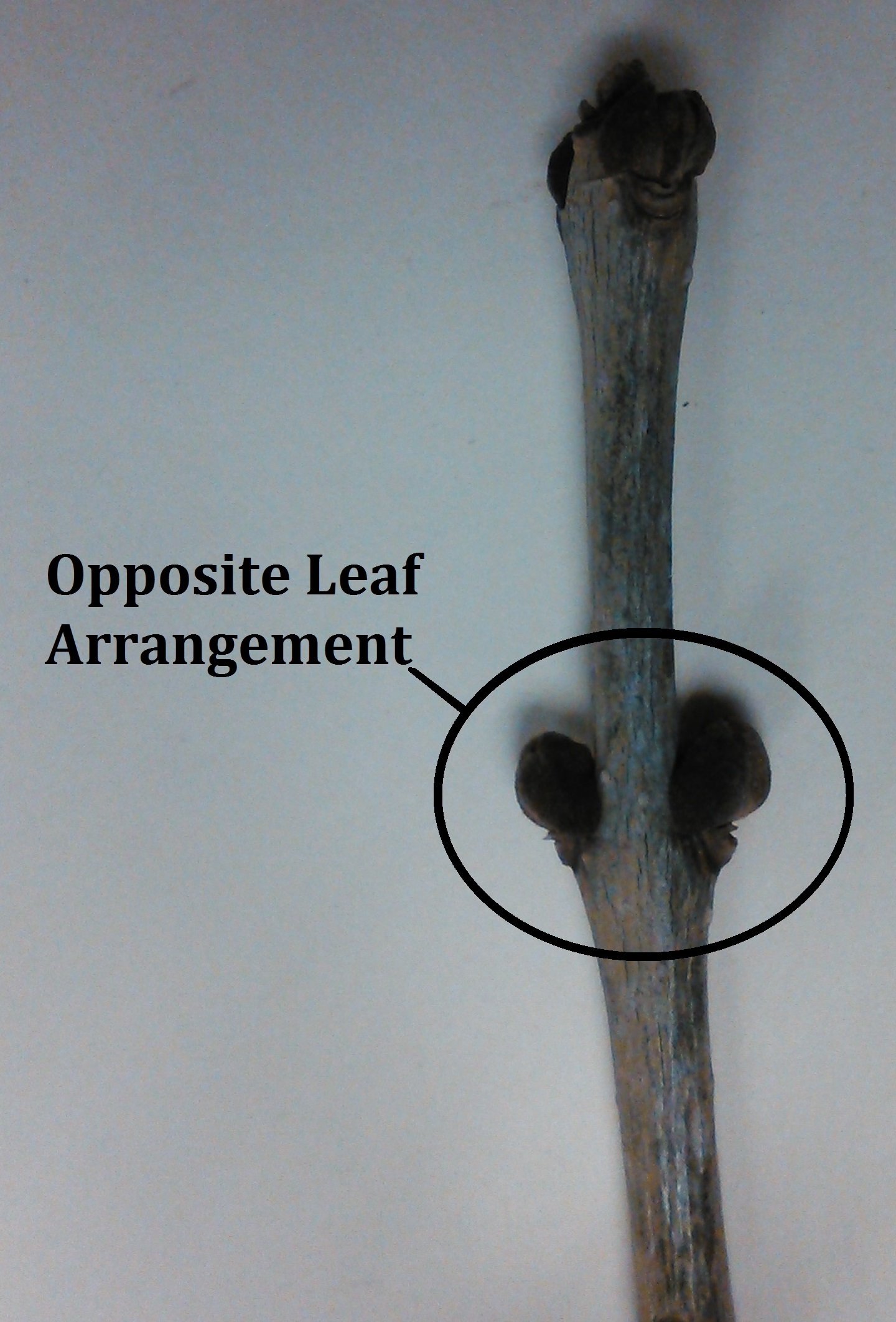
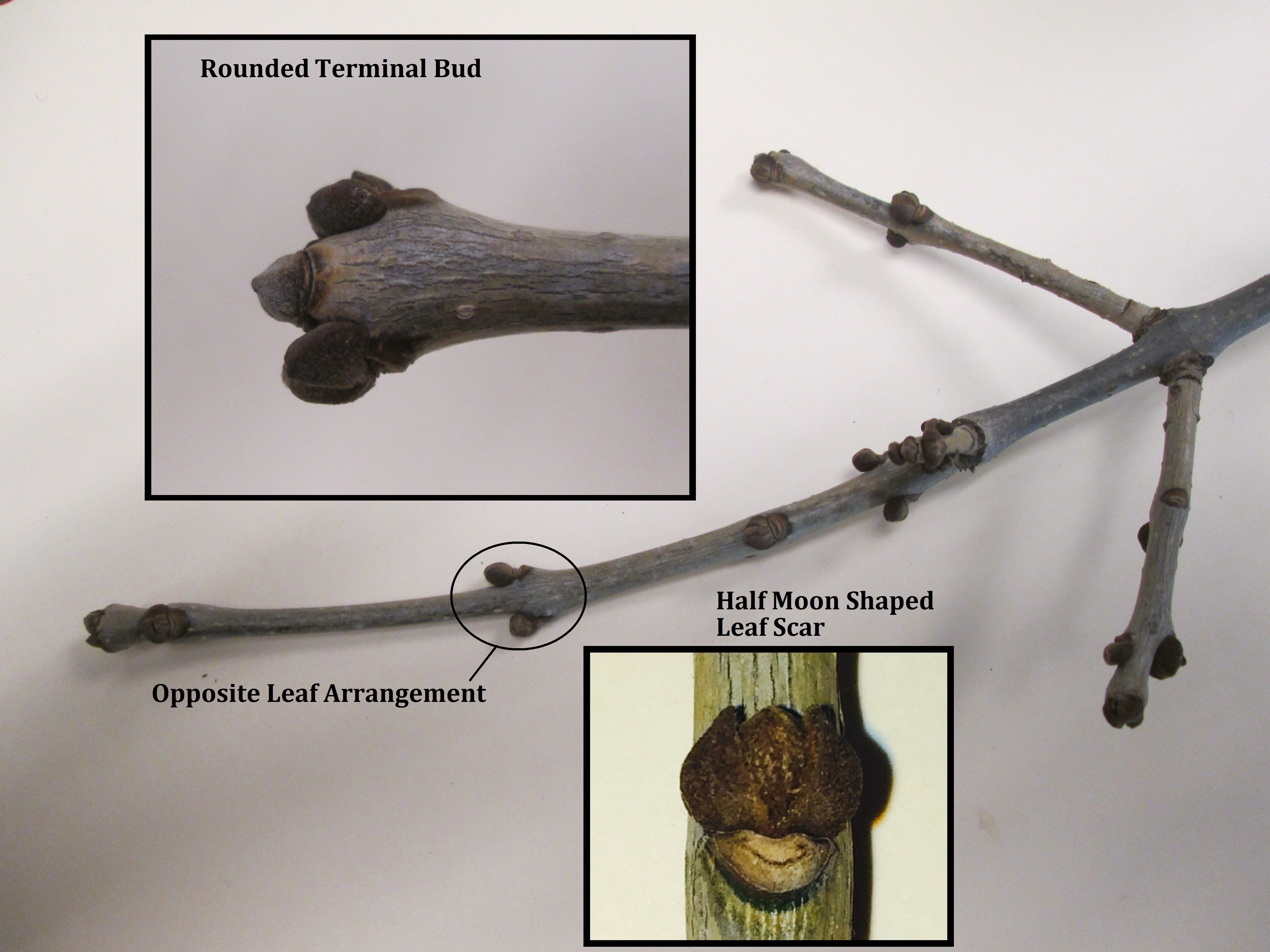
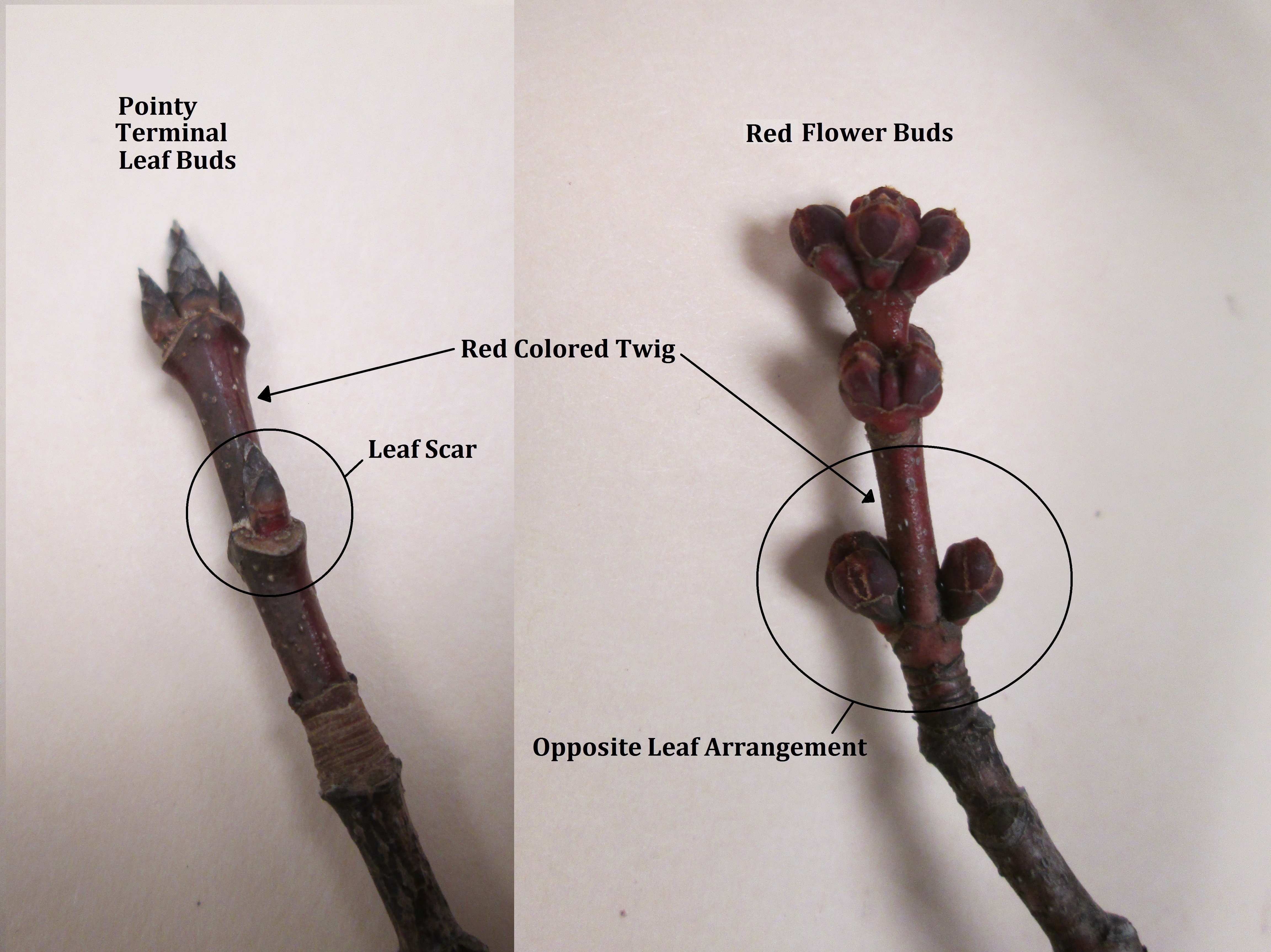
We will start with leaf or bud arrangement on the stem which will be either “alternate” or “opposite”. The buds are where next year’s leaves will emerge from and the nodes are where the leaf or bud attaches to the stem.
Alternate leaf arrangement is when there is one leaf per node.Opposite leaf arrangement is when there are leaves per node (across from one another).
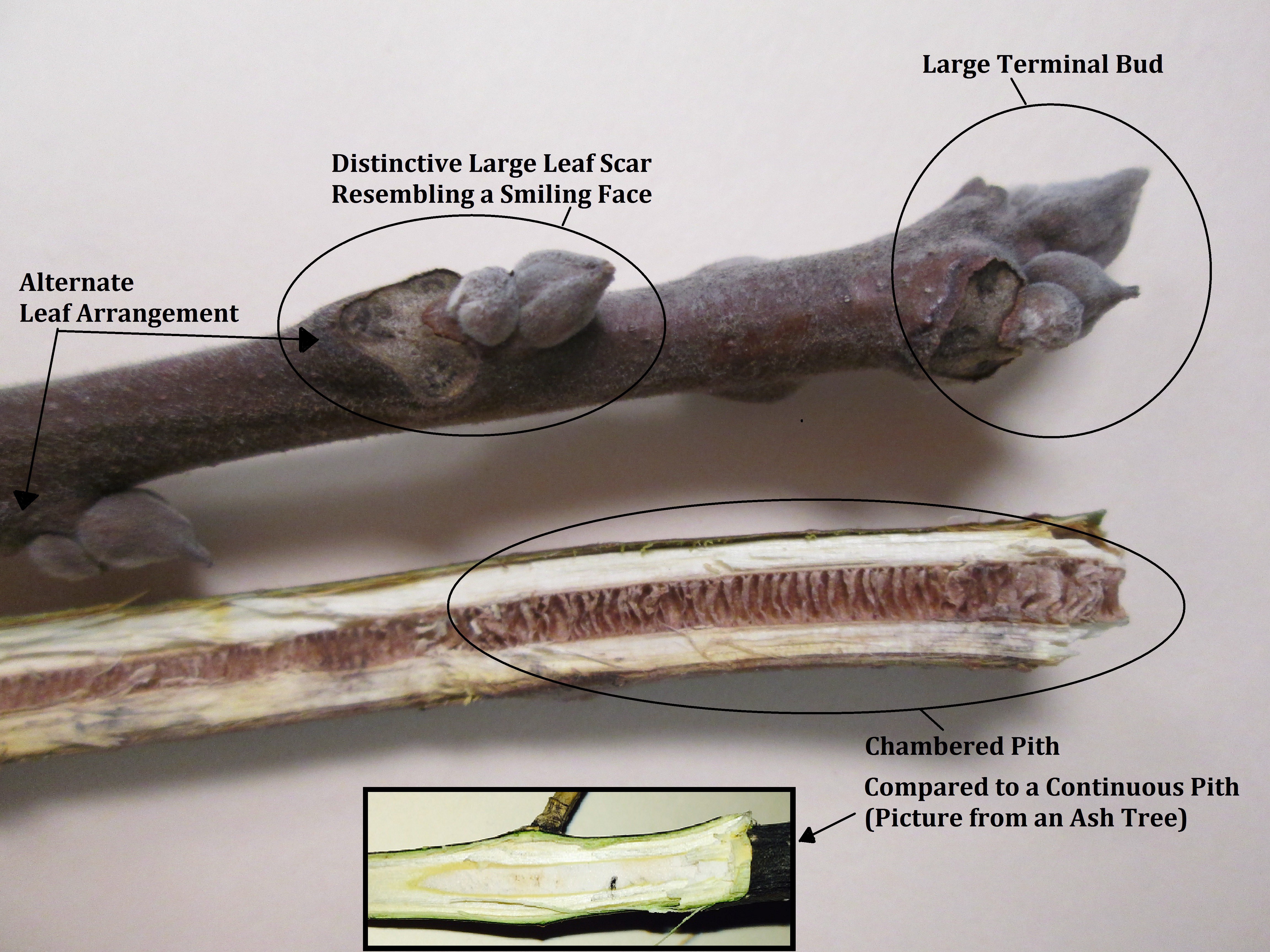
The leaf scar is another important characteristic to look at. This is where the leaf fell off the stem during autumn. Some trees, like the Black Walnut, have very distinctive leaf scars. Their leaf scar resembles a fuzzy smiley face!
Now we area ready to learn some tree species!
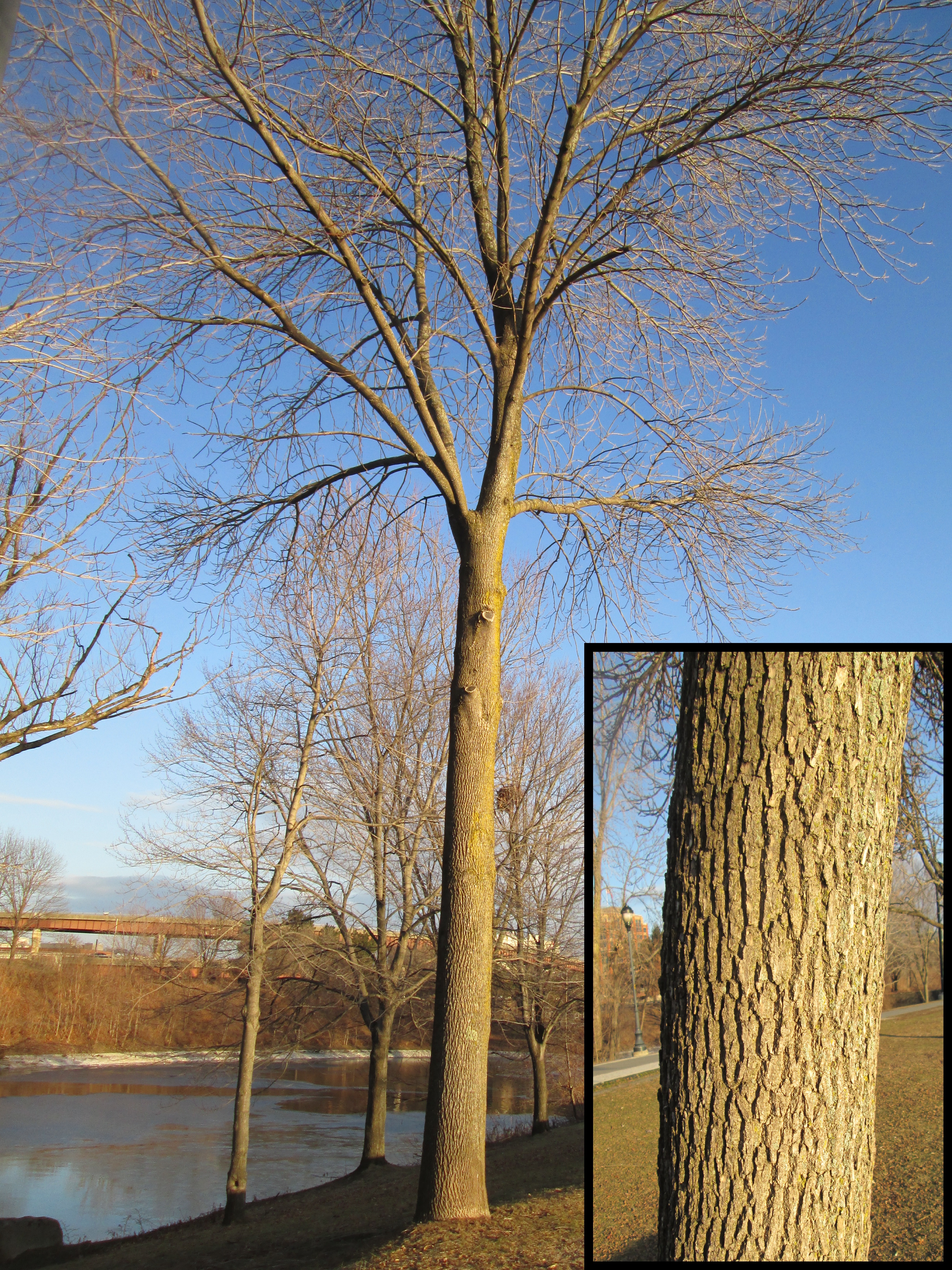
GREEN ASH
We will start with Green Ash. First let’s look at the bark and growth pattern:
Green ash is typically very straight with a single trunk. The branches usually grow from the top of the tree, not from the sides. The bark is greyish in color with thin furrowed ridges forming an intersecting diamond pattern. Green ash is found growing in lowland areas.
Now we will look at the characteristics of the twig: Notice how the leaf buds are rounded and in an opposite arrangement at the leaf node. The leaf scar is shaped like a half moon or an upside-down “D”. The stem is grey in color and the buds are a dark greyish-brown. There is one bud at the apex, or tip of the stem. White ash is very similar, but the leaf scar has a v-shaped notch on the top and the twigs tend to be gray-green.
RED MAPLE
Red maples vary in growth pattern. They may grow with a straight trunk or multi branched; like the tree in this picture. Bark is greyish-brown with a thin flaky appearance. Younger trees look smooth, the “plating” or flaky appearance, increases with age. Red maples often grow in swamps but are common in uplands too.
Red maples have opposite leaf arrangement. Flower buds usually form high up in the canopy and not on lower branches. Once the flowers have bloomed, leaves will replace them on the same node. The leaf and flower buds are reddish in color, as is the stem itself. The leaf buds are pointed and there is one terminal leaf bud.
BLACK WALNUT
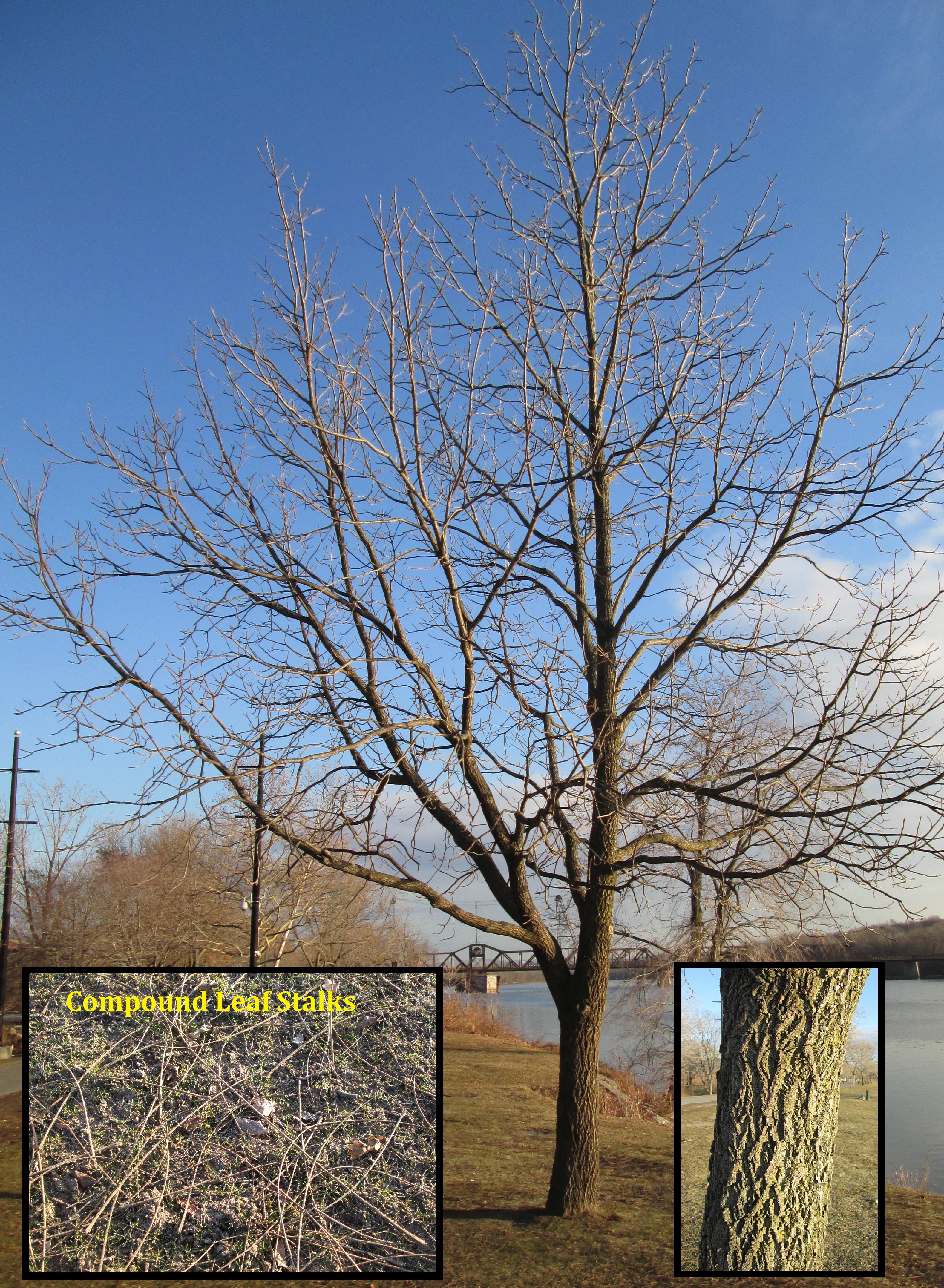
Black walnut trees have a wide branching growth pattern. The bark is dark brown, becoming darker with age. The bark has deeper furrowed ridges than ash, with looser intersecting ridges. Also evident is the dropped compound leaf stalks* underneath the tree. Black walnut trees are found growing in well drained, lowland areas.
*A compound leaf (such as on ash and walnut) has multiple leaflets on the leaf stalk. See below.
Black walnuts have alternate leaf arrangement with a large terminal bud. The buds are fuzzy and light gray in color. The leaf scar is large compared to the bud. The pith (spongy tissue in the center of the stem) is distinctly chambered. This can be seen by carefully taking a sharp blade and cutting the stem in half, as shown in the image below.
Have you ever come across animal tracks in fresh snow? Deciphering the mystery of what types of animals inhabit the places we visit can be a fascinating, and relatively simple task if you have some basic knowledge of animal gaits and patterns.
First, it is important to keep in mind that snow conditions can make a significant difference in the way that a track looks. For example, a print may appear quite clear in wet snow, whereas prints in drier, powder-like snow may be harder to analyze because they are not as clearly defined.
The next step is to think critically about the gait of the animal; the manner in which it walks or moves. There are four types of gaits that most animals employ throughout their daily (and in many cases, nightly) activities.
The first type of gait is the most common – the walk. Animal tracks left behind by a walk show alternating evenly spaced prints in parallel rows with a short stride and wide straddle. The second type of gait is the trot. When an animal is trotting, each hind foot moves at the same time as the opposite front foot. As the animal’s speed increases, the prints are spaced farther and farther apart. Next, we have the gallop, which is the swiftest form of movement for a mammal. Because an animal must expend a significant amount of energy to gallop, it usually won’t employ this method of movement for very long unless it is being chased by a predator. The straddle of a gallop is much smaller than that of a trot or a walk. Lastly, jumping is the most energy consuming gait. During jumping, there is at least one stage where all four feet leave the ground entirely. Examples of jumping animals include squirrels and rabbits.
Above: Squirrel tracks feature four toes on the front feet and five on the back, with claws visible. When squirrels run, their back feet land in front of their front feet, so this track is evidence that this squirrel was running. This print was left in shallow wet snow, hence the distinct print outline.
Above: Snowshoe hare tracks have a clear Y-shaped pattern because the back feet always land in front of the front feet and are 2-4 times longer. This print was left in deep powder-like snow, making it more difficult to identify. Snowshoe hare have large feet proportionate to their body size so that they do not sink into the snow, hence their name.
In addition to determining the gait of the animal whose print you are examining, the shape of the track helps to identify what family or group of critter you are dealing with. For example, tracks from animals in the cat family are roundish and show four toes on both the back and front feet. You won’t see any claw marks on cat prints because cats walk with their claws retracted. Members of the dog family (coyotes and foxes) leave prints with four toes showing on both the back and front feet. You can distinguish these prints from those of the cat family because the print is less rounded, and claw prints are typically visible. Deer tracks are prevalent throughout the state and are easy to identify. These prints are heart-shaped with a line down the middle. Moose tracks are similar in appearance; however they are considerably larger in size. Tracks from members of the rodent family as well as the weasel family can vary widely. Reference the key below for help with these types of tracks.
Above: Key for identifying animal tracks. These are just some of the tracks you may encounter in New York State Parks and Historic Sites.
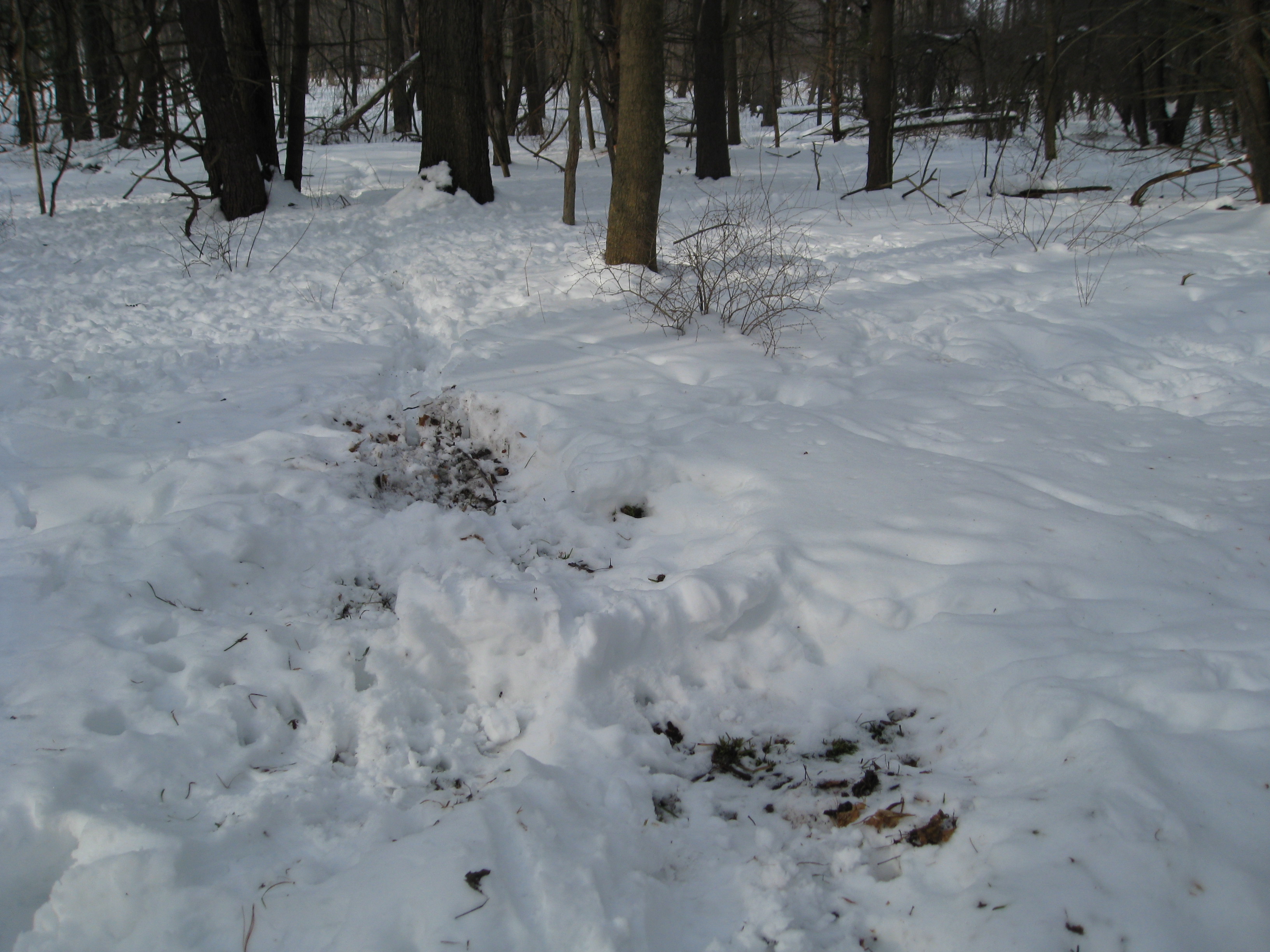
Above: This is a deer trail through the woods. The area with exposed leaves is evidence of foraging activity, where the animal was likely in search of acorns, beech nuts or evergreen foliage to feed on.
Watch this video produced by our friends at the NYS Department of Environmental Conservation to learn more analyzing winter animal tracks and winter wildlife viewing: http://www.dec.ny.gov/dectv/dectv116.html
Information sourced from the New York State Conservationist (February 2001).
Post by Megan Phillips, photos by Lilly Schelling (OPRHP).

















 New York State Parks and Historic Sites Blog

.JPG)