Category Archives: Park Projects

Protecting Pollinators

Across New York, State Parks staff is working hard to help support the diverse populations of pollinators from bees to butterflies, beetles, wasps, and more.  Here’s a sample of the pollinator protection projects going on this year in State Parks.

Rockefeller State Park Preserve

Wild Bees Photo Exhibit

Working from their photographs from both Rockefeller State Park Preserve and Stone Barns Center for Food and Agriculture, photographers Paula Sharp and Ross Eatman created the website “Guide to Wild Bees of New York.” This stunning website features extensive photographic documentation, scientific classification, identification guides, and behavior and habitat information on over 80 species of bees in the Hudson Valley.  In addition, Sharp and Eatman curated the Wild Bees exhibit which is on display on the concourse at the Empire State Plaza in Albany, NY now until June 25, the end of Pollinator Week 2017.  One visitor noted that the photos “…helped me to see bees in a new light.”

Rockefeller Exhibit_S Antenen
A sample of the photos of native pollinators from Rockefeller State Park Preserve and Stone Barns Center on display at the Wild Bees exhibit in Albany or viewable online. Photo by Susan Antenen, State Parks

John Jay State Historic Site

Native Pollinator Educational Outreach 

 Staff is developing educational materials about the native pollinators who live in the recently restored sedge meadow. This wet meadow (with grass-like sedges) is habitat for several uncommon butterflies, including northern pearly eye (Enodia anthedon), Appalachian brown (Satyrodes appalachia), mulberry wing (Poanes massasoit) and black dash (Euphyes vestris). However, the size of the habitat at the John Jay State Historic site has declined because woody plants and non-native invasives such as multiflora rose and Oriental bittersweet started growing in the meadow. Woody shrubs have been removed to set back succession and restore the sedge meadow habitat. The outreach materials will explain the restoration and highlight some of the flora and pollinators that visitors may see at the park.
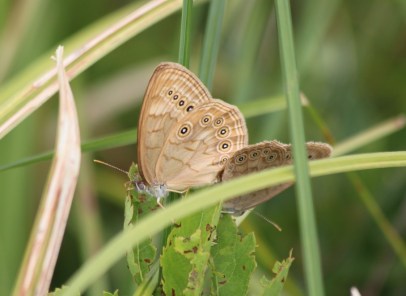
Northern pearly eye, Matt Schlesinger NYNYP
The northern pearly eye (Enodia anthedon) is one of the many butterflies that occurs in the sedge meadow habitat at John Jay State Historic Site. Photo credit: Matt Schlesinger, NYNHP.

Long Island State Parks

Bring Back the Pollinators Project

 State Parks biologists and environmental educators are establishing and enhancing native plantings and habitat in seven state parks throughout Long Island. Look for these pollinator projects in Orient Beach State Park, Heckscher State Park, Bethpage State Park, Robert Moses State Park, Caleb Smith State Park, Connetquot State Park Preserve, and Belmont Lake State Park. The Bring Back the Pollinators project is focused on gardens in order to give visitors a close-up view and to learn about the native plants and pollinators. This work goes hand-in-hand with efforts by NY Natural Heritage Program (NYNHP) scientists to identify and protect the natural areas in parks which are key to supporting native fauna, including pollinators. Parks staff have also installed tall fencing around several gardens at Robert Moses State Park, Caleb Smith State Park, Heckscher State Park, and Orient Beach State Park to keep the deer from eating the showcase of flora and pollinator fauna.

Interpret Sign_A McIntyre
Educational signs that include the graphics above are being installed at Long Island’s pollinator project sites. Photo by Annie McIntyre

Ganondagan State Historic Site

Restoring Native Flora and Habitats

At Ganondagan State Historic Site, three projects will enhance habitat for native pollinators and other fauna. Staff has worked with NYNHP to identify plant species that are native to the area and that reflect similar natural communities known in the vicinity. Just as important is that the projects restore the cultural landscape of the Seneca town that was on the site over 330 years ago.

The Oak Opening Habitat project is restoring a 60-acre old field to native grasslands to provide habitat for grassland birds, mammals, and pollinators as well as opportunities for historical interpretation. This spring, the grass seeds were sown and invasive species control efforts will continue through 2018. The restoration is based on the NYNHP rare Oak Opening community, which is known from a few places in nearby Monroe County.

Ganondagan Oak Opening, Kyle Webster
Ganondagan State Historic Site’s Oak Opening grassland restoration area. Photo credit: Kyle Webster, State Parks.

The Green Plants Trail is the second project. It includes removing invasive species and replanting native plants to improve pollinator habitat and to feature a variety of plants that had and have cultural value to the Seneca people.
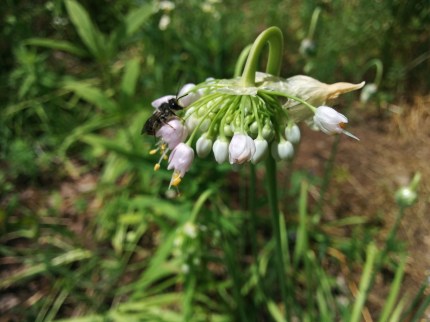
Ganondagan GPT_Nodding_onion
A native bee pollinating a nodding onion plant along Ganondagan State Historic Site’s Green Plants Trail. Photo credit: Brigitte Wierzbicki, State Parks.

The third project at Ganondagan, Pollinator Grassland, transformed a weedy 13-acre grassland into a tallgrass prairie by planting native grasses (such as big bluestem and Indian grass) and wildflowers (including common milkweed).  These plants benefit pollinators and other native fauna.

Ganondagan Milk Weed, Brigitte Wierzbicki
Native bee pollinating the milkweed plant at Ganondagan State Historic Site’s Pollinator Grassland. Photo by Brigitte Wierzbicki, State Parks.

Statewide

NY Natural Heritage Program

State Parks Partnership Educational Banners and Posters on Native Pollinators and Habitats in State Parks

NYNHP staff is developing high quality banners and signage to promote the importance of native plants and habitats in State Parks and their role in supporting native pollinators. These materials will feature the partnership between NY Natural Heritage Program and State Parks and will be available for use at events, education centers, and other venues. In 2016, NYNHP displayed some draft posters to accompany activities at the New York State Fair, which stimulated many questions and compliments. Messaging, photo selection and design of banners and signage is under way using other funding sources and the professional fabrication of signage will be completed in 2017.

Clark Reservation State Park

Native Pollinator Garden

The Council of Park Friends and a local garden club teamed up to plant a native pollinator garden along the side of the nature center at Clark Reservation. The project includes interpretive signs about the native plants, invasive species control, and how State Parks is helping to support native pollinators.

Clark Steps_K Mulverhill
Newly installed pathway through the pollinator garden, photo by Katie Mulverhill, State Parks

Glimmerglass State Park

Sensory Awareness Trail and Education

Staff and volunteers at this park are creating a Sensory Awareness Trail. Along the trail, staff added NY native plants to attract native pollinators and to interpret the role these plants and pollinators play in our environment. The accessible trail includes tactile elements such as sculptures of insects/animals that rely on our native plant species.

Glimmerglass Garden_ILMPD
Volunteers plant native plants at Glimmerglass State Park during I Love My Park Day. Photo credit: State Parks.

Saratoga Spa State Park

Local school students planted native plants at Saratoga Spa State Park to help provide food for both the federally endangered Karner blue butterfly (Plebejus melissa samuelis) and the state threatened frosted elfin butterfly (Callophrys irus). And at the Creekside Classroom, a new environmental learning center at Saratoga Spa State Park, a diverse mix of native plantings for landscaping and raingardens were installed.


Grafton Lakes State Park

Pollinator Habitat Restoration and Education

This summer, staff will convert four small lawns to wildflower meadows at Grafton Lakes State Park.  The restoration will include planting native plants to attract native pollinators. Look for the work near the main entrance and near the new visitor’s center.
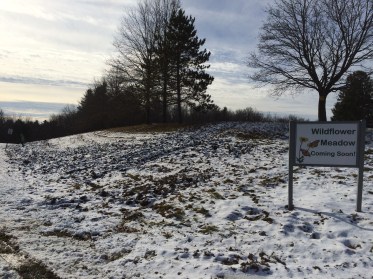
Grafton
This lawn along the main entrance road of Grafton Lakes State Park is being converted into a wildflower pollinator meadow, photo by Casey Holzworth, State Parks.

Bennington Battlefield

State Parks’ staff worked with Renssalaer County Soil and Water Conservation District, National Resources Conservation Service, and Cornell Cooperative Extension to convert two cornfields at Bennington Battlefield to grazing pasture and a wildflower meadow.  Work on this 26-acre project included tilling and seeding the area with non-invasive grasses and planting native pollinator meadows along the edges of the field and nearby wetlands. The pollinator meadows will be fenced off to keep grazing livestock out of those areas.

Bennington Battlefield

Find State Parks pollinator program.

Additional State Parks blogs on native pollinators:

Monarchs Migrate to State Parks

Milkweed

Butterflies in Your Garden

Additional resources:

New York State Pollinator Protection Plan

Featured image: female giant swallowtail, photo by Katie Mulverhill, State Parks
Harmful Algal Blooms: Keep you and your pets safe: Know it, avoid it, report it!

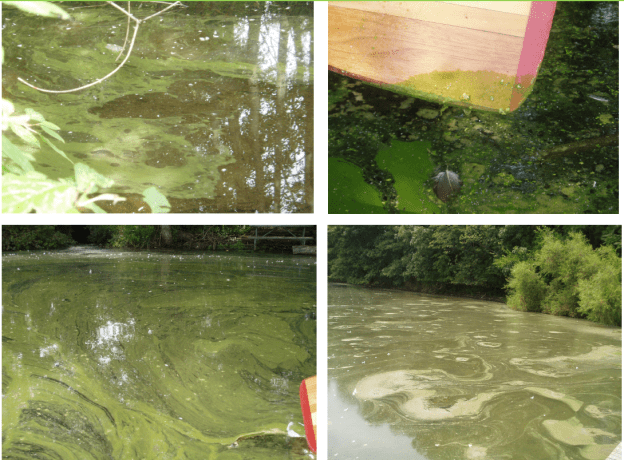
A group of tiny bacteria has been making a splash in New York State waters, and not in a good way. Harmful Algal Blooms (HABs, also known as cyanobacteria, Blue-green algae, BGA) are actually a type of bacteria rather than algae. If the right conditions are met, the bacteria can form what are called “blooms”, or massive amounts of floating material on the surface of a lake or pond. These blooms can look like brightly colored paint, oil, or scum, on the surface and at the shoreline of lakes and ponds. The blooms can move around a lake with wind action, or currents, and can appear, and even disappear, in a matter of hours.  Harmful algal blooms have been spotted at an increasing rate around the US in the last several years, including within some New York State Parks’ waterbodies.

The worst part about these colorful phenomena are that some species of HABs are known to produce toxins that are harmful to both humans and animals. Humans can be affected through swallowing water while swimming, touching blooms, and wading in blooms.  If the HABs are producing toxins, some swimmers can experience a range of symptoms, from simple rashes, to stomach issues, and even to muscular paralysis.  New York State Park bathing beaches are closed when a HAB is present. NYS Parks follows NYS Department of Health criteria when reopening the beach, which requires that the HAB bloom be visibly absent from the swim area for 24 hours.

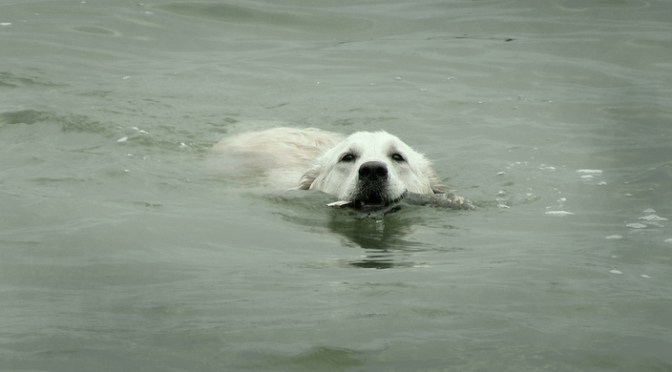
Dogs are also particularly susceptible to these toxins and should not be allowed, under any circumstance, to drink or swim in a bloom.  Dog owners are encouraged to educate themselves on identifying HABs, to protect their fur-kids from harm.  Dogs exposed to HAB toxins can experience severe illness and in some cases, fatal effects.

NYS Parks posts HAB alert signs near waterbodies where HABs have been seen.

HAB Sign
State Parks HABs alert sign. If you see this sign up, do not swim in the water!

One of the best ways to recognize HABs on a lake surface is to be aware of changes to the surface of the lake. Take a look at the pictures below of HAB blooms that have been seen in NYS Parks.

HAB Paddle
HABs can look like paint, oil or foam. HABs can also coat objects as a film, photos by Karen Terbush, State Parks
HAB Green
HABs can occur around docks and have debris caught within them., photos by Karen Terbush, State Parks
Blue HAB
HABs are not always green, and can appear as smaller clumps on the surface, suspended in the water column, or sitting on the bottom. HABs can appear foamy, coat the entire surface of a lake or move around in a smaller area, photos by Karen Terbush, State Parks                                                     
HAB Dense
HAB Bloom, photo by Karen Terbush, State Parks
Be on the lookout for HABS in stagnant or still, nutrient-rich waters, when the temperatures start to rise. HABs are influenced by time of year, climate and nutrient loads.  The best way to prevent HAB growth is through watershed management. Reduce your own runoff by following NYS fertilizer guides, and help to report any evidence of HABs to the New York State Dept. of Environmental Conservation HAB hotline.

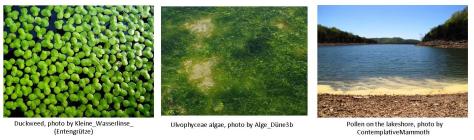
There are some HAB look-a-likes out there. Duckweed, other algae such as Cladophora (a form of clumpy, stringy algae), and pollen can easily be mistaken for HABs, especially in the spring.

Pollen Duckweed

Post by Keleigh Reynolds, State Parks

Cover image from freeimages.com.

Visit the links below to learn more about HABs!

NYS Department of Environmental Conservation: Harmful Algal Blooms

NYS Department of Health: Blue-green Algae and Health

Environmental Protection Agency: CyanoHABS

New York State Parks Partners with Audubon New York to Save One of New York’s Most Beautiful Songbirds

Warblers, sometimes called “wood-warblers”, are a group of tiny, highly vocal and often brightly colored songbirds. Every year in May, they arrive in New York from Central and South America where they overwinter. Some continue north to Canada, but many stay here to raise their young, and then return south again in the fall. Most warblers are insectivorous, at least in spring and into summer. That means they eat mainly insects. So it is no coincidence that their spring migration follows the return of the buggy season. As leaves first appear in the spring and the bees and butterflies and other insects start moving about, keep your eyes and ears open for returning warblers.

Some warblers are pretty uncommon, so you will have to look extra hard to find them. One of these is the Golden-winged Warbler, once plentiful across New York and large areas of the eastern United States, but now quietly disappearing. Intense studies over the past few decades by wildlife scientists have helped to determine the causes of the dramatic declines and what could be done to prevent the loss of this brilliantly colored bird.

Changes in land use are one of the causes for decline. Peak numbers of golden-wings coincided with the rise of agriculture and timber harvest that created an abundance of young forest and shrublands that the birds preferred. As dairy farms dwindled, shifting to extensive croplands or reverting back to forests which continued to mature over the past century, the early successional habitats became less abundant and with it the decline of the golden-wings. More recently, studies also found that competition and hybridization with the closely related Blue-winged Warbler has taken a big toll on the golden-wing populations.

Although Golden-winged Warblers often nest and forage in shrublands, they also utilize forests for a portion of their time to forage, and provide cover for their young. There are many types of forests, but all of them change as they grow older. Mature forests have trees in all shapes and sizes, many of them stretch up high and crowd out the sun from reaching lower levels of the forest. Younger forests have many bushes and smaller trees, all competing to become the big, mature trees someday. Scientists have known for a long time that some forest birds prefer shrubland and young forest while others prefer more mature forest, and some prefer a mix of both.  Golden-wings prefer shrubland and young forest with mature forest nearby. Young forests and shrublands, which were once created by natural wildfires, beaver flooding, as well as careful logging, were all growing into old forest habitat in the era of fire prevention, removal of beavers, and a decline of logging. Much of the golden-wing’s habitat was disappearing, and without it the golden-wings had no place to raise their young.

RedMaple-HardwoodSwampAnd ShrubSwamp_GregEdingerNYNHP
This red maple – hardwood swamp with its young trees, open canopy, and abundance of shrubs and sturdy sedges (the grass like plants in the middle) is an example of the kind of Golden-winged warbler habitat that State Parks is working to protect and restore. Photo by Greg Edinger, NYNHP.

The good news is that habitat loss is something New Yorkers can do something about, giving this brightly colored songbird and other shrubland and young forest species a fighting chance at a future.

To ensure this future, Audubon New York is working with forest owners in certain areas of New York to identify existing areas of young forest and early successional habitats and, where appropriate, to create small patches of young forest, while preserving the older forests nearby. In New York State Parks, biologists are working with Audubon New York and NY Natural Heritage Program biologists in places like Harriman and Sterling Forest State Parks, to restore habitats that naturally support the open structure and mosaic of forest types that Golden-winged Warblers prefer.  By surveying where the birds were and identifying the right places to create and maintain habitat for the Golden-winged Warbler, park biologists hope to increase the number of stable populations in the region.

In the future, the partnership hopes to learn more about the interaction and distribution of Golden-winged Warblers and the more abundant and competing Blue-winged Warbler in order to guide conservation needs. In 2016, the Palisades Interstate Parks Commission and Audubon New York partnered to fit individual golden-wings and Blue-winged Warblers with geolocators. These are small devices that measure day length and allow for specific locations of each bird to be calculated when in migration and while on wintering grounds in South America. This will help scientists identify additional conservation actions to save the Golden-winged Warbler.

To learn more about the Golden-winged Warbler, and ongoing conservation efforts visit the Golden- winged Warbler working group website at www.GWWA.org.  For more information on what you can do to help conserve the Golden-winged Warbler in New York, visit Audubon New York at http://ny.audubon.org/.

Post by Andy Hinickle, Audubon NY and Julie Lundgren, NY Natural Heritage Program

Dig deeper into Golden-winged Warblers

Golden-winged Warbler Working Group

Audubon New York

Golden-winged warbler fact sheet

Listen to the buzzy call of the Golden-winged warbler

Learn more about their status and habitat

Confer, J. L., Hartman, P., & Roth, A. (1992). Golden-winged Warbler: Vermivora Chrysoptera. American Ornithologists’ Union.

Parks Goes Solar

As we celebrate Earth Day we’d like to tell you a little bit about some of the projects our Energy & Sustainability Office is working on that benefit the environment. Particularly we’d like to tell you how they are developing renewable energy projects all across the state. State Parks has developed several solar arrays over the last few years. Solar arrays use panels to catch sunlight. You’ve probably seen them on the roofs of houses in your neighborhood or maybe even your own house. The panels catch the light from the sun and turn that into electricity for use in the house or building.

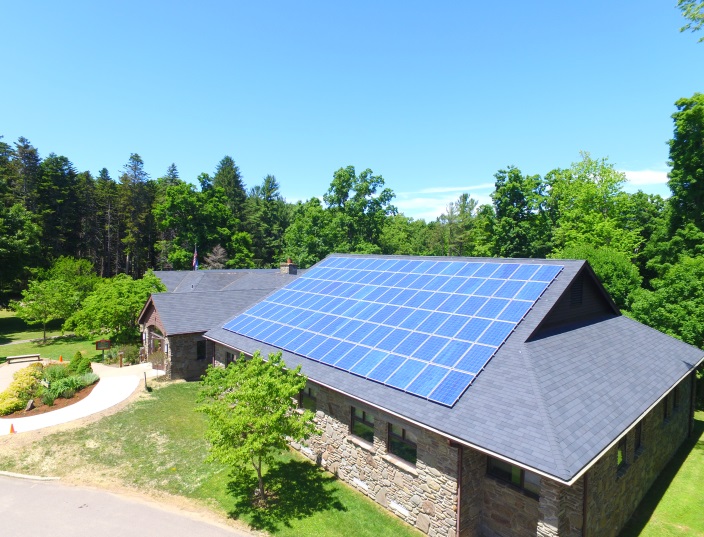
NYS Parks has completed 13 solar installation projects to date. Our goals is use the sun to power part or all of our Parks. As a result of their work State Parks is recognized as the leading renewable energy agency in the state. Most installations were completed by trained in-house State Parks employees after they went through a solar power training course at HVCC. By training employees to install solar arrays, Parks is able to save money and give employees the opportunity to learn valuable skills that give them a better understanding of the project. State Parks currently has about 50 staff members with this training and continues to train more each year.

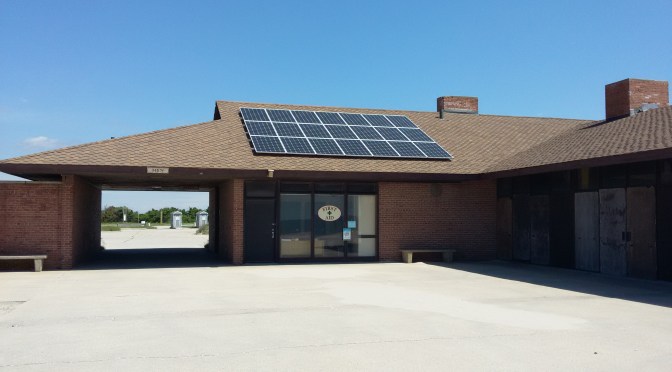
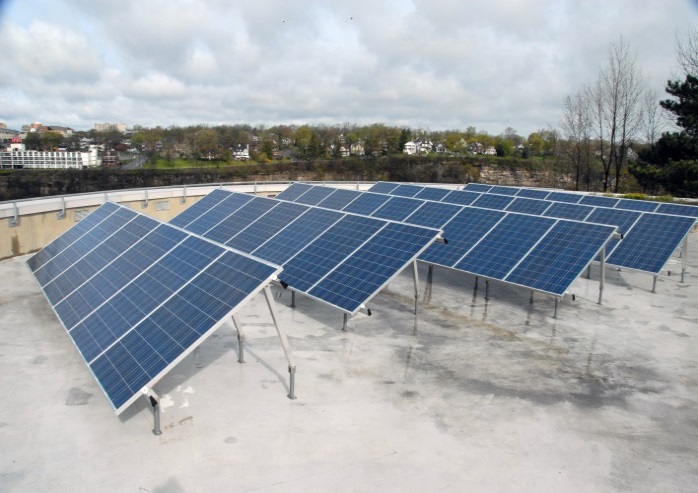
Beginning in 2012 with the construction of the rooftop array on the Niagara Falls Discovery Center State Parks renewable energy projects have grown in number and size. State Parks Staff have installed arrays in several parks across the state including, Niagara Falls, Letchworth, Robert Moses, and Grafton Lakes.

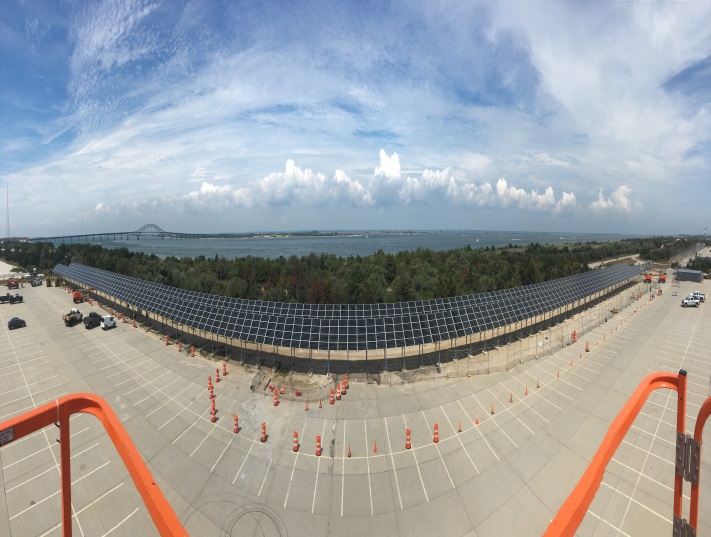
The 13th solar installation was at Robert Moses State Park in Long Island, and will become the first energy neutral State Park in the United States. The nearly 700 kilowatt solar array will save more than $100,000 each year. Built with 2,432 panels, this pole-mounted array is located in the back of parking field 4 of Robert Moses State Park. The solar panels are made in the United States by SolarWorld and supplied by National Solar Technology in Buffalo. This is the largest solar installation by State employees in the State’s history.

Currently Parks is installing a new solar system with a 144 kW capacity at the headquarters of the Historic Preservation Office, Peebles Island State Park in Cohoes. The array will account for more than 20% of the electricity used by the complex. Parks is also constructing a solar array on the roof of the Bathhouse at Lake Taghkanic State Park.  This 40kW solar array will provide more than 25% of the buildings electric need.

Happy Earth Day!

Niagara
Niagara Falls Discovery Center System Output: 8.74 kW Annual Output: 10,940 kWh, photo by State Parks
Letchworth
Letchworth Visitors Center System Output: 25 kW Annual Output: 29,200 kWh, photo by State Parks
Robert Moses
Robert Moses State Park, Field 4 System Output: 693.12 kW Annual Output: 920,000 kWh, photo by State Parks

On land and In Water: 2016 Invasive Species Removal Efforts

Terrestrial Invasive Species

Since 2010, State Parks has hired seasonal Invasive Species Strike Teams to perform removals of terrestrial invasive plants in New York State Parks and Historic Sites.  The work of the Strike Teams allows Parks staff to identify and protect areas of ecological significance that are vulnerable to the growing threat that invasive species pose.

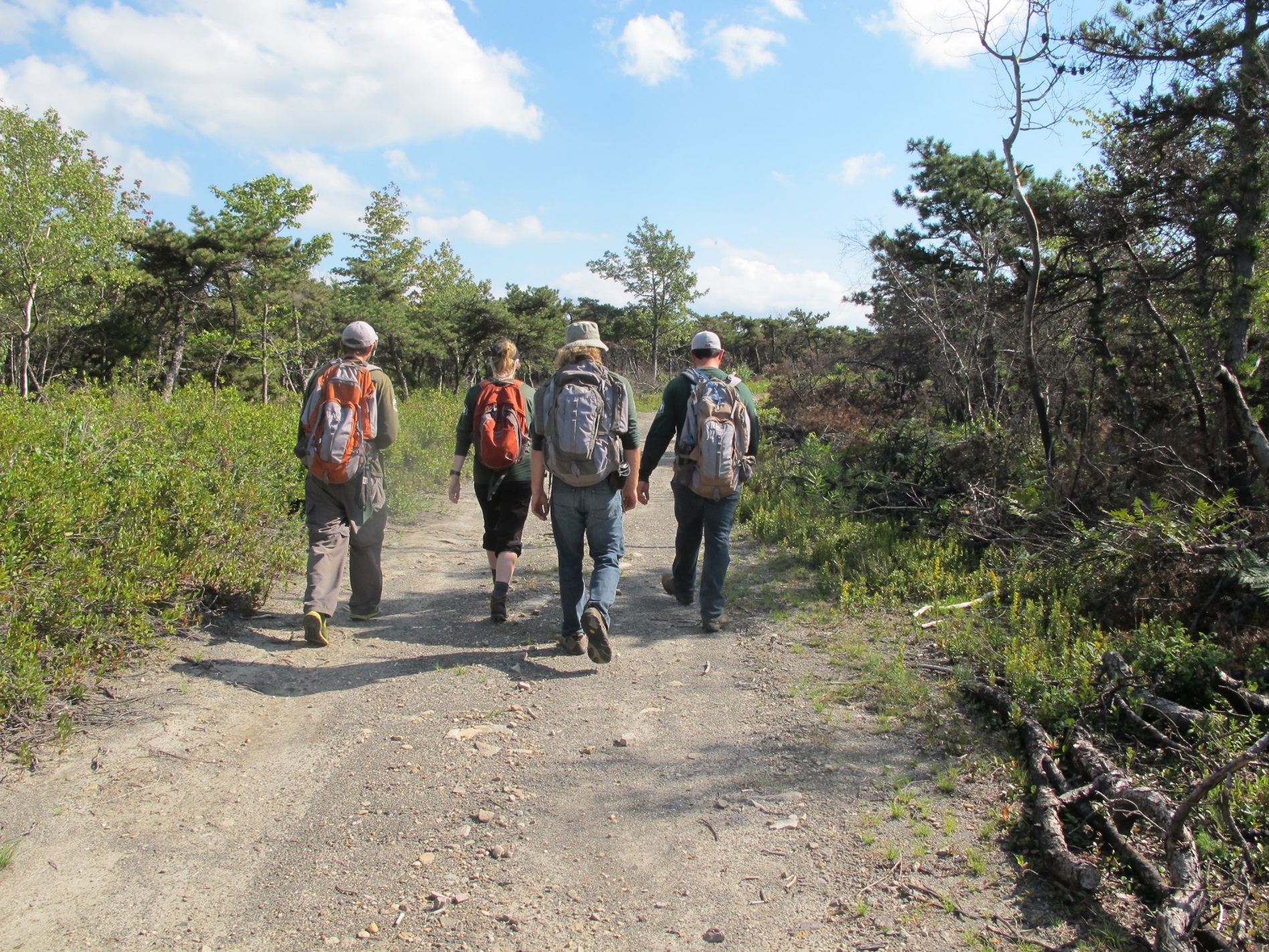
In 2016, two crews were hired, an Eastern Strike Team and a Western Strike Team. Each crew worked a 25-week field season (May 30 – November 18), camping out for much of the time and carrying heavy packs and gear to work sites.

2016-eastern-and-western-strike-teams-bob-obrien-state-parks
2016 Eastern and Western Strike Teams, photo by Robert O’Brien, State Parks.

The Eastern Strike Team covered Parks and Historic Sites in the Saratoga-Capital, Taconic, Palisades and Long Island regions.

  • Over the course of the field season, the crew visited 29 parks in 12 counties.
  • They worked on 38 different projects, targeting 32 invasive plant species.
  • The top three focal species were: Oriental Bittersweet (Celastrus orbiculatus – 18 acres removed), Phragmites (Phragmites australis – 12 acres removed) and Japanese barberry (Berberis thunbergii – 10 acres removed).
  • Surveys and invasives removals were done on a total of 98 acres.
  • Much of the work focused on protecting rare elements including:
    • Karner Blue Butterfly and Sandplain Gerardia – federally endangered
    • Slender Blue Flag Iris and the rare Pink Tickseed – state threatened
    • Cerulean Warbler and Golden Winged Warbler – state listed species of special concern
    • A globally rare maritime grassland habitat

taylor-ouderkirk-casey-bannon-mike-ferri-david-hendler-by-taylor-ouderkirkstate-parks
Taylor Ouderkirk, Casey Bannon, Mike Ferri, David Hendler, photo by Taylor Ouderkirk, State Parks.

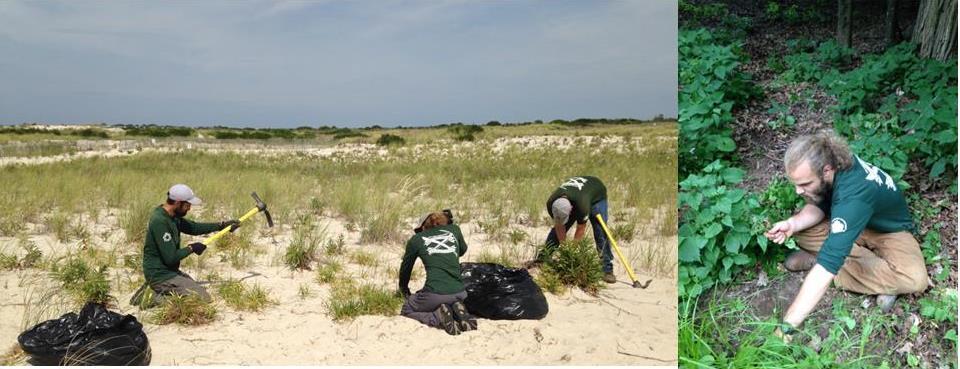
left-eastern-strike-team-removes-asiatic-sand-sedge-at-jones-beach-ny-right-strike-team-member-david-hendler-removes-black-swallow-wort-photos-by-casey-bannon-state-parks
Left: Eastern Strike Team removes Asiatic sand-sedge at Jones Beach, NY; Right: Strike Team member David Hendler removes black swallow-wort, photos by Casey Bannon, State Parks.

The Eastern Strike Team also spent a portion of their time surveying for the Southern Pine Beetle, an insect native to the southeast U.S., which has spread to the northeast, causing large-scale pine die-off on Long Island. The beetle has been detected in traps in State Parks in the Hudson Valley, but no confirmed infestations have yet been found in Pitch Pines in that region. Surveys were conducted in Schunnemunk State Park, Harriman State Park, and Minnewaska State Park Preserve.

the-eastern-strike-team-performs-southern-pine-beetle-surveys-at-minnewaska-state-park-preserve-sara-travalio-state-parks
The Eastern Strike Team performs Southern Pine Beetle surveys at Minnewaska State Park Preserve, photo by Sarah Travalio, State Parks.

The Western Strike Team focused on the Finger Lakes, Central, Thousand Islands, Niagara, Allegany and Genesee Regions.

  • Over the course of the field season, they visited 22 parks in 15 counties.
  • They worked on 50 different projects, targeting 19 invasive plant species.
  • The top three focal species were: Pale Swallowwort (Cynanchum rossicum), Honeysuckle (Lonicera spp.) and Buckthorn (Rhamnus spp.).
  • Topping the ranks in numbers or volume removed were: 2.79 acres of Japanese Knotweed (Fallopia japonica) surveyed and removed, 35,025 Garlic Mustard (Alliaria petiolata ) plants, 34 bags of Pale Swallowwort (Cynanchum rossicum), and 7 dumpsters filled with Phragmites (Phragmites australis).
  • the-2016-western-strike-team-left-to-right-sienna-mcdonald-phil-bossert-dallas-ortel-and-melissa-kirby-state-parks
    The 2016 Western Strike Team (left to right): Sienna McDonald, Phil Bossert, Dallas Ortel, and Melissa Kirby, photo by State Parks.

western-strike-team-members-phil-bossert-left-and-dallas-ortel-right-remove-honeysuckle-at-john-burroughs-memorial-field-state-historic-site-sarah-travalio-state-parks
Western Strike Team members Phil Bossert (left) and Dallas Ortel (right) remove honeysuckle at John Burroughs Memorial Field State Historic Site, photos by Sarah Travalio, State Parks.

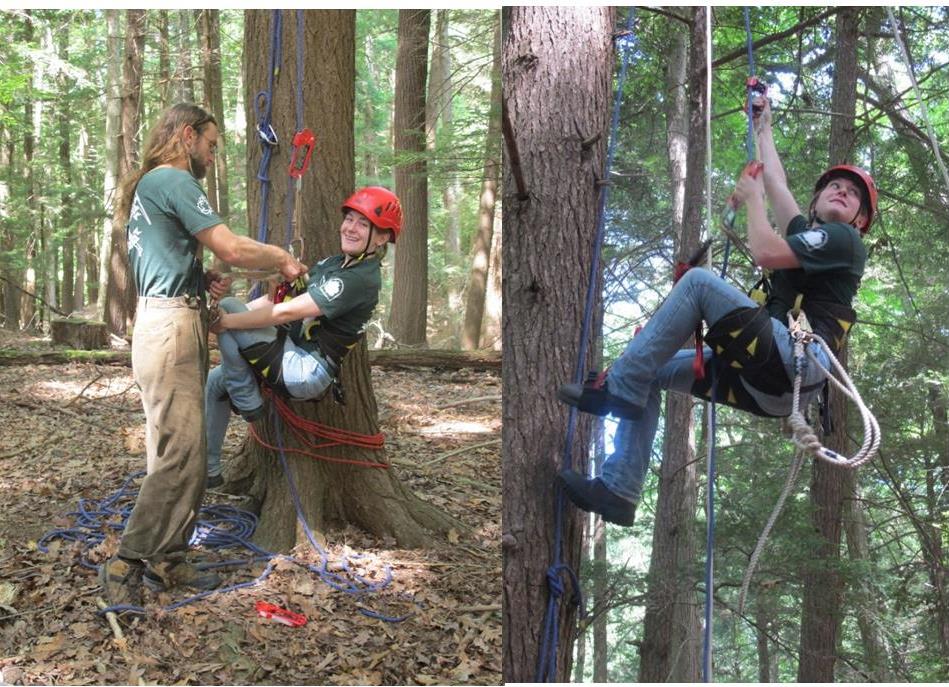
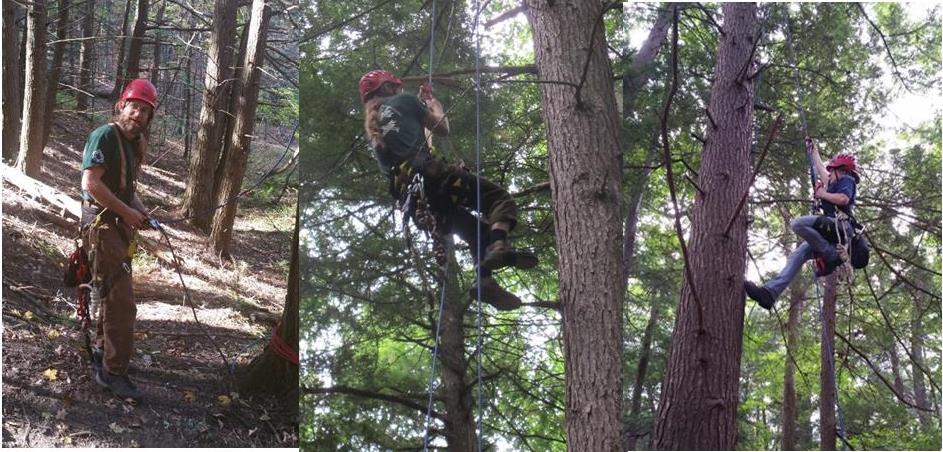
State Parks also hired two Forest Health Specialists to perform surveys for two non-native insect pests: Hemlock Woolly Adelgid (HWA) and Emerald Ash Borer (EAB). These surveys alert New York State Parks invasive species staff to new infestations, assist staff in identifying infested trees that can potentially be saved and allow for the identification and removal of trees that may pose a risk to the safety of park patrons. Forest Health Specialists also performed HWA canopy monitoring (tree-climbing) surveys at sites where HWA-infested trees had been treated previously with chemical insecticides. At these sites, the crew collected data on infestation levels and overall tree health in order to assist invasive species staff in monitoring the effectiveness of treatments.

  • Over the course of the 18-week field season, the crew was able to visit 17 different parks.
  • HWA canopy monitoring surveys were performed in 8 parks, and a total of 42 trees were surveyed.
  • All hemlock trees that had been treated with insecticides in previous years showed either no sign of infestation or signs of improvement.
  • Emerald Ash Borer (EAB) surveys were performed in 14 different parks, and the crew confirmed two new sites of EAB infestation.

forest-health-specialists-jacob-sidey-and-abigail-pierson-prepare-to-climb-a-hemlock-at-r-treman-state-park-and-abigail-shows-how-they-climb-using-ropes-and-no-spikes-sarah-travalio-state-parks
Forest Health Specialists Jacob Sidey and Abigail Pierson prepare to climb a hemlock at Robert H. Treman State Park and Abigail shows how they climb using just ropes and no spikes, photos by Sarah Travalio, State Parks.

surveying-hemlocks-jacob-sidey-left-and-center-at-mine-kill-state-park-and-abigail-pierson-right-at-robert-h-treman-state-park-sarah-travalio-state-parks
Surveying hemlocks: Jacob Sidey (left and center) at Mine Kill State Park and Abigail Pierson (right) at Robert H Treman State Park, photos by Sarah Travalio, State Parks.

Aquatic Invasive Species

The New York State Park’s Boat Steward Program is one of many boat steward programs throughout New York State. These programs provide targeted educational programming to increase awareness about aquatic invasive species (AIS) and other environmentally significant issues.

ariana-london-lake-champlain-steward-completes-a-boater-survey-on-her-tablet-computer-at-the-great-chazy-boat-launch-in-2015-meg-philips-state-parks
Ariana London, Lake Champlain Steward, completes a boater survey on her tablet computer at the Great Chazy boat launch in 2015, photo by Meg Phillips, State Parks.

Did you know that NY State Parks adopted regulations in 2015 to help try to protect our lakes and rivers from the costly effects of invasive species? Find an FAQ about the new regulations here.

The regulations states that a boater:

  • shall not launch or retrieve their watercraft from a Parks-owned boat launch facility unless the watercraft’s water-containing compartments (livewell, bilge, bait bucket) are dry.
  • has inspected the watercraft to ensure that there is not plant or animal material attached to the motor, trailer, body of the vessel, etc.

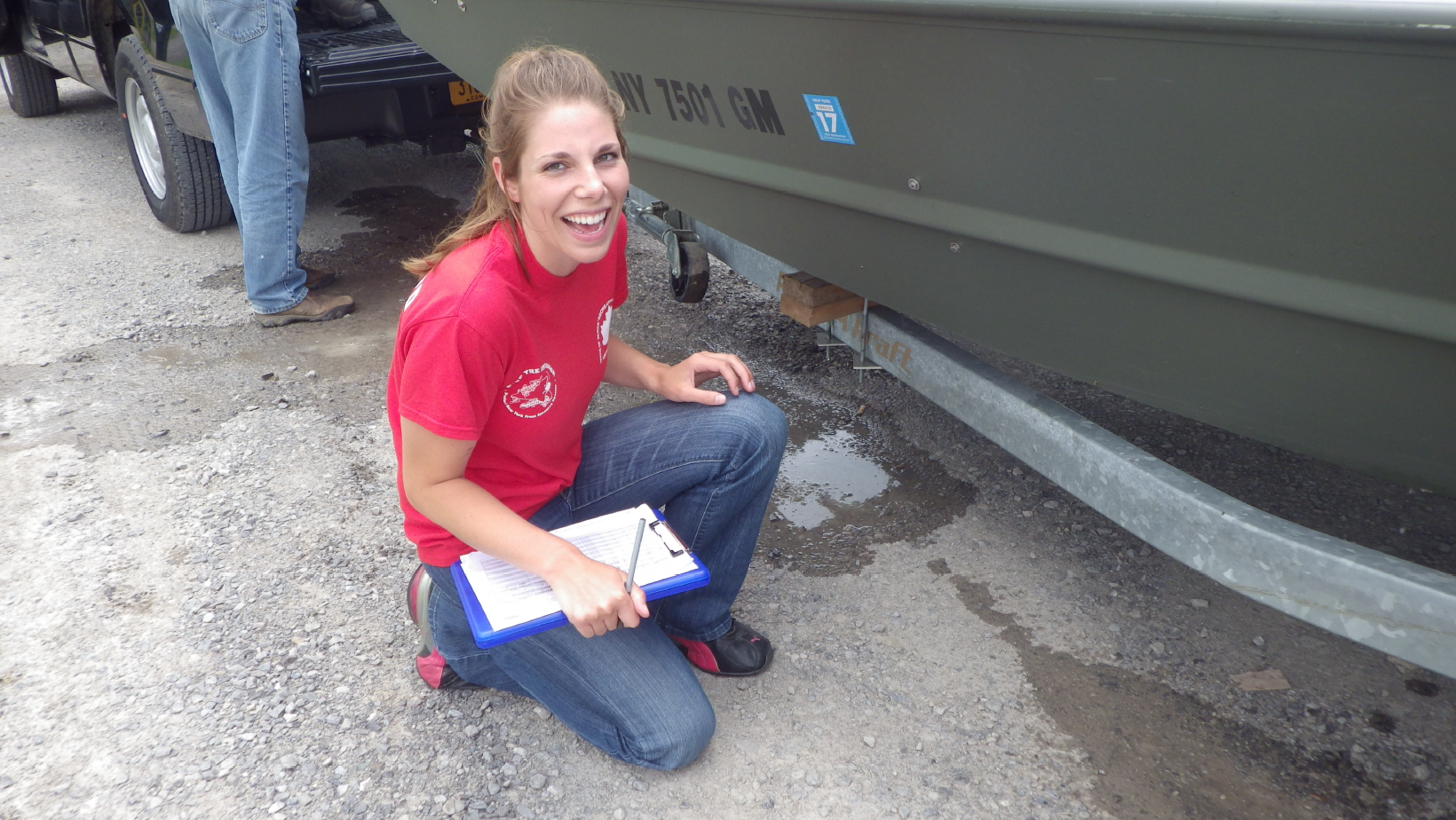
The Boat Steward Program has stewards at many of our Parks-owned boat launches across the state who conduct educational boat inspections to provide step-by-step instructions on ways you can effectively inspect your boat and dispose of invasive species. These demonstrations are both free and voluntary.

Boat Stewards can help you learn about what to do to prevent spreading aquatic invasives and what to look for. They are primarily educators and do not play a role in the enforcement of regulations.

Many Parks-owned boat launches across the state are also equipped with disposal stations for aquatic plant or animal material. The disposal stations are designed to provide a place for plant or animal material to dry out in an upland area. The dried out material is typically collected and placed in the garbage to prevent any further spread.

When you come across a red-shirted Boat Steward, please stop and ask any questions you may have.

becca-reile-buffalo-harbor-steward-completes-a-boat-inspection-in-2015-meg-philips-state-parks
Becca Reile, Buffalo Harbor Steward, completes a boat inspection in 2015, photo by Meg Phillips, State Parks.

2016 Boat Steward Program Highlights:

  • 2016 was the first year of a 2-year $500,000 grant from the Environmental Protection Agency to expand the boat steward program at state park launches
  • 16 stewards worked 30 launches within the Great Lakes Basin, Lake Champlain Basin, and Saratoga Lake
  • There were 21,431 voluntary inspections out of 22,344 boats (95% of boaters allowed their boat to be inspected)
  • 2,982 boats were discovered carrying aquatic invasive species
  • 54,627 boaters interacted with Stewards, with many boaters receiving education about Clean-Drain-Dry and aquatic invasive species
  • 11 invasive species removal projects in partnership with Strike Teams and other partners
  • 10 educational events
  • Approximately 500 bags, or around 12.5 tons, of water chestnut were removed from Selkirk Shores State Park.

jared-reed-saratoga-lake-steward-participates-in-invasive-species-awareness-week-in-albany-matt-brincka-state-parks
Jared Reed, Saratoga Lake Steward, participates in Invasive Species Awareness Week in Albany , photo by Matt Brincka, State Parks.

kelly-butterfield-sunset-bay-steward-and-holly-flanigan-fort-niagara-steward-pulling-invasive-water-chestnut-at-grindstone-marsh-in-selkirk-shores-state-park-matt-brincka-state-parks
Kelly Butterfield, Sunset Bay Steward, and Holly Flanigan, Fort Niagara Steward, pulling water chestnut (an aquatic invasive species) at Grindstone Marsh in Selkirk Shores State Park, photo by Matt Brincka, State Parks.

Click on these links for more information about the Boat Steward Program and aquatic invasive species.

If you are interested in volunteering to help remove invasive species in your area, become a member of your local Partners for Regional Invasive Species Management (PRISM) program.

If you are interesting in seasonal work removing invasive species in State Parks, check out the State Parks employment page.