While there aren’t public events in State Parks this week to mark the 50th anniversary of Earth Day on Wednesday, some of our facilities are still helping the planet every day in the fight against man-made climate change.
Each year, Parks use more than 50 million kilowatt hours (kWh) of electricity to power some 5,000 buildings, including offices, comfort stations, maintenance barns, nature and visitor centers, cabins, historic sites, and other unique facilities like golf courses and pools.
To feed more renewable power into the grid and reduce its demand for fossil fuel-fired electricity, Parks has been installing photovoltaic (PV) solar arrays since 2012. There are now 32 arrays in place, with more expected this year in the Hudson Valley and Long Island regions.
Once the new arrays are completed this year, State Parks will be covering 15 percent of its total statewide energy consumption through solar power, up from the current 4 percent.
These new arrays will offset all the power demand in the Park’s Taconic Region on the eastern side of the Hudson River, which includes 14 parks and eight historic sites in Columbia, Dutchess, Putnam and Westchester counties.
Adding solar power – which unlike natural gas or other fossil fuels does not produce the greenhouse gases that are driving man-made climate change – also saves Parks money on its utility bills. Each year, solar arrays are trimming nearly $340,000 from what Parks would otherwise pay for its electricity!
To perform this work, which both fights climate change and saves money, Parks have trained 100 staff members to design and install our solar arrays.
Parks selects locations for PV arrays that will not disturb natural areas of the park or areas of recreation. They are often installed on rooftops, the back of parking lots, or in other areas that have previously been disturbed.
Parks also applies for financial rebates from the New York State Energy Research and Development Authority (NYERDA) to lower the cost of each project, with savings then reinvested to fund future PV projects. Parks also coordinates with private utility companies to connect its arrays to the grid.
Completed in 2017, Robert Moses State Park made history as being the largest PV installation built by state employees _ its 2,432 American-made panels cover the length of two football fields! This array generates about 950,000 kWh annually, saving more than $100,000 in electricity bills. (For comparison’s sake, the average household in New York State uses about 8,000 kWh annually, according to the U.S. Energy Information Administration).
Solar power made made Robert Moses the first electric energy neutral state park of its size in the country. The array even covers the energy usage of Captree State Park which makes it the second electric energy neutral state park.
Parks also funded, developed, built and managed the first PV installation on the roof of a building listed on the National Historic Register at Peebles Island State Park, headquarters of the Bureau of Historic Sites and Bureau of Historic Preservation Field Service.
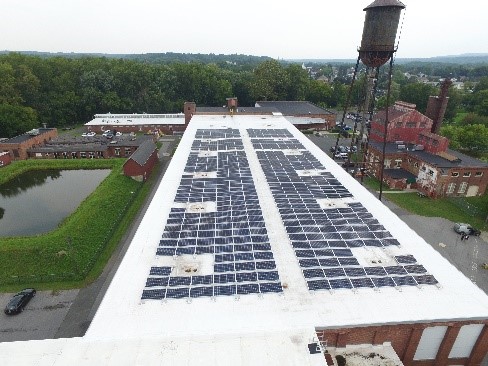
The rooftop array at Peebles Island State Park.
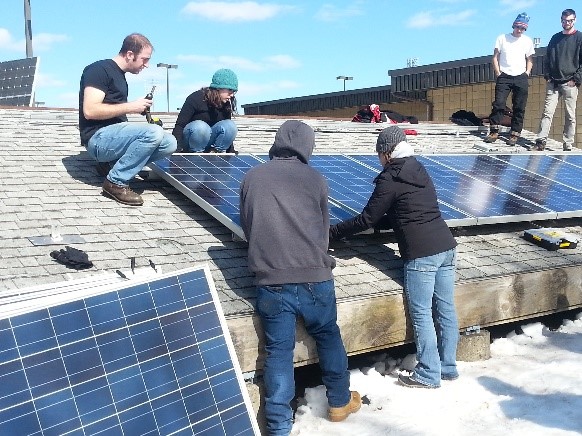
The 450 panels installed on the roof of Peebles’ historic Bleachery Building are projected to generate more than 188,000 kWh and save about $22,500 in utility bills annually. The array covers approximately 30 percent of the building’s energy use. The array at Peebles Island is also used a training location for students from Hudson Valley Community College and the Glenmont Job Corps.
Students from Hudson Valley Community College receive training at the solar array at Peebles Island State Park.
And there will be much more to come. State Parks intends to aggressively increase its solar footprint in order to cover half of its statewide electrical consumption by 2025.
From our smallest arrays to our largest arrays, each PV installation is working to create a greener state parks system every day and for many Earth Days to come!
Cover Photo- Robert Moses State Park solar array. All photos by NYS Parks.
By Caity Tremblay, Parks Energy and Sustainability Bureau
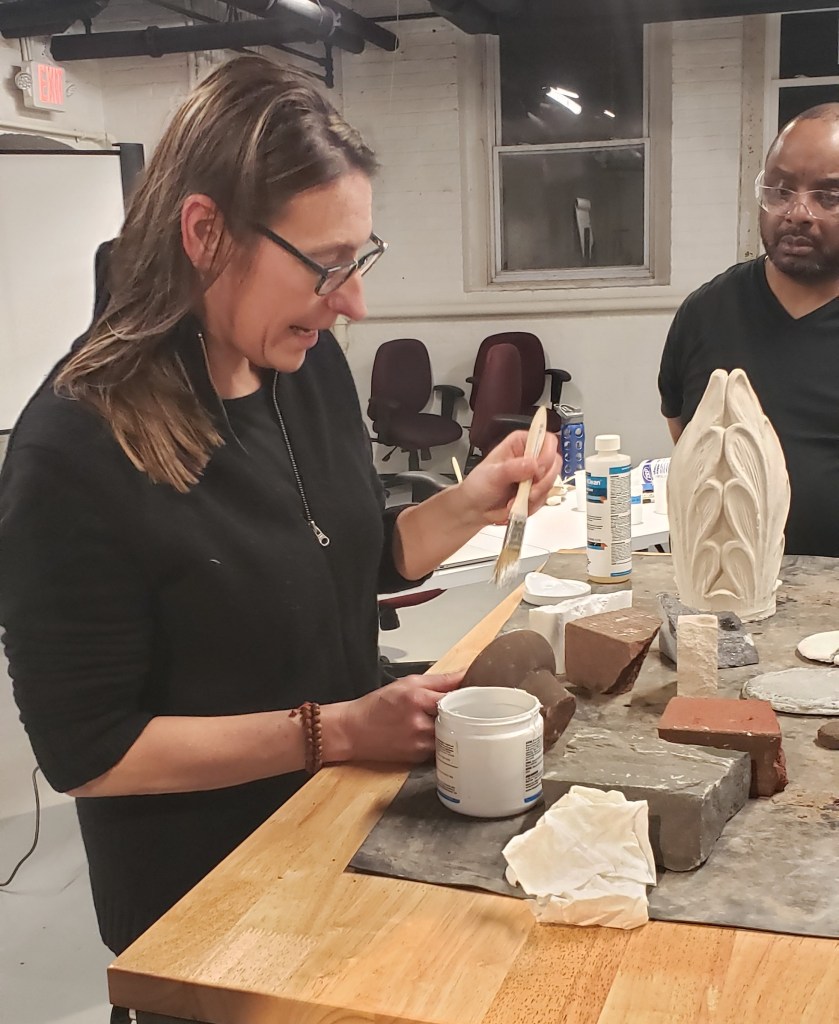
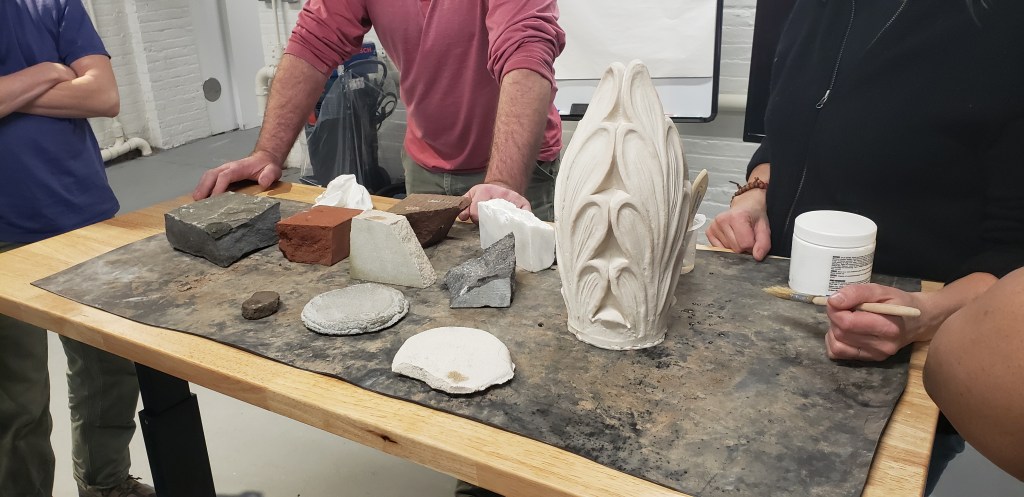
All eyes in the class were on Amanda Trienens as she applied a mild acidic solution onto a piece of discolored old stonework. “Cleaning can really make for a ‘wow’ factor,” she said, as the solution lifted away years of grime.
Six men and three women were with her in the basement of the S.T.E.A.M Garden – a maker space and learning lab on Central Avenue in Albany – attending a certificate course that explores techniques for cleaning and restoration of historic masonry.
A consultant on restoration projects including the U.S. Supreme Court, the original World Trade Center site in New York City, and inventor Thomas Edison’s original stucco garage in West Orange, N.J., Trienens was a visiting expert in class that night. She is founder and principal conservator at Columbia County-based consulting firm Cultural Heritage Conservation LLC.
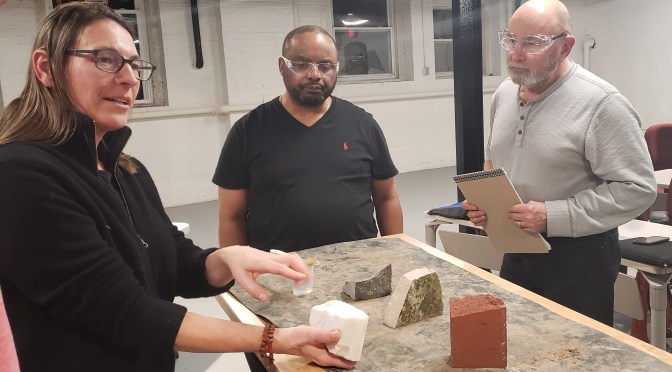
Amanda Trienens shows the use of a laxtex-based cleaner. One of the many bits of advice she gave her students: “Knowing when not to clean.”
Various types of masonry and stone to be cleaned, including brickwork, bluestone and limestone.
Aimed at training more people to better handle restoration projects in older buildings, the program was developed in 2017 by two staff at Parks: Elizabeth Martin, an architect with the Capital Program, and Dan McEneny, a program coordinator at the Division for Historic Preservation.
Through partnerships, the program offers courses to the general public in rehabilitation of historic wooden windows, preservation carpentry and woodworking, and historic plaster repair, with future offerings in roofing repair, and weatherization of historic properties. In addition, last year Martin oversaw the offering of the masonry course for staff at the Palisades Park Region, a new expansion of the program.
“New York has been undergoing a boom in the restoration of historic properties and needs more skilled craftspeople who know how to perform this kind of specialized work,” said McEneny.
“Billions of economic development dollars are being spent in New York, particularly upstate, on preservation projects, and this translates into local jobs in construction, new markets for local businesses, and bolsters the revitalization of villages, towns and cities,” he said.
The growing need for these skilled workers was identified in the 2015-2020 NYS Historic Preservation Plan, after community stakeholders told planners that finding such workers was becoming more difficult.
“There are many opportunities in the historic trades right now,” said Jude Cleary, the HVCC instructor running the historic masonry course. “These opportunities are only going to increase as we employ restoration programs on existing buildings for environmental reasons as well as historical reasons.”
Jude Cleary, (right) the instructor with Hudson Valley Community College, works with Amanda Trienens during her demonstrationas student Dave Publow watches.
At the course, Albany resident Kenneth Arrington said he hoped this training could lead him to a new job.
He had worked as an operating engineer for heavy equipment and as a building maintenance mechanic before recently losing his position. Officials at his local unemployment insurance office had told him about the Historic Trades Program.
For Tony Mariano, a retired pharmacist who lives in Albany’s Center Square neighborhood, the course is a way to fuel his passion to care for his historic home, and to help his neighbors do the same. “I found out about this after my wife saw an ad on Facebook,” said Mariano, who has taught himself plumbing and electrical work.
“I would say that I am a skills collector,” said Dave Publow, a South Troy resident and former bicycle mechanic who is gutting and restoring a former commercial building in that neighborhood for potential use as a print studio and incubator space.
Dave Publow tries his hand at cleaning a section of stonework.
Publow has already taken the carpentry and window restoration courses through the Historic Trades Program. “I really wanted to leap into this with both feet,” he said.
As Susan Sfarra applied cleaning solution to a piece of stonework, she said her neighbors in Schenectady’s Historic Stockade District encouraged her to take the course.
“Many of us in the Stockade are worried about a lack of qualified workers,” said Sfarra, who owns a brick home dating to 1838, and who also is the daughter and granddaughter to bricklayers and masons.
“My plan is to take all the courses. When you own an older home, it is a privilege, and you really are a caretaker,” she said.
The Historic Trades Program will help preserve more historic homes and neighborhoods, said Historic Albany Foundation Executive Director Pamela Howard.
“Historic Albany Foundation has been pleased to be a partner in the Historic Preservation Trades Program with HVCC since the beginning. Having skilled and trained preservation trades people is critical to the preservation of our historic homes and neighborhoods,” she said. “In addition, introducing a new professional audience to our Architectural Parts Warehouse is critical for both incoming and outgoing salvaged items to keep them from the landfills and getting them back into local homes.”
Learn More
Find more courses in the Historic Trades Program in the Albany region here.
Courses on historic window restoration are also being held this month in the Buffalo region, sponsored by State Parks and First Niagara.
Read Hudson Valley Community College’s announcement on the Historic Trades Program.
Cover Shot: Kenneth Arrington (left), and Tony Mariano, watch with another other student as Amanda Trienens demonstrates a cleaning technique. (All photos-NYS Parks)
By Brian Nearing, Parks Deputy Public Information Officer
State Parks contain a diversity of habitats, from forest and fields, to shrub swamp, marshes and streams. All these landscapes support a wide variety of native plants.
As part of efforts at Parks to restore land and protect biodiversity, it is important to have the right plants for the right habitats in order to support healthy ecological function, provide critical habitat for wildlife and reduce the threat from invasive species.
Such projects require a source of plants that are native to the area. Since it can be difficult to find such plants commercially, the Plant Materials Program was started at Sonnenberg Gardens & Mansion State Historic Park in 2016.
This program was created by the Finger Lakes Environmental Field Team, which was working at Ganondagan State Historic Site in Victor, Ontario County, to restore a grassland habitat critical for endangered birds. And the job called for 200 different species of native plants.
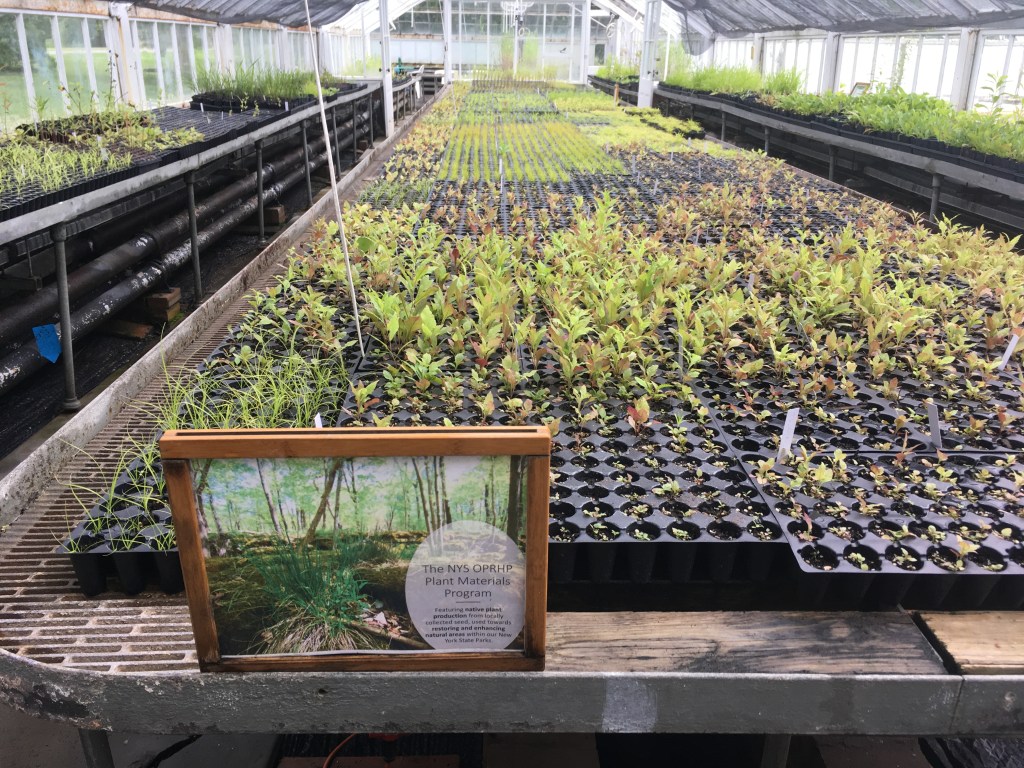
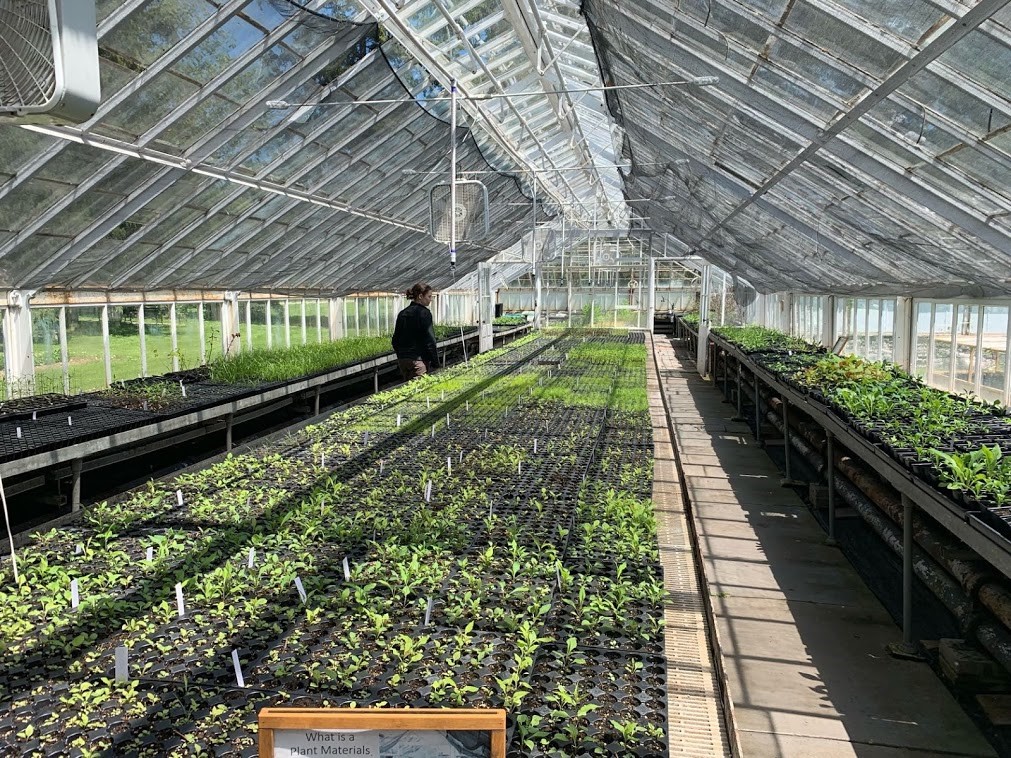
Since then, such plants have been grown in the Sonnenberg’s historic greenhouses in Canandaigua, at the north end of its namesake lake in the Finger Lakes region, to cover parks projects in the eastern part of New York. Many of the Sonnenberg greenhouses had been vacant for years, so this was a perfect match for the facility.
Seedings for native plants, grown from seeds hand-collected in the field by State Parks staffers at the Plant Materials Program, fill the greenhouses at Sonnenberg.
Plant Materials Program Coordinator Brigitte Wierzbicki, Lead Technician David Rutherford and technician Elizabeth Padgett, supported by seasonal staff, partners, and interns, run the program. To fill orders, they identify native species in the field, sustainably collect seeds, propagate those seeds in the greenhouses, and deliver plants back to project sites.
Now in its fourth year, the Ganondagan project aims to recreate the oak savanna grasslands found there in the 1600’s, when the land was managed by the Onöndawá’ga (Seneca) people. This last season, the Plant Materials Program provided more than 5,000 plants towards this project, and over 100 pounds of hand-collected seed have been sown on site.
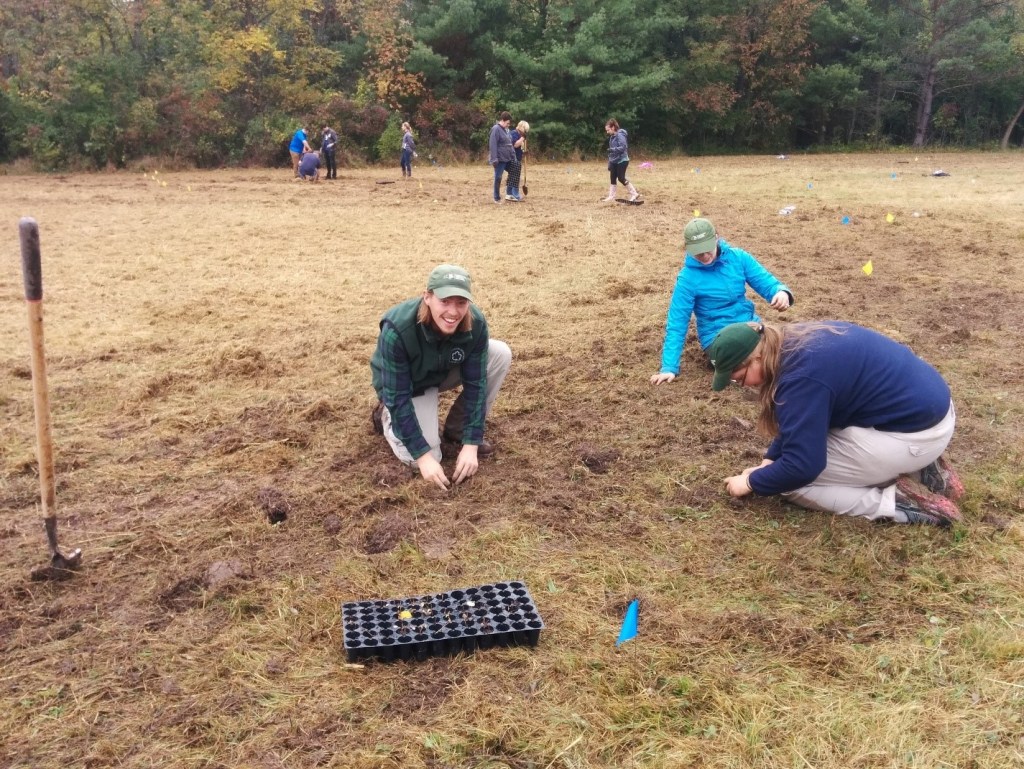
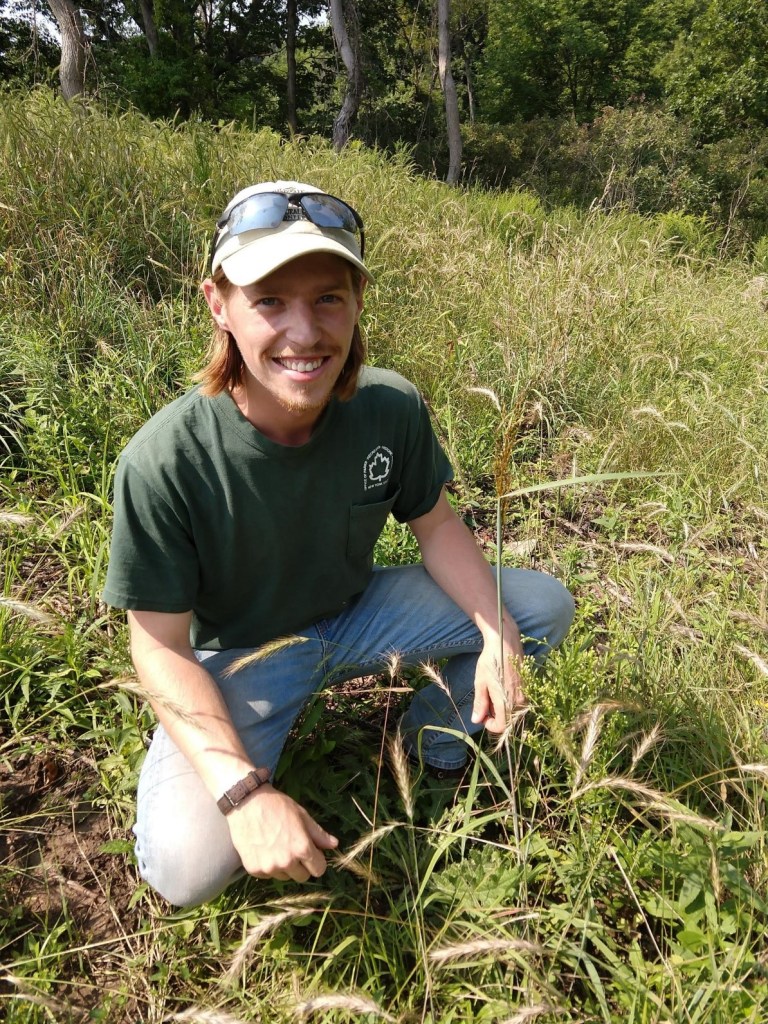
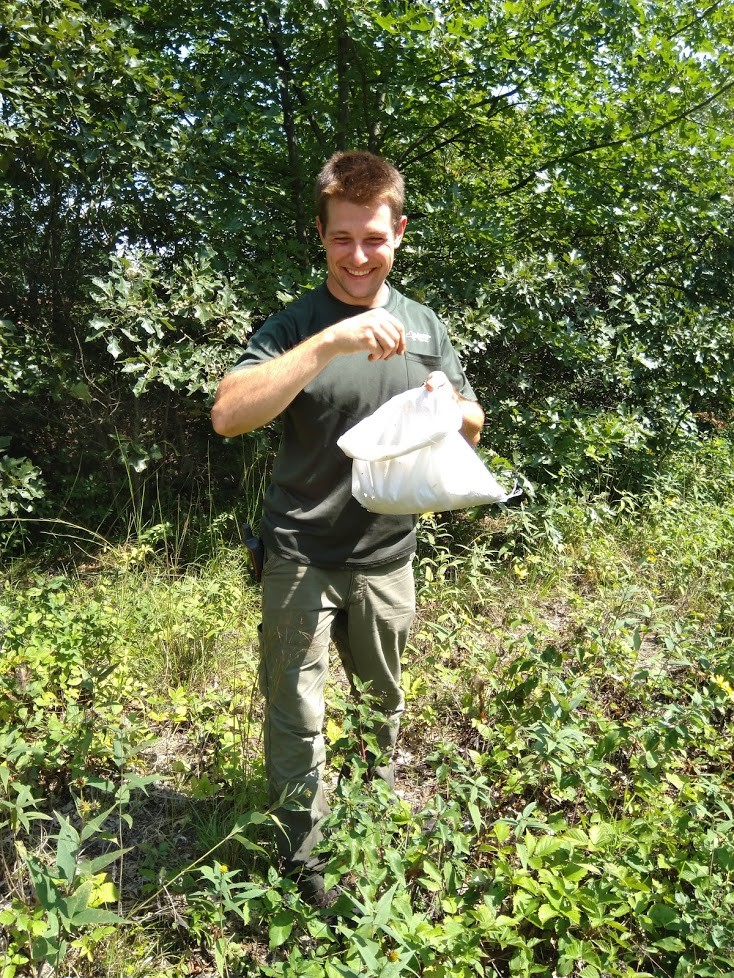
Seedlings in the Sonnenberg greehouse (1); Kyle Webster and Environmental Field Team staffers plant asters at Cayuga Lake State park (2), Webster with newly-established wild grasses at Canondagan State Historic Site (3); and Plant Matertials Program Lead Technician David Rutherford collects lupine seed at Saratoga Spa State Park (4).
Currently, the Plant Materials Program provides for environmental stewardship projects across six State Park regions of the state, from the Finger Lakes Region and eastward to the Taconic Region. The program also works with Parks Western District Nursery and its Native Landscape Resource Center, managed by Kevin McNallie at Knox Farm State Park in Erie County, which provides native plantings for the western regions of the state.
Additional guidance on plant suitability for specific habitats or sites is provided by NY Natural Heritage Program.
Why Native Plants?
A wealth of literature points to native plants and species diversity as critical factors for successful restoration. Native plantings are better able to compete against invasive species than non-native plants. Planting more native species also increases both plant and animal diversity. Ensuring that plants are not only native, but regionally appropriate and genetically diverse increases the likelihood that the plantings will be successful and contribute to their local ecosystem.
Plant Materials Program staff search for wild, naturally-occurring populations for each project within the same ecoregion. Ecoregions are zones defined by their plants, soil, geography, geology, climate, and more. Plants that live in the same ecoregion have adaptations that help each species survive in those precise conditions, so seed has the best chance of survival if it is replanted within that zone.
New York State is split into 42 different ecoregions, with each region warranting a different seed collection so that seed is often not shared across projects. In the Sonnenberg greenhouses, plants are not allowed to hybridize (or cross-pollinate) with plants from other regions. Preserving the plant genetics of each ecoregion is important to maintain each unique habitat.
Science of Collecting Native Seeds
Seed collection involves more than just taking a seed from a plant. Our collectors ensure collections aren’t harming the population. Only a small fraction of seed is taken from each plant, so that enough seed remains to support that population, and to serve as food for insects and other animals.
Populations of a plant must be large enough to support seed collection. Areas are monitored before and after collection, and they are not collected from again for multiple years. The conservation of intact ecosystems is more effective than planting and restoring ecosystems, so it is important that seeds are collected in a way that protects existing plant populations.
Measures are also taken to capture genetic diversity, including collecting multiple times a season and using field techniques to collect evenly or randomly across a population. Collectors avoid selecting for specific traits, as that can reduce a population’s ability to adapt, and can in turn negatively impact other populations.
Native Plants Help an Endangered Butterfly
In the Capital Region, the Plant Materials Program collects wildflower seed to support Parks Stewardship staff in restoring rare butterfly habitat. Saratoga Spa State Park is home to the state and federally-endangered, and globally-rare Karner blue butterfly. This small butterfly lives in pitch pine-scrub oak barrens, and during its caterpillar stage, it feeds on only one wildflower: the blue lupine (Lupinus perennis).
Blue Lupine. (Photo Credit- U.S. Fish and Wildlife Service)
Karner blue butterfly on lupine. (Photo credit- C. Voight)
Picking seeds from the right lupine plants is extremely important, as the chemical makeup of lupine has been shown to vary across the range of the species. Introducing a new strain of lupine might be harmful or even toxic for the butterflies. For example, the same species of lupine growing in another state could be different enough from the ones growing at Saratoga Spa State Park that, if planted there, could be toxic to the Karner blue butterflies living in the park.
A 2015 study found that survival and development of the Karner blue was linked to which lupines caterpillars had fed upon. Expanding lupine at Saratoga Spa through local seed is the safest option to protect the unique genetics of both the butterflies and lupine.
New Life for Sonnenberg’s Historic Greenhouses
Each spring, the Plant Materials Program grows a new cycle of plants in Sonnenberg’s historic Lord & Burnham greenhouses. These are greenhouses which date back to the Gilded Age of the early 1900s and reflect the botanical passions of the home’s original residents, Frederick Ferris Thompson and Mary Clark Thompson, two prominent philanthropists.
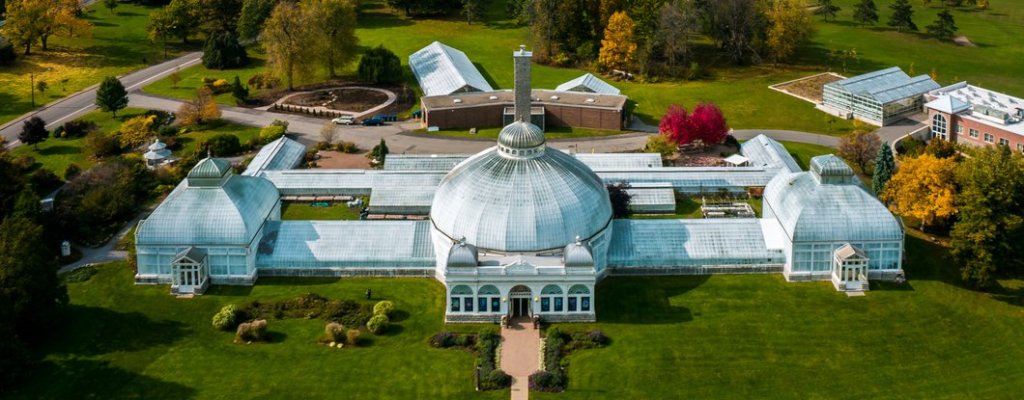
The historic greenhouse complex at Sonnenberg Gardens and Mansion State Historic Park. (Photo Credit- Sonnenberg Gardens and Mansion)
One of the greenhouses that is currently under restoration. A not-for-profit group that manages the site is fundraising to help support such work. (Photo credit- Sonnenberg Gardens and Mansion).
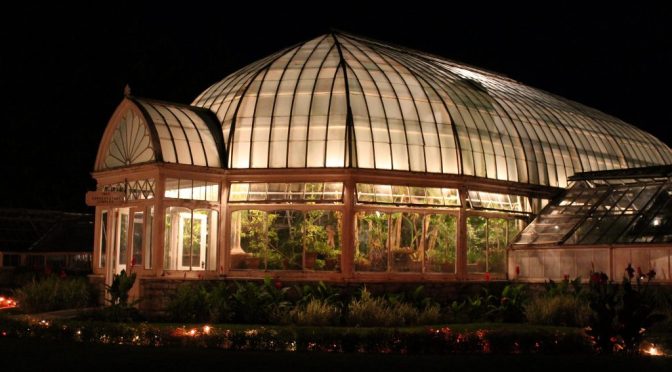
At the time of construction between 1903 and 1915, the greenhouses at Sonnenberg reflected state-of-the-art technology. Only a handful of other such Lord & Burnham structures survive today, with some major examples found at the New York Botanical Garden in The Bronx, The Buffalo and Erie County Botanical Gardens, the United States Botanic Garden in Washington, D.C., and the Phipps Conservatory and Botanical Gardens in Pittsburgh.
Other examples of Lord & Burham greenhouse complexes, including (1) New York Botanical Garden, (2) Buffalo and Erie County Botanical Garden, (3) the Phillps Conservatory, and (4) U.S. Botanic Garden.
This 50-acre estate and its greenhouses, gardens, and Queen Anne-style mansion are all open to the public from May through October. A portion of the greenhouses interprets the legacy of the site, including a palm house, orchid house, and cactus house.
Patrons can tour the greenhouses utilized by the Plant Materials Program and learn about the thousands of plants grown for restoration of native ecosystems. Housing the program at Sonnenberg expands the interpretative value for park visitors and supports the restoration of these historic structures.
During this long winter, know that the next generation of native plants for New York State Parks projects is being nurtured in a historic greenhouse complex that dates to the Gilded Age, and come spring, will be ready to preserve and protect some of our most precious places.
Sonnenberg Gardens and Mansion State Historic Park in winter. The site is open May 1 to Oct. 31 each year.
Post by Brigitte Wierzbicki, Plant Materials Program Coordinator
Cover photo by Sonnenberg Gardens and Mansion State Historic Site
Consider Native Species When Planting At Home
Check if you have natives already coming up in your garden or yard. It is likely that you already have some native plants that are providing habitat, and these will be best adapted to your local ecosystem. Use indentification resources to see what is from NY or New England. Apps likeiNaturalist, online guides like GoBotany, or field guides like Newcomb’s (Newcomb’s Wildflower Guide, Lawrence Newcomb) are great resources for getting started.
Native Plantfinder is a great resource to choose which plants are native to your zip code! It also ranks plants based on the number of native butterflies and moths that can use the plants—meaning you will be bringing in more wildlife into your garden including pollinators and birds. It is still in development and only a small fraction of these will be available commercially, so double check your favorites with what’s available.
Use the New York Flora Atlasto ensure the plant you’re interested in is native to the state. Even better if it’s native to the county you’re planting in!
Utilize the New York State Department of Environmental Conservation Saratoga Tree Nursery. The 2020 Seedling Sale is currently ongoing and is an affordable way to purchase native plants and support environmental conservation work in the state.
Check out the Native Plant Nursery Directoryto find your local native plant nursery. Request that your local garden center carries native plants, and ideally, ones that are from New York. Often the native species in nurseries are sourced from outside of New York, or even the southern U.S. These won’t be as well adapted to New York.
Avoid cultivars of native species. You may find some natives in nurseries with different names signifying they have been bred for different colors or flower shapes. These changes can reduce the ecosystem function of the plants, or even populations beyond your garden if they are able to breed. Our native species evolved with the native pollinators, and changes can make the plants completely unusable for native pollinators.
Do not collect from the wild for your garden. Taking from the wild can be more damaging to the ecosystem than the benefit that it may bring to your garden. Collecting from the wild is also often illegal. Many factors need to be considered for safe harvests, and many of our plant populations are experiencing declines due to development, habitat fragmentation, invasive species, deer overabundance, climate change, and more. It can be hard to know if the seeds you’re taking will damage the population or remove a critical food source, so don’t take the risk!
References
Bakker, J.D. & Wilson, S.D. (2004) Using ecological restoration to constrain biological invasion. Journal of Applied Ecology, 41, 1058–1064.
Fargione, J.E. & Tilman, D. (2005) Diversity decreases invasion via both sampling and complementarity effects. Ecology Letters, 8, 604–611.
Handel, K. (2015) Testing local adaptation of the federally endangered Karner blue butterfly (Lycaeides melissa samuelis) to its single host plant the wild lupine (Lupinus perennis). (Electronic Thesis or Dissertation).
Hereford J. 2009. A quantitative survey of local adaptation and fitness trade-offs. American Naturalist 173:579-588.
Johnson R, Stritch L, Olwell P, Lambert S, Horning ME, Cronn R. 2010. What are the best seed sources for ecosystem restoration on BLM and USFS lands? Native Plants Journal 11(2): 117-131.
Kline, V.M. (1997) Orchards of oak and a sea of grass. In: Packard, S.; Mutel, C.F., editors. The Tallgrass Restoration Handbook. Washington, DC: Island Press:3-21.
Omernik, J. M. (1987). Ecoregions of the conterminous United States. Annals of the Association of American geographers, 77(1), 118-125.
For many people, mushrooms can be a healthy, tasty addition at mealtime. But along the Lake Erie shoreline south of Buffalo, the science of mushrooms is being used in an innovative way – as an environmentally-safe method to reduce harmful bacteria in a stream near the beach at Lake Erie State Park.
At the beginning of this decade, tests of the stream and water at the beach by the State Parks Water Quality Unit were showing consistently high levels of e. coli, a bacteria found in fecal matter which can severely sicken those who have been exposed.
The sand and cobble beach in Chautauqua County had been closed to swimming for several years due to a combination of high bacterial levels and fiscal constraints. Testing indicated that the problem likely was being caused by faulty septic systems or unsewered properties upstream, although additional contamination from animals could not be ruled out as another potential source.
While there are mechanical and chemical techniques to filter such harmful bacteria from water, in 2014 Water Quality staff decided to test an innovative mushroom-based system developed by Fungi Perfecti, a Washington-state based company with a long research history into fungus and mushrooms, a scientific field known as mycology.
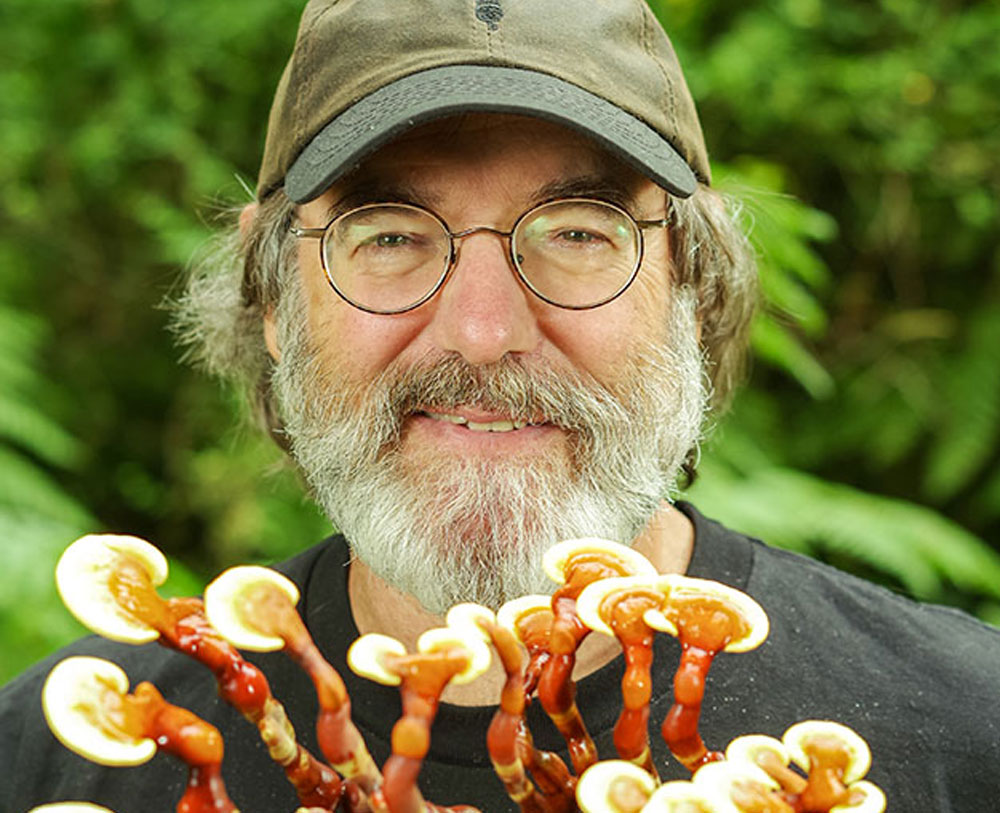
Company founder and owner Paul Stamets is a nationally- and internationally-recognized expert and promotes innovative uses for mushrooms in bioremediation and medical therapies. He even entered the realm of popular culture when creators of the latest Star Trek franchise, which started in 2017 on CBS All Access, named the ship’s science officer after him as part of the use of a a mushroom-based propulsion system for the Starship Enterprise.
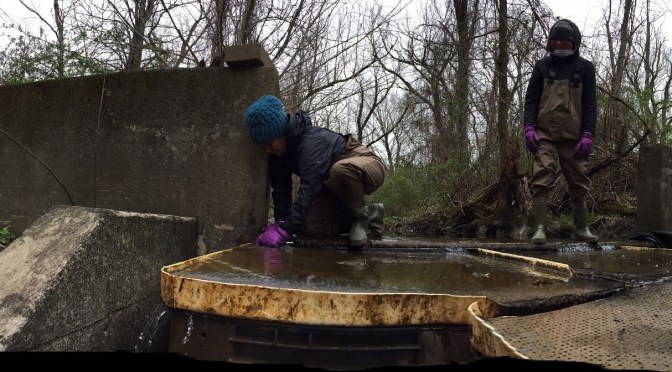
Meanwhile, back here in New York State and with funding support from the federal Great Lake Restoration Initiative, water quality staffers at State Parks installed a Stamets-designed mycofiltration system into this small creek at the Park.
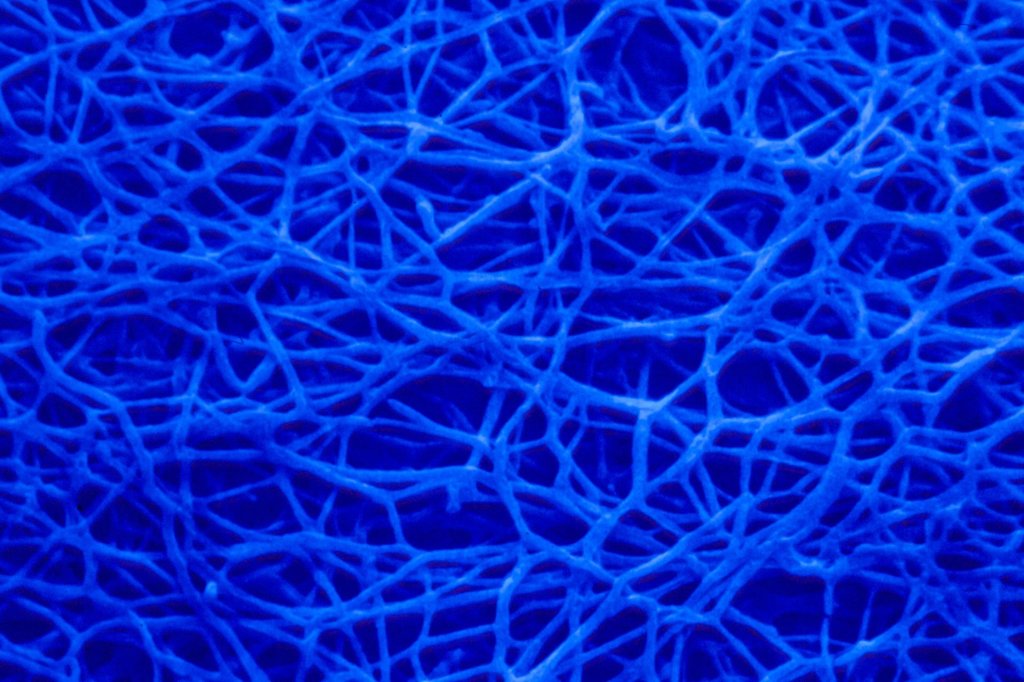
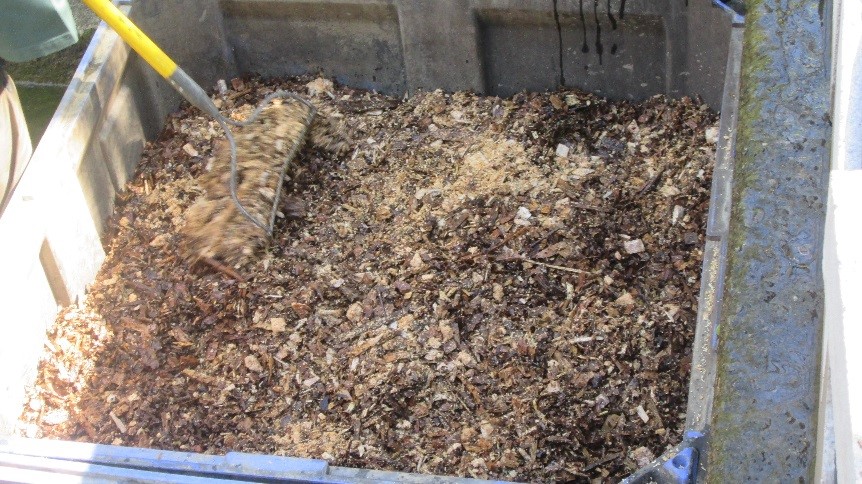
The filtration system uses large plastic containers called totes that contain a mixture of wood chips and mycelium (the tiny threadlike vegetative part of fungi that fruits as mushrooms) that allow water to pass through. This allows the mycelium mixture to absorb bacteria from contaminated water as it flows past.
A crane drops the mycofiltration tote into position within a concrete weir that channels the stream. (Photo Credit- State Parks)
Microscopic image of mycelium (Photo Credit- Fungi Perfecti)
So far, the test results seem promising. E. coli levels downstream of the filtration system have dropped and water quality at the beach has improved, although outside factors, including improvements in the surrounding watershed, may have contributed.
The mycelium in the totes were reinoculated – another way of saying reimplanted and reinvigorated – in 2016 and 2019. Data from this project is being shared with Fungi Perfecti to assist in their research and development of their system.
Said Renee Davis, director of research and development at Fungi Perfecti, “We are proud of the contributions that fungal mycelium has been able to make for Lake Erie State Park and the surrounding ecosystems. Though we still face challenges with scalability of this technology, the applications are promising. We are closely studying the aspects of fungal metabolism that drive these effects, particularly the secretion of specialized compounds from mycelium into the environment.”
She added, “New potential applications have also arisen for bioretention and stormwater. For us, this project is an example of the possibilities that emerge when we look at nature—particularly fungi—in a new, creative, and innovative way. We hope this is the first of many projects to come using mushroom mycelium for water quality.”
Mycelium and wood chips are mixed together in the totes. (Photo Credit- State Parks)Totes rest within the concrete channel of the stream. (Photo Credit- State Parks)
Currently, this is the only State Park where this chemical-free, ecologically-safe method is being tested, although it could be introduced into the Finger Lakes region if a suitable location can be found.
Cover Shot: NYS Parks crews service the mycofiltration unit in Lake Erie State Park in 2016.
Hear Fungi Perfecti Founder Paul Stamets give a TED lecture on the potential uses of mushrooms.
Fungi Perfecti founder and owner Paul Stamets. (Photo Credit- Fungi Perfecti)
Stamets’ awards include Invention Ambassador (2014-2015) for the American Association for the Advancement of Science (AAAS), the National Mycologist Award (2014) from the North American Mycological Association (NAMA), and the Gordon & Tina Wasson Award (2015) from the Mycological Society of America (MSA).
Currently, Stamets is testing extracts of rare mushroom strains at the NIH (National Institutes of Health/Virology) and with Washington State University/United States Department of Agriculture against a wide panel of viruses pathogenic to humans, animals and bees.
Read what local Capital Region entrepreneur Eben Bayer, owner of Ecovative Design, a mushroom-based packaging and development business based in Green Island, has to say about the scientific potential of mycelium.
The Ice Age, which helped form Chenango Valley State Park in the Southern Tier about 12,000 years ago, is back in a big way.
After leaves are off the trees, but before the snow flies, park crews will create what is possibly the largest refrigerated outdoor ice rink in North America. And when they build it, hockey players young and old will come.
At 24,200 square feet, this mechanically-generated ice sheet is more than 40 percent larger than the temporary outdoor facilities set up by the National Hockey League, which plays a handful of its contests outside each year.
Behold the frozen home of the Binghamton Pond Festival (called Pond Fest for short), a series of outdoor amateur hockey tournaments and youth events in the park that started in 2016, and now is drawing hundreds of youth and adult players to Broome County in January from as far away as California and Texas.
Teams compete at the Binghamton Pond Fest last year. Larger than an NHL rink, the Pond Fest refrigerated rink is divided into four sections.
Young skaters take to the ice.
A youth team member gets her game face on.
This year’s fest starts January 11 and again benefits the Mental Health Association of the Southern Tier and its programs focused on youth suicide prevention and youth mental health awareness.
Pond Fest owes it creation and growing success to two men — Tytus Haller, its founder, and Mike Boyle, manager at Chenango Valley State Park — and to the reliability of mechanical refrigeration to create and keep ice even when Mother Nature is not cooperating.
“Our first two years, in 2016 and 2017, we were running the tournament on the lake. We’d be out there checking the ice all the time,” said Haller.
And both years, unusually warm weather during the tournament left the ice in poor condition, which reduced the appeal to potential players. Said Haller, “The first couple of years, it was mainly a local crowd.”
Tytus Haller, founder and executive director of Binghamton Pond Fest, and his wife, Libbie.
But that all changed when Haller — the assistant director of the SUNY Broome Ice Center in nearby Binghamton — decided if winter was going to be unreliable, it was time to free Pond Fest from the weather with a mechanical refrigeration system.
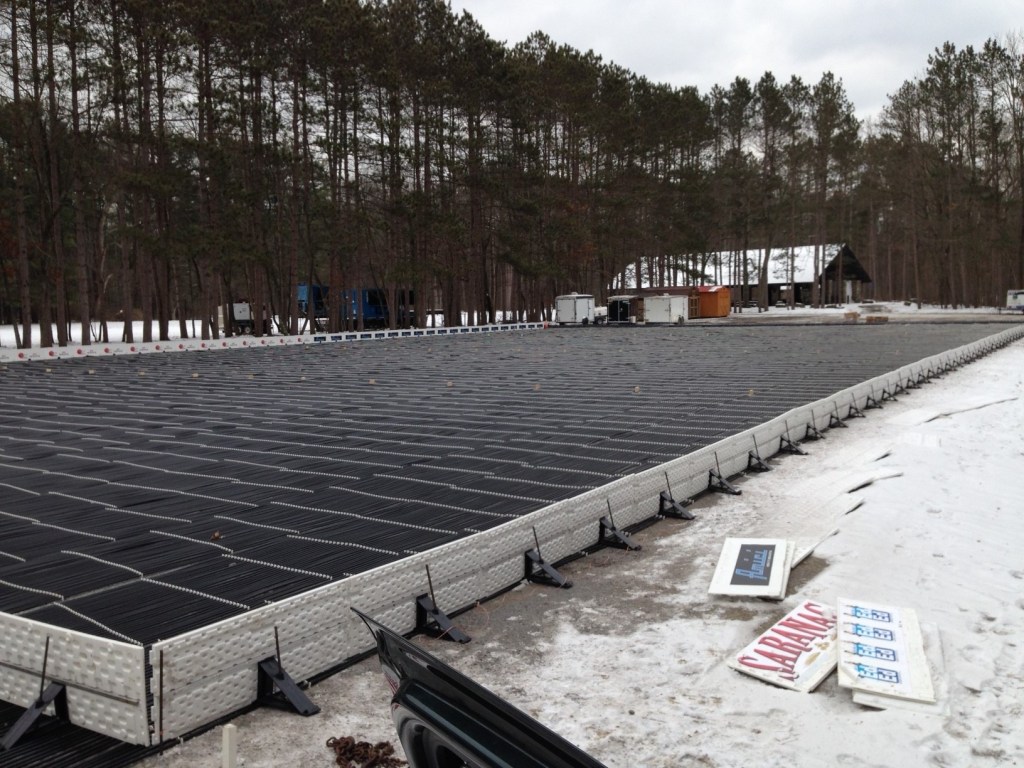
Such systems use glycol, tubes, pumps, and “chiller” machines to drop the temperature of refrigerated tubing beneath a rink into the mid-teens. This forms an ice sheet that can be maintained even in warm weather.
All Haller had to do was figure out a way to get the equipment, which was going to cost a couple hundred thousand dollars.
With the help of state Sen. Fred Askhar, who got a $150,000 grant to help Chenango Valley buy much of the rink system, the 2018 tournament was the first played played on refrigerated ice.
“Things really took off then and in 2019, when word got out what we had and what we were doing,” Haller said. “I have not found anyone else in North America that has a refrigerated outdoor rink as large as ours.”
Now, the tournament in the park is drawing youth and adult teams from states beyond New York including New Jersey, Massachusetts, Florida, Texas, Georgia, Ohio, Virginia, Maryland, and California.
One of those coming in with a youth team in 2020 is Dallas resident Seth Turner. He has ties to Haller and the region after attending and playing hockey at Broome Community College some two decades ago.
He attended the initial Pond Fests without refrigeration, and saw how it all changed once the equipment was added. Now a youth hockey coach in Dallas, Turner pitched the idea of a January trip to upstate new York to local families, and eight are taking on the expense to send their kids to Pond Fest.
“Having refrigeration is the pitch,” Turner said. “I was able to tell parents that their kids would be playing, no matter what, whether it was raining, or sunny, or snowing. And that we would be playing in a beautiful park, in the woods. That made it an easy sell.”
Hockey is an increasingly popular sport in Dallas, he said, due to the presence of the city’s NHL team, the Stars. Local interest is even stronger now that the NHL will play its outside “Winter Classic” on a refrigerated ice sheet in that city’s Cotton Bowl in January.
At Pond Fest, adults have three-on-three and four-on-four tournaments. Youth teams have six and 16 players for a weekend of hockey and other fun in the park. Pond Fest also hosts a skills and skating clinic and will now offer private rentals of the ice sheet.
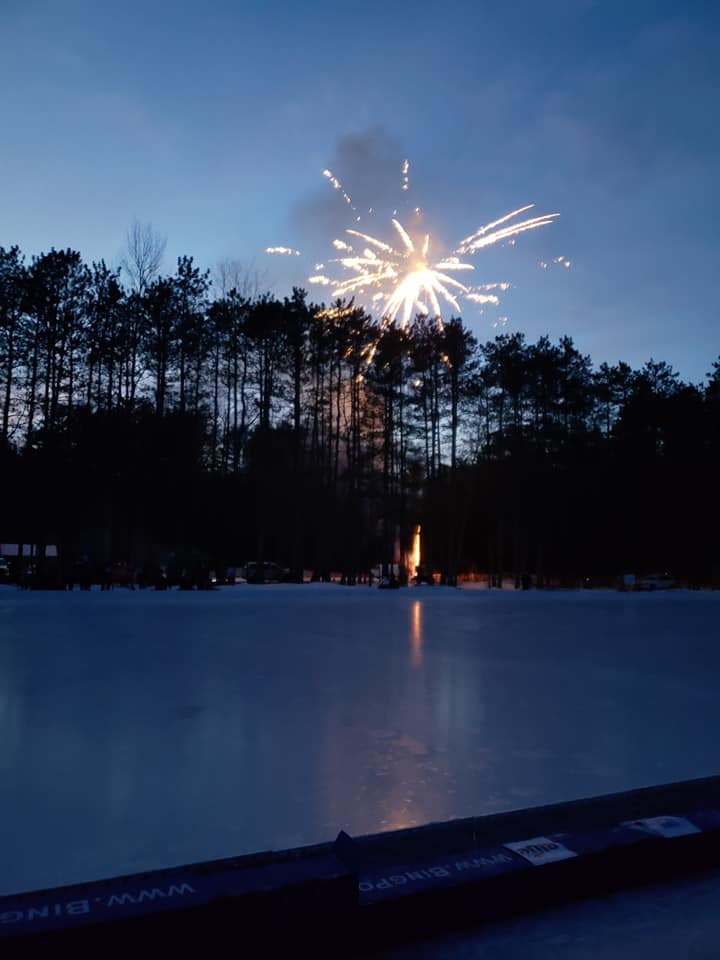
Fireworks reflect off the ice at Pond Fest.
Boyle said the festival draws fans and families into the 1,137-acre park along the Chenango River, which also features sledding and cross-country skiing in the winter. The park’s two lakes – Chenango and Lily – were formed as glaciers retreated at the end of the most recent Ice Age.
“We love this
event,” Boyle said. “We hope this keeps going for years and years to come.”
The park has added a fire hydrant near the rink, to make it easier to spray water on the rink mat system. Water has to be sprayed repeatedly in thin layers to freeze in order to make the strongest ice, a process that can take about a week to get the proper thickness on such a large ice sheet.
“Our crew here at Chenango Valley State Park has been fantastic. We have learned a lot about making an ice rink,” said Boyle. “We could build an ice rink in Florida now, if we had to.”
An electrical power upgrade is also in the works, which will reduce the need for portable electric generators that Haller has been bringing to power his multiple chiller units and pumps that move the 2,750 gallons of chilled glycol through the rink’s tubing system. His not-for-profit organization, Broome Winterworks, devotes about $25,000 annually to cover equipment rental, which is just a small part of the expenses that go into the event.
The rink refrigeration system set up before layers of water are sprayed inside to form the ice sheet. The freezing process takes about a week.
The finished rink.
Haller said the tournament in the park has turned into an economic benefit for the county, as visitors need lodging and meals.
“There are not a lot of outdoor tournaments that have a refrigerated system like we do. We are getting visitors coming up here from southern states, because they know we are going to have ice, even if it is 60 degrees and sunny,” he said. “It is no different than when people from New York State go south to the beaches during the winter. We have something here that they want and many of our players refer to the Binghamton area as a hidden gem.”
In addition to creating the wintertime fun, the multi-weekend event donates money to various youth programs including more than $23,000 so far to fight youth suicide, said Joanne Weir, development director of the Mental Health Association of the Southern Tier. The money supports the association’s DFID (Do It For Daron) program, named after a 14-year-old who died by suicide.
“We are thankful for the awareness that is provided to our association by this amazing event,” said Weir. “The Binghamton Pond Festival has continued to grow each year, and so have the conversations. Every step that we can take at breaking down the stigma associated with mental illness is a win – on or off the ice!”
Film and television star (and amateur hockey player) Steve Carell gets a look at a Pond Fest 2018 winner’s trophy with members of a women’s team from California after their return home.
Post by Brian Nearing, Deputy Public Information Officer, NYS Parks.
All photos courtesty of Binghamton Pond Festival
Have a team interested in playing at Pond Fest? Registration information is available here.
Interested in ice skating available at other State Parks this winter? Check out this list.