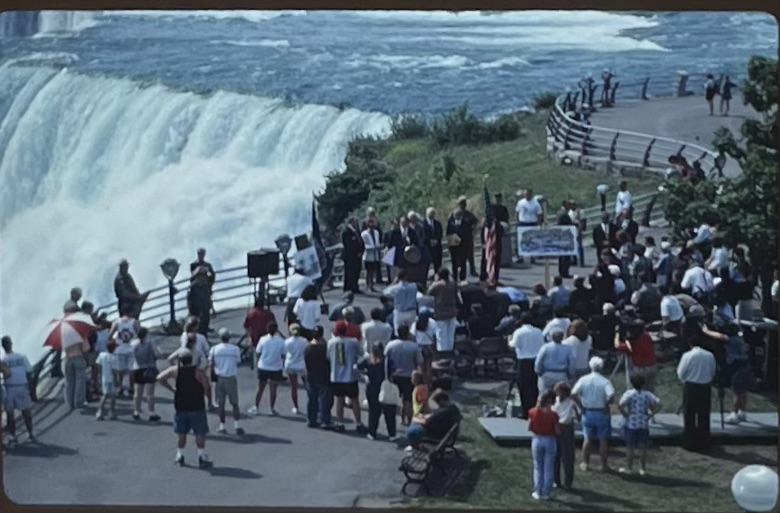
Every year, more than nine million people come from all over the globe to experience the bucket-list waterfalls at Niagara Falls State Park. With attractions like the Cave of the Winds decks and the iconic Maid of the Mist boat tour of the base of Niagara Falls, visitors can experience the power of the Falls first hand. This year, we celebrate the 140th anniversary of the park, the role it played in the fight for preservation, and its central place in the memories of families worldwide.
You’re looking at one of the world’s rarest snails:the Chittenango Ovate Amber Snail, found only at Chittenango Falls State Park in central New York.
First discovered in 1905, the Chittenango Ovate Amber Snail (known to its friends as “COAS” or “Chitt”) is what scientists call an endemic species, meaning it’s found in only one place. While this makes COAS a very special snail, it also makes it a very vulnerable snail. Flooding, drought, climate change, invasive species, and human activity threaten the small snail colony and its habitat. Never very numerous, the colony numbered only about 70 individuals during the 2023 census.
In honor of the 100th anniversary of the founding of New York’s park and historic site system, we knew we wanted to do something special. Telling our full story in-house in a documentary style — and ensuring that the agency’s 100-year legacy was shared accurately and completely — seemed like a daunting task for our small (but mighty!) Public Affairs team.
Above all else, it required bringing the right voices to the table:
Professional storytellers who value public resources.
Team members with vast institutional knowledge, from Indigenous history to environmental conservation and New York State’s recreation evolution.
Powerful visuals that do our 250+ facilities justice.
Staff and like-minded individuals who are passionate about our open spaces and rich cultural resources, and are working to preserve and protect them, day in and day out.
Get your popcorn ready and click the play button above to watch the full documentary.
Thankfully, from discussions early on, Capital region PBS affiliate WMHT demonstrated enthusiasm for working on a documentary that would share our state park and historic site system’s Centennial story with New Yorkers. And it was this author’s honor to play a small role in seeing the enormous undertaking come to life.
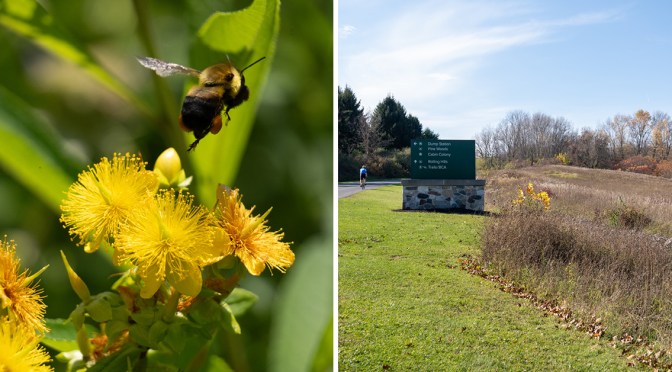
Close your eyes and picture this: You’re visiting your favorite New York state park, and as you drive along park roads or walk pathways near the visitor center, you notice tall grasses swaying in the breeze, bees and butterflies flitting between flowers, a chorus of young birds chirping in the distance, and a peaceful quiet without the hum of constant landscaping machinery.
Sound like a dream? Well, it’s become a reality! Through the ongoing implementation of the Reduced Mowing Policy—part of the New York State Pollinator Protection Plan—grow zones have become a staple at all state parks and historic sites. These zones, where native grasses and wildflowers are allowed to grow tall, continue to benefit the environment and local wildlife, proving to be more sustainable than traditional mowed areas and enhancing visitor experience in new ways.
These signs greet visitors at many of the reduced mowing sites at our parks and historic sites in an effort to inform them of our work.
Where does New York State Parks get its flowers, perennials, shrubs and trees? For the parks on Long Island, the answer for the past two and a half years may be simply “Michelle.” Since becoming the manager of the Nissequogue River State Park greenhouse, Horticulture Technician Michelle Doran-Leute has launched an ambitious program of seed collection, propagation and planting that’s not only making Long Island parks beautiful, but supporting its ecosystem. Her mantra has always been: You can’t have a park without plants! Follow along as Michelle takes us inside the operations at the Nissequogue River greenhouse and nursery.
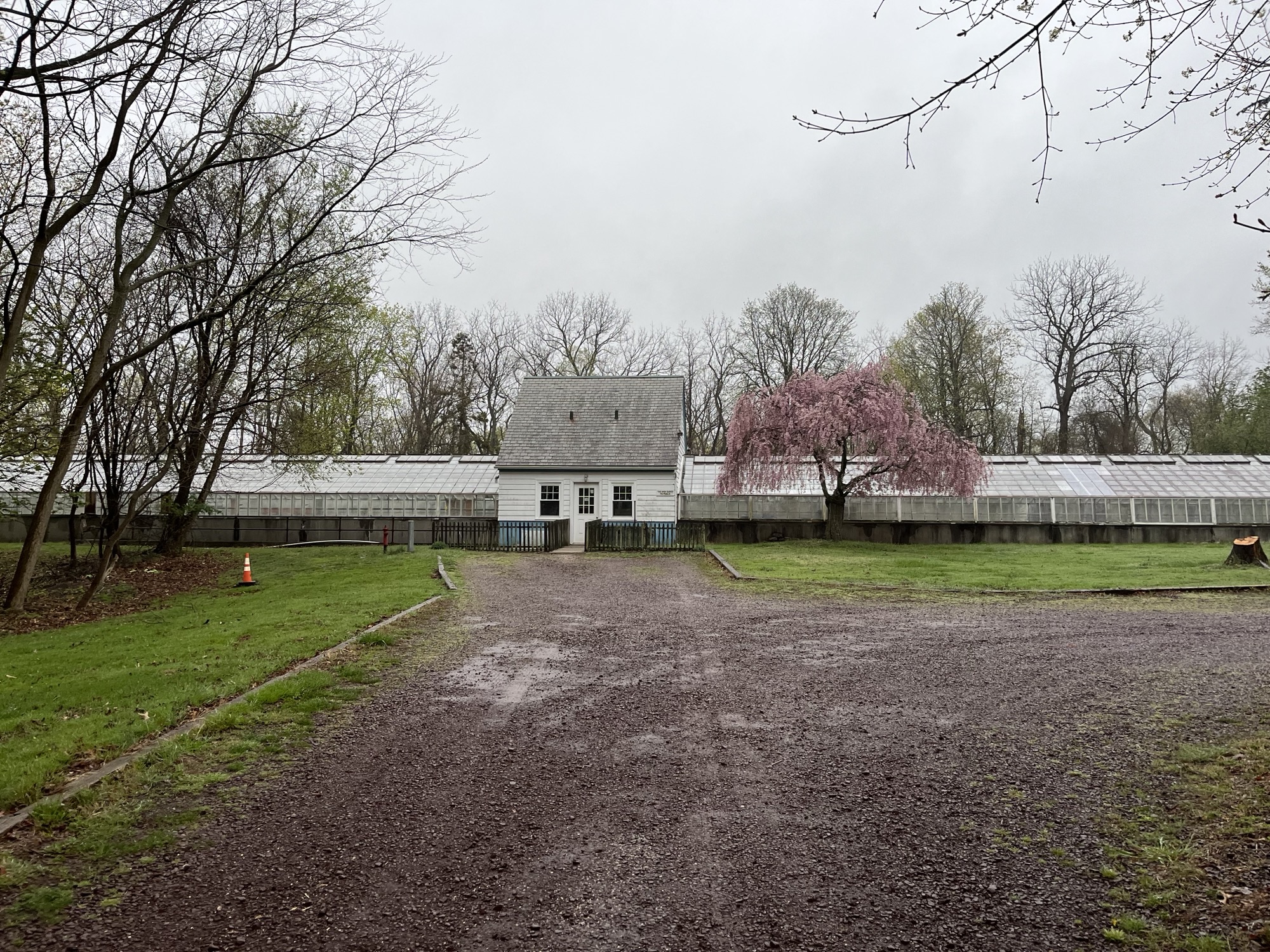
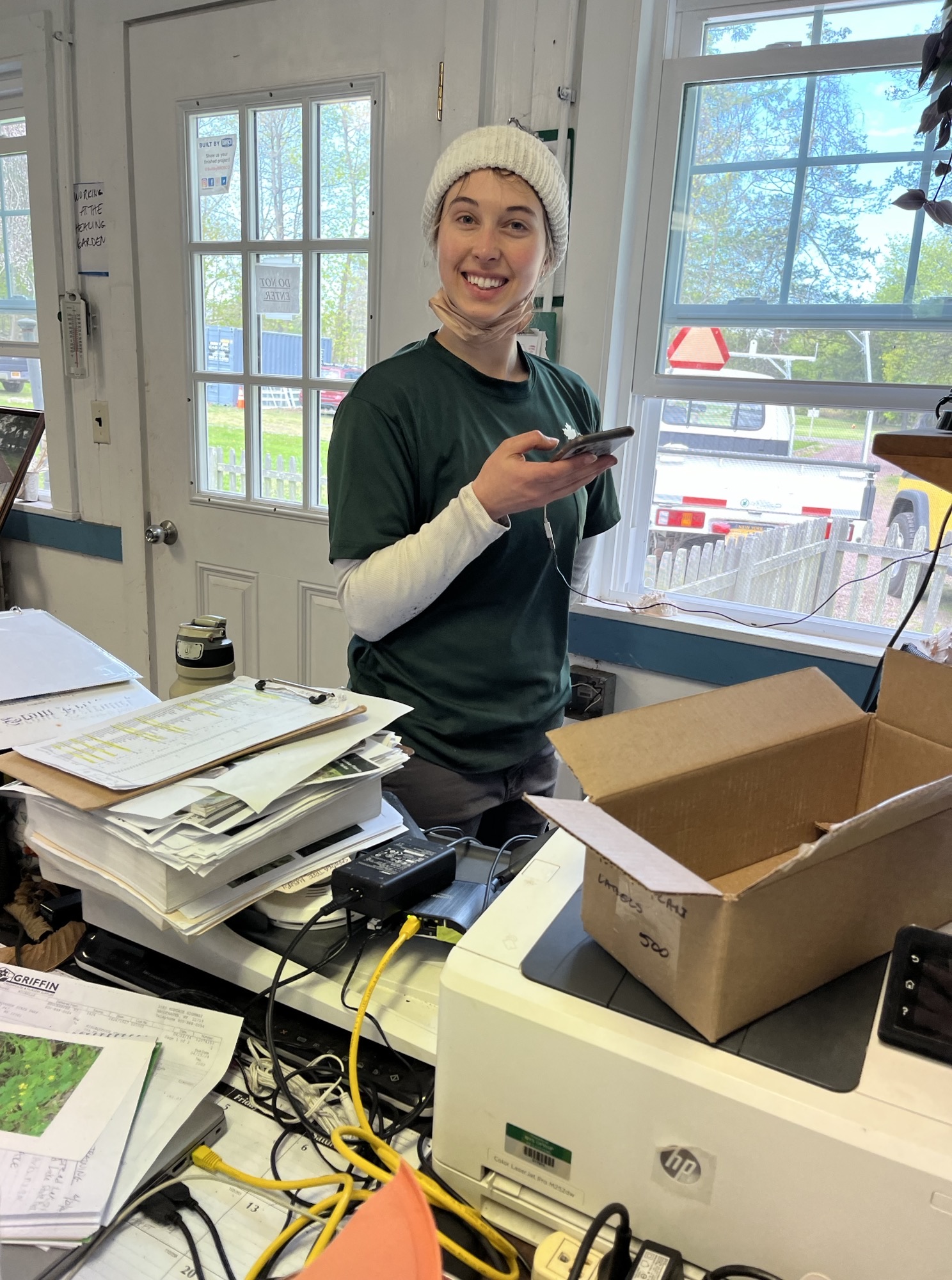
L to R: the historic Nissequogue River State Park greenhouse and nursery;Michelle and a colleague pose at the potting bench;Emma Halliday at work.
The Nissequogue River State Park (NRSP) greenhouse and nursery is home to the growing operations for the Long Island Region of New York State Parks. Operated and managed by myself and assistant Emma Halliday, its main purpose is to grow plant material to be distributed to the state parks of Long Island. We focus on growing native United States perennials, trees, shrubs, and ornamental mums, cabbage, kale, and asters for the fall season.
Long Island has a distinct ecology, salt spray, exposure to tides and hurricanes, and increasing urbanization. From the beach parks to forest parks, we have differences in the plants that naturally grow here.