
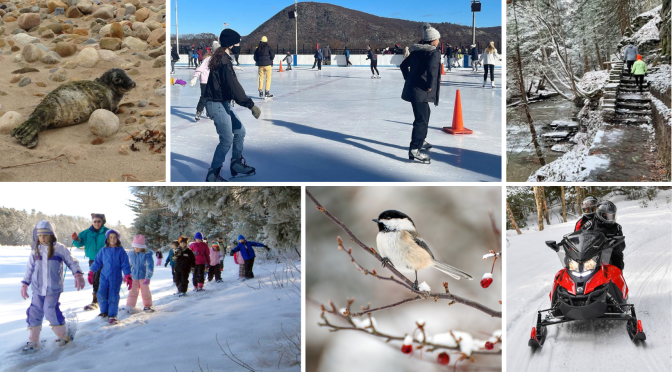
Winter doesn’t have to mean being stuck indoors. There’s year-round fun at our parks to help you beat cabin fever, chase away the winter blues, and experience a familiar spot in an entirely new way. Check out these iconic wintertime activities at our parks and sites, but hurry – spring will be here before you know it.
Ice, Ice, Baby
Ice skating is the classic wintertime activity, and our parks offer a safe way to enjoy the ice. From the urban setting of Riverbank State Park to the serenity of Grafton Lakes to the bustling atmosphere and panoramic views at Bear Mountain State Park, ice skating brings joy wherever you do it. This exhilarating experience gets your heart pumping, and is a fantastic winter bonding experience. Twelve of our parks offer skating, and most of them offer skate rentals as well.
Make sure to call ahead to ensure that conditions are suited to skating, follow all posted signs, and stay off the ice if you haven’t verified that it’s safe. Find a skating rink near you for an unforgettable experience.





 New York State Parks and Historic Sites Blog