Locals Show Some Love

On May 5, 2018, the first Saturday of May, over 8,000 volunteers helped New York State Parks celebrate its sixth annual ‘I Love My Parks Day’ at 250 projects and 125 parks across the state.

Saturday morning was met with the fresh smell of a well overdue Spring. Birds were singing and bees were buzzing. The weather could not have been nicer with blue skies and a sun to warm your skin. In Horseheads, NY, volunteers came out to the Catharine Valley trailhead to help create a pollinator garden and clear brush and invasive plants to promote native species beneficial to birds. (About 50 small pollinator plants were purchased by the Audubon Society to create a pollinator garden.

Start_photos by Audubon NY1
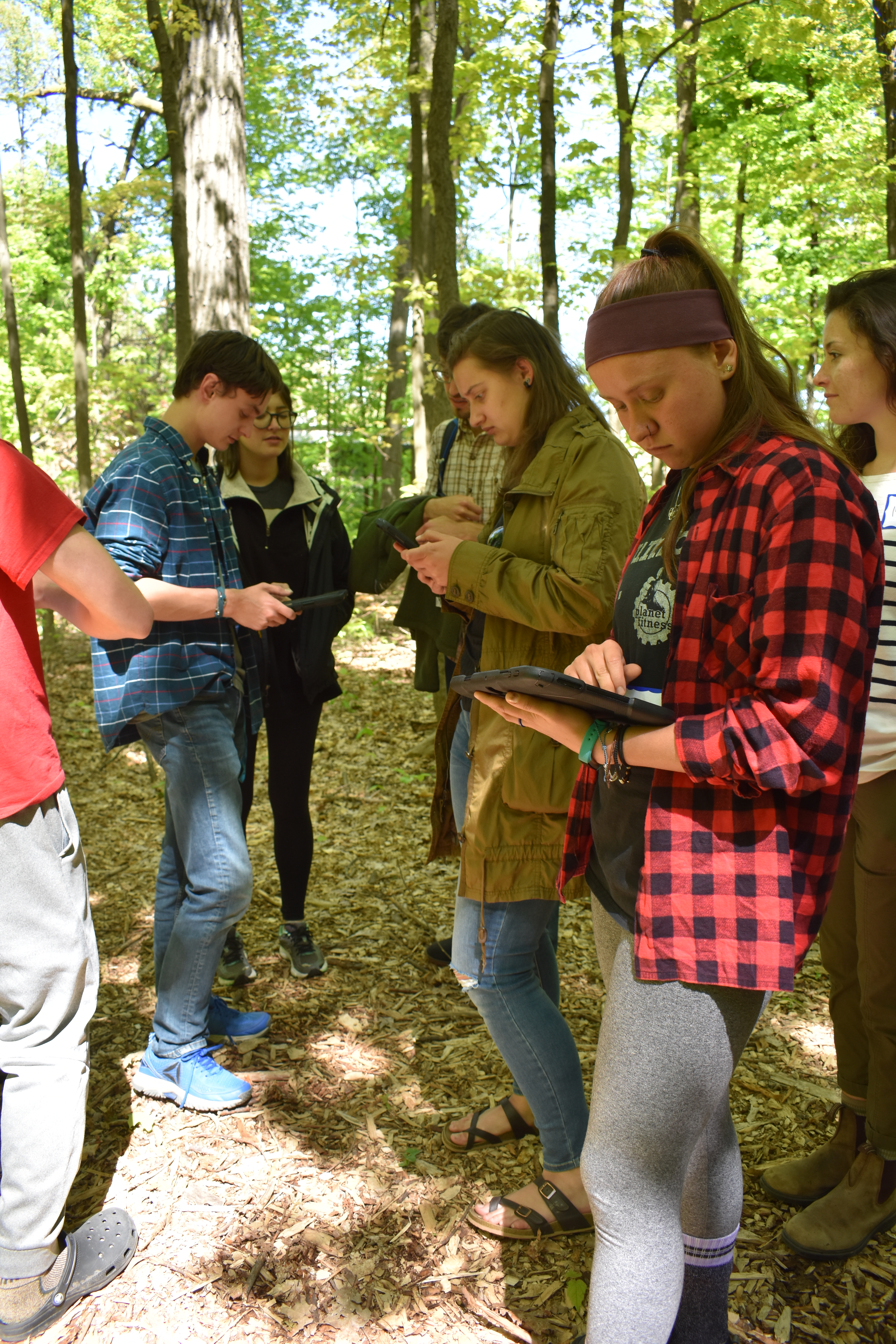
Gearing up for the event, photo by Audubon NY

About 50 volunteers showed up to do their part – from energetic toddlers, to a girl scout troop, to seasoned gardeners and everyone in-between. Three NYS parks Environmental Educators and SCA Parks Corps members –  Tamara Beal, Lizzy Hawk, and Kyle Gallaher – also stepped in as volunteers and environmental educators.

Over 400 different species of bees call NY home. The role they play in pollinating plants is irreplaceable. It is estimated that 1 in every 3 bites of food deserves thanks in part to pollinators. In other words, if you like to eat, you have to like your pollinators! With so many helping hands, this seemingly large task was completed in no time. Holes were dug with shovels or towels, or even by hand and what started as a barren landscape was quickly transformed to a vibrant garden, ripe for pollinating.

Besides the pollinator garden, different parts of the birding trails were also attended to. Dead brush was raked, honey suckle was pulled, and sticks and branches were piled high. The birding trails at the head of the Catharine Valley Trail, on Huck Finn Road, are a well kept secret. A birding lover’s delight, these trails attract birds by providing an irresistible combination of shelter, food, and peaceful atmosphere. If you are able to walk quietly enough to become a part of nature, all sorts of creatures become noticeable on these trails. Volunteers were spread out in every direction creating a green space more attractive and enticing to our feathered friends.

In the last part of the event, some time was taken to appreciate and get up close with some of the wildlife in the area. Environmental educators Kyle, Lizzy, and Tamara took about 30 of the volunteers on a short walk to a nearby turtle nesting ground. The sandy soil of these manmade nesting gardens allows the turtles to easily bury their eggs for safe keeping. SCA members helped to clean up these nesting areas earlier in the year.

A mini program about snakes was also made possible when environmental educator Tamara Beal came across a garter snake in the grass (see featured photo).

This event was just one of the number of events that were hosted this “I Love my Park Day” throughout the state. Thank you to the thousands of volunteers who came out on May 5th to support their local parks! It is inspiring to see the number of people that show up for these kinds of events. 

Join us for the eighth annual ‘I Love My Park Day’ on May 4.
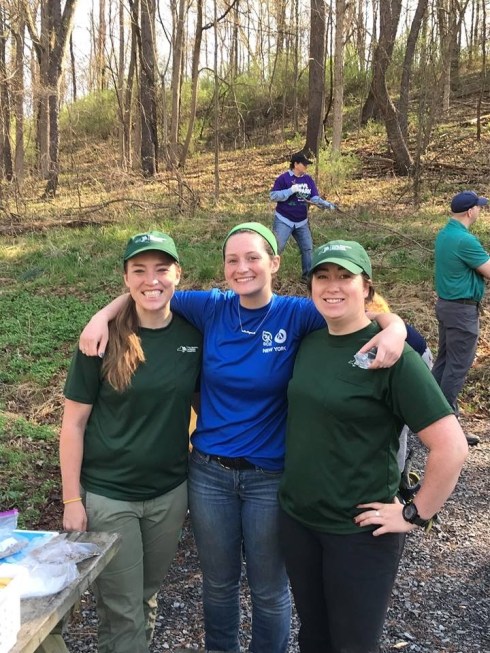
Team
NYS parks environmental educators and SCA parks corps members, Tamara, Lizzie, and Kyle

Post by Tamara Beal, 2018 SCA Finger Lakes Region intern

In Search of the Early Bloomers

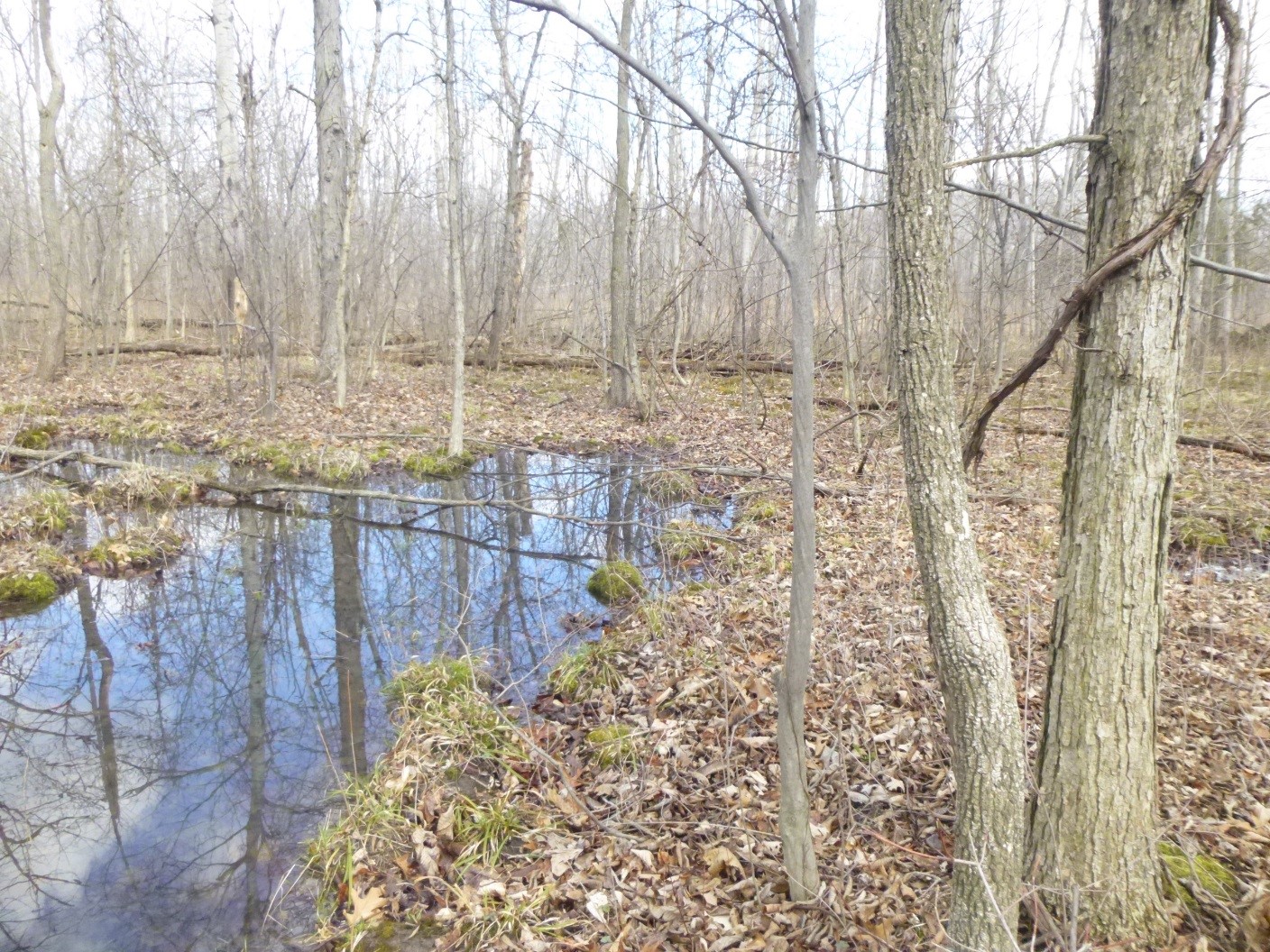
The ground is thawing out and the skunk cabbage is up – it’s time to start searching for the purple rock cress (Cardamine douglassii), a state-threatened plant. You may also find its more common cousins, all members of the mustard family – yes, like the mustard you eat, but with white to pink flowers rather than yellow. Moist woodlands with oak, hickory, and maple are a good place to look, including forests with vernal (spring) pools. Perhaps you might be out looking for frogs and salamanders around this time of year, if so -keep an eye out for these early flowering plants, too. Woodland rock cresses tend to be small, only about 3 to 8 inches tall, so they are easy to miss. If you see some patches of green that are not mosses or mounds of sedges (grass-like plants), take a closer look – you may be rewarded with some delicate flowers.

VernalPool_JLundgren
Photo by Julie Lundgren, NYNHP.

Forests with vernal pools or small streams or wetlands are a good place to look for these cresses.

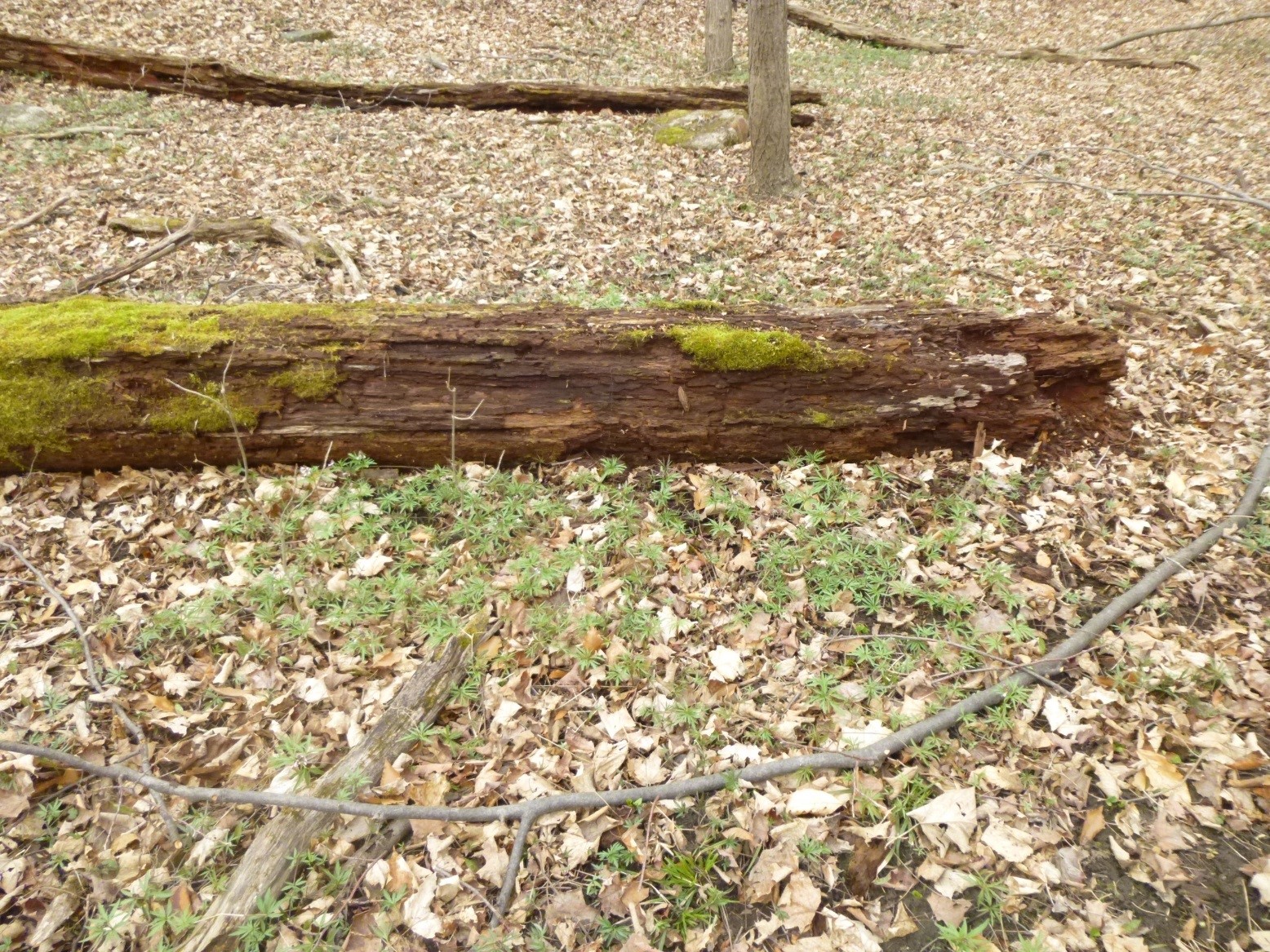
Log_JLundgren
Photo by Julie Lundgren, NYNHP.

Look for patches of green on the forest floor and take a closer look. You might find some flowers.

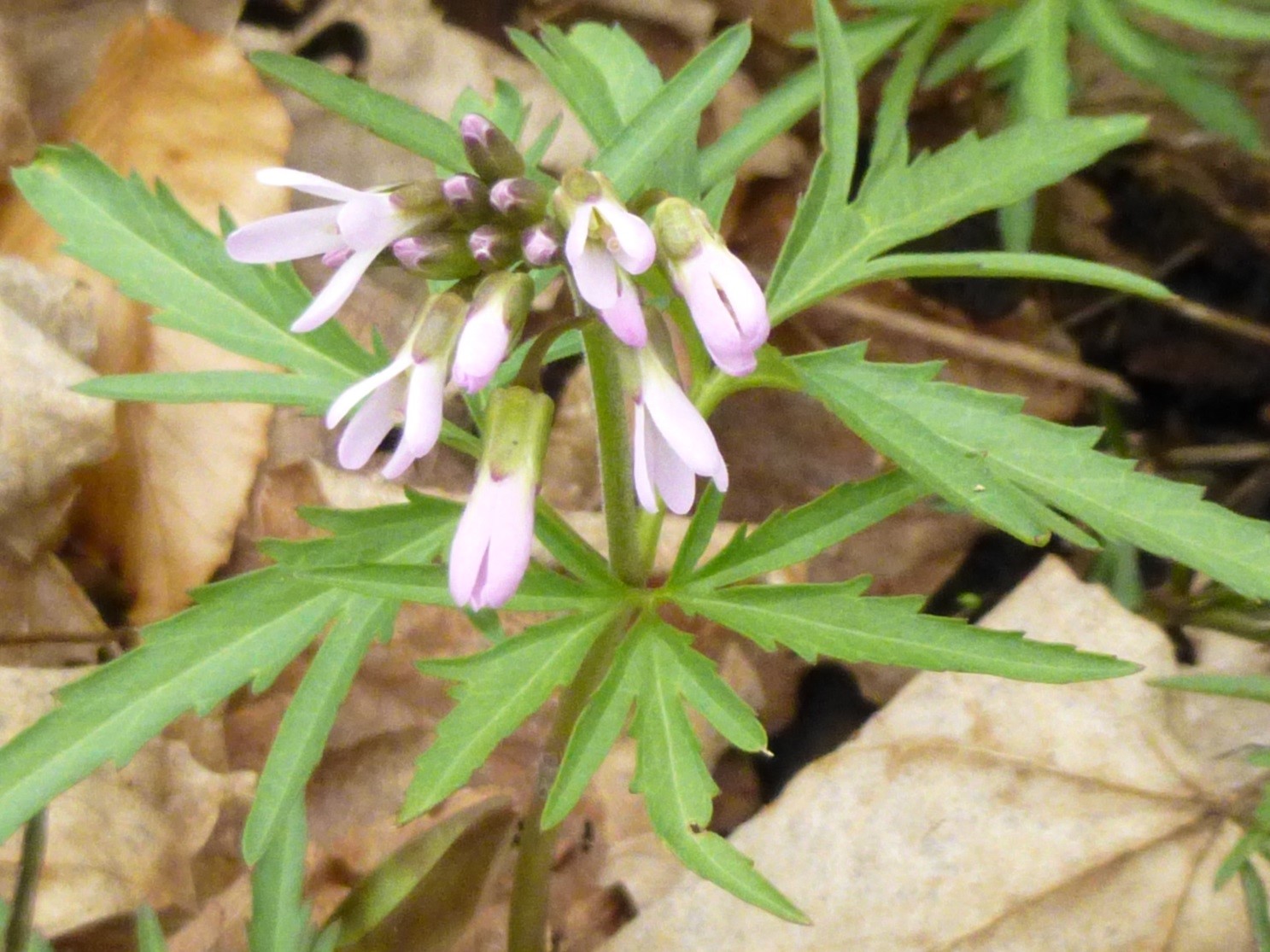
CutLeavedRockCress_JLundgren
Cut-leaved rock cress or cut-leaved toothwort, photo by Julie Lundgren, NYNHP.

A close-up of that woodland patch of green reveals this beautiful plant, the cut-leaved rock cress or cut-leaved toothwort (Cardamine concatenata), a common woodland wildflower. This used to go by the name Cardamine laciniata or Dentaria laciniata. It is easy to identify by its lacy leaves that look a bit like bird tracks.

CressLeaves_KPerkins
Rock cress, photo by Kelly Perkins, NYNHP.

Several of the other rock cresses, including the purple rock cress, have smaller and less complex leaves like this or just small roundish leaves on the stem or at the base of the plant (see in background).

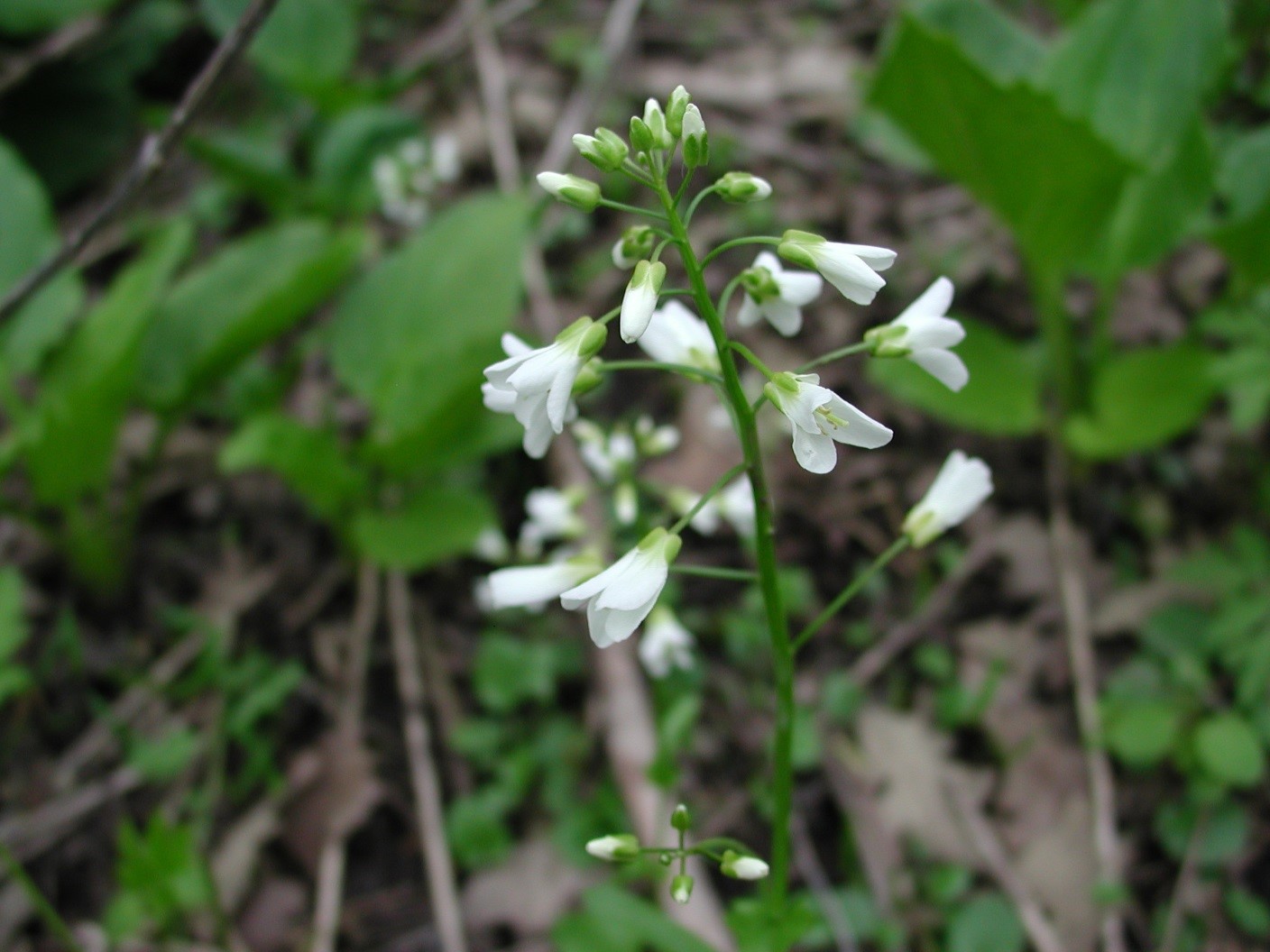
SpringCress_SYoung
Spring cress, photo by Steve Young, NYNHP.

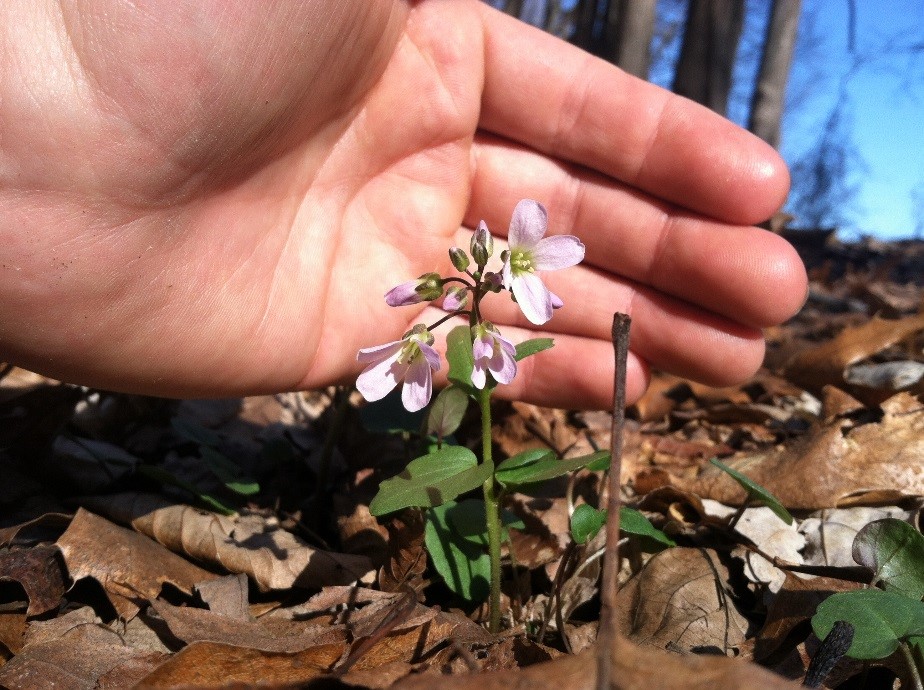
Spring cress (Cardamine bulbosa) is another common cress that blooms very early. The flowers can range from white to pink, and it can be hard to tell this apart from the rare purple rock cress. Note that all of the flowers in the mustard family have 4 petals regardless of their color.

CDouglassii_JLundgren
Purple rock cress, photo by Julie Lundgren, NYNHP.

Here is the rare Cardamine douglassii, so similar to the spring cress above. One has to consult the botanical keys in order to figure out which species you have. Some trout lilies are coming up too (leaves at upper left).

PurpRockCress_Scale_KWebster
Purple rock cress, photo by State Parks.

NY Natural Heritage and State Parks staff discovered two new locations for this rare species in State Parks in the past few years and hope that more are found in this year’s early spring surveys.

CressSeedPod_KWebster
Photo by State Parks.

The flowers of the cresses don’t last long, only until the trees leaf out. Once in fruit, you can still recognize them by their elongate seed pods, which give rise to yet another common name for this group of plants, the “rockets”.

Post written by Julie Lundgren, NY Natural Heritage Program

Featured image by Kyle Webster, State Parks

NY Natural Heritage Program is affiliated with SUNY College of Environmental Science and Forestry (SUNY ESF) and works in close partnership with NYS Parks and NYS DEC. NYNHP conducts many kinds of surveys and studies to provide guidance and tools for conservation of native biodiversity across New York State.

Recommended references for identifying the rock cresses:

https://gobotany.newenglandwild.org/genus/cardamine/

Newcomb’s Wildflower Guide by Lawrence Newcomb. Little, Brown and Co. 1989.

For more information:

NY Flora Atlas Purple Rock Cress

NYNHP Conservation Guides Purple Rock Cress

iMapInvasives and You Can Too!

You may have heard the name iMapInvasives before, but if you have not been exposed to this magnificent mapping tool, I recommend you check it out! iMapInvasives, New York State’s online invasive species database, could be compared to a modern-day hero. A robust and helpful resource- thanks to its devoted observers.

Photoby_Brittney Rogers,iMapInvasives Research Project Assistant(2)

Citizen Scientists, Educators, Students and Dedicated Natural Resource Professionals…. You can be an observer too and you can help protect our natural areas.

As we all know, every hero needs an extraordinary sidekick. In this case, it’s the Certified Trainers Network (CTN). The iMapInvasives CTN does its part by hosting trainings for people, located far and wide, about invasive species and how to report them. Established in October 2017, the network has already hosted over 75 in-person trainings across New York State and taught over 900 attendees about iMapInvasives’ capabilities.

If you have a desire to teach your community about iMapInvasives, you can become a certified trainer. All you have to do is:

Or, you can simply contact Brittney Rogers, the iMapInvasives Research Project Assistant at Brrogers@syr.edu

Post by Falon Neske, State Parks

A Book for Tales and Verses

100 years ago this summer, a little girl received a lovely present from her grandmother.

A leather-bound notebook, perfectly sized for small hands. The paper was heavy, to thwart ink from pooling and bleeding through. The pages were lined, to keep unsteady handwriting neat. The gilded edges indicate the importance and timeless elegance of its owner, a daughter of one of New York’s first families. Her name was emblazoned on the cover— Honoria Alice Livingston.

BookCover


Honoria was the eldest daughter of John Henry Livingston and Alice Delafield Clarkson Livingston. Her great-great grandfather was Chancellor Robert R Livingston, one of the 5 drafters of the Declaration of Independence, the Minster to France under Jefferson, and the co-inventor of the first practical steamboat, just to name a few accomplishments. The Livingston mansion, Clermont, was decorated in 7 generations of familiar excellence. Honoria grew up at Clermont surrounded by her family’s achievements and with the love her parents, her younger sister Janet, their beloved nurse Ollie, a dozen or so servants, and a menagerie of pets.

Honoria and Family
Honoria and her family

Her maternal grandparents, Howard and Alice Clarkson, lived just up the road and visited often. Grannie Alice and Mom Alice were both prolific poets and journal writers in their own right, so it’s no surprise that young Honoria was showing an interest and a talent for creative writing herself. Grannie christened the notebook with a special poem for her young granddaughter.

To Honoria.
When Grannie was a little girl
She made a little book,
And many times with joy and pride,
Did in its pages look.

And here she wrote her little tales,
And sometimes verses too;
For airy fondness came to her
Just as they come to you.

And now you write such pretty tales,
And little verses too;
So Grannie thought perhaps this book
To hold them all, would do.

The very day she received the book, Honoria took to work. On the next page, in her very best 10-year-old handwriting, she titled the contents “The Poetry I Made My-Self.” She wrote three poems that day and several more throughout the week.

Comb and brush
I hear a thrush.
Comb and brush
I want to wash.
Brush and comb
Gobi is home
Brush and comb
Away I rome.

Honoria A. Livingston. Aug 3rd 1919

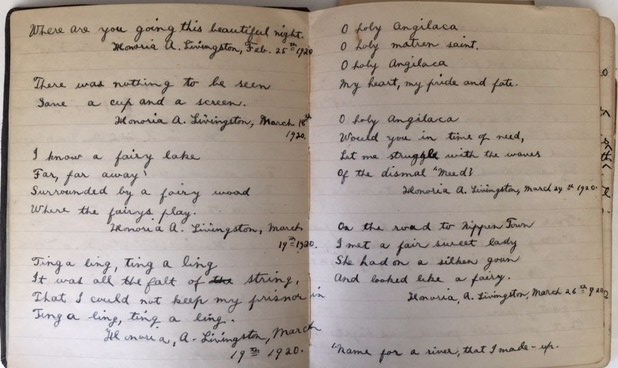
Early poems reference her family, her beloved dog Gobi, and strict rhyming schemes, even if she had to bend the rules a bit to make it work. The following year, the little notebook traveled with the Livingston family as they moved abroad to continue their daughters’ education. Honoria’s repertoire of subject matter grew beyond family life at Clermont and started to include the French countryside, German soldiers, English fairies, and Italian friends.

O Holy Angelica
A sample of Honoria’s poetry including O Holy Angelica.

The Livingstons lived in Europe for the next 6 years. Honoria became a teenager and her subjects became more mature and dramatic:

There’s a road that leads to nowhere good,
There’s a road that leads to Hell;
But there’s also a road to Paradise,
and on that road I dwell.

-Honoria A. Livingston Oct. 5th 1924
Guicciardini, Florence.

Her structures became more experimental and modern:

Of the Universe!
Tell us, I pray thee
Where do the sunsets go when dead?

-Honoria A. Livingston December 2nd 1924
Guicciardini, Florence.

But even so, more than half of her poems are about her beloved pets and many about the comings and goings of her family and friends. Some of her poems are even in French and Italian! She loved to write about the moon and sunsets over Florence, where the family called home for her teenage years.

A week before her 17th birthday in 1926, she wrote a poem to herself, remarking on the occasion and how much she had grown since starting the notebook:

Almost Seventeen!
From a very little child
Into a stately maiden dark,
she has grown.
Guicciardini, Florence. January 25th 1926

The rest of her poems in 1926 play out as her previous years in Italy had— pets, family, and beautiful evenings at the family’s Villa. But in November, something happens. The family suddenly rushes back to the States, leaving precious friends and belongings behind. Honoria’s handwriting becomes rushed, the ink is half washed away in big drips, and pages are torn out. The end of 1926 and the beginning of 1927 do not exist.

Ripped pages
Ripped pages from Honoria’s book.

This is when Honoria’s father, John Henry, passed away.

After JH’s passing, the family settled back in at Clermont. Honoria writes in the notebook for another year and then sets it aside— a memento of her childhood and teenage years. She grew up, had her debut in New York City, and married a charming Irishman named Rex McVitty.

Honoria and Rex
Honoria and Rex

They spent their lives at Clermont in Sylvan cottage, even after the mansion and grounds were deeded to The People of the State of New York. They enjoyed meeting park visitors and actively took part in site events. Honoria lived in the cottage until her passing in 2000— her tin mailbox and Poughkeepsie Journal newspaper box were only recently removed from the driveway.

Honoria on the porch
Honoria on Sylvan Cottage’s porch

But even as Honoria grew up, from a 10-year-old girl with her first important grown-up possession, to a beautiful debutant, to an accomplished writer, golfer, gardener, and the Lady of the Estate, she never forgot about her notebook. She came back to it “many times with joy and pride,” just as her Grandmother had before her. As an adult, she even edited and typed some of her early work.

FairiesTyped
The typed version of Fairies

From a historian’s perspective, Honoria’s poetry journal is a fascinating artifact. Not just a chronical of a young girl growing up, but a chronical of life for an American family and a window into post WWI Europe. Not just flights of fancy, but a collection of popular culture influences of the time. Not just cute pets, but little family moments that tell us so much about the last generation of Livingstons of Clermont. It’s a lovely little book, a scrapbook of experiences, and we are lucky to have it.

Post by Emily Robinson, State Parks


Bear Mountain State Park and PS 218 Rafael Hernandez Dual Language Magnet School, Bronx

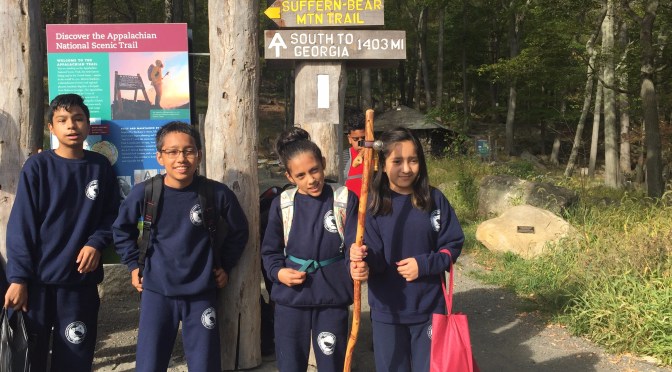
Since the fall of 2016, approximately 300 seventh graders from the P.S./I.S. 218 Rafael Hernandez Dual Language Magnet School in the Bronx have enjoyed an annual field trip to Bear Mountain State Park, thanks to the Connect Kids Field Trip Grant program run by  State Parks.  The hour-long journey from the school affords views of spectacular autumnal foliage and the Hudson River Valley to our urban students.

IMG_5575
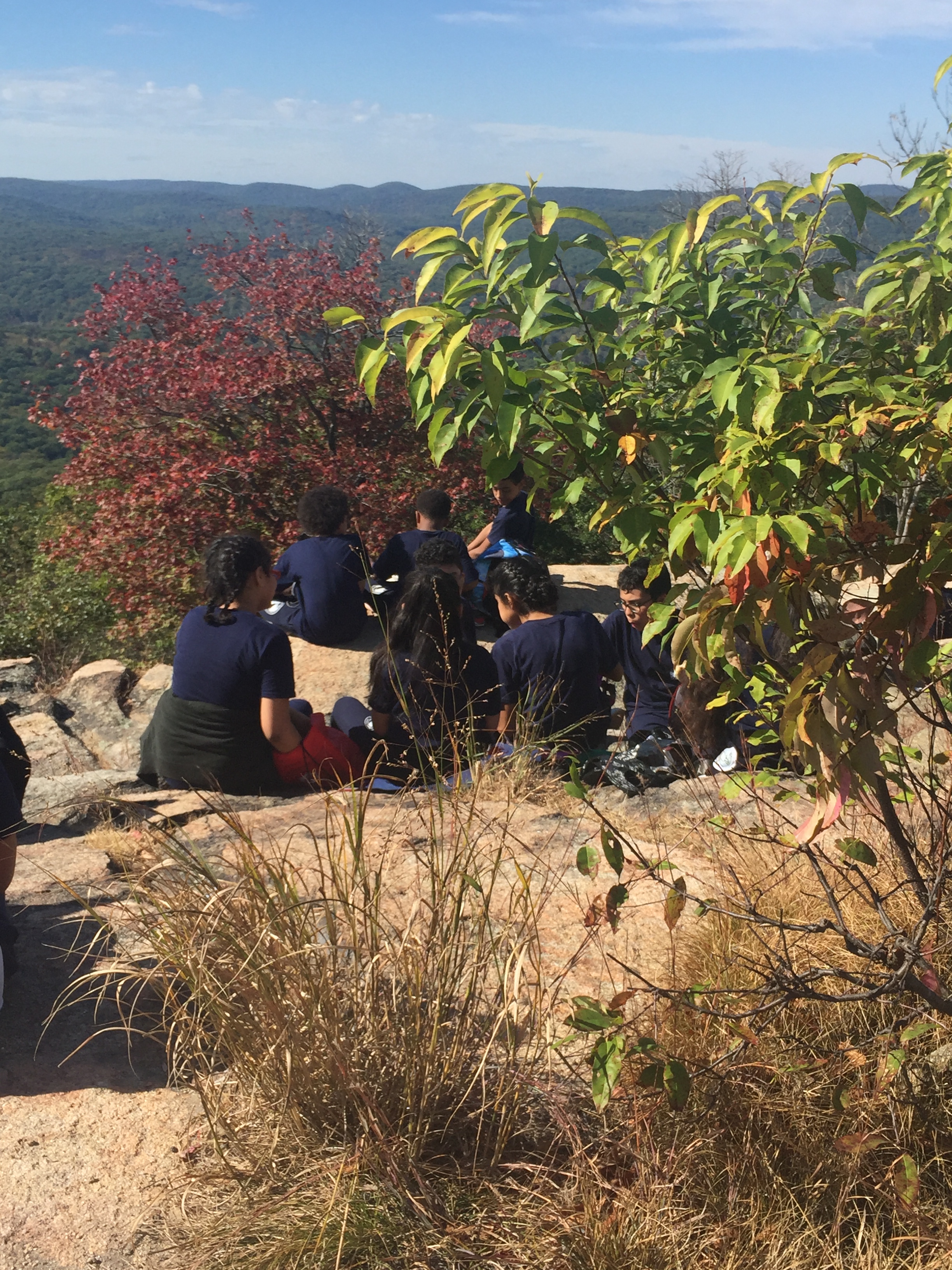
Students pause at the top of Bear Mountain, enjoying the views of the Hudson River

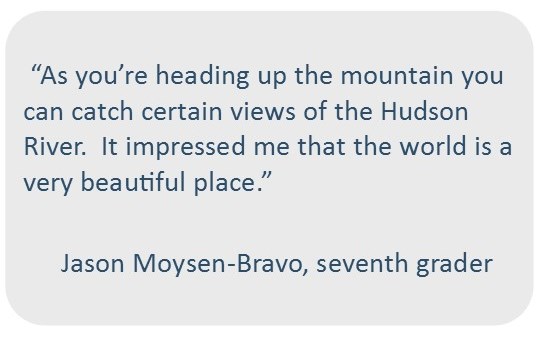
Arriving at the site the students divide into two groups: one group hikes a portion of the Appalachian Trail, while the other visits the animal exhibitions at the Trailside Museum and engages in organized outdoor play outside the Bear Mountain Inn.  (Some of our students suffer from asthma and don’t choose the mountain hike.) They return to school thoroughly exercised, full of excitement from their experiences hiking or observing firsthand the animals at the Zoo. The trip coincides with an English Language Arts unit of study focused on memoir, or personal narrative. For many, the hike up the mountain has afforded the first opportunity to hike a woodland trail that our students have ever experienced, and they write about their experience and recall it throughout the year proudly.

Quote

Because we teachers applied late in the fall, we traveled to Bear Mountain in early December of 2016.  The smell of the pines was intoxicating, but a light snow had just fallen, making the trail slippery and a bit treacherous on the way up. We conceded that the mountain top was beyond our reach that day, and did our best to lead the students back down the trail as carefully as we could. We wished we had foreseen the footwear that the students needed to better negotiate the trail under slippery conditions – some were wearing sneakers with little tread.

IMG_3551
PS 218 students on the trail in early December

In our second year, we scheduled our trip in early October, and our mountain hikers encountered a blazing hot Indian summer day.  Though we reached the top of Bear Mountain, a few children had inexplicably brought loaded backpacks, which created all kinds of challenges for our teacher crew. Yellow jackets were abundant near the picnic areas below; one student was stung!  We realized later how much we needed to bring an abundant supply of water for the return trip home on the buses. Vomiting incidents drove home that there were risks related to the heat, but junk food and dehydration played a part as well.

This year, the buses were very late departing the school, which cut short our time and made it impossible to reach the top of the mountain.  NYC morning rush hour traffic can be unpredictable; next year we will be sure to request our buses earlier.  At the end of the day, a shortcut on a loosely pebbled trail led to multiple scraped knees.

Each year, we realize how we can plan better for the next!  So, for your Kids Connect Trip, be sure you …

  • Require comfortable and appropriate footwear, depending on time of year; jackets if appropriate
  • Limit backpack weights. Test as kids leave bus (allow only lunches and a drink)
  • Outlaw sweet drinks, and chips or sweets for the ride! Students should eat a good breakfast!
  • Bring first aid kits for bee stings, cuts, bug bites
  • Stock an abundant supply of water on your buses
  • Secure contacts of individual bus driver
  • Remember your bus permit and paperwork to verify your site visit with a signature from Parks administrative staff

Post and photos by Heather Baker Sullivan, PS 218 Rafael Hernandez Dual Language Magnet School teacher

The official blog for the New York State Office of Parks, Recreation & Historic Preservation