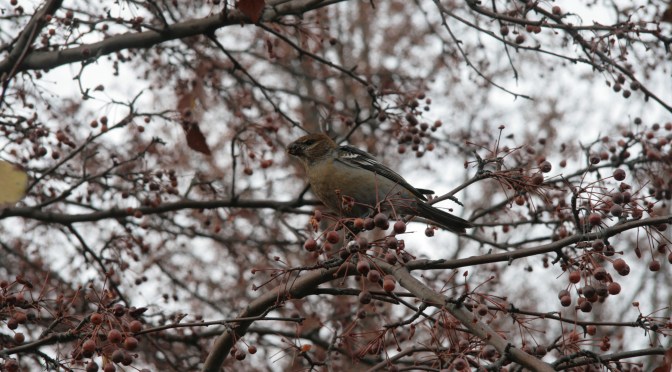
The Pine Grosbeak is one of the largest members of the finch family, and a rare winter visitor to New York. This bird species generally breeds between Alaska and Newfoundland, and south in the western mountains to California and Arizona. They winter further south, in the Dakotas, New York, and also Eurasia. These birds use their short, curved beaks to eat seeds, buds, and berries from trees such as Mountain Ash, cedar, and Juniper. Look for Pine Grosbeaks in scattered forests where these kinds of trees are plentiful. Pine Grosbeak’s tame and slow-moving behavior has earned them an unusual name in Newfoundland, where they are called “mopes.”
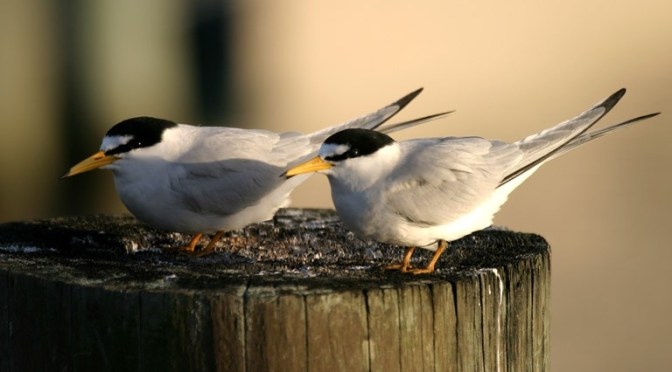
A rare denizen of NYS Parks in Long Island is the least tern. This state-threatened species is challenged by both loss of nesting habitat, as well as predation by rats, dogs, cats, and other birds.
The least tern is so named because it is the smallest member of the gull and tern family, growing to a maximum of only nine inches in body length. These beautiful birds make their homes on the Atlantic coast. In the winter, least terns migrate to the southern United States and the Mexican coast, but once it becomes warmer, they return to the beaches of Long Island to nest. Even though they are small, least terns are mighty. If an intruder crosses a nest, the tern will dive at the possible predator screeching to frighten the danger away. Least terns also make a habit to roosting with larger terns for protection.
The importance of Long Island shoreline habitat to least terns, as well as a plethora of other migratory bird species, is the main reason why some Long Island beaches are off limits to dogs. Even where pets are allowed, be conscious of how your dog might be affecting wildlife and protect the habitat of this small, but magnificent bird.
featured image is a pair of least terns, by Larry Master. Post by Paris Harper
Audubon New York, the state’s largest bird conservation organization has teamed up with New York State Office of Parks, Recreation and Historic Preservation to launch the 2014 “Be a Good Egg” campaign: A community engagement initiative to protect threatened and endangered beach-nesting birds. The goal of the Be a Good Egg project is to help people learn more about birds like Least Terns, Piping Plovers, and American Oystercatchers that nest and rest on the beaches of New York and New Jersey every spring and summer.
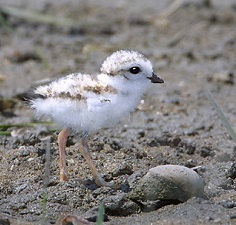
Piping Plover Chick, photo by Patrick Comins
Between April and August every year, thousands of birds nest on the bare sand of New York beaches and inlets, including 30% of the Atlantic Coast Piping Plover population and many other migratory shorebirds that rest and refuel on the New York and New Jersey coastlines on journeys as long as 9,000 miles.
These hardy little birds are threatened by predators, extreme weather conditions, and humans. When a person or dog walks through a nesting area, the adults run or fly off in fear. During the nesting season, this exposes the eggs or chicks to fatally high temperatures and drastically increases the risk of predation. The survival and recovery of these species is dependent upon being able to nest and raise their young in an undisturbed environment.
An Oystercatcher chick, photo by New York Audubon.
Audubon New York, State Parks, and other partners are reaching out to visitors at New York beaches and asking them to pledge to “be a good egg” and share the beach with our native birds. As part of this project, volunteers are helping us reach out to people at beaches where Audubon is working with the local community to protect hundreds of nesting and migrating birds. To date, nearly 2,000 beach-goers have signed the “Be a Good Egg” pledge. Volunteers are an important part of this campaign and more are needed to help outreach events and shorebird surveys. To take the pledge, and to get more information about Be A Good Egg, including dates of the outreach events, visit www.goodeggnjny.org
The featured image is a nesting Least Tern. Photo by New York Audubon.
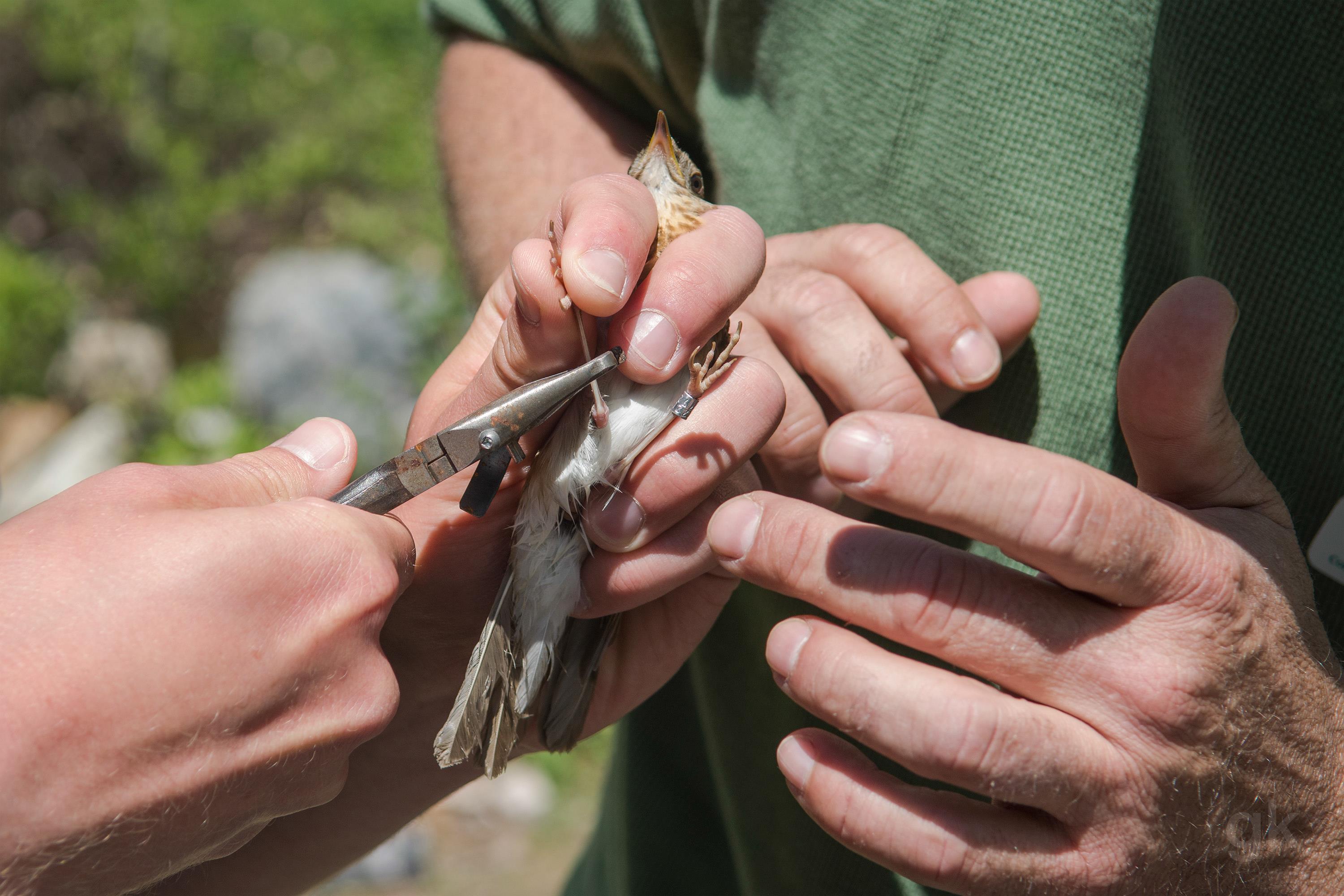
The Taconic Outdoor Education Center (TOEC), at Fahnestock State Park, invited the community to celebrate National Get Outdoors Day and National Kids to Parks Day on May 18th this year at the TOEC Outdoor RecFest. The day started with a bird banding demonstration led by Eric Lind of the Audubon Constitution March Sanctuary.
Bird banding is a way to gain valuable knowledge about migratory birds, including data used in studies of dispersal and migration, behavior and social structure, life-span and survival rate, reproductive success and population growth. The data can be used in both research and management projects.
At the RecFest, bird banding was also a great tool for education and getting kids introduced to and interested in outdoor science and the variety of songbirds that make Fahnstock State Park their home. It was also a special opportunity for kids to get up close and personal with a migratory bird. Participants learned about mist nets, band sizes, bird measurements, and data recording.
Other events of the day included a bird walk led by naturalist Peter Salmansohn of Putnam Highland’s Audubon and workshops in orienteering and canoeing. The Event was supported by the Putnam Highland Audubon chapter, and Audubon New York’s Constitution Marsh Sanctuary, with the help of TOEC outdoor Educators.
The presenters delicately attach a band to the leg of a small veery before releasing it. Photo by Gerry Katzban.




 New York State Parks and Historic Sites Blog