
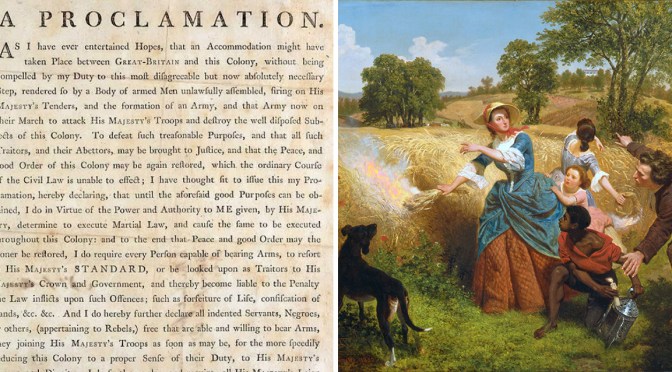
For eight years (1775-1783), the battles of the Revolutionary War crisscrossed New York. From the Canadian border to the shores of the Atlantic Ocean, enslaved and free Blacks managed the shifting tides of the rebel’s fight against the British with mixed results. All of the changes did not come at one time, but eight years is wearing. Ultimately, Blacks living in the state paid a heavy toll.
Continue reading Eight Years of Chaos and Little Change: Black Experiences During the Revolutionary War in New YorkTag Archives: Black History

Returning Home: Solomon Northup at Saratoga Spa State Park
A statue of abolitionist and writer Solomon Northup, whose story was told in his memoir and the Academy Award-winning film Twelve Years a Slave, has provided a space for reflection at Saratoga Spa State Park this summer. The 13-foot bronze “Hope Out of Darkness” sculpture was unveiled during a July 10 ceremony attended by Northup descendants, area officials and community members on the lawn in front of the Lincoln Bathhouse.

Northup, a free-born Black American born in Minerva, NY, lived in Saratoga Springs with his wife and children for about seven years when he was tricked into joining a traveling circus. This sinister ploy led to Northup being kidnapped in Washington, D.C. in April 1841 and sold into slavery.
Continue reading Returning Home: Solomon Northup at Saratoga Spa State Park
Including All New Yorkers in Our Whole History
As our understanding of history grows, so do the stories we tell about our past. The upcoming commemorations of the 250th anniversary of the American Revolution (2026) and the 400th anniversary of the arrival of the first enslaved Africans in New York and 200th anniversary of the ending of legalized slavery in New York (both in 2027) provide the perfect opportunity for a re-examination of these key events in American history.

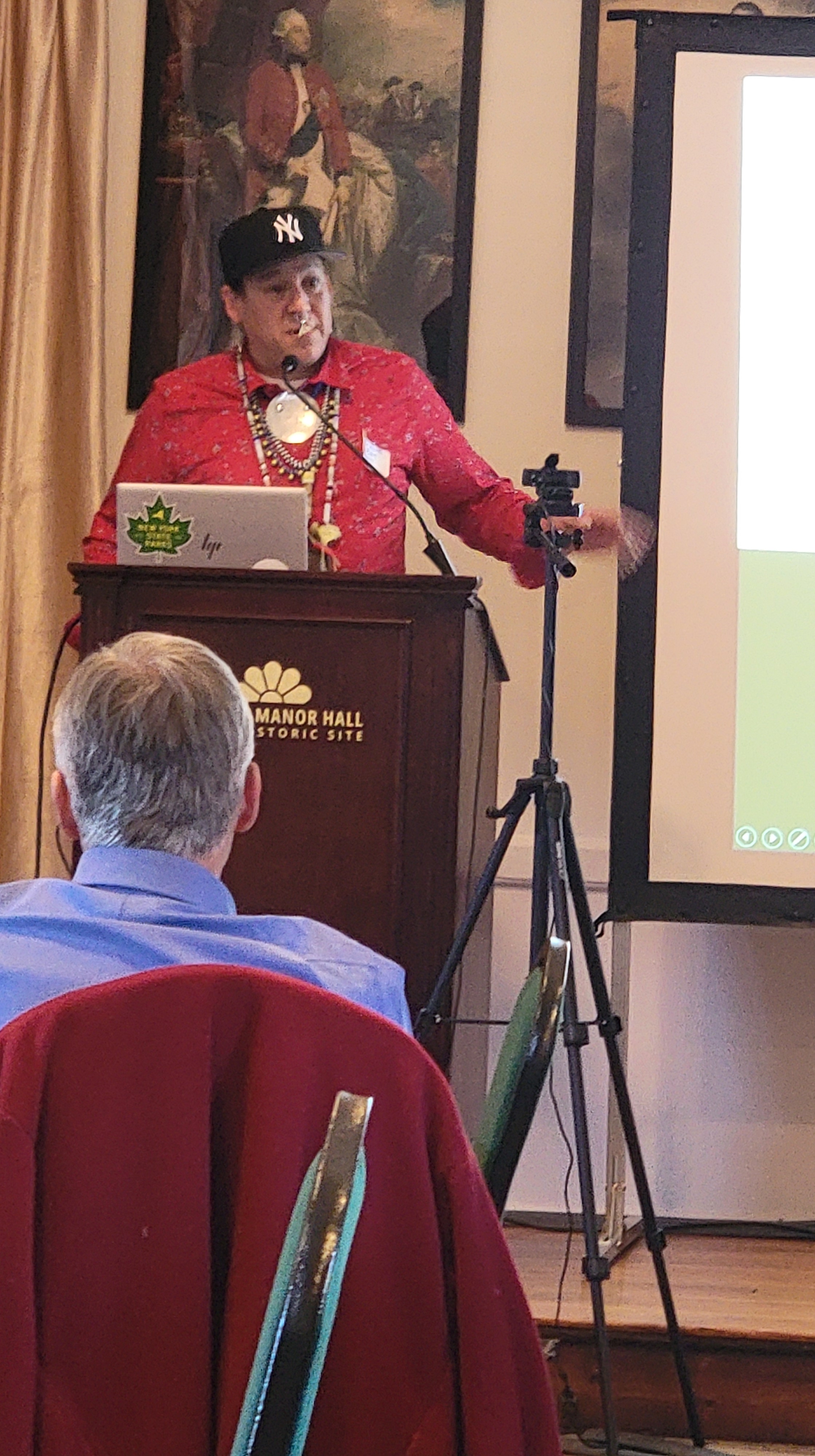
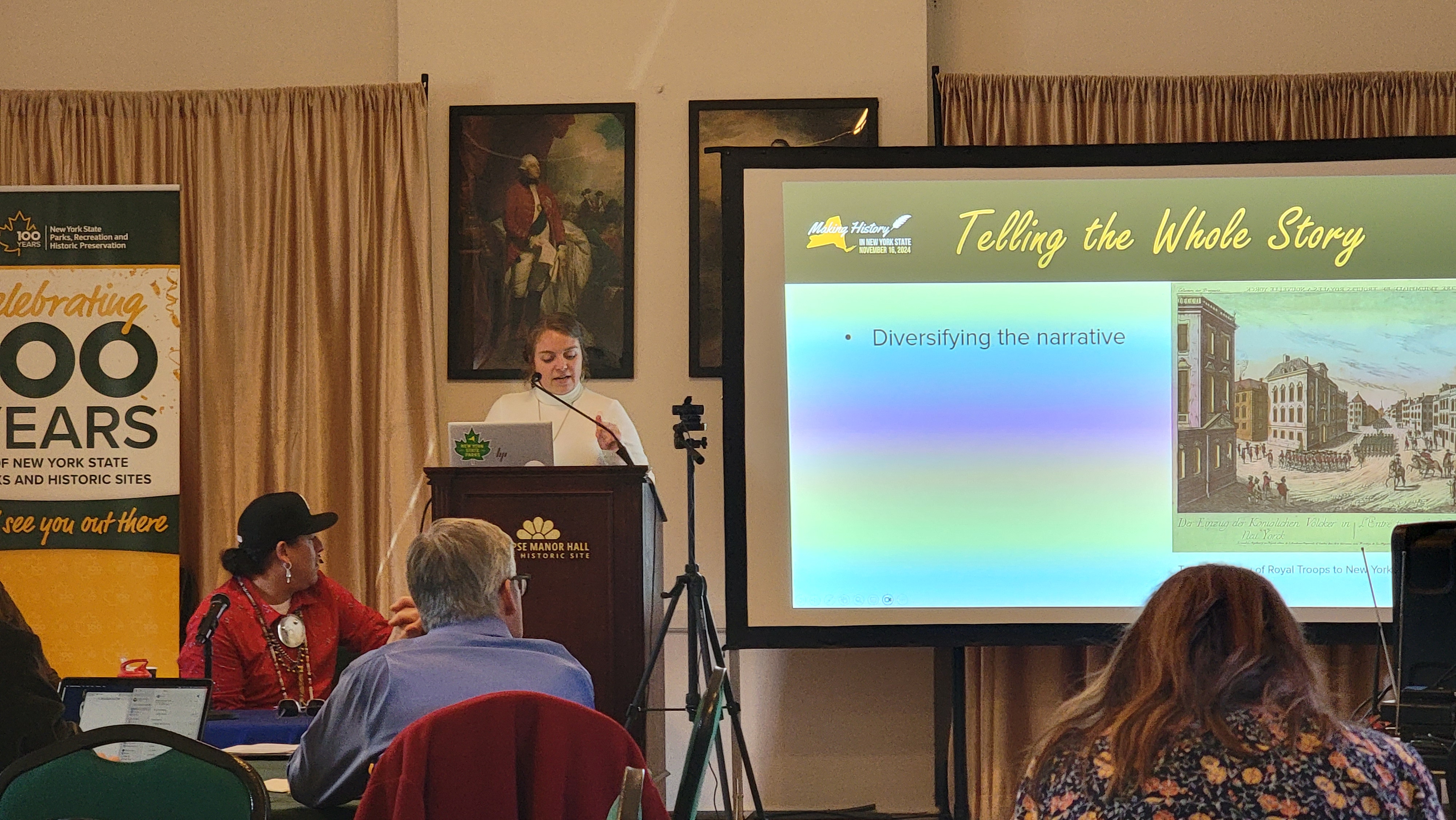


On Saturday, November 16, 2024, the public and staff members from New York State Parks, Recreation and Historic Preservation gathered at Philipse Manor Hall State Historic Site in Yonkers and online for “Making History: Revolution, Abolition, and Preservation in New York State,” a symposium highlighting the agency’s Our Whole History initiative. The initiative starts with acknowledging that our understanding of history is complex and nuanced, and evolves with historical research. Our Whole History actively fills in parts of history that were previously ignored to gain a more complete understanding of the past.

Kristine Mays Sculpture Exhibit Makes New York Debut at Jay Estate Gardens
From their earliest conception, the Jay Estate Gardens in Rye have been a place to host meaningful dialogues about American history and memory. A new outdoor wire sculpture exhibit created by acclaimed artist Kristine Mays expands upon that intentionality, celebrating and memorializing the spirts of enslaved people. Curated by the nonprofit Jay Heritage Center (JHC), “Rich Soil” is the first collection of fine art pieces to be installed in the historic landscape.
“I am breathing life into wire. With each work, I create a form that reveals the essence of a person and that speaks to humanity as a whole,” Mays said.
Continue reading Kristine Mays Sculpture Exhibit Makes New York Debut at Jay Estate Gardens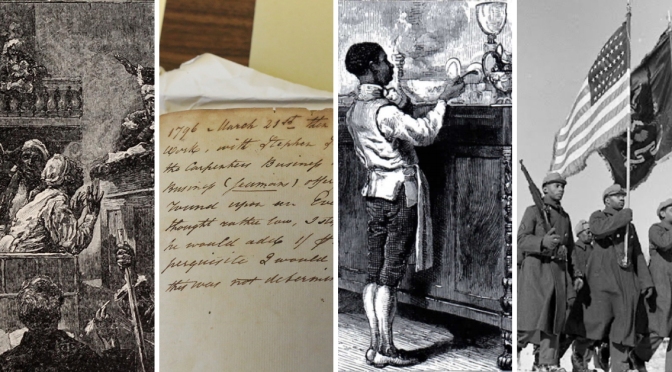
Telling New York’s Whole Story: Black History At State Historic Sites
Black History Month is drawing to a close. But at the Office of Parks, Recreation and Historic Preservation, research into New York’s Black history is continuous. From the 1627 arrival of the first 22 enslaved African men to the 1827 abolition of slavery in New York and into the future, Black history is the history of New York and of the United States. This is a cornerstone principle of ‘Our Whole History,’ a Parks initiative launched several years ago to thoroughly research and share the stories of New York State from the points of view of all who lived it.
As research continues, a more complete picture of the past emerges. The stories of the Black New Yorkers who contributed so much to New York’s history are revealed through painstaking, detail-oriented research. Key caretakers, highly skilled laborers, folks who contributed to a smooth-running household become clearer.
To piece together their stories, our dedicated historians conduct archaeology, study physical objects, and delve deep into records of all kinds: account ledgers of both homes and businesses; census data; estate inventories; wills; letters and journals; city directories; diaries, and more.
Several of our historians shared with us the stories of Black figures who shaped the history of their sites.
Continue reading Telling New York’s Whole Story: Black History At State Historic Sites New York State Parks and Historic Sites Blog