

You may have already known that cardboard boxes and cans can be recycled into new products, but did you know that your hot dogs and hamburgers can be too?
On July 1, Green Lakes State Park in Fayetteville launched a large-scale pilot waste reduction initiative, featuring food scrap composting, improved signage, public education events and coordination between regional staff and staff on the ground, including and the newly created sustainable operations team.

The program will help New York State Parks to adhere to the statewide policy known as Executive Order 22. The goal of this policy is to reduce emissions and improve waste diversion rates of New York’s public entities. “Waste diversion” is a process that encompasses reuse, recycling, and composting of trash so that it stays out of landfills and incinerators.
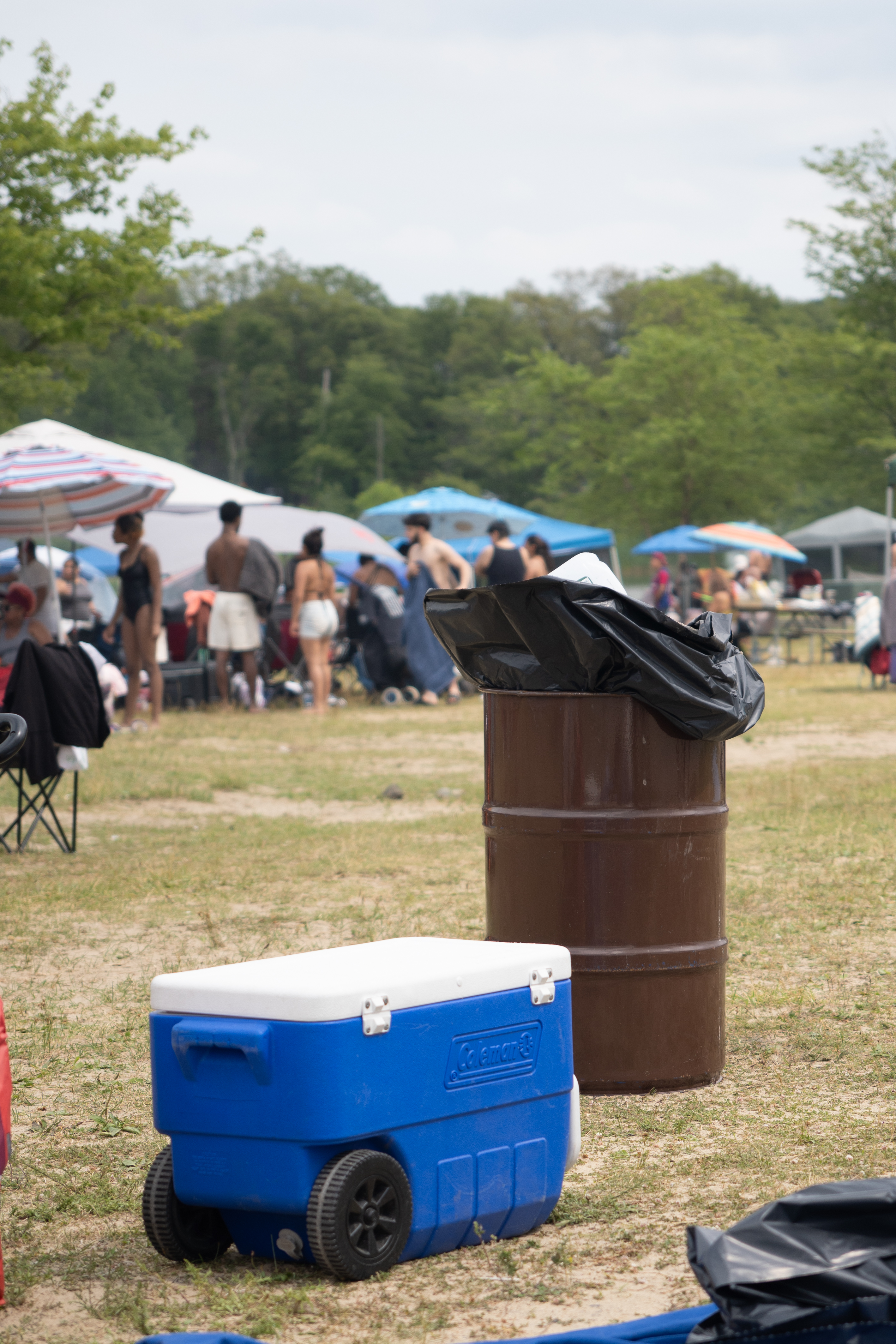
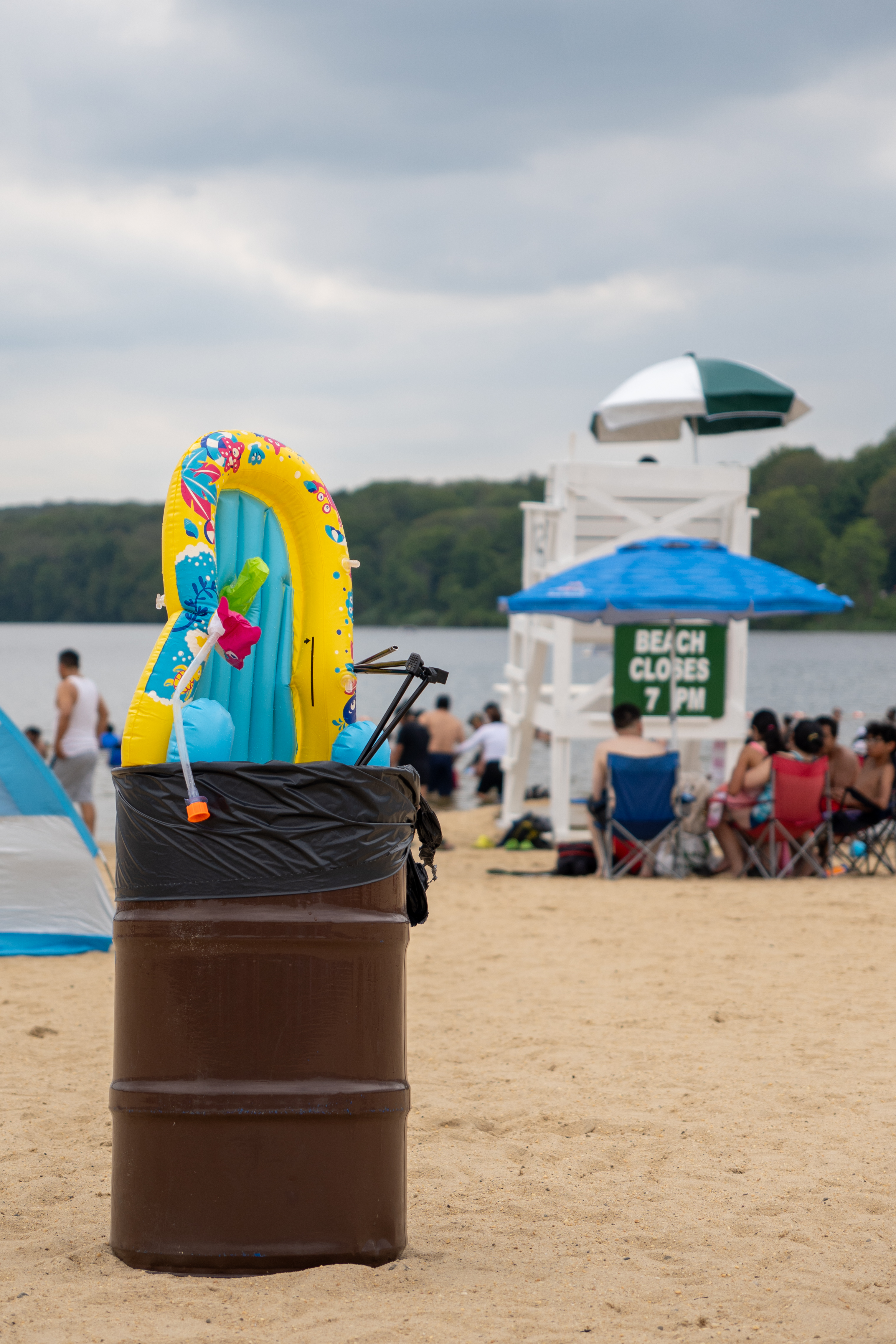
By launching this pilot program, Green Lakes will lead the way towards a more sustainable park system by testing how the public responds to improved descriptive signage on waste reduction and to public composting bins.
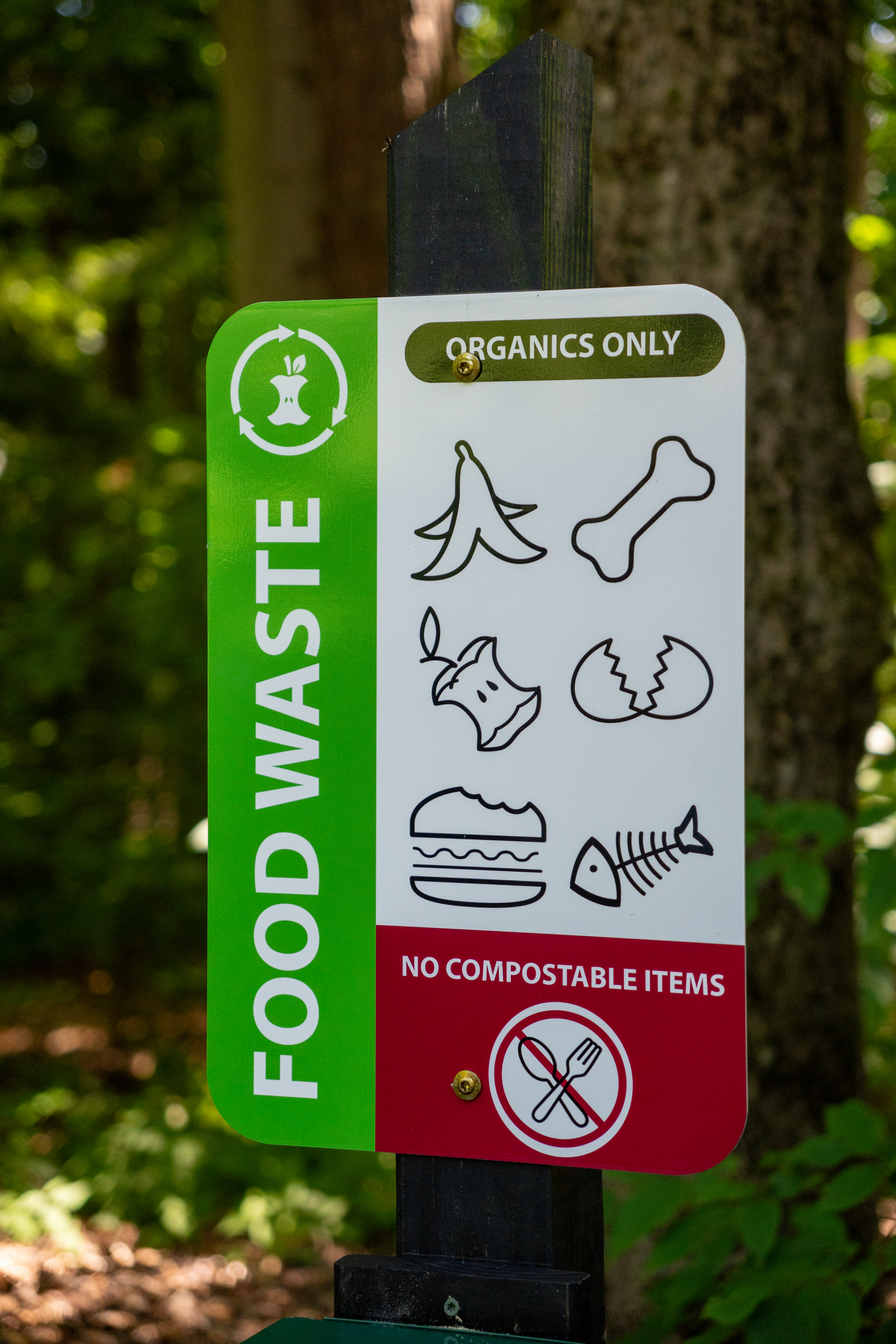
“Waste diversion” is a process that encompasses reuse, recycling, and composting of trash so that it stays out of landfills and incinerators.
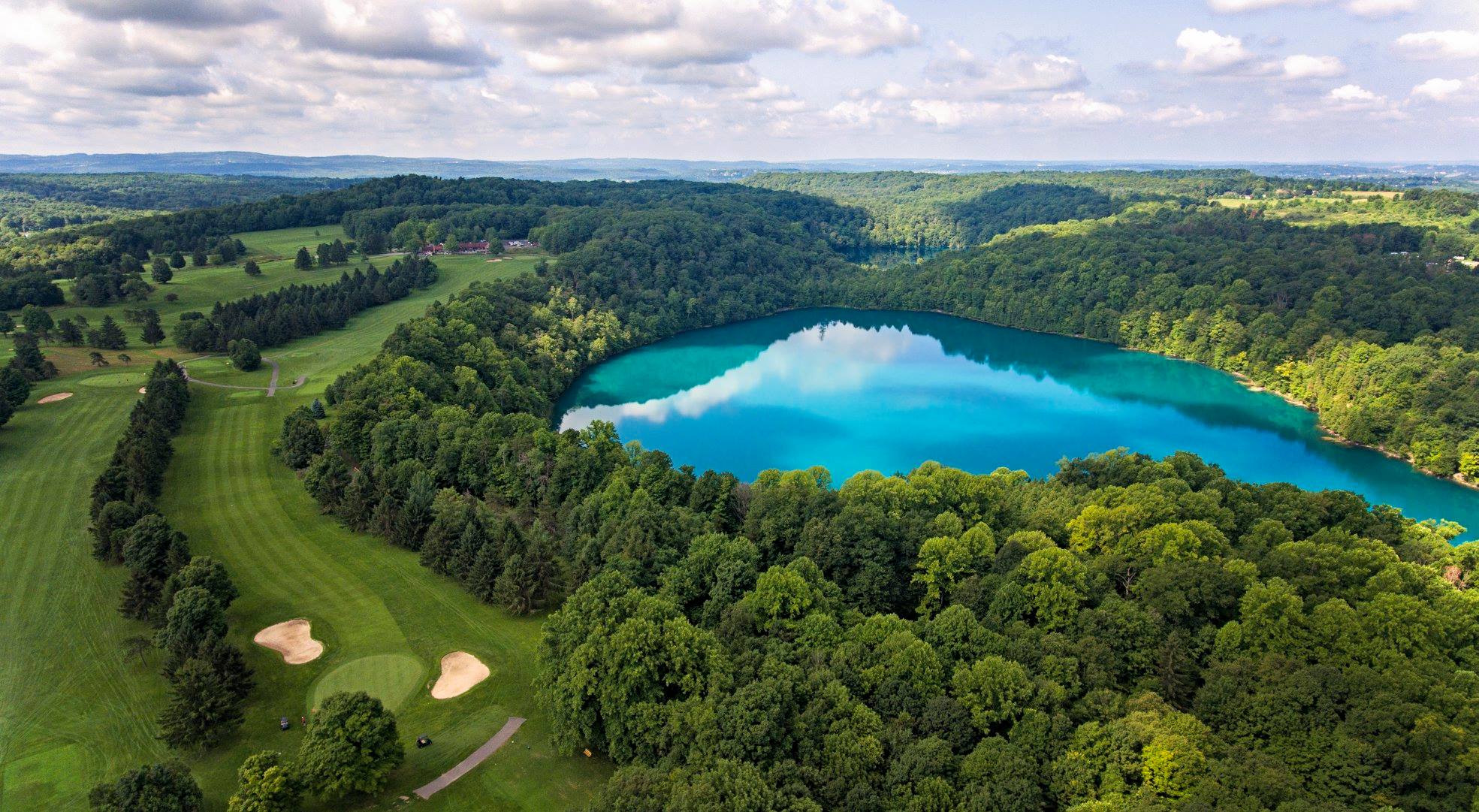
Green Lakes is the kind of place that inspires people to protect and appreciate the natural world. The flagship Onondaga County park features two dazzling meromictic lakes, sprawling campgrounds, charming picnic areas and a historic golf course, attracting more than two million visitors in 2023 alone – making it the perfect spot to launch this initiative.
Under the leadership of Sustainability Manager Jordan Elliott, SUNY Climate Corps interns Emily Bridgeford, Sanskar Narang and Savi-Cartier Stewart have been planning revisions to Green Lakes waste handling methods. Improving waste diversion rates in the park is not as simple as ordering new signs or trash bins, however; the team has been hard at work to determine how Green Lakes’ visitors interact with waste receptacles.
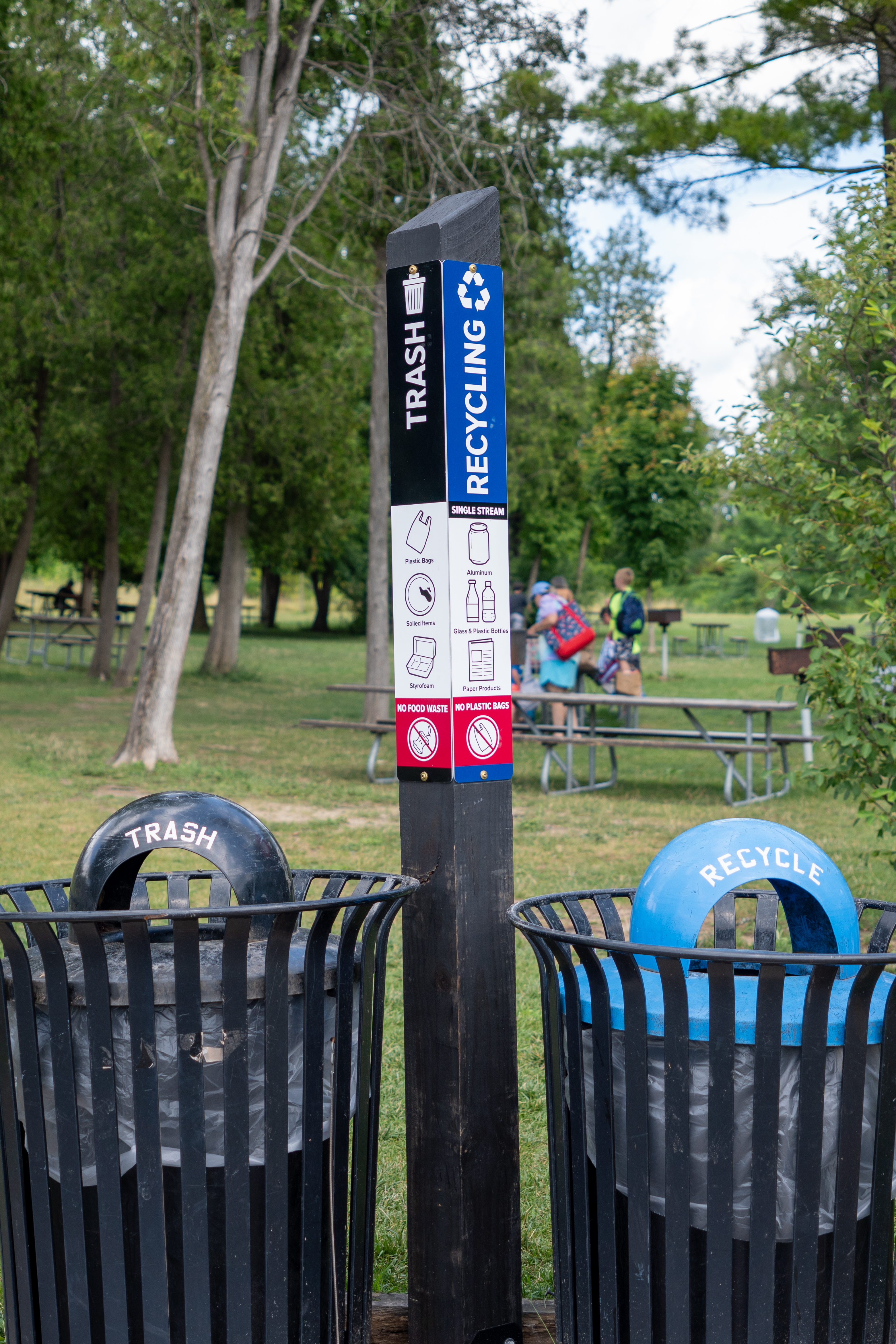

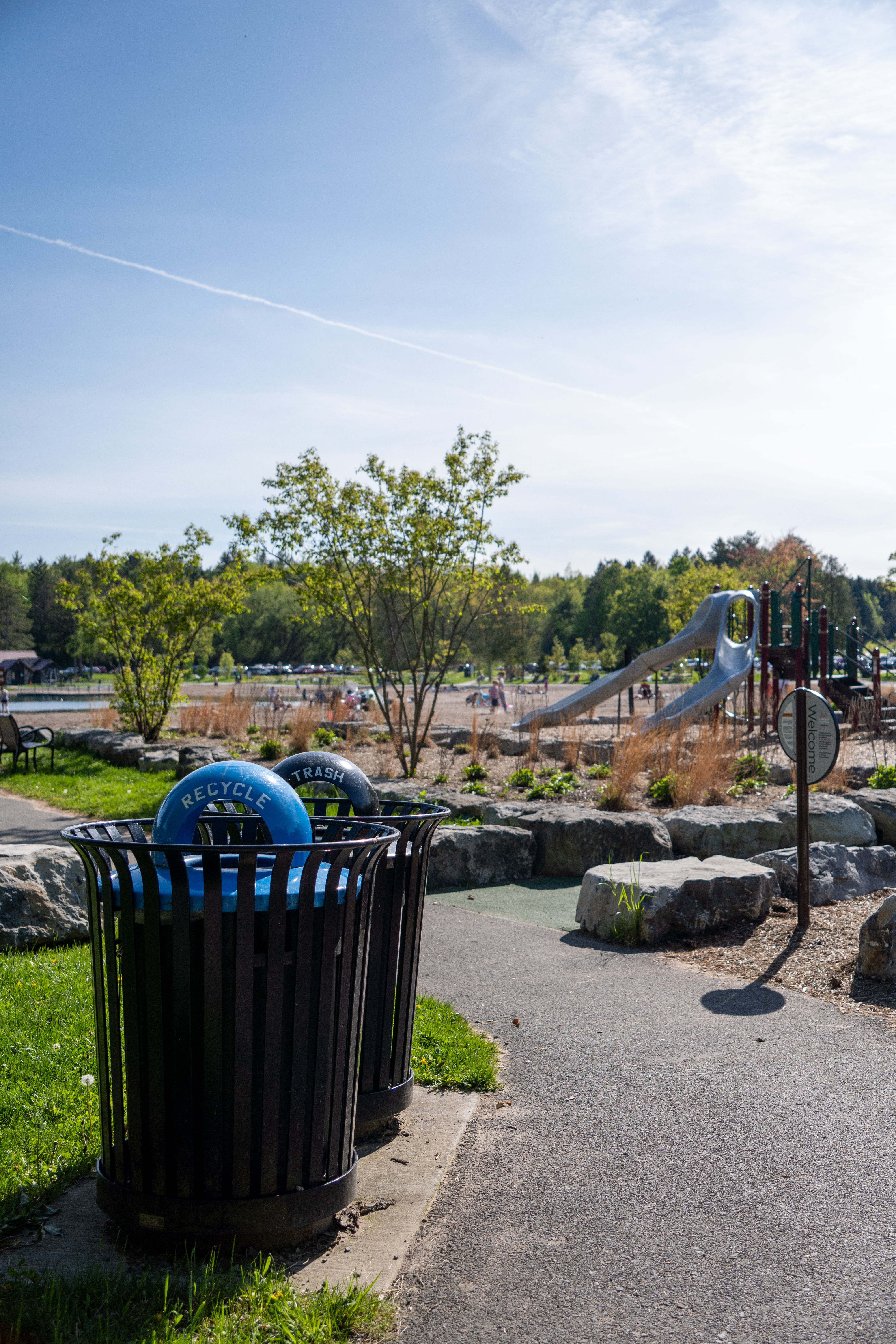
The sustainability team has been collecting insights through several methods:
- They’ve conducted weekly waste assessments, in which they sort through the components and contaminants of trash bags throughout the park. The assessments identify potential roadblocks and determine the effectiveness of different types of signage and bins.
- Daily visitor surveys have helped the team to understand the patterns and beliefs of patrons regarding waste handling. The surveys not only explore visitors’ own practices, but their beliefs about what happens to their discarded waste at the park.
- The team has been working closely with facility operations for their knowledge of the current state of waste handling at Green Lakes. Their expertise has been key to developing the program to simultaneously divert waste and address the challenges that maintenance faces in keeping the park a beautiful place to visit.
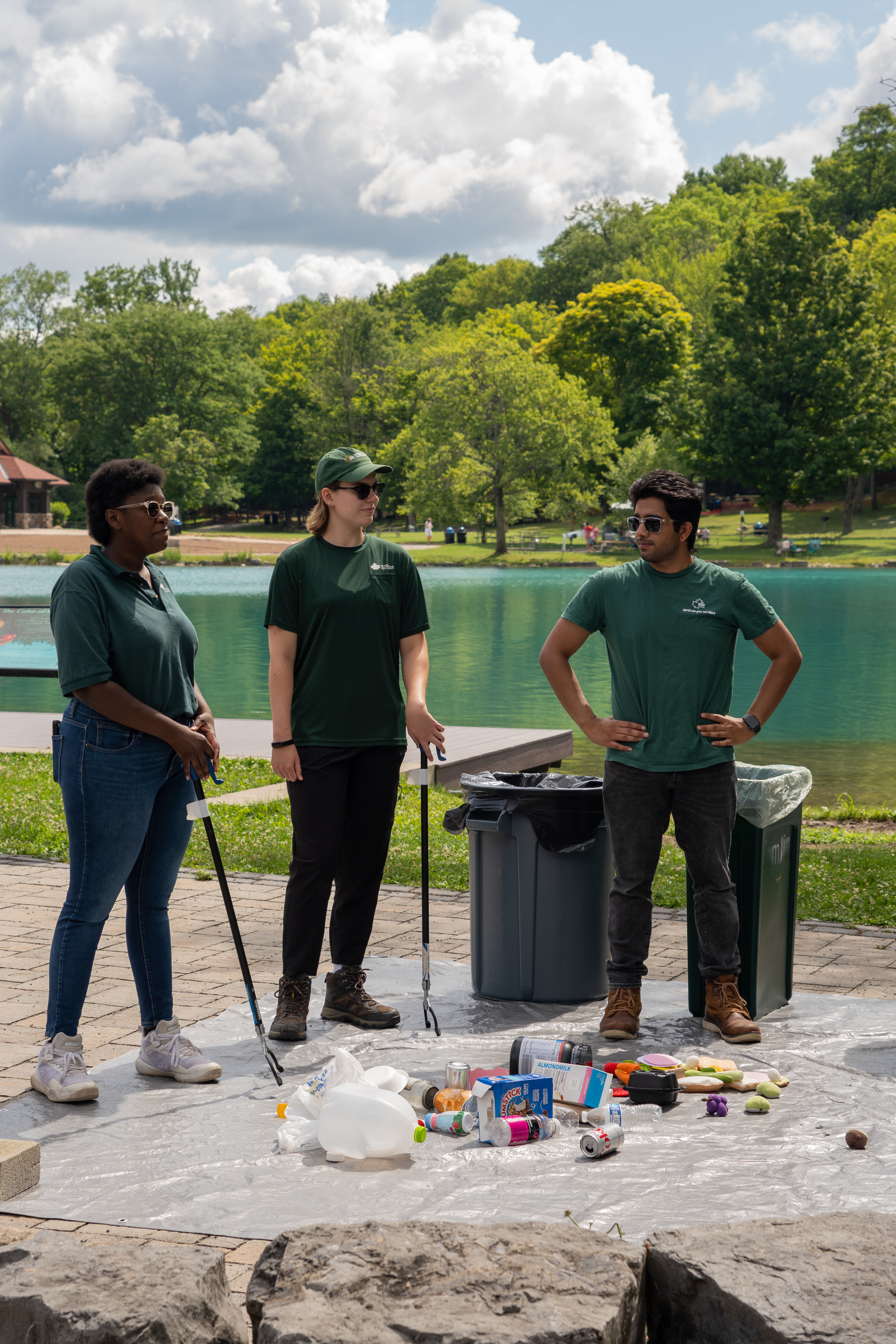
Improving public awareness and education through programming is another important aspect of the pilot program. In collaboration with the environmental education center at Green Lakes, the sustainability team is hosting interactive events for local summer camps and groups of K-12 students. Youth in these summer programs around the Onondaga region can participate in “Recycling Family Feud,” interactive waste sorting games, and trivia led by the sustainability team to become more familiar with our waste system. Park goers of all ages can watch the team conduct the weekly waste assessments throughout the summer near the education center, where they aim to make their process transparent and shed light on what happens to waste after it is thrown out.
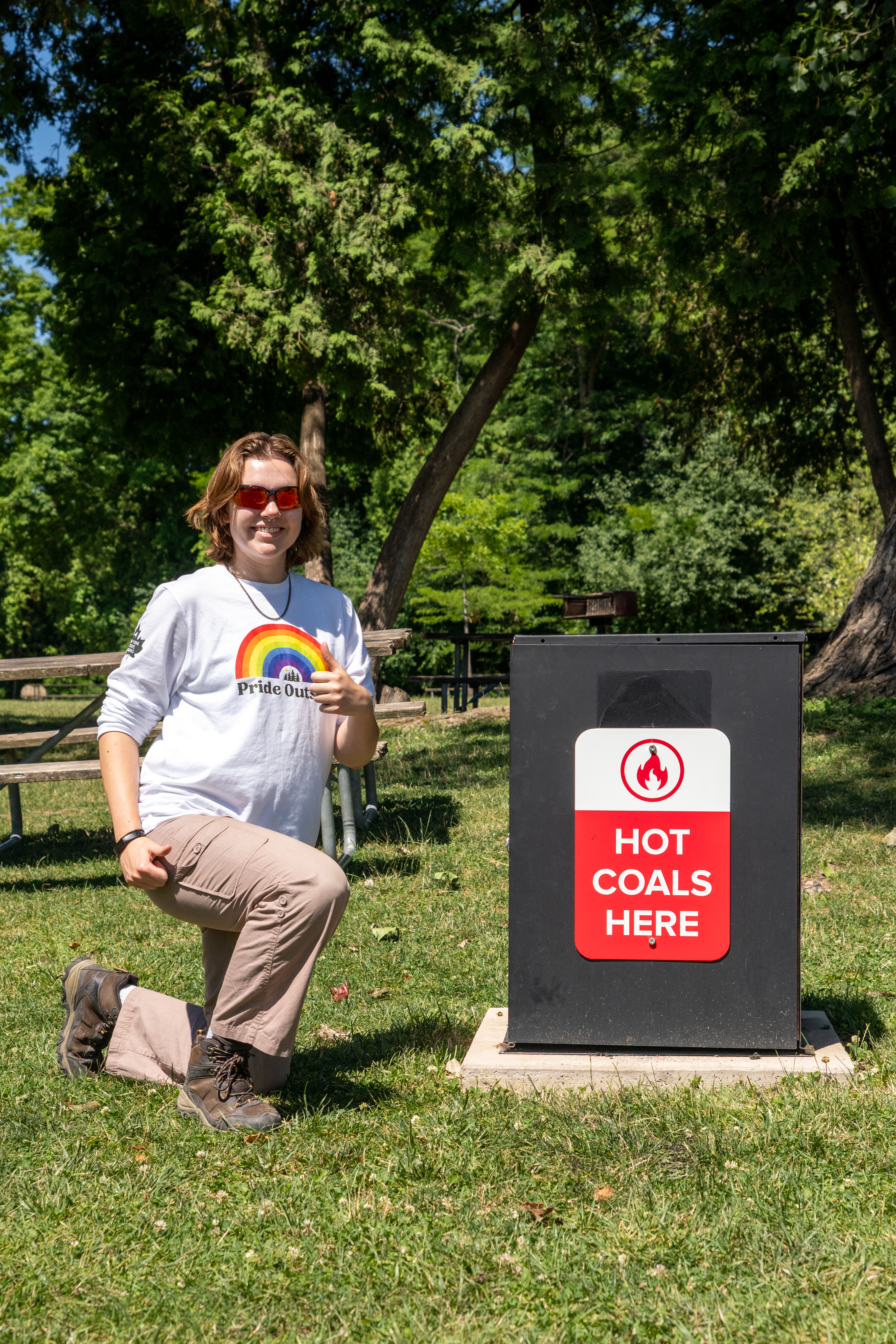
The goal of the pilot waste reduction initiative is to inform future waste actions at other State Parks facilities. The team aims to create procedures for performing and interpreting waste assessments as well as implementing descriptive signage, giving employees at other facilities a clear baseline to increase their diversion rates.
Overall, the program is designed with the values of Parks, Recreation and Historic Preservation close to heart: to be responsible stewards of our valuable resources and create safe and enjoyable opportunities for all New York State residents. The changes will contribute to Green Lakes State Park becoming a leader in sustainability for outdoor recreation facilities by reducing its environmental impact and increasing waste literacy.
– Written by Sustainability Manager Jordan Elliott and SUNY Climate Corps interns Emily Bridgeford, Sanskar Narang and Savi-Cartier Stewart
 New York State Parks and Historic Sites Blog