

There’s more to nature in New York City than rats and pigeons! From wriggly eels to soaring falcons, there are plenty of species that thrive in and around the concrete jungle. Prehistoric creatures roam our shorelines. Ancient trees line our streets. Read on to learn more about some of the species that make up the hidden nature of NYC.
American Eels

You’ll find the American eel in all rivers and estuaries around New York City, from the creeks of Jamaica Bay in Brooklyn to the streams at Clay Pit Ponds State Park Preserve on Staten Island. Unlike most migratory fish, it hatches in the ocean and travels hundreds of miles to reach freshwater, arriving to the Hudson River estuary as a tiny transparent glass eel. As it matures, it turns dark green or gray. An adult eel can grow up to four feet in length and live more than 25 years.

Eel populations are declining up and down the east coast because of overfishing, pollution, and the damming of waterways. The New York State Department of Environmental Conservation (DEC) coordinates the Hudson River Eel Project, a community science initiative, to monitor glass eel migration. You can volunteer at the project’s NYC site at Richmond Creek on Staten Island to see glass eels for yourself.
For a chance to see an adult eel, check out the free catch-and-release fishing clinics at Gantry Plaza State Park and Shirley Chisholm State Park. In addition to the occasional American eel, you might encounter other native fishes of New York’s waterways like the oyster toadfish, the black sea bass, the northern puffer, and the summer flounder.

Atlantic Horseshoe Crabs
Another common but rarely-glimpsed denizen of the New York harbor is the Atlantic horseshoe crab. This prehistoric-looking creature, which is more closely related to spiders than to crabs, has changed little over the past 450 million years. Since before dinosaurs walked the earth, the horseshoe crab has scuttled around shallow seas on its six pairs of legs, feeding on marine invertebrates with its jawless mouth, and sensing the world around it with its ten eyes. Despite the horseshoe crab’s unique physical traits and impressive natural history, the animal is now vulnerable to extinction. Habitat loss, overharvesting for use as fishing bait, and collection of horseshoe crab blood for biomedical research have all taken their toll on the Atlantic horseshoe crab population.

The DEC works with the Cornell Cooperative Extension’s marine program and Stony Brook University to coordinate the New York Horseshoe Crab Monitoring Network, which conducts surveys for spawning horseshoe crabs in May and June. Assessing the region’s population is not only critical for the horseshoe crabs themselves, but also for the migratory shorebirds that eat their eggs and sea turtles that prey on adults.
You can volunteer to count and tag horseshoe crabs at one of the monitoring network’s many sites around New York City and Long Island. You can also help any stranded or upside-down horseshoe crab you may encounter on the beach by gently lifting it by the sides of its shell and placing it in the water. Horseshoe crabs are harmless to humans and don’t bite, pinch, or sting. New York State Parks monitors the crabs at places like Shirley Chisholm State Park in Jamaica Bay, which provides vital natural shoreline habitat for these ancient critters in a city where much of the shoreline is paved in concrete.

Kentucky Coffeetrees

The Kentucky coffeetree is rare throughout most of its natural range. In New York City, however, it’s commonly planted as a street tree—almost 10,000 of them are scattered throughout the five boroughs. At Marsha P. Johnson State Park, coffeetrees line the iconic central walkway. These hardy urban trees have an extraordinary history. Indigenous peoples, including the Dakota, Meskwaki, Omaha, Pawnee, and Ho-Chunk, used the seeds of coffeetrees as food and medicine. European colonists imitated the Meskwaki practice of roasting and grinding the seeds to make a hot beverage, leading to the “coffeetree” nickname. (Readers should note that raw seeds are poisonous.)
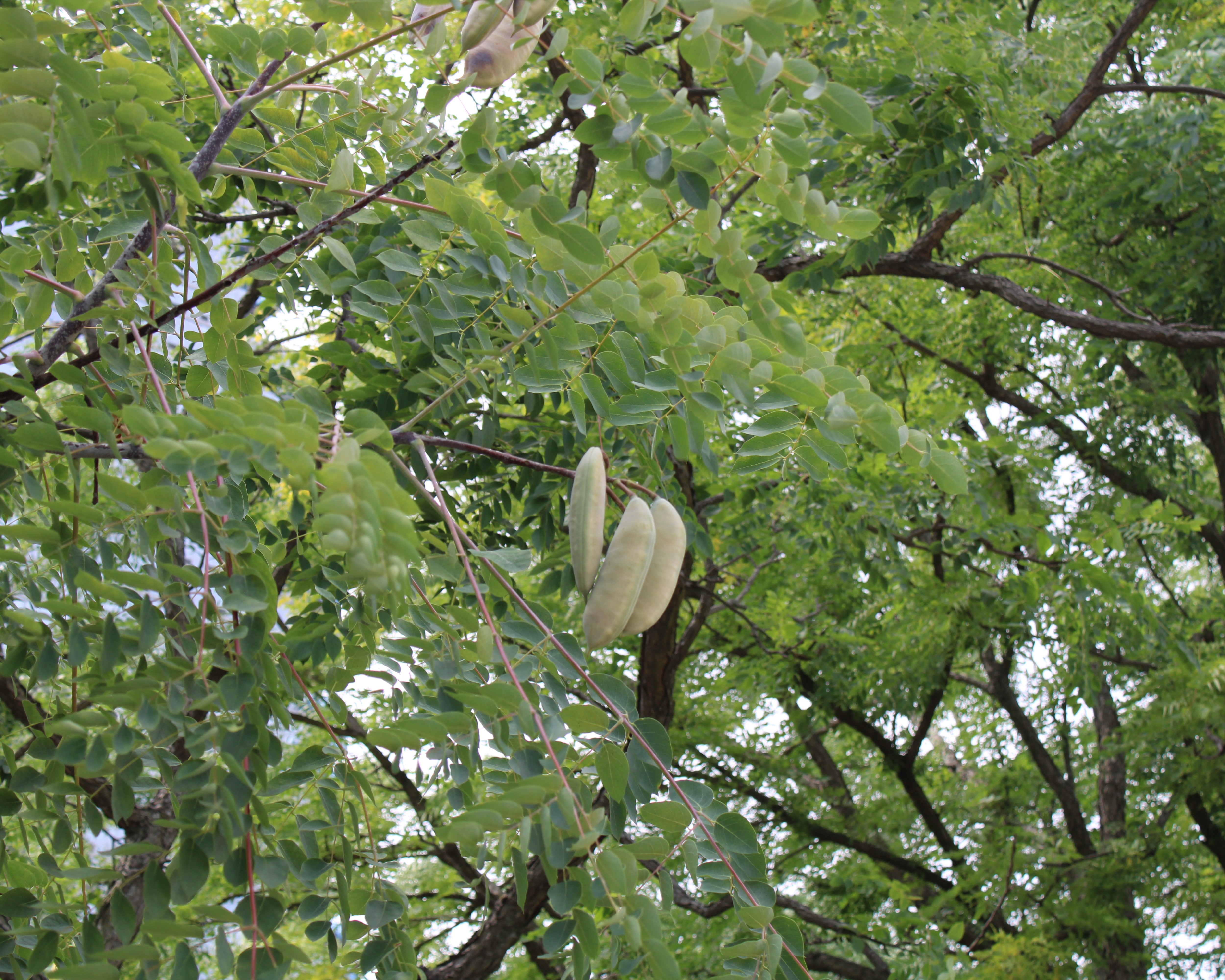
But the evolution of the tree’s large seedpods predates even human presence in North America. The coffeetree likely lived alongside Pliocene megafauna such as the American mastodon. This gigantic animal, which was larger than modern elephants, would have been capable of chewing through the coffeetree’s woody pods and dispersing its seeds. Nowadays, this “evolutionary anachronism” must rely on humans for dispersal or else wait for the pod to gradually rot away. Fortunately, humans have an incentive to keep coffeetrees around. According to the New York City Tree Map, the city’s coffeetrees provide the equivalent of $750,000 per year in ecological benefits such as stormwater interception, energy conservation, and air pollution reduction.
American Kestrels

The next time you’re outside in New York City, look up. You just might spot North America’s smallest falcon, the American kestrel. This tiny raptor—no bigger than a blue jay!—usually frequents open grassland habitats, but it adapts surprisingly well to city life. Perching on light posts or hovering over grassy lawns, the kestrel uses its sharp vision to spot grasshoppers, mice, and other small prey from more than 100 feet away. Like its bigger cousin, the peregrine falcon, the kestrel often nests on high building ledges; however, it prefers to nest in natural or man-made cavities. Keep an eye out for this colorful, fierce bird at high perches around Marsha P. Johnson and Gantry Plaza State Parks, or flying low over the grasslands of Shirley Chisholm State Park. Sometimes a kestrel will even visit a baseball game at Roberto Clemente State Park!

Along with many other wild bird species across North America, the American kestrel is in decline. Its New York City population seems to be stable, but you can still help this small bird with a big personality by putting up nest boxes, avoiding pesticide use, and advocating for the preservation of grasslands. You can learn more about urban raptor conservation from the NYC Bird Alliance.
Nature can flourish in New York City, but it needs our help to continue to thrive in the future. And we can only help species if we’re aware of their existence. Next time you’re hurrying down the street, pause to gaze at the Kentucky coffeetree and remember that you’re walking in the ghostly footsteps of mastodons. Open your ears to the shrill killy killy killy call of the American kestrel. Imagine the dark waters of the Hudson and East Rivers teeming with eels and other marine life. And when you relax at the beach, keep an eye out for stranded horseshoe crabs—creatures older than our continent—so that they may continue to grace our shores for millions of years to come.
– Written by Flannery James, NYC Region NYS Parks Student Conservation Association Intern
Sources:
https://www.nyhorseshoecrab.org
https://www.nycgovparks.org/learn/wildlife-in-new-york-city/horseshoe-crabs
https://tree-map.nycgovparks.org/tree-map/species/39377
https://celebrateurbanbirds.org/learn/birds/focal-species/american-kestrel
https://dec.ny.gov/nature/animals-fish-plants/american-kestrel
 New York State Parks and Historic Sites Blog