

In New York, spring means maple! Maple syrup and sugar are key agricultural products in New York and part of the state’s heritage. Many of our state parks and historic sites offer maple programs during the late winter and early spring. The last two weekends of March are Maple Weekends in New York, when producers large and small invite the public to see the process and sample some syrup. In this post, we’ll not only tell you how maple syrup is made, but uncover its past as a symbol of American independence and of the anti-slavery movement.
From Sap To Syrup
Making maple syrup has a lengthy tradition in Northeastern North America. Long before anyone wrote about it, Native Americans gathered sap from cuts made in maple trees that they boiled to concentrate the sugar. Once Europeans arrived in North America, they too began collecting sap and boiling it in large pots, evaporating the water to make syrup and sugar.

The equipment and techniques for making maple syrup have evolved over time, but the basic principle is the same. Maple sap is mostly water that contains a small amount of sugar and minerals. By removing the water, the sugar can be concentrated to create sweet syrup or even granular sugar. Traditionally, this was accomplished by boiling the sap for long periods of time.
If you have access to a maple tree, you can make a little bit of syrup at home. The process is simple. Collect sap from a maple tree in winter or spring (before the leaf buds begin to swell) and boil it to seven degrees above the boiling point of water. A digital candy thermometer is handy for getting the temperature right. Foam forms on top of the sap as it boils, so you need to occasionally add a few drops of defoamer. Traditionally, people used a little butter or cream, but commercial defoamers are available that are made from vegetable oils.
It takes a lot of sap and a lot of boiling to make even a pint of syrup. How much sap, you ask? That depends on the sugar content of the sap, which varies. In 1946, a University of Vermont educator named C.H. Jones devised a clever formula (known as Jones’ Rule of 86). Simply divide 86 by the sugar percentage of your sap and that will tell you how much you will need to make a gallon of syrup. Two percent sugar content is considered good, and according to Jones’ rule, it would require 43 gallons to yield one gallon of syrup. But sap often has less than two percent sugar content. One percent or even less is common. Last year, there was a lot of .7 percent sap in my area, which would require 123 gallons of sap to make a gallon of syrup. That’s an awful lot to boil in your home spaghetti pot!
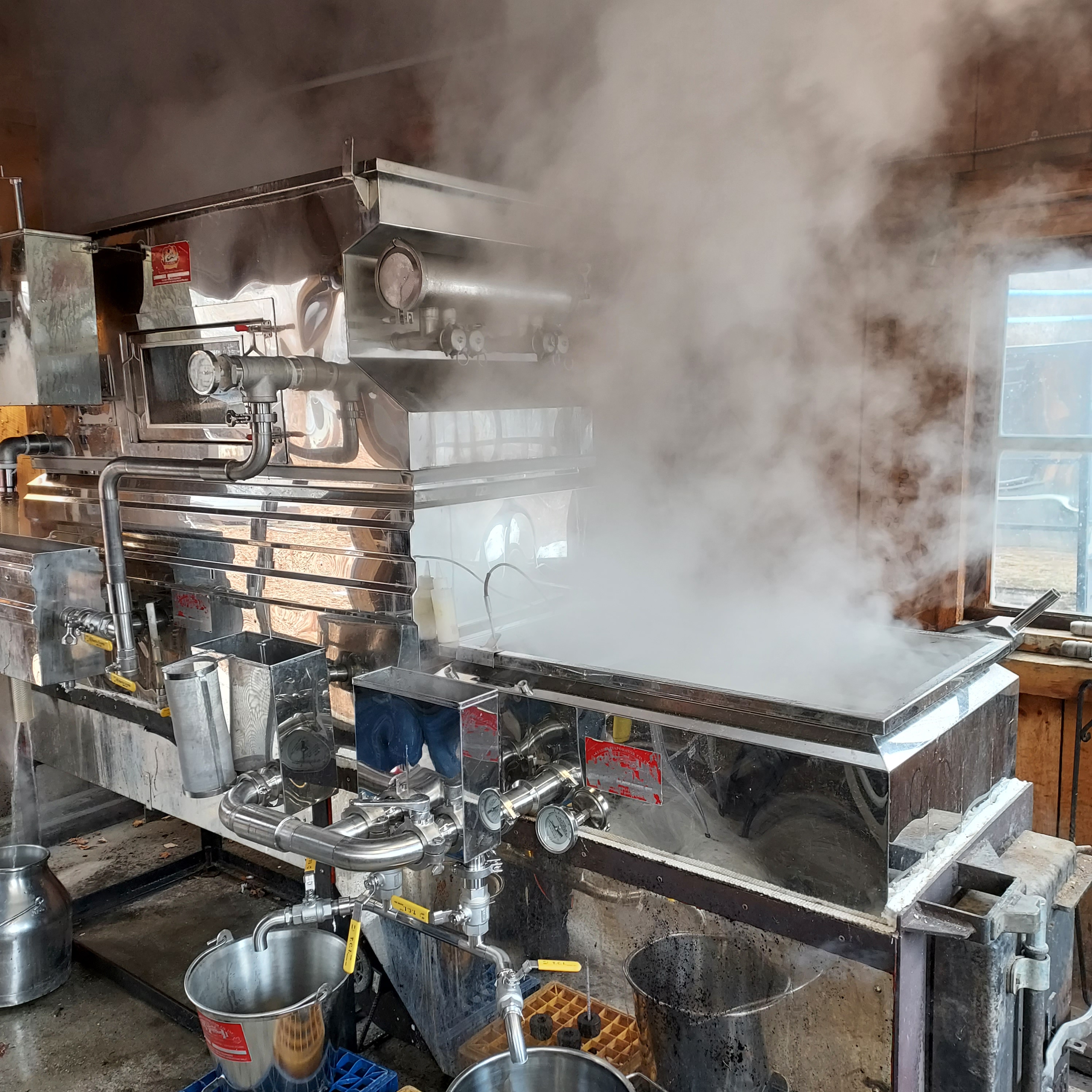
If you are wondering if there are shortcuts, the answer is yes, but they will cost you money. Let’s start by replacing your spaghetti pot with something called an evaporator, which is a purpose-built contraption of one or more pans that sit on top of a fire box called an arch. At its simplest, an evaporator can have a single shallow, flat pan, but most are more complex. A typical evaporator has a back pan, also known as a flue pan, with deep channels (flues) which increase the surface area for heating the sap, improving the efficiency of the evaporator. The flow of sap into the back pan is controlled by a float valve, which is set to maintain a specific level in the pan. As water evaporates from the sap, the float drops, opening the valve and admitting more sap to the flue pan.

After boiling vigorously in the back pan, the concentrated sap flows into one or more flat-bottom pans, called syrup pans, that often have partitions, creating something of a maze that the sap flows through. As the sap winds its way through the maze, it loses more and more of its water to evaporation. At the end of this maze is a thermometer and a valve. Here, the sap will be the most concentrated. When it reaches 7 degrees above the boiling point of water, the valve opens and syrup pours into a bucket. This is called a “draw.” The draw continues until the temperature on the thermometer falls back below the magic 7 degrees. At this point the valve is closed and the process repeats. A hydrometer is floated in the syrup to confirm that the syrup is dense enough to meet the legal definition of syrup.

But where will you get all of the sap necessary to make that much syrup? Today, plastic tubing has replaced the iconic sap buckets in most large maple operations. Not only do they reduce the labor needed to gather the sap, but they can also be connected to a high vacuum pump that can more than double the yield of sap per tap.
Sugar maples and the closely related black maples are the best trees for maple syrup production because of their sap’s high sugar content. Red maples work almost as well, and silver maples will produce useable sap but have a lower sugar content and may produce more niter. In fact, sugary syrup can be produced from other trees, including birch and walnut, which I hear are quite delicious. But that isn’t maple syrup, and not having tried them myself, I won’t vouch for them.

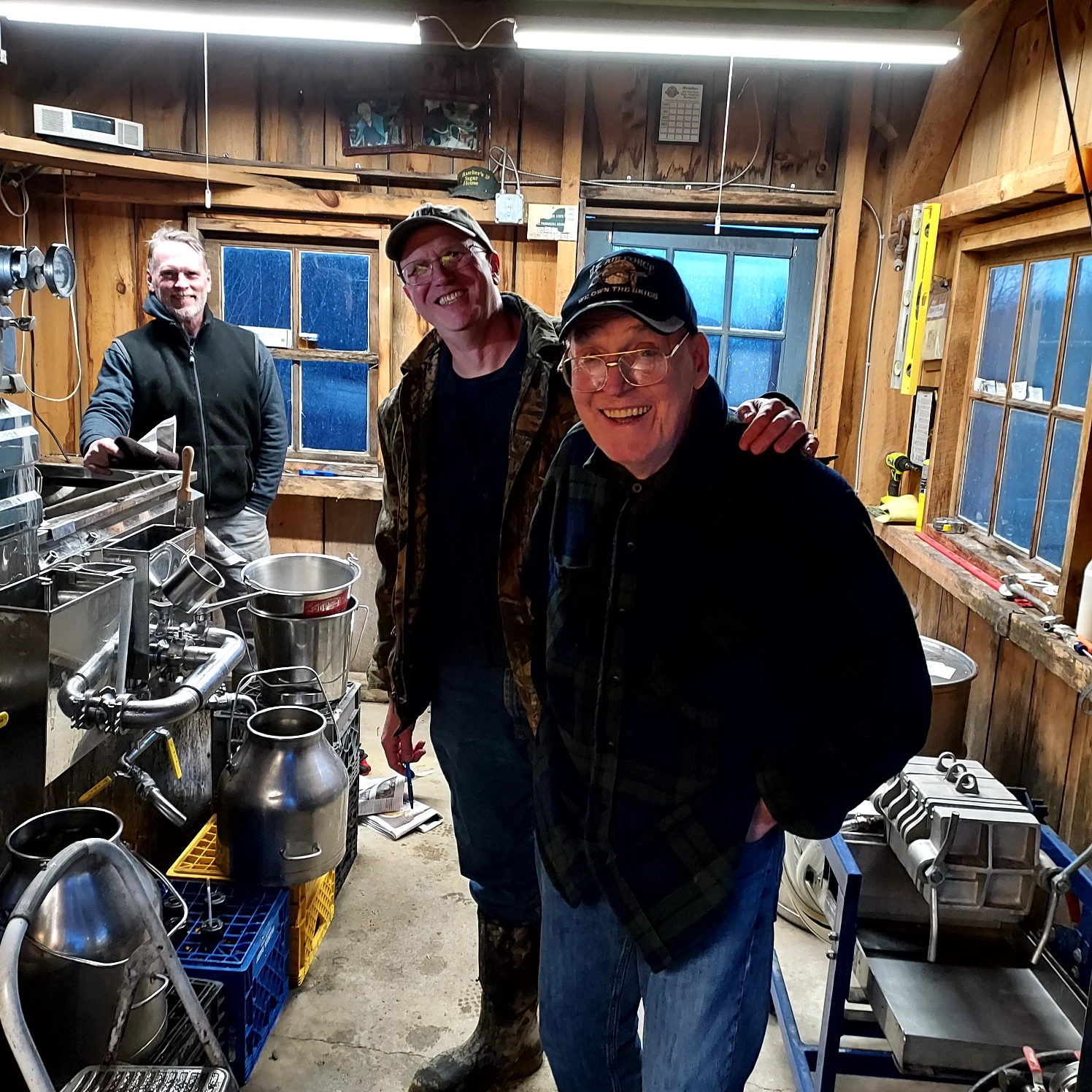
People who make maple syrup are called sugar makers, and the places they make syrup are called sugarhouses (not sugar shacks). Some are hobbyists who tap just a few trees; others have commercial operations with tens of thousands of trees. Regardless, most sugar makers are very friendly and generous, and many real characters. It is a long-standing tradition for sugar makers to visit one another and socialize whenever they aren’t making syrup themselves. Often, they’ll just drive around until they see steam billowing from somebody else’s sugarhouse. If the owner can spare the time, conversations can last for hours and will almost certainly include the weather and how much syrup they have made to date!


Who makes the most syrup? Canada produces about 70 percent of the world’s maple syrup, mostly in Quebec. Coming in second place (there really isn’t a third place), the United States produces the rest. Vermont is the clear winner among the states, producing more than twice as much as second-place New York. Quality is more important than quantity, but I can’t offer that as a consolation prize because awesome maple syrup is found everywhere it is made.
– Written by Greg Smith, Director of the Bureau of Historic Preservation
The Sweet Taste Of Freedom And Patriotism
Maple syrup is a familiar staple in many households, with the United States producing 5.86 million gallons last year alone. While its culinary use extends far beyond pancakes and waffles, maple sugar and syrup was once a choice that spoke to deeper personal morality. From the late 1700s to the Civil War, anti-slavery advocates used maple as a statement about their morality and views on human rights. Choosing to tap or purchase maple products meant one less purchase of cane sugar, an industry supported entirely by enslaved labor.
During the 1790s, the convergence of local production, agricultural development, and abolitionist ideals brought maple sugar to the forefront of political discourse. Early efforts to promote maple sugar in the United States were driven not only by ethical concerns but also by economic and nationalistic motivations. After American independence, maple sugar gained popularity as an alternative to cane sugar, which was largely controlled by British plantation owners in the Caribbean. For abolitionists, it was a moral choice; for patriots, a means of economic self-sufficiency and resistance against British influence; for landowners, a potential new source of income.
Foreign investors also saw potential in maple production. The Holland Land Company, a private corporation backed by Dutch banks, purchased over three-million acres in central and western New York, partially to encourage large-scale maple sugar production. However, the widespread commercialization of maple sugar failed to occur. The harvesting process was labor-intensive and time-consuming, yields were inconsistent, and transportation of the final product across rugged terrain proved difficult. Additionally, the increasing demand for farmland led many to clear maple forests for crop cultivation, further limiting production.


Among the most notable maple sugar advocates was William Cooper, founder of Cooperstown and father of novelist James Fenimore Cooper. Cooper sought to establish a thriving maple sugar industry as a distinctly American enterprise, for Americans and by Americans. Thomas Jefferson was also a strong supporter of adopting maple sugar over cane sugar to undercut British profits. Jefferson’s advocating for maple sugar production was more than words. He made attempts to grow maple trees at his home, Monticello in Albemarle County, Virginia. For many years, he continued to use and endorse maple sugar as a replacement for cane. His motivations for doing so likely rested more in denying profits to the British over anti-slavery beliefs, since he continued to benefit directly from slavery, despite the influence of many prominent abolitionist friends like Benjamin Rush.
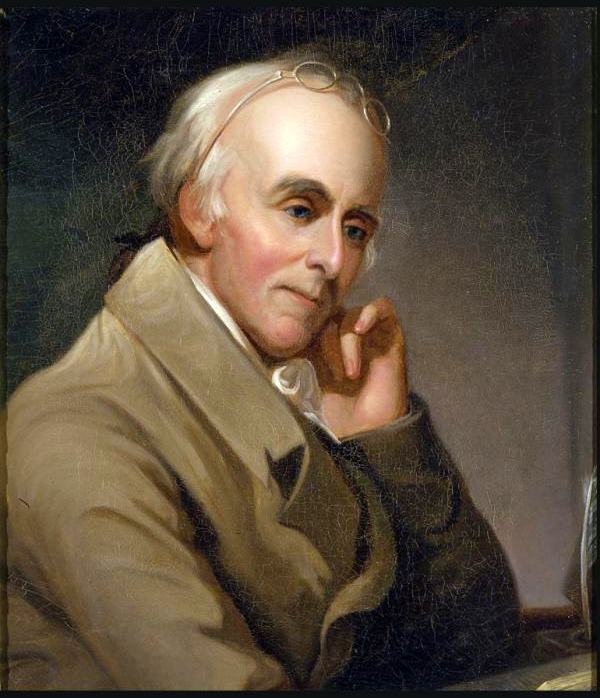
Rush, the Philadelphia physician and abolitionist, was among those who linked maple sugar to the anti-slavery movement. In his 1791 pamphlet, An Account of the Sugar Maple-Tree of the United States, Rush and his Quaker associates supported the use of maple sugar as an ethical alternative to cane sugar, which was inextricably tied to the exploitation of enslaved labor. By choosing maple sugar, consumers could actively resist the financial structures that sustained slavery.

Sugar plantation operations generated tremendous wealth for families who owned plantations but lived in the northeast or Great Britain. Maple was presented as an alternative to avoid supporting a product produced by the labor of the enslaved. Then, as now, people with strong political beliefs saw their buying power as a statement of their personal ethics. Buying cane sugar made them complicit in the horror of slavery. Maple provided an ethical, locally produced alternative. Reducing the demand for cane sugar was a way to strike at the profit of slaveholders.
Abolitionists encouraged a widespread boycott of cane sugar, viewing consumer choices as a powerful means of resistance. While this movement did not gain broad traction, it reflected the abolitionist strategy of rejecting goods produced by enslaved labor, a stance that extended to cotton and other commodities. British and American abolitionists alike condemned the hypocrisy of opposing slavery while consuming products derived from it. An 1830 British anti-slavery pamphlet underscored this sentiment, stating, “Is it not then most palpably inconsistent in those who protest against the injustice and the guilt of slavery, and profess themselves anxious for its abolition, thus to contribute to its support by purchasing the produce of the slaves’ labor?”
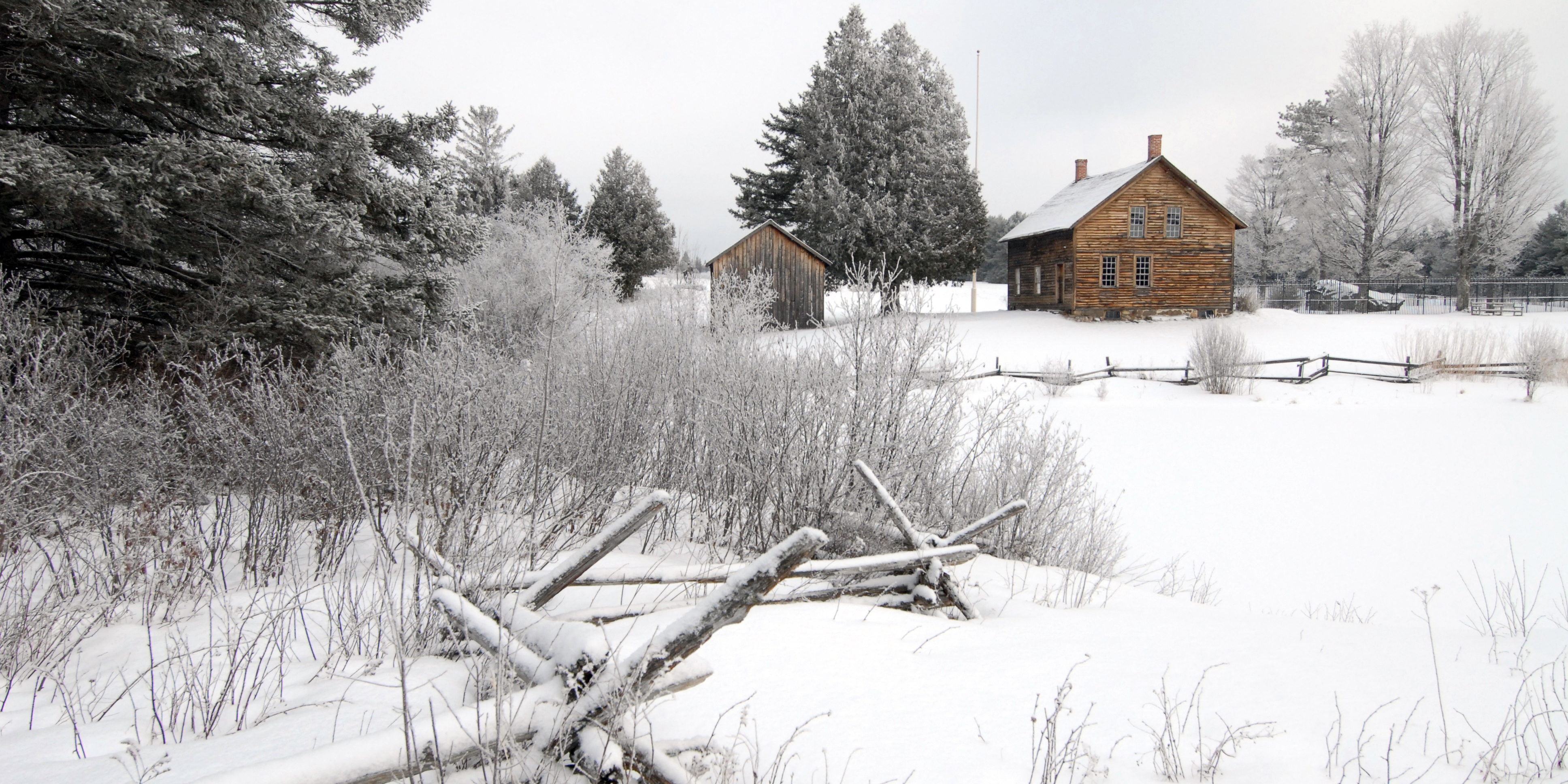
Notable anti-slavery figures such as Gerrit Smith—who provided land for John Brown’s farm and the Black settlement of Timbuctoo—advocated for the use of maple sugar as part of this ethical consumption movement. The Maple Grove Trail, which runs through a maple forest near Brown’s property, offers a tangible connection to this history. Given Brown’s self-sufficient lifestyle, militant abolitionist views, and proximity to the maple groves, it is highly likely that maple products were a staple in the households of both the Browns and their neighbors, the Black pioneers of the Timbuctoo settlement.
While the moral and political implications surrounding maple sugar no longer exist, its legacy remains. Across New York’s North Country, from large-scale operations to small sugar houses, maple syrup, candy, and sugar continue to be produced with pride, carrying forward a tradition that once stood at the intersection of economics, ethics, and the fight for human rights. Maple still has a home in New York State.
– Written by Cordell Reaves, Community Engagement Coordinator
 New York State Parks and Historic Sites Blog
One thought on “Tapping New York’s Maple Heritage”