
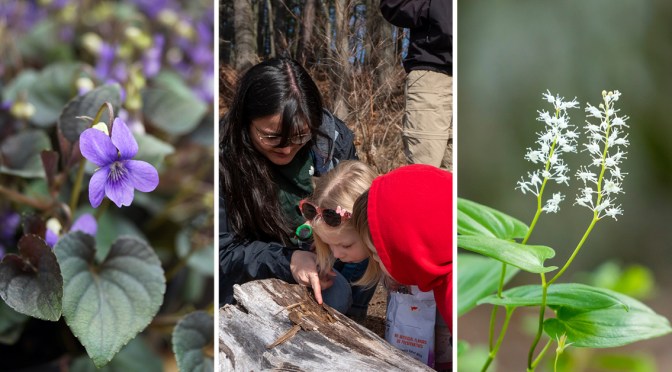
As Tom Petty once sang, “You belong among the wildflowers, you belong in a boat out at sea.” At New York State Parks, we cannot offer you a boat at sea, but we CAN offer you wildflowers! New York State is blessed with a bounty of native wildflowers that you can view throughout the year, but they are particularly brilliant in the spring.
Wildin’ for Wildflowers
Let’s paint a picture together. Winter is over, the grey gloom has retreated, and you emerge from the depths of your indoor sanctuary to the light of the outdoors. Your eyes are met with the glare of your old friend the sun, you hear birds chirping, kids playing and then you see it…poking out through the recent thaw is a beautiful wildflower. Can you imagine a better symbol of the start of spring? We can’t.
What exactly is a wildflower? A wildflower is any flower that grows naturally in the wild without human help. When discussing wildflowers during springtime, we are speaking of spring ephemerals, which have a short life cycle in the spring and grow only when their ideal conditions are met. In New York, this period is typically in May, but varies depending on weather and other environmental conditions.
Wildflowers not only look pretty, but play a major role in our ecosystem as a valuable resource for wildlife from tiny insects to deer. They’re critical for pollinators like bees and birds. By protecting wildflowers, we protect all life. These little flowers are powerful reminder of how interconnected nature can be.
Wildflower Viewing Tips
Take Your Time And Enjoy The Moment
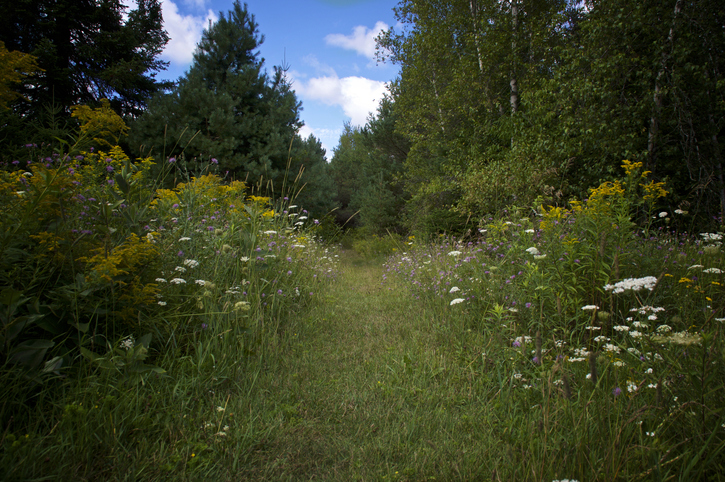
Looking for wildflowers shouldn’t be a competition to see who can find the most, but as an opportunity to be enveloped by the serenity and beauty of nature. Take your time and live in the moment. Place your phone on do not disturb, and stroll with a loved one, your dog named Jim or just by yourself. Walk like a Disney princess in a field: entirely enamored as you gently move and perhaps do one of those “I’m in love” twirls as you are lost in the natural beauty of it all. Looking for wildflowers is a slow, meditative process. This is an opportunity to enjoy nature and notice the details that we often miss.
Know Your Flora
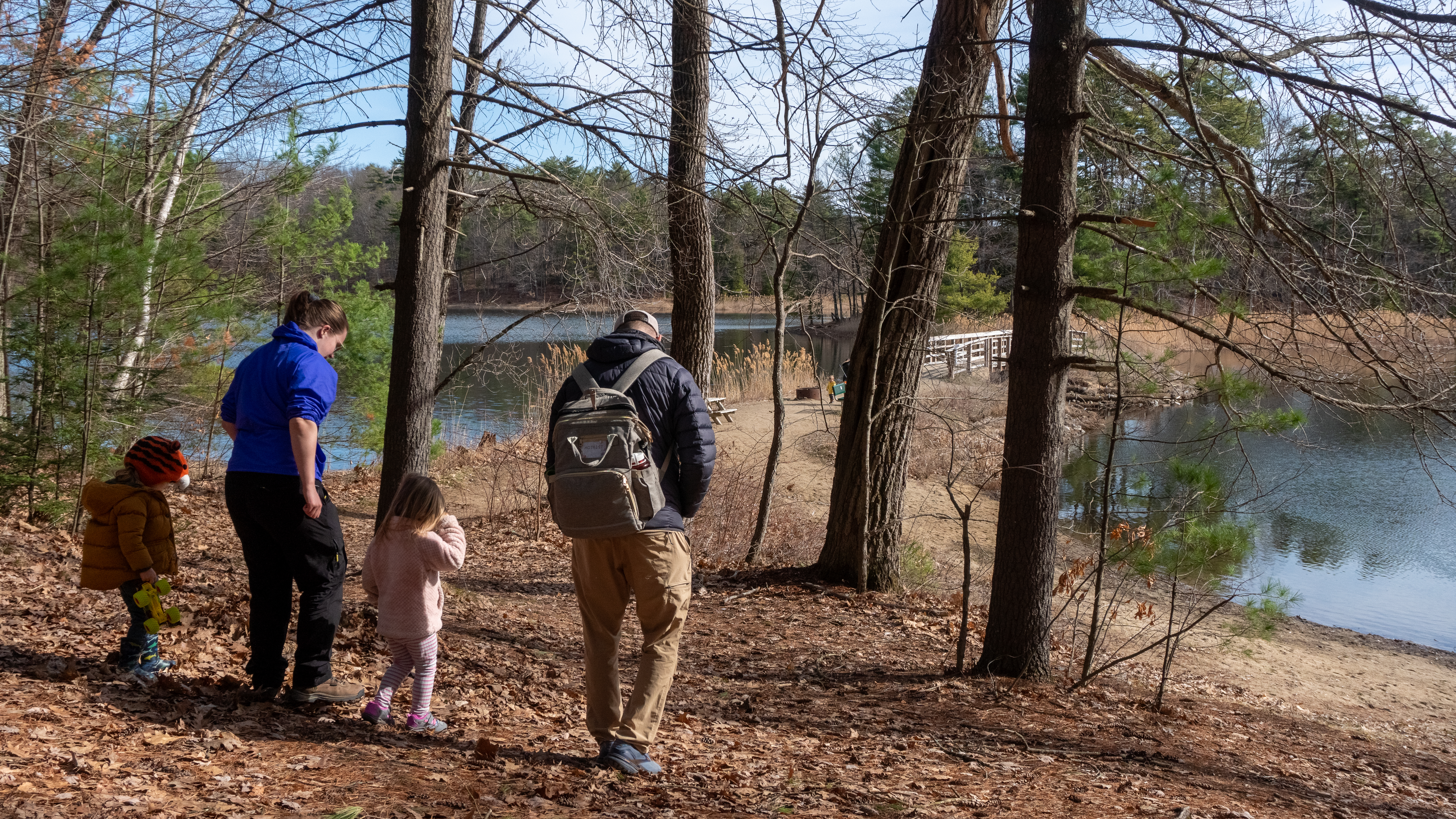
Rarely do you just walk into a field and be immediately surrounded by flowers. Often, they’re hidden like prizes among the fields and forests of the park.
Each wildflower prefers a specific environment such as woodlands, meadows, and along waterbodies. If you’re looking for a specific species, knowing their preferred environment, along with what time of year they bloom, improves your chances. Otherwise, just be open to discovery.
If you want to know where to find certain wildflowers or what blooms at your park, ask a New York State Parks environmental educator! They are dedicated to helping New Yorkers discover and connect with nature. But if you prefer to do it on your own, you can download an app. One of the most popular is iNaturalist, a non-profit run app that helps you identify wildflowers (and all flora and fauna) through photos you take, and tracks which species you see. It adds contributions to an ongoing list, useful for fellow wildflower-hunters and scientists alike.
Anticipate The Bloom
Wildflowers peak at different times, depending on factors such as recent rainfall, temperatures and sunlight. For example, heavy rainfall will lead to more flowers in the days afterwards, while areas with a lot of sunlight will bloom earlier than shadier locations.
Pack For The Occasion
Treat a search for wildflowers like a light hike. Bring comfortable, durable shoes, a water bottle, weather appropriate clothes (rain jacket, layers, etc.) sunscreen, sunglasses, a snack, and perhaps a camera for photos.
Beware Of Ticks And Poisonous Plants
With spring comes ticks and poisonous plants, which are guaranteed to ruin your day. Expect ticks to be present anytime the temperature rises above 32 degrees. Wear closed-toe shoes, tall socks and long pants. When you get home, do a tick check to catch stowaways. The best way to avoid brushing up against poison ivy or taking a bloodsucking friend home with you is to stick to designated trails. In doing so, you also protect sensitive natural areas.
Take A Pic, Don’t Pick!
As mentioned above, wildflowers play an important role in our environment. That’s why we recommend that you don’t pick wildflowers and instead let them grow. I know it’s tempting, but it’s better for the environment if you take a picture instead. It’s also against the rules at New York State Parks and other public lands.
Wildflowers You May See
Below are a few popular and fascinating spring wildflowers you can encounter throughout the state. This is only a smattering, as there are dozens of different wildflower species to see throughout the year and the park system.
Bloodroot

Bloodroot, Sanguinaria canadensis, is a cheery white flower and is named for the red-orange juice in its stem and roots. The flower is encircled by a single leaf. As the morning sun hits the flower, the flower will rise above the leaf and bloom. At night, the flower closes and is again enveloped by the leaf. Bloodroot prefers the shade and moist to wet soil. Like trillium, and a few other early wildflowers, the seeds of bloodroot are sought after by ants, who bring the seed to their nest, eat the fleshy part outside of the seed, then “dispose” of the seed. This allows the seed to propagate away from the original plant. This process of pollination by ants is called myrmecochory.
Trillium

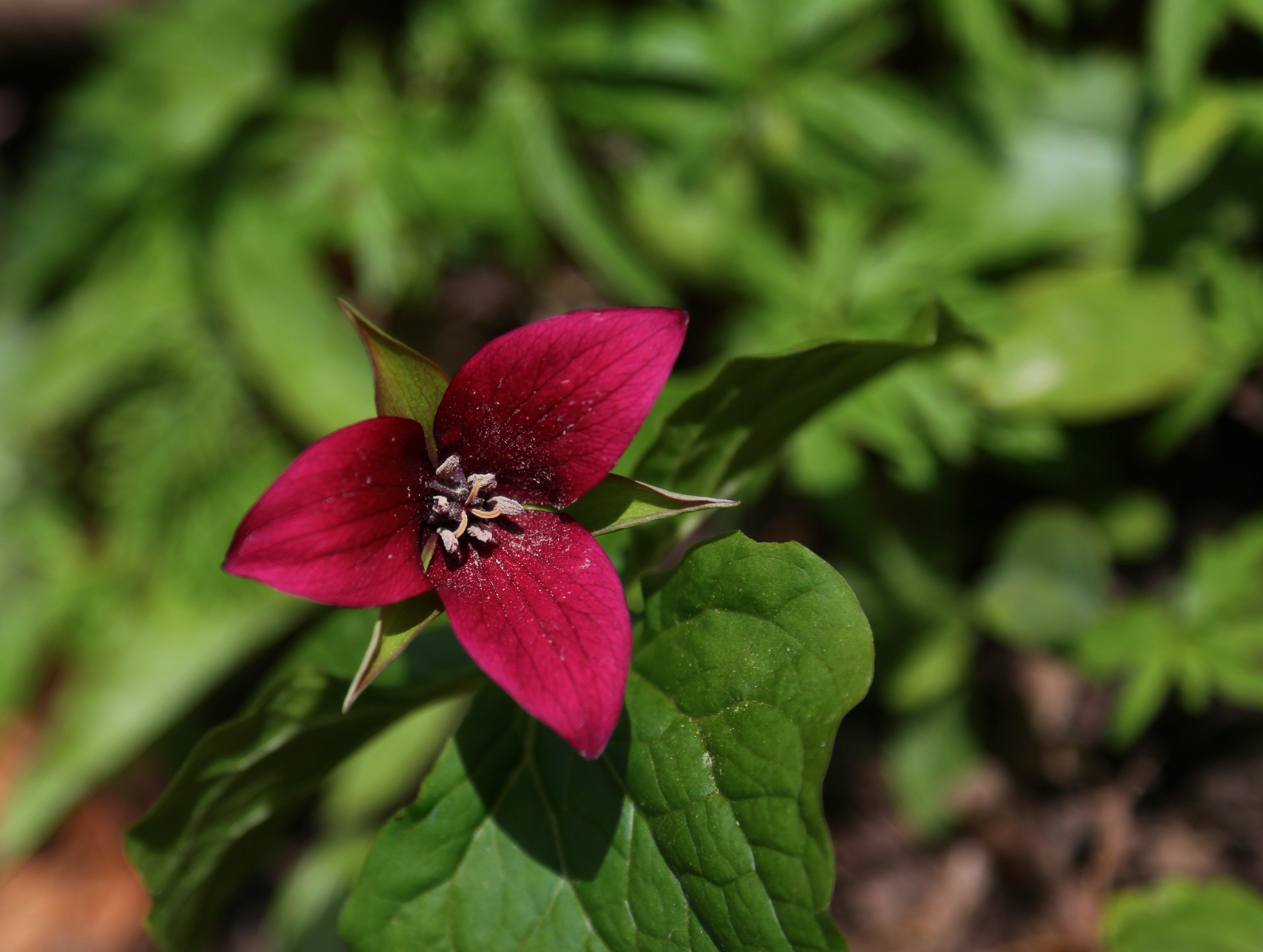
There are several varieties of trillium across the state, including white, painted, red, and a few others that are less common. It is usually found in damp woodland areas. Take the “tri” in trillium and you have everything you need to know to identify the genus: it contains three petals in the flower, three sepals just below the petals, and three leaves or bracts. Trillium do not technically have a true stem or leaves above ground. The “stem” is just an extension of the rhizome. The bracts are capable of photosynthesis and provide energy for the plant. The trillium is a protected species in New York, and as always, it is best to take only pictures.
Jack-In-The-Pulpit
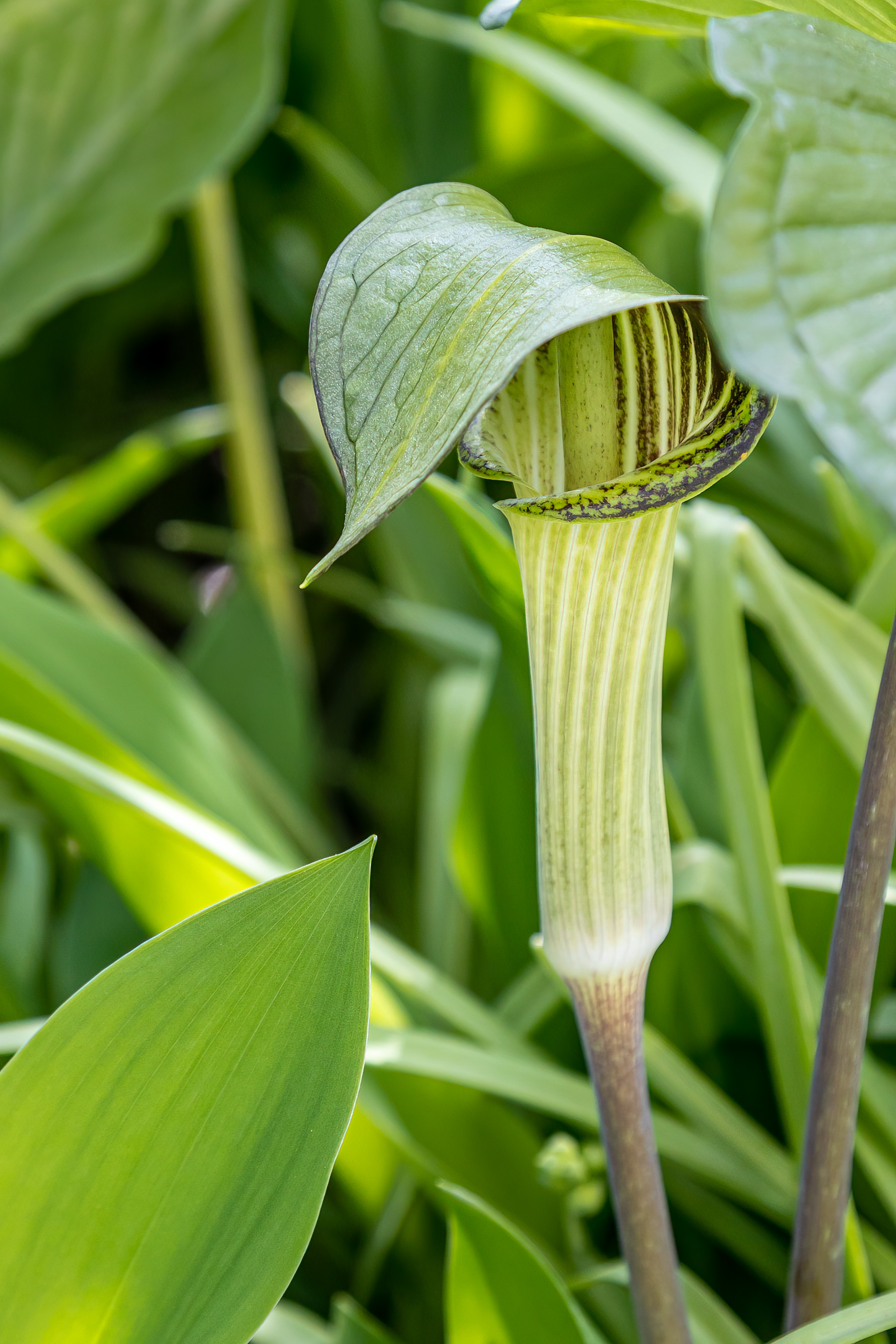
One of the coolest, but most subtle of spring flowers is the Jack-in-the-Pulpit (Arisaema triphyllum). It has one or two leaves, separated into three leaflets. The hooded green flower, or spathe (the pulpit) has maroon-brown stripes and shades the maroon-brown spadix (Jack) that contains the tiny flowers. Found in humus-rich, moist soil, the flower is pollinated by small flies that are lured by the smell of fungus. The male flowers have a hole at the bottom so the flies can escape. The females do not, thus the flies spread the pollen around, and then die in the flower. The corm, or root of the plant, is where the carbohydrates are stored. This is where it gets really interesting: the plant may start out as male, but over time, as enough energy is stored, it will change and produce a female flower. Because it doesn’t take as much energy to make pollen, it is easier to produce male flowers. As more energy is stored in the corm, it can produce the female flower and with pollination, produce seeds. Based on the energy reserves, the plant can change the sex of its flowers from year to year! The males produce only one leaf, while the females will usually produce two leaves.
Red Columbine
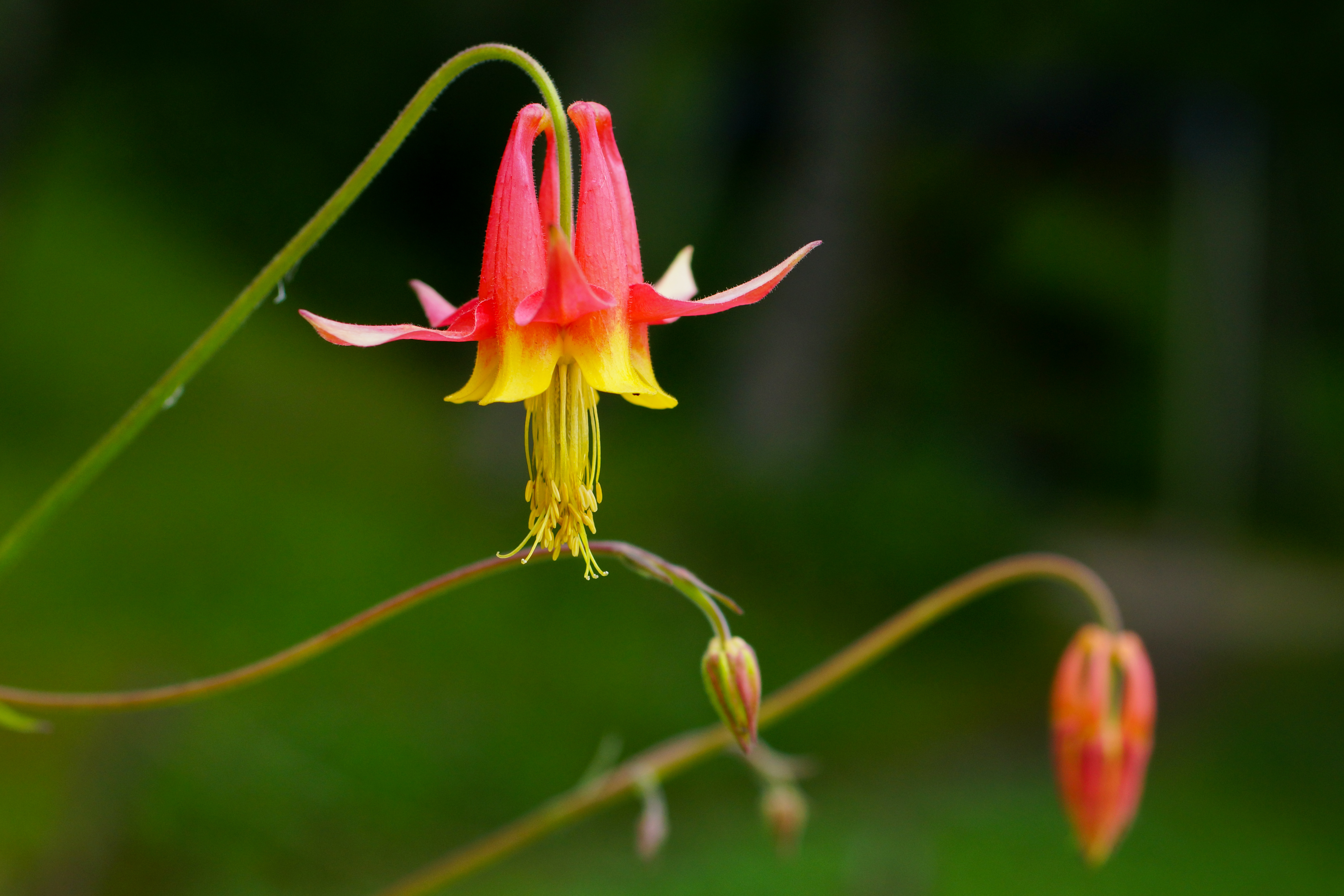
The brightly-colored red columbine (Aquilegia canadensis) bloom later in spring. This plant has a beautiful bell-like flower with reddish petals and bright yellow stamen. Look for it on rocky outcrops and dry soils. The long tubular segments of the flower contain some of the first nectar available for long-tongued insects and hummingbirds. Some say the spurred tubular flowers resemble an eagle’s talons, hence the genus name Aquilegia, meaning “eagle” in Latin.
Fringed Polygala

Another interestingly shaped flower that blooms about the same time as red columbine is fringed polygala (Polygaloides paucifolia). This brightly colored rose-purple flower lights up the dark pine forest floor in the spring. It is a low-growing plant, easily overlooked when it is not in bloom. The flowers have two petals separated by a fringed petal in the center. It is part of the milkwort family (Polygalaceae), “poly” meaning “much”, and “gala” meaning “milk” in Greek. Farmers believed that cows that ate plants from the milkwort family would produce greater amounts of milk.
Where to Find Wildflowers at New York State Parks and Historic Sites
Chances are, if you go to any state park during peak season, you will be able to see some wildflowers. Here are some we especially recommend:
Saratoga/Capital Region
- Saratoga Spa State Park, Saratoga Springs
- Schodack Island State Park, Schodack Landing
- Thacher State Park, Voorheesville
Central New York
- Mine Kill State Park, North Blenheim
- Glimmerglass State Park, Cooperstown
- Verona Beach State Park, Verona Beach
New York City
- Clay Pit Ponds State Park Preserve, Staten Island
- Shirley Chisholm State Park, Brooklyn
Long Island
- Bethpage State Park, Farmingdale
- Caumsett State Historic Park Preserve, Huntington
- Connetquot State Park Preserve, Oakdale
- Caleb Smith State Park Preserve, Smithtown
Finger Lakes
- Chimney Bluffs State Park, Wolcott
- Newtown Battlefield State Park, Elmira
- Fillmore Glen State Park, Moravia
- Taughannock Falls State Park, Trumansburg
Western New York
- Genesee Valley Greenway State Park, Rochester to Portageville
- Allegany State Park – Redhouse Area, Salamanca
- Wilson-Tuscarora State Park, Wilson
Northern New York
- Crown Point State Historic Site, Crown Point
- John Brown State Historic Site, Lake Placid
- Point Au Roche State Park, Plattsburgh
- Robert Moses State Park, Massena
- Wellesley Island State Park, Fineview
- Westcott Beach State Park, Henderson
Hudson Valley
- Olana State Historic Site, Hudson
- Bear Mountain State Park, Bear Mountain
- Taconic State Park, Copake Falls
— Written by Karin Badey, Environmental Educator, and Ryan Percy, Community Engagement Coordinator, Saratoga-Capital Region
 New York State Parks and Historic Sites Blog