

From placid lakes and intimate mountain streams to broad rivers and sea-foamed saltwater coast, the state park system offers limitless fishing possibilities and the enticing prospect of “tight lines.” Striped bass, bluefish, salmon, trout, panfish and freshwater bass are but a few of the many popular fish species that can be fished for at state parks, with angling set amidst the backdrop of some of the state’s most compelling and dramatic natural scenery.

While some anglers may prefer the fall striped bass bonanza at Montauk Point, with its festive atmosphere and challenging rock-strewn shoreline, others may find flyfishing for brook and brown trout on the remote hemlock-lined streams of Allegany more to their liking. State parks additionally offer numerous options for recreational boat fishing. Launches for motorized boats are located strategically throughout the state on prime angling waters, along with smaller docks and launches providing lake and river access for canoes, kayaks and the like.
State parks offer anglers premier opportunities on two great lakes, the Hudson, St. Lawrence, Niagara and other smaller rivers, numerous streams and brooks, countless lakes of varying size and setting, and the saltwater shores of Long Island Sound and Atlantic Ocean. If there’s a fish to be angled for in New York State, be it fresh or saltwater, chances are good that it can be found in a state park.
Through I Fish NY, the New York State Department of Environmental Conservation helps New Yorkers understand the basics of fishing legally and offers opportunities to try the activity. Our parks often hold fishing programs as well. Read on for our guide to angling at state parks!
Saltwater and Freshwater Fishing on Long Island
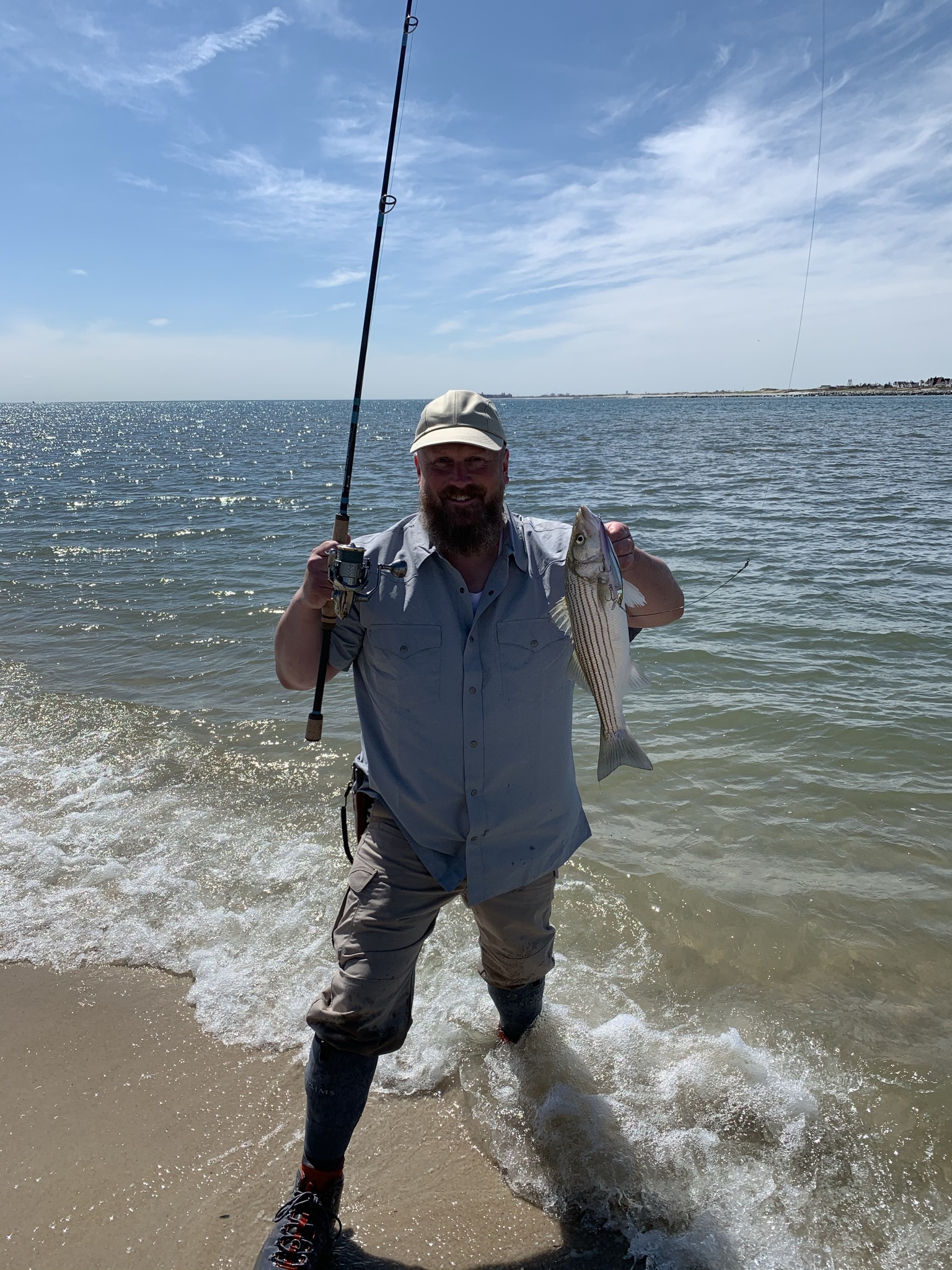
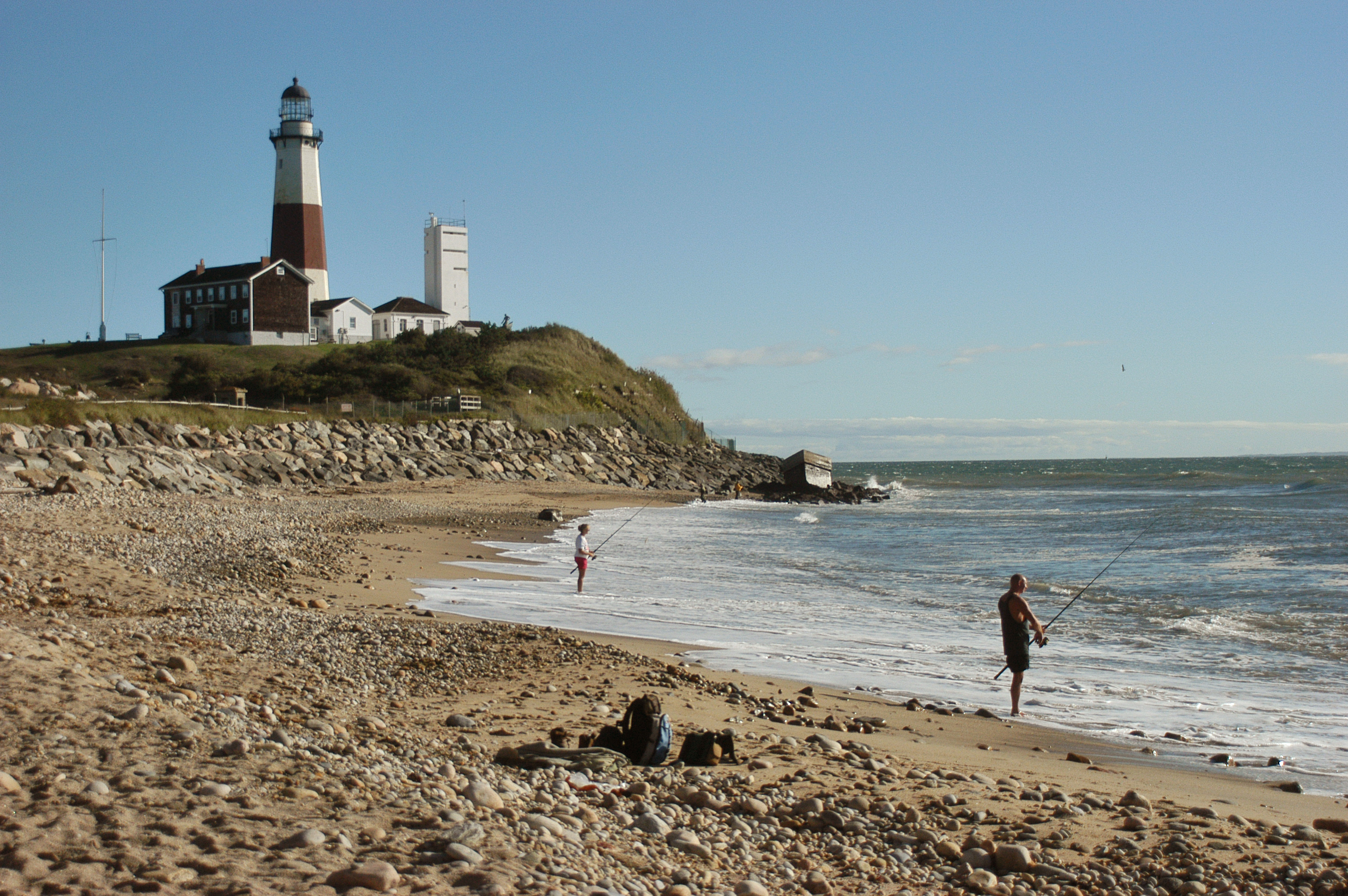
The Long Island region presents anglers with an expansive range of both freshwater and saltwater opportunities. The fall fishing at Montauk Point— known by many saltwater angling enthusiasts as the Striped Bass Capitol of the World— and adjacent Camp Hero borders on legendary. Surf fishers descend on Long Island’s South Fork as the striped bass run in great numbers just off the shoreline. The conditions can be challenging, requiring both angling skill and the ability to navigate the rocky shore, but for those who time their visit when the stripers are running, the fishing can be truly spectacular.
Outstanding surf fishing can also be had on the North Fork at Orient Beach, where stripers, bluefish and other saltwater species abound; and similar opportunities can be had at Jones Beach and Robert Moses State Park Long Island, among other coastal Long Island region parks. For those preferring a charter-boat experience, the famous Captree Fleet based at Captree State Park—the largest public fishing boat fleet on Long Island—offers the opportunity for water-based excursions for “doormat” fluke, sea bass and weakfish, among other popular saltwater species.
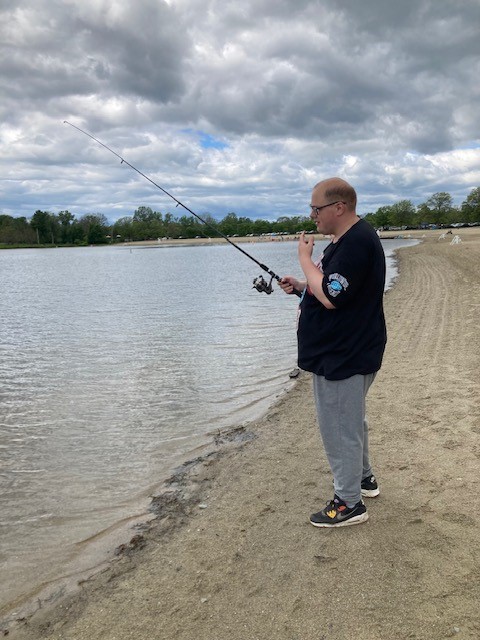
But Long Island’s freshwater fishing opportunities can’t be overlooked. Belmont and Hempstead lakes offer ample opportunity to fish for largemouth bass, rainbow trout, pickerel, and panfish such as yellow perch and sunfish, including bluegill. Panfish can be taken with the most modest of tackle and tactics, making them excellent targets for young anglers looking to set their first hook.
No tour of Long Island’s freshwater fishing locations would be complete without a visit to Connetquot River State Park Preserve, where visitors can try their hand at flyfishing for brook, brown and rainbow trout. While you’re at this park, don’t miss the opportunity to tour an active trout hatchery, first established in the late 1800s by the South Side Sportsmen’s Club, a recreational sporting club. Recently reopened with considerable upgrades, the hatchery’s output ensures that the fishing is always first rate at Connetquot. In the realm of recreational angling, the Long Island region seems to have it all. Contact the region for permit information before you go!
Big Apple, Big Fishing
Finally, the New York City region is not without recreational fishing opportunities for an array of saltwater species. Bayswater Point State Park, for instance, provides shore access to Jamaica Bay, while Hudson River Park—with its Hudson River frontage on the west side of Manhattan, and various piers—provide ample fishing potential. Gantry Plaza State Park in Long Island City and Shirley Chisholm State Park in Brooklyn offer additional opportunities for a splendid day of angling.
Fish Along The Hudson
Fishing opportunities also abound in the lower and mid-Hudson Valley and the upper Hudson River area in the Saratoga-Capital District region. Striped bass migrate up the Hudson River in the spring as far north as Troy and can be fished for from shore at locations stretching from Bear Mountain, Norrie Point (Margaret Lewis Norrie), Dennings Point (Hudson Highlands) and at Schodack Island. Launches provide ample opportunity to head out onto the river.
For those seeking freshwater species, Hessian Lake at Bear Mountain—which hosts a population of brown trout, largemouth bass and panfish— is readily accessible, making it particularly convenient for young and eager anglers. Adjacent Harriman offers numerous trout fishing opportunities, in lakes Askoti and Skannatati, or, for those seeking a more intimate stream-fishing experience, in Queensboro, Stony and Tiorati brooks as water conditions permit. Lake fishing, from both boat and shore, is also abundant in this geographic region. Canopus Lake in Fahnestock offers the opportunity to throw in a line for largemouth bass, chain pickerel, and panfish, and the same and other species can be found at Mohansic Lake and Lake Taghkanic.
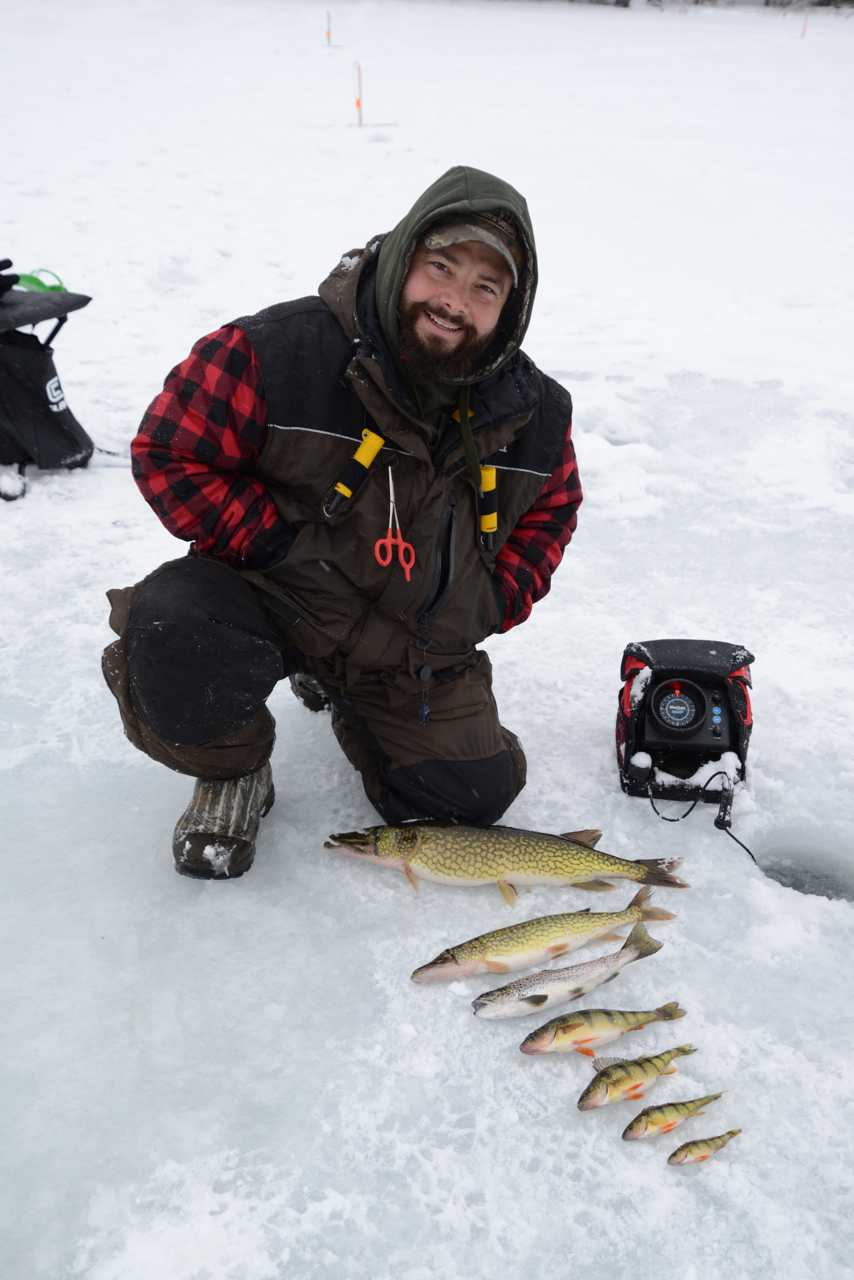
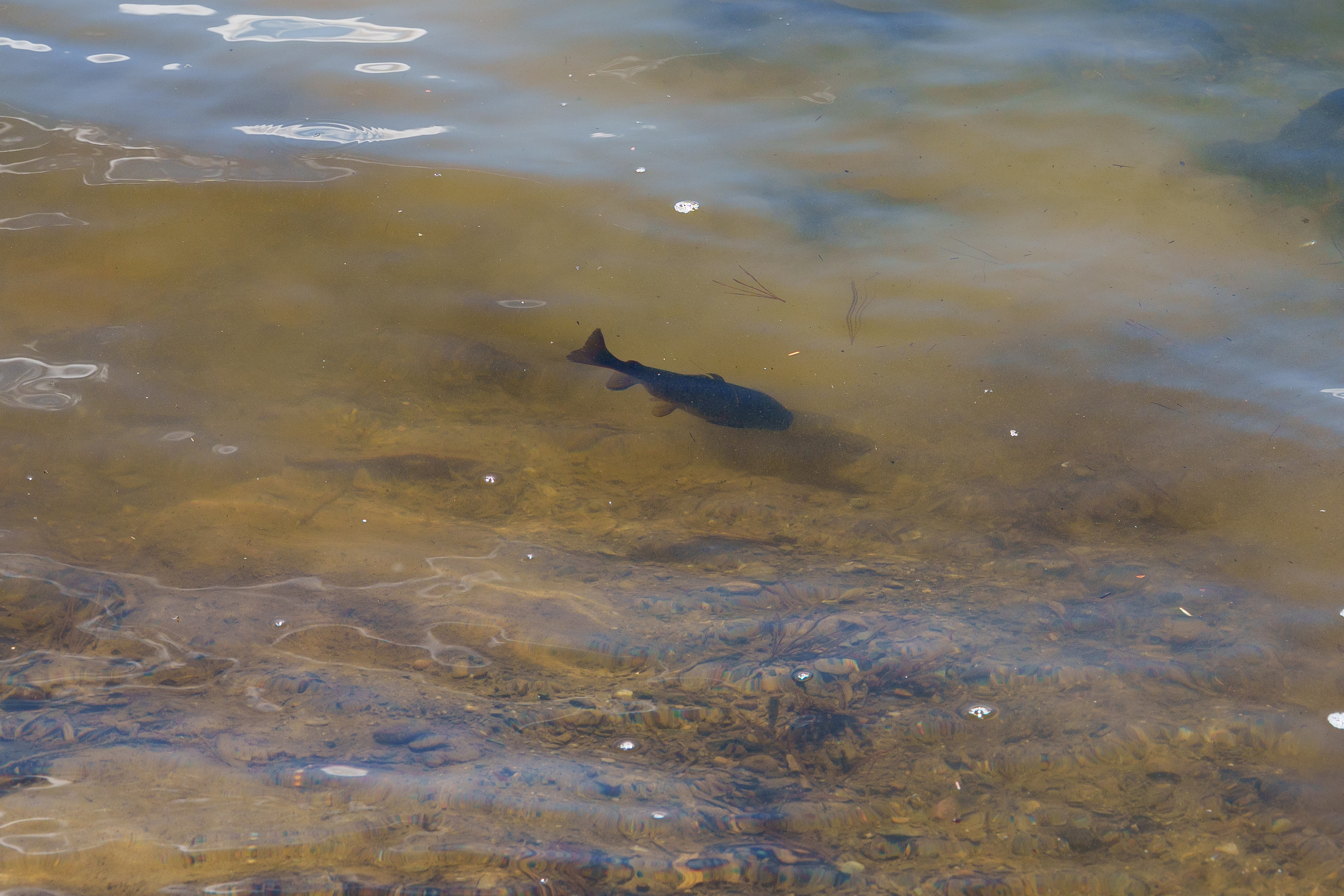
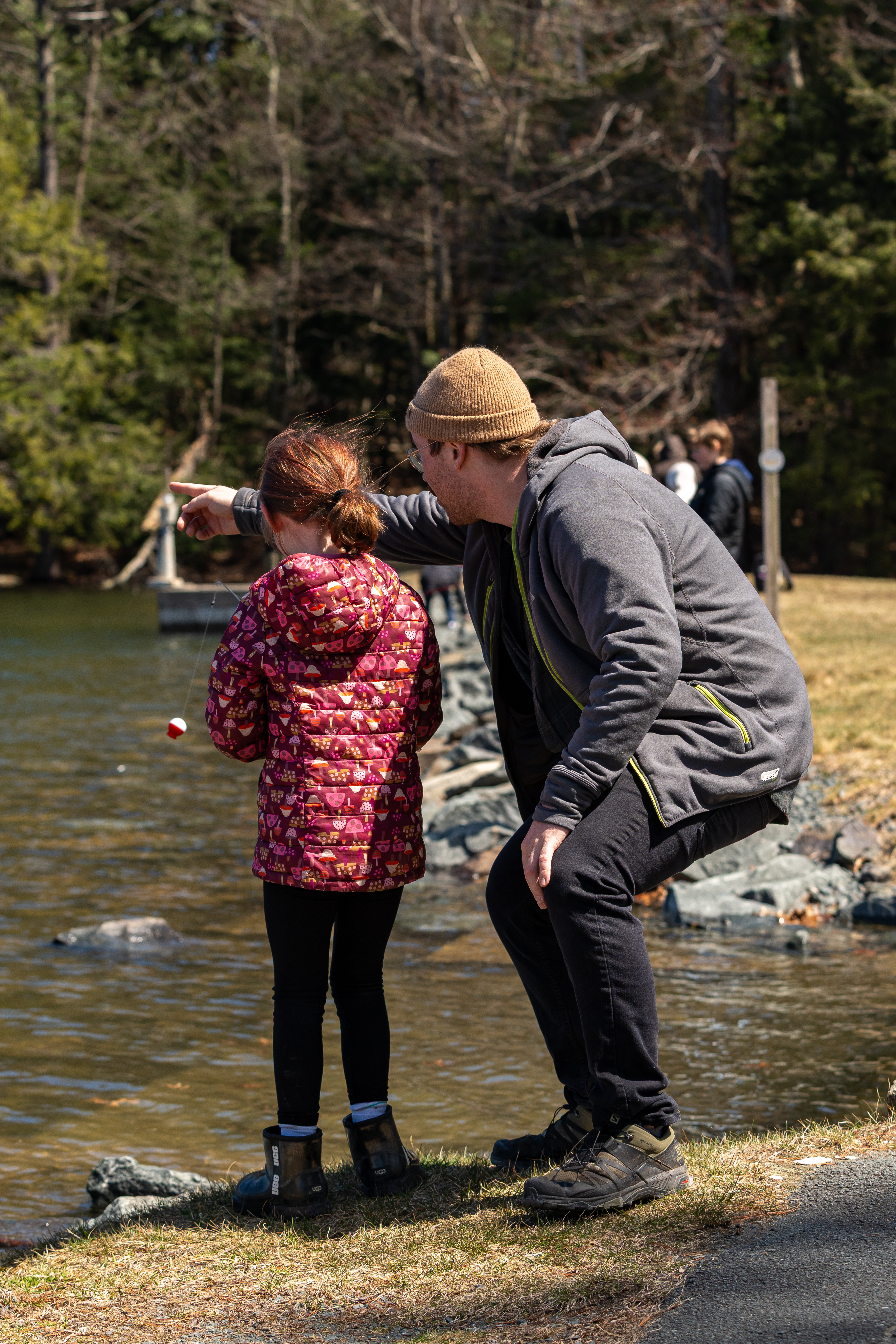
North of Albany, Moreau Lake offers similar opportunities for bass and pickerel as well as rainbow trout. The park holds an annual trout stocking event, cosponsored with the Department of Environmental Conservation, that children can participate in, reinforcing the importance of stewardship. Long Pond at Grafton Lakes, a popular winter destination among ice fisherman, is rife with large and smallmouth bass in addition to panfish and brown trout. And for those seeking a true “island” experience, Peebles Island, at the confluence of the Hudson and Mohawk rivers, offers the opportunity to fish for carp, walleye, and channel catfish. The splashy rises visible from the park’s perimeter trail system provide ample evidence of the lunkers that abound in the island’s waters!
Thousand Islands: An Angler’s Paradise

The breathtaking Thousand Islands park region, which includes portions of Lake Ontario, the St. Lawrence River, and the northern reaches of Lake Champlain, is a true angler’s paradise. This park region was born of late-nineteenth century efforts to preserve public access to the river, through the creation of the State Reservation on the St. Lawrence, ensuring continual public access to this international waterway. Numerous state parks, such as Kring Point and Dewolf Point, are situated along the broad banks of the St. Lawrence, with its myriad bays and islands. Anglers enjoy fishing from both the shore and from watercraft for the river’s abundant population of bass, walleye, northern pike, muskellunge, and panfish. Meanwhile, Point Au Roche provides access to Lake Champlain—once dubbed the sixth Great Lake— which is home to nearly 100 fish species. Anglers can fish from shore for large and smallmouth bass or use the park’s boat launch for deep-water trawling for lake trout. Inland parks such as Whetstone Gulf and Macomb Reservation offer additional freshwater opportunities.
Great Lakes and Inland Fishing
Although the western park regions lack saltwater fishing, they nevertheless offer ample options for freshwater angling, from the shores of two great lakes, to the Niagara River, along with a multitude of streams and lakes. For those seeking fishing options along the Niagara River’s east bank, Devil’s Hole, Earl W. Brydges Artpark, and Whirlpool State Parks all provide access to the river, though both the steep trails and riverside conditions can be physically challenging. Joseph Davis State Park, meanwhile, offers a universally accessible fishing pier for those with mobility limitations. The fishing on the Niagara River, which links lakes Erie and Ontario, is excellent and multifaceted, with target species including Chinook salmon, trout, and walleye.
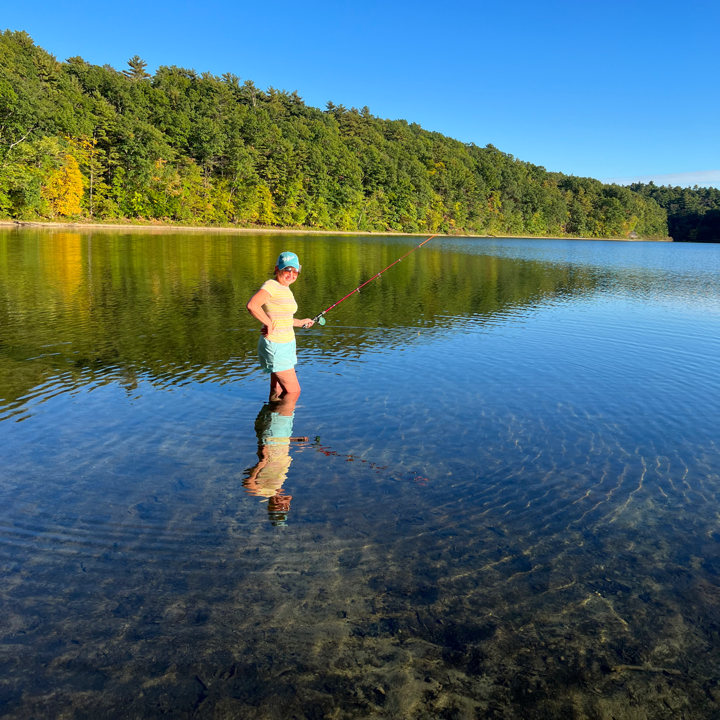
Not to be outdone are the fishing opportunities afforded in the state park system’s Genesee, Finger Lakes, and Central regions. The Finger Lakes and their many tributary waters collectively provide habitat for a wide range of trout, salmon, and bass species, among many others. Seneca Lake is home to Sampson, Lodi Point, and Seneca Lake State Parks, and is a renowned fishery and angling destination for lake trout fishing, along with brown and rainbow trout and landlocked salmon.
These three park regions also provide shore and boat fishing opportunities at various locations along Lake Ontario, among them Hamlin Beach, Lakeside, Fair Haven Beach, and Selkirk Shores. The latter park also provides public access to Grindstone Creek, where you can land brown trout and steelhead during the early season.
—Written by Bill Krattinger, Historic Preservation Project Director. All uncredited photos by OPRHP staff.
 New York State Parks and Historic Sites Blog
I absolutely loved discovering the incredible variety of fishing experiences across New York’s state parks! From peaceful freshwater streams to exhilarating striped bass runs, this post beautifully captures both the diversity of species and the stunning backdrops anglers can enjoy. It’s clear that parks aren’t just places to fish—they’re immersive outdoor classrooms where anyone, from beginners to seasoned anglers, can connect deeply with nature.