

A day spent at the beach or by the pool in the summer is a core Long Island experience. There’s nothing better than a dip in the water to cool off from the heat, and a trip to Jones Beach State Park has it all: sun, sand and, soon, a new safe place to have fun in the water!
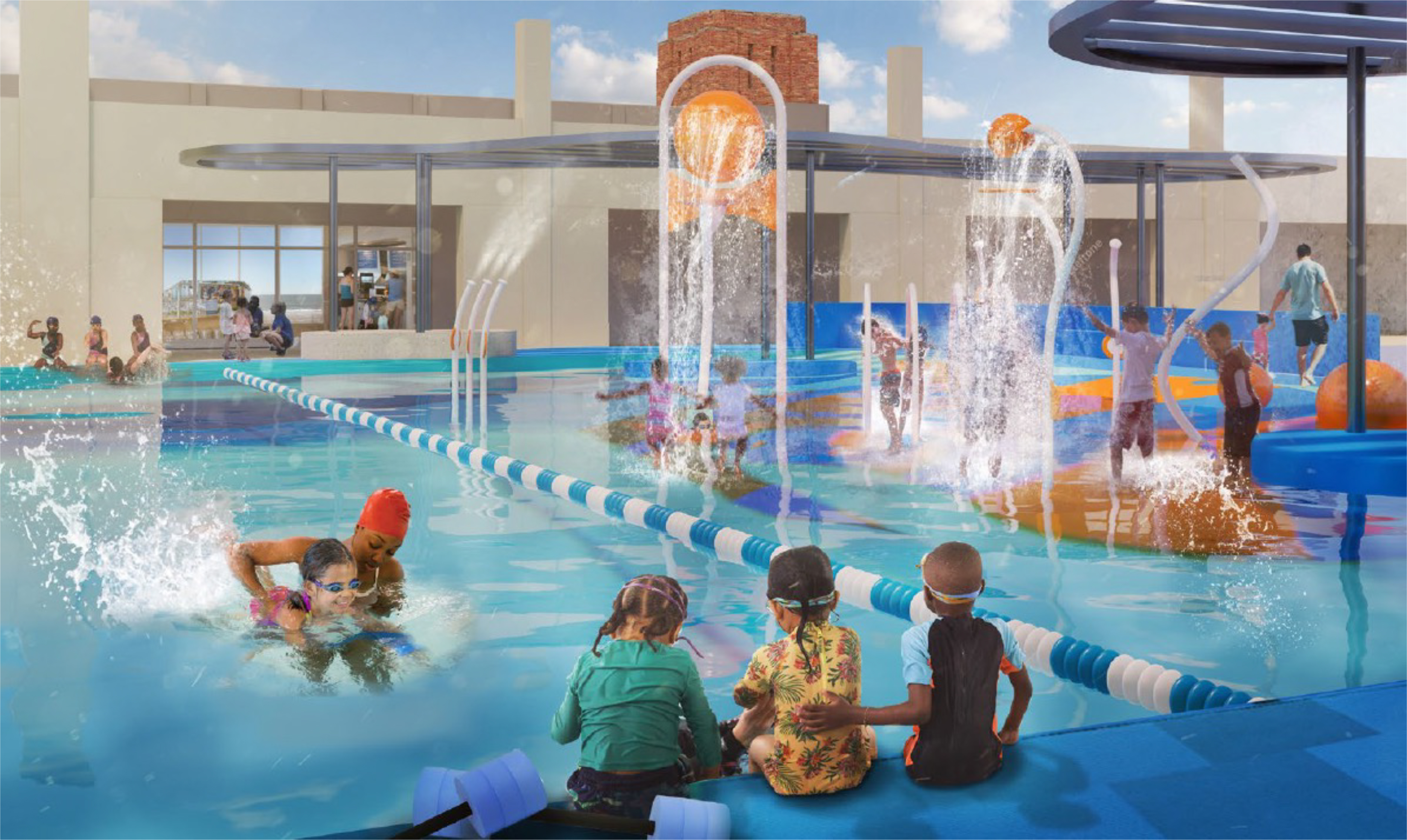
In summer of 2026, the iconic 1930 Jones Beach East Bathhouse will be reimagined for a new generation to enjoy. As part of Governor Hochul’s NY SWIMS Initiative to expand access to safe swimming in New York, a $100 million investment was secured for the revitalization. State Parks is overseeing the project in collaboration with the Office of General Services, and construction is currently underway.
The first phase of work, which included the abatement and demolition of the non-historic patio, picnic areas and associated pavilions, is complete. Phase two began in mid-May. It involves converting the abandoned pool into a destination pool and splashpad complex. A unique Learn-to-Swim feature to help children and inexperienced swimmers stay safe and build their skills in a smaller, more controlled environment is also included.
The new pool complex will be ADA accessible, with a shallow zero-entry zone which gently slopes into the water. This creates a seamless transition from land to water for a gradual and comfortable entrance and exit of the pool. The complex will also contain a separate, deeper area to aid in building swimmer confidence. Visitors will be able to move between interactive water play and swimming zones as the pool and adjacent splashpad are seamlessly connected.
To ensure both full visibility and safety, lifeguard stands will be positioned around the entire perimeter of the pool. Ample seating surrounding the pool will provide space for supervision and relaxation, enhancing both comfort and enjoyment for families. Additionally, the historic main bathhouse will be rehabilitated with new bathrooms, changing rooms and a concessions area. The integrity of the bathhouse will be preserved, and once-removed historic elements will be reinstalled.


When Jones Beach State Park first opened on August 4, 1929, the opening ceremony took place at the East Bathhouse. The bathhouse itself, however, didn’t officially open until the following spring of 1930.
Designed by Herbert Magoon, it was the first major building completed at Jones Beach. Inspired by the Beaux Arts and Art Deco architectural styles, the bathhouse featured a pair of bronze clocks on its distinguished stone towers: one for time and the other for tide times. Originally 115,000 square-feet, the bathhouse included a vast locker room and changing area, an administration building, and a south building facing the beach with sun terraces, concessions and restrooms.
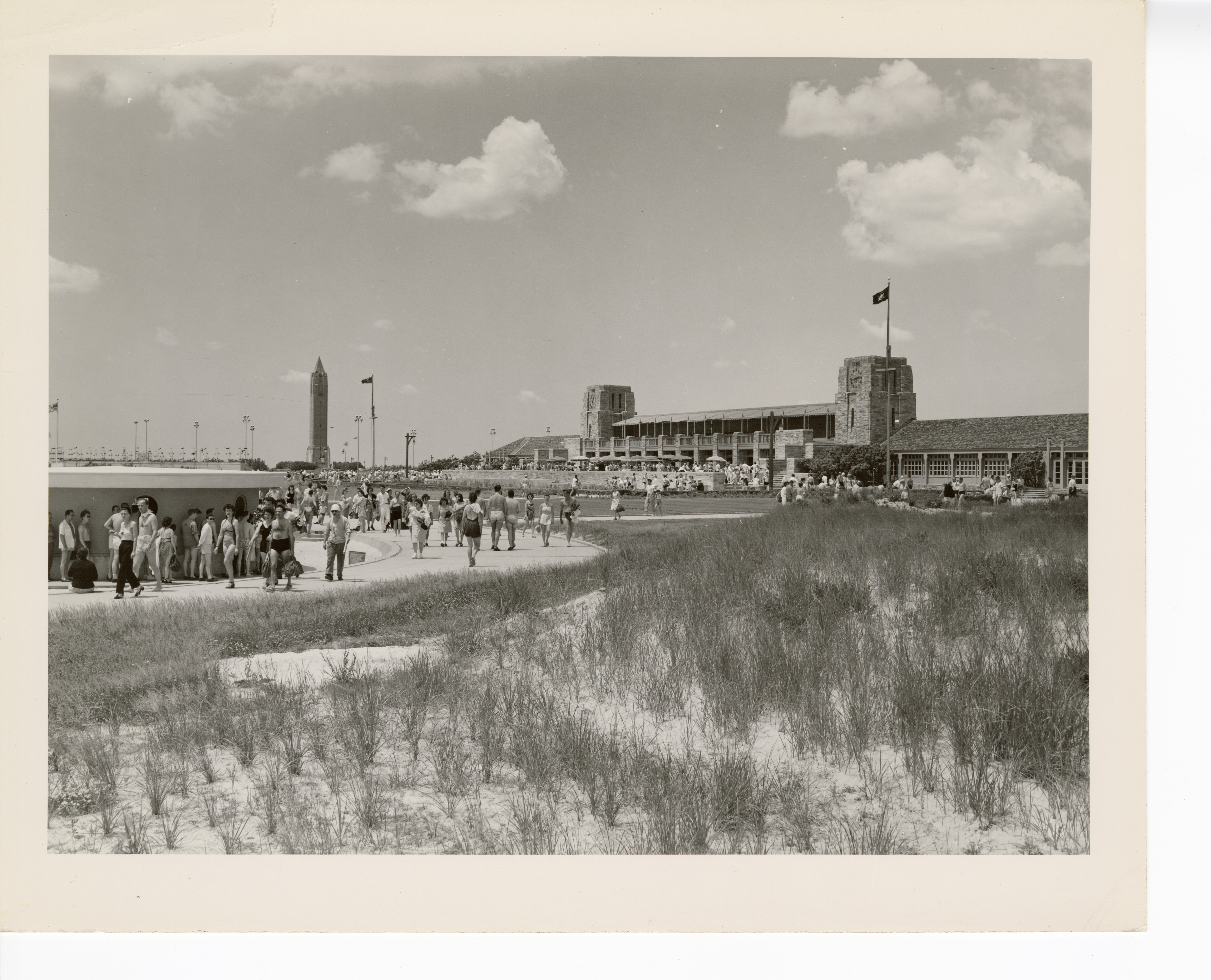
The massive multipurpose structure had three primary sections: the north entrance building, a central courtyard, and the south building. The north building was the main public entrance to the East Bathhouse. Located on Ocean Parkway, it had space for ticket counters, rentals, storage for valuables, and visitor information. Elders may remember it was also the primary entrance for the changing rooms!
At the center of the building was the roofless central courtyard, enclosed by a brick screen wall. It housed hundreds of changing rooms in rows of cabana-style buildings.
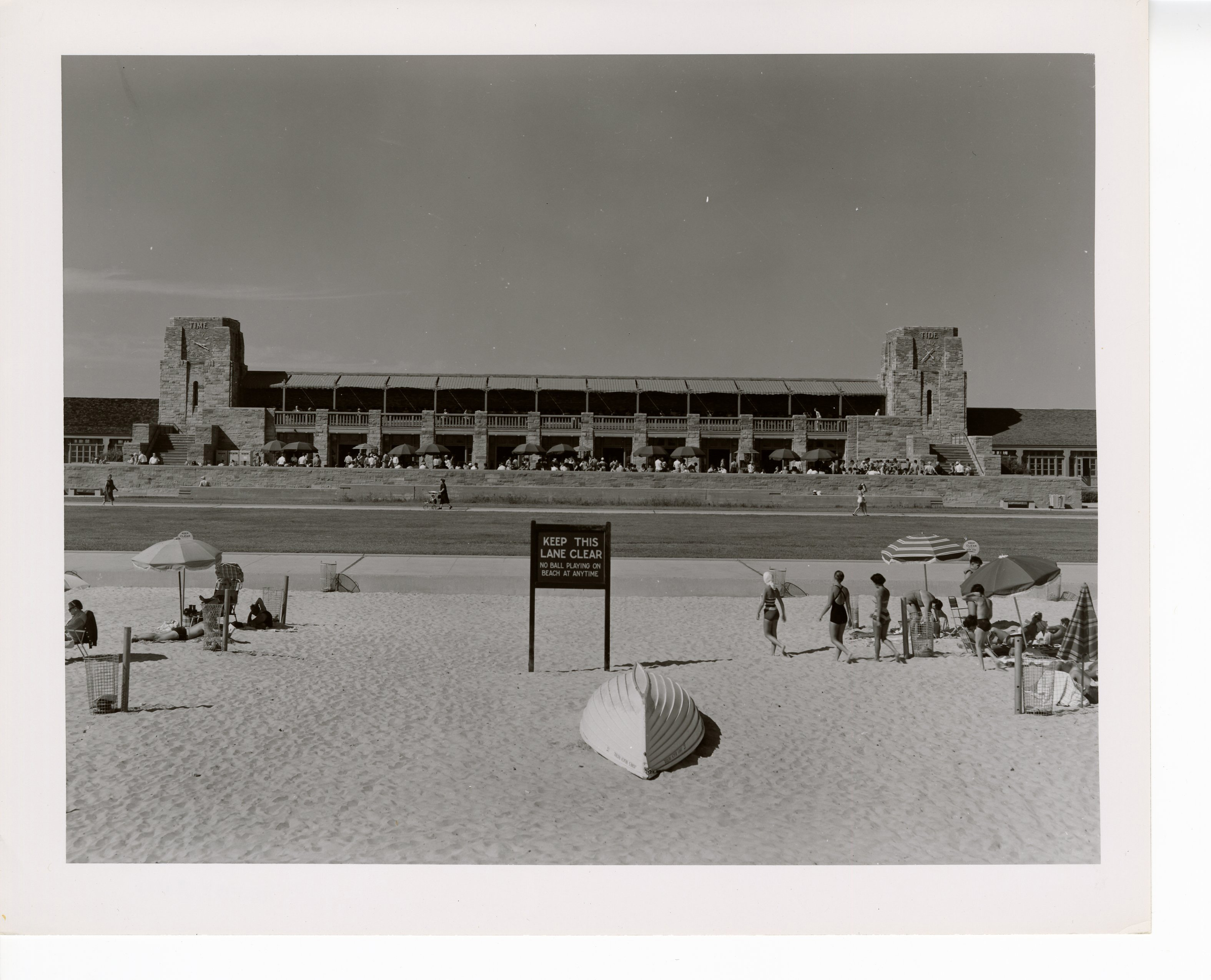
The south building, which was used for concessions, restrooms and beach views, was far larger and grander than the rest of the structure. It overlooked the ocean and featured a long central promenade that ran the length of the building on the first floor. Drawing inspiration from a promenade deck of a ship, the design of the promenade expanded on the nautical theme of the park. On the second floor was a sun deck with a long canopy-covered terrace for sunbathing and ocean viewing. One-story, cross-gabled wings extended from the outer walls of the building. In front of the building was a large, raised terrace with umbrella tables, stylishly coordinated with the building’s second-floor sundeck awning.

The bathhouses were designed for a different era of beachgoers. Since early beachgoers generally did not wear their suits underneath their clothes, the bathhouses provided hundreds of lockers and changing rooms. When park visitors made a trip to Jones Beach, the day included not only swimming, sunbathing, play, lunch and dinner, but dancing and live music to end the night. The bathhouses doubled as entertainment venues, with pools, terraces, soda fountains, formal dining and band shells. As time went on and the world changed after World War II, so did the bathhouse amenities. Formal dining went out of style and cafeteria dining replaced it.
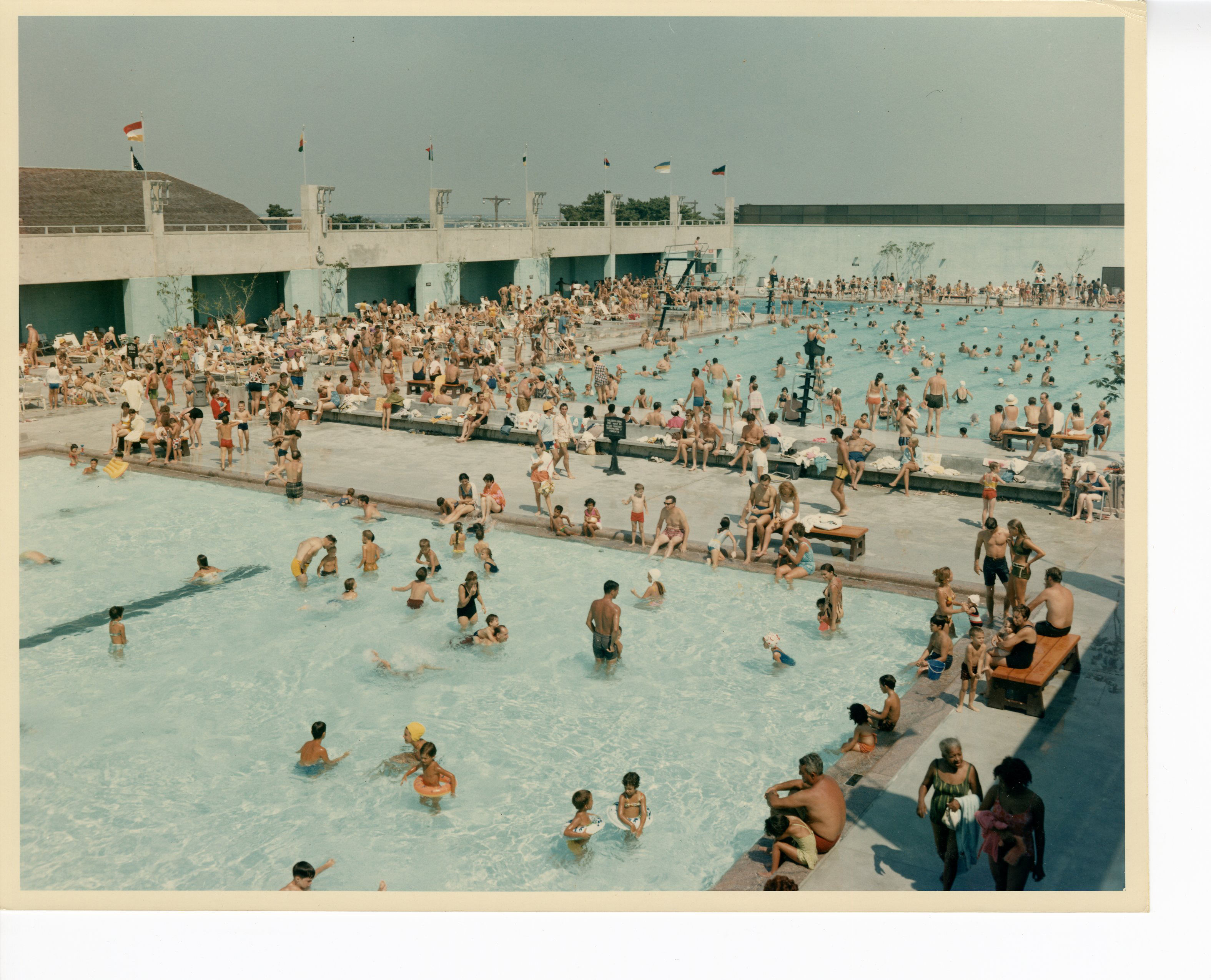
From 1967 to 1970, the East Bathhouse underwent major reconstruction. It expanded to 150,000 square feet with the addition of new wings on the east and west sides of the building. The central block was demolished, and a new courtyard was built at the center. It featured a large pool with a diving area along with a smaller wading pool. At the north and south of the courtyard, sheltered areas were added under concrete terraces. The upper terrace, which had no awnings, was open for sunbathing.
New enclosures were added outside of the original building footprint for the installation of new changing areas modelled after the original changing room layout. These rows of cabana-style buildings were set perpendicular to the brick screen walls that enclosed the area. The historic walls along the east and west elevations of the courtyard were replaced with new screen walls. A permanent aluminum structure with a corrugated fiberglass roof replaced the canvas awnings.

The south building’s long promenade was eliminated, and the formerly open space was enclosed by aluminum clad doors. A new concession area was placed in the center of the building and closed off from the east and west wings. Other changes included replacing doors and windows, and the removal or covering of ornamental trim elements.
Over the next 35 years, the major changes in use and closures of sections of the building led to deterioration. In 2009, the East Bathhouse was closed due to budget cuts.


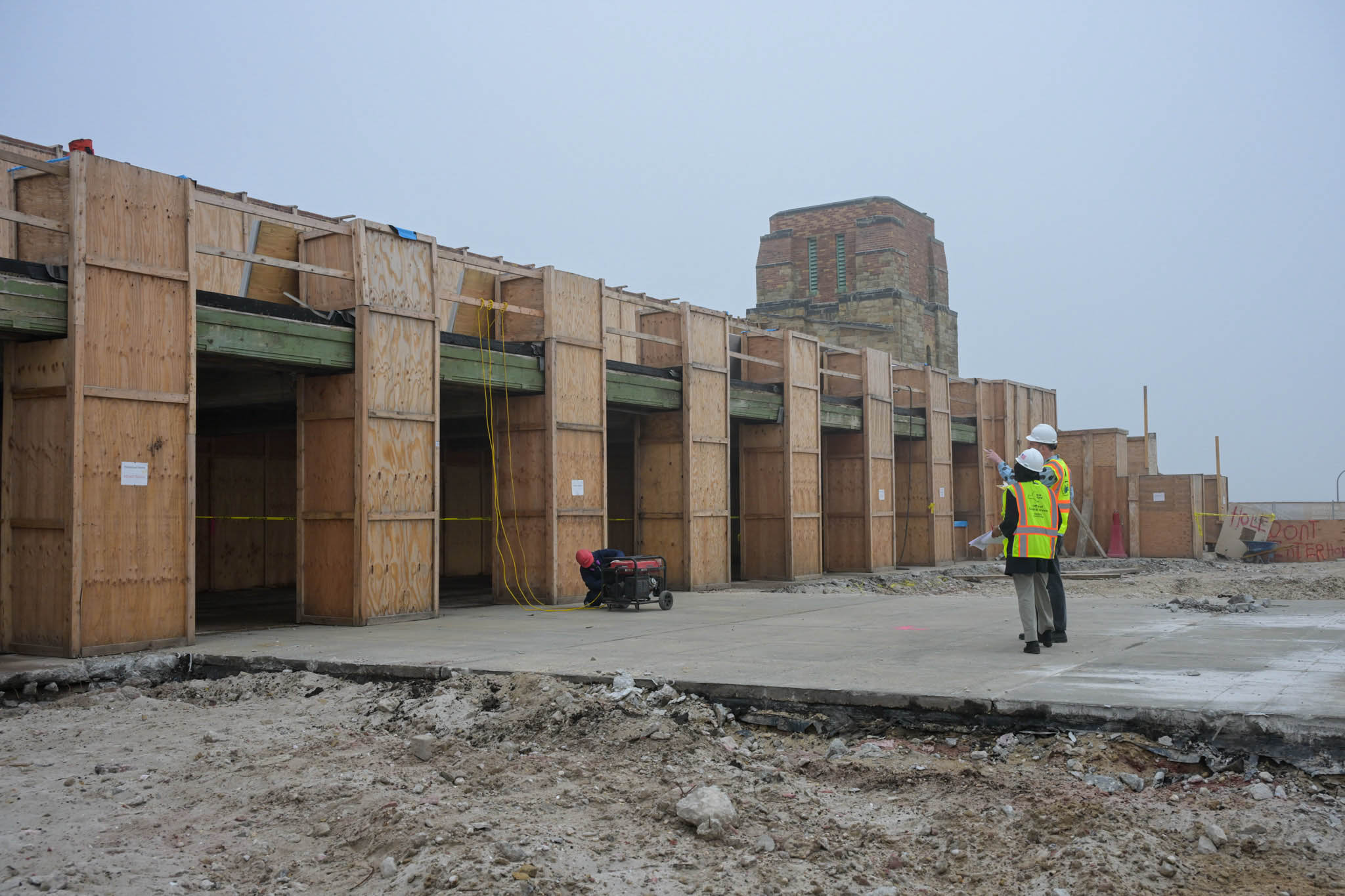
Revitalizations at the park occurred, but the iconic East Bathhouse had not been included — until now. Come 2026, we’ll be thrilled to have park visitors enjoy the modern upgrades and amenities while also getting a nostalgic glimpse of the past in the historic architecture of this flagship park’s bathhouse. We’ll see you out there!
—Written by Maire Hannigan, Communications Specialist, Long Island Region
 New York State Parks and Historic Sites Blog
2 thoughts on “Iconic East Bathhouse Project Brings Past and Present Together at Jones Beach”