

A statue of abolitionist and writer Solomon Northup, whose story was told in his memoir and the Academy Award-winning film Twelve Years a Slave, has provided a space for reflection at Saratoga Spa State Park this summer. The 13-foot bronze “Hope Out of Darkness” sculpture was unveiled during a July 10 ceremony attended by Northup descendants, area officials and community members on the lawn in front of the Lincoln Bathhouse.

Northup, a free-born Black American born in Minerva, NY, lived in Saratoga Springs with his wife and children for about seven years when he was tricked into joining a traveling circus. This sinister ploy led to Northup being kidnapped in Washington, D.C. in April 1841 and sold into slavery.
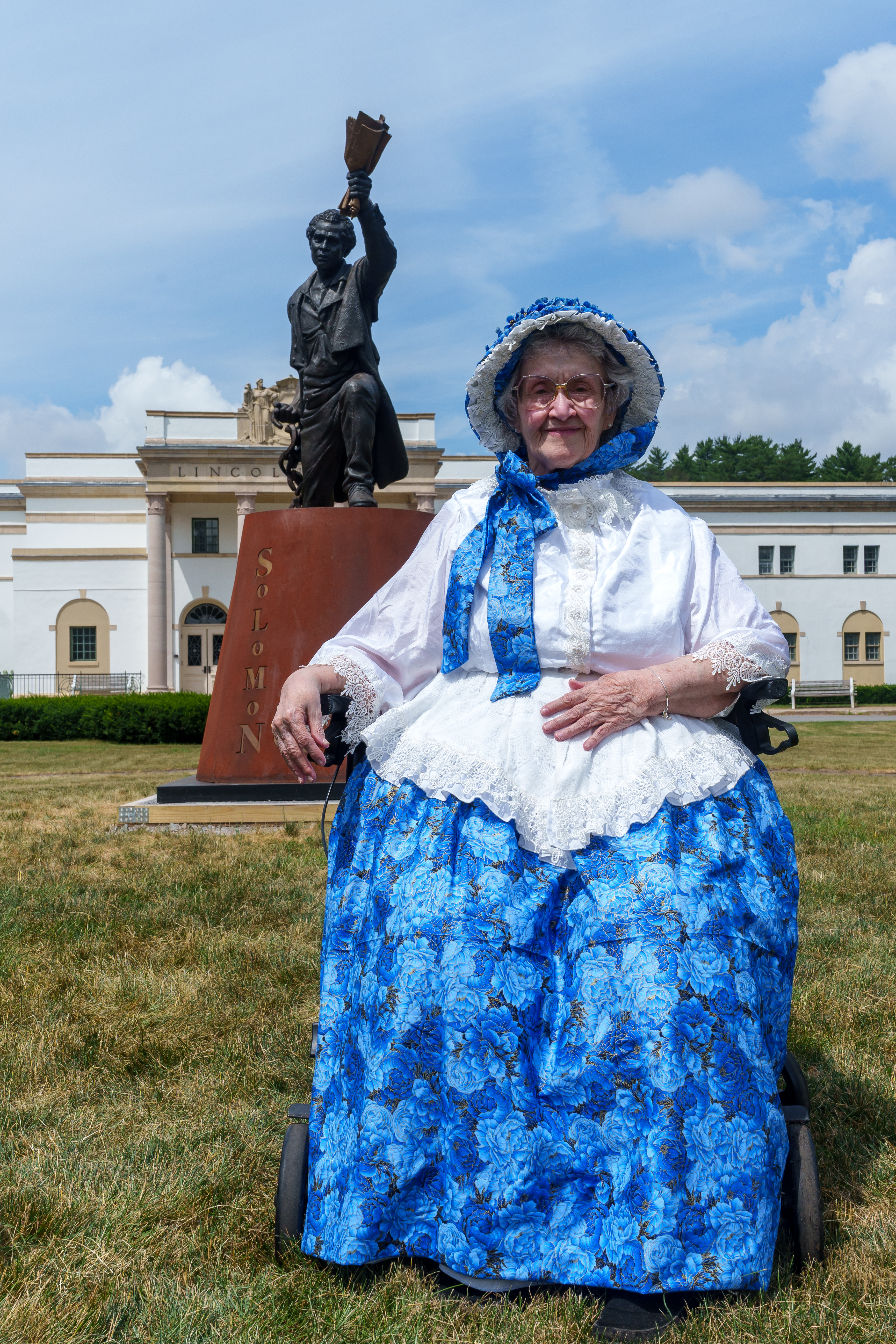
Enslaved in Louisiana, Northup met Canadian carpenter and abolitionist Samuel Bass in 1852. Gaining Northup’s trust, Bass helped get word to Northup’s family and friends in the North about his condition and status. Through these letters and action taken by New York State Governor Washington Hunt, Northup was emancipated and reunited with his family in upstate New York in January 1853. Northup’s incredible ordeal became national news and his best-selling memoir, Twelve Years A Slave, was published in July 1853.
New York State Office of Parks, Recreation and Historic Preservation’s (State Parks) Interpreter of African American History Lavada Nahon says Northup’s story is rare – he regained his freedom.
“There were hundreds of free Blacks pulled from the streets of New York State by hunters, greedy folks, organized kidnapping rings,” Nahon said. “He made it back.”
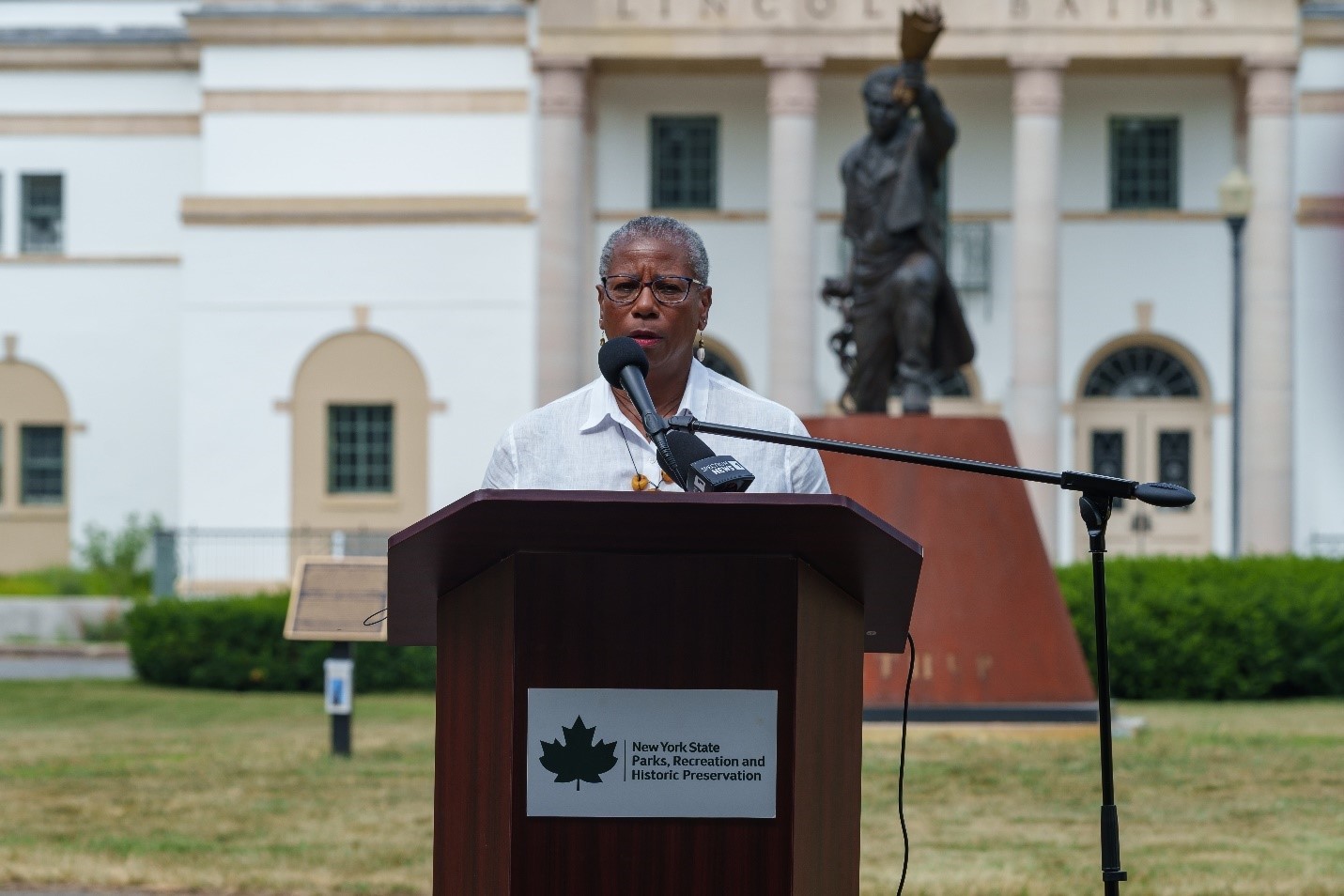
Emmy and Oscar-winning sculptor Wesley Wofford created the bronze likeness of Northup. Wofford says the papers in Northup’s upraised hand represent the papers required to be held by free Black Americans to move about the country; the letters sent north in an effort to free Northup; the legal documents written to free him; and his own memoir. The manacles in Northup’s opposite hand represent his time in captivity and the indignities he and many others suffered during long years of enslavement. The pedestal Northup is standing on is split to represent the duality of his life. He is courageously rising up from enslavement with a posture of triumph and struggle.
“I invite you to look not just at his beautiful front but walk around and look at his back,” Nahon said during the unveiling ceremony. “Because all the marks that you see there, also happened here.”

With the statue in Saratoga, State Parks planned a series of programs at the park to honor Northup, explore African American history, and examine slavery. Nahon delivered a presentation on the impact of the Fugitive Slave Acts on New York’s Black communities. Travis Bowman, the Head of Museum Collections for the NYS Bureau of Historic Sites, offered a lecture titled Slavery and the Middle Class in Colonial New York. Reenactor Clifford Oliver Mealy will discuss the lessons he learned from portraying Northup on September 3 (7 PM at Saratoga Spa State Park’s Victoria Pool House). Finally, The Ebony Hillbillies string band will perform at 3 PM on September 28 on the park’s Victoria Pool lawn (inclement weather location will be the Saratoga Music Hall).

Commissioned by the Solomon Northup Committee for Commemorative Works, the statue will remain at Saratoga Spa State Park through October 19. It will then travel to Boston before being permanently installed in 2026 outside the Marksville, Louisiana courthouse where Northup was emancipated.
A Continuing Effort
The Solomon Northup statue is the latest example of State Parks’ work to explore history through art. In 2024, State Parks hosted another Wofford sculpture at John Brown Farm State Historic Site in Lake Placid. The bronze “Beacon of Hope” statue of famed abolitionist Harriet Tubman depicts her journey from humble origins to a symbol of freedom. It was on view at the site from July to September 2024.

From September to November 2024, the Jay Estate in Rye served as the home of an outdoor wire sculpture celebrating and memorializing the spirts of enslaved people. Created by artist Kristine Mays, “Rich Soil” brought 29 life-sized sculptures to the 23-acre site. Speaking to The New York Times in 2021, Mays said her work was “a celebration of all of the enslaved people… and this idea of them coming back, like their spirits rising up from the soil and rejoicing now that they’re free.”

These works of art represent just one piece of State Parks’ ongoing Our Whole History initiative, which seeks to reveal and share historically undertold stories of ordinary and extraordinary people across New York State.
“Everybody has had a story that has led us to where we are today,” said State Parks Commissioner Pro Tempore Randy Simons during the Northup statue unveiling ceremony. “All those stories must be told.”
On The Horizon
In 2027, New York State will recognize the 200th anniversary of the end of legalized slavery in the state (1827) and the 400th anniversary of the arrival of the first Africans enslaved in the former New Netherland colony (1627). In anticipation of this significant commemorative year, State Parks is implementing a multi-year interpretive initiative called ‘Enslavement to Freedom: 1627-1827-2027.’ With ‘Enslavement to Freedom,’ State Parks and relevant state historic sites are developing exhibits, public programs, and other educational resources to explore New York’s history with slavery and the period of transition for the Black community in early New York, which gives better context and understanding for later historic movements, like abolition and the Underground Railroad.
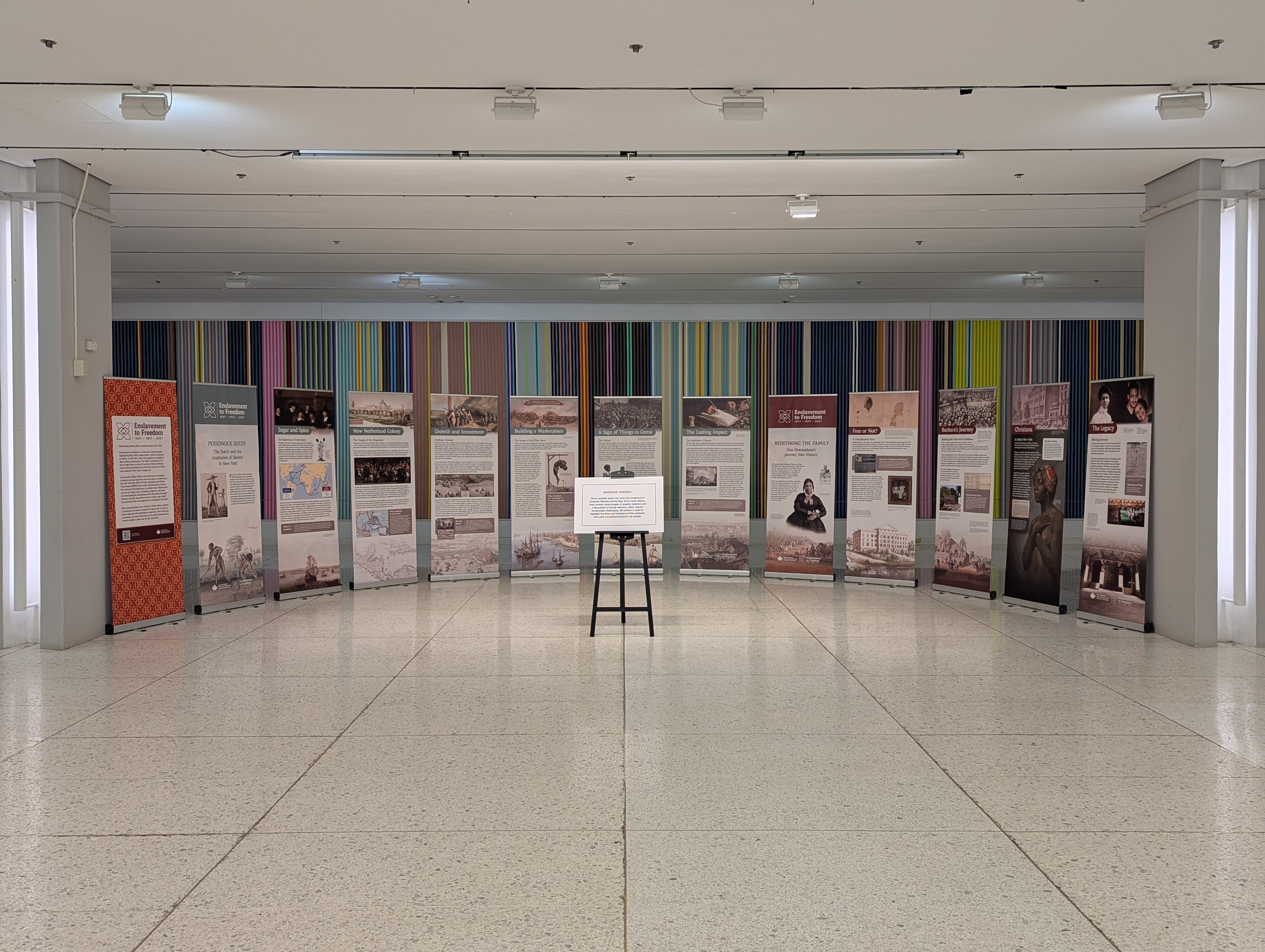
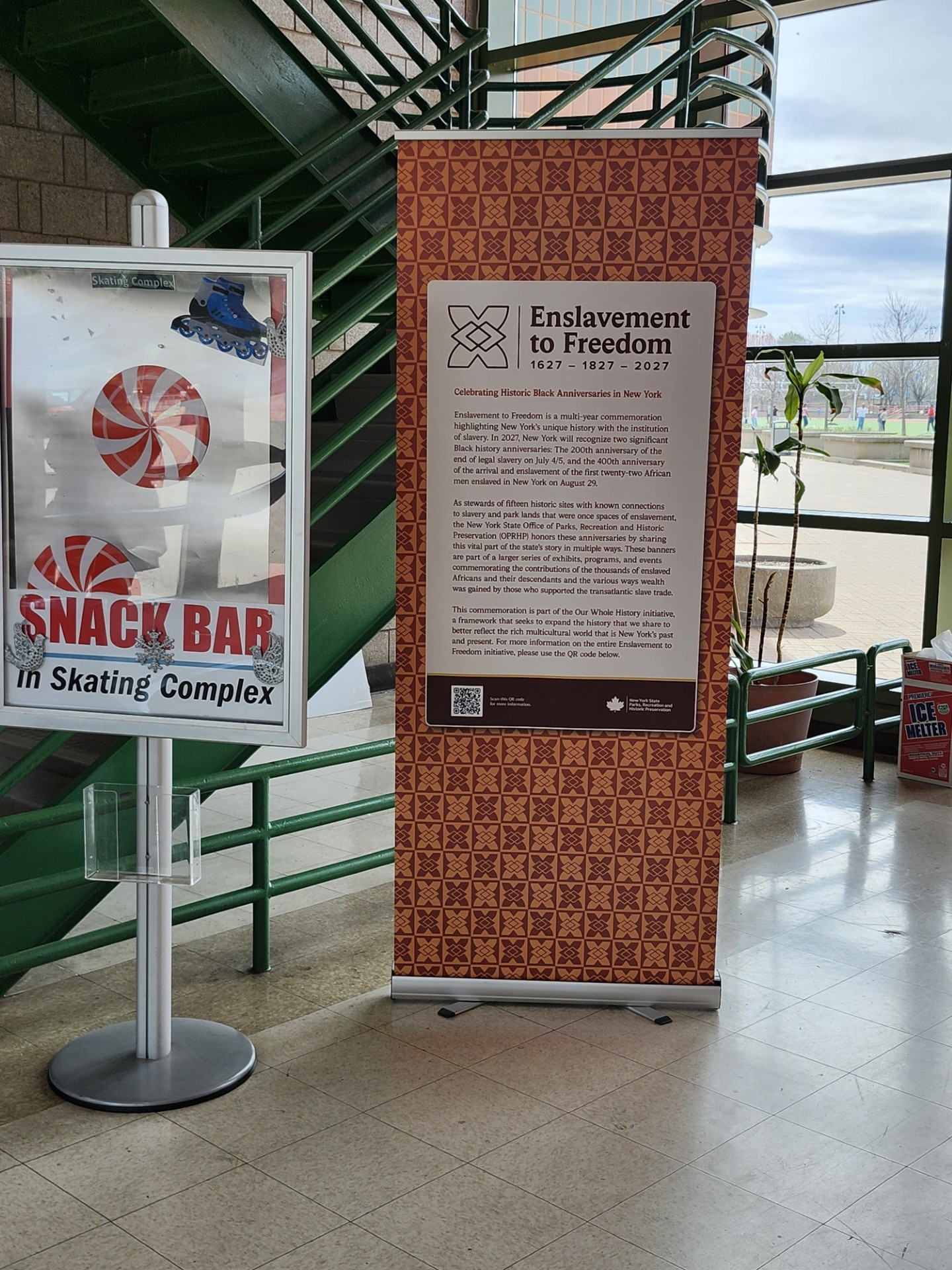
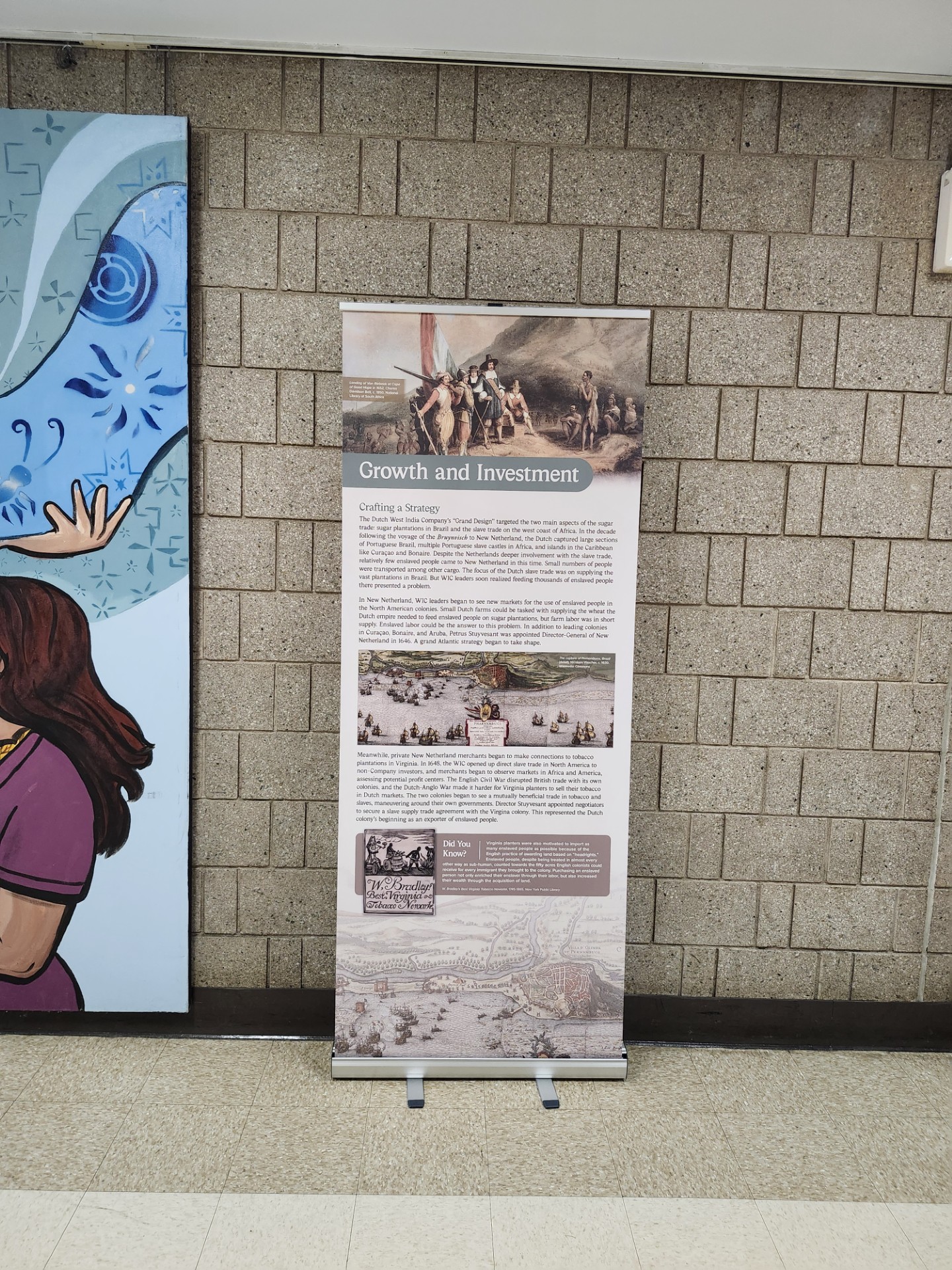
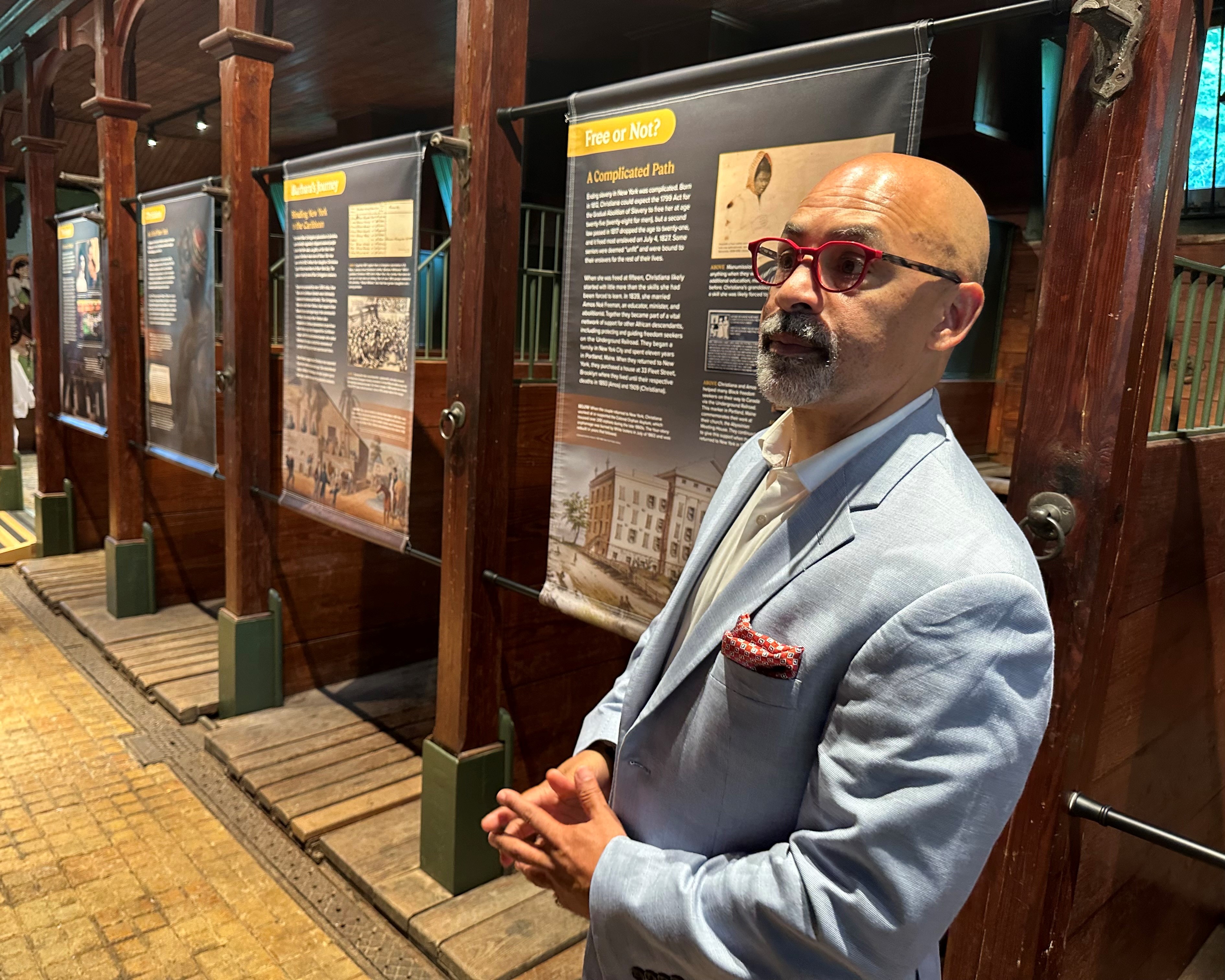
Early examples include the traveling exhibits Poisonous Seeds and Redefining the Family, which provide in-depth examinations of slavery in New York. Poisonous Seeds: The Dutch and the Institution of Slavery in New Netherland/New York explores the beginning of slavery in New York under the Dutch West Indian Company. Redefining The Family: One Descendant’s Journey Into History debuted at Clermont State Historic Site in July 2024, profiling the complex familial relationships between enslavers and enslaved through the experience of the Livingston family.
State Parks’ Black History webpage has also been revamped, now including an interactive story map where users can learn about various state parks and historic sites that hold historical significance to slavery between the Colonial and New Nation periods in the 1600s, 1700s, and 1800s.
“In one year we will focus and face our state’s whole history,” Nahon said. “Solomon Northup represents that time of change. The time of vision. The time of forwardness. And as we step back, we will do as Sankofa says – we will look back to the past, we will take the best from it and we will move boldly forward. And that’s exactly what we’re doing at Parks. Bringing our whole history – all of those stories and putting them back. And it is what I invite each of us to do as people. Bring forward the knowledge of the past but bring the best into the future with all of us.”
— Written by Jim Levulis, Public Affairs and Community Engagement Coordinator, Saratoga/Capital Region
 New York State Parks and Historic Sites Blog