Saratoga Spa State Park is remarkable not only for its heralded mineral springs, but also for its architecture and historic theater. Now known as the Spa Little Theater, the space was originally designed for the scientists who studied the surrounding mineral springs to share their findings.
In September, the Spa Little Theater and nearby buildings and grounds were once again a place of scientific knowledge sharing, hosting the 2023 New York State Invasive Species Expo that brought land managers, researchers, and the public together for an immersive three-day interactive learning experience and conference.
Ashley Longo, an environmental educator working for New York State Parks’ Long Island Regional Environmental Education Office was awarded a scholarship opportunity to attend a Teacher and Educator’s Course at the Bimini Biological Field Station Foundation in South Bimini, Bahamas. Through her participation, NY State Parks was represented along with 13 other educators out of nearly 200 applicants. More commonly known as the Bimini Shark Lab, this world-renowned research facility was established in 1990 by Dr. Samuel Gruber and has contributed to advancing the world’s knowledge on elasmobranchs (sharks, rays, skates, and sawfish)through several research projects as well as providing educational opportunities for future scientists and the public.
When you hear the word, “Shark” what comes to mind? Does it evoke a sense of fear in you? Does it stimulate your curiosity? Is your immediate first thought about how they are so negatively portrayed in the media and how unjust it is?
Sharks are some of the most talked about animals on the planet, often portrayed in a very negative light. With increasing sightings of them off Long Island in the past couple of years, misinformation and public fear can spread, something first started by the movie Jaws. It should be made clear, however, that increased shark sightings are actually a sign of a healthier ecosystem!
Blog post author Ashley Longo, an environmental educator working for the Long Island Regional Environmental Education Office in front of the Bimini Shark Lab sign in South Bimini, Bahamas.
Sharks (rays & chimaeras too), the elasmobranchs, are one of the most advanced groups of animals in the world, with specialized sensory adaptations, reproductive methods, and migration patterns not seen in other living creatures. More than half the species of sharks in the world don’t grow bigger than three feet (one meter) and most live in the waters of the deep sea, never seeing the ocean’s surface or a human being. There’s a lot more to sharks than many people realize, including myself, and I am excited to be bringing that knowledge back to the beaches of Long Island after being at the Bimini Shark Lab in the Bahamas.
Life at the Bimini Shark Lab
South Bimini, Bahamas is located alongside the Gulf Stream some 46 miles from Miami, Florida. The level of biodiversity is high surrounding Bimini and because of this many shark species can be found around Bimini and the rest of the Bahamas. Many shark species will migrate between Bimini and the United States. In 2011, the Bahamas declared their waters as a shark sanctuary, becoming the 4th country in the world to do so at the time. The value of a shark alive is worth far more than a dead shark in the Bahamas, with the diving industry there being among the highest earning in the world. As the Shark Lab has so cleverly coined, the Bimini is not infested with sharks, but INVESTED!
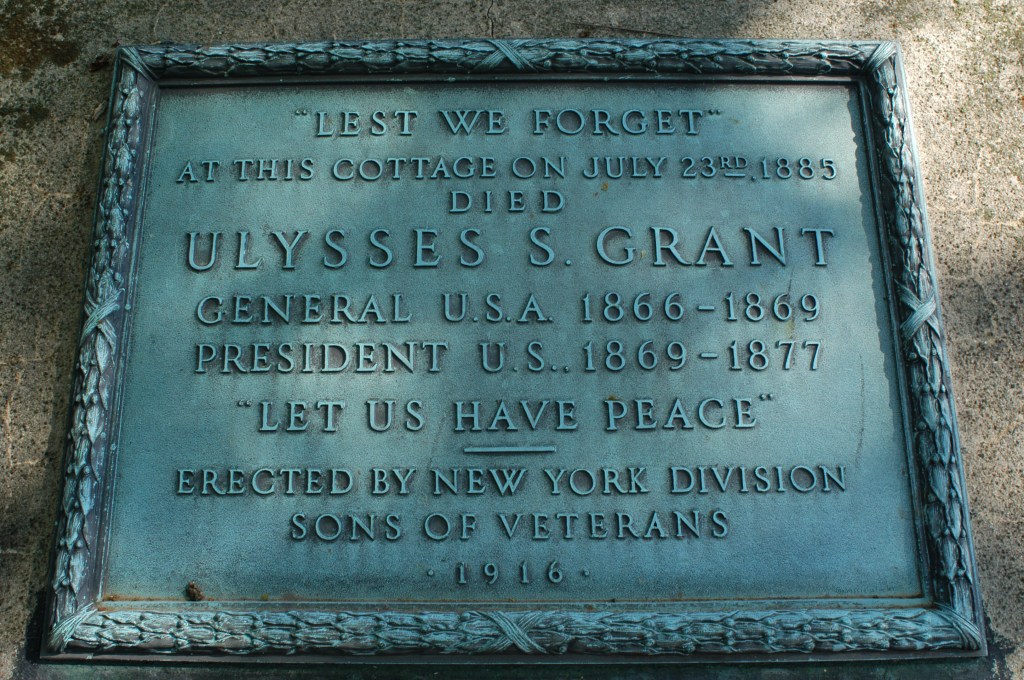
Inside Grant Cottage State Historic Site, where former President Ulysses S. Grant died of cancer on July 23, 1885 after spending his final weeks penning his memoirs, national grief remains frozen in time in the form of flowers.
Now nearly 140 years old, five different Victorian-era funerary floral displays in the parlor draw different reactions from visitors, ranging from “amazing” to “creepy.” But given that relatively few examples from that era survive today, these displays are also a rare look into the past.
Ulysses S. Grant on the front porch at Grant Cottage, with his wife, Julia, by his side. Grant was racing against his terminal cancer to finish his memoirs as a way to provide for his family.
While flowers have long been part of burial rituals, it was the tragic death toll of the American Civil War that ushered in the golden age of arranged floral tributes, when such displays became common for soldiers’ funerals.
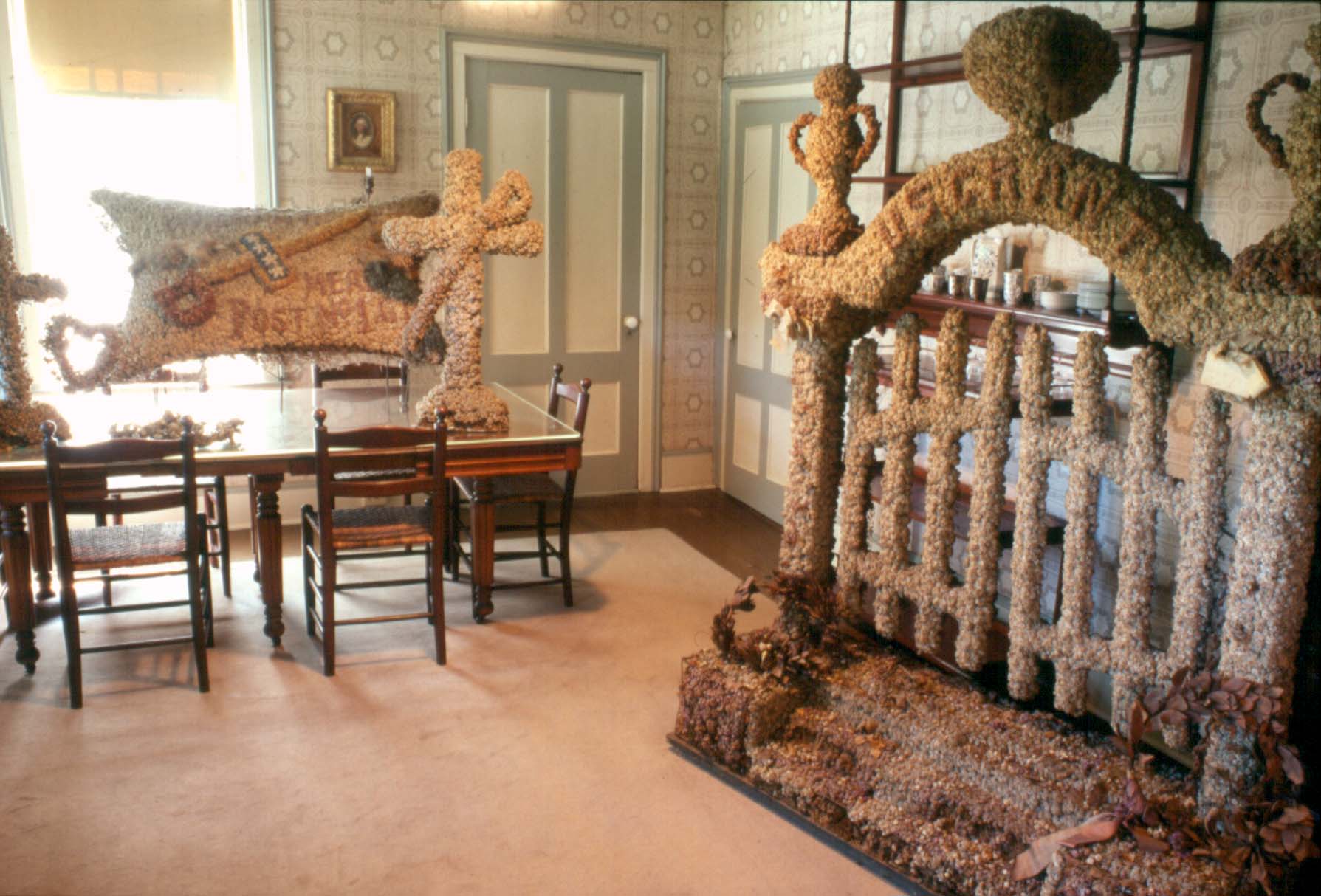
Upon Grant’s death, such expressions of mourning for a leader who meant so much to Union victory began arriving at the cottage, which is located on Mount Macgregor in Saratoga County, about an hour by car north of Albany. One tribute still on display in the parlor was in the form of an oversized pillow, provided by Union veterans in Philadelphia from the Grand Army of the Republic (GAR) that Grant had commanded two decades earlier.
A composite image of the floral pillow arrangement, with its appearance today on the left, and a photograph taken in the late 19th century at the right.
A reporter noted, “Almost every train which arrived at Mt. McGregor has brought beautiful floral mementos from Grand Army Posts and other organizations, and also from personal friends…” making the modest cottage “fragrant with flowers.”
Perhaps the most impressive piece was the enormous six-foot-high “Gates Ajar” tribute which rested in front of the fireplace. Likely custom-built, it was sent by family friend Leland Stanford of California – a native of Watervliet, Albany County who went on to become California Governor and later a U.S. Senator from that state. Its design depicted the gates of heaven, a popular theme of tributes in that era.
The “Gates Ajar” floral arrangement, to the right, with the pillow and cross arrangements on the table to the left. Lighting in the room is normally kept dim to protect the display from potential degradation.
For decades, these displays have remained untouched and undisturbed in the cottage parlor, losing their fragrance and much of their color faded, but otherwise intact, other than being understandably dusty. Last year, these artifacts came to the attention of historical florist expert Robert Treadway (co-author of A Centennial History of the American Florist), who visited in August 2021 to inspect under the supervision of conservators from the New York State Bureau of Historic Sites and site staff.
Treadway immediately cleared up two common misconceptions about the displays _ that they were prepared using fresh flowers which dried over time and had been coated in wax as a preservative, neither of which were the case.
Treadway also found that the most prevalent flowers used were immortelles (Helichrysum), a species in the sunflower family also known as everlastings for their long-lasting nature, which had been dried before use. In the Victorian era, immortelle flowers symbolized remembrance and hope in everlasting life, especially to the families of the deceased.
Historical florist expert Robert Treadway, right, joined by State Parks Conservator Heidi Miksch, examines the floral funerary arrangements at Grant Cottage State Historic Site.
Everlastings were frequently shipped to the United States from Europe and dyed various colors for use by florists. Bunches would be wired to a small stick and inserted into moss which filled a wire framework to create the tributes. It was a painstaking process that involved numerous assistants. Since the displays for Grant were designed only for short-term use, wax coatings on the flowers were deemed unnecessary and not used, according to Treadway’s inspection.
Given that the delicate nature of these artifacts, Treadway and State Parks staff discussed how to best protect and preserve such historic objects for the years to come. Various options were discussed, including coatings, enclosures, and environmental controls, each method with its benefits and drawbacks.
Representing a nation’s mourning over the loss of a war hero and leader, the arrangements reflect a uniquely Victorian outlook on death and the hereafter, each with its own specific meaning.
The “Gates Ajar” symbolized the gates of Heaven, reassuring the grieving that their lost loved one was destined for a better place that, with the gate left ajar so they could follow and be reunited. The pillow set piece represented peace, relief, and eternal rest from the trials of the physical world.
Two floral pieces feature a cross, commonly used as symbols of Christian tenets of grace, forgiveness, and salvation. Two pieces incorporate an anchor, another favorite Christian symbol representing hope amid trial with God being the “anchor of the soul.” One piece features a heart along with the anchor and cross. The heart symbolized the everlasting love of Christ but also the love of those in mourning for the deceased.
The floral cross with sword.
Two pieces – the pillow and one of the crosses – also feature a sword, which reflected General Grant’s military career, as well as the virtues of justice, fortitude, and courage.
Victorian set pieces showcased the artistry and creativity of florists during that period. One of the best-known florists, Adolph Le Moult, operating out of New York City, created one of the largest floral pieces ever made for an event in Grant’s honor during a visit to Philadelphia in 1879. Le Moult also created elaborate floral tributes for Grant’s funeral in New York City in 1885.
The goal of florists in the 19th century was not just making impressive arrangements but also ensuring they would last. Florists boasted in advertisements with statements such as, “I can so perfectly preserve even the most delicate flowers that they will last forever.”
Floral funerary displays line Grant’s Tomb in Upper Manhattan to mark the year after his death.
Preserved funeral mementos from the Victorian era can be found in public and private collections throughout the world. For example, wax-coated and encased floral pieces from the 1881 funeral of James Garfield are displayed at his home in Mentor, Ohio.
What truly makes the tributes at Grant Cottage unique is their sheer scale and survival to the present despite never have been coated in wax, encased or otherwise protected from the onset or in the decades since. Treadway indicated that the two largest pieces are larger than any others known to exist.
Flowers continued to be used in tribute to Grant by his widow, Julia. While staying at the family’s Long Branch, New Jersey cottage, she continued remembering her greatest love through this mourning ritual:
“On an antique cabinet… is a bust in plaster of the brave old soldier… Behind it hangs a wreath of white immortelles -a widow’s first tribute to memory- with a circlet of white ribbon still clinging to it, typical of wedded love. A slender glass filled with geraniums… Every morning this tiny bouquet is gathered… by the lonely wife who kisses the blossoms and tenderly places them before the face of her hero. The faded flowers are dried and, mixed with their own fragrance, go to make those memory-bags so highly prized by the friends on whom they are bestowed.”
For now, these treasures at Grant Cottage will continue to transport visitors to a moment when family, friends, and a nation were in mourning for an American icon. They are tributes not only to a man, but to the character and ideals he lived by. These aging blossoms speak to humanity’s enduring need to grieve and desire to memorialize those they love and respect.
Ulysses S. Grant, and his wife, Julia.
Post by Ben Kemp,Friends of Ulysses S. Grant Cottage Operations Manager
These , our Earth’s perennial flowers—
The fadeless blooms by Poets sung,
Songs, that from Homer’s Age till ours,
Down the aisles of Time have rung—
In many an emblem do we weave
For passionate Remembrance’ sake;
And howe’er we joy, howe’er we grieve,
Sacred pilgrimages make;
For Loss and Grief, the Asphodels
On our graves we mourning lay;
For Memory, the Immortelles—
Our loved ones live for us always.
Death in Life, Life in Death—how we
This, Love’s Faith, keep reverently.

By Laura G. Collins’s from Immortelles and Asphodels (Everlastings) (1898)
More About Grant Cottage
Located immediately below the summit of Mount McGregor in Saratoga County, the cottage and 43-acre site was recently named a National Historic Landmark by the National Park Service.
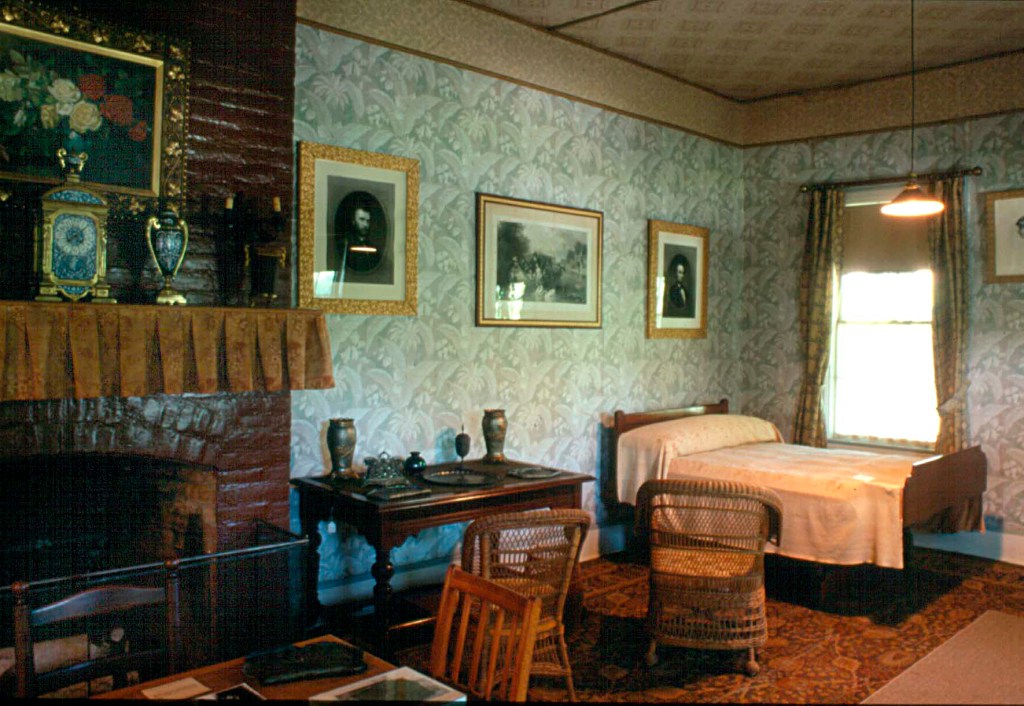
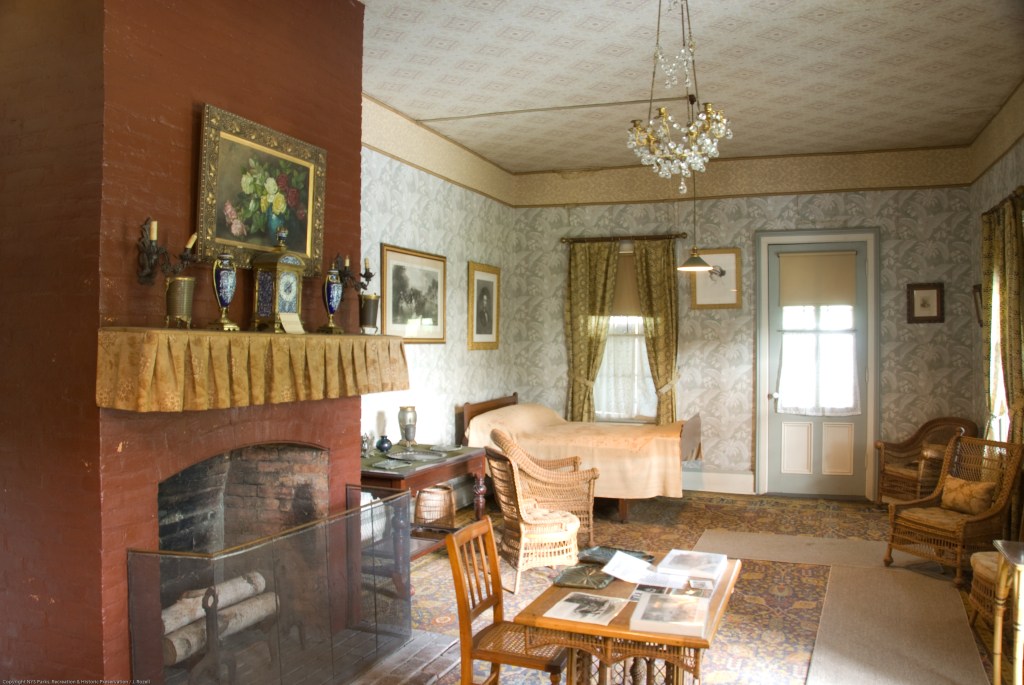
The cottage is kept as it was during the Grant family’s stay. Open to the public seasonally by the Friends of the Ulysses S. Grant Cottage, visitors can tour its first-floor original furnishings, decorations, and personal items belonging to Grant.
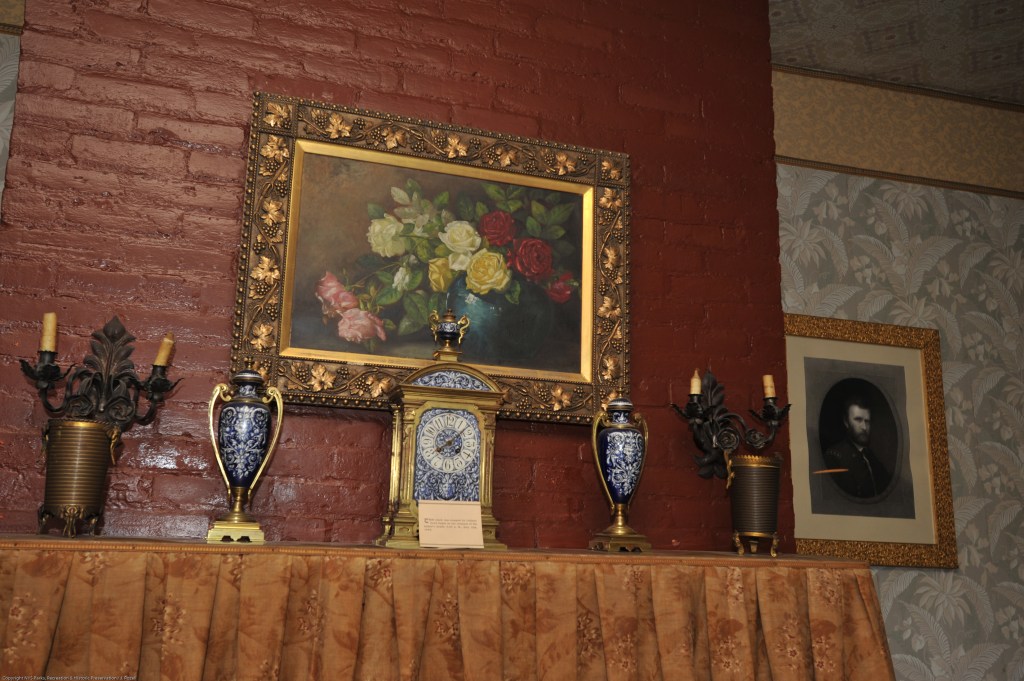
Tours are scheduled to resume for the season on April 30, 2022. Other artifacts on display include the bed where he died on July 23, 1885 and the mantel clock stopped by Grant’s son Fred at the moment of his father’s death.
Grant Cottage first opened as a historic site in 1890 when it was supported by funds raised by veterans of the Grand Army of the Republic.
The grounds surrounding the Cottage served as a tuberculosis sanitarium beginning in 1914, which in 1945 was converted into a veteran rest camp, until 1960 when it was repurposed and annexed as the Rome State School for disabled children until 1976. The Friends of Ulysses S. Grant Cottage was formed in the fall of 1989 to provide programming and tours, and partner with New York State Parks on site stewardship.
Jones Beach has always had a special relationship to energy. Located on Long Island’s South Shore just 20 miles from New York City, Jones Beach State Park is on a barrier island shaped over hundreds of thousands of years by the energy of advancing and receding glaciers, and later by the energy of the sun currents of ocean water and wind carrying sand along the coast.
Originally called Short Beach, this barrier island was inaccessible to the public. To create the state park almost a century ago, planners and engineers harnessed the energy of machines and human labor, moving sand and plants to expand the island, and building roads, amenities, and the Art Deco tower and buildings so recognizable today.
Today, energy is everywhere on Jones Beach. It’s in the dramatic dive of a predator like the Common Tern, and in the bright sun that drives photosynthesis of the Seaside Goldenrod, Beach Grass or Beach Pea. It’s in water that brings migratory species and the winds that distribute seeds and carry pollinators from plant to plant. But energy is also present in the engines of the cars that bring visitors to the Park, and in the historical construction of the parkways that they follow to get here.
In an era of climate change, and in the context of New York’s growing commitment to developing renewable energy systems, the Jones Beach Energy & Nature Center aims to help New Yorkers understand the fundamental ways human energy consumption and energy infrastructure continue to shape our natural environment.
To further this mission, the Center recently released Energy & Us, a 300-plus page curriculum for high school students that is available to view or download for teachers and school districts at no cost through jonesbeachenc.org/curriculum.
The goal of the program is to inspire young people to think critically about how energy shapes their landscapes and their lives, as well as their own roles in energy systems and ecosystems that surround them. With the beach itself as a classroom, Jones Beach State Park is the perfect place to learn about energy from sunlight, sand, wind, and water.
NATURAL ENERGY AT JONES BEACH
Let’s start by considering the very essence of Jones Beach – a simple grain of sand. A crystal structure composed of millions of molecules, typically of the compound silicate (SiO2), sand is held together with very strong bonds. By comparison, bonds in a drop of spray from the ocean are much weaker. Much less energy needs to be added to water than to sand to trigger what is known as phase shift: A puddle of water will quickly evaporate in the sun, while a similarly sized patch of sand won’t melt. Sand will melt with enough heat, as in done in glass-making, but does sand melt in nature?
Close-up images of grains of sand. (Photo credit – Wikipedia Commons)
Consider when lightning strikes a beach, it creates melted and recrystallized sand formations called fulgurites, also known as “fossil lightning.” Lightning possesses tremendous energy — the core of a lightning strike can reach 53,500 F — but only makes contact with a relatively small surface. The strike quickly heats the sand to a high enough temperature that its chemical bonds are broken. Fulgurite then forms as the energy transfers out of the melted sand into the surrounding ground and air, and the melted matter becomes solid again, forming this unusual form of fused sand.
Have you ever gone swimming in the late summer or early fall, and found the water to be warmer than the air? Solar energy that is absorbed over the course of the summer dissipates in the fall more easily from land and air than from water. This is because water is a relatively poor conductor; energy moves through it with difficulty, so water is slow to heat and slow to cool.
Air is a good insulator and a poor conductor, which is why fur and down help keep animals warm. It’s not the quantity of hairs or feathers that matters, but rather the layer of air trapped within that stops energy from being conducted out of the body into the surrounding air. Birds fluff up during the winter to trap more insulating air in their feathers.
A snowy owl sits among the sand dunes and beach grass at Jones Beach. (Photo credit – Sean Hanley and G. Anthony Svatek/Kulturfolger Productions)
When sunlight hits the beach, radiant energy transforms into the kinetic energy of excited electrons in the sand, which vibrate, producing what we experience as warmth. Maybe even too much warmth on a sunny day, as anyone who has walked barefoot knows! The excited electrons also release new photons, wave particles that carry energy away from the sand and produce what we perceive as glare.
A Monarch butterfly among the seaside Goldenrod in the maritime dunes at Jones Beach, harvesting the energy found in the flowers’ nectar. (Photo Credit – Julie Lundgren/NY Natural Heritage Program)
ENERGY DRIVES ECOSYSTEM CONDITIONS
At Jones Beach, dominant winds flow from the west and the north, pushing sand dunes gradually towards the sea. Meanwhile, ocean currents flow parallel to the mainland, pushing sand from east to west and moving the shoreline westward. A jetty constructed in the 1950s at the West End interrupts these currents, causing sand to accumulate on the eastern side while the western channel remains open.
Winter and storm-season waves typically contain more energy, pulling more sediment off the beach and into the water in a process called erosion. When large waves wash over dunes during high tides and storms — a phenomenon called “overtopping” — dunes can flatten and shift. In summer, ocean currents, waves, and winds typically bring sands back onto the beach and dunes in a everchanging cycle.
Jones Beach shoreline change map. (Photo credit – Ruth Nervig/JBENC)
Fresh sands are deposited by summer waves, wind and storms creating open habitat for piping plovers, terns and some rare plants like Seabeach Knotweed and Seabeach Amaranth. (Photo credit – Julie Lundgren/NYNatural Heritage Program)
Water and winds can also influence how species move through Jones Beach. Birds, winged insects, fish, phytoplankton, and various other organisms travel on currents in the air and water, and currents also distribute seeds, eggs, and nutrients that organisms need to survive. Local examples of this include plankton that float on ocean currents, providing food for larger marine animals; shorebirds that depend on the strong sea breeze; and grass seeds spread by water and wind. Although major storms can decimate local populations of some species, most of the plants and animals of this ecosystem are adapted to these natural processes.
Seabeach knotweed (Polygonum glaucum) is a plant that needs open and untrampled beach and dune areas. (Photo credit – Julie Lundgren/NY Natural Heritage Program)
In the aftermath of a hurricane at Jones Beach, the massive energy of the storm washed up this massive uprooted tree trunk. (Photo credit – Julie Lundgren/NY Natural Heritage Program)
ENERGY SHAPES PUBLIC INFRASTRUCTURE AND PRIVATE LIFE
When planner Robert Moses envisioned Jones Beach State Park in the 1920s, he recognized that the automobile would have an increasing role in daily American life.
The rise of cars was coupled with another innovation by automaker Henry Ford – the assembly line that allowed for costs to be reduced, creating a new class of workers with enough disposable income to purchase the goods they produced, and with more leisure time to allow travel.
Jones Beach State Park was one of the first and most prominent parks to connect this growing urban middle class to the environment.
Automobiles entering Jones Beach on its opening day on Aug. 24, 1929. (Photo credit – New York State Archives)
A map showing the Parks and Parkway envisioned by Robert Moses. (Photo Credit – Long Island State Parks Commission)
In 1924, as the new chairman of the State Parks Commission and President of the Long Island State Parks Commission, Moses began planning a system of “Parks and Parkways” to connect car-owning city residents to beaches and parklands across Long Island. Moses envisioned parkways as an extension of the parks themselves: green spaces that transported urban dwellers to a beautiful natural landscape.
Jones Beach opened in 1929 as a triumph of 20th century engineering. Forty million cubic yards of sand were dredged from the bay to widen the beach and raise its elevation up to 12 feet. Workers hand-planted a million native Beach Grass plants to prevent the taller dunes from blowing away in the wind.
Workers planting Beach Grass during construction at Jones Beach State Park (Photo credit – NYS Parks)
Beach Grass (Ammophila breviligulata), native to Long Island, has long roots which help create and stabilize the maritime dunes at Jones Beach. (Photo credit – Julie Lundgren/NY Natural Heritage Program)
Moses’s plan for parks and roads across Long Island reflected a new approach to “nature,” one of landscapes constructed intentionally for public enjoyment. The parkways also helped spark a new era of Long Island suburbanization, which greatly increased consumption and the demand for energy.
Many different types of energy come together at the Jones Beach Energy & Nature Center. As climate change impacts the globe with rising seas and stronger storms, Jones Beach will model the positive possibilities for access and use of energy. Solar panels that power the Center represent New York’s commitment to expand renewable energy and reduce greenhouse gas emissions that are driving climate change. Resilient design modeled by the building itself will be key as New York’s communities adapt to rising sea levels and changing weather patterns.
There has never been a more important time for New Yorkers to understand the connections between energy, nature, and society. With the Energy & Us curriculum, young people throughout the state can begin to reconsider about how those forces shape their own lives, and how they can engage with them to transform the future.
Cover shot – Jones Beach Energy & Nature Center, Michael Moran/nArchitects
Post by Olivia Schwob, a writer, researcher, and editor interested in human geography, political economy, and public things. Olivia was Developer of the Energy & Us curriculum from 2020-2021, Curatorial Team Writer for the Jones Beach Energy & Nature Center from 2019 – 2020, and Managing Editor of Urban Omnibus, a publication of the Architectural League of New York, from 2016 – 2019. She lives in Brooklyn.
If you were told there could be volcanoes along the shore of Lake Erie in winter, would you believe it? While it may be hard to imagine, Lake Erie does in fact produce volcanoes and Evangola State Park can be one of the best places to see them!
Unlike traditional volcanoes, the ones found at Evangola State Park are not made of rock and magma, but rather water and ice. Ice volcanoes are a temporary outcome of a partially frozen lake. When ice begins to form on the water’s surface, powerful winds push large waves towards the shore. As they do, the water is sandwiched between the shore and the ice, creating a buildup of pressure.
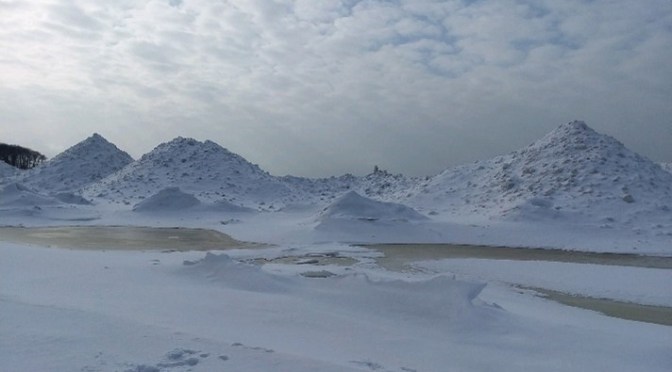
A gap in shelf ice allows for potential formation of an ice volcano.
Eventually with nowhere else to go, this pressure causes the water to burst through cracks in the ice. The resulting spray from this burst, freezes on the ice surface, accumulating in the shape of a cone with an open, unfrozen center. With each successive wave, plumes of water erupt from the newly formed ice volcano, building this winter wonder to potential heights of 20-plus feet! Occasionally the ice may build up in the shape of a cone, but without an open center. These rolling hills of ice become so called ice-dunes.
While Lake Erie is one of the best locations to see ice volcanoes, Lakes Ontario, Michigan, and Superior can also produce these icy cones when conditions are right. For example, such volcanoes have also recently formed during the cold snap at Hamlin Beach State Park in Monroe County and Fair Haven Beach State Park in Cayuga County.
Ice Volcano at Hamlin Beach State Park in February 2022. (Photo Credit – Friends of Hamlin Beach State Park/Denise Bianrosa Duffy)
Further from home but to the excitement of many, in 2021 a 45-foot tall ice volcano formed in southeastern Kazakhstan as water from a hot spring gushed through a thick layer of ice, creating a massive volcano for all to enjoy.
But also, to be clear, the shelf ice on a lake where these structures form can be extremely unsafe and people are strongly advised against venturing out on it to get closer to ice volcanoes.
Confine sightseeing to the shoreline or stick with a guided tour by a trained Parks naturalist. One such hike is scheduled for Feb. 8 at Evangola State Park. Check with the park to learn if the volcanoes have formed.
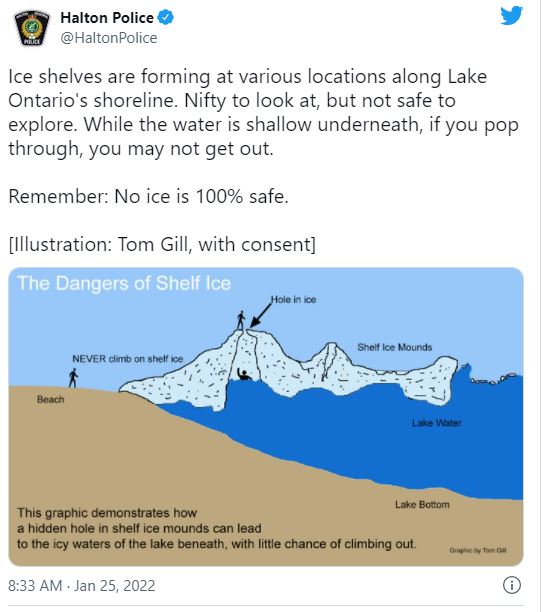
As a recent warning from the police department in Halton, Ontario, describes, if someone falls through shelf ice or down the opening of an ice volcano into the lake water below, it can be nearly impossible to get out even if aid is nearby. Cold lake water can quickly induce hypothermia, which can lead to death.
This graphic below illustrates the danger:
A shoreline guided tour past ice volcanoes at Evangola State Park. Remember, DO NOT venture out on shelf ice or approach an ice volcano. It is EXTREMELY DANGEROUS with the potential for falling into the lake water below with little chance of getting out.
Leaving earthly risk behind for a moment, scientists have even been able to detect ice volcanoes from several planets and moons deep in space. Typically called cryovolcanoes, these are defined as volcanoes that erupt with ice, water, or other materials such as methane and ammonia. In 2010, NASA’s Cassini spacecraft found possible ice volcanoes on Saturn’s moon Titan and in 2016 images from the Dawn space probe revealed dozens of ancient ice volcanoes on the dwarf planet Ceres
Ahuna Mons, an ice volcano on the dwarf planet Ceres, as seen by NASA’s Dawn spacecraft. (Photo Credit – NASA, JPL-Caltech, UCLA, MPS, DLR and IDA
Back on earth, favorable conditions for ice volcano formation here in New York haven’t been consistent in recent years. Warmer winters have resulted in less ice on all the Great Lakes. In 2021, the National Oceanic and Atmospheric Administration reported that only 2.4 percent of the Great Lakes surface was covered by ice in late January, the smallest amount in nearly 50 years. It was also noted that it was ninth-warmest January on record. While strong waves are needed to form ice volcanoes, strong waves with warmer temperatures will result in their destruction or prevent them from forming at all.
Despite our changing climate, ice volcanoes can still be a common occurrence during the winter months. The biggest change is in their longevity. For example, in the past several years, ice volcanoes at Evangola State Park have only lasted a few weeks or even just a few days after forming, as sudden warm spells take hold and break them apart.
For your best chance to experience ice volcanoes, be sure to keep a close watch on your local weather forecast and head towards the lake shore after a push of cold artic air passes through. To add to the adventure of enjoying these frozen phenomena, our team of environmental educators offer guided hikes all winter long, sharing what makes our Great Lakes environment so unique.
An ice volcano “erupts” (on left) at Fair Haven Beach State Park on Lake Ontario. Photo credit – Caroline Lamie, Office Manager/Senior Researcher/Tour & Event Coordinator, Fort Ontario State Historic Site
Cover shot – Ice Volcanoes in 2021 at Evangola State Park. All photos NYS Parks unless otherwise noted.
Post by Matt Nusstein, Environmental Educator, Niagara Region NYS Parks
Along the shores of Lake Erie, Evangola State Park becomes a winter sports mecca as the lake’s famous lake-effect snowstorms blanket the park! Lake-effect snow occurs when cold, Canadian air moves across Lake Erie evaporating its open waters and causing intense, local snow bands which can drop one to two inches of snow per hour.…
Getting cabin fever? Well, bundle up and take a trip to a beach-front state park! Lake Ontario, Lake Erie, Lake Champlain, Long Island parks or the many parks on small lakes: Glimmerglass, Green Lakes, Long Point-Chatauqua Lake, Allegany, or many others. This is the time to explore the many interesting patterns and colors of wintertime…

















 New York State Parks and Historic Sites Blog