Category Archives: Flora & Fauna

Rare or noteworthy wildlife spotted in New York State Parks

One fish, two fish, small fish, big fish: The recent story of fish in Lake Minnewaska

Big fish eat smaller fish, smaller fish eat zooplankton, zooplankton eat phytoplankton, and phytoplankton produce their own food. If smaller fish eat all of the zooplankton, what’s to stop the phytoplankton from multiplying out of control? If the big fish eat all of the smaller fish, will the big fish still be able to sustain their population? Whenever an organism is added to or taken away from an ecosystem, it acts like a pebble thrown into a pond. There’s the initial splash, then there are ripples that radiate outward affecting everything in their path.

In 2008, a “pebble” was thrown into Lake Minnewaska. This pebble was a type of minnow called a Golden Shiner.  Exactly how the Golden Shiners entered the lake is not certain, however they are a common bait fish so it is  possible that they were introduced to Lake Minnewaska by someone who was hoping to hook the catch of the day! If that was the case, the odds would have been against that fisherman.  For several decades prior to the occurrence of the shiners, there were no fish reported in the lake. Lake Minnewaska has been very acidic in the past, making it an unhospitable environment for most fish to live in. Recently, the pH in the lake has begun to rise to a level closer to neutral, making the lake more inhabitable for fish.

snakes in water
Two Northern Water Snakes compete for a Golden Shiner in Lake Minnewaska. Photo taken by Nicholas Martin, Park Educator, Minnewaska State Park Preserve.

The introduction of a predator to the food web in Lake Minnewaska caused a trophic cascade. A trophic cascade is when a top predator is added to or removed from a food chain. The effects of the addition or loss of this predator are experienced all the way down the food chain. The shiners’ predation on the zooplankton drastically decreased their population. The ripple continued spreading outward because the loss of the zooplankton meant the loss of a major plant consumer. The phytoplankton could then grow and multiply without restraint. The result was an algal bloom in 2011 that turned the lake green and decreased the visibility to less than three feet. As a result, the Minnewaska Swimming Beach was closed for a month that summer.
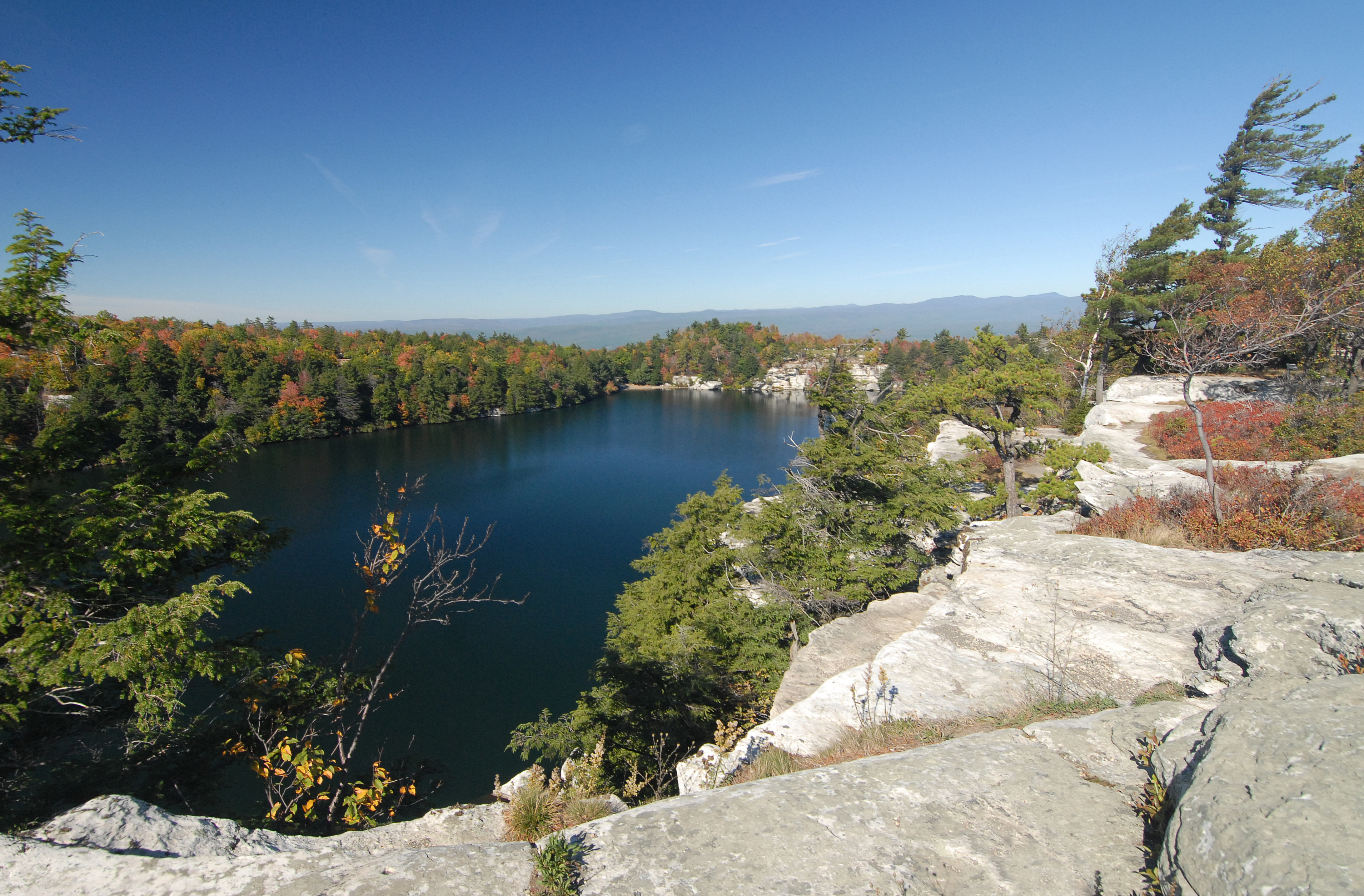
Minnewaska State Park Preserve
A view of Lake Minnewaska with the Catskills in the background from on top of the quartz conglomerate cliffs surrounding the lake. Photo by John Rozell, OPRHP.

The algal bloom showed us that Lake Minnewaska’s ecosystem had been severely altered by the shiner introduction.   Another ‘pebble’ was tossed in 2012; the “big fish on the block” made its appearance. Largemouth bass entered the lake and filled a role at the top of the food chain.  Bass are avid predators, and they began preying on the shiners.  Electrofishing, the use of a weak electrical current in the water to temporarily stun fish, has been used in the lake every year since the shiners appeared in order to monitor the fish populations. In 2013 there was a large population of 10,000 – 15,000 golden shiners and 700 – 800 largemouth bass in Lake Minnewaska. In 2014 no shiners were observed during electrofishing and the number of bass had increased by 60%. Did the bass population increase because they had an ample food source in the shiners? What will happen to the bass population now that they have lost this food source? We can only wait and see.

signage
It is important not to transport plants or animals from one environment to another. Doing so can start a chain of events that can drastically alter the balance of the ecosystem. Sign by Nicholas Martin, Park Educator, Minnewaska State Park Preserve.

Post by Laura Davis, Park Educator, Student Conservation Association/AmeriCorps Intern, Minnewaska State Park Preserve.

Sources:

Dr. Richardson SRBP Lecture at Suny New Paltz February 2015.

“Baitfish Regulations.” General Regulations. DEC, http://www.dec.ny.gov/outdoor/31416.html. 24 June 2015.

Richardson, David C. “Why Is Minnewaska Lake Turning Green: Changes in Acidity and Fish in the Sky Lakes.” Shawangunk Watch 18 (Summer 2013): 1-3. Print.

Lauren Jorgensen, Kristen Husson, and Karen Terbush. Minnewaska State Park Preserve Lake Minnewaska Water Quality Report. Rep. Albany: NYOPRHP, 2012. Print.

The Birds and The Bees …. Beetles, Butterflies, and Moths: A Salute To Our Native Pollinators

Everyone knows that honey bees are great pollinators, but there are so many more insects and animals that are also pollinators. In recognition of Pollinator Week (June 15 – 21), we introduce some of our native pollinators. Each day from April to mid-October, millions of bees, butterflies, moths, wasps, ants, beetles and a few other animals pollinate New York’s trees, shrubs, wild flowers, and agricultural crops while they are feeding on the plant’s pollen or nectar. By transferring the pollen from one flower to another flower, the plant can produce seeds and fruits (fruit in botanical terms includes most of what we call fruits, nuts, and vegetables). Food for us and food for all the animals in the wild depends on this. In fact, pollinators help to maintain healthy and diverse flora, fauna, and ecosystems across New York State and around the world.

Bees, like this Small Black Bee, are our premier pollinators.  New York State is home to over 475 bee species.  Bees like brightly colored blue or yellow flowers that are full of nectar and have a sweet or minty fragrance.

small black bee
By Sam Droege [CC BY 2.0 (http://creativecommons.org/licenses/by/2.0)%5D, via Wikimedia Commons.
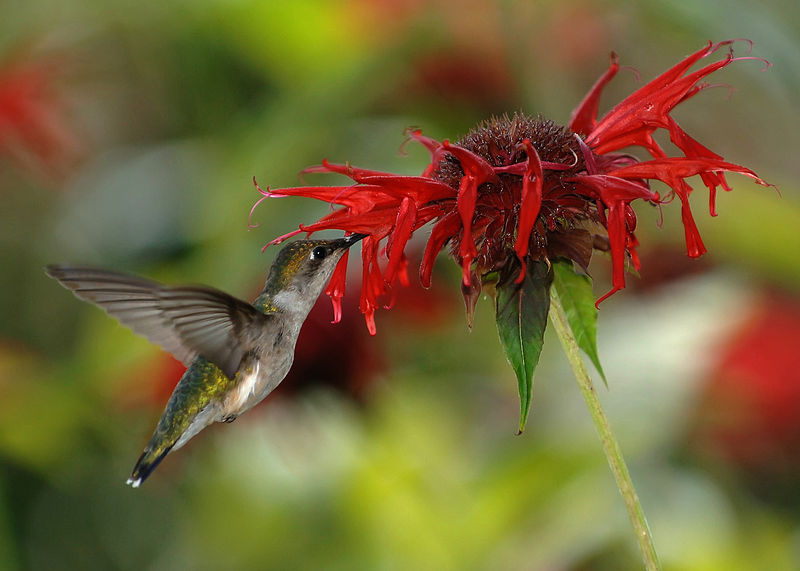
Ruby-Throated Hummingbirds like tube or funnel shaped red, yellow or orange flowers that produce a lot of nectar.

ruby throat hummingbird
By Joe Schneid, Louisville, Kentucky (Own work) [CC BY 3.0 (http://creativecommons.org/licenses/by/3.0)%5D, via Wikimedia Commons.
Look for moths like this Snowberry Clearwing Moth on white or pale flowers that open in the late afternoon or night or on dense flower heads like goldenrod. These large moths are often mistaken for hummingbirds. Both seek out plants that produce a lot of nectar deep within the flower.

snowberry clearwing moth
By Andy Reago & Chrissy McClarren [CC BY 2.0 (http://creativecommons.org/licenses/by/2.0)%5D, via Wikimedia Commons.
Like the Snowberry Clearwing Moth, this Question Mark Butterfly can also be found on flower clusters like goldenrod and yarrow (shown), and flowers that produce a lot of nectar deep in the flower.

q mark butterfly
I, Jmabel [GFDL (http://www.gnu.org/copyleft/fdl.html) or CC-BY-SA-3.0 (http://creativecommons.org/licenses/by-sa/3.0/)%5D, via Wikimedia Commons.
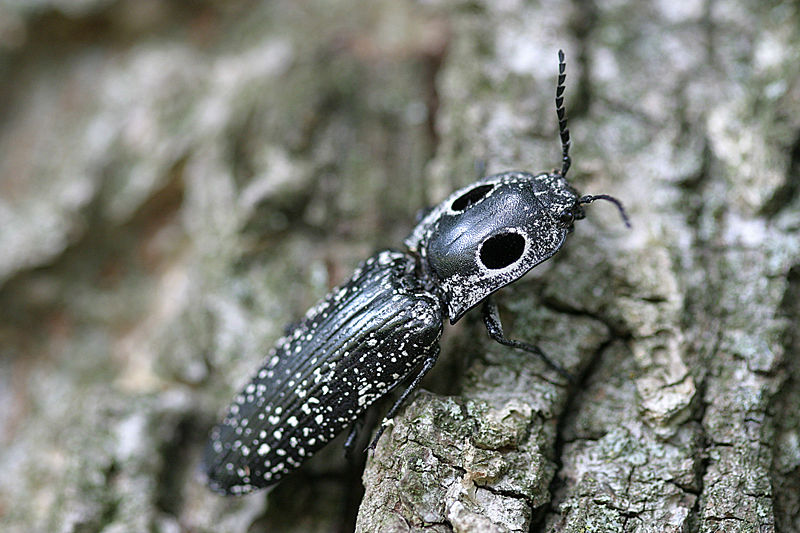
Beetles like the Eastern-Eyed Click Beetle rely upon flower smell to find flowers.  Beetles especially like spicy and sweet flowers.

e eyed click beetle
By Henry Hartley (Own work) [CC BY 3.0 (http://creativecommons.org/licenses/by/3.0)%5D, via Wikimedia Commons.
Although you might be a little wary of this insect, this Paper Wasp pollinates a variety of plants including milkweed (shown here), goldenrod, and fall asters. Many different kinds of wasps, including a group called the pollen wasps, are important pollinators.

paper wasp
By Bruce Marlin [CC BY-SA 2.5 (http://creativecommons.org/licenses/by-sa/2.5)%5D, via Wikimedia Commons.
Look for these pollinators and more during your next visit to a New York State Park!

Learn more at:

Butterflies and Moths of North American

Formicidae of the United States

New York State Biodiversity Clearinghouse

Pollinator Week

United States Department of Agriculture / Forest Service, Pollinators

Xerces Society

Post by Susan Carver (OPRHP) and Julie Lundgren (OPRHP/NYNHP).

Wildlife Sighting: Snapping Turtle at Fahnestock State Park

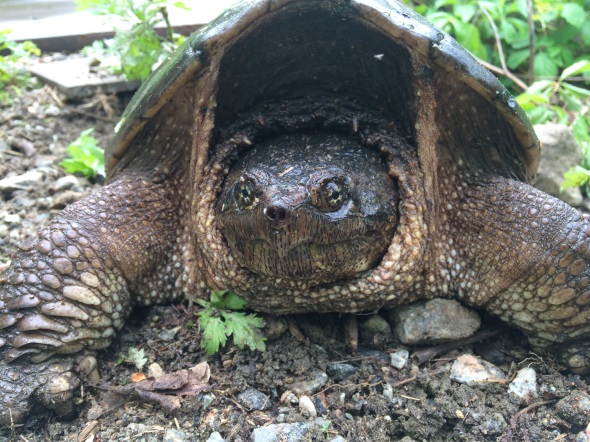
snapperWhile conducting field work in Clarence Fahnestock State Park the Environment Management Bureau’s Wildlife Unit came across this large female snapping turtle in early June. This female snapping turtle was observed digging a hole in the sandy soil to lay her eggs. This time of the year a variety of wildlife are giving birth or nesting to produce this year’s offspring. Turtles, as you may know, do not move very fast on land and tend to get hit by vehicles while attempting to cross the road. Please watch out for them on the roadways! Snapping turtles and turtles in general look for sandy soils that are easy to dig in to create their nest and lay their eggs. Nesting can take place quite a far distance from water. This is okay! Once hatched, the baby turtles will find their way back to a water source nearby. Get out in nature, experience our beautiful wilderness and all it holds, but please remember to not disturb these natural processes and give wildlife some space to be wild.

close up


Post by Kelly Starkweather, OPRHP Wildlife Unit.

Photos taken at Clarence Fahnestock State Park by Lilly Schelling, OPRHP Wildlife Unit.

Predator Plants in Our Parks

Have you ever been to a greenhouse and observed a carnivorous plant, such as a Venus fly trap or a pitcher plant and thought…where do these come from? Well not only can you find carnivorous plants growing native in New York State, we have four different types and 19 different species (New York State Flora Altas)! Carnivorous plants are plants that have adapted to depend on catching insects to supply the nutrients they need for survival, thereby allowing them to live in nutrient poor habitats. NYS is home to pitcher plants (Sarracenia), bladderworts (Utricularia), butterworts (Pinguicula), and sundews (Drosera); each having different methods for catching insects. All of these species thrive in wet, sunny conditions. Some of the best viewing opportunities for these fascinating plants are boardwalks over bogs or from a canoe/ kayak.

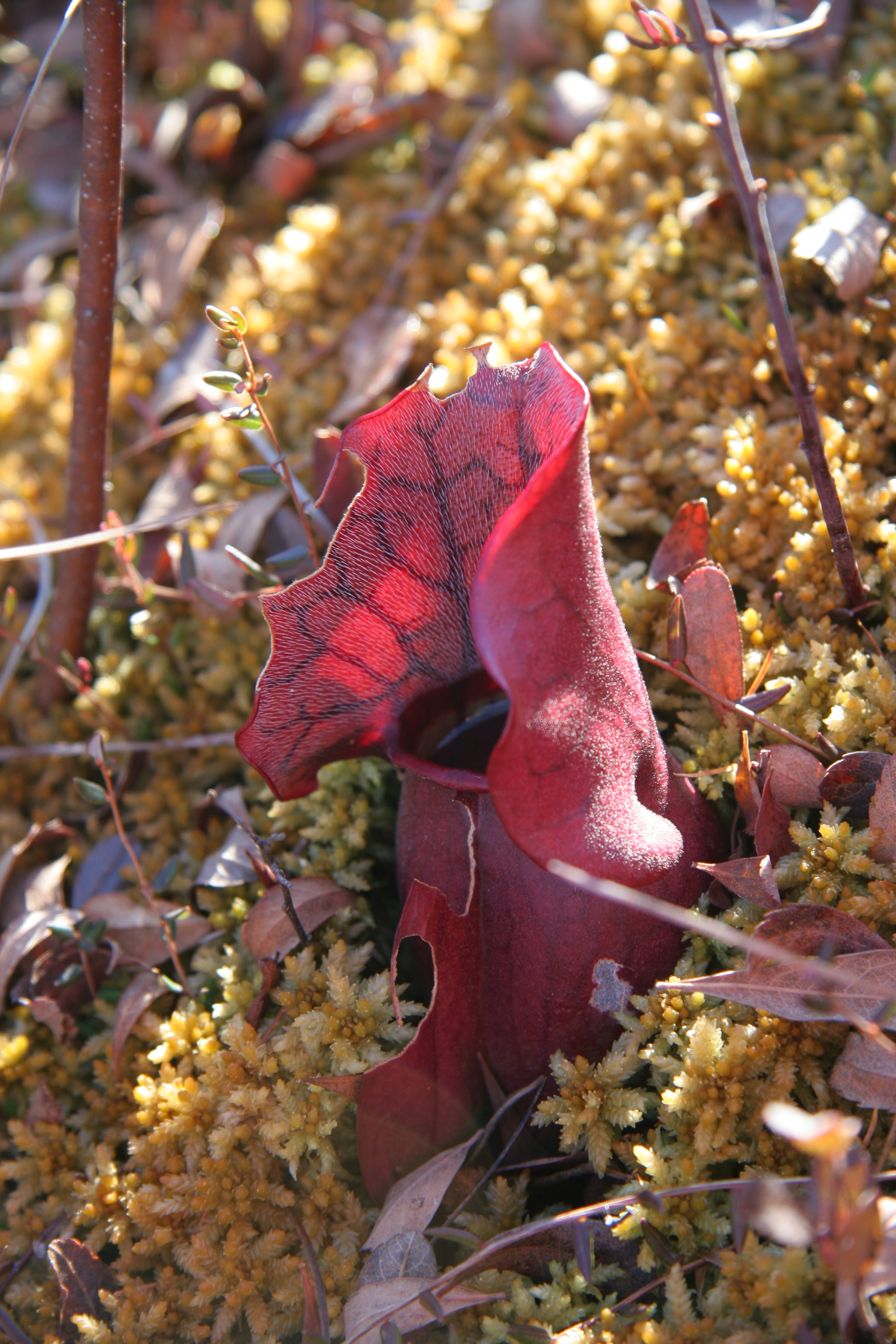
We will investigate the pitcher plant first. We have one species in New York, being the purple pitcher plant (Sarracenia purpurea). These plants are sometimes called ‘trumpet plants’ because of their shape. The pitcher is actually a modified leaf. In some species, the coloration of the pitcher is a mottling of red, green, and white to resemble raw meat – attracting flies and wasps. The mouth of the pitcher secretes a sugary nectar to draw insects to it, making the lip surface slippery, and downward pointing hairs on the lid make insects fall easily off the lid into the pitcher. Once an insect falls inside it cannot get out due to the slippery waxy surface on the inside of the pitcher. The insect is then digested in the juices that reside inside the pitcher, thereby nourishing the plant. The plant has a single flower on a long tall stalk. This is to keep the flower high away from the pitchers to protect the pollinators from becoming prey to the plant! These plants primarily grow in bog/fen habitats in sphagnum moss. Look for pitcher plants in these habitats throughout parks across the state.

Purple pitcher plant. Photo by Lilly Schelling, OPRHP.

Purple pitcher plants have tall stalked flowers, keeping pollinators away from the hungry mouths of the pitchers. Weldy, Troy, David Werier, and Andrew Nelson. 2015 New York Flora Atlas. [S. M. Landry and K. N. Campbell (original application development), USF Water Institute. University of South Florida]. New York Flora Association, Albany, New York.
Purple pitcher plants have tall stalked flowers, keeping pollinators away from the hungry mouths of the pitchers. Photo by Andrew Nelson, SUNY Oswego.
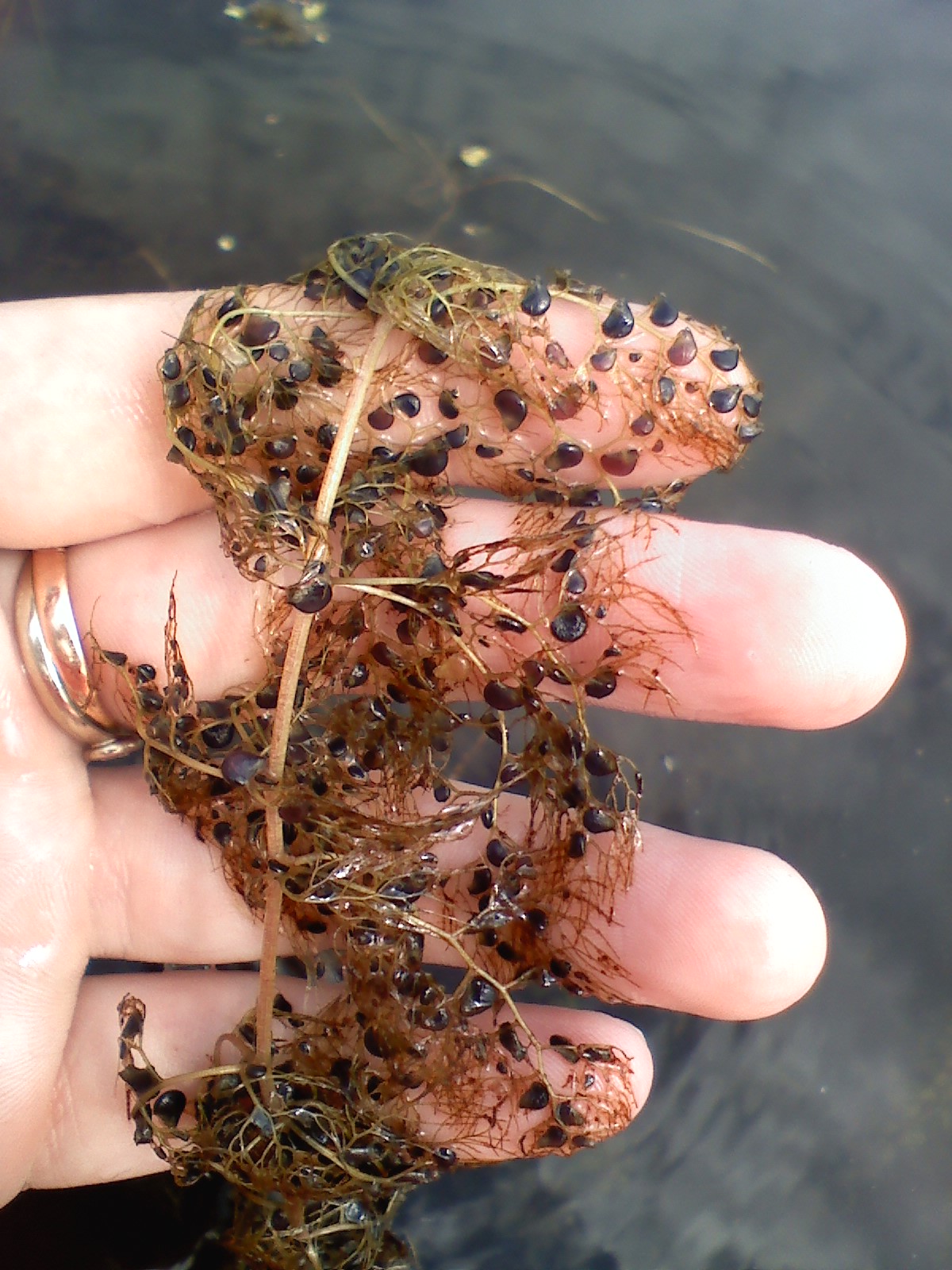
There are 14 species of bladderworts in the state, all of which are aquatic (living in water). Most of them have yellow flowers with one species having a purple flower. Primarily these plants grow in areas of very slow moving water or in pockets of still water off of rivers and brooks. They have a small bladder shaped trap. The plant has ‘trigger hairs’ at the mouth of the trap, that once touched by prey, opens the mouth and sucks the prey inside – where it is slowly digested by the plant. Bladderworts can be found across the state.

Bladderworts primarily have one flower per stalk. Most species in NY have yellow flowers. Weldy, Troy, David Werier, and Andrew Nelson. 2015 New York Flora Atlas. [S. M. Landry and K. N. Campbell (original application development), USF Water Institute. University of South Florida]. New York Flora Association, Albany, New York.
Bladderworts primarily have one flower per stalk. Most species in NY have yellow flowers. Photo by Andrew Nelson, SUNY Oswego.
Bladderwort get their name form the bladder of the shaped traps they catch prey with. Photo by Lilly Schelling, OPRHP.

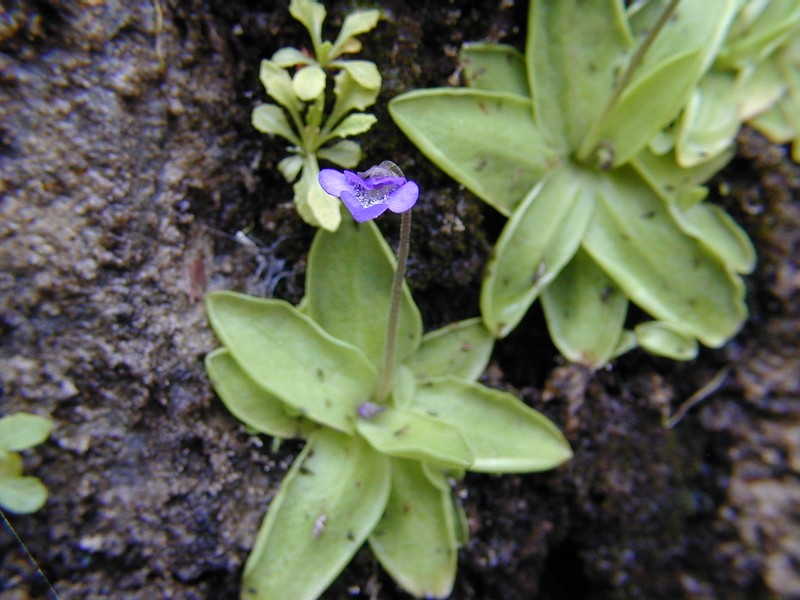
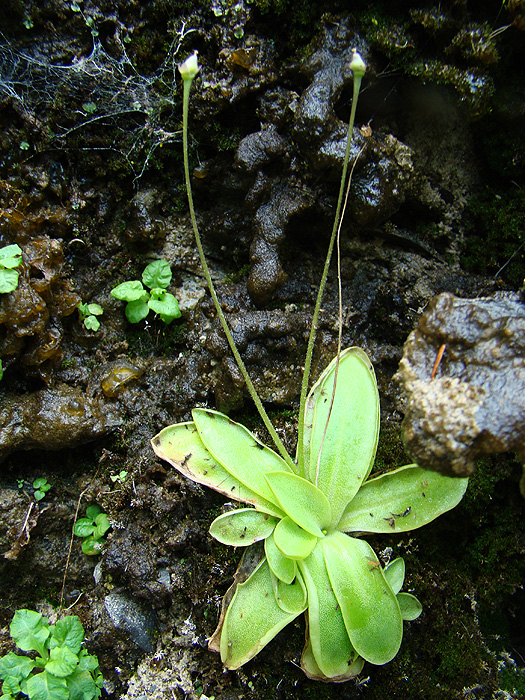
New York State has one species of butterwort (Pinguicula vulgaris). Though they do not look alike, bladderworts and butterworts are in the same family (Lentibulariaceae) because both have similar flower structure; though the method of insect catching for these plants is more akin to the sundew. The leaves have a greasy look and feel to them because they are covered in a sticky glue substance. Once an insect lands on the leaf, it is stuck and the more it thrashes around in an attempt to escape, the more it comes in contact with the sticky digestive juices of the leaf. The butterwort species we have in New York grows on permanently wet cliffs and can only be found in the central and western parts of the state.

The species we have in NY has purple flowers. Photo by Troy Weldy, The Nature Conservancy.
Insects are caught and digested on the sticky leaves of the butterwort. Photo by Kim Smith, NYNHP.

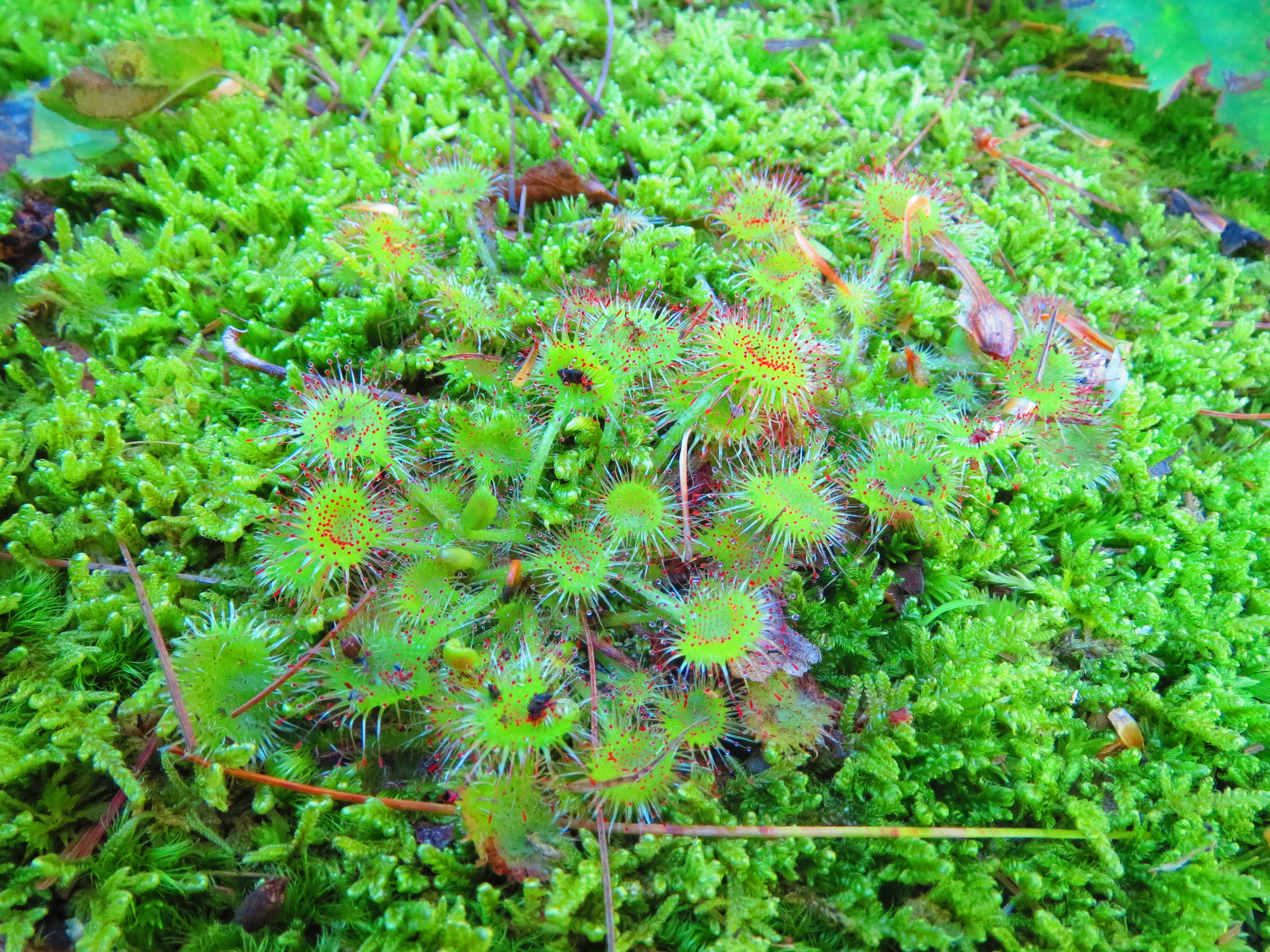
There are 3 species of sundews in New York, the round-leaved sundew (Drosera rotundifolia), thread-leaved sundew (Drosera filiformis) and the spatulate-leaved sundew (Drosera intermedia). Sundews get their name because their leaves look like they are covered in morning dew, however on closer inspection, this “dew” is actually tiny globs of digestive juices created by the plant. An insect will mistake the dew for water and upon landing, become ensnared in the sticky digestive juices of the plant. Large insects may leave legs and wings behind and smaller insects fall prey to the plant. Some species of sundew will curl their leaves around the insect to further trap their prey. Sundews can be found state wide in swampy/bog habitat, often growing alongside pitcher plants and bladderworts.

Sundew. Photo by Lilly Schelling, OPRHP.
This is the round-leaved sundew. Notice the many fine hairs with droplets of shiny – glue like digestive juices that insects mistake for water. Photo by Lilly Schelling, OPRHP.

Conserving bog habitat is important for the survival of the various unique plant and animal species that have adapted over time to live there. This type of habitat faces many threats such as development and road and agricultural run-off. Run-off rich in fertilizer from road sides or farming can be disastrous for these habitats and the species that have adapted for living in nutrient poor conditions. Additionally, always remember to leave nature as it is. Though carnivorous plants are marvelously beautiful and fascinating, leave them where they are! If you wish to cultivate these plants in your own home try your local green house or the vast array of stores on the internet.

Post by Lilly Schelling (OPRHP Wildlife Unit).

Photos by OPRHP and NY Flora Atlas (see citation below).

Weldy, Troy, David Werier, and Andrew Nelson. 2015 New York Flora Atlas. [S. M. Landry and K. N. Campbell (original application development), USF Water Institute. University of South Florida]. New York Flora Association, Albany, New York.


Getting to Know the Karner Blue Butterfly

Spring has finally arrived, and with it comes the birth of this year’s first generation of Karner blue caterpillars.  When these caterpillars hatch from the eggs that were laid by last year’s second generation of adults, they will eat only one thing, the leaves of the wild blue lupine plant.  And you thought your kids were picky eaters!

Wild blue lupine is a perennial plant that prefers dry, sandy soils in open patches of land.  It is typically found in pine barrens and oak savanna plant communities.  These habitats require ecological disturbances, such as wildfires, to sustain the sunny, open areas that wild blue lupine needs to survive.  Land development and the suppression of natural disturbances in these areas have led to degradation and loss of habitat, causing drastic declines in Karner blue butterfly populations. As a result of this, the Karner blue butterfly was declared endangered in New York in 1977 and federally endangered in 1992.  The Karner blue butterfly’s range extends from Minnesota to New Hampshire, along the northern portion of the blue lupine’s range.  In New York, populations are found from the Albany Pine Bush north to Glens Falls, with a segment of suitable habitat found in Saratoga Spa State Park.

Lupine 1
Wild blue lupine. Photo by USFWS; Joel Trick.

There are two generations of Karner blue butterflies born each year, the first of which hatches in May from eggs that were laid the previous July.  This timing coincides with the blooming of wild blue lupine flower stalks.  The caterpillars spend about two to three weeks feeding on wild blue lupine leaves before they pupate.  The adult Karner blue butterflies emerge at the end of May or beginning of June and typically live for about a week.  During this time, the adult females lay their eggs on the underside of wild blue lupine leaves or stems.  The eggs take around a week to hatch and the second generation of adults appear in mid-July to early August.  This time the females lay their eggs on the ground close to the stem of a blue lupine plant to provide them with more protection as they overwinter.

Larva 2
Karner blue caterpillar (larva). Photo by Paul Labus, The Nature Conservancy, Indiana.

Adult Karner blue butterflies are relatively small, with an average wingspan of about one inch.  You can tell the difference between males and females by looking at the coloration on the tops of their wings.  Males’ wings are silvery blue to violet blue with a black margin and white fringed edges, while females’ wings are grayish brown towards the edges, turning into violet-blue in the centers of the wings.  Both males and females are gray with black spots on their undersides and have a band of orange crescents along the edges of both wings.  Females also have bands of orange crescents on the tops of their wings, while males do not.

There are 18.5 acres of endangered Karner blue butterfly habitat in Saratoga Spa State Park.  In recent years, restoration efforts have re-established approximately 5 of these acres as suitable Karner blue butterfly habitat.  This was accomplished through the removal of small trees and shrubs that had taken over the habitat, as well as the scraping away of topsoil to remove invasive plant seeds and to expose the sandy soils that wild blue lupine needs to grow.  Wild blue lupine and native nectar species were then planted in the exposed sandy soil.  Saratoga Spa State Park staff monitors the Karner blue butterfly population and provide educational programs to the public about this endangered beauty.

In celebration of Earth Day, students from the Waldorf School contributed to the Karner blue butterfly habitat restoration effort by spreading the seed of the native blue lupine plant on 1.5 acres at Saratoga Spa State Park. Funding for this project was provided by Governor Cuomo’s NY Parks 2020 Initiative.

Saratoga Earth Day 2015 - 01
Waldorf School students spreading blue lupine seed. Photo by John Rozell, OPRHP.
Saratoga Earth Day 2015 - 05
Waldorf School students replenishing their seed supply. Photo by John Rozell, OPRHP.


Post by Allie Smith, Saratoga Spa State Park.

Sources:

Karner blue butterfly factsheet, NYS DEC,

http://www.dec.ny.gov/animals/7118.html

Karner blue butterfly, U.S. Fish and Wildlife Service Endangered Species, http://www.fws.gov/midwest/endangered/insects/kbb/kbb_fact.html

Karner blue butterfly, USDA Forest Service,

http://www.fs.fed.us/wildflowers/pollinators/pollinator-of-the-month/karner_blue_butterfly.shtml

Karner blue butterfly factsheet, NYS DEC,

http://www.dec.ny.gov/animals/7118.html

Wild lupine and karner blue butterflies, U.S. Fish and Wildlife Services Endangered Species,

http://www.fws.gov/midwest/endangered/insects/kbb/lupine.html