Category Archives: Flora & Fauna

Rare or noteworthy wildlife spotted in New York State Parks

Mayflies

Mayflies (Ephemeroptera) are short-lived winged cousins of dragonflies and damselflies.  Short-lived (ephemeros) because the adults of some species live for only 90 minutes after they emerge from water; others may live as long as three days after they emerge from water.  Adults have no working mouth parts.

Mayflies belong to the subclass Pterygota, which includes most winged insects and some insects whose predecessors had wings.  They have been around since for about 300 million years, the late Carboniferous period.

Mayfly larvae, on the other hand, will spend between 10 days and 2 years in water as larvae.  The length of time they spend as larvae also depends on the species.  They can be found in lakes and ponds, rivers, and streams; living on rocks, aquatic plants, and mud.  They eat algae and fine organic materials.

When it is time to emerge as adults, all the mayfly larvae of the same species emerge from the water together, at the same time.  Sometimes, the density of the adult mayflies is so great that they appear on Doppler radar and snow plows are needed to clear the roads.

Because mayflies are sensitive to water pollution, they are excellent water quality indicators.  In the early 1970s mayflies were nearly gone from Lake Erie due to high pollution levels.  Fortunately the International Water Quality Agreement between the United States and Canada in 1972 made it possible for the mayfly’s return to the lake.

Each summer, staff from the State Parks’  Environmental Management Bureau staff monitor mayfly larvae in Park streams to determine stream health.

Mayflies can be found in many Parks.  Look for adult mayflies anytime between May through September, with the largest number of hatches occurring in late June through early July.  Who knows, you might find a new species of mayfly – a researchers from Southern Connecticut University and Lake Champlain Research Institute found a new mayfly species in Connetquot State Park Preserve in 2012.

Post by Susan Carver, OPRHP.

Sources:

http://old.post-gazette.com/healthscience/19990726mayfly1.asp

http://www.dec.ny.gov/animals/7470.html


Saratoga Spring

No, I didn’t forget an s.  After months of cold, brown surroundings, the spring season is beginning to breathe new life into our little town.  I’m not talking sundresses and flip-flops just yet.  No, the subtle signs of spring are what you and your kids are after.  Tiny harbingers that chip away at the dirty parking lot snow and melt your wintery heart drip by drip.  This time of year, if you’re watching closely, they seem to appear daily.  There are many family-friendly places for you to visit and experience early spring in the capital region, and we can tell you where to start!

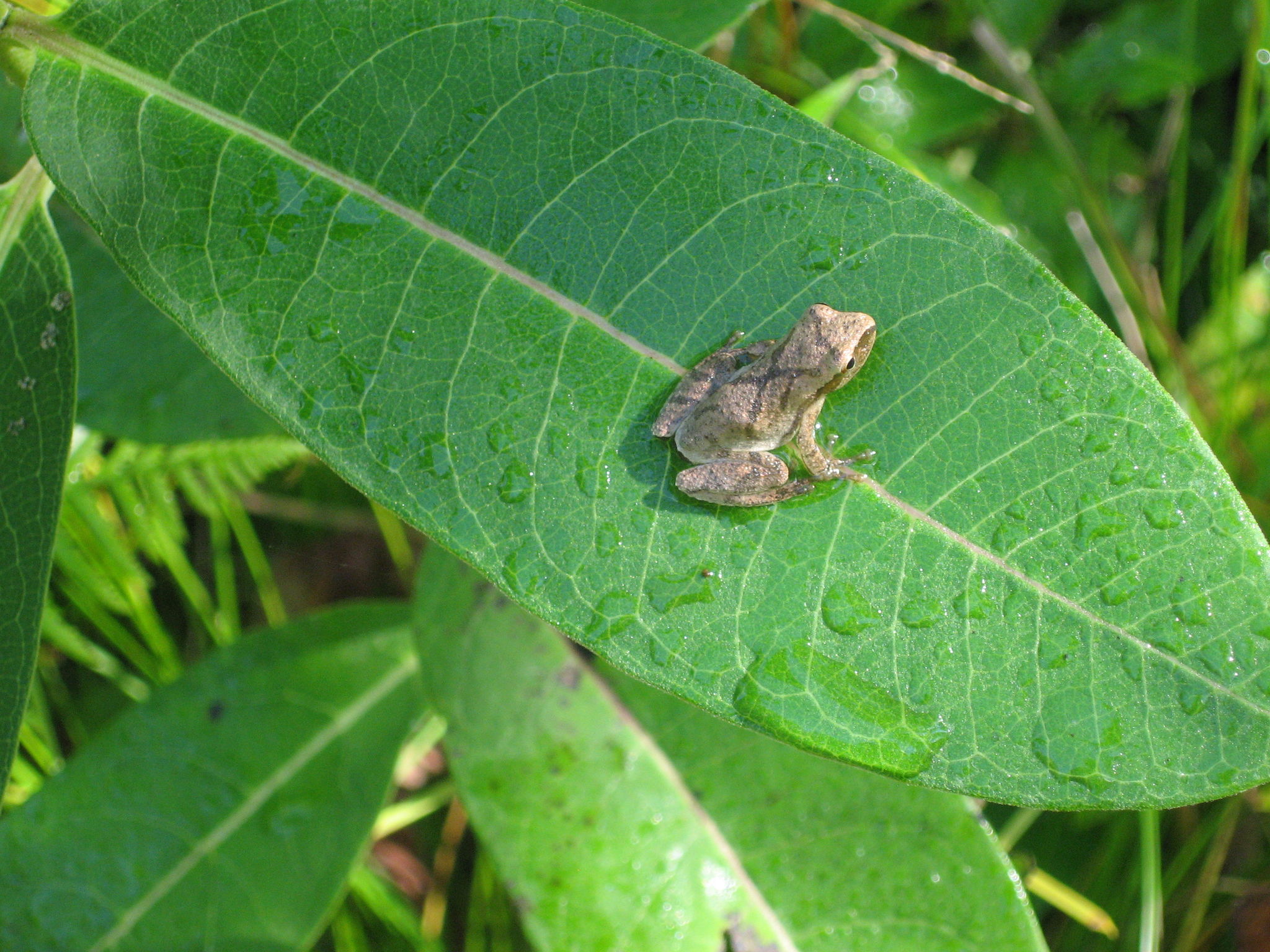
Have you ever driven past a pond on a warm evening in April or May?  The next time you do, roll your windows down.  The chilly breeze will carry a chorus of peepers into your car and surround you with spring.  The tiny animal that makes this huge noise is called a Spring Peeper.  It is a frog the size of a postage stamp!  In Saratoga Spa State Park, the sound of peepers is the first true sign that spring is around the corner.  For a special glimpse of this frog, join Spa Park’s FrogWatch.  On the last Thursday evening of April, a Park Naturalist will guide visitors through a special wetland where they get a chance to hear and see the little frog with a huge voice!

A spring peeper at Wellesley Island State Park. Photo by Julie Lundgren, NYNHP.

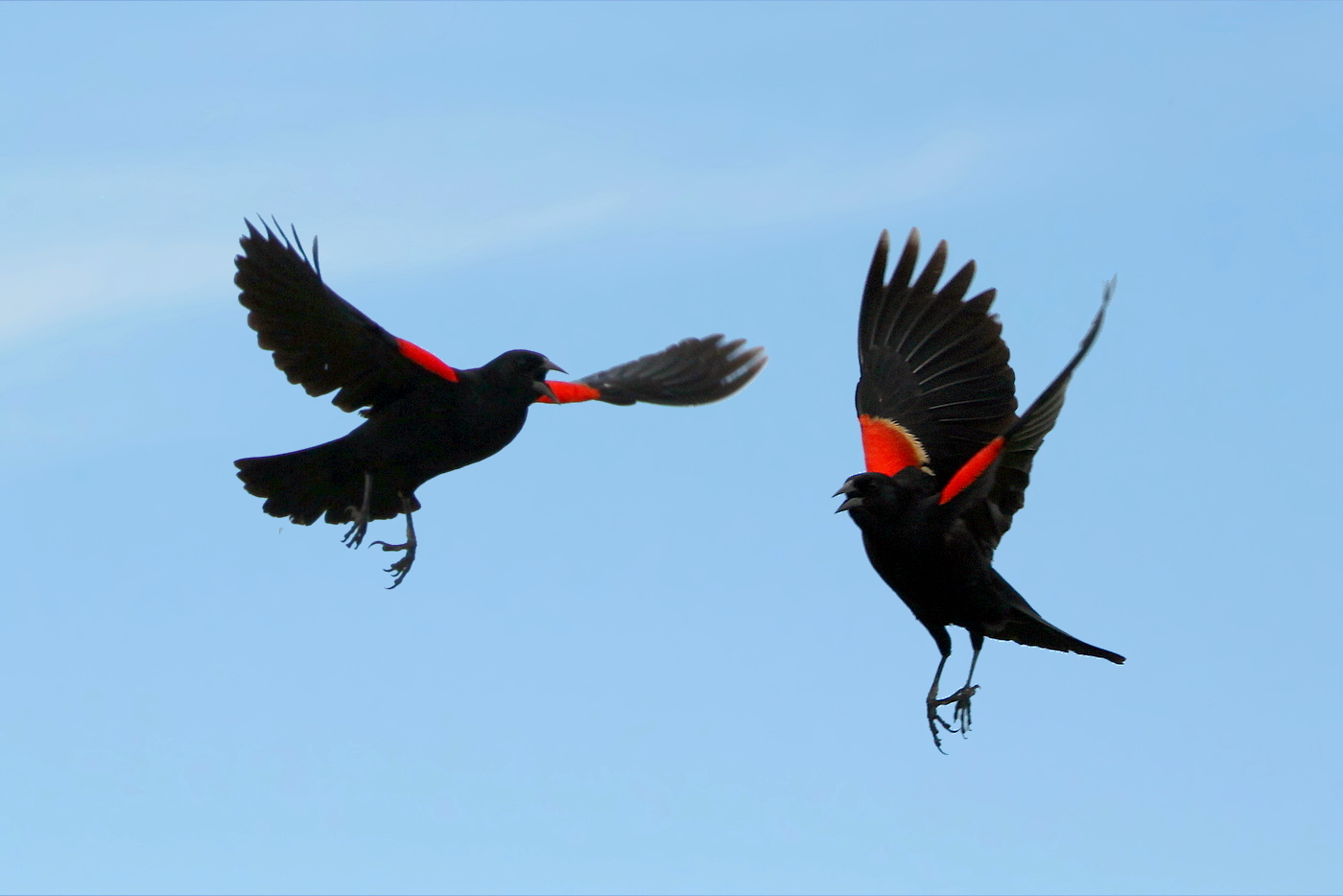
Another of Saratoga’s spring sounds comes from a sharply dressed male bird called the Red Wing Blackbird.  These birds fly south to escape the snow and ice, but they are one of the first to arrive back from their winter vacation.  Smaller than a crow but just as loud, the blackbirds congregate in tall grasses and proclaim their territory with a raucous “okalacheeee!”.  To hear them yourself, visit Moreau Lake State Park on a sunny day and bring your binoculars to see their wings flash red!

redwingedbb
Photo courtesty of Flickr. https://www.flickr.com/photos/texaseagle/14121019609.

After all of this peeping and proclaiming, perhaps your family would enjoy a quiet walk to enjoy a silent sign of spring.  Visit Saratoga Spa State Park’s Hemlock Trail for a short, flat walk to see the first spring plant, the Skunk Cabbage.  This magenta and green flower unfurls from the swampy sections of Saratoga.  It gets its name from the acrid odor it releases when it is crushed.  Later in the spring, the strange looking flower will be replaced by large, showy green leaves.  To see and smell this plant for yourself, go to the Hemlock Trail entrance on Crescent Avenue in Saratoga Springs.  You’ll find the plants about half way around the mile-long loop.

We hope you enjoy your outings in our state parks, and everywhere spring is sprouting.  Each day of this special season provides a new opportunity for you and your family to explore the outside world!

For more information regarding outings at Saratoga Spa State Park, please call the Environmental Educator at (518) 584-2000 Ext. 116.

Check out these additional spring-themed events that are happening across the state:

Vernal Pool Exploration for Families @ Minnewaska State Park Preserve, April 25

Family Adventure: Night of the Frogs @ Connetquot River State Park Preserve, May 30

Family Fun: Tadpole Expedition @ Caleb Smith State Park Preserve, May 31

Pre-registration is required for most programs.

Post by Alli Schweizer, Saratoga Spa State Park.


Happy 1st Birthday, Blog!

It is NatureTimes’ first birthday and it is spring! So get outside and celebrate, the snow will soon be melted and signs of life are appearing all around. Dust off your nature guides and your binoculars, get on your boots, and get out to a park near you. Last year, we posted some images of wildflowers that are the first to appear. Check that out – see how many you remember (hover over the photo to see the name). Here are some other flora and fauna to look for in the coming month.

To date, the Nature Times blog has 97 followers and 15,102 page visits. Thank you for keeping up with us, and be sure to tell your friends and family!

Post by Julie Lundgren, NYNHP.


Wondrous Woodcocks

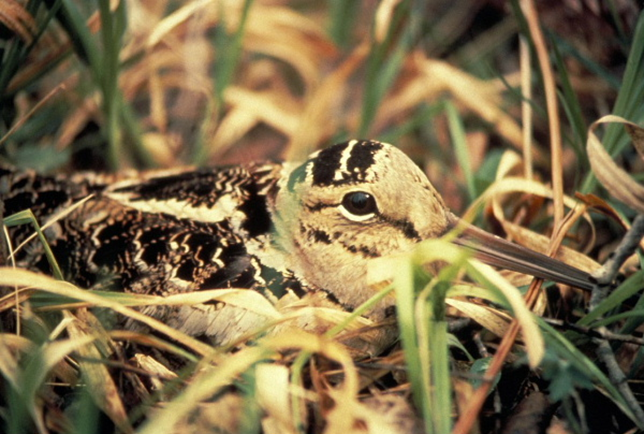
Roosting Woodcock
American Woodcock. NYSparks.com.


They are inconspicuous and well camouflaged for living on the forest floor, old fields, or wet spring meadows. Their eyes are nearly on the back of their heads, giving them the ability to see not only what is in front of them but what is behind them. Their bills look too long for their body; but this elongated bill helps them eat their weight in earthworms and other small invertebrates like spiders, beetles, and ants each day. And, in spring, males do an incredible “sky dance” at dusk and dawn, a mating display that is a highlight to any evening walk in springtime.

Who are they? They are American woodcock (woodcock), also known as the timberdoodle and Labrador twister. Woodcocks are mourning dove sized birds.  They have short necks and tails and large heads and beaks. They are one of the few shore birds that have adapted to living in the forest.

For many people, the mating “dance” of the male woodcock is a sure sign that spring has arrived. The courtship ritual starts at dusk with the male sitting on the ground in an opening in the forest or in a small field. He repeatedly utters a distinctive peent call. Next he takes off from the ground flying in a slow upward spiral. As the wind moves through the wings, a whistling sound can be heard as the bird rises. When he reaches 200-350 feet above the ground, the wing sounds become irregular and then cease as he starts a zig-zag descent. He also chirps as he goes down. He then lands silently next to a female woodcock, if she is present, and resumes peenting. The display starts again and will continue well into dark. He resumes the “dance” near dawn and will continue it until sunrise. Listen for them in the evening in wet meadows or fields in March or April, even before the snow has melted.  (Click here to listen to a woodcock.)

Woodcock dance
Diagram by Nate Kishbaugh.


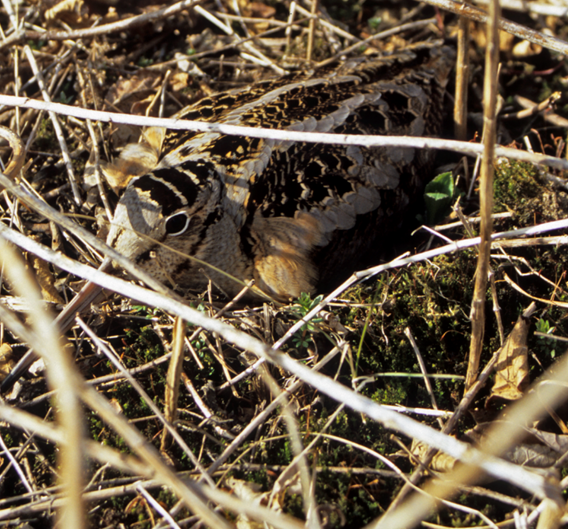
After mating, a female woodcocks lays her eggs in shallow depressions on the ground. She usually lays four eggs that take about 21 days to incubate. Once they are hatched out, the young chicks follow their mother, learning what to eat. They grow quickly on their earthworm and insect diet. By the time they are a month old, they are nearly the same size as their mothers.

In mid-fall woodcocks migrate from New York to the southeastern coast. They return to New York once the ground has thawed.

Woodcock nesting
Female Woodcock on a nest. NYSparks.com.


Post by Susan Carver, OPRHP.

Join us for a “Woodcock Walk” at:

Theodore Roosevelt Nature Center, Jones Beach State Park, Wantagh, Adult Ed-ventures, Friday, April 10, 7-8:30 pm, $4/person

Sources:

American woodcock, Cornell Lab of Ornithology, http://www.allaboutbirds.org/guide/american_woodcock/id

American woodcock, New York State Department of Conservation, http://www.dec.ny.gov/animals/45448.html


Harbinger of Spring: Skunk Cabbage

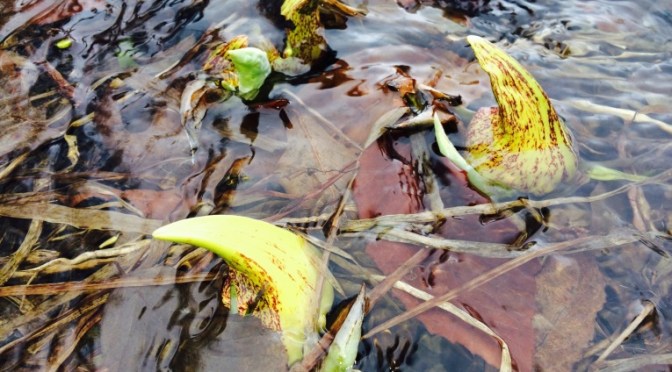
Walking in the woods this spring, especially in wet areas, you may notice these popping up through the snow. On closer inspection you will notice that it is, in fact, a plant! What you are seeing is the large spathe of the Skunk Cabbage plant. This plant has a very interesting flower structure and strategy for pollination.

Let’s learn about the flower structure first: The large fleshy hood is called the spathe; which encloses and protects the club-like spadix. The spadix is the surrounded by tiny flowers.

spadix
Diagram by Lilly Schelling.

Skunk Cabbage is one of the first wildflowers that emerge in spring. This is possible because the plant produces heat, thereby melting the snow around it. The coloration of the spathe varies from greenish to purple, often accompanied by spots or stripes. Two color variations are depicted below:

lilly photo
Photo by Lilly Schelling.
kelly photo
Photo by Kelly Starkweather.

Notice how the plant on the right resembles the look of raw meat, and if you smelled it you would notice a rather pungent skunky odor; hence the name Skunk Cabbage! These characteristics attract flies which pollinate these plants. You can experience the intense smell by scratching the leaf next time you see this plant in the woods.

Skunk Cabbage can be found in many of our state parks in swamp or wetland habitat. Though the plant has the “Cabbage” in name, it is not edible. The leaves contain calcium oxalate crystals that cause a painful burning sensation in the mouth when consumed. Even boiling the leaves does not rid them of all the irritating crystals.

Post by Lilly Schelling, OPRHP.