Category Archives: Historic Sites

Front Line Nurse: A Tale of Sacrifice

As the Revolutionary War was drawing to an end, General George Washington wanted an award that recognized merit in the common soldier. So, he created the Badge of Military Merit _ the precursor to the Purple Heart _ while at his Newburgh headquarters in the Hudson Valley.

It was more than 150 years later when a New York resident and immigrant became the first woman to receive the Purple Heart for suffering wounds in wartime. And she was a nurse, a profession that has again finds itself at risk in the front lines during the current COVID-19 pandemic.

One night in August 1917 during World War I, a German aerial bomb exploded at a military field hospital in Belgium. It was about four miles behind trenches where hundreds of thousands of British, French, Belgian and German troops were fighting the Third Battle of Ypres, also known as Passchendaele.

Metal shrapnel ripped through a tent at Casualty Clearing Station #61, where 36-year-old U.S. Army nurse Beatrice Mary MacDonald was rising from her cot to start her shift caring for wounded Allied soldiers. Jagged shards struck her face, damaging her right eye so badly that it later had to removed by doctors.
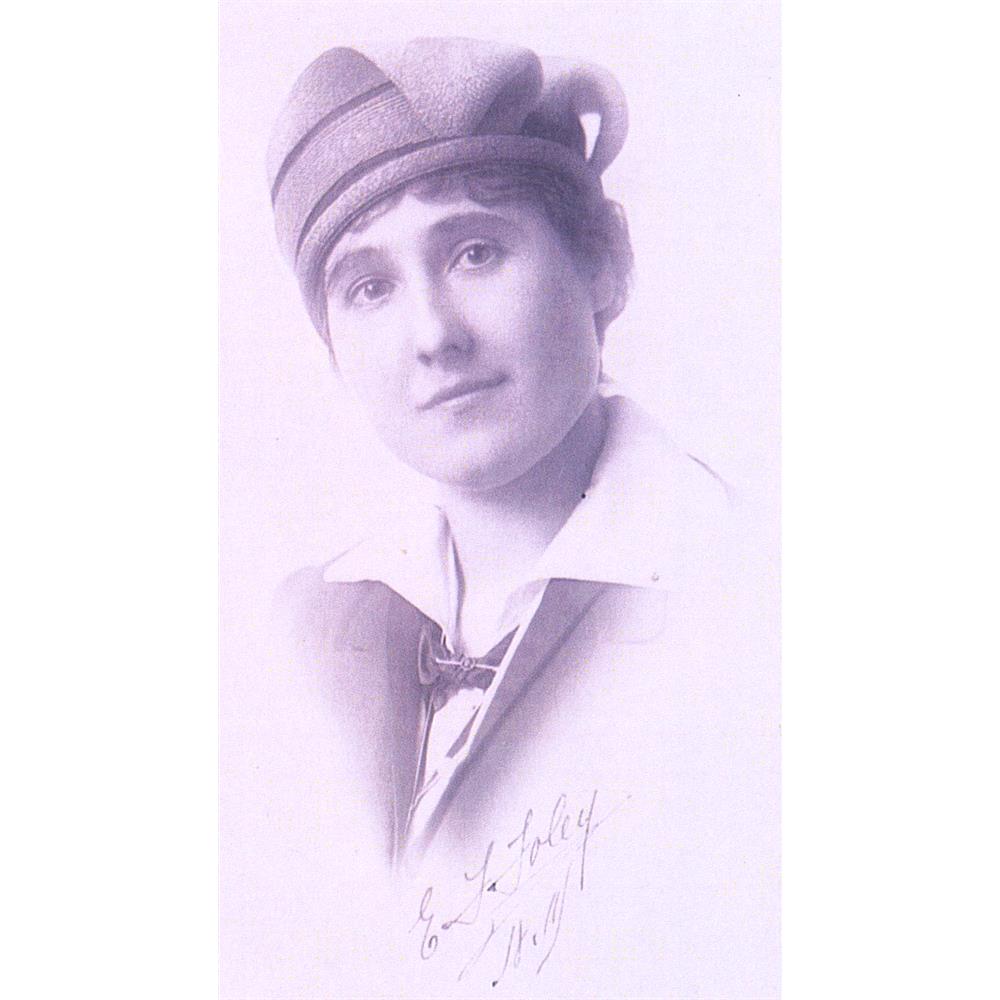

Beatrice Mary MacDonald in 1905 after completing her nurses’ training.

Although serving in the U.S. Army Nurse Corps, MacDonald was a native of Canada, where she grew up in a large family on Prince Edward Island. She had come to New York to get her nursing training in 1905 and chose to live there afterward to pursue her career. When war came, she volunteered for the American war effort. She was part of a unit organized by Presbyterian Hospital, now part of New York-Presbyterian Hospital.
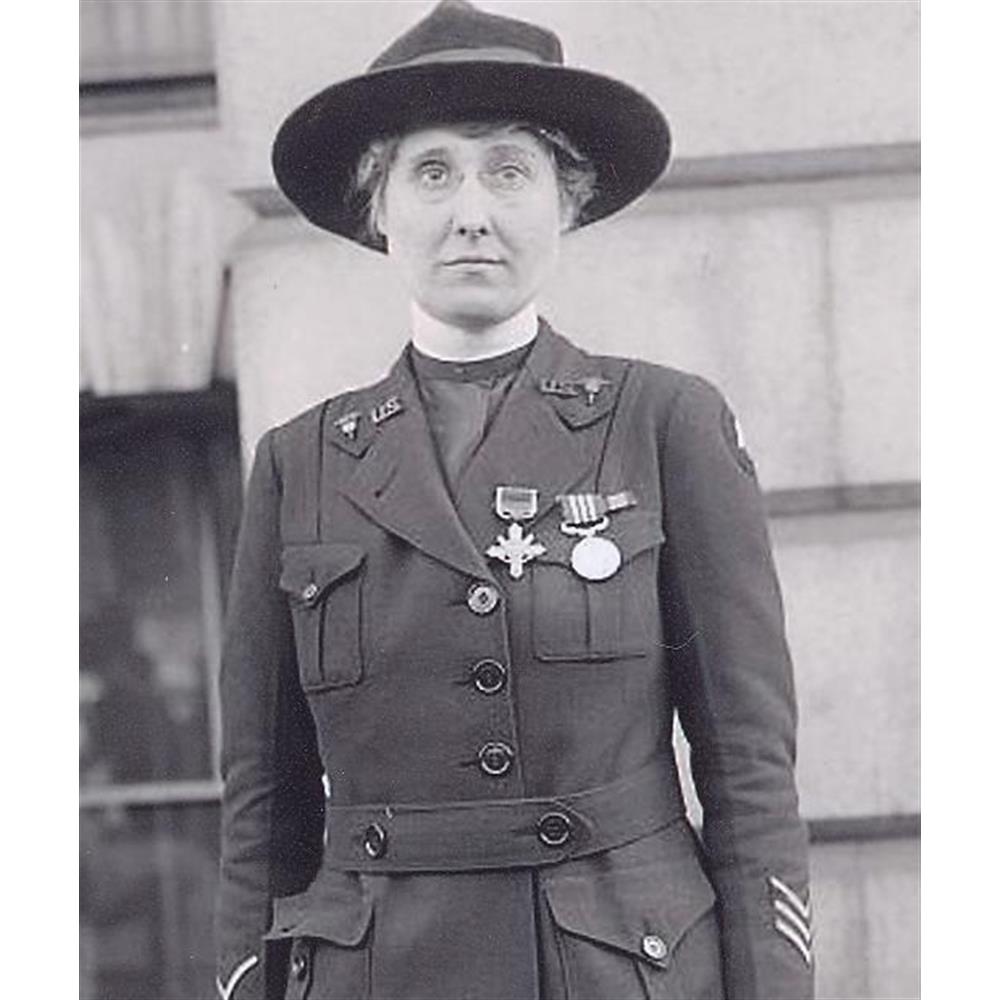
Beatrice Mary MacDonald in her military uniform after recovering from her wounds.

After a six-week recovery from her injury, Macdonald returned to duty serving in military hospitals in France and Belgium. “I’ve only started doing my bit,” she said, according to material from her wartime scrapbook, which is now in the collection of the Radcliffe Institute for Advanced Study at Harvard University.

In her scrapbook, the young nurse described her training to deal with one of the horrors of the battlefield _ poison gas. That included “. . . entering chambers containing a certain amount of Phosgene and other gasses, in order that we should be able to recognize them in case of an attack, and to become adept in adjusting our gas masks in less than ten seconds.”

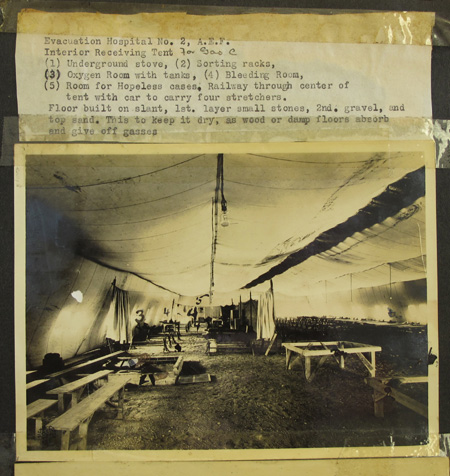
She kept photographs of the tent where gas casualties were treated, including a shot of one area that was set aside for “hopeless cases.”
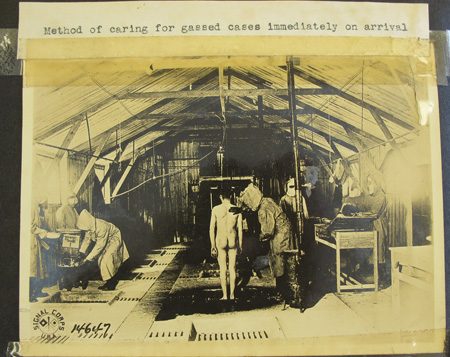
A gassed soldier being treated as the military field hospital where Nurse Beatrice Mary MacDonald was stationed. (Photo Credit- Ann Fraser Brewer papers, Radcliffe Institute for Advanced Study, Harvard University)

The area at the military hospital set aside for the “hopeless cases” of gas attacks. (Photo Credit- Ann Fraser Brewer papers, Radcliffe Institute for Advanced Study, Harvard University)

After the war ended in 1918, MacDonald served with Allied forces in Germany until returning to the U.S. There, she resumed living in New York City to continue her profession, and later served as director of the Pennsylvania Hospital School of Nursing for 23 years until her retirement in 1956.

The war had been over for years when MacDonald received her Purple Heart in 1936, four years after the award has been reestablished under an order by President Herbert Hoover. The modern award was meant as a tribute to Washington’s original award, which he represented with a cloth or silk purple heart.

In authorizing the Purple Heart, the award was made retroactive to living World War I veterans like MacDonald, who was among thousands of male soldiers who subsequently applied for and received the award.

MacDonald received numerous awards in recognition of her bravery and is perhaps one of the most highly decorated women of World War I. Her commendation for the Distinguished Service Cross states:

“It is interesting to note that this cross is to be conferred upon a woman and a nurse. This war has, of course, taken the nurses, who are the ministers of mercy, up to the very front lines of battle, and because of the carrying of the war into the third dimension the airplane has, of course, made their task more perilous.”

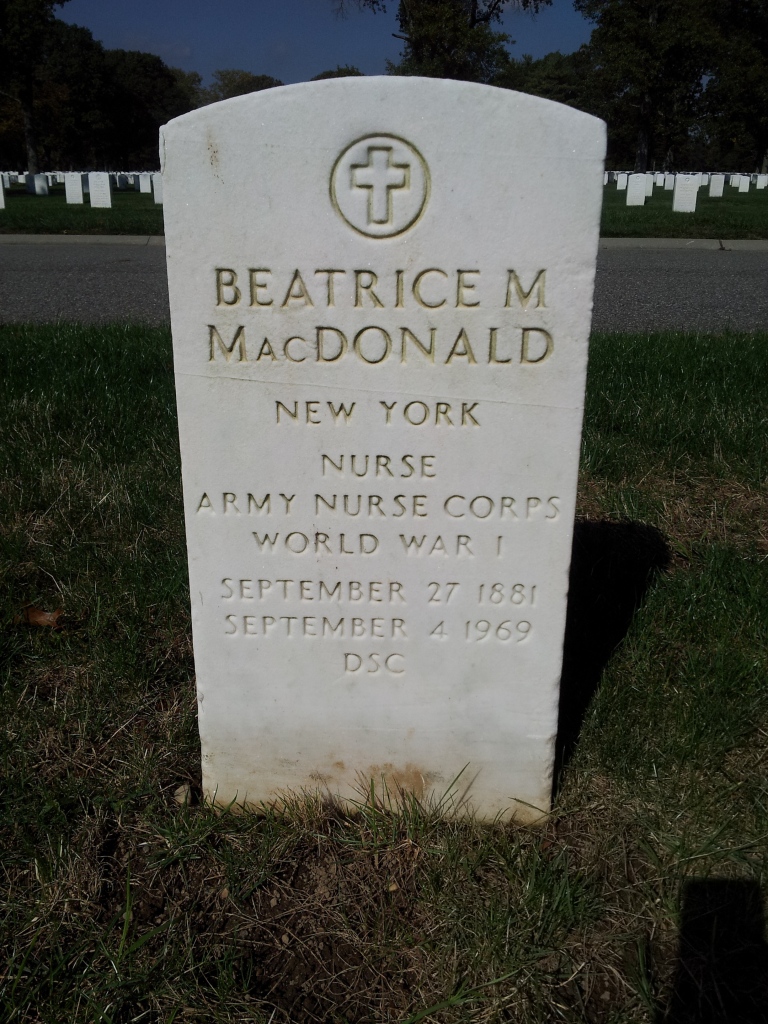
MacDonald died in 1969, at age 88, in a nursing home in White Plains, Westchester County. MacDonald received a full military funeral at Long Island National Cemetery in Suffolk County.
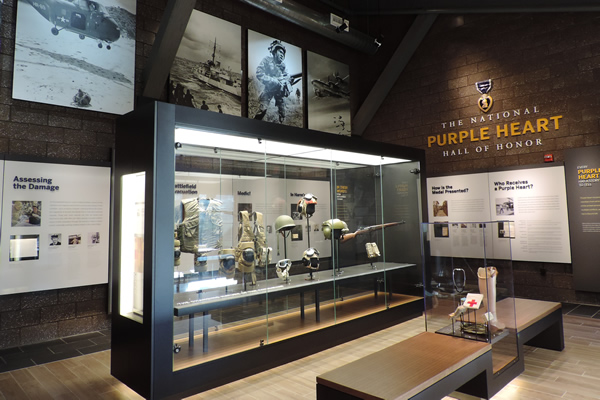
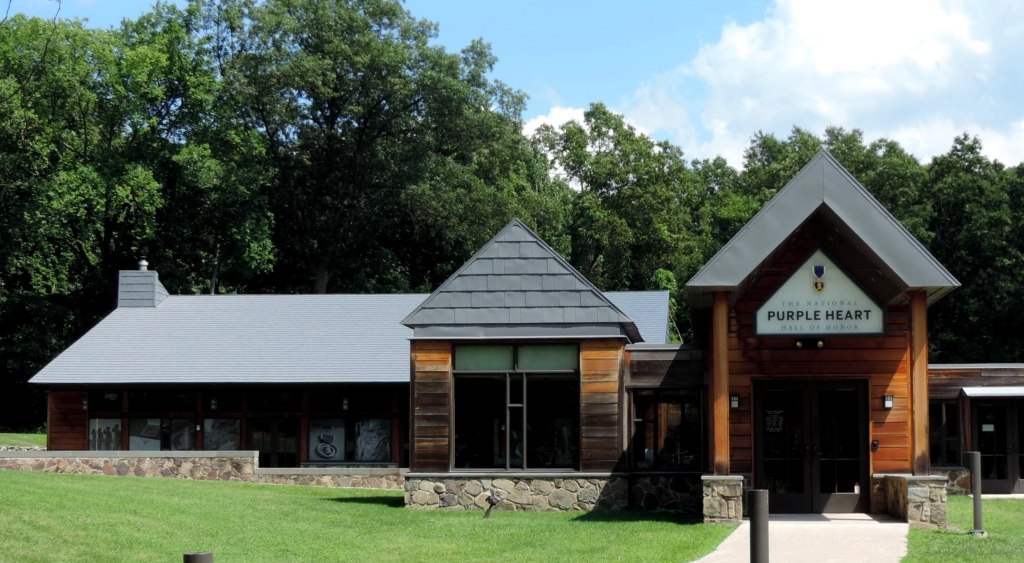
MacDonald is one of many stories found at the National Purple Heart Hall of Honor in New Windsor, Orange County.  Opened in 2006, it is the first facility in the nation dedicated to the estimated 1.8 million recipients of the Purple Heart, which is awarded to American military personnel who have been wounded or killed by enemy action.
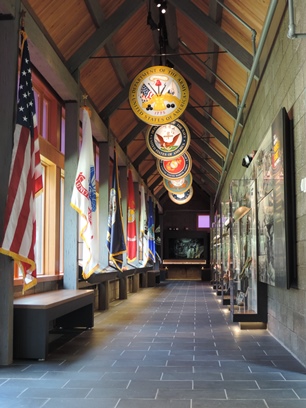
Other famous Purple Heart recipients include President John F. Kenney, and U.S. senators John McCain, Bob Dole, Tammy Duckworth and Daniel Inouye.

The Hall of Honor maintains an online database, which can be used to explore the stories of Purple Heart recipients like MacDonald and others. Purple Heart recipients or families of recipients can enroll in the database. Enrollment is voluntary and more information on that can be found here.

A 2020 expansion project incorporated integrated audio-visual and media presentations, as well as museum-quality casework for each area with interpretive graphics, locally controlled lighting, touch-screen interactive monitors, and multiple large-format graphic displays. It also created new exhibits that tell stories about joining the service, the day of the incident, field treatment and evacuation, the changing nature of warfare, the consequences of war, road to recovery and the ultimate sacrifice. The expanded exhibits include more personal stories, interactive displays, and artifacts highlighting the experiences of featured Purple Heart recipients.

Currently, the online Roll of Honor database represents Purple Heart recipients from all 50 states, Washington, D.C., Puerto Rico, Guam, Samoa and the Philippines.


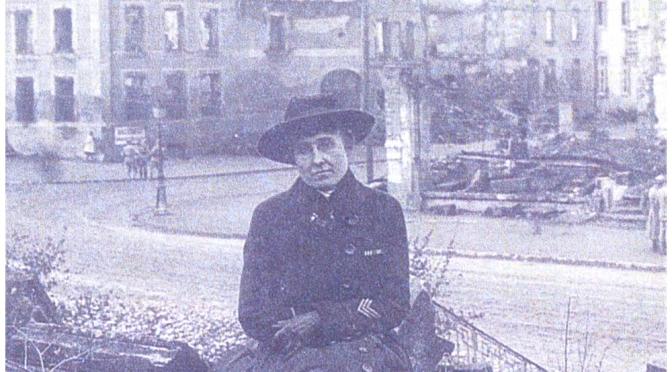
Cover Photo- U.S. Army Nurse Beatrice Mary MacDonald in the ruins of a French town. All photographs from NYS Parks unless otherwise noted.

By Brian Nearing, Deputy Public Information Officer, NYS Parks


COMMON MISPERCEPTIONS ABOUT THE PURPLE HEART
George Washington created the Purple Heart: FALSE

General Washington created the award called Badge of Military Merit in 1782. It was a heart shaped piece of cloth or silk. It was to be awarded for a “singularly meritorious act”. It all but disappeared after the American Revolution. It was never referred to as the “Purple Heart” in Washington’s time. That language was used in General Order #3, establishing the Purple Heart award in 1932.

All casualties receive the Purple Heart: FALSE

Only those casualties resulting from enemy action are eligible for the Purple Heart. “Non-hostile” injuries or deaths (e.g. disease or accidents)  are not eligible. The injury must require medical attention, be treated by a medical professional and documented. Numerous instances have occurred where the award was not made due to clerical errors, confusion after a battle or lack of proper documentation.

If you are wounded you automatically get a Purple Heart: FALSE

If the wounding was caused by the enemy, required professional medical attention and was documented, then the individual is eligible and should receive the award. However, there is a “paperwork process” that must be completed. Also, from 1932-1942 the majority of recipients had to apply for their awards as they were WWI (and earlier wars) wounded veterans, and therefore no longer in the military.

General Douglas MacArthur received the 1st Purple Heart: FALSE

While General MacArthur did sign General Order number 3 creating the modern Purple Heart on 22 February 1932, he did not apply for his Purple Heart until July 1932. By that time many WWI wounded veterans had applied for and received their awards (including the 136 veterans at the Temple Hill Ceremony held on the Grounds of what is now the Hall of Honor, 28 May 1932). General MacArthur’s medal however, was numbered “1”

The Government has a list of all Purple Heart recipients: FALSE

There is no list of Purple Heart recipients maintained by the Federal Government. The information is found on the record of the individual, or in copies of General Orders. This information has never been extracted to generate a list of all recipients.

Those wounded or killed in all wars are eligible for the Purple Heart: FALSE

When the award was created in 1932, it was open to any living veteran who felt that he or she was qualified. This resulted in a small number of recipients from the American Civil War and Spanish-American War. However, current regulations limit the award to those killed or wounded after 5 April 1917.

You have to be in combat to receive a Purple Heart: FALSE

The term “enemy action” has a much wider application than traditional combat. Changes in the regulations now recognize: injury or death while a prisoner of war; certain instances of friendly fire; as well as considering international and specific types of domestic terrorist acts.

Lt. Annie G. Fox was the first women to be awarded the Purple Heart: FALSE

Lt. Fox was the first known woman to receive a Purple Heart during World War II. For many years it was believed that she was the first female recipient. However (as you now know), Beatrice Mary MacDonald, an Army Nurse during World War I was wounded on 17 Aug. 17, 1917, when German planes bombed her hospital. The resulting wound caused her to lose her right eye. As with all other WWI veterans, she had to apply for her Purple Heart (Remember there was no Purple Heart prior to 1932). She was officially awarded her Purple Heart Jan. 4, 1936.

The first 136 Purple Hearts were awarded May 28, 1932 at Temple Hill, now the site for the National Purple Heart Hall of Honor: FALSE

Purple Hearts had been awarded prior to May 28, 1932. We know of one Civil War veteran who received his in April 1932. One of the Temple Hill day recipients also received his in late April and was formally awarded the medal at the Temple Hill Day ceremony.

Drawing Today’s History to the Page

For decades, comics have been a gateway into the world of reading for many children. During today’s challenging times, creating personal comics can also help young people chronicle their unique view of the history-making COVID-19 pandemic, according to an artist who also helps students discover history at the Clermont State Historic Site.

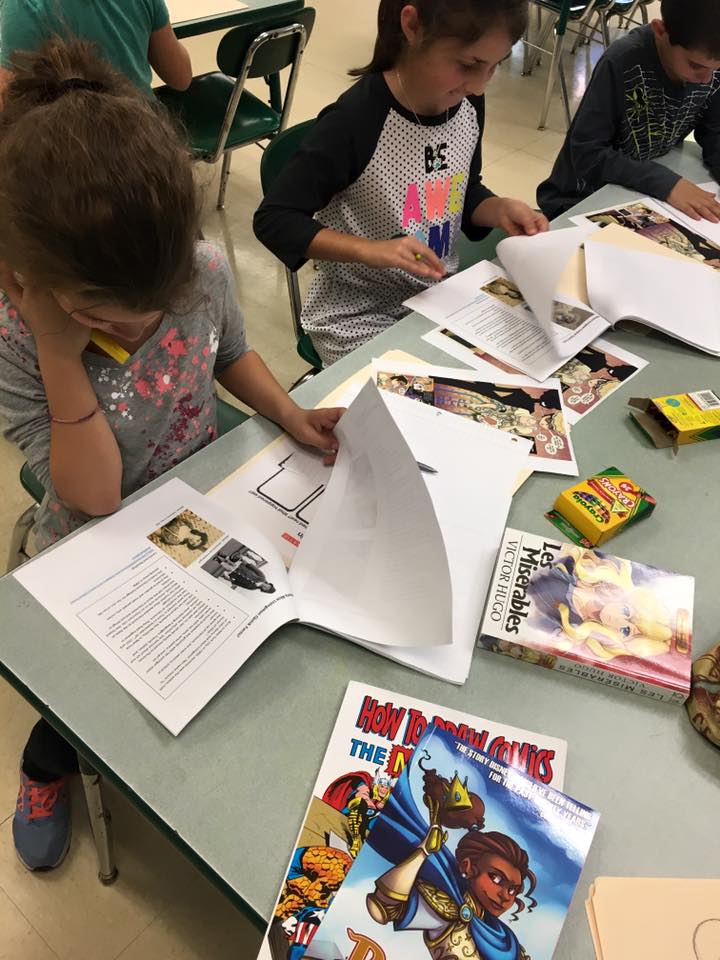
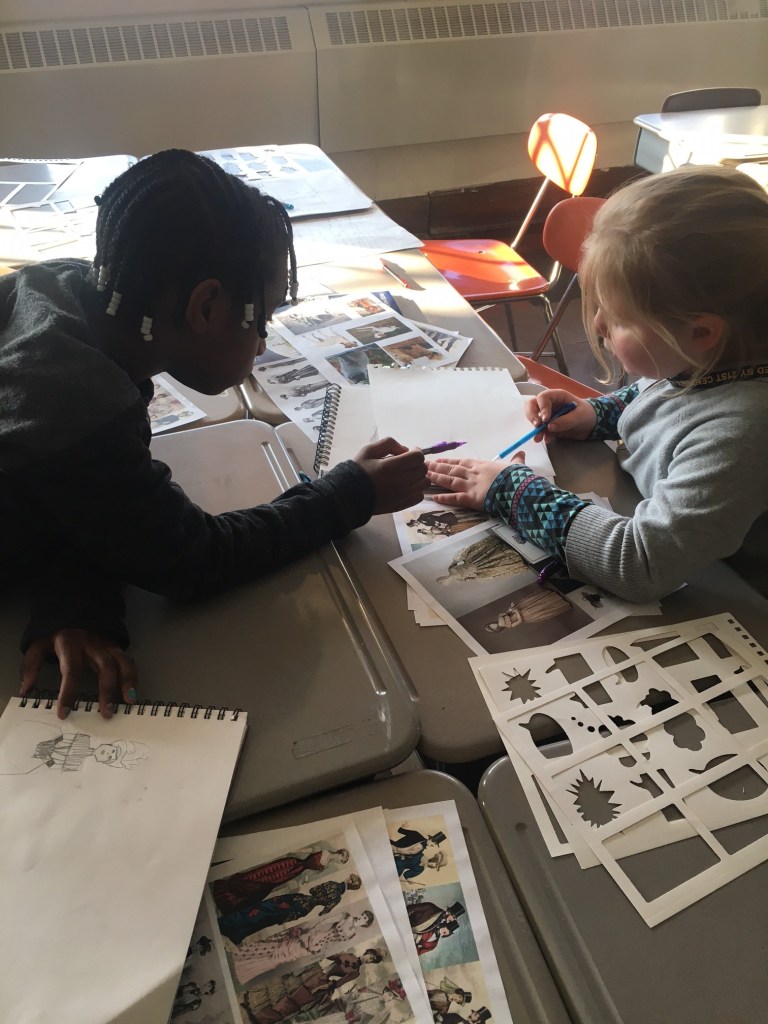
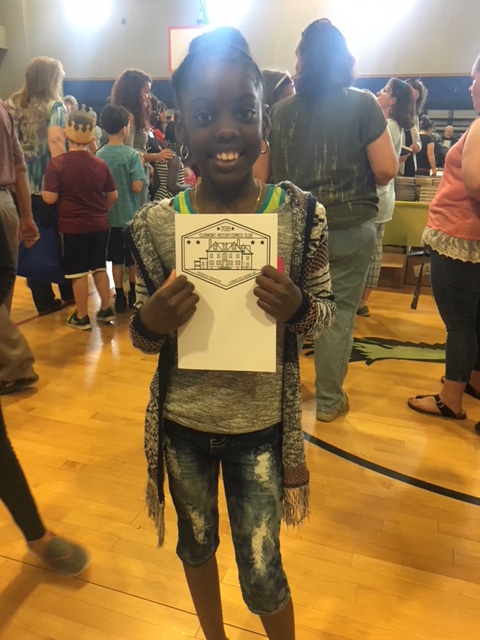
In 2016, Emily Robinson, a professional comic artist and the site’s School Programs Coordinator and Camp Director, founded History Comics Club, a unique program that connects underserved youth with their local history, builds an interest in art and writing, and helps create a sense of place at our historic site for students and their families in the community. Each student learns to draw their own comic while learning about the history of the Livingston Family.
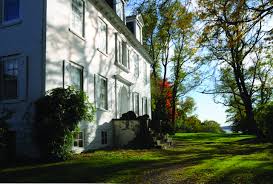
Seven successive generations of the family left their imprint on the site’s architecture, room interiors and landscape. Robert R. Livingston, Jr. was Clermont’s most notable resident. His accomplishments include drafting the Declaration of Independence, serving as first U.S. Minister of Foreign Affairs, administering the oath of office to George Washington, negotiating the Louisiana Purchase and developing steamboat technology with Robert Fulton.

Clermont State Historic Site, which remains closed to the public during the COVID-19 pandemic. (Photo Credit: Friends of Clermont)

Thanks to funding from Friends of Clermont, History Comics Club has provided the program to more than 1,000 students from age 7 to 17, resulting in the program’s publication of five books of their collected comic art and prose.

“Drawing requires the students to look at the history represented at Clermont, from clothing and how homes looked, to pets that lived on the estate,” said Robinson. 

As part of her work to help introduce students to Clermont’s history, she created a series of comics from the point of view of the family dog, Punchy, who gives a “tour” of the mansion in his own inimitable way. View some of it here

Punchy the dog makes an appearance at the Hudson Children’s Book Festival in 2018 to introduce visitors to the history of Clermont.

During the pandemic, families are sheltering at home, and many children might feel anxious over what the future might hold. Art can be a powerful way of processing that anxiety and interpreting ongoing events through their eyes as part of a historical record.

“Art can be a great healer,” said Robinson. “It doesn’t matter how well you draw or write, it’s about being creative and conveying information.”

Emily Robinson’s comic version of herself urging students to consider creating their personal comic or other record of their experiences during the COVID-19 pandemic.

As a child grows older, each piece of art will provide a window into their younger years, said Robinson, who recalled being in fifth grade during the September 11th terrorist attacks.

“I remember the confusion of those early days, and how my own teacher used art as a creative outlet,” she said. “I struggled writing the script for the COVID-19 comic, because I wanted to address kids in a way that wasn’t patronizing but didn’t scare them. They’re already stressed out; art should be a welcome window to self-expression.” Robinson continued, “I hope kids will feel pride that their artwork could help inform future historians’ understanding of life during the pandemic.” 

It does not take many supplies to start creating comics at home, a drawing pad and something to draw with. Robinson suggested that students may start with a basic sketch book, which includes stencils and general information on how to draw expressions and symbols. But almost any kind of white paper, like computer printer paper, will do.

During the last four years, Robinson has taken the program to the Hudson City School District, Germantown Central School District, Rhinebeck Central School District, and the Starr Library in Rhinebeck, as well as the Hudson Valley Writers’ Project in New Paltz. She also has presented on the program at the Hudson Children’s Book Festival and in 2018 hosted a panel at Comic Con in New York City.

Clermont’s Historic Site Manager, Susan Boudreau, is extremely proud of the program and what it offers to area children: “As I’ve seen over the life of the program, the art of making comics can make a great impact on the lives of our students. No student needs to have any artistic experience to participate, and some find that they are quite talented, which is so empowering. The openness of the comic genre encourages students to explore their own identities, fears, hopes, and dreams, which is a wonderful gift in these uncertain times.”

Emily Robinson, under her pen name Emily Ree, is best known for her young adult graphic novels, Anarchy Dreamers and Marshmallow Horns. You can see more of her work on her websites, EmilyRee.com and AnarchyDreamers..com.


Cover Photo: Emily Robinson’s comic representation of herself wearing a protective mask. All photos from New York State Parks.

By Brian Nearing, Deputy Public Information Officer, New York State Parks

Tender Care For A Most Egg-cellent Collection

How do you clean an egg more than a century old? Very, very carefully…

That was the challenge facing conservator Heidi Miksch at the State Park’s Historic Preservation Division at Peebles Island State Park. She had just gotten a case of bird eggs that had been collected in the late 19th century by the children of famous Hudson River School landscape painter Frederic Church.

While growing up in the family home at Olana in Columbia County, Church’s four children were part of the then-popular hobby of bird egg collecting, also known as oology or “birdnesting.” The children managed to collect and fill a large case with hundreds of specimens in wooden trays, each in a small labeled box lined with cotton.

The case had been stored ever since at what is now the Olana State Historic Site, where staffers intend to display part of the collection for the first time ever this spring in an exhibit on connections between art and the environment.

*** UPDATE***

Due to the COVID-19 pandemic, this display was cancelled last year. It is now scheduled for June 12, 2021 through October 31, 2021.

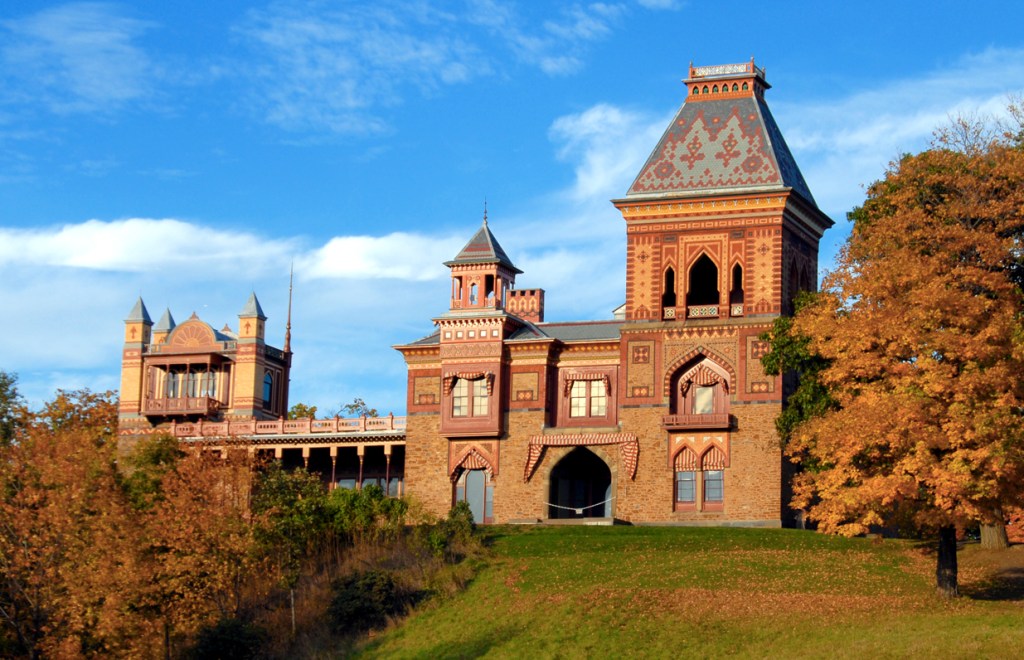
The mansion at Olana State Historic Site, where landscape painter Frederic Church and his wife, Isabel, , raised their four children who took up the popular Victorian-era hobby of egg collecting.

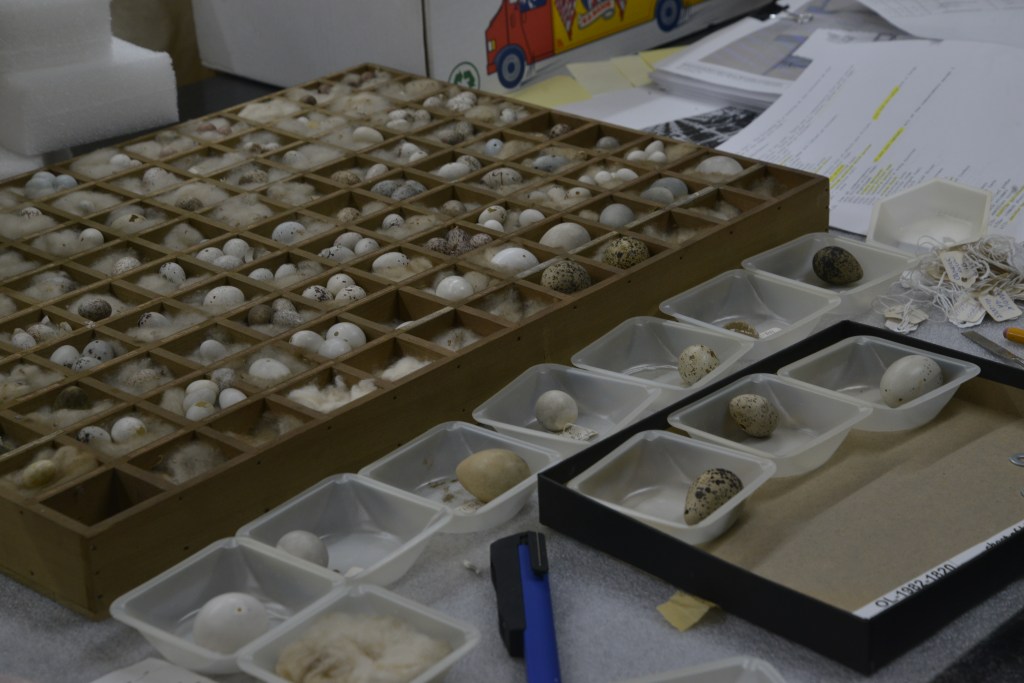
But many of the eggs were blackened with decades of dust and grime, and had to be cleaned before being displayed. So Miksch, who has conserved objects from a stuffed black bear to a piece of the Parthenon, researched a bit, and came up with her technique _ using conservation-grade cotton swabs, a dab of water, and gently rubbing. An average-sized egg takes about 20 minutes to clean, and the case contains eight trays, each with 36 boxes with most boxes containing one or more eggs. Miksch uses water, and not a cleaning solution, for fear of degrading the delicate eggshells.


Curator Heidi Miksch shows how she cleans bird eggs more than 100 years old.

Click through the slideshow as conservator Heidi Miksch (wearing the blue sweater) shows the Church childrens’ egg collection.


“The Church children collected many different kinds of eggs,” said Miksch. “I have even found a flamingo egg in there.” (For the record, a flamingo egg is white and oval in shape, appearing much like an oversized chicken egg.)

In the early 20th century, conservation concerns over the impact of bird egg collecting began to mount, and the practice later was limited in the U.S. under the Migratory Bird Treaty Act of 1918

But when Church’s children – Frederic, Theodore, Louis, and Isabel – were growing up in the Hudson Valley during the 1870s and 1880s, egg collecting was seen as a good way for children to learn about nature while also engaging in healthy outdoor exercise.

To preserve a collected egg, a tiny hole would be drilled into it, and the contents would be aspirated out of the hole, and then the egg would be rinsed out to prevent rot and decay. Or two holes could be drilled and then the contents would be blown out. The empty egg was then carefully stored.

Egg collecting was not just a hobby for children. Cultured gentlemen of the era, particularly in England, amassed large collections and ranged over many nations in pursuit of rare or unusual eggs. One of the world’s richest men at the time, English financier Baron Rothschild, had a collection of nearly 12,000 bird eggs, which now resides in the British Museum of Natural History.

Egg collecting was at its zenith from about 1885 through the 1920s, with children being the vast majority of collectors, according to a 2005 research paper by Lloyd Kiff, past director and curator with the California-based Western Foundation of Vertebrate Zoology.

Collectors of the day would trade eggs among themselves. There also were commercial egg sellers, who would offer eggs for sale in catalogs, just like dealers in stamps or coins.

Examples of egg collector catalogs. (Photo Credit- The Western Foundation of Vertebrate Zoology)

An American collector, William Brewster, who in the 1880s was the chair of the American Ornithologists’ Union Committee on Bird Protection, collected thousands of eggs that are now held in the Museum of Comparative Zoology at Harvard University in Massachusetts.

But the hobby began dying out as conservation principles and legal restrictions took hold, and by the 1940s the practice was all but gone. Today, it is illegal to collect bird eggs in the U.S. without a permit issued for research purposes.

The practice is also outlawed in England, although a few fanatical collectors persist despite legal sanctions.

Kiff’s study estimates that there about 80 major egg collections in the U.S., composed of about a half million egg sets, representing some two million individual eggs. These collections have demonstrated significant scientific value in subsequent years, supporting the discovery that exposure to the pesticide DDT was causing eggshell thinning in birds like bald eagles, Peregrine falcons, and pelicans.

This evidence formed the basis of a $140 million federal government settlement with DDT manufacturers in 2001, which Kiff described as the most important ecological use of any bird-related specimens.


“By now, hundreds of eggshell-based studies of (DDT) have appeared in all major regions of the world, and the present ban on DDT use in all but a handful of countries is a direct result of this research.” – Lloyd Kiff

History, Present Status, and Future Prospects of Avian Eggshell Collections in North America, The American Ornithologists’ Union (2005)

He suggests that eggshell collections may also be useful in the future for the study of ongoing climate change and its impacts on birds.

This comes as expertise in this field is fading away, Kiff wrote, adding “The body of traditional oological knowledge may vanish, except on the browned pages of extinct journals, and existing egg collections may gradually become objects of greater interests to historians than to biologists.”

If you would like to see the eggs collected by the Church children displayed in the home where they grew up, visit Olana between May 9 and Nov. 1 for the exhibition entitled “Cross Pollination: Heade, Cole, Church, and Our Contemporary Moment.”

This exhibition features Martin Johnson Heade’s 19th-century series of hummingbird and habitat paintings – The Gems of Brazil – and their relationship to Hudson River School landscape painters Thomas Cole and Frederic Church.

Co-organized by the Olana State Historic Site, The Olana Partnership, and the Thomas Cole National Historic Site, as well as the Crystal Bridges Museum of American Art in Arkansas, this exhibition will also feature work by contemporary artists including Nick Cave, Mark Dion, Jeffrey Gibson, Paula Hayes, Patrick Jacobs, Maya Lin, Dana Sherwood, Rachel Sussman, and Vik Muniz.

And finally … here is a look at that flamingo egg.

Cover Shot- Close-up of part of the Church children’s egg collection. (All photos and videos by NYS Parks unless otherwise noted)

Brian Nearing, Deputy Public Information Officer, NYS Parks


Resources

History, Present Status, and Future Prospects of Avian Eggshell Collections in North America, 2005, Kiff, Lloyd L., American Ornithological Society.

The Code of Nomenclature and Check-list of North American Birds

Ornithologists and Oologist, Semiannual, January 1889 – Victorian-era instructions on collecting and preserving. Explains collector practices of the time period.

Fragile Beginnings: Bird Egg Collection – Blog post on collection decisions made at Wesleyan University

University of WisconsinSearchable online database for egg identification

Gilded Age Ice Skater Carved Early Path

Staatsburgh State Historic Site, formerly the Gilded Age estate of the very wealthy and socially-prominent Ruth Livingston Mills and her husband, financier and philanthropist Ogden Mills, sits along the eastern bank of the Hudson River in the mid-Hudson Valley.

Commanding a view of the river and the Catskill Mountains, the estate’s Beaux-Arts mansion was once the scene of elegant house parties each autumn weekend for the glitterati of American society. The home is still filled with the original furnishings, art and décor chosen by Ruth and Ogden Mills after its redesign by prominent architect, Stanford White, circa 1895, from a 25-room home built by Ruth’s great-grandfather into the 79-room house we see today. 

Touring the home, one is struck by its opulence but also by its regal formality: Ruth’s bedroom, with its hand-carved bed on a platform, surmounted by a lavish baldachin (a kind of ceremonial canopy), and surrounded by walls of raspberry silk brocade, seems well-suited for a queen of society. 

Ruth Mills’ bedroom at the Staatsburgh Mansion.
A formal portrait of Ruth Livingston Mills painted in 1909 by artist François Flameng. Learn more about this portrait in this January 2018 post in the NYS Parks Blog.

Among her peers, Ruth was known for her acumen as a hostess, her exclusivity (reportedly opining that there were only 20 wealthy families in New York worth knowing), and her imperious poise.  As one of her contemporaries said:

“[Ruth Mills] would invite [guests] to her house…greet them with a limp hand, languidly extended, and a far-away expression, and then apparently forget their existence.  They were chilled but impressed.”

While it might be difficult to image, this reserved, aloof woman also had an athletic side uncommon for most women of that time. She helped build the popularity of the sport of figure skating as an early prominent practitioner and benefactor. And she also had a hand in the opening of one of the earliest indoor refrigerated ice rinks in North America.

My research into her history revealed some parallels with my own life. I have been a competitive figure skater for more than 20 years, and am a U.S. Figure Skating Gold Medalist after passing tests in four disciplines including freestyle and ice dancing. Now, I coach young skaters at a rink in nearby Saugerties.

For me, like it might have been for Ruth Mills, skating is athletic and artistic, allowing one expression through music and dancing.

Ruth Mills’ skating was widely recognized during her time. An 1893 New York Herald article praised her as an accomplished and graceful ice skater.  According to the newspaper, Ruth started skating with her twin sister Elisabeth when they were girls. That would have been during the 1860s, which was a time when skating was starting to become very popular in the United States. By that time, men and women were skating together on the same ponds (one of the few athletic activities where both genders were involved together), and even the press was supportive of women skating, extolling the health benefits.

Figure skating was the first sport where women participated for the pure joy of it and where their participation with men was widely accepted.  Skating became so popular in the mid-19th century that there was an estimated crowd of 100,000 on the pond in New York City’s Central Park on Christmas Day in 1860.

Newspapers of the day took note of Ruth Mills, with one reporter writing in the 1890s: “Mrs. Ogden Mills is quite too graceful and proficient.  As if by common assent, the others stop a moment to watch her do the double Philadelphia grapevine, about the most difficult gyration on ice known to the expert.” By this point, Ruth Mills would have been about 40 years old.

A portion of an account from the New York Herald on Jan. 6, 1895 on Ruth Mills’ skating technique.

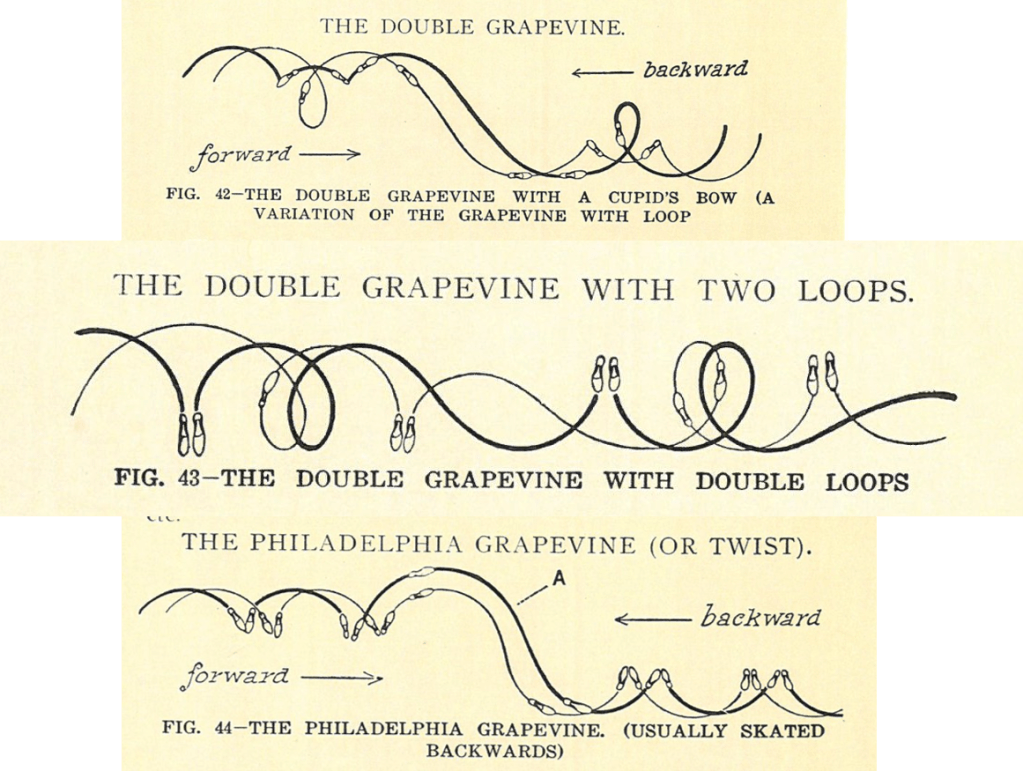
Watchers of skating today might not recognize this move, but the double Philadelphia grapevine was seen as one of the most complex techniques of its time. As described in a contemporary magazine: “The double grapevine is the same as the single, except that a loop is introduced at the beginning and also at the end of the figure. It is executed, as in the single grapevine, by passing the right foot in front of the left foot with the chain step; but instead of making a half revolution, as in the single, the body is swung completely around by the means of two turns on the right foot and an inside loop on the left.”

Maria Reynolds demonstrates the double Philadelphia grapevine skating technique.
Illustration of the double grapevine technique from a skating instruction book of the period.

While newspapers of this time made a habit of fawning praise over wealthy and powerful members of New York society, it is clear that Ruth was an accomplished skater. To the modern skater, the fact that Ruth could maneuver gracefully on ice, in the corset and multiple layers of clothing covering her from neck to foot, which Gilded Age women were required to wear, makes her ability even more impressive.

Given Ruth Mills’ self-composed demeanor, I find it hard to imagine her falling on the ice in front of people. But she must have started skating very early in life and put in much practice to become as skilled and confident as she was. Some of that early practice likely must have been on the rough ice of the frozen Hudson River at Staatsburgh when she was growing up.

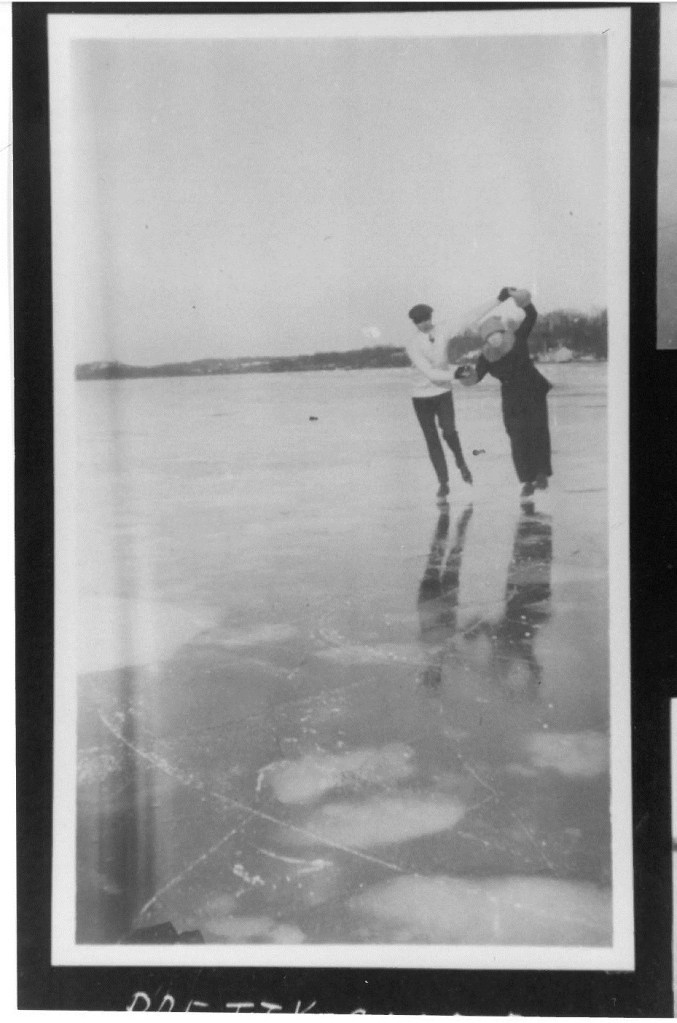
We know that the river was a very popular place to skate and we have a photo of the estate superintendent’s family skating in 1916.  The cove area near the estate’s powerhouse was a popular place for local village residents to skate.

Agnes and Bill Blair, children of the caretaker of Staatsburgh State Historic Site, skate on the Hudson River circa 1916.

While Staatsburgh was the primary residence of Ruth and Ogden Mills in the autumn, like many of their social set, the couple traveled with the seasons. New York City was where the elites dwelled in the winter months, as it was the season of the opera, and of lavish balls given in assorted Fifth Avenue mansions.

Whether dancing or ice skating, the elites of New York always preferred to pursue their leisure apart from the common folk, and in 1896, many of the wealthiest families, including Ruth and Ogden Mills, contributed to the construction of one of the earliest indoor ice rinks built in New York City, the St. Nicholas Skating Rink.

Skaters at St. Nicholas Rink in 1901. (Photo Credit- Wikipedia Commons)

When skating depended on a pond or river to freeze, skaters were at the whim of mother nature (sometimes they had only 15 to 20 days a season to skate), but after the creation of indoor ice surfaces, the skating season would extend much longer.

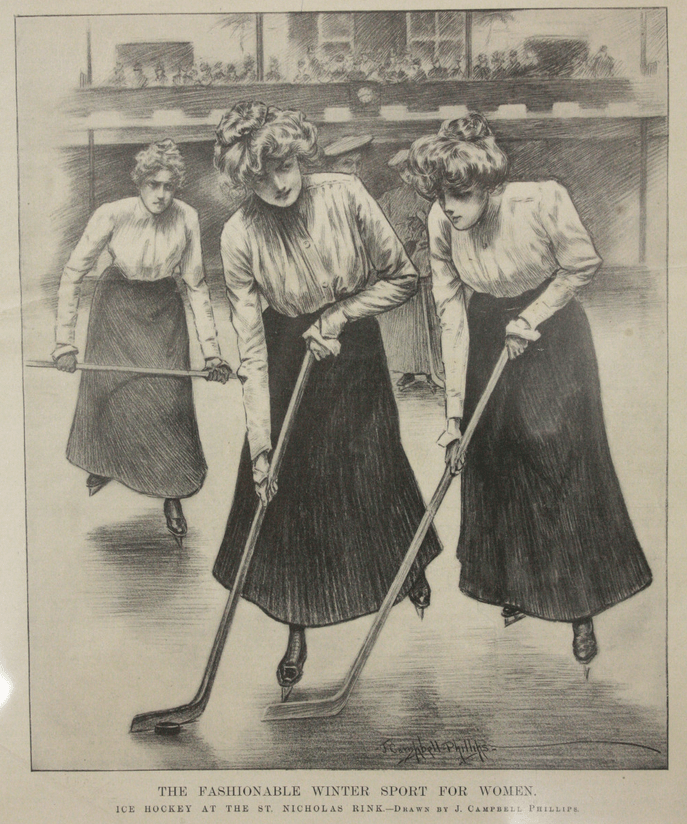
The St. Nicholas Skating Rink also was one of the earliest indoor ice rinks made of mechanically frozen ice in North America. The arena also was the site of the first game between women’s ice hockey teams in the United States, when in 1917 the St. Nicholas team defeated Boston 1–0.

An illustration in a 1900 issue of Harper’s Bazaar magazine shows fashionable women playing ice hockey at the St. Nicholas Skating Rink in New York City. (Photo Credit- Hockeygods.com)

Building this rink was an investment of $300,000 (more than $9 million today) contributed principally by elite patrons like the Mills. Located on West 66th street, the rink was less than four blocks from the couple’s mansion, and contemporary newspapers accounts stated that Ruth Mills skated there nearly every morning.

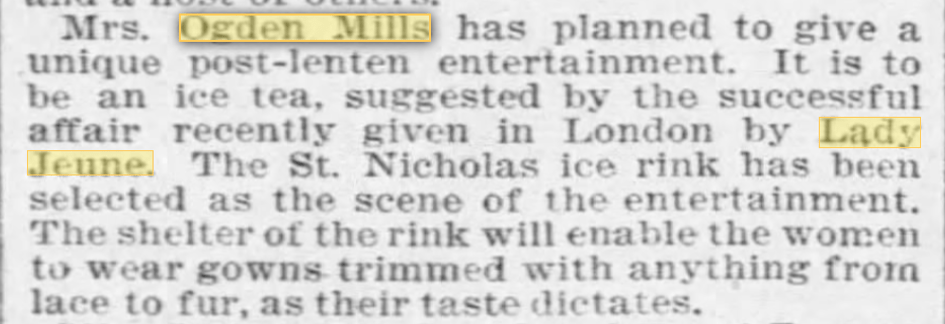
Shortly after the rink opening, an article in The New York Times noted that Mrs. Mills was to host an “ice tea.”  Not the popular beverage, this exclusive social event included both skating on the rink and tables to consume tea and light refreshments.

An item in the April 5, 1896 edition of the New York Times announcing Ruth Mills’ “ice tea” event at the St. Nicholas Skating Rink.

So here, Ruth Mills got to combine her interests in both luxurious entertaining and skating. Sadly, the St. Nicholas Rink was demolished in the 1980s after a long history of hosting skating and boxing matches.

If you would like to know more about this family, and the Gilded Age lifestyle they led and the mansion in which they lived it, make a trip to Staatsburgh State Historic Site the Taconic Region.

Nearly 200 acres of the historic Mills estate is within the Ogden Mills and Ruth Livingston Mills Memorial State Park, which is open every day, all year, from sunrise to sunset, with no fee for park entry.  It includes the Dinsmore Golf Course, one of America’s oldest golf courses, as well as trails for hiking and cross-country skiing.

Guided tours and special programs are offered at the Mills mansion year-round; for programs information and hours of operation, call (845) 889-8851, or visit our website.

The 79-room Mills Mansion, which is located on the 120-acre Staatsburgh State Historic Site in Dutchess County. (Photo Credit- Andrew Halpern)

Cover Photo: The St. Nicholas Skating Rink in New York City. Unless otherwise noted, all photos courtesy of NYS Parks.

Maria Reynolds, Ph.D., Historic Site Assistant / Curator, Staatsburgh State Historic Site

Reynolds has given lectures at Staatsburgh on “Gilded Age Tea & Talk” program series, presented each winter.  Now in its sixth season, this program series offers guests the chance to enjoy the site’s custom tea blend, created by Harney & Sons, along with scones, clotted cream, tea sandwiches and sweets, served in the mansion’s opulent formal dining room while listening to talks on various aspects of Gilded Age history. 

A Legacy of Strength

During the 1930s when racial segregation and Jim Crow held sway over much of America, there was a Depression-era federal public works unit where African-Americans, not whites, were in command. And it was here in New York State Parks.

To combat rampant unemployment among young men, President Franklin Roosevelt had created the Civilian Conservation Corps (CCC) in 1933 to perform public works projects.  

The struggles of the 1930’s reached beyond the economic depression. Major environmental issues plagued the nation as well.  The impact of poor farming practices, deforestation, and destructive pests were just a few of the things destroying thousands of acres of usable land. Across the nation, the CCC immediately put its companies to work solving these two major crises at once.

While discrimination based on ‘race, color, or creed,’ was against Roosevelt’s founding policy, that was to exist almost only on paper. When the first CCC companies formed, racial segregation was part of the process.  After two years of operation, this practice became official policy in 1935 when CCC Director Robert Fechner insisted on complete segregation of whites and colored enrollees.  The only exception allowed was if a company was formed in an area of the country with a small African American population.

Enrollees from big cities and small towns all over New York found themselves at Camp Dix, New Jersey, with thousands of other men who were desperate for work.  Upon arrival, men were assigned to a 200-man company, although many colored companies numbered less than 100. Each company was given a number, and a lowercase ‘c’ was added for ‘Colored’ where needed. And policy dictated that those in charge of all companies were white Army officers.

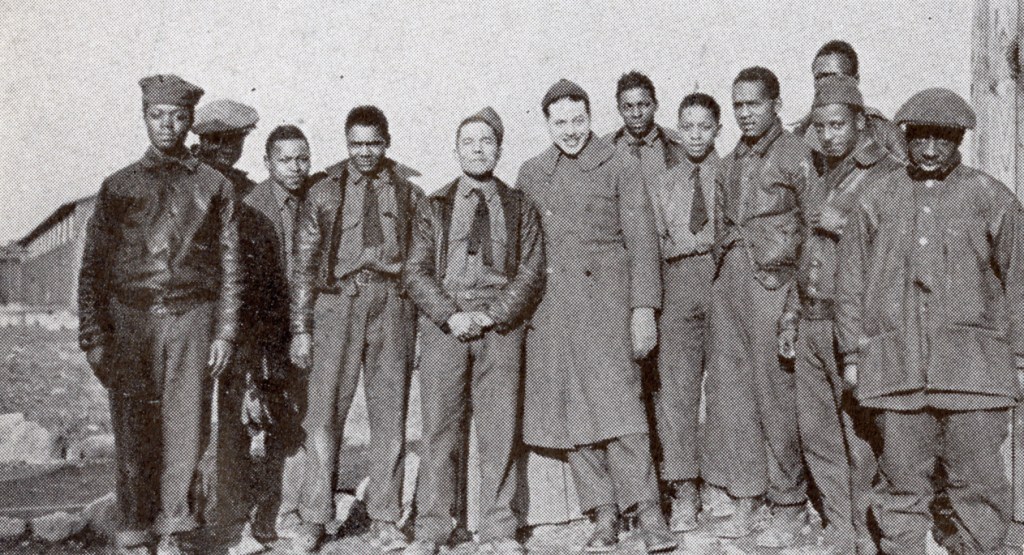
Men from New York quickly filled slots in several ‘Colored’ companies forming at Camp Dix. As these companies moved around the country, they were trained on the job by local professionals who were also white.  Pressure from Congress, the National Urban League, and the National Association for the Advancement of Colored People (NAACP) began immediately for African American officers and professionals to work with African American companies, but it would be several years before things changed.


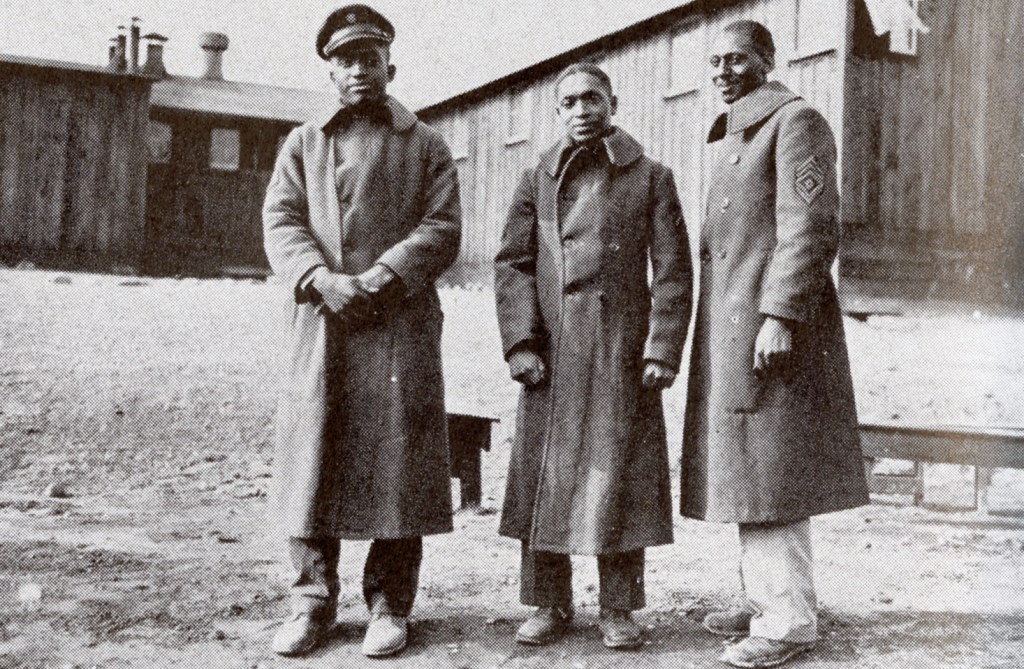
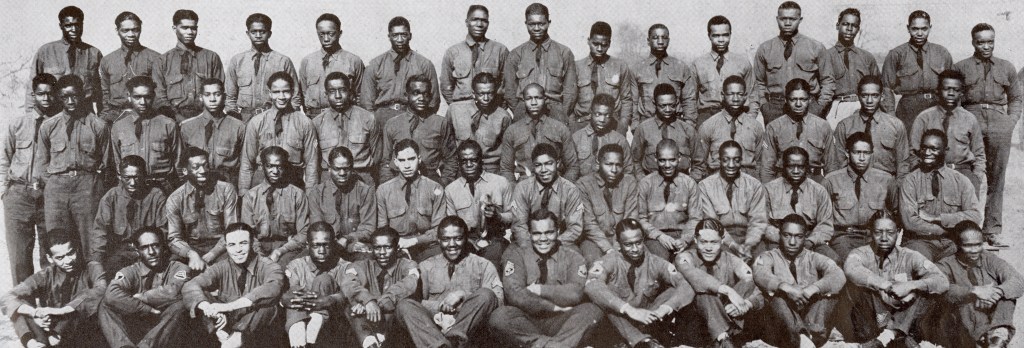
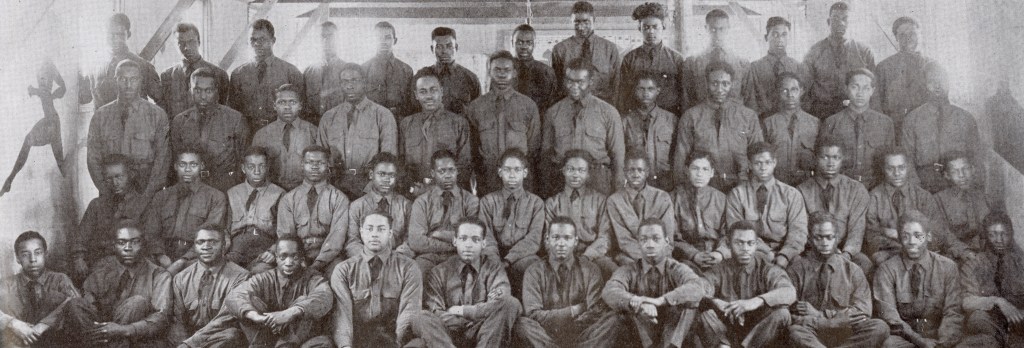
Click on this slideshow of the men of the Civilian Conservation Corps “Colored” companies from New York State.


By the fall of 1933, colored companies from Fort Dix including 246-c, 247-c, and 1245-c were formed and immediately sent out.  Company 246-c was shipped by train to Chelan, Washington State, to fight fast-moving forest fires. Their next mission took them across the country to Yorktown, Virginia, to excavate colonial buildings and reconstruct two historic sites — the Moore House and the White Swan Tavern, both of which still stand today.

From Virginia, the men of 246-c headed back to New York to the Orange County town of Wawayanda to begin working on the Wallkill Flood Control Project, a ten-mile-long canal designed to change the direction of the river and stem seasonal flooding.

Company 247-c headed to Idaho to build roads and fire trails and plant hundreds of trees in the Lake Pend Oreille Forest. They later went south to work as archaeologists at the Yorktown Battlefields collecting pottery chards and other bits before returning to New York. Company 1287-c fought forest fires in Idaho, built roads in Virginia, then moved into New York, joining the other companies for the Wallkill project.

Company 1245-c headed out in 1934 to create fire breaks, build truck trails, plant trees and dig wells before heading to the Wallkill. Company 3210-c and 3211-c, formed in 1935, went directly to the Wallkill project, with 3211-c later heading a few miles north to build roads.

Health care and food services were year-round jobs as well with the CCC, and often these were the first positions filled by young African American men. During the early years of the program, African Americans could be found as cooks and health orderlies but rarely as the head chef, doctor, or dentist.

Initially, trained African American officers in the U.S. Reserved Army were totally ignored, then slowly as more pressure from members of Congress and other groups continued, they began filling positions as medical officers, working alongside African American orderlies and chaplains. By 1936, such outside pressure forced Fechner to set-up a “demonstration camp” in Gettysburg, Pennsylvania, where a Colored company would be managed by African American commanding officers. If the experiment worked, other companies could be switched over.

While the Gettysburg effort was successful, only one other CCC company ever saw the change to Colored officers _  1252-c in New York State. Initially stationed at the Newtown Battlefield Reservation outside of Elmira, Chemung County starting in 1935, this company had started with white officers like all the rest. But in June 1939, colored officers were quietly brought in to run the unit.

The work of the men of Company 1251-c is still visible at Newtown Battlefield State Park, where they built the picnic pavilion and concession stand, sports fields, stone tables, and wooden bridges, as well as planted trees and plants, and added or graded topsoil.

A new CCC enrollee arriving at Newtown Battlefield Reservation.
At work at the battlefield.
The men of Company 1251-c at Newtown Battlefield Reservation with their officers, seated in the center of the front row.
Pavilion at Newtown Battlefield State Park built by the men of Company 1251-c.

Such work was only part of an average day for company members. Improving the education of enrollees was also part of the CCC’s mission. Civilian Educational Advisors (CEA) were local educators who were stationed at the various sites.

Classes were held regularly and for many of the colored companies stationed in New York the classes were taught by African American men. Reading and writing went hand in hand with Spanish, French, Mathematics, and Negro History. Recreational pursuits included bands, sports teams, and company newsletters.

Although hugely successful, the CCC came to an end in 1942 as the nation joined the Second World War. By then, more than two million men had gone into the program. Read more about New York’s history in the program in the Parks Blog post below…


Civilian Conservation Corps in New York State Parks

When Franklin Delano Roosevelt (FDR) became president in 1933, the entire nation was in a state of turmoil never seen before or since. It was the height of the Great Depression: unemployment was at 25%, croplands were failing, and millions of families were going hungry. As governor of New York State, FDR had implemented the…


Even in the face of economic hardship and ecological stress, racism and segregation had dogged the program each step of the way. CCC Director Robert Fechner’s insistence on racial inequality plagued the CCC in spite of constant pressure from the White House, Congress, and other groups striving to create a more equitable environment in the country.

The work done by the men in New York’s colored companies of the CCC continues to enrich the lives of New Yorkers everyday. Theirs is a legacy of strength we can all draw from.


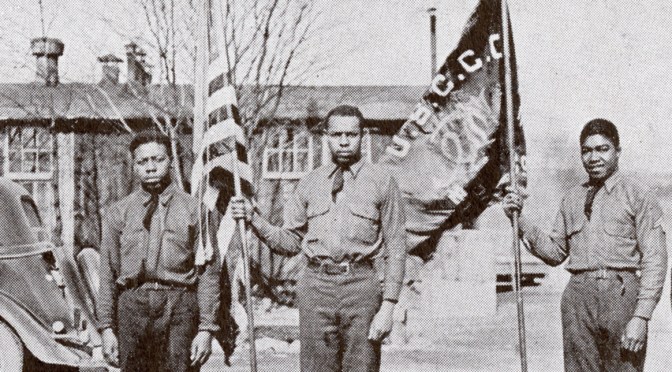
Cover Shot: Company 246-c. All photographs from state Bureau of Historic Sites

Post by Lavada Nahon, Interpreter of African American History, state Bureau of Historic Sites


At Gilbert Lake State Park,  Otsego County, other companies of the CCC constructed cabins, trails, roads, dams, and erosion control structures between 1933 and 1941. The park is also home to the New York State Civilian Conservation Corps Museum, which displays photographs and artifacts from the days of the CCC.

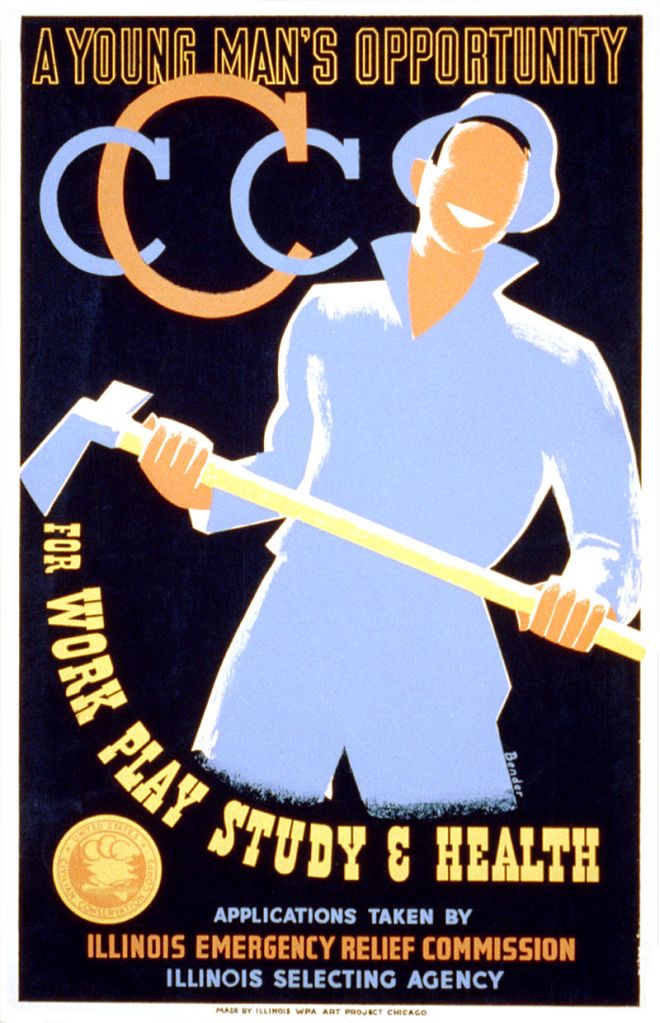
A 1935 poster for the Civilian Conservation Corps. (Photo Credit- Wikipedia Commons)