Category Archives: Park Projects

Invasive Species Spotlight – Mugwort

Name: Mugwort or Common Wormwood (Artemisia vulgaris)

Origin: Mugwort is native to Europe and Asia, where it was utilized as a medicinal and culinary herb. It was introduced to North America through ship ballast and continues to spread across the continent via nursery stock, turf grass and roadways.

NYS Presence: Widespread throughout the state and often found in ditches, roadsides, pastures and other disturbed areas.

Species Profile: Mugwort is a perennial that flowers in late summer to early fall. Its alternating dark green leaves are smooth on top and have silvery-white hairs underneath. When the foliage is crushed it is known to release a pungent odor. One plant can produce as much as 200,000 seeds which are roughly 1mm in diameter and are spread by the wind and easily moved around on tires, mowers and construction equipment. As a result, Mugwort can be found along miles of roadside.

Mugwort
Note the difference in color from the top (green) and the bottom (gray), image from https://extension.umass.edu/landscape/weeds/artemisia-vulgaris

Although seed dispersal plays a large role in the spread of this invasive weed, its root system is also a culprit in increase this weed’s introduction to new sites. Nursery stock including ornamental plants, turf grass, and orchard stock are easily contaminated by these root fragments and carried into new places. Mugwort’s rhizomatous roots – an extensive and dense underground network — and the abundance of seeds make this species very hard to control.
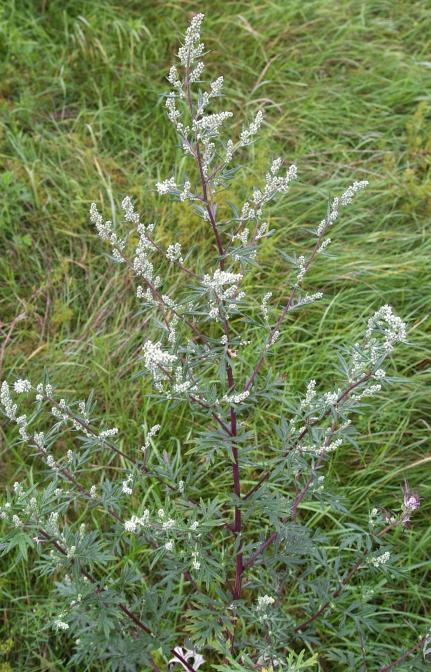
ArtemisiaVulgaris_Christian Fischer, accessed from Wikicommons
Mugwort in flower, photo by Christian Fischer, accessed from Wikicommons.org

Mugwort has displaced many native plants, especially those that thrive in sunny, open habitat. Cleaning equipment, using clean fill (e.g., at construction or landscaping sites), and removing and disposing of any new infestations of Mugwort are some of the ways to reduce the spread of this plant.

Resources:

Barney, J.N. and A. DiTommaso. 2003. The biology of Canadian weeds. 118. Artemisia vulgaris L. Canadian Journal of Plant Science 83:205-215.

https://www.forestandwatersolutions.com/uploads/3/6/3/1/3631108/japanese_knotweed_mugwort_pale_swallowort.pdf

http://www.nyis.info/index.php?action=invasive_detail&id=63

http://www.nrcresearchpress.com/doi/pdf/10.4141/P01-098

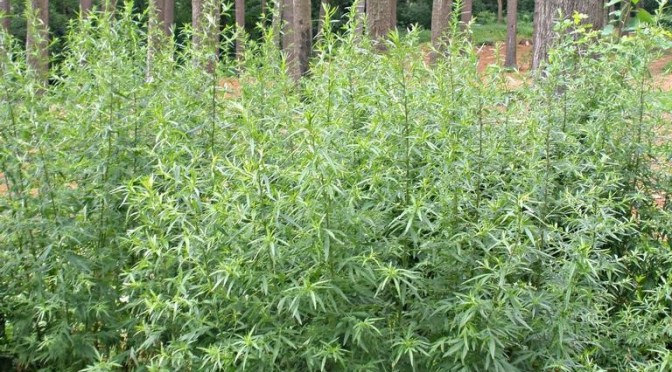
Featured image, mugwort growing along a forest edge, photo by Ansel Oommen, Bugwood.org

Invasive Species Spotlight – Kudzu

k14
Kudzu along the Old Croton Aqueduct State Historic Park in Yonkers, photo courtesy of Shawn Gorman, Friends of Old Croton Aqueduct

Name: Kudzu (Pueraria montana)

Origin: Kudzu was first introduced to the southern US in the late 1800’s as an ornamental plant to shade porches. In the early 1900s, farmers were encouraged to plant kudzu for erosion control and in the 1930’s the Civilian Conservation Corps (CCC) planted thousands of acres of it along hillsides for that same purpose. Kudzu wasn’t recognized as an invasive species by the USDA until 1953.

 NYS Presence: Lower Hudson Valley and Long Island

 Species Profile: Kudzu is a perennial, semi-woody, climbing vine that can reach up to 100 feet in length! Kudzu leaves are compound (i.e., made up of three separate leaflets) and are oval to heart-shaped. In the late summer, vertically growing stems produce fragrant purple flowers that are followed by the production of hairy, brown, flattened seed pods. Kudzu can grow up to one foot per day, which makes it capable of outgrowing almost anything! This fast-growing plant competes with native trees and plants for sunlight, water and nutrients from the soil.

Roughly 2 million acres of forests in the southern US are covered with kudzu! Let’s prevent this from happening in NY. If found, please report findings to iMapInvasives. Take note of your location, photograph the species and then upload!

Reminder: Poison ivy is another species with three leaflets, so be sure to brush up on your plant ID before handling these species.

Click here to learn more about kudzu.

Counting the Bristlesides, Sedgesitters, Leafwalkers

It’s National Pollinator Week! Scientists have been busy looking to see what pollinators live in State Parks. Here’s a first look at some of the early results.

NHP@Bumblefly
This is actually a fly! The bare-cheeked bumblefly is a very rare Syrphid in NY that mimics bumblebees and lives in old forests.  Photo courtesy of NYNHP.

In 2017 a cadre of NY Natural Heritage Program (NYNHP) biologists working under a long-standing agreement with State Parks began testing out sampling methods for a multi-year statewide Native Pollinator Survey (ESNPS) under the auspices of the Governor’s NYS Pollinator Protection Plan jointly administered by Department of Environmental Conservation and Department of Agriculture and Markets.

NHP_EasternCalligrapher
The eastern calligrapher (Toxomerus geminatus) is a very common species in State Parks all over the state.  Photo by Lindsay Dombroskie, accessed from iNaturalist.

The goal of the ESNPS is to determine the rarity of a wide array of native insect pollinators in non-agricultural habitats. NYNHP Zoologists honed in on the most important and vulnerable pollinating groups in the state, representing a wide variety of native insect pollinators such as bumble bees, mining bees, bee flies, longhorn beetles and flower moths.

NHP_Spider
Captured by a spider, a fate that befalls some flower-visiting flies.  Photo courtesy of NYNHP.

Between June 8 – October 3, 2017 on fair weather days, two biologists used sets of small painted bowls containing soapy water to trap pollinators (the insects mistake the color for a flower) in four different habitat types within each Park (see photo). The biologists also used insect nets to hand- capture pollinators (see photo), spending the better part of one day obtaining a snapshot of the Park’s pollinator community. The collections are the only way to document and identify most of the species.


Over the past winter the biologists then separated out the flies (Dipterans) from the bees and pinned these specimens so that they could be identified by fly specialists at SUNY Cobleskill (see photo). They focused on flies in one notable family, the Syrphidae – or Syrphids, known as the hover flies or flower flies.  Most of the remaining captured pollinators like the bees will be identified by experts at Cornell University as the project continues.


Preliminary results are in for the hover flies or flower flies that SUNY Cobleskill experts helped to identify. There are many different species or types of these flies and not anything like the plain black housefly. Some go by interesting names like Bristlesides, Sedgesitters and Leafwalkers. Many hover flies are mimics of stinging Hymenoptera (see photo) and known to be second only to bees in their pollinating prowess. This is because the adult flies feed on pollen and nectar to power their energy- intensive flight. In doing so, they help to pollinate a wide range of trees, shrubs and wildflowers in every conceivable habitat. At the same time, their larvae (the young stage) are predators of harmful insects such as aphids and adelgids. Many play an important role in aiding decomposition in aquatic and forest environments; in effect breaking down leaves, logs and other debris which then releases nutrients and builds soil.  In other words, Hover flies are very important to the health of our native ecosystems.

NHP@Goosepond
Look closely for the hover fly on a leaf at Goosepond Mountain State Park on September 28, 2017.  Photo courtesy of NYNHP.

A brand new hover fly field guide focusing specifically on northeastern North America will be published later in 2018 by a team of Canadian researchers. This will allow anybody with an interest to pursue these fascinating and colorful insects who will challenge your notions of what a fly is!

A few fun facts we learned about hover flies in State Parks:

  • Total number of Parks sampled: 22 (in all Regions)
  • Total number of different Syrphid (fly) pollinators: 50 species
  • State Parks with the highest diversity of hover flies (at least 7 different species plus more than 15 individual flies): Minnewaska, Thacher, Sunken Meadow, Letchworth, Taconic, and Allegany
  • Number of new species never before seen in the State, or were thought to be no longer in NYS: 5
  • Two out of every three individuals captured (67%) was a calligrapher (Toxomerus), small black and yellow flies whose larvae eat aphids (see photo)
  • Number of Parks with a species that mimic hornets (the rare eastern hornet fly (Spilomyia longicornis)): 3: Allegany, Knox Farm, Sunken Meadow
  • Number of Syrphid species whose larvae eat adelgids (adelgids are a small insect that can cause severe tree damage): 2 (in the genus Heringia) at Gilbert Lake, Grafton, Moreau Lake
  • Number of non-native, introduced species detected: 2. The common compost fly (Syritta pipiens), and common drone fly (Eristalis tenax)
  • Over half of the State Parks had at least one Syrphid species that lives predominantly in older forests.

Authored by Jeff Corser, Zoologist with NY Natural Heritage Program (NYNHP).

NY Natural Heritage Program is affiliated with SUNY College of Environmental Science and Forestry (SUNY ESF) and works in close partnership with NYS Parks and NYS DEC. The Empire State Native Pollinator Project is only one of many kinds of surveys and studies that the program conducts to provide guidance and tools for conservation of native biodiversity across New York State.

All photos by NYNHP for use by permission only

Harmful Algal Blooms: New York State Takes Action in 2018!

There has been a lot of activity in New York State this spring regarding Harmful Algal Blooms (HABs)!  In an effort to raise awareness regarding HABS, Governor Cuomo called together four HAB Summit Meetings across the State (February 27 in New Paltz, March 6 at SUNY ESF, March 20 in Ticonderoga, and March 26 in Rochester).  Leading experts from the Department of Health (DOH), Department of Environmental Conservation (DEC), Department of Agriculture and Markets (DAM) and other state and national experts convened to discuss and address the causes of algal blooms in 12 priority waterbodies across the state.  The meetings were the first step in the development of action plans to address HAB occurrences in each waterbody.  Of the 12 priority waterbodies chosen as part of the Governor’s initiative to combat HABs, five of them are the home of State Park’s beaches, marinas, or campgrounds (Conesus Lake, Honeoye Lake, Chautauqua Lake, Cayuga Lake and Lake Champlain).  The action plans will be used to implement monitoring and treatment projects related to HABS.

What’s the problem with HABs?

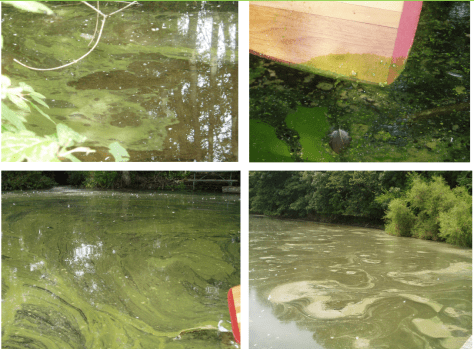
You might see a couple of different terms used in association with HABs, but they mean the same thing: cyanobacteria and blue green algae are used interchangeably.  The term “blue-green algae” is a misnomer; it is not truly algae. It is a type of bacteria called cyanobacteria that is capable of photosynthesis. An algal “bloom” consists of cyanobacteria in great enough numbers of cells to be seen by the naked eye.  Some algal blooms can produce toxins, but not all do.  When an algal bloom produces toxins, it is called a Harmful Algal Bloom.  HABs can thrive when certain conditions are met, including warm weather, stagnant water, and sufficient nutrients in the water body.  The bacteria can form dense mats on the surface of a lake or can be suspended in the water column. The blooms can be brightly colored and look like pea soup, spilled paint, or an oily scum/sheen that coats the lake surface.  The blooms move around the lake in response to wind and currents, tend to accumulate at shorelines, and can move vertically in the water column to find the perfect nutrient and temperature conditions to flourish.  Blooms occur most often in waters high in phosphorous and/or nitrogen, and research is ramping up to determine the exact causes of algal blooms.

Because of the potential for blooms to produce toxins, it is important to keep people and pets out of the water during a bloom.  The toxins can make people and animals sick, and toxin exposure can cause a range of symptoms, including rashes, respiratory irritation, gastrointestinal troubles, and effects on the liver. HABs may also impact drinking water and recreational activities, and can cause unpleasant odors.

It is State Parks Policy to follow the DOH protocol and close bathing beaches when a HAB is present.  To re-open a beach at a State Park, the beach must be free of any signs of a bloom for 24 hours, and a water sample must be submitted for toxin analysis.

The Big Message for the 2018 Beach Season

Know it, Avoid it, Report it.  Learn what a bloom looks like, avoid it, and make sure to report it to the Park Manager if you see a potential bloom at a State Park.  You can also notify the NYS Department of Environmental Conservation, or harmfulalgae@health.ny.gov

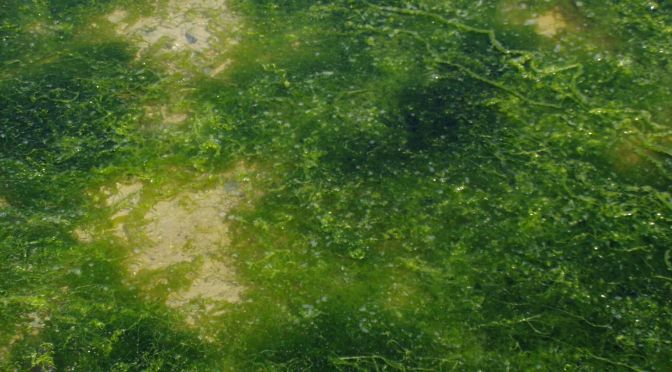
HAB Photos from State Parks:

HAB

Below are a few links to learn more about HABs!

NYS Department of Health: Harmful Blue-Green Algae Blooms

Environmental Protection Agency: Cyanobacterial Harmful Algal Blooms in Water

NYS Department of Environmental Conservation: Harmful Algal Blooms

Trails Stewardship in the Finger Lakes

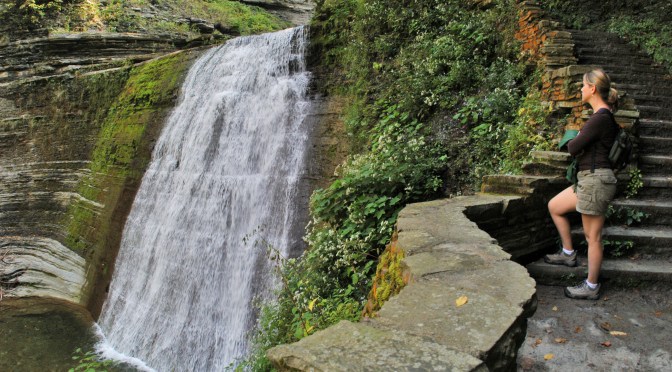
Here in the Finger Lakes, one of the best ways to access the natural beauty of the area is by taking a hike on one of the many trails that can be found within the region’s state parks. The trails (in parks such as Watkins Glen, Taughannock Falls, Robert H. Treman, and Fillmore Glen) lead hikers through a variety of environments, including mature forests, meadows, lake shores, and wetlands. Of course, hikers can also enjoy the deep gorges, dramatic cascades, and waterfalls the region is famous for! Over the years, hiking has gained popularity nationwide. With thousands of miles of hiking trails, New York State has a lot to offer people looking to get outside. The Finger Lakes region of the State Park system sees several hundred thousand visitors each year, many of whom come to hike the trails. Foot traffic, weather, and time have left some of the trails in Finger Lakes state parks eroded and in need of repair. This erosion not only makes the hiking experience less enjoyable for trail users, it also leads to negative impacts on the surrounding ecosystems. To meet this problem head-on, the Finger Lakes Regional Trail Crew (FLRTC) was developed in the spring of 2017.

Crew
Some of the hard-working members of the Finger Lakes Regional Trail Crew, photo by State Parks

The main goal of the trail crew is to maintain safe and enjoyable hiking trails for park visitors, while protecting the natural and historic resources of the park. Currently the FLRTC consists of three Parks staff members and a diverse group of local volunteers. The Excelsior Conservation Corps (an AmeriCorps program) also helps out with specific projects. In 2018, the trails crew will host two interns from the Student Conservation Association (SCA) Parks Corps devoted to trail stewardship. This team effort has led to a tremendous amount of progress towards the Finger Lakes Park’s trail improvement goals.

Boardwalk
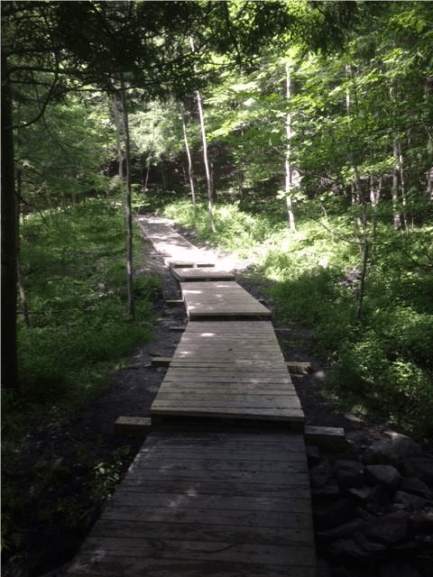
Boardwalks protect wet areas or fragile habitat and make for easier walking for visitors, photo by State Parks.

Trail work, as a rule, takes a large amount of physical effort and creative problem solving. The work done by the FLRTC is no exception. Traditional tools and building techniques are often employed. Many of the trails in need of repair are in areas that are not accessible by vehicles or equipment. As a result, many of the materials used in trail construction have to be carried in by hand; it takes a strong crew to lug in lumber, stone, and gravel. Sometimes materials have to be moved down into or across the area’s gorges. The trail crew uses high-strength zip lines to accomplish this task. This is the safest method and protects the fragile slopes and vegetation.

Zipline
Boardwalks protect wet areas or fragile habitat and make for easier walking for visitors, photo by State Parks.

All of this hard work pays off in the form of functional, safe and visually pleasing staircases, boardwalks, and bridges that blend with the surroundings.

 As you get out on the trails this year, take a minute to look down from the beautiful scenery. The trail you are on most likely took a lot of hard work to build and maintain – but chances are the park staff and volunteers behind the work loved every minute of it!

 Post by Zachary Ballard, State Parks