
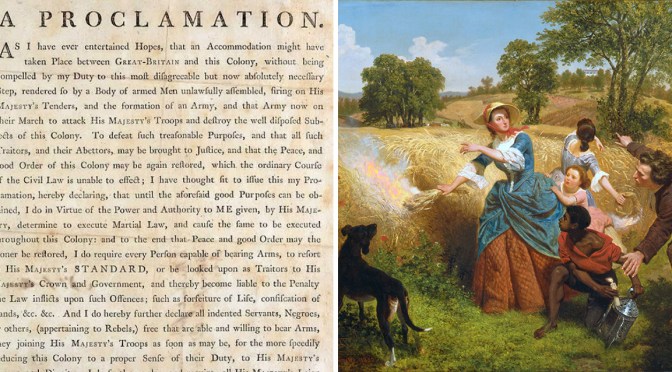
For eight years (1775-1783), the battles of the Revolutionary War crisscrossed New York. From the Canadian border to the shores of the Atlantic Ocean, enslaved and free Blacks managed the shifting tides of the rebel’s fight against the British with mixed results. All of the changes did not come at one time, but eight years is wearing. Ultimately, Blacks living in the state paid a heavy toll.
Continue reading Eight Years of Chaos and Little Change: Black Experiences During the Revolutionary War in New YorkCategory Archives: State History
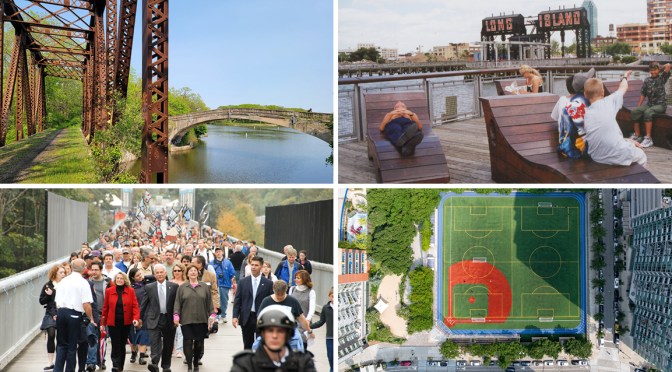
Infrastructure’s Second Act: Transforming Rails to Trails
Across New York, outdated infrastructure is getting a second chance to serve communities. Former factories, railroads, and hospitals are now spaces for New Yorkers to get outside, get some exercise, and disconnect from their electronic devices. In this new series, we explore how your favorite state parks once served a very different but equally important purpose to our state.
In this first installment of Infrastructure’s Second Act, fasten your seatbelts and learn about the state parks built from former transportation infrastructure, including railroads and canals. These sites served as critical community connectors in the past, and now connect communities in a much different way: as places to recreate, relax, and enjoy the natural world.
Continue reading Infrastructure’s Second Act: Transforming Rails to Trails
Sojourner Truth Day: Community Food Drive Celebrates Trailblazing Park Namesake
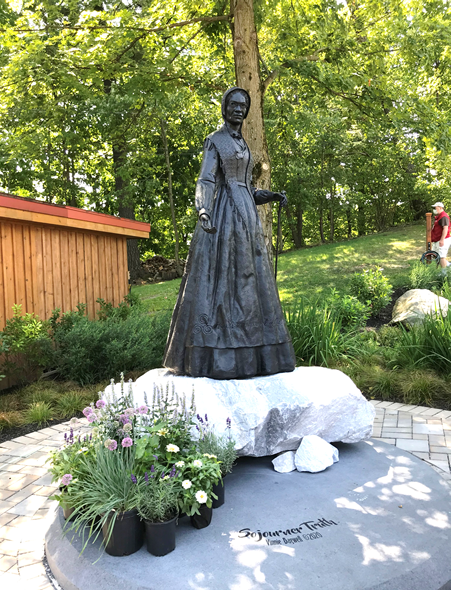
Named in honor of the life and legacy of the 19th-century African American abolitionist and suffragist, Sojourner Truth State Park in the Hudson Valley is one of the newest acquisitions to the New York state park and historic site system. First announced in 2022, the park reclaims more than 500 acres of Hudson River shoreline land shared by the City of Kingston and the Town of Ulster. It opened to the public the following year.
Sojourner Truth was born Isabella Baumfree (also known as Bomefree) in 1797, enslaved among Dutch people in Ulster County. A dynamic human rights advocate, she “walked away by day-light,” freeing herself from slavery one year before legal enslavement ended in New York. Her accomplishments and vital contributions to American history are recognized not only with the park’s naming, but also with the installation of a bronze statue at Walkway Over the Hudson State Historic Park, created by sculptor Vinnie Bagwell.
Governor Hochul designated November 26 as Sojourner Truth Day in New York State last year, and we can’t wait to share our plans to celebrate this trailblazing New Yorker with you.

Reflections on the Erie Canal During its Bicentennial Year
The history and impact of the Erie Canal stretches back over 200 years, across more than 300 miles, and millions of lives. It is complicated, it is messy, it is multidimensional. You can become fascinated by it through the economics, the politics, the engineering, the social and cultural changes, the environmental impact, music, folktales, art, or a general love of history. Like the canal itself, history is a ribbon that connects us, for all the good and the bad.

The capstone of the revitalization of the Erie Canal during its Bicentennial is the inspiring journey of a replica canal barge. Buffalo Maritime Center enlisted the help of volunteers, donations and corporate sponsors to create a new version of The Seneca Chief. The original barge made the inaugural journey on the entirety of the canal in October of 1825, carrying Governor DeWitt Clinton and a keg of Lake Erie water. The replica Seneca Chief is on a similar journey in its path across New York State, but on a far larger, more complex journey through history.
Continue reading Reflections on the Erie Canal During its Bicentennial Year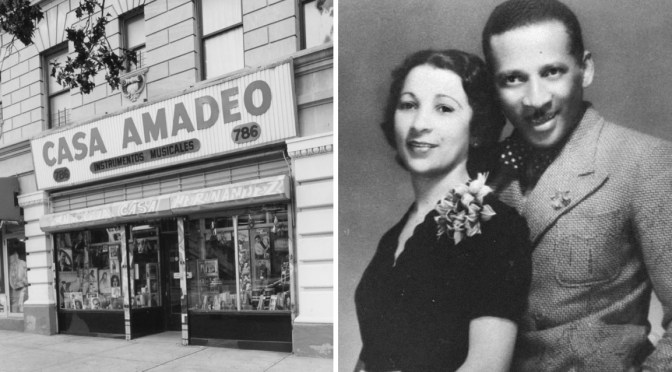
Recording Latin Music History in New York City
Added to the National Register of Historic Places in 2001, Casa Amadeo, antigua Casa Hernández is best known as the Bronx’s longest continually run music establishment and the oldest Latin music store in New York City. The store’s founder, Victoria Hernández, is one of the earliest female Puerto Rican entrepreneurs in the city. The National Register listing highlights her story and the lasting impact she had on the city’s Latin music scene.
This history is just part of the story! Read the complete nomination for Casa Amadeo.
Looming on a corner along Prospect Avenue in the Bronx, this 1905 Neo-Renaissance style apartment building is home to a cornerstone of New York City’s Latin music history.

 New York State Parks and Historic Sites Blog