When Ann Rutland Schulze goes to the historic 30 Mile Point Lighthouse at Golden Hill State Park on Lake Ontario, she feels at home.
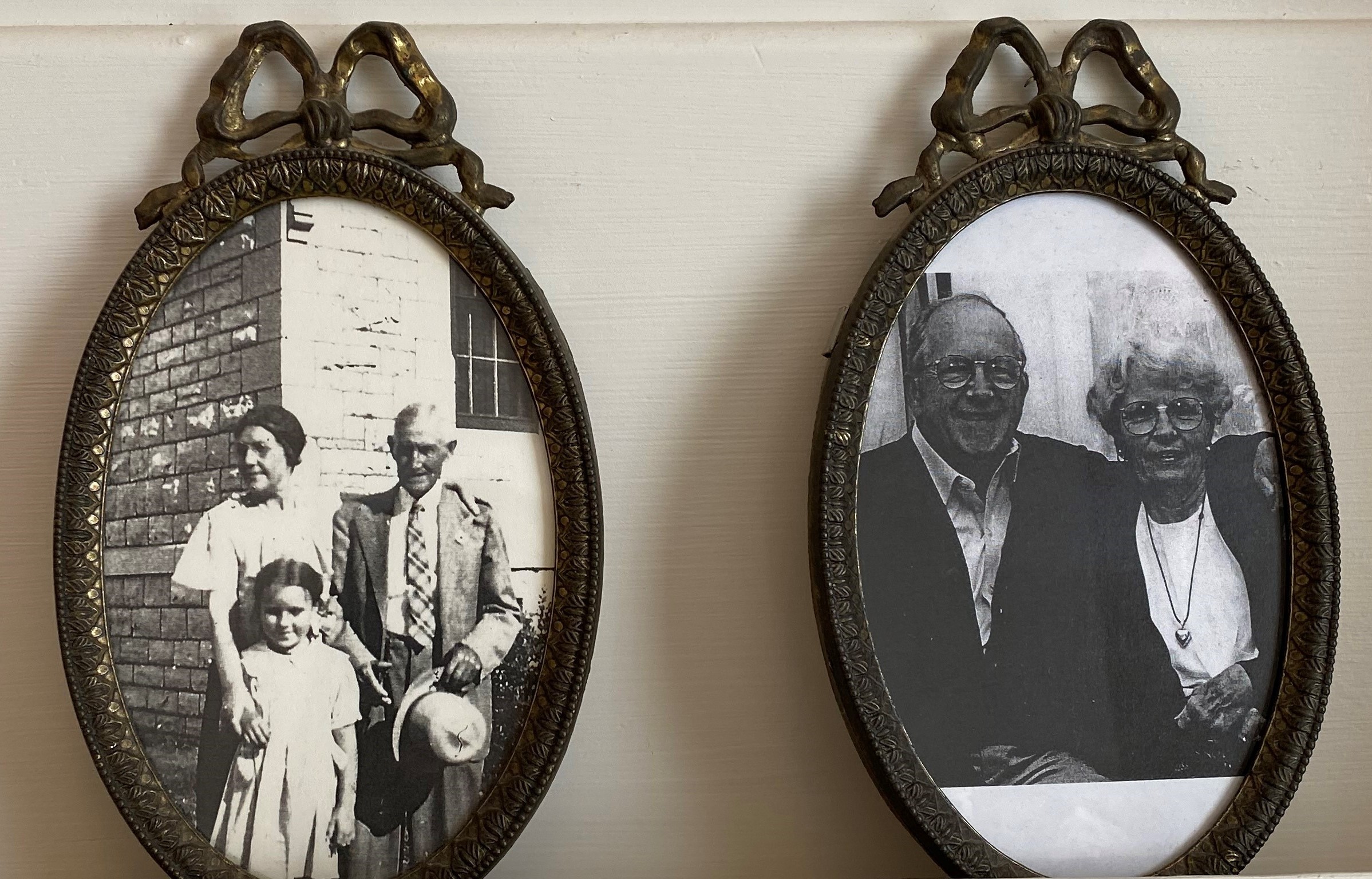
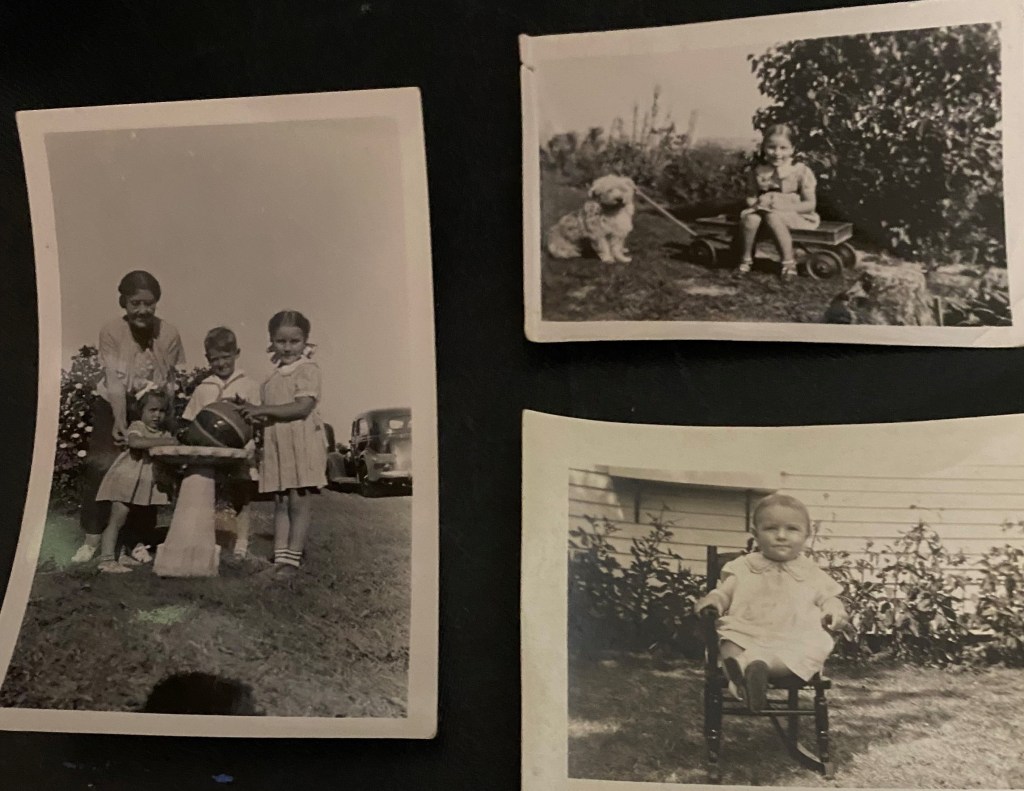
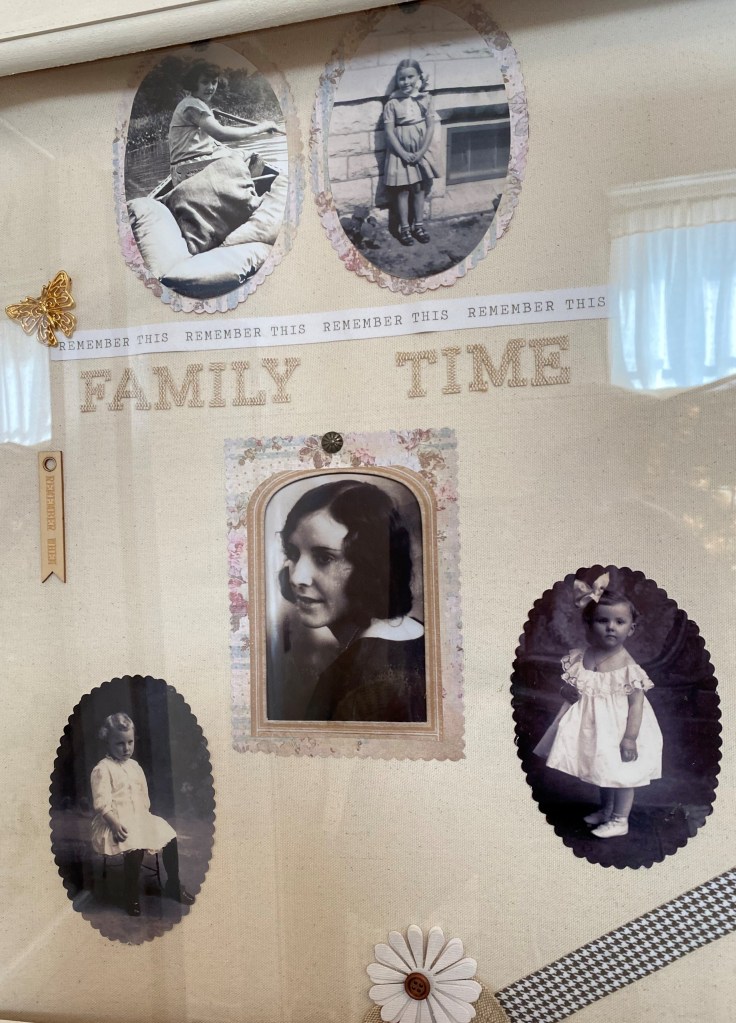
Inside one of the rooms are black-and-white pictures of a former lighthouse keeper and his family who once lived there. Some show their granddaughter, a little girl named Beverly who grew up to become Ann’s mother.
Not too far away, along the banks of a creek, a teenage boy who was fishing got teased by a friend about that girl who lived in the lighthouse with her grandparents. The boy’s name was Richard Rutland, and he later married Beverly. They had Ann and two other children, Julie and Richard.
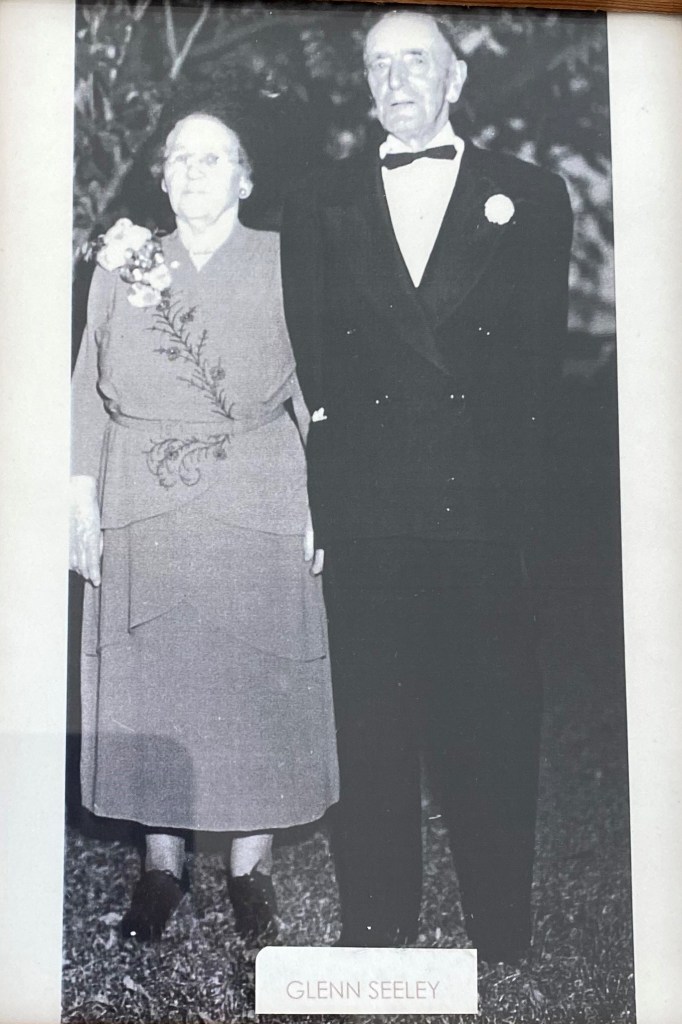
The picture to the left shows young Beverly with her grandparents, Glenn and Cora Seeley. Shown right is Beverly with her husband, Richard.
Now, Schulze , her husband Martin, and their sons Tyler and Shaun, run a family-owned vineyard and winery about a half-hour away from the lighthouse in the Niagara County town of Burt, where visitors can hear stories of a time when a family of six lived in isolation and simplicity in the lighthouse on a bluff overlooking the lake.
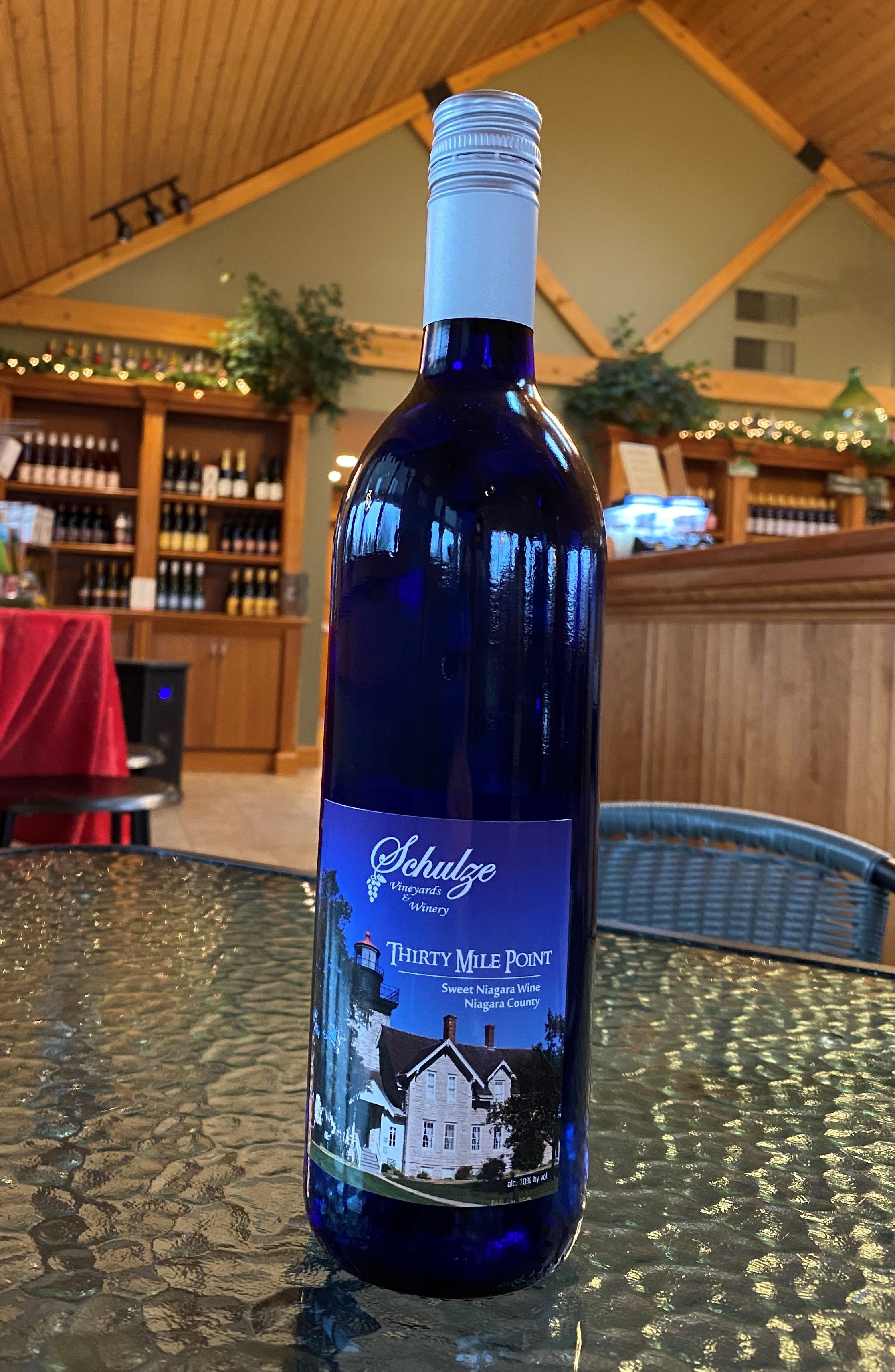
One of their wines even features a picture of the lighthouse.
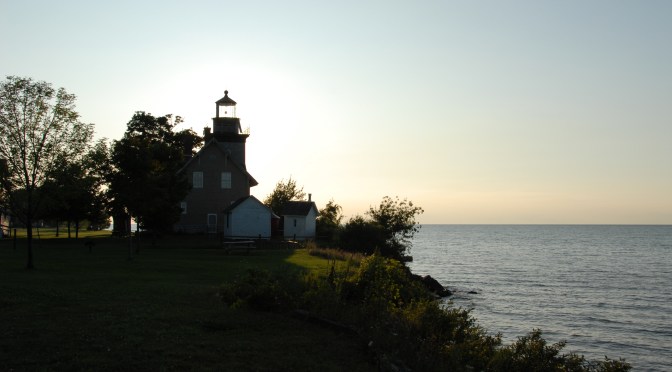
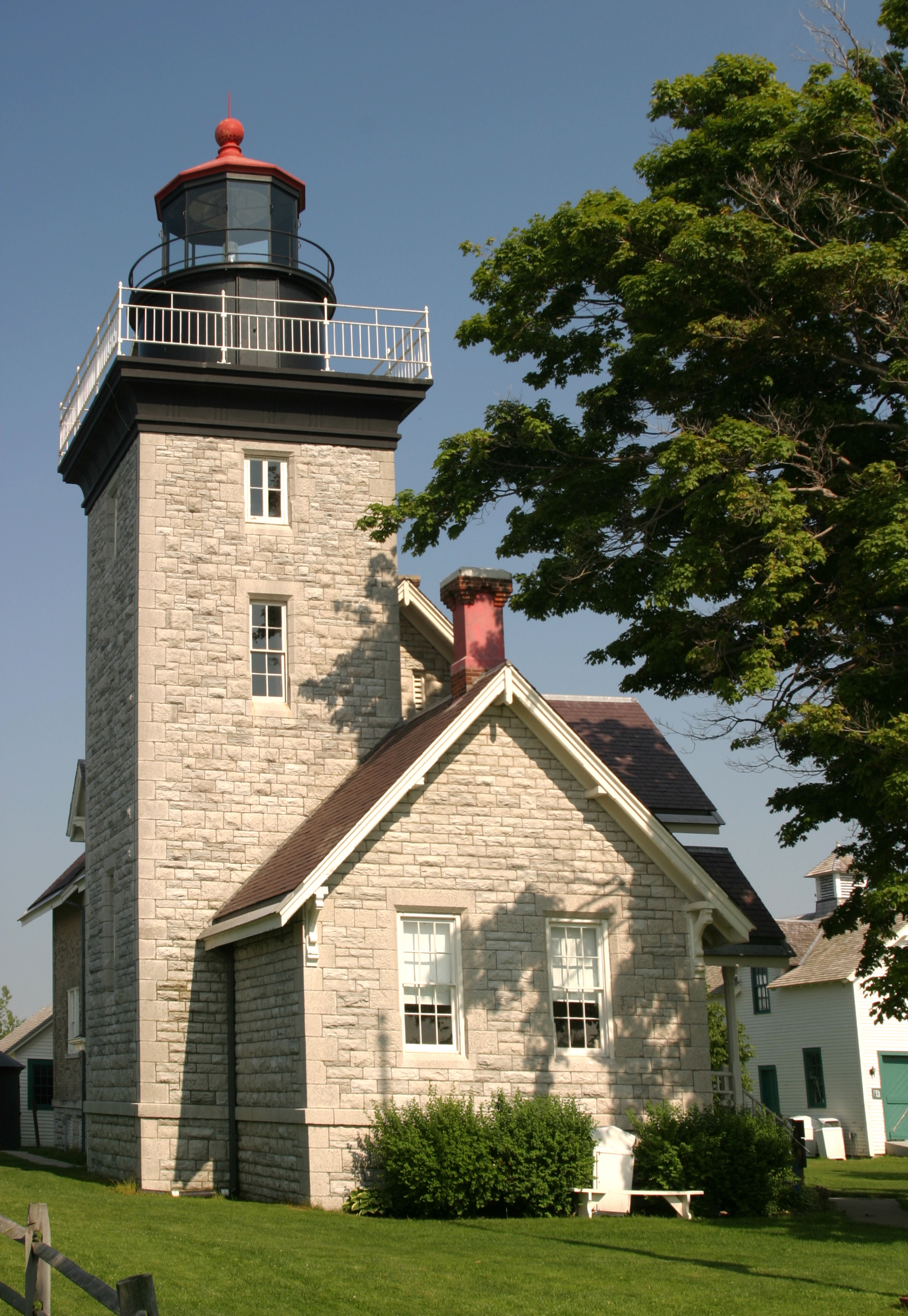
Use the slider bar to see on the left, the Schulzes’ wine featuring the 30 Mile Point Lighthouse, and on the right, the lighthouse itself on a bluff at Golden Hill State Park.
“My mother certainly enjoyed growing up here, and she was so pleased that this place wasn’t just let go after it was closed,” said Schulze. “This lighthouse has been so beautifully preserved as an emblem of the history of this region. It is the official town seal of Somerset. The downstairs of the lighthouse is the way it was when they lived here. It has what the park has named the “Beverly Room,” which has a wicker crib, a rocking chair, and pictures of Beverly and my great-grandparents.”
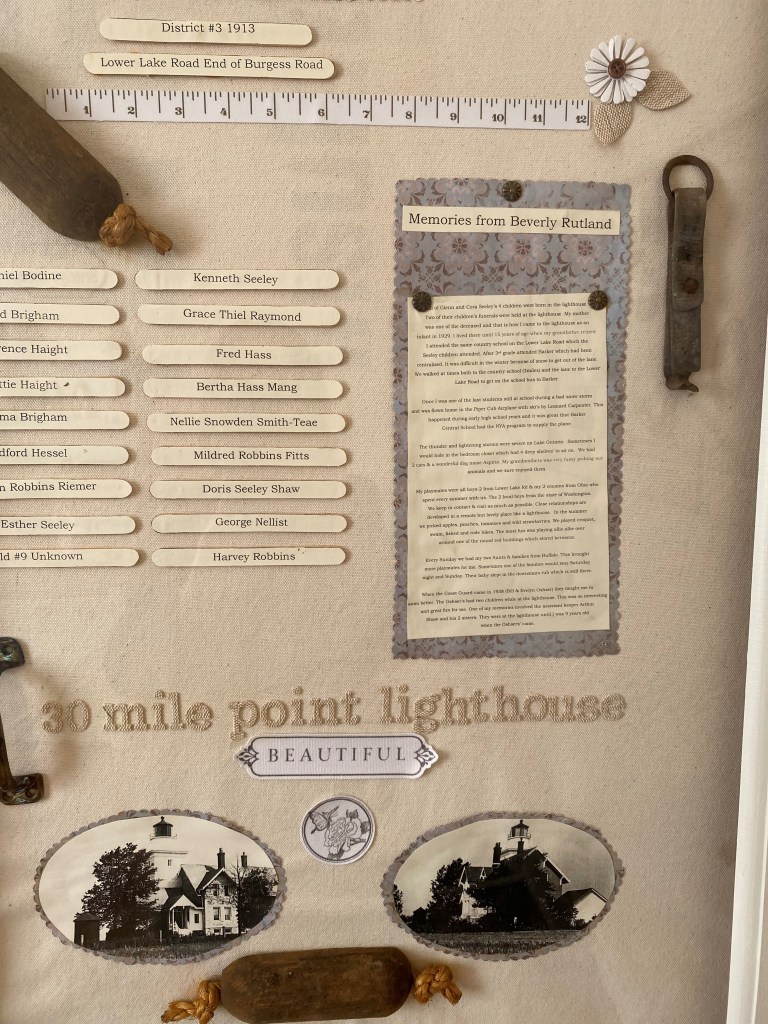
Glenn and Cora SeeleyBeverly as a young girl, with her dog, named Aspirin, in the top right photographBeverly’s recollections of growing up in the lighthouse are displayed in the “Beverly Room” there.
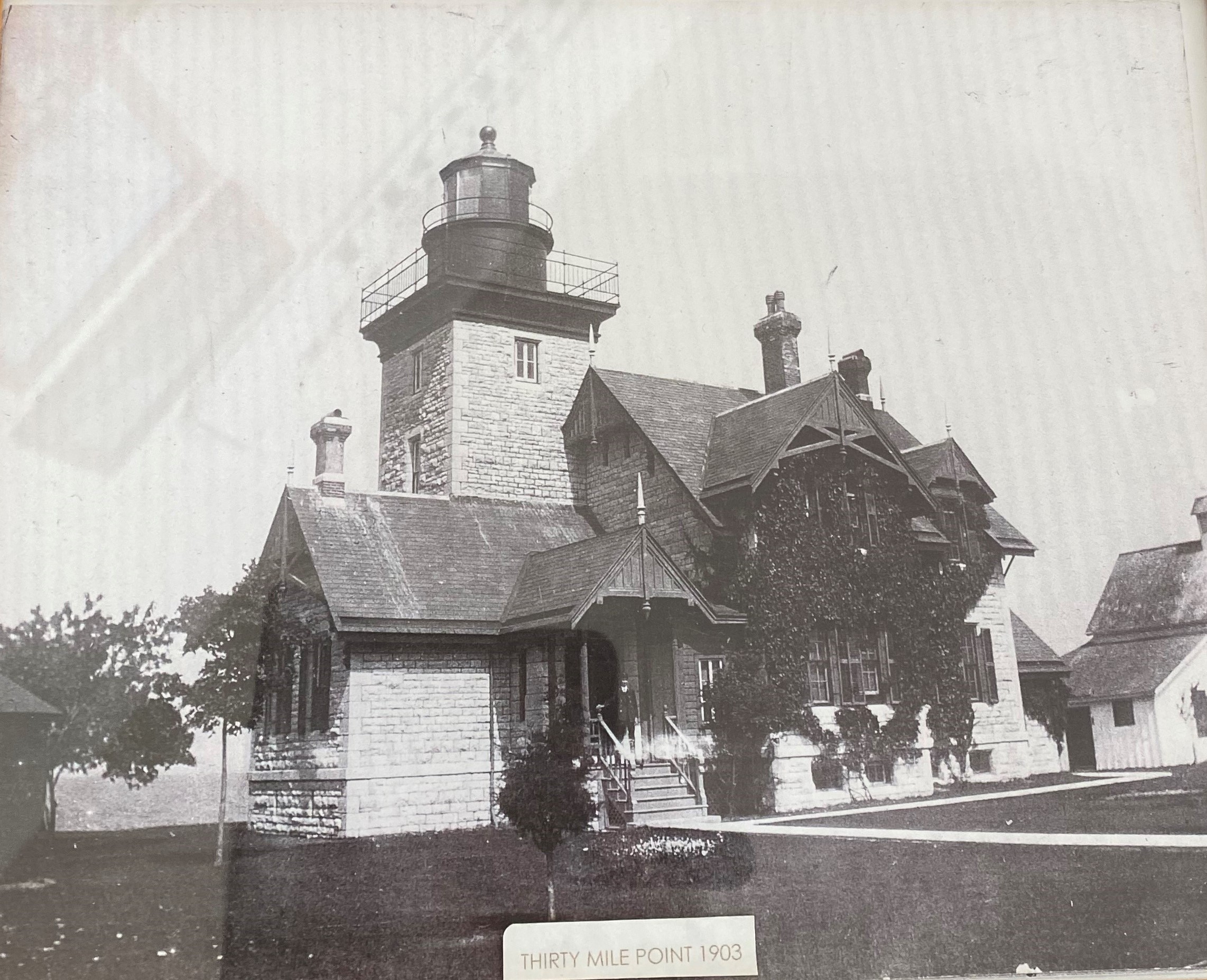
The 30 Mile Point Lighthouse, so named because it is 30 miles east of the Niagara River, was built in 1875 to help warn passing ships of dangerous shoals in the lake. It was decommissioned by the federal government in 1958 and its light removed, and in 1984 the U.S. Coast Guard transferred the lighthouse to Golden Hills State Park. The limestone structure is now on the Federal and State Registers of Historic Places.
During the decades that passed in between, the lighthouse was a residence for 13 different keepers and their assorted families whose job it was to keep the light lit. The longest tenured of those, Glenn R. Seeley served from 1903 to 1945 with support from his wife, Cora. The couple had four children and also raised Beverly, their granddaughter, after their daughter passed away in childbirth.
Glenn Seeley on the front porch of the lighthouse.
“My mother said it was wonderful place to grow up. She remembered her grandfather whitewashing the lighthouse once a year so it could be better spotted by passing ships and making her a concrete pond so she could have goldfish. Her grandfather would walk her to the nearby one-room schoolhouse. And she remembered that the lighthouse got the first telephone in the area,” said Schulze.
Beverly lived there until age 15, when her grandfather retired and moved the family to the nearby village of Olcott. She later went to college, became a public health nurse, and had a family of her own.
All through her life, Beverly remained connected to the lighthouse, coming there with her family for picnics or other events. “My three boys were in the Boy Scouts, and the troop came to the lighthouse when the U.S. Post Office issued a stamp for it in 1995. She was at the ceremony for that,” Schulze said.
The U.S. Postal Service issued a stamp featuring 30 Mile Point Lighthouse in 1995.
A year later, the not-for-profit Friends of the Thirty Mile Point Lighthouse group was formed, to support the preservation of the lighthouse. And in 1998, the light, which had been removed four decades earlier, was restored.
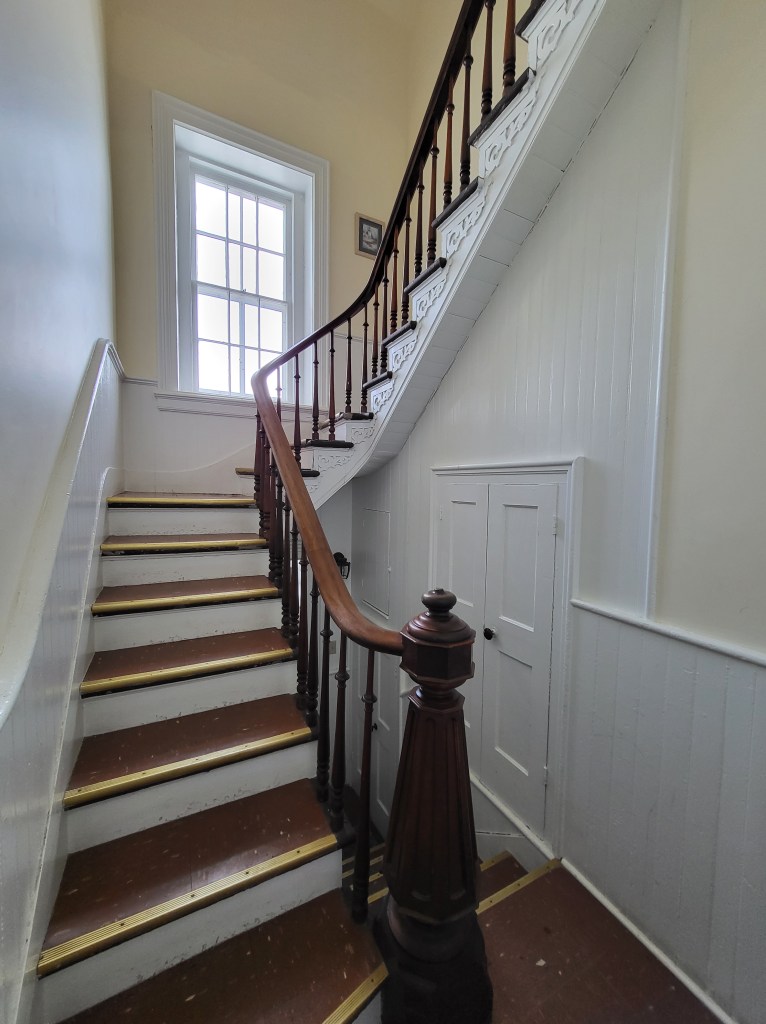
In her handwritten note cards, Beverly recalled the family doing its laundry in a washtub that was originally a copper boiler, and initially having no inside bathroom, only a privy that was cold in the winter. They later got the first inside toilet and telephone in town. She wrote how the children of the assistant keeper, who lived there in a separate residence with his family, taught her how to “swim and fish and play cards.” And that she was so afraid of the massive lightning storms that would cross the lake that she would hide in a closet under the stairs until the crashing passed.
Eventually, Beverly’s health began to fail, and such nostalgic trips to the lighthouse became impossible. Beverly passed away in 2010 at age 80.
Visitors who want to get a taste of lighthouse life can rent the second floor “cottage” of the facility for overnight stays. The former assistant keeper’s quarters, the cottage has a living room with an electric fireplace, bath with an old-fashioned tub, three bedrooms, and an awesome view of Lake Ontario.
Guests will notice the craftsmanship of the building, especially the original wooden double doors, with ornate knobs and lock set. All rentals are made through the website https://newyorkstateparks.reserveamerica.com/ or by calling 1-800-456-2267.
Click through the slideshow below to get a look inside…
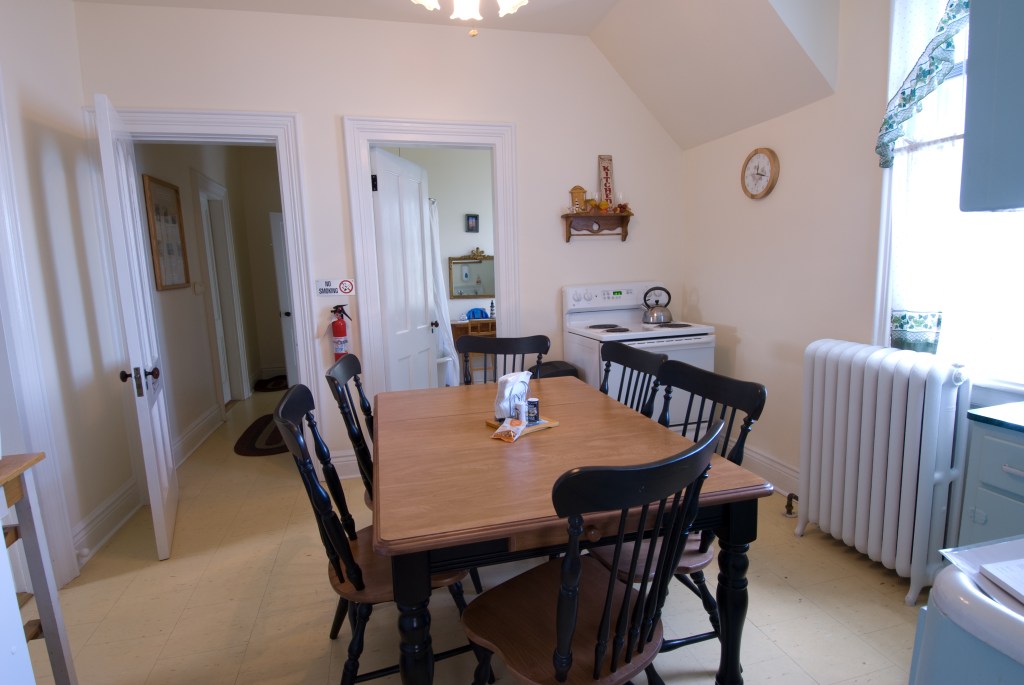
Renters are provided with a private picnic area with a barbecue grill and picnic table. This vacation rental offers a private entrance, kitchen with refrigerator, electric stove, microwave, coffee maker, cooking utensils, silverware and dishes, living room with electric fireplace, couch, two chairs and a writing desk, full bath with an old-fashioned bathtub, three bedrooms with queen size beds and pillows and a view of Lake Ontario that is stunning.
Visitors looking at the lighthouse’s “memory book” will see some entries written by Beverly herself. The lighthouse cottage is more than just a place to stay. It is place of beauty, reflecting lives filled with long nights, hard work, rough waters, violent storms, joy, heartbreak, and family bonds that don’t break.
Post by Brian Nearing, Deputy Public Information Officer, NYS Parks
About Golden Hill State Park
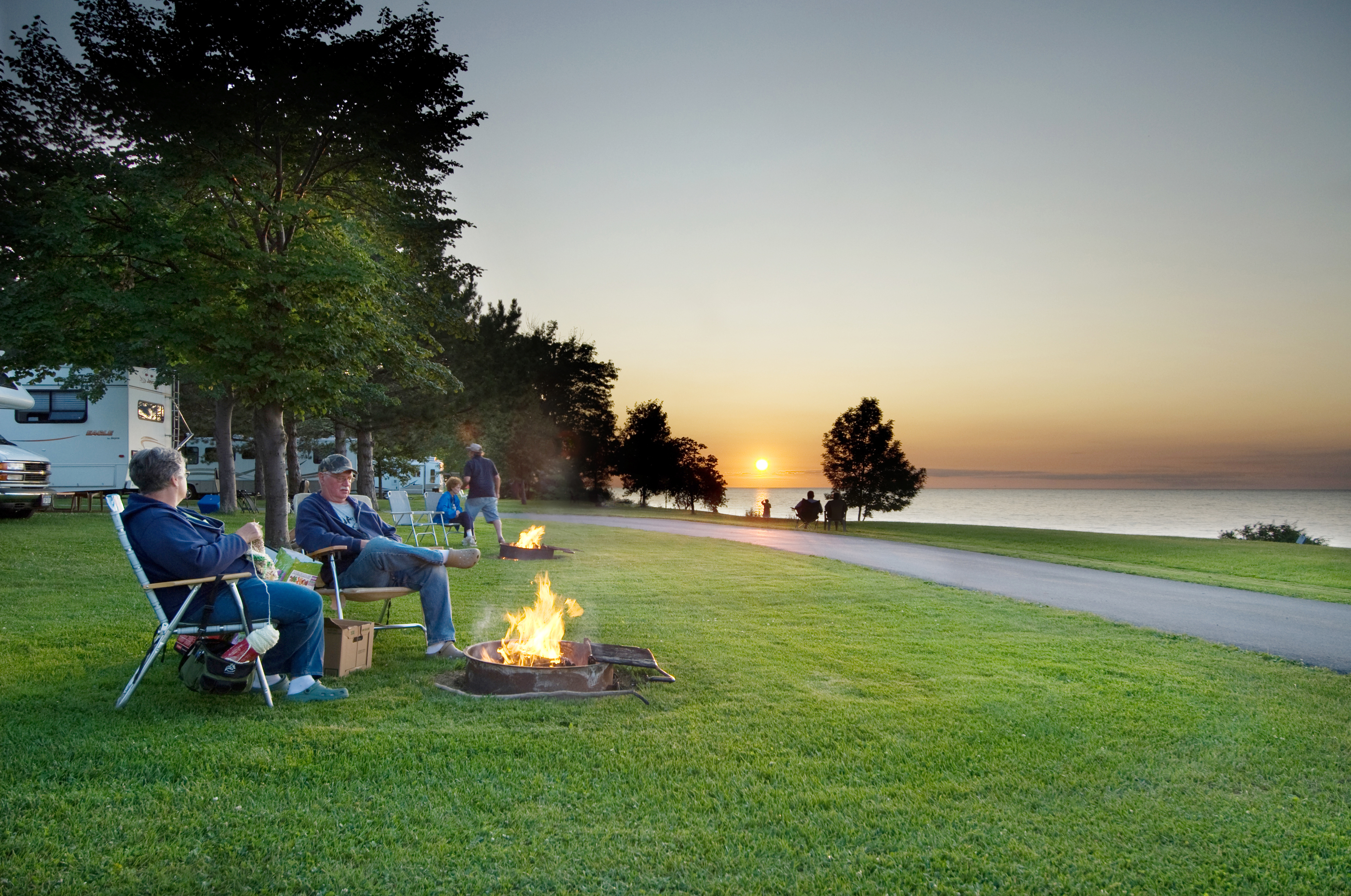
Located in Niagara County, this park along the Lake Ontario shoreline covers 510 acres. Created in 1962, the park has 59 campsites, six yurts, two pavilions, a new playground, a volleyball court, softball field, two picnic areas, hiking trails, a disc golf course, and a boat launch.
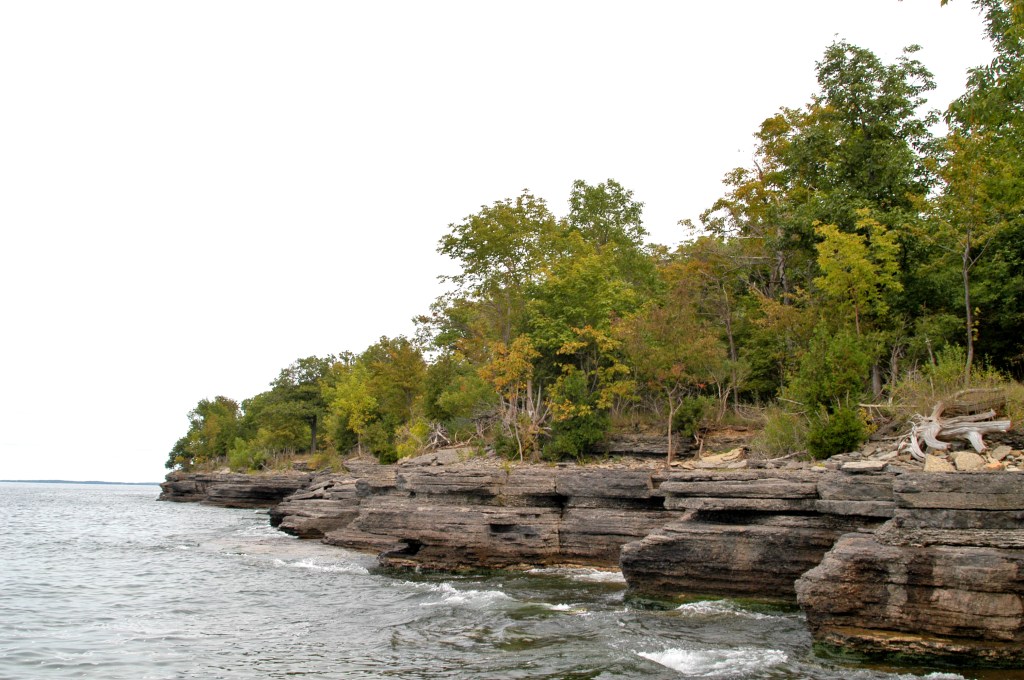
With 80-foot cliffs overlooking eastern Lake Ontario, 14 miles of hiking trails, a dog park, a state-of-the-art playground, a residential cottage that sleeps eight, and a globally rare ecosystem, Robert G. Wehle State Park is a gem.
This striking landscape also has a military history of helping to defend the country. Between 1895 and 1947 before it was a park, the U.S. military used this property as training grounds. The park includes remnants of the Stony Point Rifle Range, where soldiers trained for combat, as well as shoreline concrete observer posts where spotters oversaw aerial gunnery target practice.
In 1963, the U.S. Army sold this land to Louis Wehle, founder of the post-Prohibition Genesee brewery, and Thomas Nagle, a Rochester car dealer. In succeeding years, Wehle and his son, Robert, maintained the property as a cattle farm, game preserve, and rural retreat for raising of internationally-renowned hunting dogs . After Robert Wehle’s death in 2002, the state Department of Environmental Conservation acquired the land, later passing it State Parks to establish as Robert G. Wehle State Park in 2003.
Click on this slideshow below for scenery at the park:
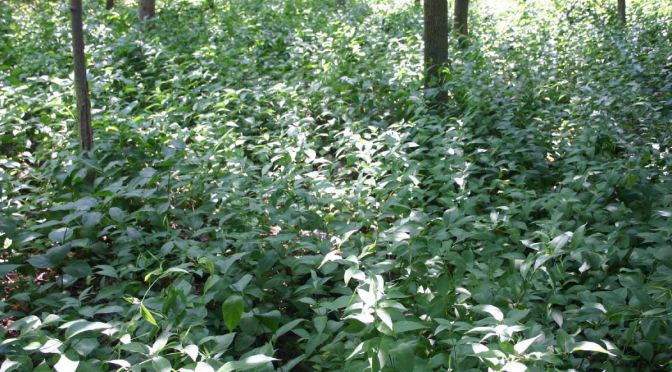
But visitors to this park may notice something else beyond its beauty _ large areas overrun by a strange, twining vine that seems to grow everywhere that is not mowed lawn, leaving few if any other plants surviving. Before his death, Robert Wehle was trying, with limited success, to control this invasive plant, known as pale swallow-wort (Vincetoxicum rossicum).
Now, decades after it was used to help train soldiers, this park is again on the front lines of a new mission: To be part of a campaign to learn whether a small moth found in Europe and Asia can help fight this invading perennial plant, which has spread throughout the eastern U.S. and Canada.
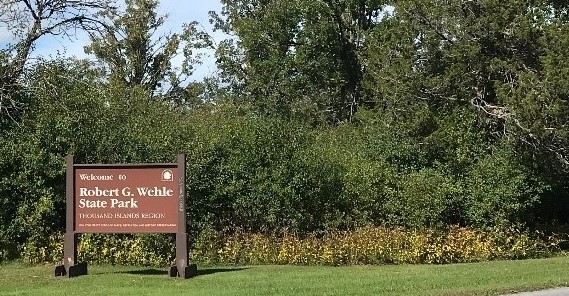
Pale swallow-wort at the entrance to Robert G. Wehle State Park in Jefferson County. The plant has begun to turn yellow at the end of the summer.
But first, what is this aggressive interloper that drives out other plants wherever it spreads?
Also given the ominous name of “dog-strangling vine,” pale swallow-wort is a native of Ukraine that was introduced to North America in the mid- to late-1800s as an ornamental vine in herbariums and greenhouses. Once here, it began expanding into old fields, pastures, and woodland understories. Pale swallow-wort wipes out native plants in its path due to its vast root system, immense seed production and seed dispersal method (seeds look similar to milkweed seeds and can float far away in the wind), and the production of allelochemicals that inhibit growth of other nearby plants and protect it from grazing animals. Whitetail deer, which will eat most plants, avoid it.
Pale swallow-wort also poses a threat to New York’s population of native Monarch butterflies, which require milkweed to reproduce. Monarchs are known to confuse swallow-wort with milkweed and lay their eggs on it. Due to the chemical composition of swallow-wort, Monarch larvae that feed on the plant usually don’t survive.
All of these traits combine to create the ‘perfect’ invasive species and a land manager’s worst nightmare. So, what has been done and what is still being done to control this tenacious weed?
Robert Wehle noticed this plant on his property, according to anecdotal accounts. The cattle herds that he kept could have suppressed the plant’s invasion in pastures through grazing and trampling. Wehle also utilized fire management to maintain some fields, which could have held swallow-wort at bay temporarily. Records also indicate he tried chemical herbicides to control swallow-wort infestation. This suggests that, like subsequent scientific studies conducted have shown, that Wehle found grazing and burning were not effective control techniques.
After the land became a State Park, grazing, burning, and chemicals were no longer done. Instead, staff began mowing areas around the entrance, maintenance shop, parking lots, rental compound, and trails frequently, which cuts back swallow-wort before it matures enough to produce seeds. But only so much mowing could be done on a 1,100-acre property.
Where mowing stops at Robert G. Wehle State Park, pale swalow-wort often begins.
Pale swallow-wort along trails in the park, above and below. The plant turns yellow in the fall.
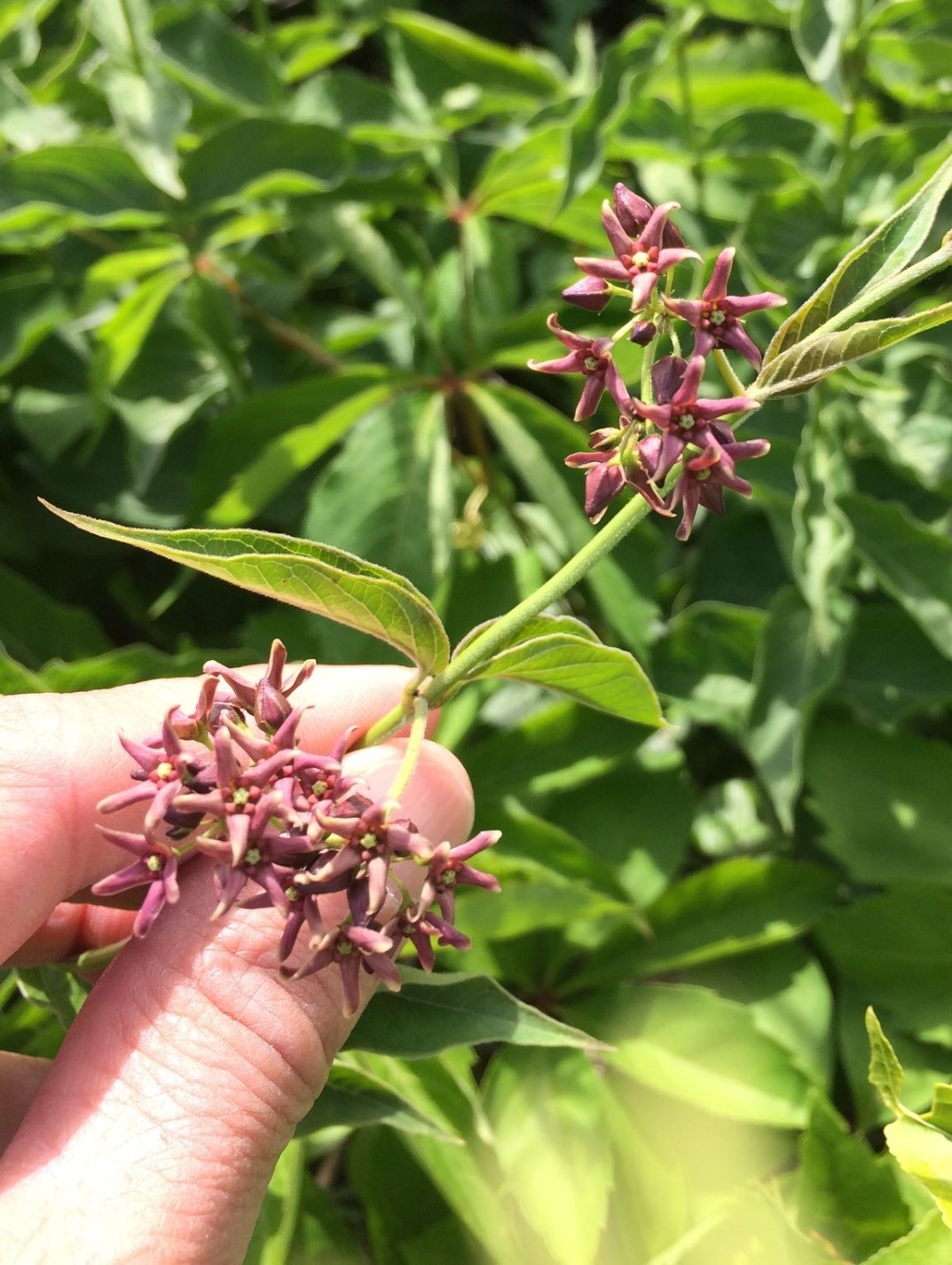
The flowers of pale swallow-wort.
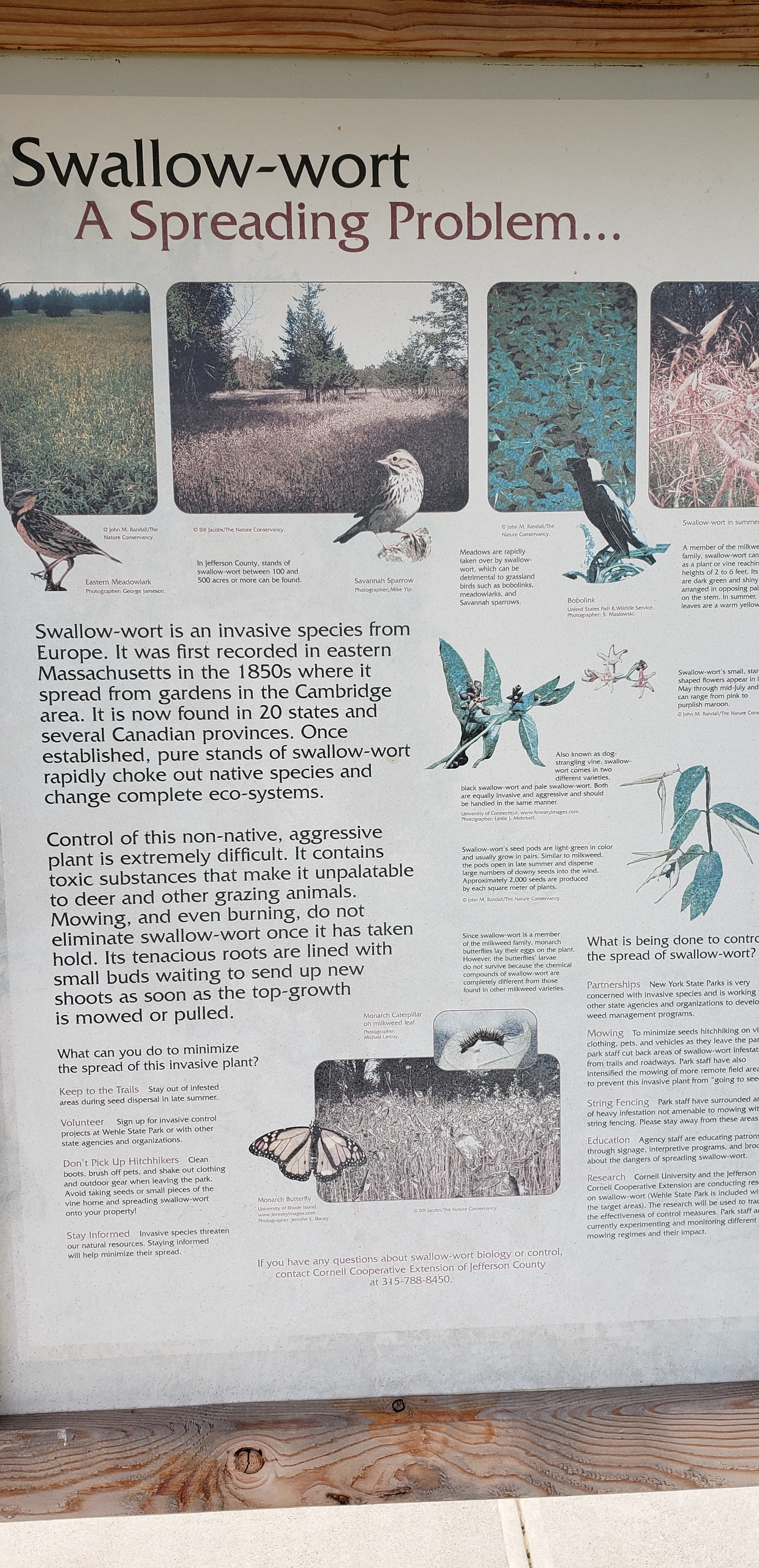
Signs at the park inform visitors about pale swallow-wort and steps being taken to address it.
A plan to address this issue was adopted in 2010 by State Parks, in cooperation with the state Department of Environmental Conservation. The first step was to raise public awareness of the problem. Interpretive signage was installed at most trailheads throughout the park to inform visitors. Boot brush stations were placed at the entrance/exit to the park for patrons to clean off their footwear to limit the spread of swallow-wort and its seeds off the property . The feathery seeds can easily stick to shoes, clothing and even the fur of dogs being walked.
That same year, State Parks hired an excavation company to carry out an experiment that may show promise for restoring degraded portions of Wehle’s globally rare Alvar ecosystem. Alvar is a grass- and sedge-dominated community, with scattered shrubs and sometimes trees. The community occurs on broad, flat expanses of calcareous bedrock, like limestone or dolostone, covered by a thin veneer of mineral soil.
Using a skid steer in selected areas, crews scraped away soil containing swallow-wort roots from limestone bedrock. Once most of the soil was gone, swallow-wort could not take root on bare rock. The areaa was then reseeded with native species. Other native plants showed up on their own, freed from the smothering competition from the swallow-wort. But these efforts could not be used everywhere in the park.
An area of the park reclaimed from pale swallow-wort by scraping off soil and later reseeding it with native plants.
In addition to the Lake Ontario and St. Lawrence regions, pale swallow-wort is found in other areas of the state, including the Finger Lakes and Hudson Valley.(Photo credit – New York State Invasive Species Information, http://nyis.info/)
Where does the moth come into this ongoing effort? For the last two years, Parks and its partners at Cornell University, SUNY College of Environmental Science and Forestry (ESF), Wells College, SUNY Cortland, and the University of Rhode Island have been using Robert G. Wehle State Park to study the viability of Hypena opulenta moths to suppress this invader.
This approach – the use of a natural enemy to deal with an invasive species – is known as biocontrol. In order to ensure that a new introduced species will not negatively impact other plants and animals, the effects must be extensively studied before any widespread use or release can be permitted. It cannot be overstated how extensively biocontrols are scrutinized before potential approval for release. Study can continue for years or even decades. Only after research confirms there will be little or little to no impacts to native species will federal regulators approve the biocontrol to be released.
In this case, the U.S. Department of Agriculture (USDA) in 2017 approved the release of the moths for field testing as biocontrol for pale swallow-wort. After the moths lay eggs on the swallow-wort, the larvae that later emerge eat the plant’s leaves.
For the last two seasons, Hypena moths were placed in cages in areas of swallow-wort at Robert G. Wehle State Park, as well on as nearby Grenadier Island in Lake Ontario off Cape Vincent. The cages ensured that the moths would be confined to the test areas.
Results from 2020 showed promise as one cage showed 100 percent defoliation of swallow-wort within four weeks by the caterpillars. Preliminary results from this year were not as successful. However, this is all part of the scientific process as the battle against the invasive continues with Robert G. Wehle State Park playing its part.
A Hypena opulenta moth inside the mesh cage over a patch of pale swallow-wort. The moth will lay its eggs on the plants.
After eggs hatch, the emerging caterpillars begin eating the plant leaves.
After four weeks, the caterpillars have eaten all the leaves in this cage. (All photos above credited to the St. Lawrence Eastern Lake Ontario Partnership for Regional Invasive Species Management.)
Hopefully one day we can say the tide is turning. Eradication is likely not possible, but containment could give native plants a better chance at a peaceful co-existence. If you visit the park, remember: Use the bootbrushes and check your clothes! Don’t inadvertently spread the ‘perfect invasive.’
Cover Shot – A pale swallow-wort infestation at Robert G. Wehle State Park. All photos NYS Parks unless otherwise credited.
Post by Pete Zimmer, Stewardship Specialist, Mid-State Capital District/Thousand Islands Region, NYS Parks
Resources
Learn more about the biocontrol project from the report below by the St. Lawrence Eastern Lake Ontario Partnership for Regional Invasive Species Management:
On July 22, 1997, Gonzo the Black Vulture stepped timidly onto northern soil for the first time at the Trailside Museums and Zoo at Bear Mountain State Park in the Hudson Valley. Born five years earlier at the Memphis Zoo, and later transferred to the Nashville Zoo, where he served as and education ambassador, Gonzo had made a northbound journey many members of his species would later take.
Early on in his career, Gonzo had developed a significant droop in his left wing, prompting surgery for a partial amputation to aid in his mobility. During his surgery, veterinarians discovered that Gonzo also suffered an irregular heartbeat. While it would be an early retirement from commercial zoo life, Gonzo would not be arriving alone in New York’s strange and unfamiliar landscape.
Gonzoin his enclosure at the Trailside Museums and Zoo at Bear Mountain State Park.
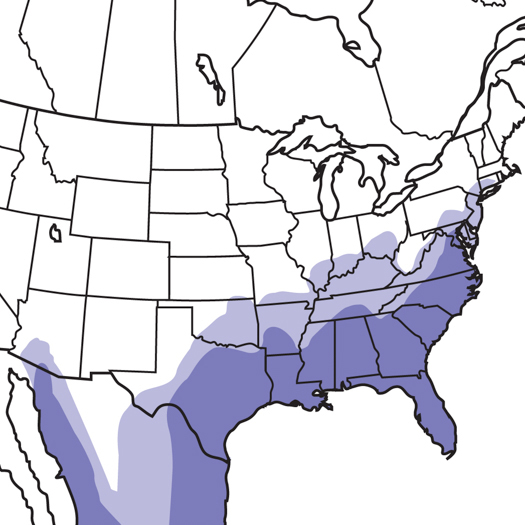
Like Gonzo himself, black vultures are historically southerners. They are a neotropical species ranging from South America to Virginia, which remained the case up to the mid-20th century. However, beginning in the 1980’s and increasingly ever since, black vultures have been engaging in a northward expansion.
Sixteen years prior to Gonzo’s arrival at Trailside, the first ever black vulture was recorded in New York state at Minnewaska State Park Preserve on November 1, 1981 by Dan Smiley, a resident naturalist at the nearby Mohonk Preserve. In 1997, the same year as Gonzo’s arrival, the first black vulture “nest” was recorded nearby on the eastern side of Bonticou Crag in Ulster County by Joe Bridges, a research associate with the Mohonk Preserve. The term “nest” is to be taken lightly, as black vultures aren’t much for creature comforts. Like all new world vulture species, black vultures forego building nests instead opting for hard-to-reach rocky crags and recesses in caves, hollow logs, brush piles, thickets, and abandoned buildings to lay their clutch of eggs.
For Gonzo’s first years at Trailside, his neighbors outside his enclosure would consist primarily of his slightly larger and keen-smelling counterpart, the turkey vulture, which was the dominant vulture species in the Hudson Highlands at the time. Black vultures such as Gonzo lack the turkey vulture’s sense of smell, instead relying their sharp eyesight while coasting thermals to forage for meals. Unable to smell carrion, black vultures have adapted a new strategy, relying instead on turkey vultures to do the work for them. To find food, all black vultures need to do is keep an eye on the lower-soaring turkey vultures. Once the turkey vulture descends, the black vulture follows close behind.
How to tell a black vulture from a turkey vulture
Since his early days at Trailside, Gonzo bore witness to a population boom in New York of his species, a black vulture golden age. The latest large-scale survey of New York birds was performed during 2000 to 2005, splitting the state into 5,000 geographic blocks. It confirmed black vulture nests in five blocks and reported suspected nests in 100; a significant increase since the last survey, performed during 1980 to 1985, which reported no found or suspected nests. Since then, its safe to say that the population has continued to increase as evidenced on local Christmas Bird Counts and the community science site eBird.org.
As to why the black vultures have taken up this avian manifest destiny to spread into New York, we are left only to speculate. Climate change may be a driving factor, turning New York’s colder climate into something milder and more habitable for black vultures. However, the black vulture’s range has shifted northward only along the eastern seaboard from Virginia, and along the Hudson River north to the St. Lawrence, with little change in the Midwest.
Other possible causes include an increase in deer and other mammal populations, and vehicle traffic, leading to increased food availability from roadkill, and greater tolerance of the species and increased protection under the federal Migratory Bird Treaty Act.
The range of the black vulture in North America is extending northward. The darker purple regions is where the birds are common, while the lighter regions are where the vultures are spreading, but less commonly found. (Photo credit – Audubon Society)
Despite being called “vultures”, black vultures and other new world species bear little similarity to old world species. Their common characteristics are a result of convergent evolution, or traits selected for a similar lifestyle. Both share bald featherless heads, perfect for rooting around in carcasses without ruffling any feathers. Both share similar circular flight patterns, utilizing the energy saving tactic of coasting on thermals. And both share the same highly corrosive digestive system; the PH of a black vulture’s stomach acid rests just above 0, akin to car battery acid and nearly 100 times as concentrated as human stomach acid.
Black vultures are instead more closely related to storks with whom they share an interesting, yet effective means of thermoregulation[1]. If a warming climate is the culprit behind the black vulture’s expansion, they will, without a doubt, continue to thrive in warmer climates thanks to urohidrosis; or the habit in some birds of defecating onto the scaly portion of the legs as a cooling method, using evaporative cooling of the fluids.
[1] Thermoregulation is the ability of an organism to keep its body temperature within certain boundaries, even when the surrounding temperatures is very different
Additionally, keeping in mind that a black vulture’s stomach acid is highly acidic, they produce a sterile excrement which cleanses their feet of bacteria and parasites, which may accumulate due to their scavenger lifestyle. Two birds with one stone, if you will
Black vultures will also simultaneously thermoregulate and sanitize through the process of sunbathing. Often observed with wings out and backs to the sun, these birds are warming their bodies while utilizing the UV radiation from sunlight to kill bacteria and parasites on their feathers.
As adults, black vultures experience few predators. Their main threat comes in the form of nest predation either by raccoons or foxes. Despite their relative safety, vultures still maintain a gruesome defense mechanism against predation; defensive vomiting. Utilizing their stomach acid once more, black vultures are able to produce a foul smelling and corrosive vomit that acts as a deterrent and mace for predators.
In addition to clever adaptations, black vultures themselves are undoubtedly intelligent birds, this trait being readily observable in Gonzo and other captive black vultures. Gonzo observed and interacted with the world around him with great curiosity. Behind his soulful brown eyes, there was a spectacular presence, a timid and gentle personality with an almost irrefutable perception and understanding.
The social intelligence hypothesis posits that human “intelligence” has evolved in order to adapt to complex interpersonal relations and is generally accepted in the current theory of evolution. It is believed that as the size of the group increases, it becomes necessary to adapt to more complex social relationships within the group, driving the selective pressures for increased neocortex size. Black vultures are not exempt from this theory, belonging to flocks largely composed of family units and roosting in large masses in the evening.
At Trailside, where the black vultures seemed to have designated the bear exhibit as their daytime roost, their community engagements can be observed through mutual preening, playful chasing, food sharing, and the occasional scuffle. But perhaps the best example of their sociality was seen with Gonzo.
Confined to his exhibit, Gonzo began receiving vulture visitors, and over the years they grew in number to the point which on any given day a sizeable flock of wild black vultures could be seen mingling with Gonzo. Perhaps they were assessing the mystery as to why this member of their species was captive, putting their bald little heads together in a sort of vulture think-tank, or perhaps, lacking his own flock, the wild vultures assimilated him into their own.
Keepers at Trailside have observed on numerous occasions, the passing of food between cage bars to the flock; perhaps, an altruistic sharing of of a captive bird’s bounty. Food sharing in wild vultures is typically only observed within members of the same family. Perhaps Gonzo viewed this flock as a sort of family. Between shared mice and fish, did the vultures swap tales of harsh winters, open skies, and a northbound journey? Voiceless secrets told hushed through throats lacking a syrinx[2]
[2] The syrinx is the lower larynx or voice organ in birds, situated at or near the junction of the trachea and bronchi and well developed in songbirds
Because Black vultures lack the organ responsible for birdsong in many species, their vocal repertoire consists mainly of huffs, grunts, and hisses. Click here to hear a recording of a black vulture from the The Cornell Lab of Ornithology Macaulay Library.
On the black vulture’s sociability, Charles Darwin wrote:
“These vultures certainly may be called gregarious, for they seem to have pleasure in society, and are not solely brought together by the attraction of a common prey. On a fine day a flock may often be observed at a great height, each bird wheeling round and round without closing its wings, in the most graceful evolutions. This is clearly performed for the mere pleasure of the exercise, or perhaps is connected with their matrimonial alliances.”
It certainly does appear that black vultures perform many activities through the sheer pleasure the action brings. Play is widely regarded as a hallmark of intelligence in birds, observable in both crows and ravens. It is an activity which helps an individual gain information regarding its environment; and play in many forms can be observed in the vultures of Bear Mountain. In the bear den and along the zoo trail, black vultures can be seen taking turns chasing each other, tossing about hay, playing with sticks and feathers, ripping apart paper bags, tugging on the mesh of exhibits.
Trailside’s resident black bear, Sadie, shares her exhibit with a wild black vulture.
Play is also one of the reasons many Hudson Valley residents are at odds with vultures. In their exploration of this world, it turns out black vultures can be quite destructive. Their favorite pastimes including tearing rubber from windshield wipers, and shingles from roofs.
Several years ago the Bear Mountain Inn experienced nearly $10,000 in roofing damage by black vultures and, as of 2017, black vultures are estimated to have cause nearly $75,000 in damages statewide. Much like teenagers, if you have enough black vultures in one place without enough to do, they’re bound to get up to trouble. As a consequence, many Hudson Valley businesses and residents are now flying in face of the Migratory Bird Treaty Act and federal law, taking up arms against the vultures. Several methods of deterrence include lasers, sprinklers, pyrotechnics, trapping and effigies; but with a population on the rise, conflict with humans is only more likely to increase.
On the other side of the coin, black vultures are a necessary asset to our ecosystem, serving as “nature’s cleanup crew” feeding on the dead and diseased other carnivores wouldn’t dare venture near, their stomach acid allowing them to safely digest putrid carcasses infected with rabies, botulinum toxin, hog cholera bacteria, and anthrax bacteria that would be lethal to other scavengers. Their work halts the further transmission of these diseases between humans and other wildlife, a role which, in the age of a zoonotic pandemic like COVID-19, is paramount.
For all those still at odds with the black vulture, Gonzo served as a shining exemplar of his species positive qualities, and magnificent beauty, connecting the black vulture in the minds of many to a handsome bird, with a quiet, yet inquisitive personality.
Gonzo passed away at Trailside on Tuesday, June 22, 2021 at 29 ½ years old. While longevity records for black vultures are scarce, Gonzo may have well been one of the oldest specimens in captivity. He leaves behind the legacy of being one of New York’s pioneer black vultures, who instilled a passion and understanding for his species in many visitors.
Gonzo is survived by his flock, a family he made all his own, the wild vultures of Trailside. Months later, the occasional solemn vulture could still be seen idling outside what was once his aviary, wearing all black feathers, dressed as if for mourning.
Gonzo gives himself a health sunbath.
Post and photographs by Malerie Muratori, Student Conservation Association intern at Trailside Zoo.
On Route 9, just south of the village of Kinderhook in Columbia County, a sign proudly proclaims it as the birthplace and home of Martin Van Buren, the eighth U.S. President. Next to that is a purple-and-gold sign for the local Elks lodge.
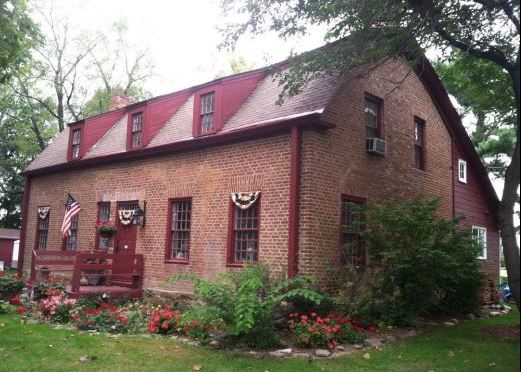
Right across the street sits an unassuming two-story red brick house with dormer windows. While locals know it as the Tory House, there isn’t a sign. But this house has its own story to tell about early New York, one of a family among many thousands that picked the losing side in the Revolutionary War and ended up years later losing that home to the victors in a practice that was to be banned in the U.S. Constitution.
That family was named van Alstyne, one of the many families with Dutch roots that settled in the region during the 18th century to farm. The family had three sons _ Abraham, the oldest; Peter, the middle son; and John, the youngest. By the time that the Revolutionary War broke out in 1775, Peter had built his family the red brick house in Kinderhook on land that he and his brothers had inherited as teenagers two decades earlier when their father died.
Earlier this summer, that house – still used as a residence more than two centuries later – was named to the State and National Registers of Historic Places because of the story of Peter Sander van Alstyne and his family. The narrative of this post is based on research for that nomination submitted on behalf of State Parks by the late Ruth Piwonka, a former member of the Historic Preservation Division at State Parks, and a later Parks consultant and historian for Kinderhook.
Peter Sander Van Alstyne was 32 years old in 1775, already a successful farmer, married and with a young family. A local judge appointed by the Colonial government, he found himself caught up in the conflict the following year when a group of town members come to his home to forcefully tell him that his office, resting on royal authority, no longer had authority to settle disputes over debts. That same year, the beleaguered judge was chosen to be a member of the Albany Committee on Correspondence, a kind of shadow authority created by patriot supporters. But as a supporter of British authority (known as Tory, or a Loyalist), van Alstyne was not to last long on the committee, and he and more than a dozen other suspected Loyalists in that body were soon ordered arrested and imprisoned in 1776.
Many New Yorkers felt as van Alstyne did about their loyalty to England. Some studies estimate that about half of the state’s 200,000 residents held Loyalist sentiments, giving New York the highest percentage of Loyalists among the 13 colonies. Like van Alstyne, many New Yorkers took up arms to oppose what they saw as an an “unnatural” rebellion against the legitimate government.
Van Alstyne was released from jail in early 1777, but after being forced by threats to leave his home, he headed north to join British forces in Canada, and by summer was marching with British General John Burgoyne’s army from Lake Champlain in a bid to capture Albany as part of a strategic plan to split the rebellious colonies in two. His Kinderhook home was being used as a staging point for Loyalists and military supplies in the event that Albany fell.
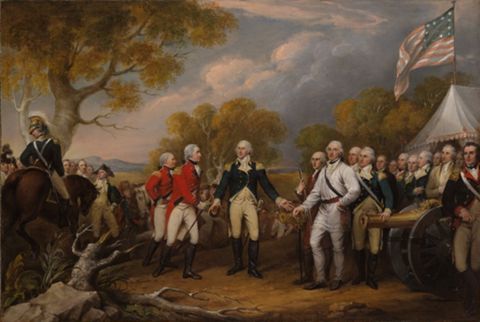
But that moment was not to come, and van Alstyne was there when Burgoyne’s forces were defeated at the Battle of Saratoga that September, a battle that marked a turning point in the American Revolution and convinced the French to support the rebels.
Surrender of General Burgoyne, painted by John Turnbull, 1822. Showing Burgoyne presenting his sword to American General Horatio Gates at Saratoga, this painting hangs in the U.S. Capitol. Peter Sander van Alstyne took part in this battle – on the losing side. (Photo Credit – Wikipedia Commons)
By 1778, van Alstyne had gone to New York City and Long Island, which were under British control, to command sailors who fought in small boats called bateaux. His armed opposition to the Revolution by this point had put his life at risk. Continental troops stationed near his Kinderhook home were trying to catch him, and had captured some of his associates, some of whom were put to death as traitors. By October 1779, van Alstyne had been formally indicted as an “enemy of the state” by New York authorities under what was called the Forfeiture Act. As the war neared an end, New York officials in early 1783 ordered him stripped of his lands, his livestock, and his home, where his brother John’s family was living.
On Sept. 8, 1783, only five days after the Treaty of Paris ended the Revolutionary War, van Alstyne and his family, along with many other displaced Loyalists from Columbia, Rockland, Orange, Ulster, Westchester, and Dutchess counties, as well as some of the troops from Major Robert Rogers, of the famed Rogers’ Rangers backcountry unit, set sail for British-controlled Canada, according to a 1901 account published by Columbia University.
Settling on the northern shore of Lake Ontario near Quinte Bay, van Alstyne received a government land grant of 1,200 acres and became a prominent member of the community, being appointed a judge and later winning election to the Legislative Assembly of Upper Canada. He died in 1800, at age 57.
The former Kinderhook resident was among thousands of New York Loyalists, perhaps as many as 35,000 people, who left the state during and after the Revolutionary War for refuge in British dominions including Canada, according to the 1901 Columbia University account. That came from a total state population of about 200,000, so the forced migration represented about one in every six New Yorkers.
The 1901 account from Columbia University estimated that during the war, there were “at least 15,000 New York Loyalists serving in the Brish army and navy, and at least 8,500 Loyalist militia, making a total in that state of 23,500 Loyalist troops. This was more than any other colony furnished, and perhaps as many as were raised by all others combined.”
The legacy of these Loyalists who left New York can be found in the historic structures along the St. Lawrence and Lake Ontario. Said State Parks historic researcher William Krattinger, “I focus quite a bit on the built and architectural environment and have seen examples of Dutch-framed barns and houses erected in Ontario, undoubtedly erected by builders from the Hudson, Mohawk and Schoharie valleys who were banished to the north after the Revolution. These New Yorkers brought their material culture with them.”
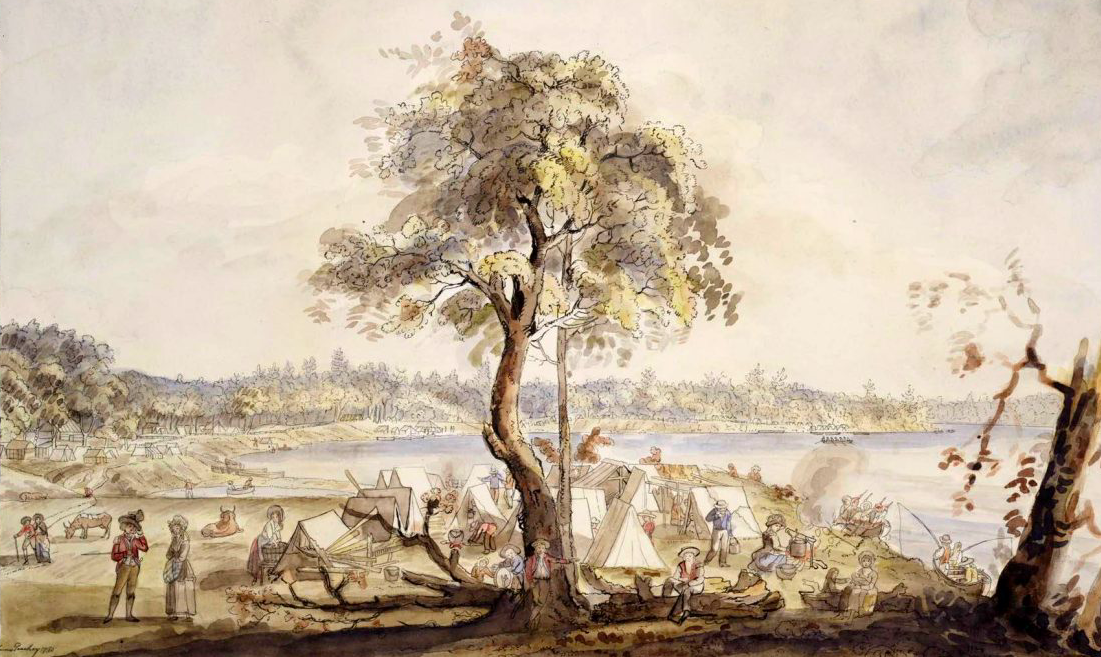
This 1786 painting by James Peachy, a British military surveyor, shows American Loyalists camped out on the northern shore of the St. Lawrence River at Johnstown (across from present-day Ogdensburg) during the summer of 1784 as part of their relocation into new lands in Canada. (Photo Credit – American Revolution Institute – Society of the Cincinnati)
Two years after van Alstyne’s death, New York State officials passed a law in 1802 to renew its still incomplete efforts to confiscate a list of Loyalist properties – a list that included van Alstyne’s Kinderhook home. Offering a bonus to anyone who pointed out forfeited property that had still not been seized, the law described those who had forfeited that property for opposing the Revolution as “attainted.” This concept originates from English criminal law, in which those condemned for a serious capital crime against the state lost not only their life, but also their property, the ability to bequeath property to their descendants, and any hereditary titles.
New York’s bid to seize and sell off remaining Loyalist property two decades after the end of the war came even though the U.S. Constitution, ratified in 1789, specifically prohibits “bills of attainder” passed by legislatures to condemn those deemed state enemies and seize their property.
Here the trail of what happened to van Alstyne’s red brick house grows cold. A clear title to prove who owned the home after van Alstyne lost ownership appears in the public record only starting in the 1850s, although records of forfeiture and sale for other Loyalist properties in Columbia County do exist.
The fate of this home represents just one family’s part of the larger story of how the end of the Revolutionary War meant exile and loss for thousands of New Yorkers who had sided with England, and how the fallout of that time continued for years until the Revolution could truly considered to be ended.
Cover Shot _ Peter Sander Van Alstyne house, Kinderhook. All photos NYS Parks unless otherwise credited.
Post by Brian Nearing, Deputy Public Information Officer, New York State Parks
Resources
Learn more about the Loyalist experience in New York State, using these sources:
Did you know that New York State’s public lands and waters have had a charitable partner for more than 50 years? The Natural Heritage Trust (NHT) was established in 1968 as a non-profit, public benefit corporation with the mission to support parks, outdoor recreation, historic preservation and land and water conservation throughout state lands.
During this time, the NHT has worked with its agency partners — New York State Parks, the Department of Environmental Conservation (DEC) and the Department of State (DOS) to raise funds, secure grants and support programs in benefit of the state’s environmental, outdoor, and historic resources
New York has a long and cherished history of private support for parks and public lands. Starting more than a century ago, large land donations and philanthropy formed the very beginnings of the New York State Park system. During Governor Nelson Rockefeller’s administration, the state established the Natural Heritage Trust to provide the organizational structure for park philanthropy.
In the decades that followed, countless examples of generosity at all levels — from small individual donations to a favorite park or trail, to large foundation grants for construction projects — have supported parks and nature centers, conserved significant historic and cultural sites, and protected natural resources in state lands across New York.
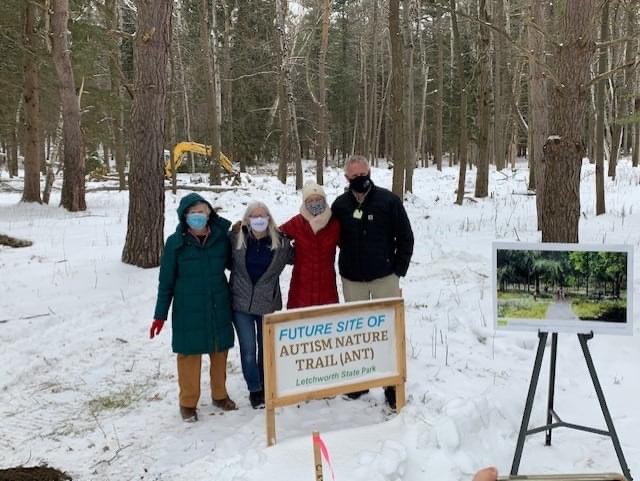
The NHT also works in partnership with Friends groups and other non-profits. It is currently the fundraising partner to The Autism Nature Trail at Letchworth State Park. To date, over $3 million has been raised for the construction of this innovative, fully privately funded sensory trail for families of visitors with autism spectrum disorder (ASD) and other developmental disabilities..
For many New Yorkers, parks are cherished places where families spend valuable time together. Gifts to the NHT are often made in memory and in honor of friends and loved ones for whom a park, trail or place in nature had particular significance. From memorial benches and tribute tiles to estate planning, the NHT is honored to provide this opportunity of remembrance for so many. To learn more about this type of giving to the NHT, visit www.naturalheritagetrust.org. All donations to the NHT are fully tax-deductible.
Careful financial stewardship guides the NHT’s mission, resulting in a robust organization prepared to expand the impact of private philanthropy and strategic partnerships throughout New York State. The NHT currently holds just over $59 million in total assets, including more than $32 million for permanent endowments.
During the 2020-21 fiscal year, it managed over $18 million in program and activity revenues, donations, grants, and corporate sponsorships, while expending approximately $12.4 million in support of a wide variety of exemplary projects like those described above.
Individual donations made up nearly a third of donations to the Trust last year, with the rest coming from foundations, corporations and Friends groups.
The investment policies of the Trust also reflect its responsible stewardship and the environmental and social values inherent in its mission. In early 2021, the NHT’s Board of Directors approved the incorporation of Environmental, Social and Governance (ESG) criteria into the Trust’s investment decisions to encourage sustainable business practices and ethical behavior of companies.
Parks are a vital part of New York’s social fabric. They connect communities and offer both respite and relaxation, and adventure and exploration. New Yorkers are proud of their parks and the NHT is honored to be entrusted with the thousands of donations New Yorkers make every year to support them.






















 New York State Parks and Historic Sites Blog