On April 8, New York State Parks and Historic Sites welcomed people from around the world to share a once-in-a-generation total solar eclipse. Thousands of people enjoyed a rich, memorable experience thanks to the hard work of our staff over a two-year period.
Public Information Officer Angela Berti of the Niagara Region led this effort on behalf of State Parks and represented our agency on the statewide Eclipse Task Force.
Our Park Police used their expertise in peacefully managing large crowds to keep our visitors safe. Countless staff worked behind the scenes and on the front lines to open selected campgrounds for the occasion, plan educational programming, get the word out to the public, make sure our parks were in top condition, and ensure the safety of our visitors.
As Chief of Staff and Commissioner Pro Tempore, I am filled with pride and gratitude for all the hard work of our staff in preparing for this remarkable event. Enjoy reliving the day with photos from around our parks and sites!
With its spectacular scenery, Letchworth State Park is one of the most beloved parks in our system. But a crucial part of its story is the power of thinking differently.
Letchworth State Park.
William Pryor Letchworth, the park’s namesake, was deeply interested in epilepsy, traveling the country and the world in the late 1800s to study how it was treated. It’s not unreasonable to imagine that Letchworth would be proud to know that the park bearing his name is now home to a first-of-its-kind nature trail designed to meet the needs of people with an often misunderstood and stigmatized condition: autism.
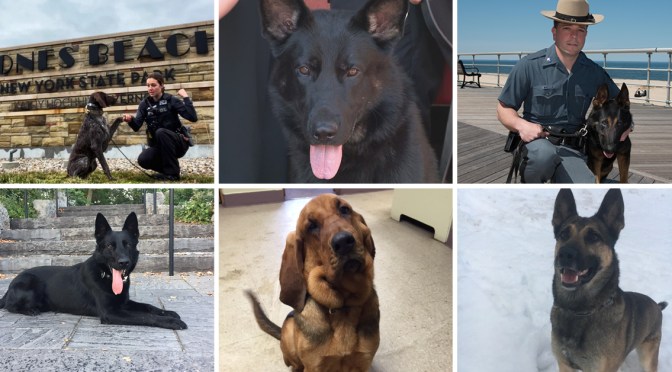
Since 2002, New York State Parks and Historic Sites have been proudly protected by a team of four-legged officers and their handlers. The K-9 program commenced in 2002 with two K-9 teams trained in explosive detection stationed on Long Island. The team expanded from there, adding four more K-9 teams stationed in the Niagara and Saratoga-Capital District Regions, and in the Hudson Valley, all primarily trained for finding explosive devices. This inaugural generation served with distinction until 2014, marked by the retirement of K-9 Chase from the Palisades Region.
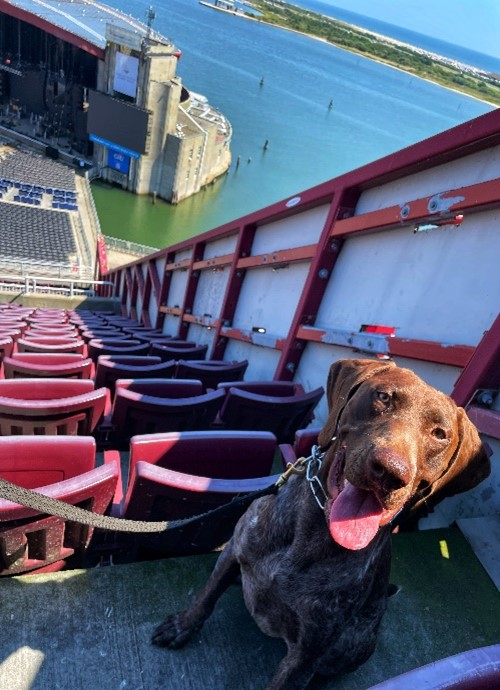
Park Police K-9s at work: Kairos sweeping Northwell Health Theater at Jones Beach, Travers at Saratoga Spa State Park, Niko investigating a crime scene in the Buffalo-Niagara region.
The K-9 force is larger and more diverse than ever today, with six K-9 teams throughout New York. The police dogs range in breeds and specialties, serving not only the State Parks system but the communities they live in, often being called in to help at large events and to find missing people. There is no typical day for a K-9 team. One day, they could be patrolling a park, and the next, tracking down perpetrators. Regardless of their task, they are well-prepared with each new pup undergoing extensive training to ensure they can handle whatever comes their way. Training ranges from explosive detection, search and rescue, tracking, and other disciplines well-suited for this unique breed of officer.
However, each pup is only half of the team. Their handler, a New York State Park Police Officer, is specially trained to work with K-9s and they must work in sync to be successful. Many of the handlers can only describe the relationship they build with their K-9 companions as “special” and their passion for their partners is clear. These teams work and live with each other every day. When not at work, these pups live life much like any other dog would, living at home with their handlers and their families, relaxing, playing, and receiving plenty of pets.
Let‘s dive into the biographies and backgrounds of each of these canine crimefighters, highlighting their unique personalities and showcasing some of the amazing things they have done to make the our state parks safer.
A rare total solar eclipse is passing through western New York, the Finger Lakes, and the Adirondacks on April 8, 2024, and eclipse mania has begun! The eclipse will be fully visible in New York State across a narrow route, referred to as the path of totality, but all New York residents and visitors can still experience a partial eclipse throughout the rest of the state.
Whether you’re in the path or not, what makes an eclipse-viewing experience so special? And what should we expect to see, feel, and be exposed to?
We spoke to David Cheney, Program Executive in NASA’s Heliophysics Division, to shed light on all the need-to-know information. Whether you’re planning to attend one of the eclipse-viewing gatherings scheduled at our parks and historic sites (featuring eclipse-themed activities, discussions and trivia, snacks, and distribution of solar viewing glasses to prevent severe eye injuries); register for and follow NASA’s livestream monitoring the path from Mazatlan, Mexico to Milton, Maine; or just pop outside that day; we’ve got you covered.
NASA’s David Cheney (left) and Lester Morales (right) during our February 2024 interview.
Longer days. Warmer temperatures. More birdsong. The signs of spring have been growing stronger in New York for weeks, and now the season has arrived. We’re proud to share some of the delights of spring with you at our parks and historic sites — here’s hoping we’ll see you out there.
Springing from the Earth
Getting out on the trail in the springtime is an exhilarating experience, as wildflowers begin to bloom, trees return to leaf, and the smells of nature fully return. If you enjoy identifying the plants, insects and animals you see on the trail, consider joining the global nonprofit iNaturalist project. You can use their app to identify flora and fauna you find, record your sightings, or find out from other users what’s been sighted nearby. Below are a few plants to look out for!






 New York State Parks and Historic Sites Blog