Geocaching in a Winter Wonderland for 2022

While the ground may soon be frozen or covered in snow (or not), that doesn’t mean the hunt for a hidden treasure in a state park has to stop.

Through this summer and fall, more than 220 people searching in three State Parks regions found enough geocaches – hidden little containers of trinkets whose locations are identified by Global Position System (GPS) coordinates – to be awarded special 2021 New York State Geocache Challenge coins.

To earn the coins, geocache hunters had to locate at least 45 out of more than 230 concealed caches, with 35 “finds” coming from one of the three regions and the balance from either of the other two regions. Cache-seekers used coordinates with their own GPS devices to locate the caches, and were able to take some trinkets and leave some of their own for subsequent seekers to find.

Altogether, nearly 4,700 people took part in the seasonal challenge, which wrapped up in mid-November and covered 56 state parks and historic sites in Central New York, the Saratoga-Capital District Region, and the Hudson Valley. Odds of finding enough caches to earn a coin worked out to roughly 1 in 20. So obviously, the caches were not in plain sight!
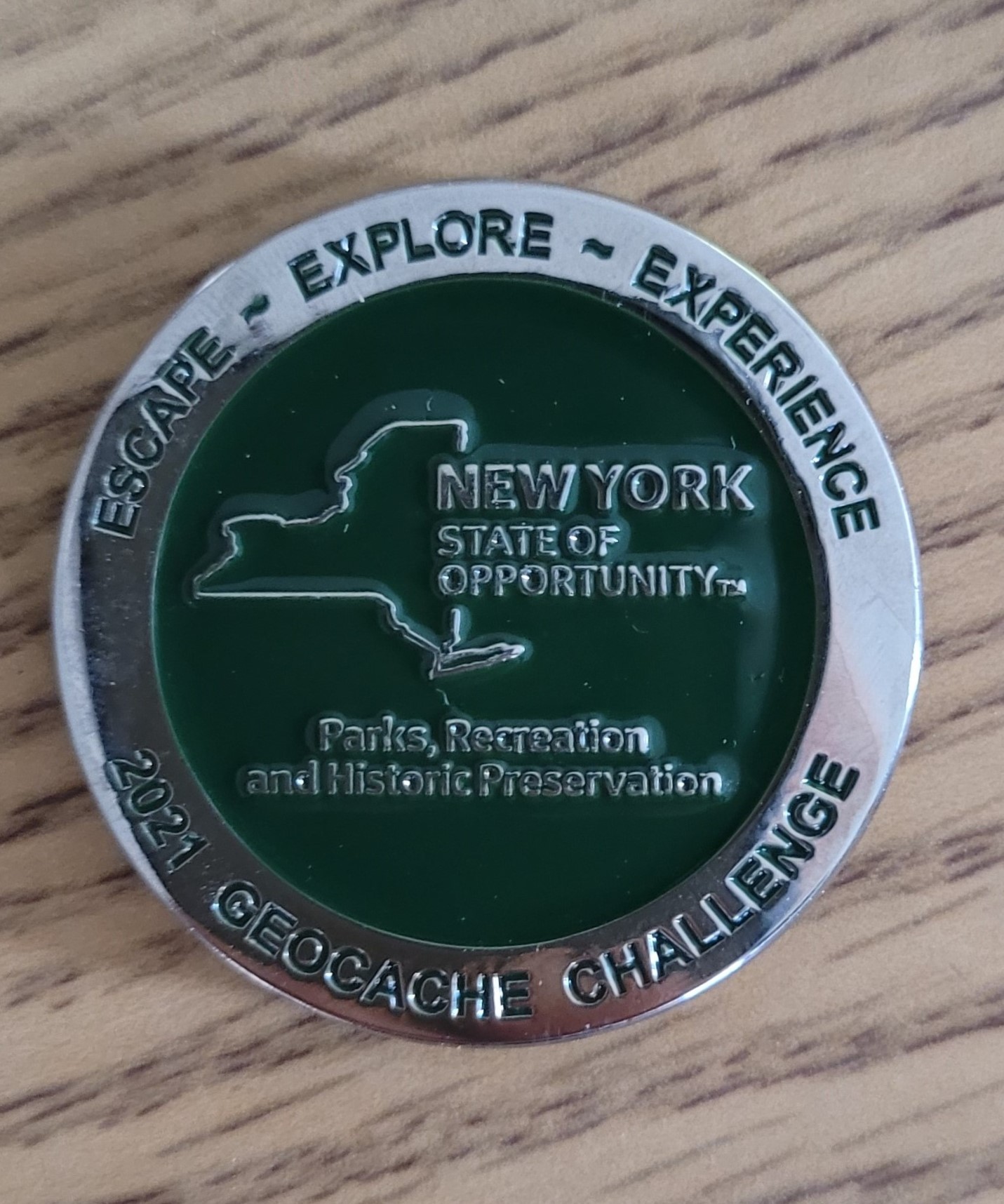
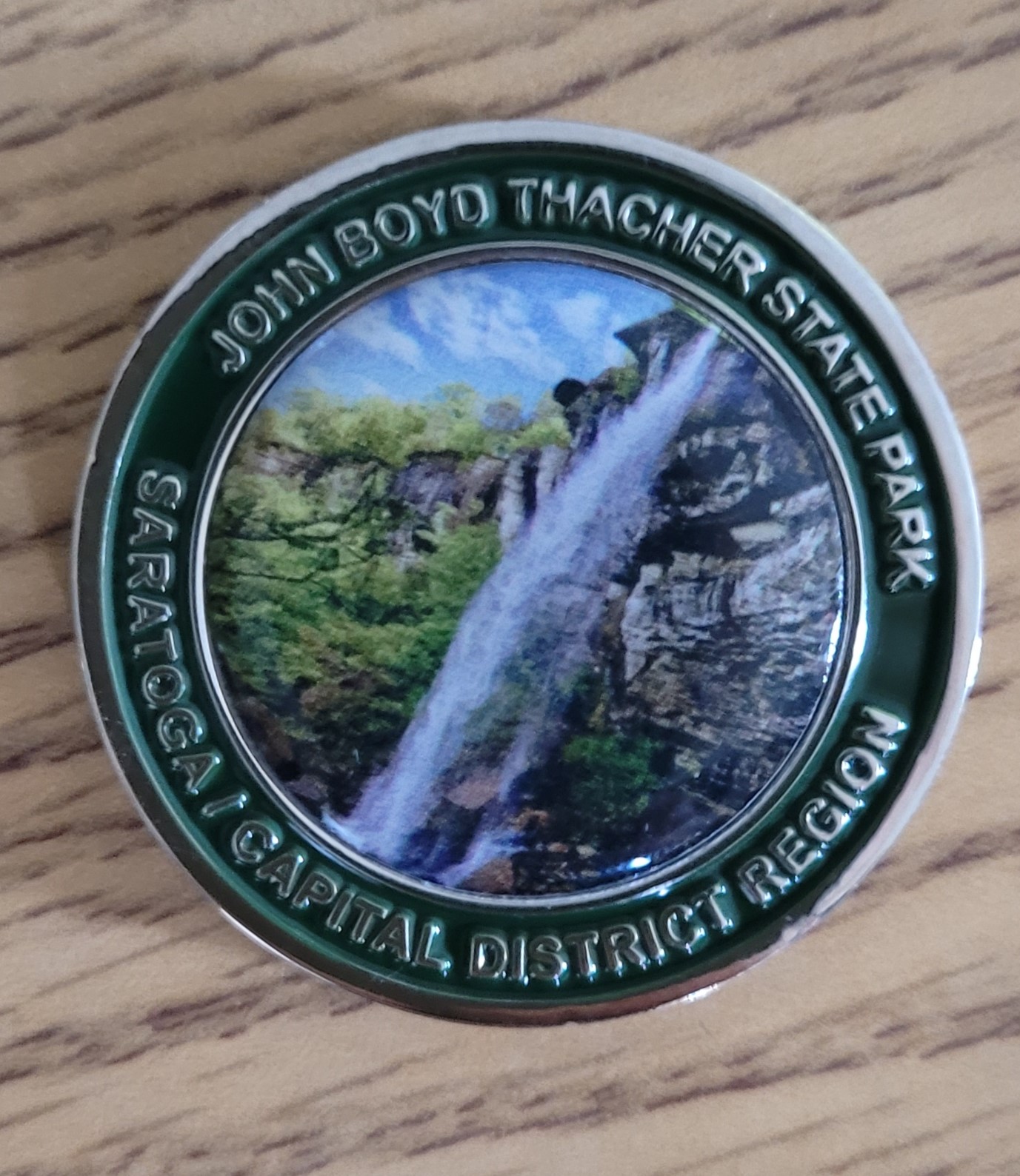
Use the slider bar to compare the front and back of the 2021 New York State Parks Geocache Challenge coin. This coin was available in the Saratoga/Capital District Region, where 78 people found enough caches to qualify for the free coin.

This season, three Parks regions are hosting winter geocache events,

Tthe Saratoga-Capital District Region is hosting a “Winter 33” Geocache Challenge, which will offer 33 “winter-friendly” caches placed in three parks in the region. This challenge will run from Jan. 15 to April 15, 2022. There will no geocoins available during this winter challenge, so it it all just for the fun of it!

In the Taconic Region of the Hudson Valley, the 2022 Winter Geocache Challenge will take place at Lake Taghkanic State Park in Ancram, Clarence Fahnestock Memorial State Park in Cold Spring, and Mills Norrie State Park in Staatsburg.

And in the Central Region, there will nearly 70 geocaches placed at 14 Parks and Historic Sites, including Battle Island, Fort Ontario, Green Lakes, Chenango Valley, Robert Riddell, Glimmerglass, Hyde Hall, Herkimer Home, Chittenango Falls, Clark Reservation, Old Erie Canal, Lorenzo House, and Verona Beach.

And what might a “winter-friendly cache be? Well, that means the items will be hidden in a way that prevents them from being buried in the snow, such as being hung from tree branches or tucked up under a bench or a picnic table.

To find the caches, download the Geocaching app or follow the coordinates of the caches listed on the Geocaching.com website. When you find a cache, stamp your passport with the stamp inside each cache the turn it in to the state park indicated on the passport. Remember to leave the stamp behind for others that come after you.

Geocaching in winter presents its own challenges of snow and cold weather. Make sure to dress for the weather, with warm clothing, gloves and winter boots. Carrying extra water during the winter is advisable to avoid dehydration. And always carry a flashlight or headlamp, as daylight hours are shorter in the winter.

The geocoins awarded previously are trackables, since each coin carries a unique identifying number that can be activated online and then tracked as coins are located, reported and moved to new locations by their owners or subsequent geocachers. “Owners” of the geocoin, along with anyone else who knows its number, can follow its travels online.

So far, the geocoin that has traveled the farthest from a state park is from the 2015  Saratoga-Capital District Region Geocache Challenge. Most recently located in the southernmost point in the U.S. on the Big Island of Hawaii last month, this token (TB6Y60Y) has so far trekked 190,655 miles to such places as the Mediterranean island of Malta, Germany, the Kapaleeshwarar Temple in India, Japan, Israel, and more than 350 other places.

According to the owner’s page, they want to “travel to at least one state park in each state across the USA.” Now there is a mission that we can all get behind!

Happy Holidays and Happy Geocaching!
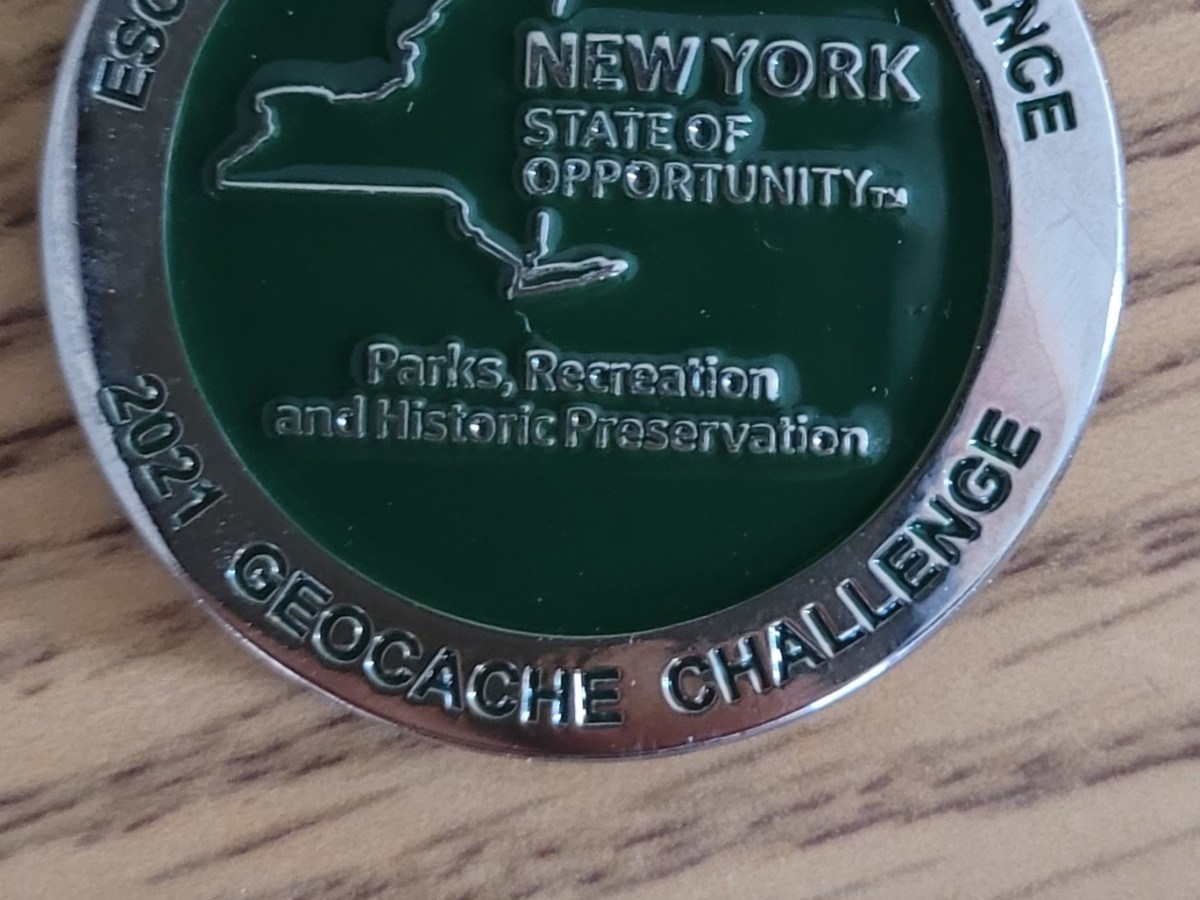
Seek and You Might Find: Geocaching In NYS Parks

I am not stealthy. This is not new information, but I didn’t realize how sloppy I was at sneaking around until I tried geocaching—a worldwide game of locating some of millions of little hidden stashes. This outdoor activity relies on the use of Global Positioning System (GPS) technology, where participants place caches of trinkets, also…


Post by Chris Kenyon, Park Manager, Mine Kill State Park

Welcome 2022 With a First Day Hike!

As the year and its challenges draw to a close, New Yorkers can look forward to 2022, hoping the COVID-19 pandemic that has caused so much stress and tribulation will recede from our lives.

During the pandemic, many people have embraced outdoor activity as a safe and healthy response, and the 11th annual First Day Hike events on Jan. 1 are a great way to ring in the New Year on public hiking trails across the state.

More than 80 such hikes will be held at State Parks, Historic Sites, state Department of Environmental Conservation lands, wildlife areas, Forest Preserve trails and environmental education centers.


In light of the ongoing pandemic, event options for hikes range from self-guided treks to small staff- or volunteer-led hikes to multiple event options that day, allowing participants the time and space to social distance while still enjoying nature’s winter wonders. 

Because of the recent surge in COVID-19, Governor Kathy Hochul last week announced new masking requirements for going inside all public places and businesses. Read more about that here.

There are a variety of hikes from seal walks, fire tower treks, lakefront trails, boardwalks, and canal towpaths, to walks along waterfalls, historic estates, military forts and more.

The walks and hikes are family-friendly, and typically range from one to five miles depending on the location and conditions.  Some First Day Hike events may include drawings for an annual Empire Pass, as well as keepsake giveaways.

Click on this slideshow below to see previous First Day Hike events…


Click here for a listing of Parks events for 2022, or use this interactive map below to locate hikes.

Additional information can be found online at parks.ny.gov and dec.ny.gov. Interested participants are encouraged to check the details of their preferred host site and pre-register where required; alternate locations should be considered as capacity restrictions and registration limits may impact availability.  

As always with winter hiking, remember to dress warmly and in layers, while keeping in mind this old Scandinavian saying: “There is no such thing as bad weather, only bad clothing.”

And with snow and ice possible on many hiking trails, make sure to use proper footwear, and consider adding traction devices, like Microspikes, for additional stability.

Whether maintaining a safe distance in a group or hiking on your own, remember that you are still part of something that is happening across the U.S. in all 50 states, and dates back to the initial First Day Hikes that started in Massachusetts in 1992.

So, get outside, keep safe, and let’s ring in 2022 to welcome better days ahead!

What to do with a Thousand Acres of Swallow-wort?

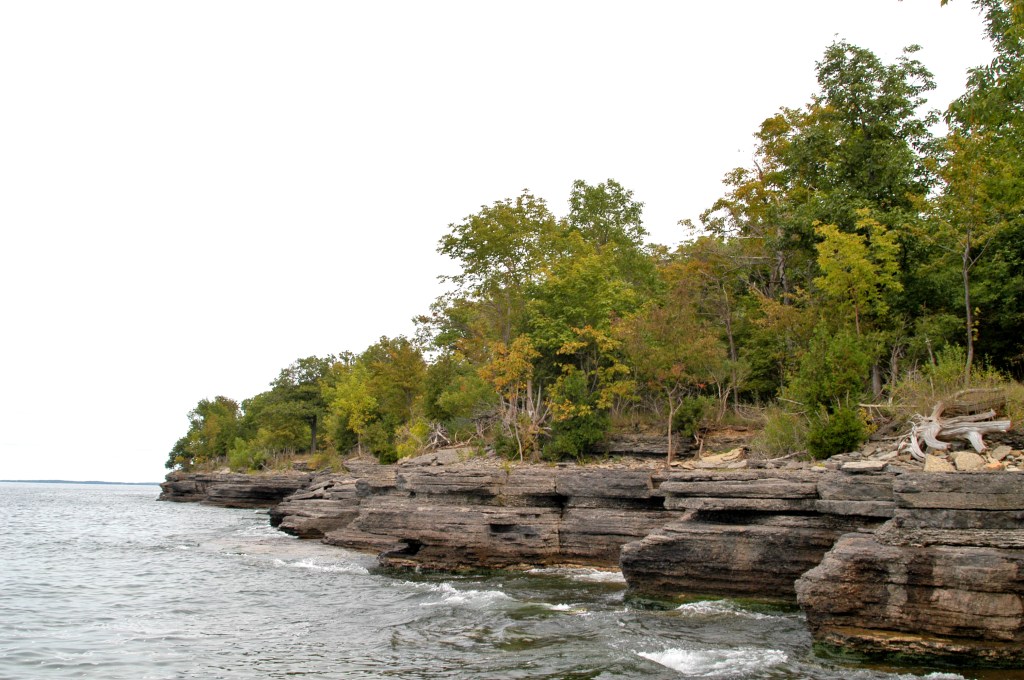
With 80-foot cliffs overlooking eastern Lake Ontario, 14 miles of hiking trails, a dog park, a state-of-the-art playground, a residential cottage that sleeps eight, and a globally rare ecosystem, Robert G. Wehle State Park is a gem.

This striking landscape also has a military history of helping to defend the country. Between 1895 and 1947 before it was a park, the U.S. military used this property as training grounds. The park includes remnants of the Stony Point Rifle Range, where soldiers trained for combat, as well as shoreline concrete observer posts where spotters oversaw aerial gunnery target practice.

In 1963, the U.S. Army sold this land to Louis Wehle, founder of the post-Prohibition Genesee brewery, and Thomas Nagle, a Rochester car dealer. In succeeding years, Wehle and his son, Robert, maintained the property as a cattle farm, game preserve, and rural retreat for raising of internationally-renowned hunting dogs . After Robert Wehle’s death in 2002, the state Department of Environmental Conservation acquired the land, later passing it State Parks to establish as Robert G. Wehle State Park in 2003.

Click on this slideshow below for scenery at the park:

But visitors to this park may notice something else beyond its beauty _ large areas overrun by a strange, twining vine that seems to grow everywhere that is not mowed lawn, leaving few if any other plants surviving. Before his death, Robert Wehle was trying, with limited success, to control this invasive plant, known as pale swallow-wort (Vincetoxicum rossicum).

Now, decades after it was used to help train soldiers, this park is again on the front lines of a new mission: To be part of a campaign to learn whether a small moth found in Europe and Asia can help fight this invading perennial plant, which has spread throughout the eastern U.S. and Canada.

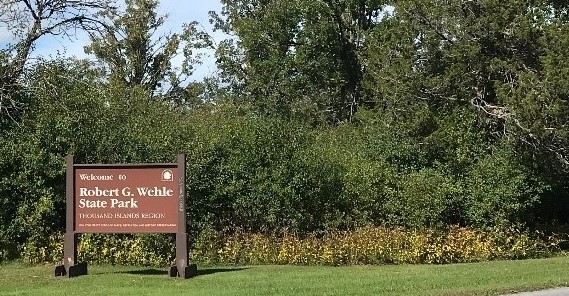
Pale swallow-wort at the entrance to Robert G. Wehle State Park in Jefferson County. The plant has begun to turn yellow at the end of the summer.

But first, what is this aggressive interloper that drives out other plants wherever it spreads?

Also given the ominous name of “dog-strangling vine,” pale swallow-wort is a native of Ukraine that was introduced to North America in the mid- to late-1800s as an ornamental vine in herbariums and greenhouses. Once here, it began expanding into old fields, pastures, and woodland understories. Pale swallow-wort wipes out native plants in its path due to its vast root system, immense seed production and seed dispersal method (seeds look similar to milkweed seeds and can float far away in the wind), and the production of allelochemicals that inhibit growth of other nearby plants and protect it from grazing animals. Whitetail deer, which will eat most plants, avoid it.

Pale swallow-wort also poses a threat to New York’s population of native Monarch butterflies, which require milkweed to reproduce. Monarchs are known to confuse swallow-wort with milkweed and lay their eggs on it. Due to the chemical composition of swallow-wort, Monarch larvae that feed on the plant usually don’t survive.

All of these traits combine to create the ‘perfect’ invasive species and a land manager’s worst nightmare. So, what has been done and what is still being done to control this tenacious weed?

Robert Wehle noticed this plant on his property, according to anecdotal accounts. The cattle herds that he kept could have suppressed the plant’s invasion in pastures through grazing and trampling.  Wehle also utilized fire management to maintain some fields, which could have held swallow-wort at bay temporarily. Records also indicate he tried chemical herbicides to control swallow-wort infestation. This suggests that, like subsequent scientific studies conducted have shown, that Wehle found grazing and burning were not effective control techniques. 

After the land became a State Park, grazing, burning, and chemicals were no longer done.  Instead, staff began mowing areas around the entrance, maintenance shop, parking lots, rental compound, and trails frequently, which cuts back swallow-wort before it matures enough to produce seeds. But only so much mowing could be done on a 1,100-acre property.

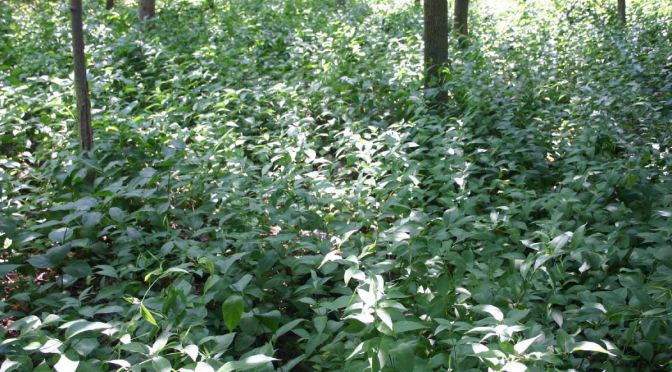
Where mowing stops at Robert G. Wehle State Park, pale swalow-wort often begins.
Pale swallow-wort along trails in the park, above and below. The plant turns yellow in the fall.
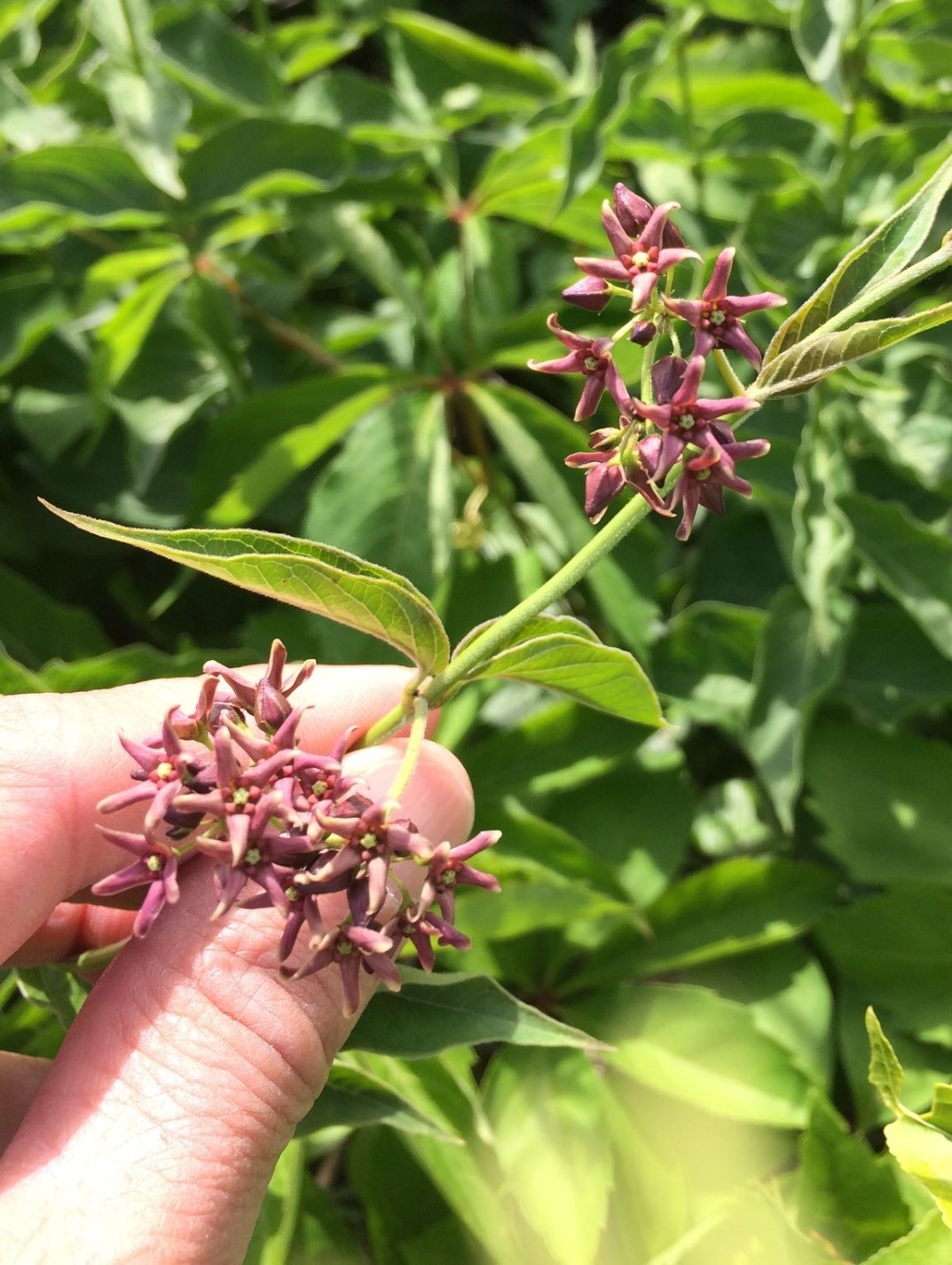
The flowers of pale swallow-wort.

A plan to address this issue was adopted in 2010 by State Parks, in cooperation with the state Department of Environmental Conservation. The first step was to raise public awareness of the problem. Interpretive signage was installed at most trailheads throughout the park to inform visitors. Boot brush stations were placed at the entrance/exit to the park for patrons to clean off their footwear to limit the spread of swallow-wort and its seeds off the property . The feathery seeds can easily stick to shoes, clothing and even the fur of dogs being walked.

That same year, State Parks hired an excavation company to carry out an experiment that may show promise for restoring degraded portions of Wehle’s globally rare Alvar ecosystem. Alvar is a grass- and sedge-dominated community, with scattered shrubs and sometimes trees. The community occurs on broad, flat expanses of calcareous bedrock, like limestone or dolostone, covered by a thin veneer of mineral soil.

Using a skid steer in selected areas, crews scraped away soil containing swallow-wort roots from limestone bedrock. Once most of the soil was gone, swallow-wort could not take root on bare rock. The areaa was then reseeded with native species. Other native plants showed up on their own, freed from the smothering competition from the swallow-wort. But these efforts could not be used everywhere in the park.

An area of the park reclaimed from pale swallow-wort by scraping off soil and later reseeding it with native plants.
In addition to the Lake Ontario and St. Lawrence regions, pale swallow-wort is found in other areas of the state, including the Finger Lakes and Hudson Valley. (Photo credit – New York State Invasive Species Information, http://nyis.info/)

Where does the moth come into this ongoing effort? For the last two years, Parks and its partners at Cornell University, SUNY College of Environmental Science and Forestry (ESF), Wells College, SUNY Cortland, and the University of Rhode Island have been using Robert G. Wehle State Park to study the viability of Hypena opulenta moths to suppress this invader.

This approach – the use of a natural enemy to deal with an invasive species – is known as biocontrol. In order to ensure that a new introduced species will not negatively impact other plants and animals, the effects must be extensively studied before any widespread use or release can be permitted. It cannot be overstated how extensively biocontrols are scrutinized before potential approval for release. Study can continue for years or even decades. Only after research confirms there will be little or little to no impacts to native species will federal regulators approve the biocontrol to be released.

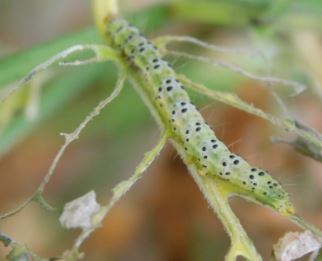
In this case, the U.S. Department of Agriculture (USDA) in 2017 approved the release of the moths for field testing as biocontrol for pale swallow-wort. After the moths lay eggs on the swallow-wort, the larvae that later emerge eat the plant’s leaves.

For the last two seasons, Hypena moths were placed in cages in areas of swallow-wort at Robert G. Wehle State Park, as well on as nearby Grenadier Island in Lake Ontario off Cape Vincent. The cages ensured that the moths would be confined to the test areas.

Results from 2020 showed promise as one cage showed 100 percent defoliation of swallow-wort within four weeks by the caterpillars. Preliminary results from this year were not as successful. However, this is all part of the scientific process as the battle against the invasive continues with Robert G. Wehle State Park playing its part.

A Hypena opulenta moth inside the mesh cage over a patch of pale swallow-wort. The moth will lay its eggs on the plants.
After eggs hatch, the emerging caterpillars begin eating the plant leaves.
After four weeks, the caterpillars have eaten all the leaves in this cage. (All photos above credited to the St. Lawrence Eastern Lake Ontario Partnership for Regional Invasive Species Management.)

Hopefully one day we can say the tide is turning. Eradication is likely not possible, but containment could give native plants a better chance at a peaceful co-existence. If you visit the park, remember: Use the bootbrushes and check your clothes! Don’t inadvertently spread the ‘perfect invasive.’


Cover Shot – A pale swallow-wort infestation at Robert G. Wehle State Park. All photos NYS Parks unless otherwise credited.

Post by Pete Zimmer, Stewardship Specialist, Mid-State Capital District/Thousand Islands Region, NYS Parks


Resources


Learn more about the biocontrol project from the report below by the St. Lawrence Eastern Lake Ontario Partnership for Regional Invasive Species Management:

More information is also available from the New York State Invasive Species Research Institute.


The 2013 report by the U.S. Department of Agriculture also describes early efforts to contain pale swallow-wort.

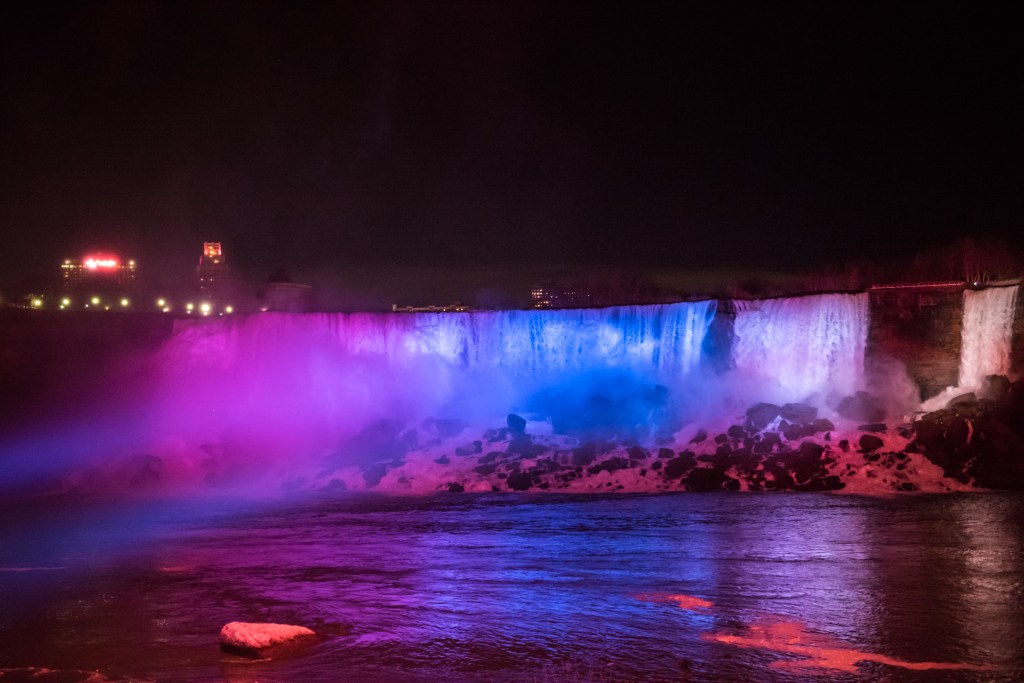
Lights in the Night at Niagara Falls

A custom energy-efficient LED lighting system that produces a rainbow of colors nightly at Niagara Falls State Park is a far cry from the simple technology used at the start of the Civil War when the falls were illuminated for the first time in honor of a visiting English prince.

The evening of Sept. 14, 1860, the falls were lit up for a short time using so-called Bengal lights, which were a centuries-old type of chemical flare that burned with bluish light. While it worked for the prince’s visit, this short-term and cumbersome method of lighting the falls was not to be used again.

A few years later, a new technology developed during the recently concluded Civil War came to the world-famous falls.  Spotlights used then were powered by heating up piles of calcium quicklime until it glowed brightly, which is the origin of the phrase of putting something “in the limelight.” Union forces had used such spotlights during the war to illuminate Confederate positions at night.

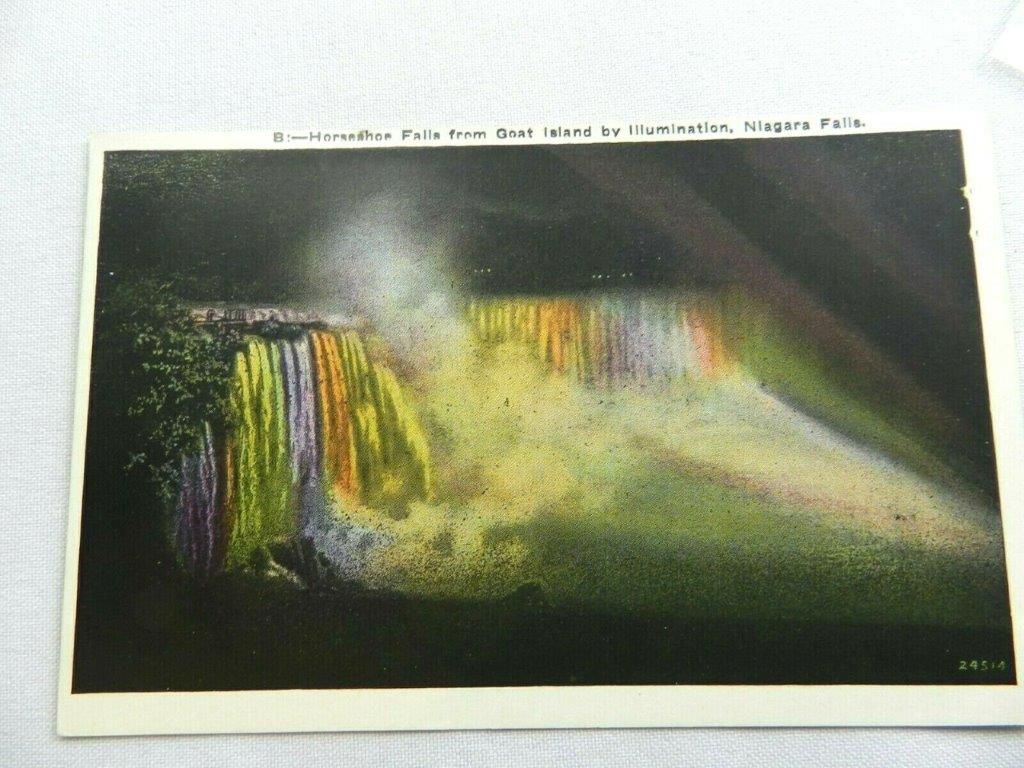
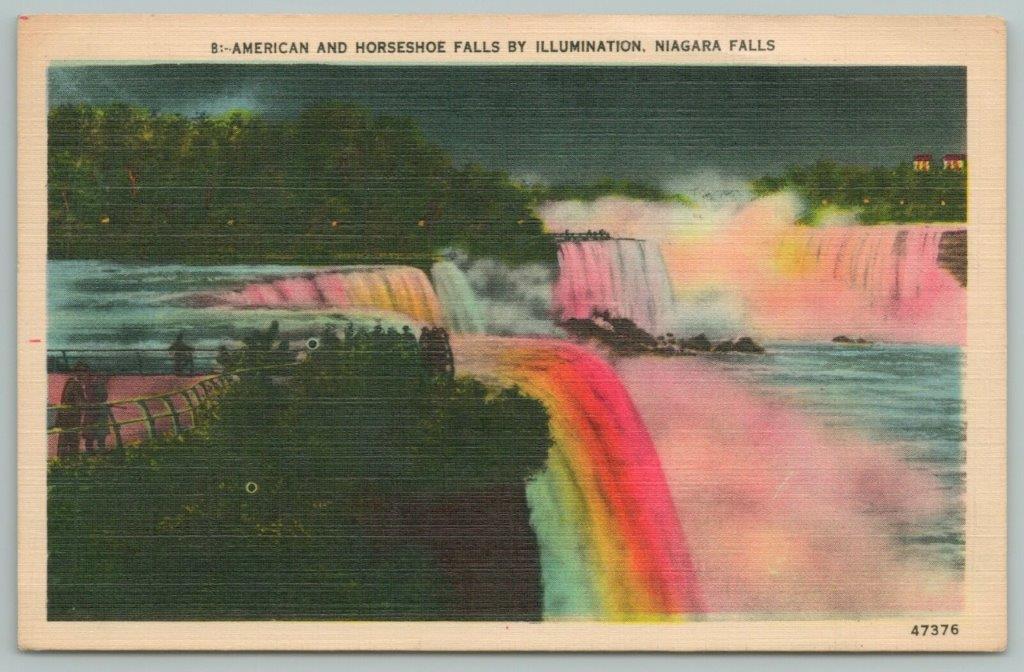
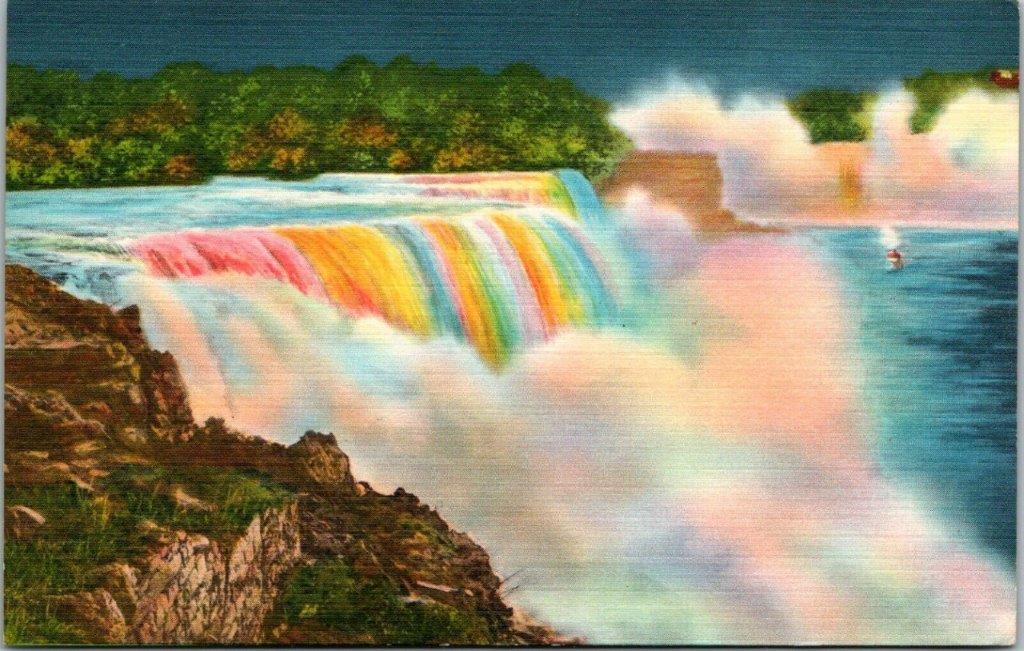
The emerging technology of electric lights arrived at the falls in 1879 to herald the arrival of an official couple from the government of Canada. More than two decades then passed before Walter D’Arcy Ryan, an innovative lighting engineer with Schenectady-based General Electric Co., designed a massive new searchlight system in 1907 that used colored gelatin films changed by hand to project different colors onto the face of the falls.

For 30 nights in a row in 1907, Ryan used 44 searchlights with colored filters, and powered with steam engines, to illuminate the entirety of Niagara Falls for the first time. Following this acclaimed success, he was named head of GE’s Illuminating Engineering Laboratory, the world’s first institution for research into lighting, created the following year in Schenectady.

According to the New York Tribune of Sept. 5, 1907, Niagara Falls looked far more dramatic lit up at night such that “words fail to describe the magnificence of the spectacle”. Another observer wrote: “It was a riot of glorious beauty, so new, so strange, so marvelous – so like some unearthly and unexplained magic that it held the spectator startled, then spellbound, speechless and delighted.”

Officials pose with the General Electric searchlight system used to illuminate Niagara Falls in these undated photographs. (Photo Credit- NYS Parks)

Ryan’s system was incredibly powerful for its day, producing more than 1 billion candela (a measurement of luminous intensity). That was the equivalent to more 8.3 million standard 110-watt lightbulbs!

By then, the illumination of the falls was proving to be an increasingly popular attraction, and in 1925 a joint U.S.-Canadian group was formed to manage and operate lighting – the Niagara Falls Illumination Board. The five-member board saw to it that new, even more powerful electric lights were installed for a ceremony that year. Lights were upgraded again in 1958, 1974, and 1997.

Today, visitors to Niagara Falls State Park are witnessing the work of an array of energy efficient LED lights that was installed in 2016. This $4 million custom system produces any color desired and has twice as much illumination as the previous lights, producing an enormous 8 billion candela. (For the lighting techies, that is more than eight times more powerful that the turn-of-the-century GE system, equivalent to the illumination from 66.6 million standard 110-watt lightbulbs!)

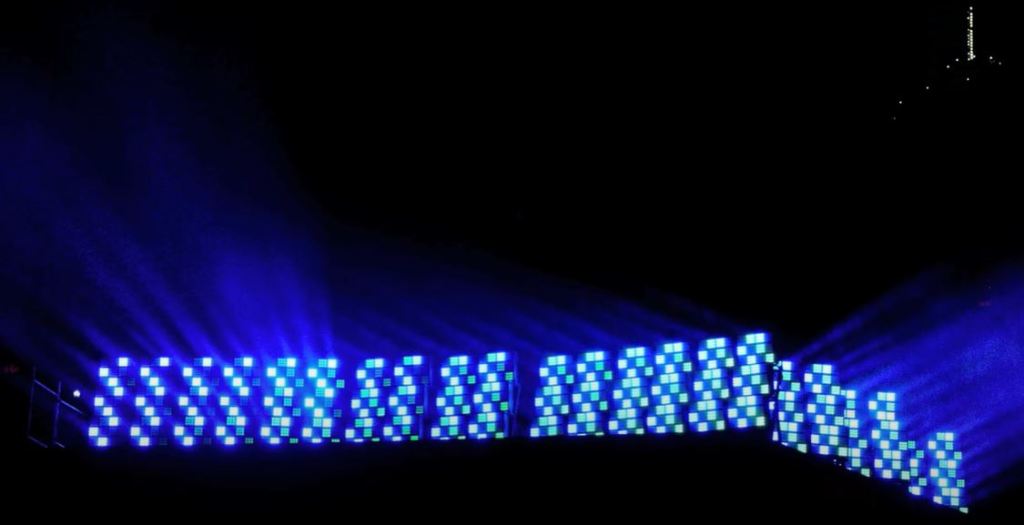
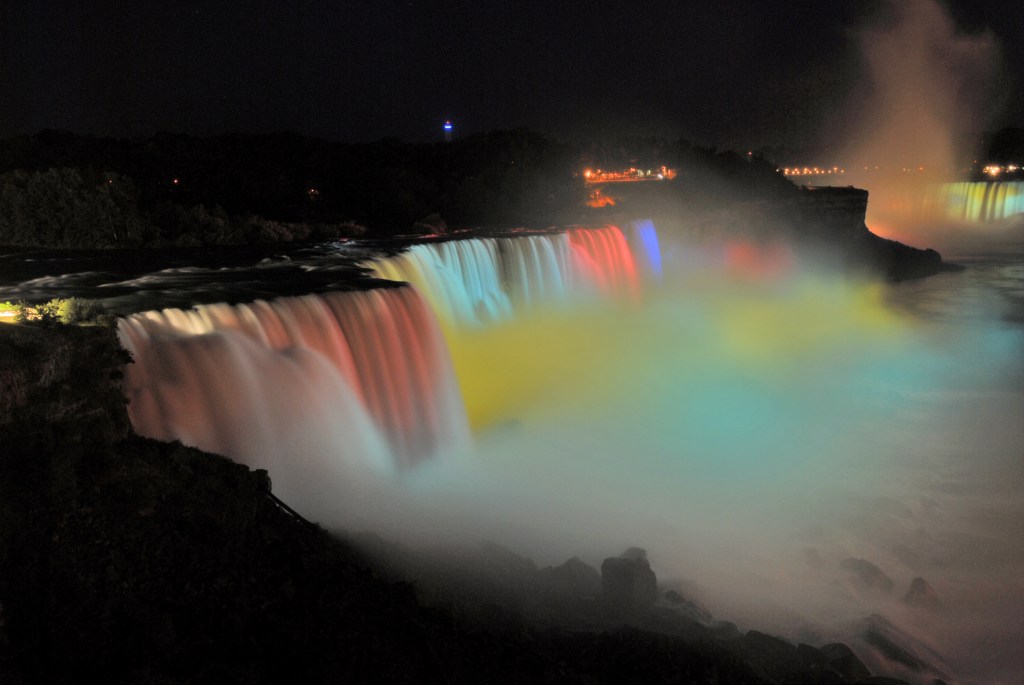
The array contains 12,600 LED lights, evenly divided among red, blue, green, and white. Red, blue, and green are the primary colors of light in physics and adjusting the ratios of each produces the full palette of colors. When all three colors are equally combined, that produces white light. The system at Niagara is powerful enough to span the 1,900 feet needed to reach the both the American and Horseshoe Falls.

A technician tests the new LED lighting system at Niagara Falls. (Photo Credit- Mulvey & Banani Lighting Inc.)

Click this slideshow below to see aspects of the LED array, including a close-up of the lights, their appearance once grouped, and use in action.

A schematic of how the LED light beams illuminate American Falls and Horseshoe Falls. (Photo Credit- Mulvey & Banani Lighting Inc.)

This unique custom system was designed by a consortium of companies including ECCO Electric Ltd., Salex Inc., Mulvey & Banani Lighting Inc., Sceneworks, and Stanley Electric. To test whether the LEDs could cast beams of light the distance needed, the crew successfully tested mockup systems across a lake in Ontario and along an abandoned aircraft runway!

The lights are operated via computer but can also be operated by two staff members who watch guard over the lights each night. They can even be programmed to perform shows such as “Inspired by Nature” which features colors and movements inspired by nature, including the sunrise, aurora borealis, rainbows and sunset.

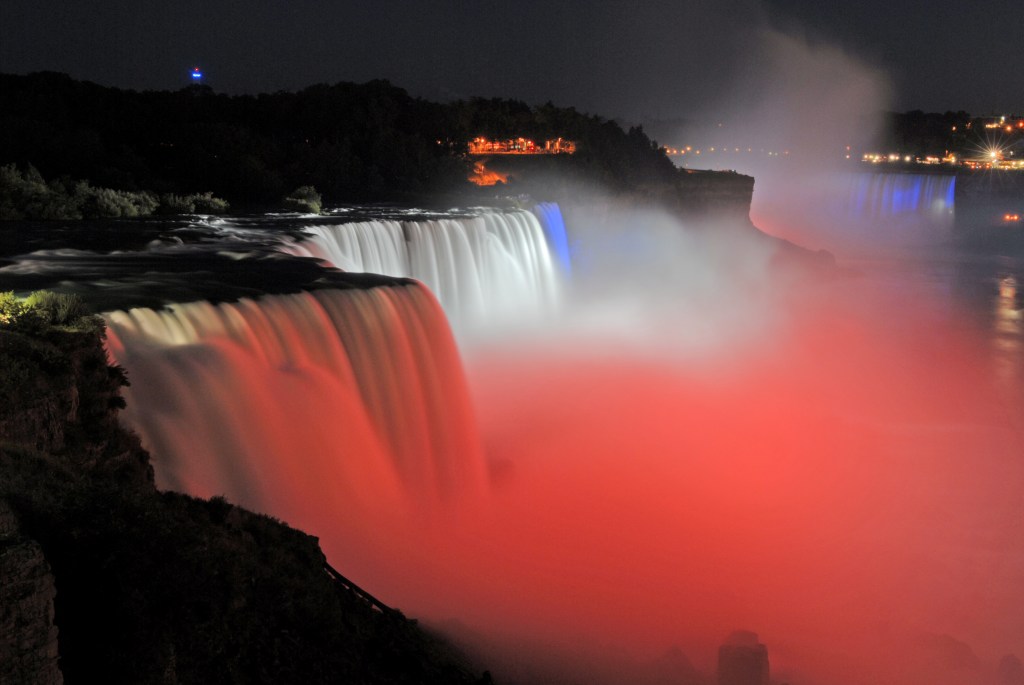
Today the world-famous falls are lit up every night of the year in an ever-changing light show, the colors chosen to reflect a wide variety of causes, events, and people, all of which reviewed and approved by the board.

On June 15th, 2021, for example, the falls were illuminated in the official New York State colors of blue and gold in celebration of reaching 70 percent of New York adults receiving their first dose of COVID-19 vaccine.

In 2016, when Queen Elizabeth turned 90 on April 21, the falls were colored purple in her honor. It did cause a bit of unintended confusion.  The musician formerly known as Prince, who was closely associated with purple, died the same day so many people mistakenly thought the lighting was for him!

Other recent illumination highlights might be less well-known, including highlighting of the Republic of Bashkortostan, Wrongful Conviction Day, and Dress Purple Day, Bullying Prevention Month, Latvian Independence Day, and Dysautonomia awareness.

The falls have been illuminated blue to mark playoff appearances of the NFL Buffalo Bills, purple and gold to mark the tragic death of NBA star Kobe Bryant, a combination of red, white, and gold to honor the Canada’s gold-medal Olympic women’s soccer team, and blue and green for the Canadian professional basketball team Niagara River Lions.

The falls also have been lighted green for St. Patrick’s Day, rainbow colors for Pride Month, blue to mark the 70th anniversary of the North Atlantic Treaty Organization (NATO), and red to welcome Chinese New Year.

One night a year, March 26, the falls go dark for an hour in honor of Earth Hour, a global initiative aimed at drawing attending to ongoing human-induced climate change. Click on the slideshow below to see some of Niagara Fall’s amazing colors!

With the ability to shine light through mist and flood both the American Falls and Horseshoe Falls with every color under the sky, the nightly illumination is the highlight of any visit to Niagara.

Hours of illumination vary by seasonal timing of nightfall, starting between 4:30 and 8:30 p.m., and wrapping up from 1 to 2 a.m. With the earlier nightfall in winter, the falls are illuminated earlier in the evening. When the falls freeze in the winter, creating massive ice formations, the lights take on another beautiful dimension.

The Illumination Board is an example of international cooperation between the U.S. and Canada, with its membership consisting of New York State Parks, Niagara Parks (Canada), the New York Power Authority, Ontario Hydro (Canada) and the cities of Niagara Falls in both the U.S. and Canada, which pay annual dues to cover the expenses associated with this special attraction.

The group is also charged with fulfilling requests for lighting for charitable organizations, special causes, global events, and other special occasions.  As the Falls is such a global icon, hundreds of requests are received each year.

Under board rules, requests cannot be considered for commercial purposes, personal occasions like birthdays or marriage proposals, religious or political events, and institutions, such as hospitals and schools.

Be sure to include an overnight on your next visit to Niagara Falls to catch the illumination. Pro tip: The best viewing from the American side is from Terrapin Point or Prospect Point.

Check out the schedule of lightings and learn more about the nightly illumination here.

Post by Angela Berti, Marketing and Public Affairs Coordinator, Niagara Region, NYS Parks

Watch this Youtube video below by Mulvey & Banani Lighting to learn more about how the Niagara Falls are illuminated…


Learn more about the color of light from the American Museum of Natural History.

Click below for a slideshow of historic Niagara Falls’ postcards showing its illumination…

Eclipse of the Beaver Moon

Starting in the wee hours of Friday, November 19, the upcoming Beaver Moon eclipse will be the longest partial lunar eclipse in six centuries, clocking in at nearly 3 ½ hours. Visible throughout North American, this celestial occurrence also is a reminder that stargazing nights are among many events available at State Parks, some of which have relationships with local astronomy clubs.

But to start, a naturalist question: Why is this upcoming full moon that will undergo this eclipse called the Beaver Moon? Well, according to state DEC naturalist Tom Lake, this description originates with the Indigenous peoples of the Northeast, who in November observed that beaver would stock up provisions to get through the coming winter when ponds, lakes, and other waterways freeze over. Beaver instinctively collect forage, including branches, limbs, even small trees, dragging it into their ponds, and securing it on the bottom for later retrieval as needed during the cold and ice of mid-winter.

The Beaver Moon, as illustrated by The Old Farmer’s Almanac.

Now, what about this lunar eclipse? What will happen, when will it happen and how best to observe it? According to the National Aeronautics and Space Administration, during the peak of the eclipse, the earth’s shadow will cover 97 percent of the moon’s surface, likely casting the moon in a dark, rusty reddish color.

The partial eclipse phase will last 3 hours, 28 minutes and 24 seconds, making it the longest partial eclipse in nearly 600 years! But to see this cosmic dance of earth, moon and sun unfold, two things are needed: Clear nighttime skies and a willingness to be awake when most people normally are asleep.

When the eclipse starts at 1:02 a.m. on Nov. 19, as the earth begins to pass between the sun and the moon, the changes initially will be subtle and difficult to see. That is because the earth actually casts two types of shadows _ a lighter, broader shadow known as the penumbra and a full, dark shadow, called the umbra. After initially entering the penumbra, the full moon will start entering the umbra at 2:18 a.m., gradually darkening and reddening until maximum eclipse is reached at 4:02 a.m. The moon then will start exiting the umbra, followed by the penumbra, until the eclipse ends completely at 7:03 a.m.

This graphics shows the progress of the eclipse. Note, the times shown are in Universal Time (UT). The local times in Eastern Standard Time are part of the description above this graphic. Photo Credit- NASA/Sky & Telescope

No special equipment is needed to safely observe a lunar eclipse, unlike a solar eclipse, which should never be looked at directly without special protective gear. A pair of binoculars can reveal more detail of the moon’s surface. For photography buffs, NASA has tips here for how to best photograph the moon and eclipses.

In State Parks’ Long Island Region, several Parks will remain open for those who want to observe the Beaver Moon eclipse. A requirement for a stargazing permit, which is normally needed to be in those parks after normal operating hours, is being waived for this event.

Long Island State Parks that will remain open for viewing are:

Upstate, the light pollution that present around metropolitan New York City is not as much of an issue, so finding a place to see the eclipse will be relatively simple.

Some of the darkest night skies in the New York are found in the Adirondack Region, and the John Brown Farm State Historic Site outside of Lake Placid will be open that night and morning with a telescope available for visitors who want to see the Beaver Moon eclipse.

And for those interested in astronomy, keep in mind that State Parks offer a variety of stargazing events throughout the year, with a calendar listing available here.

Some Parks also host events by local astronomy clubs, like the Mid-Hudson Astronomy Association in the Hudson Valley which has a Dec. 3 public event at Lake Taghkanic State Park and the Rockland Astronomy Club, which has an November 27 event at the Anthony Wayne Area at Harriman State Park and Dec. 8 event at Rockefeller State Park Preserve. Rockefeller State Park Preserve also hosts free monthly stargazing events, with a Rockland Astronomy Club member donating use of telescope and his expertise. The next such event is Dec. 2.


At Moreau Lake State Park in Saratoga County, a telescope will be is expected available for visitors on the night of Dec. 14 for the Geminids meteor shower, which can produce up to 120 meteors a minute. Fort Niagara State Park will also be open Dec. 13 for the meteor shower.

At Clay Pit Ponds State Park Preserve on Staten Island, a Winter Solstice Astronomy Night will be held Dec. 18, hosted by Professor Harold Kozak, a NASA Solar System Ambassador.

Before making a trip, always call the specific park in advance to ensure such weather-dependent events are being held as scheduled.

And for those who aren’t able get outside the coming Beaver Moon eclipse, check out a virtual online telescope event for that night. Happy viewing!

This chart shows the Beaver Moon lunar eclipse will be visible. (Photo Credit- NASA JPL/Caltech.
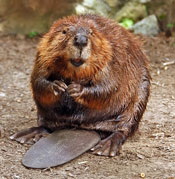
Maybe I’ll stay up late to see the Beaver Moon Eclipse! (Photo Credit- NYS DEC)

Cover Shot- Lunar Eclipse (Photo Credit- NASA)

Post by Brian Nearing, Deputy Public Information Officer, NYS Parks

The official blog for the New York State Office of Parks, Recreation & Historic Preservation