‘Jack’ is the spike flower cluster (or spadix) of the early spring wildflower known as bog onion, wild turnip, brown dragon, and most commonly jack-in-the-pulpit. Jack’s pulpit is a modified leaf (known as a bract) that wraps around and drapes over the top of the flower like a hood.
Jack-in-the-pulpits (Arisaema triphyllum) are perennial plants that are found in moist woodlands throughout New York. They can grow from 12”-26” inches tall, with the leaves in clusters of three on a separate stalk.
The flowers, Jacks, that we see are either female or male. Smaller, younger jack-in-the-pulpits make male flowers and older, larger plants produce female flowers. It takes three years for the plants to start to produce the green flowers.
The plant relies upon flies including fungal gnats and lake flies to pollinate the flowers. They are attracted to the flower’s fungal, mushroom, smell. Gnats and flies can escape from the male flowers through a small hole in the side of the flower, but they get stuck inside the female flowers because there is no escape route.
Once the flower is fertilized, plants produce a green fruit/seed stalk in summer, which turns a bright red in fall.
Jack-in-the-pulpit seed stalk in the fall, Rob Routledge, Sault College, Bugwood.org
Wilson Tuscarora State Park, located on Lake Ontario in northern Niagara County, is just 12 miles east of historic Fort Niagara State Park and the mouth of the Niagara River. Established in 1965, the park, encompasses 386 acres bordered by the east and west branches of Twelve Mile Creek, and has approximately four miles of trails.
When you choose to hike the red Interpretive Trail at Wilson Tuscarora, you will experience several amazing things, particularly if you choose to visit in late spring. Along the trail, you will hike through many different habitats, including wetlands, successional fields (a field transitioning to a forest), shrub lands, ending in a mature beech-hemlock forest.
Your journey begins at the marina parking lot heading toward the large weeping willow tree, with its bright yellow green leaves drooping toward the ground.
Weeping Willow (Salix babylonica)
Once past the old weeping willow tree you will find the trail and the real journey begins through a successional field and into shrub lands as you follow the east branch of Twelve Mile Creek. Along the trail, you will notice red-osier dogwood shrubs forming thickets on each side. Quaking aspen trees are found along the way as well, revealing their name’s origin as each breeze cause the tree’s leaves to quiver or quake in the wind.
Red-Osier Dogwood (Cornus sericea)
Quaking Aspen (Populus tremuloides
Keep your eyes on the wetlands too. You may see a beaver, or at least signs that they are active in the area. If you are lucky enough you may catch a glimpse of the pileated woodpecker. Look for pileated woodpeckers in the mature beech-hemlock forest area of the park. Chances are you will hear them before you see them. Listen for a deep, loud drumming and shrill, whinnying call.
East Branch of Twelve Mile Creek beaver chew
This trail is best known for its spring wildflowers; especially trillium. New York’s largest flowered trillium, the white trillium, blankets the forest floor in May. The name trillium refers to three, the number of leaves, sepals (bud covers), and petals.
Carpet of white trillium (Trillium grandiflorum)
If you haven’t gone down Wilson Tuscarora’s Interpretative Trail yet, be sure to head there this late spring to see these unique natural features!
On May 5, 2018, the first Saturday of May, over 8,000 volunteers helped New York State Parks celebrate its sixth annual ‘I Love My Parks Day’ at 250 projects and 125 parks across the state.
Saturday morning was met with the fresh smell of a well overdue Spring. Birds were singing and bees were buzzing. The weather could not have been nicer with blue skies and a sun to warm your skin. In Horseheads, NY, volunteers came out to the Catharine Valley trailhead to help create a pollinator garden and clear brush and invasive plants to promote native species beneficial to birds. (About 50 small pollinator plants were purchased by the Audubon Society to create a pollinator garden.
Gearing up for the event, photo by Audubon NY
About 50 volunteers showed up to do their part – from energetic toddlers, to a girl scout troop, to seasoned gardeners and everyone in-between. Three NYS parks Environmental Educators and SCA Parks Corps members – Tamara Beal, Lizzy Hawk, and Kyle Gallaher – also stepped in as volunteers and environmental educators.
Over 400 different species of bees call NY home. The role they play in pollinating plants is irreplaceable. It is estimated that 1 in every 3 bites of food deserves thanks in part to pollinators. In other words, if you like to eat, you have to like your pollinators! With so many helping hands, this seemingly large task was completed in no time. Holes were dug with shovels or towels, or even by hand and what started as a barren landscape was quickly transformed to a vibrant garden, ripe for pollinating.
Planting the pollinator garden., photo by Lizzie Hawk, Audubon NY.
I Love My Park Day is a great family day.
Finished pollinator garden, ready to grow.
Besides the pollinator garden, different parts of the birding trails were also attended to. Dead brush was raked, honey suckle was pulled, and sticks and branches were piled high. The birding trails at the head of the Catharine Valley Trail, on Huck Finn Road, are a well kept secret. A birding lover’s delight, these trails attract birds by providing an irresistible combination of shelter, food, and peaceful atmosphere. If you are able to walk quietly enough to become a part of nature, all sorts of creatures become noticeable on these trails. Volunteers were spread out in every direction creating a green space more attractive and enticing to our feathered friends.
In the last part of the event, some time was taken to appreciate and get up close with some of the wildlife in the area. Environmental educators Kyle, Lizzy, and Tamara took about 30 of the volunteers on a short walk to a nearby turtle nesting ground. The sandy soil of these manmade nesting gardens allows the turtles to easily bury their eggs for safe keeping. SCA members helped to clean up these nesting areas earlier in the year.
A young garter snake, reminder: it is best to watch wildlife from a distance.
SCA members after clearing the turtle nesting gardens.
A mini program about snakes was also made possible when environmental educator Tamara Beal came across a garter snake in the grass (see featured photo).
This event was just one of the number of events that were hosted this “I Love my Park Day” throughout the state. Thank you to the thousands of volunteers who came out on May 5th to support their local parks! It is inspiring to see the number of people that show up for these kinds of events.
Join us for the eighth annual ‘I Love My Park Day’ on May 4.
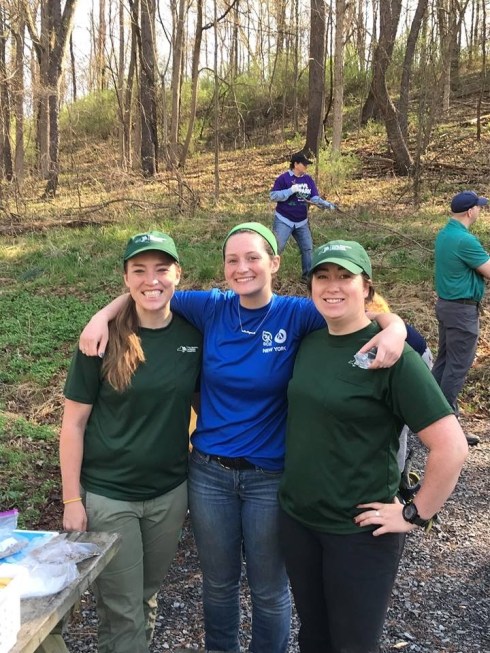
NYS parks environmental educators and SCA parks corps members, Tamara, Lizzie, and Kyle
Post by Tamara Beal, 2018 SCA Finger Lakes Region intern
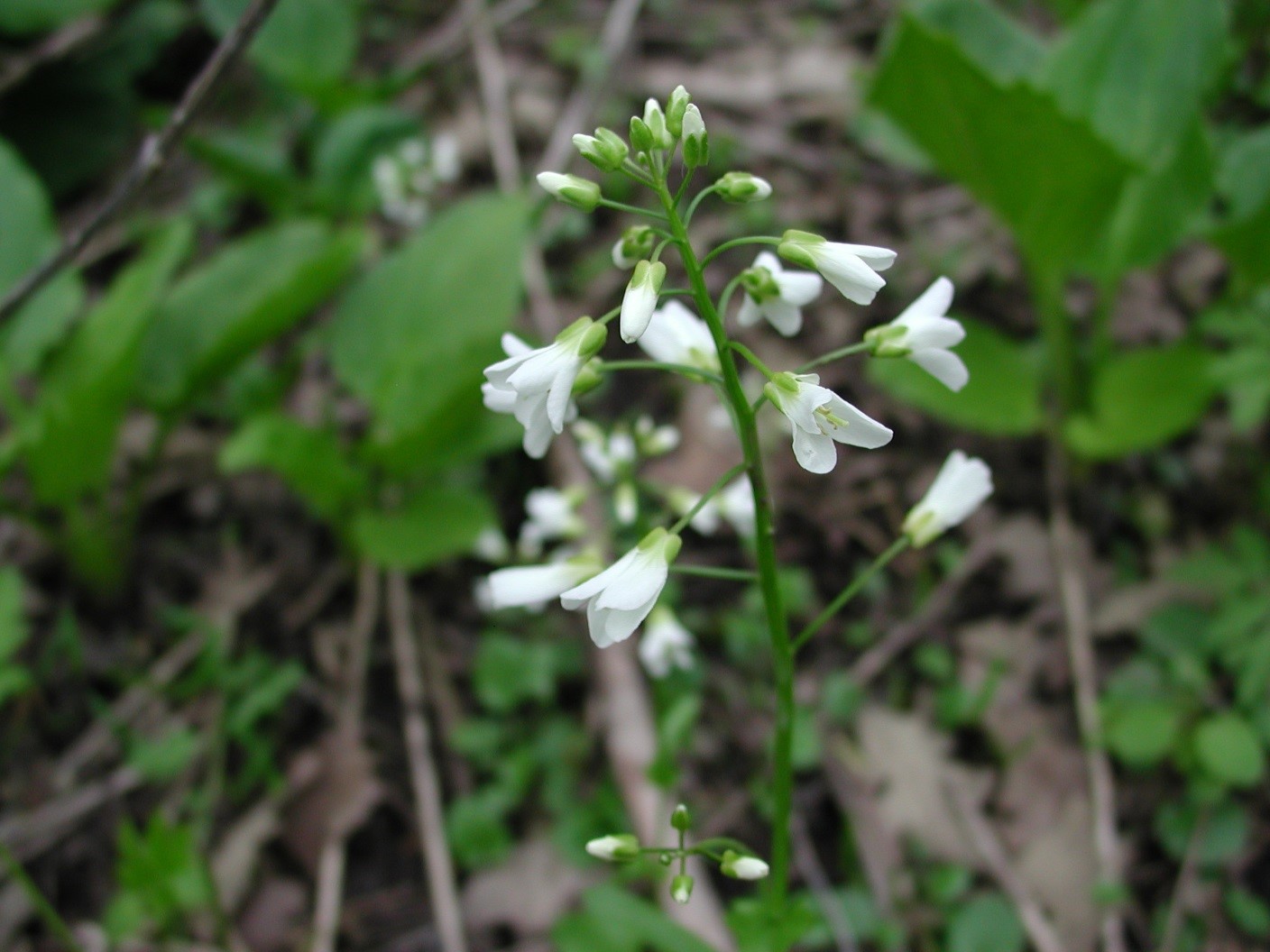
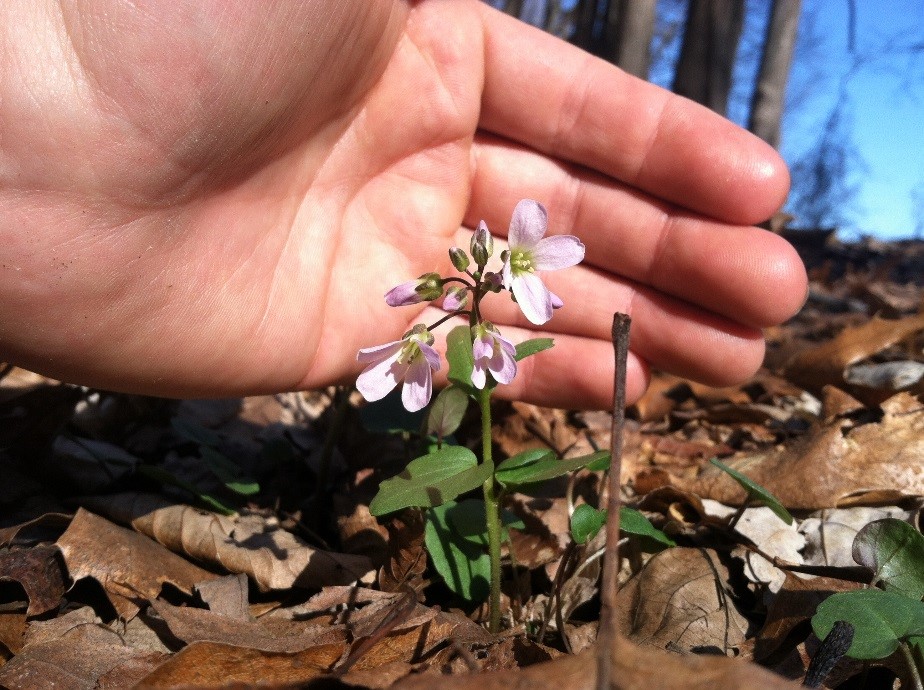
The ground is thawing out and the skunk cabbage is up – it’s time to start searching for the purple rock cress (Cardamine douglassii), a state-threatened plant. You may also find its more common cousins, all members of the mustard family – yes, like the mustard you eat, but with white to pink flowers rather than yellow. Moist woodlands with oak, hickory, and maple are a good place to look, including forests with vernal (spring) pools. Perhaps you might be out looking for frogs and salamanders around this time of year, if so -keep an eye out for these early flowering plants, too. Woodland rock cresses tend to be small, only about 3 to 8 inches tall, so they are easy to miss. If you see some patches of green that are not mosses or mounds of sedges (grass-like plants), take a closer look – you may be rewarded with some delicate flowers.
Photo by Julie Lundgren, NYNHP.
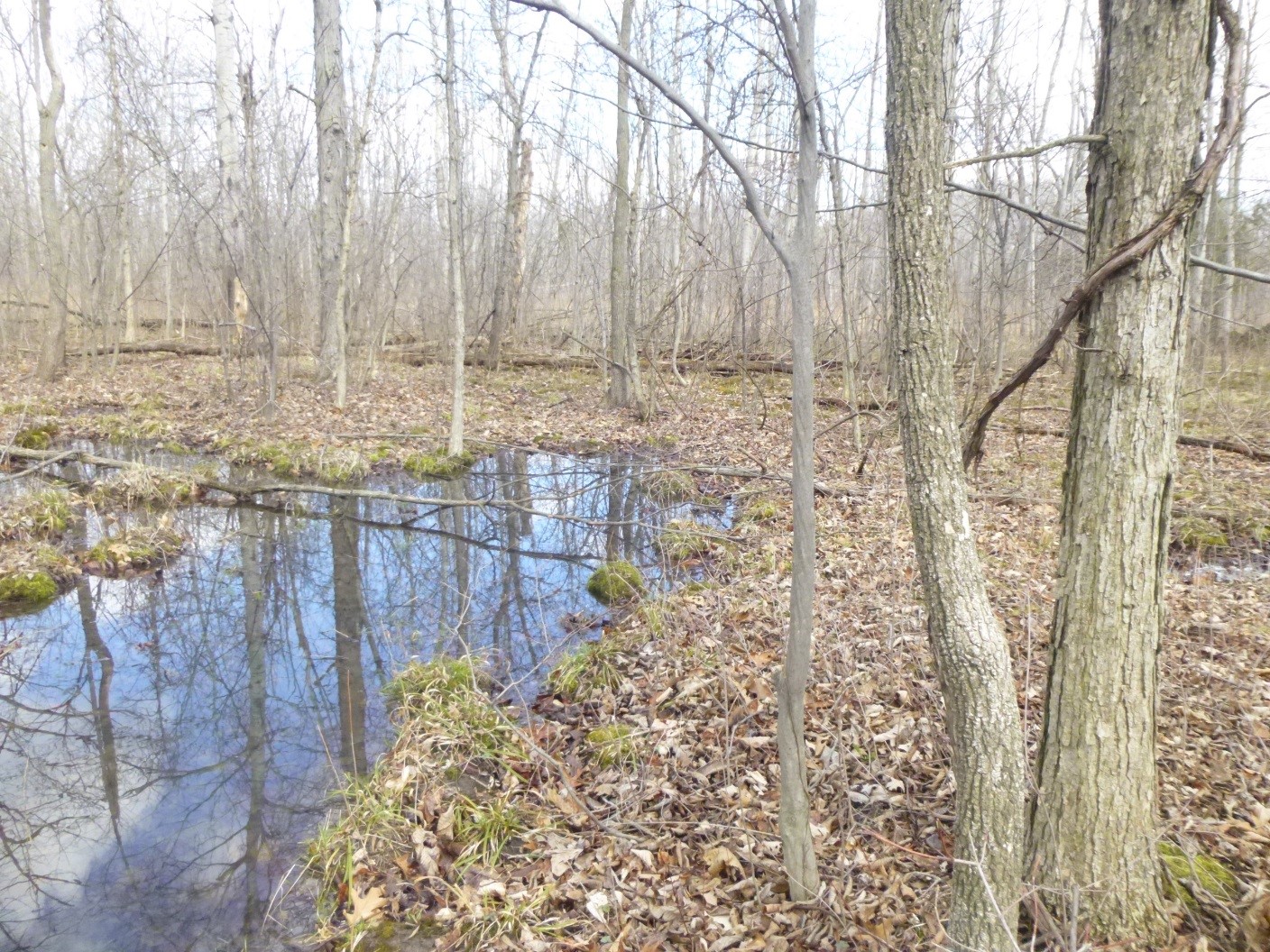
Forests with vernal pools or small streams or wetlands are a good place to look for these cresses.
Photo by Julie Lundgren, NYNHP.
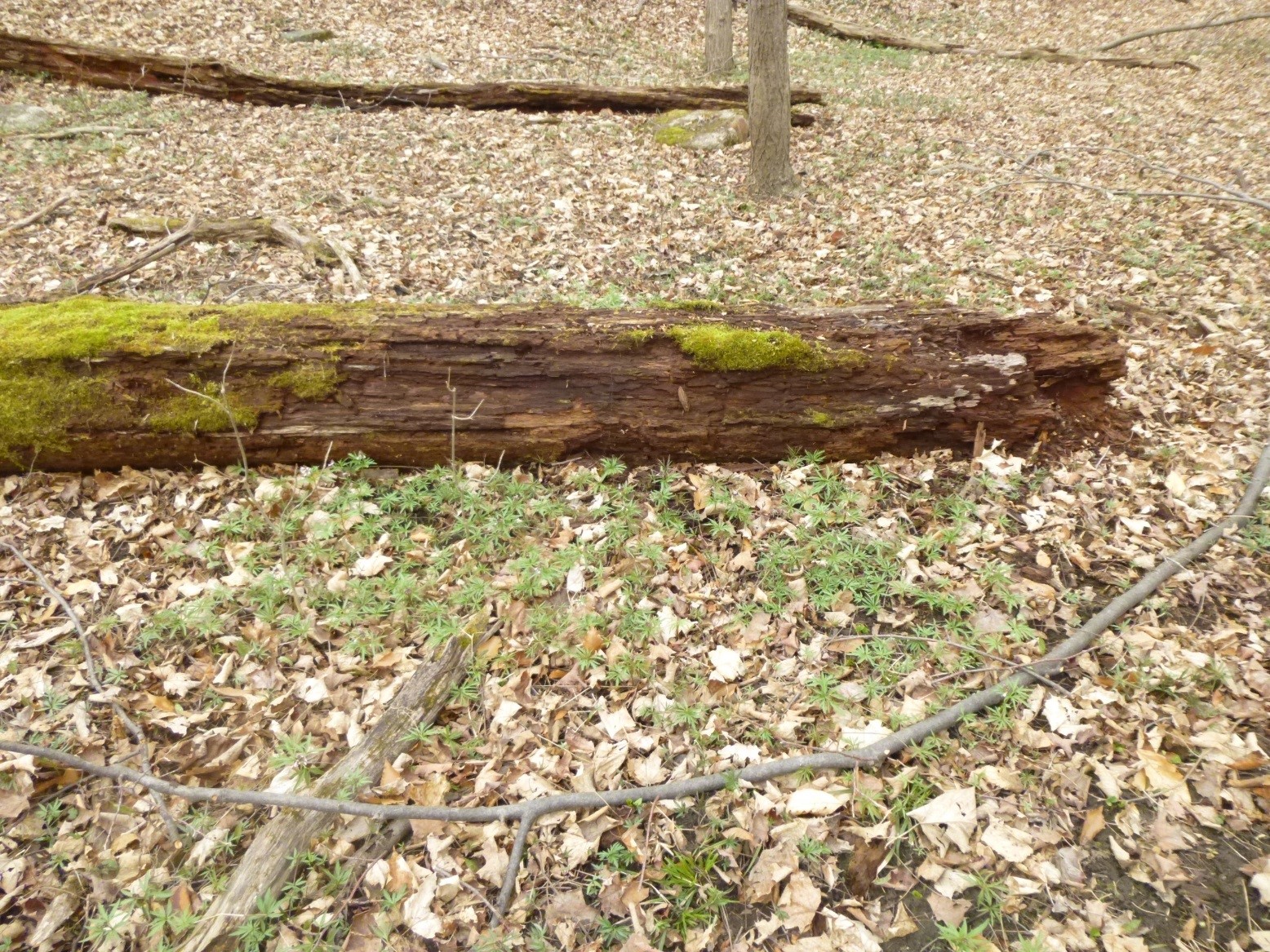
Look for patches of green on the forest floor and take a closer look. You might find some flowers.
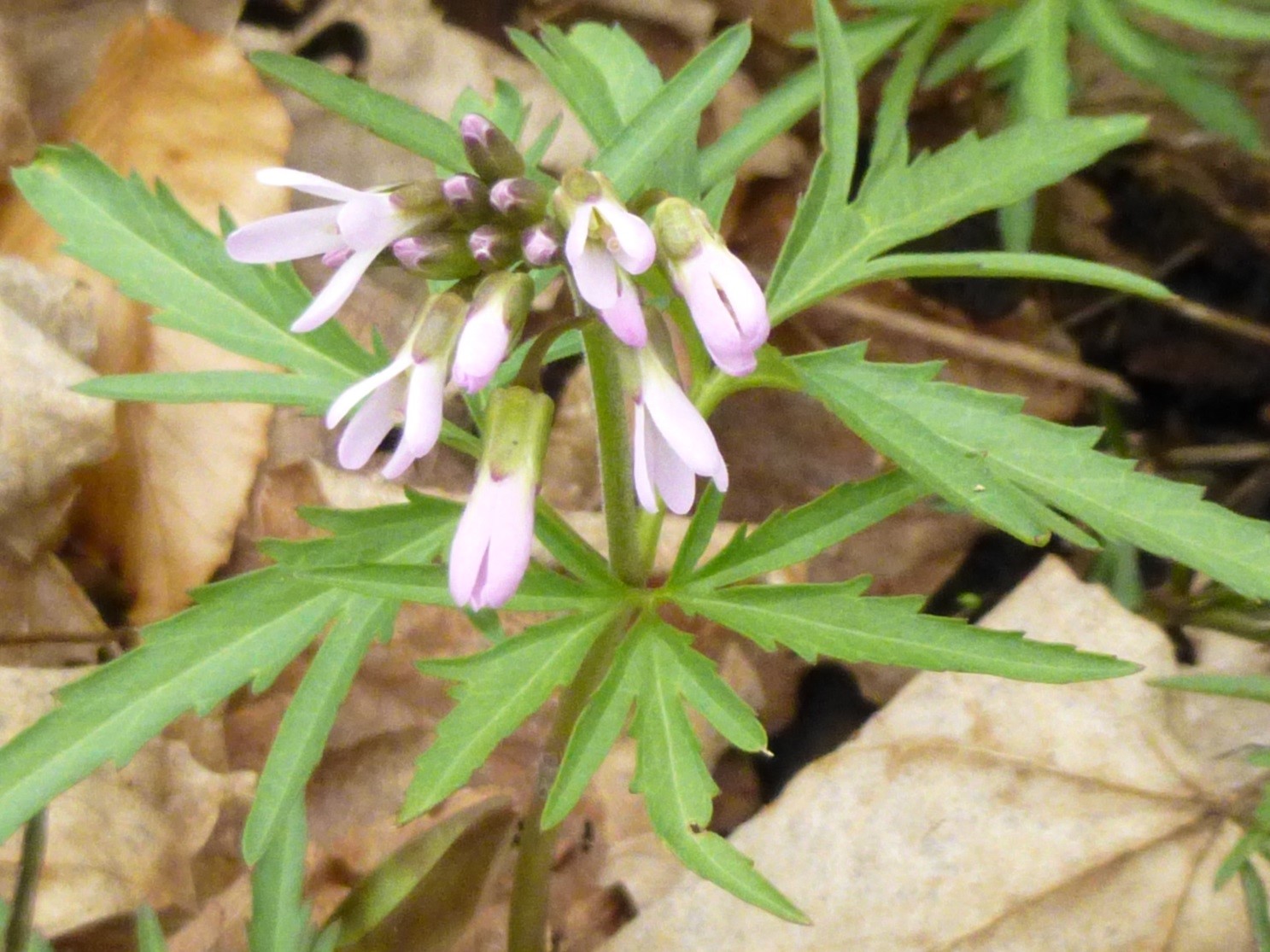
Cut-leaved rock cress or cut-leaved toothwort, photo by Julie Lundgren, NYNHP.
A close-up of that woodland patch of green reveals this beautiful plant, the cut-leaved rock cress or cut-leaved toothwort (Cardamine concatenata), a common woodland wildflower. This used to go by the name Cardamine laciniata or Dentaria laciniata. It is easy to identify by its lacy leaves that look a bit like bird tracks.
Rock cress, photo by Kelly Perkins, NYNHP.
Several of the other rock cresses, including the purple rock cress, have smaller and less complex leaves like this or just small roundish leaves on the stem or at the base of the plant (see in background).
Spring cress, photo by Steve Young, NYNHP.
Spring cress (Cardamine bulbosa) is another common cress that blooms very early. The flowers can range from white to pink, and it can be hard to tell this apart from the rare purple rock cress. Note that all of the flowers in the mustard family have 4 petals regardless of their color.
Purple rock cress, photo by Julie Lundgren, NYNHP.
Here is the rare Cardamine douglassii, so similar to the spring cress above. One has to consult the botanical keys in order to figure out which species you have. Some trout lilies are coming up too (leaves at upper left).
Purple rock cress, photo by State Parks.
NY Natural Heritage and State Parks staff discovered two new locations for this rare species in State Parks in the past few years and hope that more are found in this year’s early spring surveys.
Photo by State Parks.
The flowers of the cresses don’t last long, only until the trees leaf out. Once in fruit, you can still recognize them by their elongate seed pods, which give rise to yet another common name for this group of plants, the “rockets”.
Post written by Julie Lundgren, NY Natural Heritage Program
Featured image by Kyle Webster, State Parks
NY Natural Heritage Program is affiliated with SUNY College of Environmental Science and Forestry (SUNY ESF) and works in close partnership with NYS Parks and NYS DEC. NYNHP conducts many kinds of surveys and studies to provide guidance and tools for conservation of native biodiversity across New York State.
Recommended references for identifying the rock cresses:
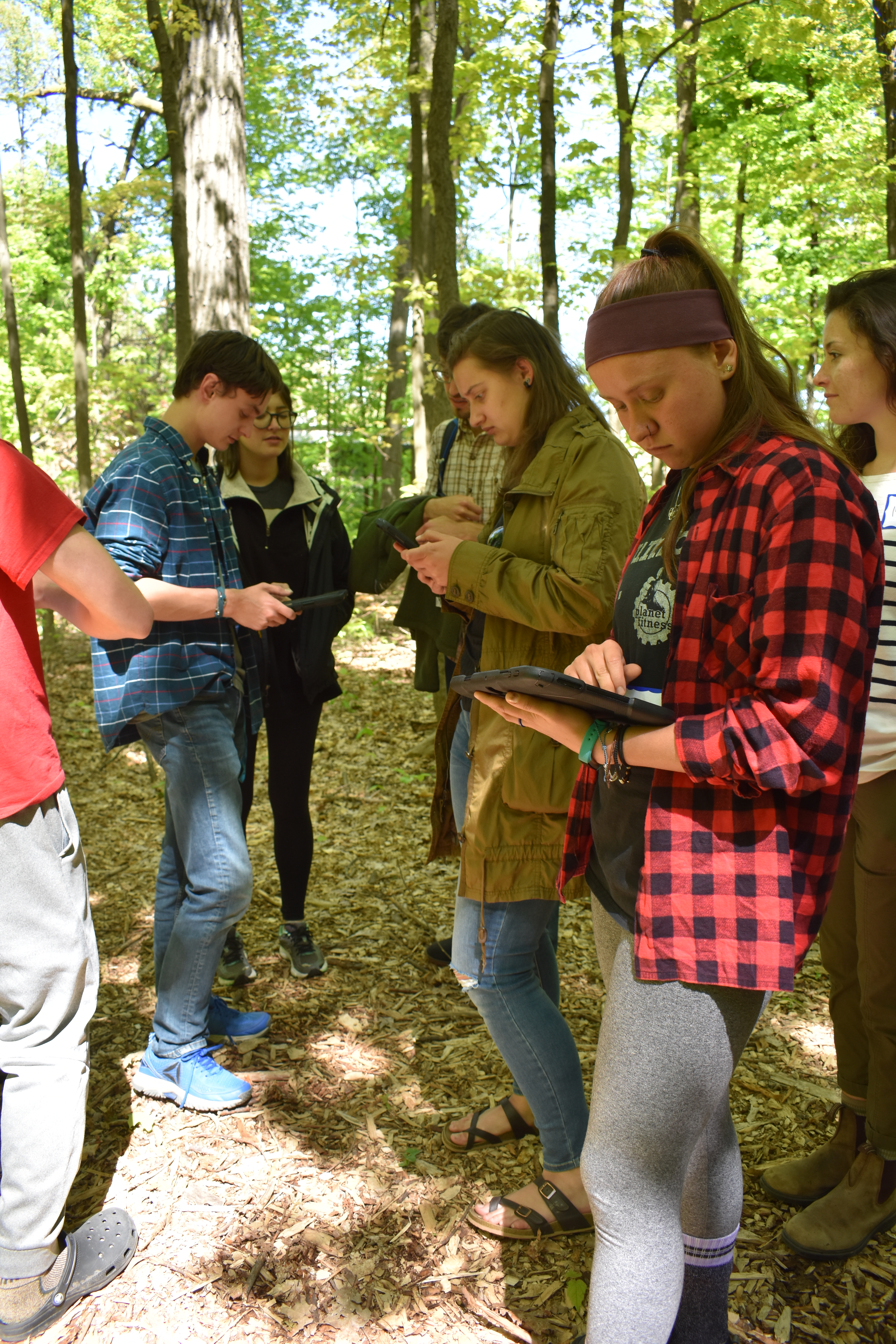
You may have heard the name iMapInvasives before, but if you have not been exposed to this magnificent mapping tool, I recommend you check it out! iMapInvasives, New York State’s online invasive species database, could be compared to a modern-day hero. A robust and helpful resource- thanks to its devoted observers.
Citizen Scientists, Educators, Students and Dedicated Natural Resource Professionals…. You can be an observer too and you can help protect our natural areas.
As we all know, every hero needs an extraordinary sidekick. In this case, it’s the Certified Trainers Network (CTN). The iMapInvasives CTN does its part by hosting trainings for people, located far and wide, about invasive species and how to report them. Established in October 2017, the network has already hosted over 75 in-person trainings across New York State and taught over 900 attendees about iMapInvasives’ capabilities.
If you have a desire to teach your community about iMapInvasives, you can become a certified trainer. All you have to do is:
Participate in the initial online training or watch the recorded webinar.